
Access control systems are critical to the security of many businesses, organizations, and facilities. To ensure that only authorized individuals can enter secure areas, it’s essential to implement effective access control measures.
Two-factor authentication (2FA) using the Elatec TWN4 RFID and ePortID palm vein scanning solution significantly enhances the security of access control systems.
Access control process
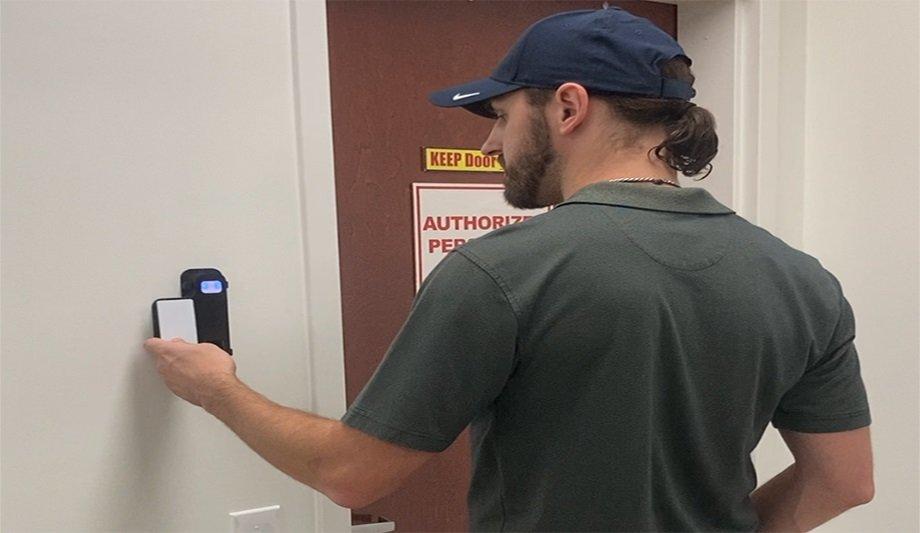
RFID technology is commonly used in access control systems to allow individuals to gain entry to secure areas by presenting a card or tag that contains an RFID chip. However, the use of a single-factor authentication method like RFID can be problematic because it relies on a single point of failure. If an unauthorized person gains access to an RFID card or tag, they can potentially gain entry to a secure area without being detected.
By combining RFID with palm vein scanning, an additional layer of security is added to the access control process. Palm vein scanning uses near-infrared light to capture an image of the vein patterns in a person's palm. These vein patterns are unique to each individual and are virtually impossible to replicate or forge.
Risk of unauthorized access
The benefits of using RFID and palm vein scanning for access control are numerous
When used in combination with RFID, palm vein scanning requires the user to present both the RFID card or tag and their palm to gain access to a secure area. This two-part authentication process significantly reduces the risk of unauthorized access by requiring two separate forms of identification.
The benefits of using RFID and palm vein scanning for access control are numerous. First and foremost, it provides a high level of security that is difficult to breach. It also eliminates the need for users to remember and frequently change passwords or PINs, which can be a hassle and lead to security risks if passwords are weak or compromised.
Social engineering attacks
Additionally, this 2FA technique can reduce the risk of human error or social engineering attacks, where an attacker attempts to obtain access to a secure area by tricking a user into providing sensitive information. Furthermore, it can provide an audit trail that tracks who accessed the secure area and when which can be useful for forensic analysis in the event of a security breach.
Overall, the use of RFID and palm vein scanning as a 2FA technique for access control offers a powerful and secure means of verifying a user's identity. As access control systems become increasingly important in today's world, it is essential to implement the most advanced security measures possible to protect sensitive data and secure areas. This technology is a step in the right direction.

- Network / IP
- Biometrics
- Digital video surveillance
- IP video surveillance
- Electronic security systems
- Application security
- Physical security
- Perimeter security
- Security devices
- Security installation
- Security access systems
- Radio frequency Identification
- Asset tracking
- Video analytics
- Electronic access control
- Building security
- Facility security
- Wireless security
- Door access control
- Security software
- IP Surveillance
- Security service
- Physical Security Information Management (PSIM)
- IP security solutions
- Integration software
- Perimeter protection
- IP transmission
- Security Assessments
- Mobile access
- Video surveillance
- Mergers & Acquisitions
- Touchless Security