Touchless Security

ULTRALOQ, a best-selling smart lock brand under Xthings, a pioneer in IoT solutions, announces the launch and availability of its next-generation smart lock collection, built to redefine access and provide customers with a wide range of effortless entry experiences that best suit their lifestyle. The collection includes ULTRALOQ Bolt Mission, unveiled as the industry’s first ultra-wideband (UWB) enabled smart lock, featuring precise, hands-free approach-to-unlock functionality. Joining Bo...

dormakaba has signed a binding agreement to acquire Alliants Limited, the guest experience technology partner behind more than 100,000 hotel rooms for the world’s leading hospitality brands. The acquisition will strengthen dormakaba’s position as a global hospitality access solutions leader. It expands the company’s hospitality offering beyond physical access control, connecting room entry with digital guest engagement to support a seamless guest journey while preserving custo...

Boon Edam Inc., a global pioneer in physical security entrances, will demonstrate its advanced secure entry innovations and the latest biometric and access control integrations at GSX 2026 booth 2633. The company will feature innovations like the Speedlane Compact and its Turnlock Full Height Turnstile on a forklift-ready mobile platform, as well as integrations with biometric industry leaders. Advanced entrances for secure, seamless access "Securing complex facilities—from outer p...

Iris ID, the pioneer in iris recognition technology, is showcasing its next-generation iris and face fusion solutions at Identity Week America, September 10-11. At Booth 417, attendees can see how Iris ID’s touchless identity solutions are engineered for today’s most demanding environments, from enterprise security to national identification programs. Additionally, NextgenID, an Iris ID partner and trusted provider of identity security and technology, will display their Identity Sta...

Inner Range has released Integriti Idemia Biometric Integration Version 1.6, further strengthening Integriti's position as a unified security and access management platform through expanded biometric authentication capabilities and enhanced support for Idemia's latest biometric reader technologies. The Integriti Idemia Biometric Integration enables organisations to seamlessly combine advanced biometric authentication with Integriti's enterprise-grade access control p...

Camden Door Controls is pleased to announce two new ValueWave+ Microwave Touchless Switches. CM-241 and CM-242 Series switches are designed for automatic door and access control applications, are ADA compliant, and feature LED sensors that can be controlled by hand-wave, remote control, or optional manual override button. They come with an 18-gauge stainless steel faceplate and a variety of graphic options. Microwave sensing technology operates by emitting low-power microwaves that respond to m...
News
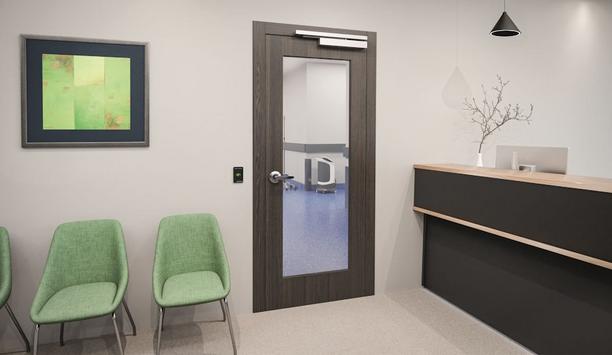
dormakaba is launching a smart access solution that makes opening and closing doors significantly easier, especially for older adults, people with limited mobility, and children. The EasyAssist system sets a new standard for barrier-free access to buildings and rooms. The EasyAssist system improves comfort and safety in everyday life and can be easily retrofitted in locations such as senior living facilities and hospitals. The technology is also energy-efficient due to its low power consumption. “Barrier-free access without unnecessary physical effort is becoming a key requirement for modern buildings,” says Till Reuter, CEO of dormakaba. “With the EasyAssist system, we support people in their daily lives and provide an innovative solution that can be easily integrated into existing buildings.” Four functions in one system The EasyAssist system offers multiple functions in a compact solution: Gentle electronic assistance when opening manually, requiring less effort Automatic opening with just a light touch on the door Touchless access in fully automatic mode Controlled, quiet closing Because the system uses the existing mounting points of traditional door closers, it is particularly easy to retrofit – for example, in senior living facilities, nursing homes, hospitals, hotels, or administrative buildings. Several research collaborations Following its launch in the U.S. in April 2026, the EasyAssist system will be introduced in Germany and several Asian countries in July 2026. The launch in Switzerland is planned for spring 2027, with other markets to follow. Findings from several research collaborations have been incorporated into its development. dormakaba worked with several universities in Germany to investigate how the force required to open a door can be reduced throughout the entire range of motion. In another research project, conducted jointly with the Singapore Institute of Technology, the company explored the specific difficulties doors pose for older adults in their daily lives. With this innovation, dormakaba is responding to demographic change. According to the World Health Organization (WHO), the number of people over the age of 60 is expected to double to around 2.1 billion by 2050. Accessible environments are considered a fundamental prerequisite for health, safety, and social participation.

Leisure and business travellers increasingly want the stress-free convenience of a frictionless journey. Flexible, secure PIN-powered hotel locking can help provide the flow they crave, door-to-door, combining round-the-clock keyless, queue-less access with powerful, cost- and time-efficient management for staff. A 2025 survey of 12,000 travellers across 14 major European markets found that guests increasingly expect seamless, queue-free hotel stays, with self-service check-in becoming a standard preference. In the 2026 Global Hotel Alliance Travel Trends survey, nearly 80% of brands said they were investing in frictionless check-in to meet these growing guest expectations. Growing guest expectations Providing guests with the convenience of round-the-clock check-in and the safety of contactless arrival, then, is an increasing priority as the market evolves with the needs of a new generation of travellers. TESA Hotel’s Check-In PIN solution offers hospitality businesses a system which is easy to implement and simplifies day to day operations for staff. With the TESA Check-In PIN solution, guests enter their room when they choose, without keys, keycards, or queues at the reception desk. Prior to the stay, they receive an email with their PIN. They can then arrive friction-free and independently at their own pace: no keys or cards to carry, no apps to download. On checkout, they just pack their bags and head for home. Every stage of their digital journey happens without hassle or hitch. Authorized common doors Property owners and managers enjoy significant benefits. TESA software automatically sends the guest PIN email. No reminders need to be set. The same code automatically expires on scheduled checkout – or managers can change the validity period with a few clicks in the software. For small hotels or B&Bs, Check-In PIN can be a game-changer, enabling 24/7 guest arrivals without additional staffing costs. For every business, it reduces the use of plastics and frees hotel staff from endless reception queues. The unique, secure PIN also becomes the guest’s digital companion during their stay. It unlocks their room and authorized common doors such as main entrance or gym. Hotel managers can tailor access on a guest-by-guest basis. Delivering smoother experience Late checkout is also offered with a couple of clicks in the TESA Hotel software. Check-In PIN simplifies hotel operations, enabling faster service and delivering a smoother experience for both staff and guests. Check-In PIN is just one option within the TESA Hotel ecosystem, and part of a suite of connected digital solutions from the access experts at ASSA ABLOY. The TESA Hotel solution is custom-built to streamline access management for hotels, rental apartments, campsites, guesthouses, and hospitality businesses – of every size and type. Robust battery-powered locks Compatible TESA locks with keypad are quick and wire-free to install at almost any door. For enhanced site security, every PIN may be canceled instantly and all communication between system and locks is encrypted. The TESA hardware range includes a choice of robust battery-powered locks for doors and in-room devices, available in multiple finishes and designs. As well as PIN, hotel managers can offer guest access with RFID keycards or mobile keys on their smartphone – without changing their locks. Staff manage the stay from user-friendly TESA Hotel software. With real-time, remote control over all doors, they can react instantly to any unexpected incident. If a keycard is lost, or a PIN compromised, it is quick to generate a new one within the software, simultaneously cancelling the missing one. There is no need to change locks or waste time and money with rekeying. With minimal training, any staff member will find TESA Hotel a breeze. Online booking platforms The Check In PIN solution also integrates seamlessly via API with PMS systems, self check in kiosks, and online booking platforms, enabling managers to streamline operations and manage bookings and access more efficiently. Harpazul, an apartment complex in Galicia, chose Check-In PIN to make late guest arrivals stress-free. Booking confirmation and follow-up messages provide each party with their unique PIN to enter Harpazul; move through common areas; and unlock their room. Stylish, wire-free digital devices secure all main access points, recreation areas, and individual apartments. “This way we offer a better service to the customer because they don't have to queue at reception,” explains Harpazul’s Roi Casal. “It is as easy as sending the PIN via email.” Their TESA devices are already fully compatible with keycard and smartphone unlocking, if Harpazul introduce either option in future. The Harpazul welcome is appreciated by their guests: apartments are rated 4.7/5 on Google Reviews and 9.5/10 on Booking.com.

Group-IB, a creator of predictive cybersecurity technologies to investigate, prevent, and fight digital crime, today unveils its Top 10 Masked Actors for 2026 – a definitive ranking of the most prolific cybercriminal groups operating globally. The list is drawn from Group-IB's High-Tech Crime Trend Report 2026, which identifies 2026 as the year the supply chain became cybercrime's most exploited attack surface. Across more than 1,550 frontline investigations and extensive monitoring of the criminal underground, Group-IB analysts observed a structural transformation in how attacks are orchestrated: threat actors are no longer targeting victims directly, but embedding themselves into the trusted infrastructure and third-party ecosystems that organizations depend on — amplifying their reach, compressing detection windows, and maximising disruption across entire industries simultaneously. Novelty of technical evolution The 2026 Top 10 Masked Actors ranking is determined through a rigorous, adversary-centric methodology, scoring each group across six dimensions: financial impact, victims, volume of threats during the operational lifespan, novelty of technical evolution, growth of affiliates, and notoriety. The result is an intelligence-led framework that goes beyond listing who the top threat actors are — it explains why they matter, and how their tactics are reshaping the future of cybercrime. Scattered Spider - Linked to some of the most high-profile attacks of the past year, Scattered Spider has risen to global notoriety through a combination of social engineering mastery and unprecedented operational scale. This decentralized cybercriminal community demonstrated the power of the supply chain attack vector in a single 2025 operation that compromised 130+ organizations across the technology sector - showing how loosely affiliated actors can cascade a downstream supply chain and rival the impact of traditional organized crime. Lazarus - A highly sophisticated, state-linked threat actor blending cyber espionage with large-scale financial crime. Lazarus earns its place, primarily for its financial impact, responsible for over $6.5 billion in cryptocurrency theft within its lifespan, and over $2.02 billion in 2025 alone - making it one of the most financially destructive threat actors documented. MuddyWater - A state-aligned cyber espionage group targeting government, financial services, and logistics sectors, notable for its broad geographic reach across 113 countries. Its defining characteristic, operational tempo: between October 2025 and March 2026, MuddyWater deployed three new malware variants, illustrating the velocity of adversary development cycles that defenders must now anticipate. Tycoon 2FA -The dominant force in Phishing-as-a-Service (PhaaS), Tycoon 2FA controls 89% market share of the adversary-in-the-middle PhaaS segment. It’s SaaS subscription model has commoditised enterprise credential theft at scale - enabling thousands of attacks across cloud environments globally and lowering the barrier for less technically sophisticated actors to execute high-impact campaigns. GoldFactory - First identified by Group-IB in 2024, GoldFactory is a technically advanced threat cluster that has demonstrated a unique capability: stealing biometric data to bypass facial recognition authentication in mobile banking fraud. Operating 15 infections per day across active campaigns, the group has begun to expand beyond its original APAC focus, with new Spanish-language code artefacts signaling deliberate geographic expansion. TX-NFC - A commercialised ecosystem that emulates contactless payment systems on fraudsters' devices, offered via subscriptions from $45 a day to $1,050 per three months. As contactless payments continue to expand globally, TX-NFC’s available attack surface grows with them. The group is expanding into English and Russian-speaking cybercrime ecosystems. Shadow Silk - A financially motivated group specializing in obfuscation and long-duration evasion, Shadow Silk has been observed operating undetected within critical infrastructure and government entities across multiple regions — remaining concealed for over 12 months in one documented instance. Its ability to persist inside high-value environments without triggering detection places it among the most operationally mature actors on this year's list. Bloody Wolf - A persistent threat group prioritising long-term access and surveillance over immediate financial gain. Operating primarily in Central Asia with a focus on government organizations, Bloody Wolf employs geo-fenced delivery infrastructure to maintain a targeted, low-profile foothold — a tradecraft increasingly associated with actors seeking strategic, intelligence-gathering objectives. Teste PHP - In under a year, Teste PHP has built a financial crime operation spanning five Spanish-speaking countries, using malicious browser extensions that silently harvest credentials in real time. Its rapid geographic expansion and aggressive victim acquisition rate illustrate the relentless pace at which new cybercriminal operations can scale in the current ecosystem. DarkBlinders - An emerging threat cluster targeting aviation and telecommunications sectors in the Middle East, DarkBlinders holds the highest TTP evolution score on this year's list — a metric derived from the frequency and breadth of changes to its tactics, techniques and procedures over a 12-month period. Unlike actors operating from a static playbook, DarkBlinders continuously monitors its own exposure and adapts its methods to invalidate existing detection signatures, making it one of the most operationally agile adversaries currently tracked by Group-IB. Commercialisation of attack infrastructure “The supply chain has become cybercrime’s most powerful multiplier. What our investigators documented across more than 1,550 cases last year tells us that attacks are no longer targeting victims in isolation - they are embedding themselves into trusted infrastructure and third-party ecosystems to cascade across entire industries at once.” “A single point of compromise reached over 130 organizations in one operation we tracked. At the same time, the commercialisation of attack infrastructure - phishing platforms with 89% marketshare, NFC fraud sold on subscription - is closing the capability gap between sophisticated and unsophisticated threat actors fast. For defenders, the response has to be adversary-centric: understanding how these specific adversaries evolve, not just what they did last quarter, but predicting through AI driven intelligence what they will do next.” - Dmitry Volkov, Chief Executive Officer, Group-IB. Featuring frontline investigators The top 10 Masked Actors ranking is underpinned by Group-IB’s unique position at the intersection of threat intelligence and global law enforcement collaboration. Group-IB’s intelligence has directly supported operations with INTERPOL, Europol, AFRIPOL and national agencies, resulting in the arrest and prosecution of cybercriminals worldwide, providing it with unmatched visibility into how threat actors operate, adapt, and reconstitute following disruption. This law enforcement cooperation is a core differentiator in the quality and depth of intelligence informing the 2026 ranking. To accompany the ranking, Group-IB will release the second season of its Masked Actors podcast series, launching on 30th June with an in-depth episode on Scattered Spider. The episode, available on all major podcast platforms, will feature special guest Seán Doyle. Lead, Cybercrime Atlas Initiative, at the World Economic Forum, examining how the group exploits a single trusted entry point to cascade across hundreds of downstream organizations. Subsequent episodes will cover each ranked actor in turn, featuring frontline investigators and expert commentary on emerging cybercrime trends.

Hospitality access solutions pioneer dormakaba will showcase its latest security solutions at HITEC North America 2026, the world's largest showcase of hospitality technology, June 15-18, in San Antonio. At Booth #1838, dormakaba will demonstrate flexible, future-ready access solutions that help hospitality providers simplify operations, modernize guest access, and improve security across their properties. Delivering choice "Hoteliers are being asked to choose between flexibility and simplicity. With dormakaba, you don’t have to," said Darien Long, Senior Vice President, Specialty Access Control Solutions, dormakaba North America. "Modern hospitality environments are increasingly complex, requiring solutions that adapt to each property, technology ecosystem, and guest experience strategy. We deliver that power of choice without the complexity." About HITEC HITEC comes on the heels of Resorts World Las Vegas expanding its digital wallet guest experience to support hotel key in Google Wallet, powered by dormakaba, Alliants, and LEGIC. The launch marks the first implementation of hotel key in Google Wallet on the Las Vegas Strip, enabling guests to securely access their hotel room and resort amenities using the devices they already carry. Behind the scenes, LEGIC’s neon technology provides the secure mobile credential foundation for the Google Wallet experience at the resort, enabling seamless provisioning and secure lifecycle management of digital room keys without adding complexity to the guest experience. Expanding digital access strategy Resorts World Las Vegas has continued to expand its digital access strategy, including its earlier launch of room key in Apple Wallet. Guest adoption continues to grow across the resort’s digital wallet offerings, with nearly 30% of guests arriving at Resorts World last month using digital keys and 80% of guests who completed check-in adding a digital key at that time. This transition not only reflects the increasing demand for seamless, contactless interactions but also offers sustainability benefits by reducing reliance on traditional paper and plastic. Additional dormakaba technologies at HITEC 2026 dormakaba Staff Key Validator: Staff Key Validator is a keycard management solution that simplifies operations and increases security. It uses multi-layer, PIN-based authentication to reduce the front-line workload typically associated with staff keycard management and mitigate the risk posed by lost, stolen, or shared keycards. dormakaba Ambiance™ Cloud Access Management Software: Ambiance Cloud is a powerful, cloud-based access management software designed to simplify and streamline hotel operations. Whether managing a single hotel or multiple properties, Ambiance Cloud gives properties full control over guest and staff access, room locks, perimeter security, and more – from anywhere, at any time. Perimeter Access Solutions: dormakaba Perimeter Access solutions provide flexible, scalable, and centralized access control. From lobby entrances and staff-only corridors to elevators, parking gates, amenity spaces, and restricted back-of-house areas, the solutions work with Ambiance Cloud to help secure guests, operations, and properties.

As access control projects continue to expand in scale and operational complexity, traditional standalone turnstile management is rapidly being replaced by cloud-based centralized management platforms. For multi-site, multi-project, and cross-region deployments, customers now demand higher standards in remote control, system stability, operational efficiency, and centralized management. As a professional turnstile manufacturer and access control solution provider, TURBOO develops intelligent cloud platforms that help integrators, distributors, and facility operators achieve smarter and more efficient turnstile management. What Is a Turnstile cloud platform? A turnstile cloud platform is a cloud-based access control management system that enables remote control, centralized monitoring, and intelligent maintenance of turnstile gates through network connectivity. Compared with traditional local control systems, cloud platforms transform isolated turnstile devices into a unified, remotely manageable, and data-driven smart access control system. Challenges of traditional Turnstile management In conventional projects, operators often face the following problems: Distributed devices with difficult centralized management On-site parameter adjustment requirements Lack of standardized management across multiple projects Difficult overseas technical support and maintenance As project scale increases, these operational issues become significantly more challenging. The core value of a turnstile gate cloud platform is transforming “passive maintenance” into “proactive intelligent management.” Core functions 1. Remote Turnstile Control The cloud platform supports real-time remote operation of turnstile gates, including: Gate opening / closing Normally open / normally closed mode switching Temporary access strategy adjustment Rapid response during peak traffic periods This allows operators to manage access control systems remotely without visiting the site, making it ideal for large-scale projects such as airports, metro stations, industrial parks, and commercial buildings. 2. Remote Parameter Configuration Different application scenarios require flexible turnstile parameter adjustments, such as: Opening and closing speed Infrared detection logic Anti-pinch sensitivity Passage mode settings Through the cloud platform, operators can achieve online modification, batch configuration deployment, and unified multi-device management, significantly improving operational efficiency while reducing manual errors. 3. Online Fault Diagnosis & Predictive Maintenance Traditional maintenance often relies on on-site troubleshooting and manual repair, resulting in high costs and slow response times. The intelligent turnstile gate cloud platform enables: Real-time device monitoring Automatic fault alarms Abnormal data recording Remote diagnosis and troubleshooting Many operational issues can be resolved remotely, minimizing downtime and improving system reliability. 4. Centralized Multi-Site Management For enterprises managing multiple projects, the platform provides: Unified multi-site management Group device control Hierarchical permission management Enterprise-level data administration This helps companies standardize operation and maintenance processes across all access control projects. 5. Data Monitoring & Operational Analysis The cloud platform collects and analyzes operational data such as: Passenger flow statistics Usage frequency analysis Peak traffic identification Fault history analysis These insights help operators optimize traffic flow strategies, improve efficiency, and support data-driven management decisions. Typical Applications of Turnstile Gate Cloud Platforms Smart Office Buildings: Unified management for multi-building access control systems Airports & Metro Stations: High-throughput and high-security access management Industrial Parks & Factories: Remote maintenance and multi-zone access control management Government & Public Facilities: Enhanced security, stability, and centralized control Overseas Projects: Efficient remote technical support and cross-region management Advantages of a cloud-based Turnstile management system Lower Maintenance Costs: Reduce manual inspections and minimize on-site maintenance frequency. Improved Operational Efficiency: Centralized management enables faster response and real-time system adjustments. Enhanced System Stability: Real-time monitoring and predictive alarms reduce downtime risks. Flexible & Scalable Deployment: Support multi-project expansion, flexible configuration, and standardized management. How to choose a reliable Turnstile gate cloud platform supplier When selecting a turnstile manufacturer or cloud platform supplier, customers typically focus on the following capabilities: Long-term system stability and reliability Mature remote control and configuration technology Third-party system integration capability Custom development and OEM/ODM support Experience in global and overseas projects As an experienced turnstile factory and access control system manufacturer, TURBOO provides integrated hardware, software, and cloud platform solutions for global partners. Future trends of Turnstile cloud platforms With the development of smart cities and intelligent campuses, turnstile cloud platforms are evolving toward: AI-driven operational analysis Deep integration with contactless access systems Cloud-edge collaborative architecture Data-driven operational optimization Modern turnstile cloud platforms are transforming access control systems from standalone equipment into intelligent management ecosystems. Conclusion For modern access control projects, cloud-based turnstile management platforms not only improve operational efficiency, but also significantly enhance system stability, scalability, and controllability. As project complexity continues to grow, intelligent cloud platforms will become one of the core capabilities of future turnstile and access control solutions.

RecFaces, a global developer of enterprise-grade facial biometric software, will host an exclusive online expert panel, “Face Forward: Building the Smart Office Standard in APAC”, on June 2 at 3:00 PM IST, bringing together voices in biometrics, smart infrastructure, and workplace transformation to explore how facial recognition is rapidly becoming the new operational standard for offices across India and the wider Asia-Pacific region. As APAC’s smart office and smart building markets continue to expand at double-digit annual growth rates, driven by the rise of IT campuses, commercial real estate development, and demand for digital workplace efficiency, organizations are increasingly shifting away from traditional access cards toward identity-based biometric systems. Digital workplace efficiency The panel will examine why post-pandemic APAC has seen touchless access control, biometric office entry, and hybrid employee identity models evolve from innovation into expectation — especially for business centres, enterprise campuses, coworking environments, and modern corporate offices seeking to improve both security and operational efficiency. Hosted by RecFaces, the event will feature: Oleg Kurochkin, Business Development Director for APAC, RecFaces Farida Baichora, Product Owner, RecFaces Shashi Kumar Yadav, Co-Founder and CEO, Startologic Technologies Karan Kanal, Director, EINS Technologies India Pvt. Ltd. Workforce time tracking Designed specifically for system integrators, distributors, facility managers, business center operators, coworking providers, and organizations managing offices with 100+ employees, the discussion will address the growing business challenges facing modern offices, including outdated card systems, inefficient workforce time tracking, administrative overload for HR and security teams, and limited scalability of legacy infrastructure. Attendees will gain practical insights into how facial biometrics can help businesses: Eliminate card sharing and badge misuse Accelerate employee access with frictionless office entry Reduce administrative and HR overhead Improve workforce attendance accuracy Strengthen office security without increasing staff burden Scale seamlessly across growing office ecosystems Biometric access control The panel will also showcase real-world implementation of biometric access control, automated time and attendance, infrastructure integration, and workforce analytics. “In a region as digitally advanced and fast-evolving as APAC, smart offices are already a business reality”, said Oleg Kurochkin, Business Development Director for APAC, RecFaces. “But today, businesses need more than digitalisation alone. They need measurable operational and security outcomes. Facial biometrics helps eliminate queues at entry points, removes friction from daily office access, and at the same time protects organizations from costly security risks — from unauthorized access and physical theft to one of the most critical business threats of all: the loss of sensitive data and intellectual property.” Evaluating biometric transformation Shashi Kumar Yadav, Co-Founder and CEO of Startologic Technologies, added: “The market is clearly moving from physical credentials to trusted digital identity. For integrators and enterprise leaders, the real opportunity is not simply deploying new technology, but creating scalable ecosystems that combine security, automation, and business intelligence. This panel is about showing how that transformation can happen in practice.” In addition to market insights and use cases demonstrations, the webinar will provide attendees with implementation-focused guidance covering project lifecycles, infrastructure requirements, deployment timelines, common risks, and strategies for successful scaling, making it especially relevant for partners and enterprise stakeholders evaluating biometric transformation. Registration is now open for this limited online event. Industry professionals interested in understanding how biometric identity is shaping the future of office operations across APAC are encouraged to secure their place early.

Expert commentary

A key characteristic of many successful companies is that good ideas come from everyone, not just specific departments or job titles. What one person sees as obvious may be questioned by someone else who is less familiar with the product or process. This simple interaction can spark a whole new, faster, and better approach. While valuing tradition is important, if someone uses the phrase “that’s how we’ve always done it,” it’s essential to analyze the process to ensure it remains optimal. Business conditions change rapidly, and what was considered a perfect process last week may need adjustments this week. Comprehensive approach to innovation This comprehensive approach to innovation fosters continuous improvement across all aspects of the organization Innovation should permeate every level of an organization, from product development and customer experience to sustainability practices and employee training. This comprehensive approach to innovation fosters continuous improvement across all aspects of the organization, allowing companies to stay agile, competitive, and in tune with their customers' constantly evolving needs. Addressing real-world challenges At the heart of pervasive innovation in the security industry lies the development of smart products and solutions that address real-world challenges. This approach integrates advanced technologies to enhance security while improving user experience. For instance, the integration of mobile credentials, biometrics, real-time wireless locks, intelligent keys, and cloud-connected access control systems exemplifies how technology can streamline operations and provide users with seamless and secure access. Offering user-friendly solutions These advancements reflect a deep understanding of user needs and preferences, offering solutions that are not only secure but also convenient and user-friendly. A notable example is UniKey's Kēvo, the first Bluetooth-enabled touch-to-open smart lock, introduced in 2013. Developed in partnership with Kwikset, this innovative product allowed users to unlock doors simply by tapping the lock with a compatible smartphone. By continuously innovating across various aspects of security products and solutions, companies can ensure that their offerings remain relevant and effective in addressing the evolving challenges of the security landscape. Design-driven features Products designed for quick and straightforward installation reduce labor costs and minimize downtime Innovation extends beyond technology to encompass design-driven features that prioritize user convenience and satisfaction. For instance, ease of installation is a critical factor in the adoption of new door hardware. Products designed for quick and straightforward installation reduce labor costs and minimize downtime, making them more attractive to both installers and end users. For electronic locks, long-lasting battery performance is essential for minimizing maintenance and ensuring reliability. Products with extended battery life reduce the frequency of replacements and enhance user confidence. Incorporating antimicrobial finishes into door hardware addresses growing concerns about hygiene and cleanliness. Taking hygiene a step further, touchless technology in door hardware minimizes physical contact, reducing the potential for cross-contamination and enhancing user convenience. Sustainability initiatives Sustainability initiatives in door hardware have evolved from niche considerations to central pillars of modern product development, not least of which is the growing consumer demand for sustainable products, which is influencing purchasing decisions. According to a Nielsen report, 66% of global consumers are willing to spend more on a product if it comes from a sustainable brand, leading many companies to prioritize the use of recycled and recyclable materials in their products. Beyond material selection, manufacturers are also refining their production processes to minimize environmental impact. Finishing processes are evolving to use non-toxic and low-impact finishing methods, such as powder coating and physical vapor deposition. Energy-efficient door hardware Energy-efficient door hardware plays a significant role in the overall energy conservation of buildings Energy-efficient door hardware plays a significant role in the overall energy conservation of buildings. Properly designed door hardware can help maintain a building’s thermal envelope, reducing heating and cooling demands. For instance, the HID® Signo™ access control reader includes improved power supply technology and energy-saving features that ensure reduced energy consumption when the reader is in a resting state. Environmental Product Declarations To further demonstrate their commitment to sustainability, many manufacturers seek certifications validating their environmental efforts. Environmental Product Declarations (EPD) and Leadership in Energy and Environmental Design (LEED) certifications have become key indicators of a product’s environmental performance. An EPD provides detailed information about the environmental impact of a product throughout its lifecycle, aiding in the transparency that architects and builders require to make informed choices. Similarly, LEED certification emphasises energy savings and broad environmental priorities, including water efficiency, CO₂ emissions reduction, and improved indoor environmental quality. Customer service and training Innovation is also making great strides in the behind-the-scenes efforts of customer service and training. Predictive maintenance technologies are revolutionising how companies manage product performance and customer support. By utilizing data analytics and IoT technologies, companies can offer maintenance alerts, remote diagnostics, and connected support services that anticipate issues and failures before they occur. This shift from reactive to predictive maintenance minimizes service disruptions and enhances customer trust by ensuring products operate at optimal levels. Digital training initiatives Digital training initiatives equip employees and customers with the skills needed to utilize new technologies In parallel, digital training initiatives equip employees and customers with the skills needed to utilize new technologies in a cost-effective and accessible manner. Digital installer certification programs, learning portals, and customer enablement initiatives are all part of a comprehensive strategy to equip stakeholders with the knowledge and skills they need to succeed. By investing in comprehensive training programs, companies foster a culture of adaptability and competence, ensuring that customers can fully leverage technological advancements. This approach not only enhances operational efficiency but also strengthens customer relationships by empowering them with the knowledge to make informed decisions. Incremental improvements While groundbreaking innovations often capture headlines, it’s the steady, incremental improvements that consistently deliver real-world value. Companies can achieve sustained growth and success by focusing on continuous innovation across all facets of the organization. This quiet progress, though less visible, is often more impactful as it builds a solid foundation for long-term achievement. In a world where change is the only constant, fostering a culture of pervasive innovation is the key to sustained relevance and growth.

Access control solutions will continue their evolution in 2025 as organizations assess and adapt to dynamic and increasingly dangerous threats. Trends to watch include the growing adoption of mobile access credentials and digital IDs, and the integration of digital and physical security and other technologies. Other ongoing trends include the integration of AI into access control solutions and the increasing adoption of contactless biometrics for enhanced convenience. New access control innovations As these trends gather momentum, they highlight the pivotal role access control systems play in combining security and convenience, every hour of every day. Organizations must strike the ideal balance between a secure environment and satisfying user experience if they are to meet increasingly vocal demands for both. Achieving this balance not only delivers the expected user experience but also delivers multi-layered threat protection while introducing exciting new access control innovations. Digital technologies and open standards Modern access control solutions deliver a faster pace of innovation and dramatically improved capabilities Modern access control solutions deliver a faster pace of innovation and dramatically improved capabilities as compared to what was possible in the past. The primary objective is no longer simply to secure places and assets so they are beyond the reach of the wrong people. Now it also must be as easy as possible for authorized individuals to enter a building or access digital assets. Mobile access credentials and digital IDs are increasingly a preferred solution for achieving this seamless and convenient access experience. Technology convergence is happening at a rapid pace and this convergence makes it possible to integrate digital and physical security with real-time location systems and other technologies. Together, these converged technologies provide multi-layered protection against both cyber and physical threats while also enabling valuable new capabilities. 2024 State of Physical Access Control Report As AI is increasingly incorporated into access-control solutions, we will see even more powerful ways to leverage access control data for analytics use cases. Almost 40% of respondents to our 2024 State of Physical Access Control Report said they were looking to do this. Equally consequential is the rise of fast, frictionless and easy contactless biometrics solutions in a wide range of applications including healthcare, where 32% of respondents to our recent 2024 State of Healthcare Security Report said their facilities have already implemented this technology for authentication. Looking at the broader marketplace, nearly one in four (23%) respondents to our 2024 State of Physical Access Control Report cited biometrics when asked to “name the top three trends shaping the wider access control industry in the near future.” Evolution of access control solutions As access control solutions become increasingly central to secure and convenient daily life, these and other trends will have an ongoing impact on all market sectors from healthcare and banking to the corporate real estate enterprise and business and college campuses. At the same time, those responsible for a facility’s digital and physical assets know that these trends – and security in general – will never be a static proposition. The only constant is change. Threats will never stop evolving, and those tasked with protecting organizations against these threats must never stand still. The evolution of access control solutions that we saw during 2024 will continue through 2025 and beyond, and organizations will need to remain thorough and vigilant as they address today’s ever-expanding attack surfaces and ever-evolving attack schemes.

If you were to ask people outside our industry what door and access security entails, chances are their answers would reflect their common encounters with locks, security guards, cameras, and maybe metal detectors, badges, or automatic doors. But if they were curious enough, they’d probably be astounded to learn how extensive, intricate, and interesting the business can be and, of course, how vital it is to life safety, physical security, and cybersecurity. Integrated, interoperable solutions They’d also discover that it’s not just about levers, deadbolts, and other products. Instead, it’s a system of many systems, integrated, interoperable security solutions that cover everything from access control, video surveillance, fire alarms, and communications to server rooms, IT networks, energy efficiency, and more. Partnerships to keep up with changing needs A manufacturer’s support of their customers is how prepared they are to respond with high-quality advice Integral to the future success of the openings solutions industry is how well manufacturers and security experts keep up with the changing threat landscape and their customers’ evolving needs. Part of a manufacturer’s support of their customers is how prepared they are to respond with high-quality advice, service, and innovations that address the questions and concerns that arise. That’s why more developers, designers, and end-users alike are leaning on partnerships with visionary manufacturing companies and systems integrators who proactively keep their ear to the ground and an eye on the future. Caution: curves ahead As we look toward that future here in North America, there will always be forces of change to contend with and the accompanying impact on people’s safety, security, health, and livelihoods that our industry will need to address. The forces range from the incessantly unfolding threat scenarios in our country and the world’s geo-political dynamics to climate change and a host of other shifting factors, including the ways we want to work post-pandemic. Bypassing tailored approach Commoditization poses risks to customized systems integration, good design, the environment Like many industries, ours has seen a change in the level of commoditization in recent years. While this may give some customers access to cheaper door products in the short term, it usually means bypassing a tailored and more effective approach to security solutions that better meet risk assessment needs for the long haul. It can also get in the way of fulfilling a customer’s forward-thinking requirements for sustainable and aesthetic building materials. In other words, commoditization, with its tendency toward “sameness” and dependency on less sustainable, corner-cutting materials and processes, poses risks to customized systems integration, good design, the environment, and potentially security itself. Change for the better Fortunately, change has its upside, especially as it applies to innovation, the counterforce to commoditization. It’s the primary reason why progressive architects, integrators, and security professionals in North America keep gravitating to manufacturers with the instincts and resources to make bold investments in people, new ideas, and processes that produce advanced, planet-friendly solutions. From our view of the door security industry, sustainability will be a central component of innovation from here on out, where the development of new solutions and products is guided by practices and values that reduce their environmental footprint and increase their positive impact. Sustainably-made solutions Transparency in the form of documentation and third-party certifications to back up sustainability claims Along with being a top-down priority for certain manufacturers, sustainably made solutions and products are in higher demand than ever from the design, building, security, and end-user communities. They want to know about the carbon footprint and health impact of product ingredients, their recyclability, and how responsibly things are being made, packaged, and delivered. And they expect transparency in the form of documentation and third-party certifications to back up sustainability claims. Resilience Along with sustainability, a greater focus on resilience has emerged. Climate change is being looked at as a key contributor to the increase in wildfires and the intensity of windstorms and flooding. There will continue to be an expanding need moving forward for FEMA-rated storm shelters, fire- and water-resistive doors, and even blast-resistant openings for certain locations. On the near horizon Facial recognition has long been in use in government and other high-security applications The door security industry is also seeing a fusion of technologies, including newer touchless/contactless opening solutions that incorporate improved biometric access credentials like facial recognition. Facial recognition has long been in use in government and other high-security applications, and we’re starting to see more adoption and willingness to use advanced biometrics devices for door access. Video sensing data and analytics Fortunately, there are new strides regarding the transparency of the algorithms relating to facial recognition. Reassurances about the prevention of bias will help further that adoption. Voice and video will also soon become more prevalent for building and security management by using video sensing data and analytics to inform door security solutions. These developments often stem from the convergence of application engineering and systems integration. Application engineering It also advances the de-commoditisation of security and access control solutions Openings solutions innovators and manufacturers receive vital feedback and insight from both channel partners and customers about the characteristics of a vertical market and/or region. Not only does this partnership require trust and close working relationships, but it yields near and longer-term advantages to all participants. It also advances the de-commoditization of security and access control solutions. Serving underserved communities Smaller businesses need to manage the security and safety of their personnel and assets just as larger operations do. The challenge has been how to offer the right fit of robust door security solutions that also fit these organizations’ budgets. Historically, they’ve been caught between having to choose an enterprise system that would provide the security they need but comes with a high price tag or settling for mechanical locking doors and a fire alarm system that will at least satisfy a certificate of occupancy requirement. Smart lock system Many small business owners want technology that’s simple to install, even DIY in some cases Many small business owners would like to add a smart lock system to enhance their company’s security which also gives them the flexibility to issue mobile credentials and manage employee and visitor access remotely. Ultimately, they’re looking for a higher level of functionality than what’s available at the low end but something with far less infrastructure and at a lower cost than what’s inherent with higher-end solutions. They also want technology that’s simple to install, even DIY in some cases. Scalable electronic access control Supporting these underserved customers requires developing scaled solutions to match the fewer doors, employees, and amount of space that smaller businesses need. This unique approach to electronic access control is new, but it’s already proving to be successful in helping organizations better manage their time, resources, and security. Training The need for expanded solutions awareness, product knowledge, and installation training is also growing The need for expanded solutions awareness, product knowledge, and installation training is also growing. Retirements and other changes within the locksmithing, systems integration, and facilities management sectors continue to affect how our industry needs to recruit, develop, and retain talent. So do technological advancements in electronic access control and door security hardware overall. Change, innovation, and learning A manufacturer or organization that can offer comprehensive training led by seasoned professionals will go a long way toward expediting the onboarding of new hires and providing continuing education for experienced professionals at all levels and from all disciplines connected to safety and security. Ultimately, door security experts and companies who embrace change, innovation, and learning will gain the extra edge customers are always looking for to add value to their investments in security.
Security beat
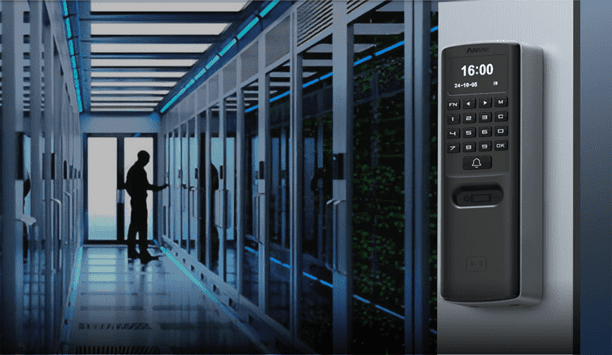
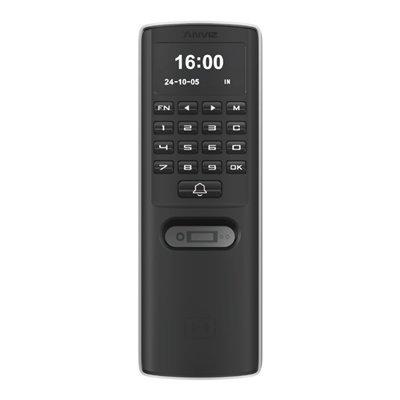
The pattern of veins in the hand contains unique information that can be used for identity. Blood flowing through veins in the human body can absorb light waves of specific wavelengths. Irradiating the human palm with near-infrared light waves yields an image of the vascular pattern. A venous distribution map can be processed and compared to pre-registered data to match and confirm identity. Palm vein biometrics The idea of palm vein biometrics goes back to the 1980s when palm vein scanners emerged as commercial products in the 1990s. The devices gained some traction in military-grade and high-security applications, although the technology was too expensive to become popular among mainstream applications such as physical access control. Anviz Global is expanding palm vein technology into mainstream applications, featuring a lower price point that will open new market opportunities. Palm vein technology “Palm vein technology has been viewed as a boutique product because it is costly and has not developed as a mainstream product,” says Mark Vena, Senior Director of Business Strategy and Development for Anviz Global. “With a more compelling price point, the market can see the technology more broadly. We can change the game in terms of how people think about palm vein technology.” FAR and FRR Palm vein technology is more accurate than either fingerprint (0.0001% FAR) or facial recognition (0.001% FAR) Iris recognition is considered the gold standard in biometric identification, but palm vein technology can almost achieve the accuracy of iris. The false accept rate (FAR) for palm vein technology is 0.00008%, compared to 0.00005% for iris recognition systems. The false reject rate (FRR) is comparable at 0.01% for either technology. Palm vein technology is more accurate than either fingerprint (0.0001% FAR) or facial recognition (0.001% FAR). Palm vein identification occurs in less than half a second. M7 Palm “Anviz is seeking to bring a high level of capability to more mainstream commercial applications,” says Vena, specifically providing a lower-cost palm vein unit. The M7 Palm by Anviz can achieve next-generation biometric access control for greater security and intelligence. The door-mounted unit combines palm vein recognition with an RFID card reader and PIN code (using a 17-button keypad), all configurable for multi-factor authentication. Outdoor applications The robust unit, including a narrow metal exterior design, provides strong vandal resistance (IK10) and stability for outdoor applications. To ensure a weatherproof design, the IP66 rating indicates the product is completely protected against dust and can withstand strong jets of water from any direction. Power-over-ethernet (PoE) enables centralized power management and the ability to remotely reboot devices. Wiegand-out interface The unit communicates using RS-485 or TCP/IP and can connect locks, exit buttons, door contacts, doorbells, etc The unit communicates using RS-485 or TCP/IP and can connect locks, exit buttons, door contacts, doorbells, etc. The Wiegand-out interface can connect to standard third-party controllers, or a built-in relay can trigger a lock directly. Capacity is 500 users. Because palm vein recognition originates from the physiological characteristics of the human body, it represents a “credential” that cannot be forged, lost, or left at home. It is not easily counterfeited or worn out. Multi-factor authentication Applications include industries requiring high security such as government, judicial, and banking. Multi-factor authentication eliminates fraud and ensures safety at banks, data centers, airports, prisons, and government. An end user might opt for higher levels of access control for a laboratory or server room. For dealers and integrators, palm vein technology, including multi-factor authentication, provides an additional option for customers seeking to protect high-security areas on a large campus. Card readers Card readers may suffice for most of the doors, but an important laboratory or cash-handling area requires more protection. Palm vein technology can secure a casino cash cage or a room containing corporate secrets. Time of Flight ToF laser-ranging uses a laser to measure the distance to an object by calculating the time Time of Flight (ToF) laser-ranging achieves accurate measurement to ensure the right distance for operation. ToF laser-ranging uses a laser to measure the distance to an object by calculating the time it takes for the laser light to travel to the object and back. Palm vein technology operates in the range of 10 to 30cm (4 to 12 inches). The proprietary BioNANO palm vein recognition algorithm enables accurate and fast scanning speed. Non-contact biometric The non-contact biometric performs in touchless environments and does not contribute to lingering health concerns in the post-COVID world. The technology is accurate across all hand types and skin tones. Users may feel more comfortable scanning their hands than their eyes. Optimal human-machine interaction M7 Palm’s optimal human-machine interaction and user experience include a low-power-consumption OLED screen to deliver clear text notifications to the user. Advantages of M7 Palm include accuracy, stability, security, and privacy. Features include easy installation with standard processes and no special tools, centralized power management, simplified cabling, and less maintenance. Managing the system is expedited by integration with the Anviz CrossChex Standard access control and time management dashboard, used by more than 30,000 enterprises, and the system can be integrated with any access control system. Security for SMBs Anviz Global is a converged intelligent security provider for SMBs and enterprise organizations Anviz Global is a converged intelligent security provider for small- and medium-sized businesses (SMBs) and enterprise organizations. The company’s product line includes biometrics, video surveillance, and security management solutions based on the cloud, Internet of Things (IoT) and artificial intelligence (AI) technologies. Privacy concerns Anviz is part of the Xthings family of companies, which includes Ultraloq (smart locks), Utec (smart home), Bright (smart lighting), Secu365 (SaaS Platform), and Ulticam (smart cameras). Privacy concerns are minimized because palm vein recognition does not directly store the original image but rather extracts feature information through algorithmic models. Personal data is protected through obfuscation and encryption.
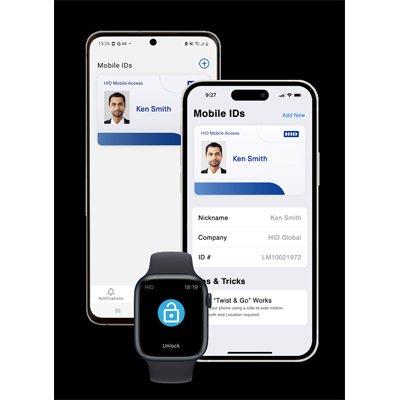
In the competitive world of physical access control, Big Tech companies are seeking to play a larger role. Physical access competition Apple Wallet continues to stake its claim on mobile credentialing. Amazon One Enterprise is pushing a palm-based identity service. Google/Nest offers smart locks for home access control, with identity and access management provided in the Google Cloud. The entry of these big companies in the historically fragmented physical access control market is causing disruption and foreboding new levels of competition. Apple Wallet Impacting Credentialing Trends The popularity of mobile wallets and contactless technologies in general has grown, creating more demand At Apple’s Worldwide Developer Conference in June 2021, the company announced support for home, office, and hotel keys, including corporate badges and student ID cards, in Apple Wallet. Later, the company announced Hyatt as the first hotel partner to support the technology. Since then, the popularity of mobile wallets and contactless technologies in general has grown, creating more demand for a seamless solution such as Apple Wallet. Easy access In 2023, HID Global announced the availability of their employee badge in Apple Wallet, allowing staff and guests to easily access corporate spaces with their iPhone or Apple Watch, including doors, elevators, turnstiles, etc. Employees just need to hold their iPhone or Apple Watch near the reader to unlock. Factors affecting the rate of adoption However, implementing and maintaining an Apple Wallet-based access control system can incur costs for hardware updates, software licensing, and ongoing maintenance. Factors affecting the rate of adoption include the need to upgrade existing infrastructures to accommodate the technology, and the necessity for access control manufacturers to develop and implement integrations with Apple Wallet. Benefits of Adoption Keys in Apple Wallet take full advantage of the privacy and security built into the iPhone and Apple Watch With larger companies leading the way, some smaller ones might take longer to catch up. There is also a need to educate building owners and administrators to see the value and benefits of switching to Apple Wallet-based access control. Convenience and greater security can accelerate adoption. Keys in Apple Wallet take full advantage of the privacy and security built into the iPhone and Apple Watch. Sensitive data protection A compatible app, specific to the building’s access control system, is needed. Once added, credentials are securely stored in the iPhone's Secure Enclave, a dedicated hardware chip designed for sensitive data protection. Holding an iPhone near an NFC-enabled reader enables the transmission of encrypted credentials. In addition to Near Field Communication (NFC), some systems also utilize Bluetooth Low Energy (BLE) for added security, longer read range, and hands-free unlocking. Phones need sufficient battery charge to function. Amazon One Enterprise Enables Palm-Based Biometrics In November 2023, Amazon Web Services Inc. (AWS) announced an identity service providing comprehensive and easy-to-use authentication for physical and digital access control. The system enables users to employ their palm as an access control credential, allowing organizations to provide a fast and contactless experience for employees and others to gain access to physical locations as well as digital assets. Physical and digital locations Physical locations include data centers, office and residential buildings, airports, hotels, resorts Physical locations include data centers, office and residential buildings, airports, hotels, resorts, and educational institutions. IT and security administrators can easily install Amazon One devices and manage users, devices, and software updates using AWS’s Management Console. Elimination of physical credentials An advantage of the Amazon approach is the elimination of physical credentials such as fobs and badges, and digital elements such as personal identification numbers (PINs) and passwords. AWS says security is built into every stage of the service, from multi-layered security controls in the Amazon One device, which is the same technology used in the Amazon Go retail stores, where shoppers can pay for purchases by scanning the palm of their hands. The devices combine palm and vein imagery for biometric matching and deliver an accuracy rate of 99.9999%, which exceeds the accuracy of other biometric alternatives, says the company. AI and ML The palm-recognition technology uses artificial intelligence and machine learning to create a “palm signature” that is associated with identification credentials such as a badge, employee ID, or PIN. Boon Edam, a revolving door and turnstile manufacturer, offers Amazon’s palm biometric technology on its equipment, and IHG Hotels & Resorts uses the technology to provide employees a convenient way to identify themselves and gain access to software systems. Google and Nest Devices in Access Control When the Nest × Yale Lock is connected to the Nest app, a resident can unlock a door from their phone Google’s Nest devices include smart locks for home access control. The Google Nest × Yale Lock allows access control via both physical keys and passcodes accessible through the Google Home app. When the Nest × Yale Lock is connected to the Nest app, a resident can unlock a door from their phone. Passcodes can be created for family, guests, and other trusted persons. Alerts can be provided whenever someone unlocks and locks the door. When Nest “knows” a resident is away, the door can lock automatically. Voice control, Google Home app Voice control, using Google Assistant integrated with various Nest devices, enables the use of voice commands to lock and unlock doors, thus adding another level of convenience. Smart home devices from various manufacturers can be controlled through the Google Home app. SMART Monitoring ADT’s Self Setup smart home security systems integrate Google Nest smart home products with ADT security and life safety technology, including SMART Monitoring technology. Microsoft Azure is another company that could impact access control. The Microsoft Azure Active Directory is an identity and access management platform that could be extended to physical access control, leveraging existing user credentials. Long-Range Impact on the Security Marketplace Big Tech companies are creating platforms for managing access control data, integrating with other security systems Increasingly, Big Tech companies are creating platforms for managing access control data, integrating with other security systems, and offering analytics for optimizing security and building operations. Big Tech is also actively researching and developing new technologies for access control, such as facial recognition, voice authentication, and AI-powered anomaly detection. Access control communication and integration As their involvement in physical access control grows, Big Tech companies could potentially gain more influence in setting industry standards for access control communication and integration, similar to how they have become dominant in other areas such as mobile platforms. Given their expertise in user interface design and data analysis, Big Tech companies could help to direct how future access control systems are managed and how users interact with them, including more intuitive and user-friendly operations. Future of physical access control Existing concerns about privacy, security, and potential dominance by a few Big Tech companies could spill over into physical access control. However, traditional security companies, startups, and industry consortiums are also actively developing innovative solutions. Ultimately, the future of physical access control will likely be shaped by a combination of many different players and technologies – large and small.
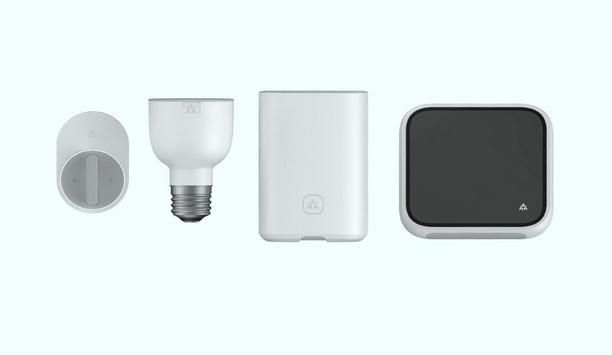
Matter is a new open-source interoperability standard that will simplify the connectivity of smart home systems, including security. The growing popularity of the Matter 1.0 standard was evident at the large Consumer Electronics Show (CES) in January in Las Vegas, where the standard was heavily promoted by companies including Google, Amazon, and Samsung. A flood of Matter-connected products is on the horizon for ship dates in the second half of 2023. Evolve, and manage IoT standards Creating the standard is the Connectivity Standards Alliance (CSA), formerly the Zigbee Alliance, which changed its name in May 2021. With 300 companies as members, CSA seeks to create, evolve, and manage Internet of Things (IoT) technology standards through a well-established, collaborative process. CSA promotes the benefits of global, open standards, and the value of the IoT to customers and consumers, and seeks to break down the barriers to broad access and adoption of IoT technologies and solutions. Matter The new brand name Matter was launched in May 2021 to designate the standard formerly known as Project CHIP (Connected Home over IP), developed by CSA member companies including Apple, Google, Samsung, and Amazon. There are currently 800 devices and apps certified to the new smart home standard, including various smart home equipment (except video cameras, which will be included in a major release in the fall of 2023). Matter version 1.0 was initial launch in October 2022. Matter 1.0 release Twice a year moving forward, Matter plans a minor release each spring and a major release each fall As part of the Matter 1.0 release, authorized test labs are open for product certification, the test harnesses and tools are available, and the open-source reference design software development kit (SDK) is complete, thus enabling new products to be brought to market. Twice a year moving forward, Matter plans updated releases, a minor release each spring and a major release each fall. Smart home interoperability Currently, a variety of CSA working groups are addressing various aspects of interoperability in the smart home, including issues such as data privacy, security, energy management, and health and wellness, says Christopher LaPré, CSA’s Head of Technology. “Implementing elements requires that the standards alliance be able to multitask on several tracks,” says LaPré. Some development is centering around connectivity and the need for a “hub” to which multiple systems can communicate and incorporate an “identity” to regulate the availability of information to various systems. The standards will enable both do-it-yourself (DIY) systems and devices deployed by professional installers. Addressing privacy requirements The new development will be guided by what installers need to succeed in the home automation" Ecosystems depend on the availability of some type of “identity” to meet privacy requirements. Rules must be implemented across the ecosystem that deploys a “trust system” to ensure privacy. Solving the challenge involves getting all the major players to the table at the technical level to meet the bar from the business and technology perspective. “Integrators and retailers will play a role as Matter continues to evolve,” says LaPré. “New development will be guided by what installers need to succeed in the home automation market.” Matter-certified devices There is still work to be done to expand the 800 certified devices to function throughout the Matter ecosystem and to add new devices over time. One goal is to simplify an integrator’s solution using fewer hubs (and possibly a single hub) to provide a wide variety of services. The timeline of adding new Matter-certified devices may be delayed by the availability of equipment in the global supply chain, says LaPré. Flexibility Multi-admin provides for the simultaneous operation of devices in multiple smart home systems A multi-admin feature of Matter enables more flexibility for multiple ecosystems. A core feature of Matter, multi-admin provides for the simultaneous operation of devices in multiple smart home systems. Accordingly, family or household members could operate the device with the digital assistant or smartphone app of their choice. A bridging protocol helps to tie existing systems together. Amazon, Apple, Comcast, Google, SmartThings, and the Connectivity Standards Alliance came together in 2019 to develop and promote this new standard, joined by fellow Alliance board member companies IKEA, Legrand, NXP Semiconductors, Resideo, Schneider Electric, Signify, Silicon Labs, Somfy and Wulian. Smart device communication Currently, member organizations span all sizes, across a range of business categories. More than 1,700 Member individuals participate in bringing the Matter specification, reference implementations, testing tools, and certification programs to life. Matter's underlying network technologies are Wi-Fi and Thread. Wi-Fi enables Matter devices to interact over a high-bandwidth local network and allows smart home devices to communicate with the cloud. Thread provides a mesh network within the home. Both the Wi-Fi Alliance and Thread Group partnered with the Connectivity Standards Alliance to help realize the vision of Matter.
Case studies

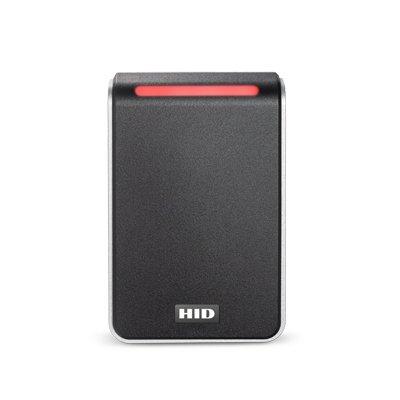
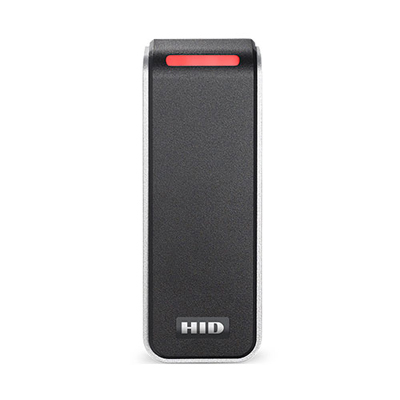
HID, the worldwide pioneer in trusted identity solutions, announces that the University of Dundee is updating its city campus estate implementing HID® Mobile Access® and signature HID Signo™ readers throughout its buildings to guarantee it has a modern, secure and reliable access control system to allow staff and students to enter using both RFID cards and smartphones. The project will involve buying and installing new mobile-ready HID Signo readers at around 40 buildings – a staged rollout being completed over a two-year period by specialist security installer, Scottish Communications Group. HID Mobile Access licenses University has purchased 10,000 HID Mobile Access licenses to offer its academic community In addition, the University has purchased 10,000 HID Mobile Access licenses to offer its academic community the option to use their Apple and Android smartphones for touchless entry into its facilities. “We wanted a modern system which is safe, secure and easy for everyone to use,” says Colin Stebbing, the University’s Head of Precinct Services. HID solution: future-proof equipment Stebbing added: “Complying with forthcoming legislation was also another important project requirement. With bills like Martyn’s Law soon to be enacted, ensuring the University is ready for this was important given that we have a duty to protect to ensure everyone is safe." "The HID solution enables us to not only lock down buildings immediately, but it has built-in functionality which we can leverage over time, meaning we’ve invested in ‘future proof’ equipment which will last us long term.” Ambitious development plans University of Dundee is a research institute in Scotland, noted for its academic merit in dentistry The University of Dundee is a public research university in Scotland renowned for its academic excellence in dentistry, medicine, science and engineering, and life sciences. Based in the heart of the city, it is home to over 16,000 students, 3,300 staff and is ranked 33rd in the Sunday Times Good University Guide 2024. A thriving institution with ambitious development plans, it is currently building a new £40 million facility called the Innovation Hub. This will offer commercial organizations flexible laboratory, meeting and office space and, over the next 10 years, it is anticipated the Hub will help create up to 280 new high-quality jobs. New HID Signo readers The new HID Signo readers integrate with the University’s existing AEOS access control software from Nedap. Supporting both native Bluetooth® and Near Field Communication (NFC) connectivity, they allow touchless smartphone entry and are fast to install as the wiring uses common protocols like OSDP (Open Supervised Device Protocol) and Wiegand. Furthermore, existing access cards already in circulation can be used with the new HID Signo readers, thereby speeding up the rollout. RFID cards access buildings The university used to print and issue plastic RFID cards so staff and students could access buildings Historically, the University used to print and issue plastic RFID cards so staff and students could access buildings. This process was laborious and time-consuming, especially during peak times like Freshers Week, when some 2,500 – 3,000 undergraduate and postgraduate students enroll. Issuing cards was logistically complex due to the high demand and the need for thorough identity checks, which could take up to 10 minutes per card. HID Origo management software Shifting to HID Mobile Access – which utilizes cloud-based HID Origo management software integrating with the AEOS system – completely changes this and delivers wireless credentialing. This significantly simplifies all the licensing, allocation of credentials, setting of building access rights, validating or revoking of IDs – all of which is now done virtually and remotely. Improve the mobile credential “Once registered by Student Services in AEOS, a student simply gets an email to their phone, they tap on a link, the app automatically uploads and a mobile credential is granted,” says Paul Brady, HID’s End User Business Manager for Physical Access Control Solutions. “Not only does this improve the overall student experience because it’s substantially quicker and more efficient, but it’s far more sustainable as you’re not issuing PVC cards anymore.” Integrate with digital campus cards While the strategy and aspiration are for the university population to shift wholesale to mobile access While the strategy and aspiration are for the university population to shift wholesale to mobile access, its approach now is to operate a dual system. “We recognize that some visitors and staff still want to use a physical pass and not all employees have a university-issued mobile credential,” explains Stebbing. “HID Signo readers allow us to run both credential types in tandem, with HID Mobile Access giving us the option to scale up to include digital wallets from Apple and Google, as well as integrate with digital campus cards should we decide to go down this route in the future.” FARGO range of ID card printers Given that RFID cards are still required now, the University of Dundee utilizes its reliable FARGO DTC4500e printers to back up this transition to digital transformation. The FARGO range of ID card printers integrates easily with the AEOS software so that Student Services staff can easily issue physical IDs themselves. HID’s reputation University of Dundee utilizes its FARGO DTC4500e printers to back up this shift to digital change “HID Signo readers are going in now across the main buildings, including the new Innovation Hub site,” says Stuart Leslie, Scottish Communications Group’s director. “HID’s reputation is built on reliability and security with its solutions supporting the latest encryption, communications and authentication standards. Their devices have an open architecture so they’re easy to install and integrate which reduces the cost for the university and makes time to value that much quicker.” MOTORTRBO Ion smart radios In addition, Scottish Communication Group is supplying Motorola MOTORTRBO Ion smart radios to the University’s security staff. The radios will be configured to run HID Mobile Access so they can open doors fitted with the new HID Signo readers. Because these smart radios also link to the University’s CCTV, alarm systems and CriticalArc Safezone® App, security staff need carry only a single device to fulfill their duties.
Dubai Taxi Corporation (DTC) Limousine Service offers a luxury chauffeur-driven vehicle designed to cater to the needs of visitors, business professionals, and the tourism industry. Their services prominently support hotels, tour operators, airlines, corporate clients, and government agencies. Operating 24/7, they aim to offer enriched transport services across Dubai and other Emirates. Challenges With the increasing demand for hygiene and touchless services amid the pandemic, DTC required solutions that: Provided touchless access for enhanced safety Ensured quick and seamless service Allowed tracking of drivers accessing accommodations Solution To address these concerns, Matrix recommended a Face Recognition-based Access Control Solution that seamlessly integrated with IP cameras. This setup not only provided contactless access but also ensured efficient tracking of driver movements within the facility. Products Offered: COSEC VEGA CAX: Advanced Face Recognition-based Door Controller SATATYA IP Camera: High-quality surveillance for monitoring access points COSEC CENTRA Platform: Centralized access control and monitoring system COSEC CENTRA FR: Facial Recognition Users’ Database Management COSEC CENTRA ACM: Access Control Software Module for streamlined operations Key Features Implemented: Touchless Access Control: Enhanced hygiene and safety Seamless Integration with IP Cameras: For real-time monitoring Turnstile Integration: Prevents unauthorized tailgating Swift and Efficient Access Control: Ensures smooth entry and exit Results By deploying Matrix's Contactless Access Control Solutions, Dubai Taxi Corporation successfully achieved the following: Hygienic and secure access control with face recognition technology Faster and more efficient entry management Accurate tracking of driver accommodations Minimized unauthorized access risks

A newly built, small, intimate building with 26 high-standard apartments. It features two staircases and two passages with access control between the underground garage and the staircases. DNAKE IP intercom solution Limited apartments often signify a sense of exclusivity and high-end living. DNAKE IP video intercom solution delivers both security and convenience for modern residential living. The 902D-B6 offers a hands-free and contactless entry experience. Access control is installed at entry points between the underground garage and staircases to enhance security. Residents can unlock doors using both the E216 indoor monitor and the mobile application.
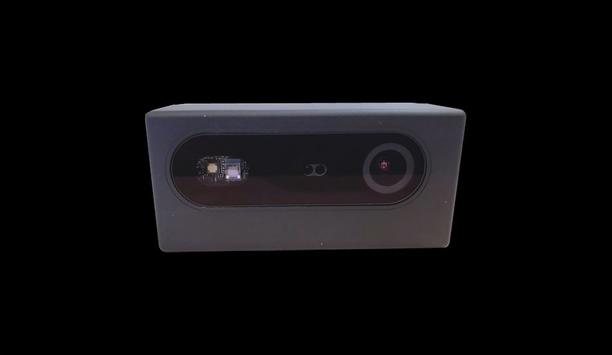
Reliable identity verification is an unwavering requirement at mission-critical checkpoints such as border crossings. Oftentimes, however, this involves slow manual processes that create a ripple effect of inefficiency and security risks. Passengers endure long wait times leading to frustration, fatigue, and dissatisfaction. Indonesia Immigration recognized this strain on travelers moving through its destinations — specifically in one of the region’s busiest locations: the international seaport at Batam Center. Batam Center is one of the most-trafficked border spots between Indonesia, Singapore and Malaysia. Approximately 500,000 people move across Batam’s five seaports each year. The challenge Extremely long wait queues for international departures and arrivals were a severe pain point for the port Extremely long wait queues for international departures and arrivals were a severe pain point for the port. The root cause was the outdated manual process of handling identity verification for the tremendous number of passengers moving through the center. People had to present their documentation papers and wait to be reviewed and verified before crossing the border. Officials sought an intuitive, contactless solution to automate border control, process passengers faster and improve the traveler experience. They also required a system with strong security measures and high performance in challenging lighting to accommodate varying traffic control and conditions. The solution Facial recognition is becoming an increasingly important tool for border security. It is fast, seamless and secure, and offers a contactless approach for identity verification. Working through Indonesia Immigration’s local system integration partner, the HID U.ARE.U™ Camera Identification System was selected as the facial recognition component for the automated border crossing (ABC) gate — or Autogate per Indonesia Immigration — installed throughout the Batam ports. Combining a self-service gate system, document reader and facial recognition camera immediately transforms border control and boosts the passenger experience. HID U.ARE.U™ Camera is an edge-computing device, delivering unsurpassed face detection, authentication & verification This intuitive passenger verification begins when an individual approaches the Autogate and places their passport on the HID ATOM™ document reader to scan the data. Once confirmed, the first gate opens, and the traveler steps forward in front of the HID U.ARE.U™ camera to scan their face. Once the system confirms a match between the passport photo and the passenger’s face, a second gate opens, and the visitor is on their way — all within seconds. HID U.ARE.U™ camera The HID U.ARE.U™ camera stands out as an edge-computing device, delivering unsurpassed face detection, matching, identification and verification directly at the edge. The camera was selected based on its engineering excellence that met the project’s many requirements, including: Combined HID-patented multispectral imaging (MSI) technology with artificial intelligence (AI) to deliver impeccable performance — even in challenging lighting conditions On-device biometric processing — face detection, capture, image quality checks and liveness detection — for the highest level of performance and maximum data protection Industry-renowned presentation attack detection (PAD) with passive liveness detection to prevent fraud attempts in unattended use cases (ISO 30107-3 PAD Level 1 compliance, Level 2 pending) Top NIST ranking in matching speed and accuracy Ethically trained and built AI to reduce matching bias Results People passing through the Batam Center ports engage with top-notch facial recognition technology to quickly, seamlessly and securely authenticate themselves. The Autogate system helps increase efficiency, shorten passenger wait times and enhance the traveler experience. The entire identity verification process is now accomplished in seconds, greatly improving passenger throughput and operational efficiencies. Benefits of HID U.ARE.U™ Camera Identification System. “People moving through borders really appreciate the efficiency provided by this Autogate system with facial recognition,” said Silmy Karim, Director General of Immigration in Indonesia, adding “Wait queues are now drastically decreased and passengers are empowered by the fast and convenient self-service process that has them on their way in a matter of seconds.” Key benefits realized by Indonesia Immigration: Shorter wait times at the checkpoints Improved passenger experience Increased operational efficiency Enhanced border security
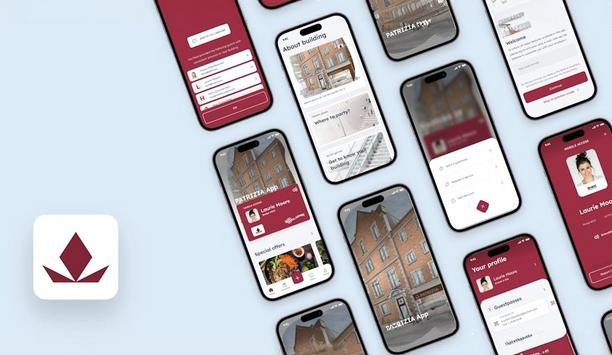
Sharry, a global workplace experience platform built around digital employee badges, has successfully delivered its enterprise solution to London’s new international hub opened by PATRIZIA, a global real estate investment manager. The state-of-the-art mobile access leverages Gallagher Mobile Connect credentials and, through full integration with the Gallagher Command Center access control system, enhances physical security and significantly improves the workplace experience. PATRIZIA’s international hub Located in London’s Endell Street, PATRIZIA’s new international hub was opened after an extensive brown-to-green refurbishment that delivers sustainable ‘office of the future’ combining smart building tech, wellness amenities, hospitality services, street art, and flexible workspaces. The five-floor hub brings together PATRIZIA’s 200 UK-based employees. Their access to the existing Victorian building is completely managed through the PATRIZIA App and web-based PortalWX developed by Sharry. The workplace experience platform is fully integrated into the Gallagher Command Center access control system allowing users to unlock their office doors simply and quickly by presenting their smartphones. Innovative approach If an employee arrives from another office, they can generate a mobile access badge in the app in seconds “PATRIZIA’s employees in London and those visiting from our other offices can enjoy seamless and touchless mobile access to our new international hub in London’s Covent Garden,” said Shreya Sheth, Associate Director, Building Technology & Sustainability at PATRIZIA. If an employee arrives from another office, they can generate a mobile access badge in the app in seconds. There is no need to send a new badge request, pick up the plastic card in person, or wait for it to be sent, and think about returning it when they leave. This innovative approach saves time while strengthening security policy. Next-generation security solution “We are very excited to be supporting PATRIZIA with their new innovative London office. Their commitment to creating a flagship workspace for the future of work is truly inspiring. It's been an incredible honor to be able to support them with a smart workplace app and integrated access control solution for the space,” said Ondřej Vodňanský, Head of Sales EMEA at Sharry. “We are thrilled to collaborate with Sharry and PATRIZIA to deliver a next-generation security solution at their new London hub. By integrating our Mobile Connect credentials with Sharry's workplace platform, we've created a seamless and secure access experience that not only enhances security but also aligns with the modern, flexible work environment that PATRIZIA envisions,” said Gordon Swallow, UK Sales Manager at Gallagher Security. Enhance experience and operations Beyond mobile access, the PATRIZIA App offers users a comprehensive set of features designed to enhance their workplace experience. To name a few: Reservations: Employees can easily reserve shared workstations or book access to the Health Club. Service Requests: With one tap, users can request any service or maintenance through the app. Guestpasses: The app also simplifies visitor management by allowing users to invite guests to the building and send them a guestpass with all the necessary information. Integrated access control solution Sharry provides an efficient platform for managing workplace access and offers powerful tools For facility and office managers, Sharry provides an efficient platform for managing workplace access and offers powerful tools for communication and engagement with all users, including the ability to send news updates, polls, and event invitations straight to the mobile app. Sharry and Gallagher's integrated access control solution significantly enhances physical security in many areas. For example, a manager can remotely revoke any mobile or plastic badge with just one click in the PortalWX. Even the end-user can immediately report their plastic card as lost in the PATRIZIA app and thus suspend it. The Building Operating System Finally, managers can access real-time data on workplace occupancy, enabling more informed decisions regarding space and amenities utilization thanks to a partnership with Trigrr. The building operating system Trigrr has been deployed in PATRIZIA HQ to simplify system integrations and provide a centralized tool that unifies data, automation, and controls across Sharry, HVAC, IoT, and lighting. Thanks to Trigrr BOS, occupants can remotely control office room temperature, adjust lighting, monitor CO2 levels, or launch smart scenarios directly in the Sharry workplace platform. "Partnering with Sharry on the new PATRIZIA international hub is a fantastic opportunity to generate more value by combining all applications and systems into a flexible tool that can adapt building behavior in real-time according to the needs of the occupants," said Jean-Michel Verhulst, CEO of Trigrr.

A premier luxury resort with its location on an artificially created island that provides world-class luxurious accommodation, dining, and entertainment experiences. It is renowned for its lavish amenities and impeccable service, the resort is frequented by visitors from all over the world seeking an unforgettable experience of living in a beautiful setting. Overview The challenges the client faced were related to managing time and attendance across geographically dispersed locations within the resort. Moreover, a non-centralized attendance solution and less accurate palm geometry systems contributed to the failure of tracking employee attendance. Yet another challenge in this area was the seamless integration required with their current human resource management system and payroll applications, which would need a sophisticated solution to integrate with many database integrations. Challenges A complete end-to-end time-attendance management system was required for the following challenges: Multiple Brands Spread Across Locations: Geographically managing attendance across all locations of multiple brands demanded a system centralizing all the data and providing unified management. No Centralized Solution for Attendance: There was no centralized attendance system as multiple brands were being used for attendance; it was really tough to monitor and manage employee attendance with precision at first and acted upon quickly. Low Identification Speed Using Palm Vein Technology: The palm vein devices had a very slow speed of identification, which caused a traffic jam at different check-in points, sometimes even resulting in differences in the records of attendance. Database Integration with HRMS: Integrating the attendance data with the existing HRMS was complicated because the involved systems were different from suppliers and required multiple database integrations. Payroll Integration: Attendance had to be integrated with the payroll system to evaluate and dispense the salary correctly. Solution Following are some of the solutions that Matrix implemented to resolve client challenges: A robust, comprehensive face recognition time-attendance system ensured the following solutions were in place: Centralized Time Attendance Management: Matrix installed its on-premise solution, COSEC CENTRA, for managing attendance from various different locations on the site. At entry points, the organization installed the COSEC ARGO FACE devices and integrated them with the system to track attendance events in a unified manner and efficiently. Seamless Integration with Third-Party HRMS & Payroll: Matrix facilitated database-level integration so that the client could seamlessly connect to their prevalent HRMS and thus ensure that attendance data is correctly captured and integrated in payroll processing. Improved Speed in Identification through Face Recognition: The advanced face recognition system improved the speed and accuracy of attendance marking. High-speed face recognition in less than 0.5 seconds provided guaranteed reliable and accurate attendance records using COSEC ARGO FACE. Contactless Face Recognition with Bluetooth®: Matrix offered a contactless solution using face recognition and Bluetooth® Low Energy (BLE) through its COSEC ACS mobile app. It brings a better user experience in hygiene, safety, and speedy, efficient attendance marking. Results Matrix resolved the problem of the client with the delivery of a centralized, accurate, and seamless face recognition time attendance system. This was delivered to the client with results such as: Centralized Time Attendance Management: Improved management and control of attendance at locations. Seamless Integration with HRMS & Payroll: Increased efficiency and accuracy in the integration with HRMS and processing of payroll. Face Recognition for Faster Identification: Advanced face recognition system that gave dependable attendance records. Contactless Solution with Face & BLE: Heightened user experience with hygiene and safety, ensuring no-contact attendance tracking. Products Offered COSEC ARGO FACEM: Face-based Door Controller with MiFare Card Support COSEC CENTRA PLT1000: Platform License for 1000 Users COSEC CENTRA FR1000: Face Recognition License for 1000 Users This case study demonstrates how Matrix's face recognition time attendance system effectively addressed and resolved the client’s challenges, ensuring efficient and accurate management of employee attendance across multiple locations.
Round table discussion
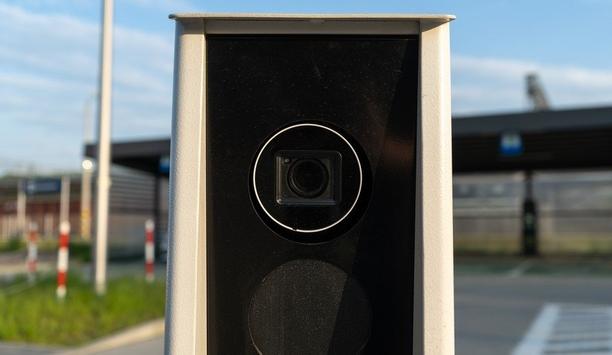
In the United States, they are called license plate recognition (LPR) systems. In Europe, the more common term is automated license number-plate recognition (ANPR). In either case, the systems provide capabilities that can benefit a range of applications from schools to municipalities to parking lots. Newer technologies can even identify vehicle color, type, make, and model. We asked this week’s Expert Panel Roundtable: What's new with license plate recognition (LPR) and/or automated number-plate recognition (ANPR) systems?

Historically, the emphasis of security systems has been on reactivity, whether it’s providing video evidence of an incident or data to support a resulting investigation. Reactivity is core to impactful security, but increasingly, systems are also seeking to be more proactive. A proactive system seeks to prevent events from happening in the first place, thus mitigating the harm to an organization, and making the need for a reactive response moot. We asked this week’s Expert Panel Roundtable: How can security systems be proactive? Please provide a couple of examples.

Biometrics is both a mature technology in the physical security world and an innovation perpetually on the cutting edge. Biometric technologies received a boost during the COVID pandemic when “touchless” became a buzzword with particular relevancy to the world of biometrics. Higher security needs, such as “two-factor authentication,” are also driving demand for biometric products. We asked this week’s Expert Panel Roundtable: What are the latest technology trends in biometrics?
Products