Security installation

iDenfy, a global RegTech service and fraud prevention solution provider, has announced a new partnership with NuxGame, a B2B iGaming software provider with over 8 years of experience delivering solutions across international iGaming markets. This partnership formalises the integration of iDenfy’s identity verification technology into the NuxGame platform. NuxGame operator partners now benefit from a reliable solution for know-your-customer and anti-money laundering compliance. It is fully...
False alarms are the security industry's oldest and most persistent challenge. Industry estimates suggest that as many as 95% to 98% of security system activations are non-emergencies. The high rate stems from a combination of human behavior, environmental triggers, and technical limitations. However, newer technologies are finally addressing the challenge of false alarms. We asked our Expert Panel Roundtable: What are the new solutions to security's oldest challenge, reducing false alarms?

At ISC West 2026, booth #26053, i-PRO Americas Inc., announces the first recipients of its Security Technician Scholarship Program, a workforce initiative designed to help address the growing shortage of trained technicians across the physical security industry. The program awarded scholarships to 19 Las Vegas–area participants, providing each recipient with hands-on technical training valued at approximately $4,000. Applicants were sourced through outreach to technical and vocational pro...

Minuteman Security & Life Safety, a provider of integrated security and life-safety solutions across critical infrastructure, data centers, healthcare, education, and enterprise environments, announces the appointment of Eric Joseph as Global Director of Business Development and Strategy. In this role, Eric will lead Minuteman’s vertical market strategy, strengthen national partnerships, and accelerate the company’s expansion across key U.S. regions. His appointment reflects Min...

BadgePass, a provider of modern identity and credentialing solutions, announces the appointment of Jason Thomas as Executive Vice President (EVP) of Sales and Robbie Jefcoat as Executive Vice President (EVP) of Customer and Brand Strategy. These leadership additions strengthen the company’s executive team as they accelerate growth, deepen customer relationships, and continue scaling its platform and services. “BadgePass is entering an exciting new phase, and we’re investing in...
ESTYA, a French electronic fire safety and security systems services provider, backed by Charterhouse Capital Partners and Chequers Capital, and led by Ludovic Goëta, announces the acquisition of SIMIE Group, a player in the French fire protection services sector. Founded in 2019, SIMIE has a turnover of more than €40 million, and offers a comprehensive suite of services, notably the installation and maintenance of fire protection materials. Other activities include fire detection, d...
News

Dormakaba has signed a binding agreement to acquire Avant-Garde Systems Inc., one of the largest independent solution providers for entrance systems control products in the US. This acquisition represents a core-in-the-core acquisition, strengthening Dormakaba’s North American go-to-market in access automation solutions. Consultation and product selection Founded in 2015 and based in Clarksville, Indiana, USA, Avant-Garde is a solution provider in the entrance systems control business, providing a “one-stop-shop” solution for their customers. Avant-Garde combines in-depth entrance control expertise with full-service capabilities, offering full lifecycle from consultation and product selection to installation and support. Dormakaba’s core portfolio The entrance systems control offering belongs to Dormakaba’s core portfolio, where Avant-Garde adds key capabilities to target strategic growth verticals such as data centers, airports and nation-wide integrators. By expanding its direct solution approach, Dormakaba is strengthening its entrance systems control offering and unlocking further growth opportunities in North America. Entrance systems control capabilities Till Reuter, CEO Dormakaba, says: “We are delighted to welcome the Avant-Garde team into our Group. This acquisition is an important piece to advance our North American growth plan." "It will strengthen our entrance systems control capabilities, enhancing our high-margin business as well as positioning us for growth in our key verticals airports and data centers.” Financial terms of the transaction Dormakaba expects the transaction to be accretive to Group EPS from day 1. The parties have agreed not to disclose further details and the financial terms of the transaction. Dormakaba expects to close the acquisition of Avant-Garde Systems Inc. in early January 2026.
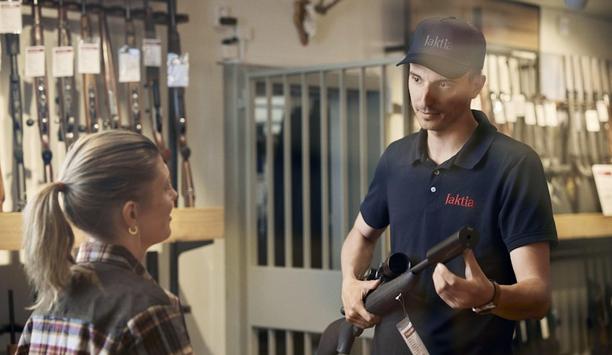
Gunnebo Safe Storage has partnered with Jaktia to deliver a tailored storage solution for a new store offering high-tech equipment and ammunition. Designed to integrate seamlessly within a restricted layout, the system was developed to meet all regulatory obligations and Police Preferred standards. As Sweden’s pioneering retailer for hunting, fishing and outdoor activities, a tight schedule for a new store opening meant Jaktia required a secure and certified storage system that could be installed quickly and operate reliably from day one. Operational needs and available space From the early planning stages, Gunnebo Safe Storage collaborated closely with Jaktia to understand operational needs and available space. Each unit was carefully specified to maximize capacity within the confined area while maintaining accessibility and full compliance. “The storage needed to meet all regulatory requirements and fit within our store layout,” says Haris Beganovic, Store Manager at Jaktia. “Gunnebo responsiveness in the early stages allowed our team to focus on preparing the store for customers. We were able to give input on how the storage would work for our day-to-day operations, which meant the final system was practical as well as compliant. Working with them gave us confidence that everything was taken care of correctly.” Oversaw certification and regulatory checks Gunnebo Safe Storage oversaw certification and regulatory checks throughout the process, seamlessly incorporating Centurion Grade 4 high security vault door with Encry connected lock and Centurion Grade 5 Strong room, enabling Jaktia’s team to focus on preparing the store for launch. Installation progressed smoothly, with teams working in partnership to resolve challenges as they arose and ensure a timely handover. The final system met all Police Preferred and legal standards, providing Jaktia with a robust, efficient solution. Installation and reliable long-term performance Joakim Tillman, Key Account Manager for the Nordics at Gunnebo Safe Storage, added: “Every store has its own operational needs and physical constraints. Our role was to translate Jaktia’s requirements into a system that met compliance standards while fitting perfectly within their space." "By collaborating closely with the store team from initial design to project completion, we were able to anticipate potential challenges and plan solutions in advance, ensuring a smooth installation and reliable long-term performance.”

Security-Net, Inc., a network of pioneering security system integrators, is pleased to welcome its newest member, Mala Grover, president and chief executive officer of Digitronics, based in Herndon, Va. With the addition of Grover, Security-Net strengthens its presence in the Mid-Atlantic region, including Washington, D.C., Maryland, Virginia, and West Virginia, while gaining a member with deep expertise in federal government security projects. Advanced electronic security systems Grover brings three decades of experience in the security industry, including more than 20 years pioneering Digitronics, a woman-owned small business specializing in design, installation, and support of advanced electronic security systems. The company is uniquely positioned in the federal sector, maintaining CSEIP certification and UL 2050 certification, which enable Digitronics to serve highly regulated government environments and protect critical national infrastructure. In recent years, the company has expanded its footprint into the commercial market, offering the same level of rigorous design and implementation expertise to private sector clients. Project management, bidding, and integration practices “Security-Net is truly an elite group of seasoned companies spread across the United States,” said Grover. “One of the biggest benefits is the network itself and having trusted partners across the country who I can reach out to for support on projects or team with to get them completed on time and within budget. It’s like having an extended arm that helps me deliver the best possible service to my customers.” Through her participation in Security-Net, Grover is eager to both contribute her federal sector expertise and learn from her peers’ extensive experience in project management, bidding, and integration practices. She believes the relationships she builds through Security-Net will help her business to continue to grow, innovate, and evolve. Security-Net’s collective capabilities With Digitronics joining Security-Net, the organization gains additional depth in federal government integration and expands its footprint in the important Washington, D.C. corridor, which is a region known for its complex and high-security installations. "Mala brings an exceptional level of professionalism and technical expertise to the group,” said Roy Stephenson, director of business development for Utah Yamas Controls, and a long-time Security-Net member. “Her company’s experience in the federal sector, along with its UL 2050 certification, adds a tremendous amount of value to Security-Net’s collective capabilities.” Prior roles of Grover Grover entered the security industry in 1995 after beginning her career in international business. What started as a single $450 project grew into a thriving company managing large-scale federal installations, including projects with the U.S. Department of Education. Today, Digitronics employs 23 people, including Grover’s son, who is helping expand the company’s commercial business. Security-Net currently has 19 members with an extensive geographical footprint to serve customers throughout the United States, Canada, and internationally. Together, members share best practices, including technical knowledge and training initiatives, and partner on customer projects that extend beyond a company’s geographic reach to ensure national account-level service.
DNAKE has been awarded "Preferred Supplier of Top 500 China Real Estate Development Enterprises" in building intercom and smart home areas for eight consecutive years. "Building Intercom" system products ranked No.1! On March 18, 2020, the “2020 Evaluation Results Release Conference of Top 500 China Real Estate Development Enterprises” co-sponsored by China Real Estate Association, Shanghai E-House Real Estate Research Institute, and China Real Estate Evaluation Center was held through live broadcast. Evaluation work The evaluation work has been running for 12 consecutive years and has achieved a good response in the industry. At the conference, the evaluation lists of “Preferred Suppliers of Top 500 China Real Estate Development Enterprises in 2020” were released. Building intercom and smart home DNAKE brand has been recognized by China Real Estate Industry Association experts and pioneers The two major industries of DNAKE – building intercom and smart home are both on the list and have won the “Preferred Supplier of Top 500 China Real Estate Development Enterprises 2020″ awards. This also means that the DNAKE brand has been recognized by China Real Estate Industry Association experts, pioneers, and top 500 real estate companies for eight consecutive years! Honourary medal DNAKE Building Intercom won the “Preferred Supplier Brand of Top 500 China Real Estate Development Enterprises” award with the No. 1 brand preferred rate of 18%, and Smart Home won the “Preferred Supplier Brand of Top 500 China Real Estate Development Enterprises” award with the preferred rate of 8%. Innovation has never been exhausted. For DNAKE, 2020 is bound to be an extraordinary year. This year is the 15th anniversary of the establishment of DNAKE, and the eighth year that DNAKE has won the honourary medal of “Preferred Supplier of Top 500 China Real Estate Development Enterprises”. Innovation Grow together and start again! In 2020, DNAKE will continue to regard innovation as the soul of the enterprise, steadily take root in the field of intelligence, and work together with various real estate development companies to create a new era for customers with more intelligent video intercom and smart home products, etc., to create a “beautiful human settlement” in the new era for the majority of users.
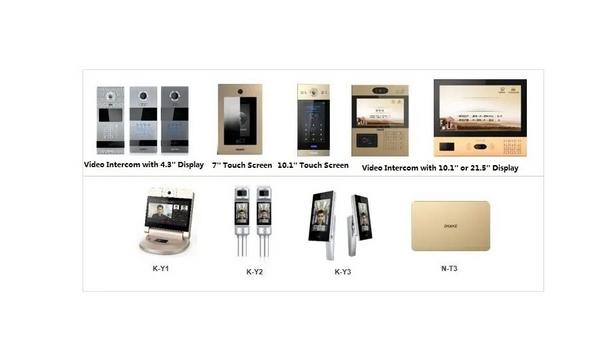
Following the development of AI technology, facial recognition technology is becoming more widespread. By using neural networks and deep learning algorithms, DNAKE develops facial recognition technology independently to realize fast recognition within 0.4S through video intercom products and facial recognition terminal, etc., to create convenient and smart access control. 906N-T3 AI box Based on facial recognition technology, the DNAKE facial recognition access control system is designed for public access scenarios and secure entrances. As a member of facial recognition products, the 906N-T3 AI box can be applied to any public premises that require facial recognition by working with an IP camera. Its features include: Real-time Facial Image Capture: 25 facial images can be captured in one second. Facial Mask Detection: With the new algorithm of facial mask analysis, when the camera captures a person who wants to get into the building, the system will detect if he/she wears the mask and take a snapshot. Accurate Facial Recognition: Compare 25 facial images and the database within one second and realize non-contact access. Open APP Source Code: According to the application scenarios, it can be customized and integrated with other platforms. Ultra-high Performance: It can connect to eight H.264 2MP video cameras and be utilized for various purposes, such as access control of data centers, banks, or offices that require improved security.
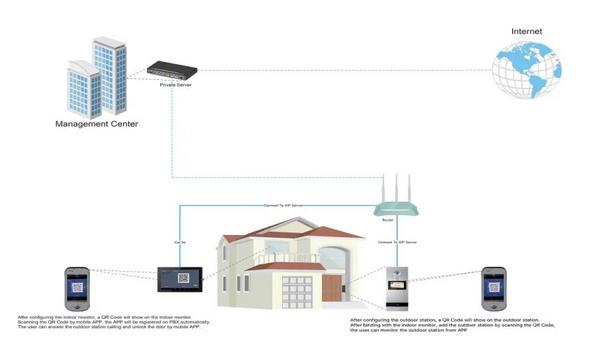
IP intercom devices are making it easier to control access to homes, schools, offices, buildings, hotels, etc. The IP intercom systems can use a local intercom server or remote cloud server to provide communication between intercom devices and smartphones. Video door phone solution Recently DNAKE specially launched a video door phone solution based on the private SIP server. The IP intercom system, consisting of an outdoor station and indoor monitor, can connect to a smartphone on the local network or Wi-Fi network. No matter being applied to an apartment or single-family house, this video intercom solution can be an ideal choice. Solution benefits Compared to the cloud server solution, here are some benefits of using this solution: Stable Internet Connection: Unlike cloud server that requires high-speed networks, DNAKE private server can be deployed at the user’s end. If something goes wrong with this private server, only the project connected with the server will be affected. Secure Data: The user can manage the server locally. All user data will be saved in the private server to ensure data security. One-time ChargeThe expense of the server is reasonable. The installer can decide to collect a one-time charge or annual charge from the user, which is more flexible and convenient. Video and Audio Call: It can contact up to 6 smartphones or tablets via voice or video call. User can see, hear, and speak with anyone at the door, and allow their entry via the smartphone or tablet. Easy Operation: Register a SIP account in minutes and add an account on mobile APP via QR code scanning. The smartphone app can notify the user that someone is at the door, display the video, provide two-way audio communication, unlock the door, etc.

Expert commentary
As part of ever-evolving technological advancements and the increase in digitization, home security systems remain a vital piece of equipment for at least 39 million households in the U.S., and as many as 13 million more households may install new security systems in the next 12 months. Global home security market In addition, a recent study found that 60% of burglars are deterred from attempting a burglary when a home has a security system, looking for alternative targets that are easier. Another similar study found homes without security systems are 300% more likely to experience a burglary. It’s estimated the global home security market is expected to grow to $84.4 billion as more and more people install home security systems as a way to ensure their safety. High-tech security devices Home security systems and the technology behind them will continue to expand and integrate further With the ongoing need for home security systems and the introduction of technology such as Artificial Intelligence (AI), home security companies are finding new and innovative ways to improve the home security experience by installing high-tech security devices. These devices are changing how we protect our homes, valuables, families, pets, and more. As we look ahead to the future, home security systems and the technology behind them will continue to expand and integrate further within the home as AI evolves and takes on a more meaningful and deeper role in the home security industry. Features of AI-based home security systems Most home security systems already use AI regularly for features like smart cameras, motion sensors, and alarms. These offerings incorporate AI to detect and respond to potential security threats, differentiating between everyday activities and potential suspicious behavior and then alerting homeowners based on the activity. As AI expands the capabilities of critical security features such as facial recognition, voice control connectivity, and enhanced video capabilities, it will significantly improve the traditional security systems we use today, providing additional means of not only protecting homes but also streamlining the overall home security system. Future advancements in AI home security systems Increased integration of security devices through AI As AI continues to evolve, we can expect to see increased integration and connectivity of devices included in a home security system and home – all powered by AI. This includes hardware such as cameras, motion detectors, keypads, sensors, and smart locks, as well as software, such as digital apps. This increased connectivity will not only make it easier for homeowners to manage their security system but also to customize their home and home security to meet their evolving needs. Voice control connectivity The new hands-free approach to home security enhances the user experience and opens up new possibilities Voice control connectivity is yet another key feature that is gaining popularity in AI-powered home security systems. Security system users can control and monitor their security systems using voice commands similar to how Amazon’s Alexa works, making security systems more convenient and user-friendly. The new hands-free approach to home security not only enhances the user experience but also opens up new possibilities for seamless integration with other smart home devices and mobile devices. AI will help personalize and individualize security settings Relying more heavily on facial recognition technology, AI algorithms integrated into home security systems will become more personalized and tailored to individual users based on their preferences. Imagine a security system that recognizes each member of your family and adjusts its settings and alerts based on each user’s unique preferences and habits. Thanks to facial recognition improvements in recent years, this new level of customization will enhance security and improve the ease of use, making home security more intuitive and user-friendly. By incorporating personalization via AI into home security systems, simple tasks like disarming the system when returning home or arming the system before going to bed at night will be much more efficient, and security settings will be saved based on each user’s preferences. AI will analyze threats before they become emergencies AI-powered automation will play a heightened role in the future of home security systems as it learns to proactively analyze and respond to potential threats, security breaches, and emergencies like fires or carbon monoxide leaks. Through real-time monitoring, AI will begin to predict and prevent security breaches before they occur, working efficiently with human counterparts for an effective approach to security monitoring. Security monitoring AI linked to a carbon monoxide detector may notice the levels rising before they reach a dangerous level For example, through camera monitoring, AI will learn how to tell the difference between normal and suspicious activities, automatically adjusting your security settings and alerting you of a potential risk. Similarly, AI linked to a carbon monoxide detector may notice the levels rising before they reach a dangerous level and alert the security system user and monitoring service in advance. The AI evolution of home security The traditional idea of home security systems, with physical locks, keypads, and alarms, is rapidly changing into a more intelligent system powered by AI. Just as the cell phone industry revolutionized communication by making phones constantly accessible to us all, AI is on the cusp of transforming our home security systems into a much safer and more user-friendly experience. Shortly, we’ll see a world where every aspect of home security systems is easily accessible on one or multiple devices within the home or even on mobile devices, boosted by the help of AI. From keyless entry systems that recognize our faces to AI assistants that communicate with us and adjust settings based on our preferences, the possibilities are truly endless. A safer, smarter, and more secure future As AI continues to advance and becomes more integrated into home security systems and life in general, the future will bring enhanced safety, security, convenience, and peace of mind for homeowners. As we move towards a future where AI plays a larger role in our daily lives, we can expect to see a shift in the way we think about and approach home security systems – in fact, it’s already happening. The traditional security setup of the past is being replaced by a new era of intelligent, interconnected, and proactive home security systems that work seamlessly. With AI as our ally and incorporated into our home security systems, we can look forward to a safer, smarter, and more secure future for our communities, homes, and loved ones.

In the realm of physical security, the distinction between being perceived as a security vendor and a security partner holds great importance. While both may seem interchangeable at first glance, how an organization is viewed by its clients can have a huge impact on the success of its security programs. At the heart of this differentiation is the concept of relationships and how they shape the dynamics between providers and their clients. Time, care, and diligence For security vendors such as systems integrators, security dealers, monitored services providers or manufacturers that sell directly to the end user elevating from supplier to partner requires a greater investment of time, care, and diligence. However, the eventual payoff can be incalculably advantageous to the organization. Not only does this approach better serve the client but it also cultivates longer-term business and is more likely to generate referrals. Clients will change vendors often but stick with partners for the long haul. Simple installation and/or service Security end-users should look to their security products and service providers to partner with them Security end-users should look to their security products and service providers to partner with them, be vested in their success, and be part of the solution. They should seek out and expect more than a simple installation and/or service in the absence of any real, tangible, and value-added relationship with stakeholders. That means looking deeper than the similar cameras or equipment most vendors provide. Doing so brings benefits from the partnership in solving problems and creating strategies for mitigation. Vendors have short shelf lives A security vendor is typically seen as a transactional company that offers products or services to address specific security needs or challenges. When an organization engages with a vendor, the focus is primarily on the exchange of goods and/or services for a fee. The relationship tends to be more transactional, with limited interaction beyond the scope of the security solution being provided. Tools, technologies, or service offerings The relationship between a security vendor and a client is often short with a one-time purchase Security vendors often play a crucial role in the security industry by offering specialized tools, technologies, or services that can help organizations improve their defenses against threats. Examples would be video surveillance, access control, intrusion detection, or fire/life-safety systems, as well as the monitoring of any of them from a central monitoring station or security operations command center. The thing about it is, however, that the relationship between a security vendor and a client is often short with a one-time purchase and limited ongoing engagement or consultation. Partners prove their value On the other hand, a security partner is viewed as a member of the team that works closely with an organization to address its security challenges. Unlike a vendor, a security partner is invested in the long-term success of their clients and is committed to building a strong relationship based on expertise, trust, and transparency. Creating custom solutions Security partners go beyond offering products or services by engaging with companies and organizations Security partners go beyond offering products or services by engaging with companies and organizations to understand their unique security needs, goals, and challenges. They work concurrently with organizations to develop customized security solutions, provide support and guidance, and adapt to ever-changing threats and risks. When this kind of scenario is developed, the potentially distracting and detracting focus on monetary cost moves to the back burner because the value and return on investment (ROI) are so thoroughly compelling. Relationships bring real benefits The core of the difference between being perceived as a security vendor and a security partner hinges on the crucial role of relationships. While vendors focus on transactions and sales, partners prioritize collaboration and a sense of being in it together. Building strong relationships based on trust, communication, and shared goals is essential for forging a successful security partnership. Personalized approach Security partners navigate complex security challenges, drive innovation, and deliver incredible value over the long term Security partners are not just providers of security solutions; they are trusted advisors who are invested in the success and well-being of their clients. They can be reached easily when needed and emphasize a personalized approach with custom-tailored solutions. By building strong relationships based on respect and understanding, security partners navigate complex security challenges, drive innovation, and deliver incredible value over the long term. Operational opportunities Businesses and facilities often encounter or face very specific security needs that can only truly be solved in concert with a vendor that essentially acts like an extension of the end-user organization. Furthermore, when communicating and collaborating on that level, additional security/safety and sometimes even operational opportunities for improvement come to light. This amplifies the value for both the end customer and their security vendor. Talk about a win-win! Prosper with partner power While vendors offer products or services, partners offer teamwork, expertise, and a shared commitment At the end of the day, the difference between being a security vendor and a security partner is not merely a matter of semantics. It is about the fundamental difference in approach and mindset toward physical (electronic and networked) security. While vendors offer products or services, partners offer teamwork, expertise, and a shared commitment to reducing losses and crime. Quality of relationships Ultimately, it is the quality of relationships that separates providers in the security space and determines the success of security initiatives in the current rapidly changing security landscape. This unification of intent, practice, and purpose enables practitioners and the public alike to harness the full power of pioneering-edge technologies that support the security industry’s core mission of protecting people and property. Security partners are not just providers of security solutions; they are trusted advisors who are invested in the success and well-being of their clients.

Changing customer needs can make specifying an alarm system that will continue to deliver in the long term a challenge. However, the latest modular alarm solutions provide the opportunity to build a more individualized system from the outset, as well as offering the ability to up-scale in the future without causing disruption. Martin Wilson, North EMEA Regional Director at Resideo, looks at how alarm specialists can use this style of solution to both benefit customers and build their own business opportunities. Holistic sense of home security An alarm system no longer needs to function on one level, alerting only to a break-in taking place In a survey of 1,000 homeowners undertaken by Resideo, the results revealed that, although deterring burglary was still a top priority, consumers were moving to a more holistic sense of home security, wanting to bring convenience, and property and life safety, into the mix. Indeed, an alarm system no longer needs to function on one level, alerting only to a break-in taking place. The latest modular alarm systems offer the flexibility to create a scalable security and life safety platform for homes and small businesses, as well as giving installers the ability to suggest future update options that can be added as and when budget or requirement allows. Valuable up-scales Finding an alarm that can be scaled over time has the obvious business benefit of ensuring it is easy to revisit and add to as customers naturally expand their existing security. With many modular designs connected via WiFi, this not only means installers can opt for the right mix of sensor options from the get-go but also that any additions can be connected to the panel and system with ease. Many control hubs have winning features in their own right. The ProSeries security panel by Resideo, for instance, has an intuitive touchscreen, easy-to-read, full-color display to reduce false alarms, plus a built-in camera, speaker and microphone, intuitive icons, and even five-day weather alerts. The ProSeries security panel by Resideo has an intuitive touchscreen Natural up-scale opportunities For instance, for those in a property prone to flooding, a flood sensor may be a worthwhile addition For the installer, it has a plug-in power connection, trouble-shooting videos, and end-user-replaceable batteries to reduce unnecessary callouts. However, to build a scalable system, this needs to be coupled with the right, flexible solutions to tackle customer concerns. Taking the time to find out what is important to the end user is vital here and can lead to natural up-scale opportunities. For instance, for those in a property prone to flooding, a flood sensor may be a worthwhile addition. Similarly, a panic button and even medical transmitters may be of benefit to others. All this, as well as other options, such as glass break detectors, door and window sensors, and indoor and outdoor MotionViewers™, are available within the ProSeries range, and can be updated or added to an installation as needed or as a property grows with minimum disruption. Adding life safety The ability to propose an alarm system that can bring together alerts for different threats – for both the home and life – under one platform, also has real appeal. Indeed, in a survey of 1,000 homeowners undertaken on behalf of Resideo, a system’s ability to alert to the dangers presented by fire and CO was mentioned as an important part of the decision-making process by 41% of participants. For many, this increased awareness may stem from the many regulation updates regarding smoke and carbon monoxide (CO) alarms that took place in 2022. In Scotland, for instance, carbon monoxide detectors were required to be fitted in any room with a carbon-fueled appliance in all homes, rented or owned. Social housing properties In England, smoke and carbon monoxide alarms were required in all social housing properties In England, from the 1st of October 2002, smoke and carbon monoxide alarms were required in all social housing properties, with carbon monoxide alarms now mandatory in the private rented sector. Wales followed suit in December for rented accommodation. The new guidance for England and Wales requires at least one smoke alarm to be installed on each storey of a property, to help alert to domestic fires more quickly, ensuring a quicker evacuation and reduced risk of fatality. For professionals, systems such as ProSeries, can be connected to a series of smoke and carbon monoxide detectors, in a ‘one-go-all-go’ setup that means the alarm will go off if one of these threats are identified. Smart and connected benefits The total Connect 2.0 app gives ProSeries end-users the ability to view and control the security platform remotely. The Resideo Pro app currently gives installers the ability to view the system and connect to the central monitoring system. The platform also supports home automation as it works with Zwave devices. The platform also supports home automation as it works with Z-wave devices. The platform also supports home automation as it works with Z-wave devices There are also extra benefits for alarm professionals too. The AlarmNet 360™platform on which ProSeries is configured gives greater insight to improve business operations, increase efficiency and deliver insights on accounts to identify additional upsell opportunities and ongoing services. Providing the ability to remotely diagnose brings valuable time-saving options and avoids unnecessary callouts. It also means the ProSeries panel and peripherals programming can be accessed anytime, anywhere, using the cloud, allowing ease of programming, troubleshooting and account management on the go. Needs and future possibilities Changing a complete alarm system to apply new functions is never going to feature highly with the end user, nor does it work where longevity and sustainability is concerned. Having the ability to build a modular system and add to this as needed, whether this is at a property or a small business, provides benefits for both customers and professionals when it comes to meeting immediate needs and future possibilities. Add connectivity and remote access to this and you have a platform that can help streamline business operations, putting professionals more in touch with customers, and helping to spot future opportunities.
Security beat
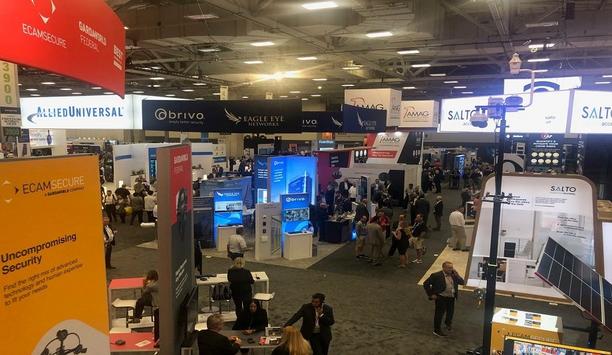
Companies at GSX 2023 emphasized new ways that technologies such as artificial intelligence (AI) and the cloud can address long-standing issues in the security market. Among the exhibitors at the event in Dallas were companies seeking creative ways to apply technology, lower costs, and make the world a safer place. Reflecting on the exhibition, here are some additional takeaways. Expanding AI at the edge i-PRO is a company reflecting the continued expansion of edge AI capability in the security market. Today, more than half of the company’s lineup supports AI at the edge so the customer has a wide choice of form factors when seeking to leverage the feature set. AI processing relay, extended warranty i-PRO is increasing their warranty period from 5 to 7 years, which could be a lifetime warranty in some cases I-PRO also has an “AI processing relay” device that accepts non-AI video streams and applies edge analytics. AI has progressed from a high-end technology to a feature available in a variety of cameras at different price points. i-PRO is also increasing its warranty period from 5 to 7 years, which could be a lifetime warranty in some cases depending on a customer’s refresh schedule and lifecycle management. Active Guard, MonitorCast The company’s video management system (Video Insight) is continuing to build new features including “Active Guard,” an integrated metadata sorter. Their access control platform, MonitorCast, is a Mercury-based solution that is tightly integrated with Video Insight. Their embedded recorders now have PoE built in. “We can move at a faster pace to fill out our product line since leaving Panasonic,” says Adam Lowenstein, Director of Product Management. “We can focus our business on adapting to the market.” Emphasis on retail and other verticals Shoplifting is a timely issue, and retail is a vertical market that got a lot of attention at GSX 2023. “We see a lot of retailers who are primarily interested in protecting employee safety, but also assets,” says Brandon Davito, Verkada’s SVP of Product and Operations. “Shrinkage is a CEO-level priority.” “Retailers are getting more engaged with security posture, instead of letting perpetrators walk,” Davito adds. Intrusion detection Verkada has an intrusion product that will notify a central station if there is an alarm On the alarm side, Verkada has an intrusion product that will notify a central station if there is an alarm, and operators can review videos to confirm the alarm. Other capabilities seeking to discourage trespassers include sirens, strobes, and “talkdown” capabilities. International expansion Verkada continues to expand internationally with 16 offices in all, including Sydney, Tokyo, and London. The core value proposition is to enable customers to manage their onsite infrastructure more simply, including new elements such as PTZ cameras, intercoms, and visitor management. Verkada emphasizes ease of use, including a mobile application to allow access to be managed across the user base. Forging partnerships “We are committed to the channel and industry, and we continue to build relationships and expand our reach,” says Davito. Among the industry relationships is a new partnership with Convergint, which was hinted at during the show and announced later the same day. They are also expanding their partnerships with Schlage, Allegion, and ASSA ABLOY. Working with other verticals They offer new features for K -12 schools, and a new alarm platform is easier to deploy and manage Verkada has also found success across multiple other verticals, notably healthcare, where they integrate with an electronic medical records system. They offer new features for K-12 schools, and a new alarm platform is easier to deploy and manage. They are integrating wireless locks to secure interior doors in schools, looking to secure the perimeter, and installing guest management systems. Transitioning the Mid-Market to the Cloud Salient is squarely focused on the “mid-market,” a large swath of systems somewhere between small businesses and enterprise-level systems. Pure cloud systems are not as attractive to this market, which has a built-out infrastructure of on-premise systems. Adding a camera to an existing system is easier and less expensive than tying it to the cloud. Benefits of cloud It’s a market that may not be ready for pure cloud, but there are benefits to be realized from adding a cloud element to existing systems. “We are continuing to augment our premise-based solutions with added cloud capabilities and flexibility,” says Sanjay Challa, Salient’s Chief Product Officer. The feedback Salient hears from their customers is “I want to own my data.” The hybrid cloud approach offers the right mix of control, flexibility, and unit economics. Cloud add-on capabilities We want to provide the flexibility for customers to go full-cloud as it becomes more economically attractive" Cloud add-on capabilities include bringing more intelligence about system operation to the user via the cloud. Over time, Salient expects to sell more cloud-centric offerings based on feedback from integrators and customers. “We want to provide the flexibility for customers to go full-cloud as it becomes more economically attractive over time,” says Challa. Vaidio AI technology Salient seeks to be a transition pioneer to help customers realize the path to the cloud. Their approach is “crawl, walk, run,” and helping customers make the transition at each stage. Salient has added AI to its product offering, incorporating Vaidio AI technology from IronYun into a powerful suite and broad array of on-premise analytics, which are gaining traction. The seamless approach makes it easy for customers to embrace AI analytics, although Salient remains broadly committed to open systems. Addressing ‘Soft’ Features for Integrators AMAG is in the process of enhancing its product line with the next generation of access control panels. However, “product” is just part of the new developments at AMAG. In addition to “hard” features (such as products), the company is looking to improve its “soft” features, too; that is, how they work with the integrator channel. Integrator channel Rebuilding a process to make your organization more efficient, is relatively easy; it just takes a lot of persistence" “We have the depth of our legacy customer base we can learn from, we just need to close the feedback loop quicker,” says Kyle Gordon, AMAG’s Executive Vice President of Global Sales, Marketing, and commercial Excellence, who acknowledges the value of reinstating face-to-face meetings after COVID. “We are laser-focused on nurturing our integrator channel,” he says. “Developing new features takes time, but rebuilding a process to make your organization more efficient, that’s relatively easy; it just takes a lot of persistence,” says Gordon. More cohesive internal communication is another useful tool, he says. Disrupting the cloud based on price Wasabi is working to make cloud applications less expensive by offering a “disruptive” price on cloud storage, $6.99 per terabyte per month (80% less than hyperscalers). Contending “hyperscalers” like AWS are charging too much for cloud storage, Wasabi is using its own intellectual property and server equipment co-located in data centers around the world. Wasabi sells “hot cloud storage,” which refers to the fact that they only have one tier of storage and data is always accessible. In contrast, a company such as AWS might charge an “egress fee” for access to data stored in a “colder” tier. Cloud storage “We saw that several video surveillance companies had not yet adopted cloud storage, and we saw an opportunity to make it easy to use,” said Drew Schlussel, Wasabi’s Senior Director of Product Marketing. “We just install a little bit of software that allows them to store data in the cloud and bring it back from the cloud.” Performance, protection (cybersecurity), and price Wasabi works with integrators, resellers, and distributors and also integrates with VMS companies Wasabi works with integrators, resellers, and distributors and also integrates with VMS companies such as Genetec and Milestone. Emphasizing performance, protection (cybersecurity), and price, their data centers are certified to SOC 2 and ISO 27001 standards. Faster throughput for weapons detection Xtract One is a young company focusing on weapons detection in a time of accelerated concern about gun issues post-COVID. Founded in Canada and based on technology developed at McMaster University, Xtract One has found a niche in providing weapons detection at stadiums and arenas. These customers already have budgets, and it is easy to shift the money to a newer, faster technology. Madison Square Garden in New York City is among its customers. Cost savings solution Xtract One can increase throughput to 30 to 50 people per entrance per minute (compared to 5 to 6 people per minute when using metal detectors). The solution doesn’t require anyone to empty their pockets and the system alarms on items beyond guns and knives. Using Xtract One allows customers to reduce the number of screening lanes and security staff, providing additional cost savings, all while getting fans through the screening process in half the time. Purpose-built sensors The system uses purpose-built sensors looking for specific characteristics, such as reflective and density properties In addition to stadiums and arenas, Xtract One, formerly Patriot One, is also getting “inbound” interest from schools, hospitals, manufacturers, and other verticals that makeup 50% of their business. “We’re on a rocket ride, mainly because the weapons issues are not going away,” says Peter Evans, CEO and Director at Xtract One. The system uses purpose-built sensors looking for specific characteristics, such as reflective and density properties, all correlated by an AI engine. Providing early warning of violence ZeroEyes is another company focused on weapons detection. Their AI gun detection system works with video images to identify if someone is “brandishing” (carrying) a weapon. In other words, the system does not detect concealed weapons. Identifying someone carrying a weapon provides early warning of a possible violent act. Increased response with AI-enables images Images are identified by AI and sent to a monitoring center where a human confirms the image before contacting first responders. Knowing the location of a shooter enables staff to lock entry points, move people to safety, and direct first responders. The company was founded to leverage existing camera views to stop mass shootings and gun violence by reducing response times.
A pioneer in the access control sector since 1971, AMAG Technology is looking to the future and the next generation of products that will expand its services to customers. “In our vision, we have advanced approaches that will not only provide our partners with advanced technologies but also ones that are easier to install with tools to expand their services,” says David Sullivan, who was appointed President of the venerable access control company in September 2022. New challenges at AMAG Sullivan brings a new outlook to the AMAG business, a part of Allied Universal, and a new vision to lead the company into the future. We caught up with David Sullivan to discuss his new challenges at AMAG and the journey ahead as the company looks to the future. Q: How does your background inform your approach to leading AMAG? I believe that it helps me to define a vision for AMAG that will be unique and on the leading edge of our industry David Sullivan: With the exception of only a few short years, my career has been in access control. I have experience with several systems and have had the privilege to manage several successful access control companies. As a result, I bring a great deal of experience into my role at AMAG. I believe that it helps me to define a vision for AMAG that will be unique and on the leading edge of our industry. Q: How would you describe AMAG’s journey over the last several years and how do you see the future? Sullivan: Prior presidents of AMAG always shared their leadership vision and direction with senior leaders located in the United Kingdom. This had an impact on the full direction of the business, sometimes limiting its ultimate success. Before I became a part of AMAG, these senior leaders that were located in the UK retired, placing for the first time the full management responsibilities of the president. This has allowed me to integrate the business into a single team, with single objectives, and a single vision. We expect to begin to reveal this new vision in the coming weeks. We are excited about the future of AMAG and believe we will surprise the industry with our new products and approach in the coming months and years. Q: How important is it that a manufacturer provides both hardware and software solutions? How does AMAG’s approach (in general) differentiate it in the market? We can design the complete solution, providing functionality that others may find more difficult to accomplish Sullivan: Regardless of the manufacturer, we all provide hardware and software. An access control solution is not complete without both. Some of us choose to make our panels, and others do not. Those who are dependent on third-party suppliers are restricted to the developments and direction of that company, and while it might be perceived to be an open technology, it still is proprietary to the hardware manufacturer. AMAG has controlled its manufacturing of panels from day one. The result means that we can design the complete solution, providing functionality that others may find more difficult to accomplish. Q: How does the breadth of AMAG’s product suite provide advantages to customers and/or integrators? Sullivan: AMAG’s product portfolio is unique and provides the end user with an end-to-end identity management solution from one company. Our Control Room PSIM, Symmetry CONNECT Identity Management Solution, Symmetry Access Control, and Symmetry GUEST solutions all integrate to provide the user with a broad set of features and capabilities from a single provider. There is no finger-pointing when we come to support your system. We hold full responsibility for making it work and can quickly provide a resolution to any application difficulties the user may be experiencing. Q: How does AMAG address the divide between on-prem and cloud systems? How do you help customers make the transition and/or plan for the future? We are in the early stages of developing our next generation of access control in which we intend to provide on-prem Sullivan: In our current product portfolio, we have three products that are cloud-based. Our mobile credential platform (Symmetry Mobile), our visitor management solution (Symmetry GUEST), and our physical identity and access management solution (Symmetry CONNECT) are all offerings that operate in the cloud. We are in the early stages of developing our next generation of access control in which we intend to provide on-prem, web client, and cloud-based offerings. One of the primary objectives is to ensure that the large installed base of systems that are out there today will be able to migrate not only to our next generation but as well to the cloud if the client so desires. Q: What is AMAG’s approach to mobile credentialing? Sullivan: As an access control provider, adding Symmetry Mobile credentialing to our portfolio just made sense. We want our customers to have a forward-thinking solution with the opportunity to save money not only on the physical badges but the cost of printing and distributing badges. Mobile credentials can be easily issued and revoked remotely, reducing administrative overhead, and eliminating the need for physical inventory management. Organizations can centrally configure what devices are used and the read range for each type of device and operating system, thus providing flexibility. Symmetry Mobile offers a customized questionnaire that controls access and reduces liabilities. Q: What has surprised you the most in your first year or so leading AMAG? Not many companies are blessed with such a broad portfolio that is supported by a resource-rich company Sullivan: I wouldn’t say I was surprised by this as much as happy to see, but I would say that the quality of our people was a pleasant surprise. As well, the AMAG product offering is broad and has some unique elements. When coupled with the depth of the resources that we have in AMAG, I know that we are second to none. Not many companies are blessed with such a broad portfolio that is supported by a resource-rich company that has so many talented people. Q: Please describe your dealer channel, and how you are seeking to expand it. Sullivan: The AMAG products are sophisticated and typically are installed for higher-end applications. With this sophistication comes a need to be well able to install such a solution. We have a strong group of certified and loyal partners who help us to deliver these enterprise solutions. We desire to provide our existing partners with updated and competitive systems to offer to their end users. Q: What is the security industry’s (and/or AMAG’s) biggest challenge in the next five years? We need to find ways to provide both our channel partners and the customers with solutions that are easily integrated Sullivan: I believe that the advancements that we are seeing in technology provide our industry with the opportunity to truly change how security is provided to our collective customers. As we advance these solutions, we will need to do so responsibly and in a way that helps the channel’s abilities. We need to find ways to train our partners to both install and support these more complex solutions. At the same time, we need to find ways to provide both our channel partners and the customers with solutions that are easily integrated, moving away from proprietary closed systems to open and cohesive solutions. This will ensure that the users get the best, and most complete solutions. Q: What does the industry as a whole misunderstand about AMAG -- time to set the record straight! Sullivan: Well, I am not ready to openly share where we are heading. We are in the process of putting together some advanced approaches to how we will do business with our partners. We are focused on providing tools that will enhance their services to their customers, and with products that are leading edge. I can only state that all should keep their eyes on AMAG, because over the next few years, we are going to surprise some people, and more importantly make our loyal partners quite powerful.
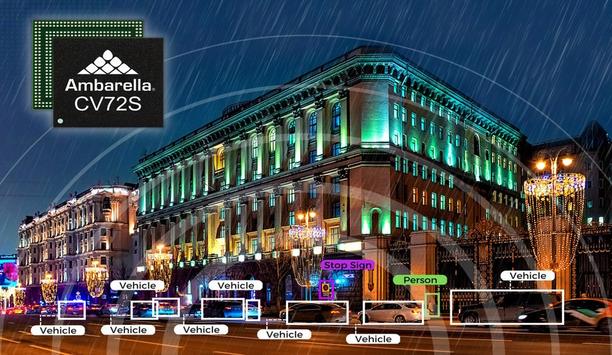
When it comes to security cameras, the end user always wants more—more resolution, more artificial intelligence (AI), and more sensors. However, the cameras themselves do not change much from generation to generation; that is, they have the same power budgets, form factors and price. To achieve “more,” the systems-on-chips (SoCs) inside the video cameras must pack more features and integrate systems that would have been separate components in the past. For an update on the latest capabilities of SoCs inside video cameras, we turned to Jérôme Gigot, Senior Director of Marketing for AIoT at Ambarella, a manufacturer of SOCs. AIoT refers to the artificial intelligence of things, the combination of AI and IoT. Author's quote “The AI performance on today’s cameras matches what was typically done on a server just a generation ago,” says Gigot. “And, doing AI on-camera provides the threefold benefits of being able to run algorithms on a higher-resolution input before the video is encoded and transferred to a server, with a faster response time, and with complete privacy.” Added features of the new SOC Ambarella expects the first cameras with the SoC to emerge on the market during early part of 2024 Ambarella’s latest System on Chip (SOC) is the CV72S, which provides 6× the AI performance of the previous generation and supports the newer transformer neural networks. Even with its extra features, the CV72S maintains the same power envelope as the previous-generation SoCs. The CV72S is now available, sampling is underway by camera manufacturers, and Ambarella expects the first cameras with the SoC to emerge on the market during the early part of 2024. Examples of the added features of the new SOC include image processing, video encoders, AI engines, de-warpers for fisheye lenses, general compute cores, along with functions such as processing multiple imagers on a single SoC, fusion among different types of sensors, and the list goes on. This article will summarize new AI capabilities based on information provided by Ambarella. AI inside the cameras Gigot says AI is by far the most in-demand feature of new security camera SoCs. Customers want to run the latest neural network architectures; run more of them in parallel to achieve more functions (e.g., identifying pedestrians while simultaneously flagging suspicious behavior); run them at higher resolutions in order to pick out objects that are farther away from the camera. And they want to do it all faster. Most AI tasks can be split between object detection, object recognition, segmentation and higher-level “scene understanding” types of functions, he says. The latest AI engines support transformer network architectures (versus currently used convolutional neural networks). With enough AI horsepower, all objects in a scene can be uniquely identified and classified with a set of attributes, tracked across time and space, and fed into higher-level AI algorithms that can detect and flag anomalies. However, everything depends on which scene is within the camera’s field of view. “It might be an easy task for a camera in an office corridor to track a person passing by every couple of minutes; while a ceiling camera in an airport might be looking at thousands of people, all constantly moving in different directions and carrying a wide variety of bags,” Gigot says. Changing the configuration of video systems Low-level AI number crunching would typically be done on camera (at the source of the data) Even with more computing capability inside the camera, central video servers still have their place in the overall AI deployment, as they can more easily aggregate and understand information across multiple cameras. Additionally, low-level AI number crunching would typically be done on camera (at the source of the data). However, the increasing performance capabilities of transformer neural network AI inside the camera will reduce the need for a central video server over time. Even so, a server could still be used for higher-level decisions and to provide a representation of the world; along with a user interface for the user to make sense of all the data. Overall, AI-enabled security cameras with transformer network-based functionality will greatly reduce the use of central servers in security systems. This trend will contribute to a reduction in the greenhouse gases produced by data centers. These server farms consume a lot of energy, due to their power-hungry GPU and CPU chips, and those server processors also need to be cooled using air conditioning that emits additional greenhouse gases. New capabilities of transformer neural networks New kinds of AI architectures are being deployed inside cameras. Newer SoCs can accommodate the latest transformer neural networks (NNs), which now outperform currently used convolutional NNs for many vision tasks. Transformer neural networks require more AI processing power to run, compared to most convolutional NNs. Transformers are great for natural language processing (NLP) as they have mechanisms to “make sense” of a seemingly random arrangement of words. Those same properties, when applied to video, make transformers very efficient at understanding the world in 3D. Transformer NNs require more AI processing power to run, compared to most convolutional NNs For example, imagine a multi-imager camera where an object needs to be tracked from one camera to the next. Transformer networks are also great at focusing their attention on specific parts of the scene—just as some words are more important than others in a sentence, some parts of a scene might be more significant from a security perspective. “I believe that we are currently just scratching the surface of what can be done with transformer networks in video security applications,” says Gigot. The first use cases are mainly for object detection and recognition. However, research in neural networks is focusing on these new transformer architectures and their applications. Expanded use cases for multi-image and fisheye cameras For multi-image cameras, again, the strategy is “less is more.” For example, if you need to build a multi-imager with four 4K sensors, then, in essence, you need to have four cameras in one. That means you need four imaging pipelines, four encoders, four AI engines, and four sets of CPUs to run the higher-level software and streaming. Of course, for cost, size, and power reasons, it would be extremely inefficient to have four SoCs to do all this processing. Therefore, the latest SoCs for security need to integrate four times the performance of the last generation’s single-imager 4K cameras, in order to process four sensors on a single SoC with all the associated AI algorithms. And they need to do this within a reasonable size and power budget. The challenge is very similar for fisheye cameras, where the SoC needs to be able to accept very high-resolution sensors (i.e., 12MP, 16MP, and higher), in order to be able to maintain high resolution after de-warping. Additionally, that same SoC must create all the virtual views needed to make one fisheye camera look like multiple physical cameras, and it has to do all of this while running the AI algorithms on every one of those virtual streams at high resolution. The power of ‘sensor fusion’ Sensor fusion is the ability to process multiple sensor types at the same time and correlate all that information Sensor fusion is the ability to process multiple sensor types at the same time (e.g., visual, radar, thermal, and time of flight) and correlate all that information. Performing sensor fusion provides an understanding of the world that is greater than the information that could be obtained from any one sensor type in isolation. In terms of chip design, this means that SoCs must be able to interface with, and natively process, inputs from multiple sensor types. Additionally, they must have the AI and CPU performance required to do either object-level fusion (i.e., matching the different objects identified through the different sensors), or even deep-level fusion. This deep fusion takes the raw data from each sensor and runs AI on that unprocessed data. The result is machine-level insights that are richer than those provided by systems that must first go through an intermediate object representation. In other words, deep fusion eliminates the information loss that comes from preprocessing each individual sensor’s data before fusing it with the data from other sensors, which is what happens in object-level fusion. Better image quality AI can be trained to dramatically improve the quality of images captured by camera sensors in low-light conditions, as well as high dynamic range (HDR) scenes with widely contrasting dark and light areas. Typical image sensors are very noisy at night, and AI algorithms can be trained to perform excellently at removing this noise to provide a clear color picture—even down to 0.1 lux or below. This is called neural network-based image signal processing, or AISP for short. AI can be trained to perform all these functions with much better results than traditional video methods Achieving high image quality under difficult lighting conditions is always a balance among removing noise, not introducing excessive motion blur, and recovering colors. AI can be trained to perform all these functions with much better results than traditional video processing methods can achieve. A key point for video security is that these types of AI algorithms do not “create” data, they just remove noise and clean up the signal. This process allows AI to provide clearer video, even in challenging lighting conditions. The results are better footage for the humans monitoring video security systems, as well as better input for the AI algorithms analyzing those systems, particularly at night and under high dynamic range conditions. A typical example would be a camera that needs to switch to night mode (black and white) when the environmental light falls below a certain lux level. By applying these specially trained AI algorithms, that same camera would be able to stay in color mode and at full frame rate--even at night. This has many advantages, including the ability to see much farther than a typical external illuminator would normally allow, and reduced power consumption. ‘Straight to cloud’ architecture For the cameras themselves, going to the cloud or to a video management system (VMS) might seem like it doesn’t matter, as this is all just streaming video. However, the reality is more complex; especially for cameras going directly to the cloud. When cameras stream to the cloud, there is usually a mix of local, on-camera storage and streaming, in order to save on bandwidth and cloud storage costs. To accomplish this hybrid approach, multiple video-encoding qualities/resolutions are being produced and sent to different places at the same time; and the camera’s AI algorithms are constantly running to optimize bitrates and orchestrate those different video streams. The ability to support all these different streams, in parallel, and to encode them at the lowest bitrate possible, is usually guided by AI algorithms that are constantly analyzing the video feeds. These are just some of the key components needed to accommodate this “straight to cloud” architecture. Keeping cybersecurity top-of-mind Ambarella’s SoCs always implement the latest security mechanisms, both hardware and software Ambarella’s SoCs always implement the latest security mechanisms, both in hardware and software. They accomplish this through a mix of well-known security features, such as ARM trust zones and encryption algorithms, and also by adding another layer of proprietary mechanisms with things like dynamic random access memory (DRAM) scrambling and key management policies. “We take these measures because cybersecurity is of utmost importance when you design an SoC targeted to go into millions of security cameras across the globe,” says Gigot. ‘Eyes of the world’ – and more brains Cameras are “the eyes of the world,” and visual sensors provide the largest portion of that information, by far, compared to other types of sensors. With AI, most security cameras now have a brain behind those eyes. As such, security cameras have the ability to morph from just a reactive and security-focused apparatus to a global sensing infrastructure that can do everything from regulating the AC in offices based on occupancy, to detecting forest fires before anyone sees them, to following weather and world events. AI is the essential ingredient for the innovation that is bringing all those new applications to life, and hopefully leading to a safer and better world.
Case studies

U.S. Bank Stadium in Minneapolis, Minnesota is a 66,200-person venue, hosting regular football games for the NFL and NCAA as well as baseball and soccer games, concerts, weddings, and many other events. Approximately 3,500 people make up the staff on a game day or during a major event. These concession workers, cleaning personnel, police, guest experience team, security officers and supervisors, operations managers and more are on site to deliver not only a safe and secure event, but also a memorable experience for all guests in the stadium. Access control systems While under construction, U.S. Bank Stadium managed their keys by using a complicated pencil-and-paper system that required key users to provide collateral against key removal; this proved to be both time-consuming and inefficient. When looking to upgrade their internal access control systems to provide the security and efficiency they required at such a large facility, U.S. Bank Stadium while working with Hoffman Security Solutions, chose Morse Watchmans’ KeyBank system for cost-effective, highly capable key management throughout their facility. Automated key control systems “There were a few different automated key control systems we looked at,” said Billy Langenstein, Director Event Services, U.S. Bank Stadium. “But when it came down to not only the financials, but also the capabilities, reporting and infrastructure that Morse Watchmans KeyBank has, I personally believe there’s nothing comparable on the market that amounts to how we wanted to use the system here at the stadium. This is the first time I’ve used this system in my career, and if I have the opportunity to open up another stadium, Morse Watchmans will be installed there as well.” In February 2016, Hoffman Security Solutions installed one KeyBank managing 120 key locations throughout U.S. Bank Stadium. In June 2017, they added 2 expansion cabinets to fill out the system, bringing their total managed key locations to 360. Maintaining business operations Each day, U.S. Bank Stadium has different staff working throughout the stadium to fulfill the varied roles needed for their many events. Contractors working on the facility itself, temporary staff, and other day-to-day workers all require access to different workspaces. By requiring that staff check out a key from the KeyBank system, U.S. Bank Stadium security staff are able to account for all the keys in the system, who removed each key, and what time they were checked out or returned through the KeyBank’s timestamp feature. At the end of each day, a report is delivered to security staff that displays this data in an easy-to-read manner, allowing staff to account for the many keys they use throughout the stadium during the day. With access control a strong component of U.S. Bank Stadium’s security, consistent reporting of key access is essential to maintaining business operations. Guest experience team U.S. Bank Stadium’s guest experience team, consisting of ushers, lobby hosts, ticket takers, scan ambassadors, and others, arrives early each morning and requires their own separate access. Through the KeyBank system, they are allowed to prepare for a game while simultaneously reporting that access to security staff. Each team member is given access to the keys they require, while ensuring safety throughout the stadium by keeping other keys restricted. This ease of use and reporting ability are what have made KeyBank an essential element of U.S. Bank Stadium’s access control and security systems. “We’re looking at installing another Morse Watchmans KeyBank here at the Stadium because we’re already outgrowing the one we have, and we want to start creating efficiencies within our own departments,” said Mr. Langenstein. “Having a Morse Watchmans KeyBank gives us a sense of security and a sense of convenience while providing the level of accountability that we want. It’s a fantastic product that we’re very proud to have here.”
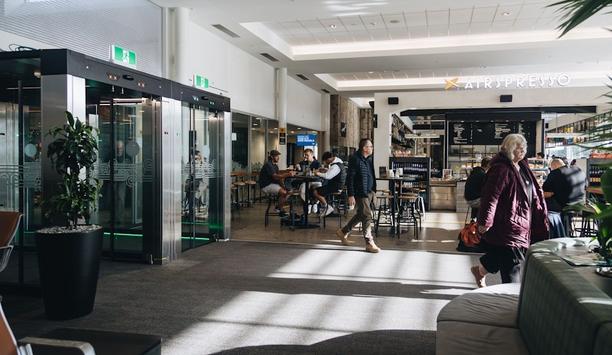
Gunnebo Entrance Control has partnered with Queenstown Airport (ZQN) and Custom Technology Systems Ltd to elevate the domestic departure experience, providing greater convenience and security for passengers. Queenstown Airport, a key gateway to New Zealand’s South Island and the country’s fourth-busiest airport, has evolved continuously since opening in 1935. Now serving more than 2.6 million passengers each year, it connects major domestic destinations and east coast Australia, driving ongoing improvements to passenger facilities and operational efficiency. Entrance control solution As part of a dedicated program to enhance the domestic departures journey, ZQN reworked existing café space. A glass wall was installed to relocate the café airside, integrating it with the gate lounge. This provided direct food and beverage access for passengers and created additional seating, all within the same footprint. To support the new layout, Custom Technology Systems Ltd and Gunnebo Entrance Control worked closely with the on-site teams to deliver a tailored entrance control solution that balanced security and passenger flow while accommodating spatial limitations. Adapting to unexpected challenges “The success of this project was achieved by working together, adapting to unexpected challenges, and staying focused on delivering a secure, seamless journey for every passenger,” said Chris Walker, Project Manager at Queenstown Airport. “Every challenge we encountered was met together. Whether it was refining the design, resolving compliance issues, or adapting to the space, we relied on each other’s strengths to get it right.” Gunnebo Entrance Control’s PasSec solution To optimize style, security and passenger movement, the team installed Gunnebo Entrance Control’s PasSec solution, a sleek one-way corridor system designed to prevent backflow while maintaining compliance with strict local and international aviation regulations. Brett Copeland, Managing Director at Custom Technology Systems Ltd, added: “For this works programme, there was a genuine sense of problem-solving together. It wasn’t about one party leading and others following but instead a collaborative process from initial design and specification through to project completion. We each brought ideas, worked through constraints and stayed focused on making the solution fit.” Challenges together to deliver smarter Clive Dillen, Regional Manager at Gunnebo Entrance Control, concluded: “We’re proud of what we achieved here, and the result reflects the true essence of coordination, discussion and trust. That’s what true partnership looks like and marks a major step forward in Queenstown Airport’s continued development." "It stands as a clear example of what can be accomplished when organizations work through challenges together to deliver smarter, more effective outcomes for passengers and operators.”

When major fire and security specialists Cornerstone were appointed to deliver the life safety systems for the refurbishment of 77 Grosvenor Street, they faced a unique challenge. Located in the heart of London’s Mayfair district, the prestigious building features classical architecture and over 50,000 square feet of premium open-plan office space spread across six floors. The goal was to upgrade the fire protection without compromising the building’s refined aesthetics. The client, a major property management company, required a solution that was robust, reliable and unobtrusive. Working closely with the design and construction teams, Cornerstone turned to Hochiki Europe, a long-standing partner known for dependable systems that blend seamlessly into high-end environments. Latitude fire detection and alarm control system At the core of the installation is the Latitude fire detection and alarm control system. Chosen for its powerful cause and effect programming, flexible networking and modular scalability, Latitude was well suited to the demands of a multi-level heritage building. Its ability to support complex configurations made it ideal for a site where multiple zones, floors and room functions needed to be managed with precision. To deliver complete protection across the site, Cornerstone selected a combination of Hochiki's Enhanced System Protocol (ESP) addressable devices and the FIRElink aspirating detection system. The FIRElink system is adaptable to a broad range of environments and applications. ESP detectors From small, to very large areas, the system is particularly useful in protecting computer rooms or data centers but can be designed to fit almost any environment. ESP detectors offer high performance with a minimal visual footprint, ideal for preserving the character of the restored interiors. In areas requiring an even more discreet solution, such as decorative ceilings or high airflow zones, FIRElink was installed using capillary sampling pipes hidden within the building’s structure. One of the key advantages of the Latitude platform is its ability to interface with wider building management systems (BMS). At Grosvenor Street, this opens the door to centralized monitoring and control of fire safety in conjunction with other building systems. Open integration Latitude’s open integration options mean it can share status updates and alarm events in real time with the BMS, enabling facilities teams to coordinate responses quickly and efficiently. For a high-spec office environment, this not only improves safety outcomes but also supports smoother day-to-day operation and building performance. Patrick Anthony, Project Manager at Cornerstone, explained the decision: “We have a trusted relationship with the Hochiki team. Their systems and devices are reliable, help reduce false alarms and are designed to aesthetically fade into the background, exactly what this project needed and delivers complete peace of mind for the management team.” The site at Grosvenor Street is now protected by a fully integrated, future proof life safety system that meets modern building safety standards while maintaining the building’s elegance.

As custodians of one of the world’s most important historical artefacts, Salisbury Cathedral required a highly specialized surveillance system to safeguard its copy of the Magna Carta – housed in a controlled low-light environment within the Chapter House. ARC Fire Safety & Security, a long-term partner of Dahua Technology and trusted security provider at Winchester, Chichester and St Albans Cathedrals, was appointed to take over the servicing of the fire and intruder alarms, as well as the existing surveillance systems at Salisbury Cathedral. During this transition, ARC were also tasked with reviewing and upgrading the surveillance around the Magna Carta. The Magna Carta is displayed in a specially designed dark room to prevent light damage. Strict visitor control measures are in place – only one person may enter at a time, and flash photography is strictly prohibited. The surveillance solution had to meet demanding requirements – most notably, that the camera must not face the document directly and must emit less than 10 LUX of light to protect the ancient parchment. Solution With the support of Oprema, ARC Fire Safety & Security specified a range of Dahua cameras that met the project’s unique constraints. Central to the installation was Dahua’s 5MP IR Fixed-focal Eyeball WizSense Network Camera (DH-IPC-HDW3541EM-S-S2), selected for its compact design, superior low-light performance and adaptability. To comply with conservation restrictions, the infrared (IR) lamp was disabled and cameras were configured to operate via motion detection only. When a visitor enters the exhibition area, a dim cabinet backlight is activated. This soft, indirect light is sufficient for the Dahua camera to generate high-resolution color footage without emitting harmful direct illumination. The full deployment of Dahua’s solutions included six strategically positioned cameras to cover the Magna Carta, Chapter House, and entrance areas without violating historical preservation protocols. Results The installation was delivered with precision and sensitivity to the historic environment. ARC Fire Safety & Security and Dahua were able to meet the Cathedral’s requirements entirely, protecting an 800-year-old document while integrating the solution into a larger Dahua-based network infrastructure that is already in place across the site. “The cameras specified met the client’s brief perfectly. Despite the strict requirements around light emission and camera positioning, Dahua’s technology offered a reliable, image-rich solution. This ensures that Salisbury Cathedral’s Magna Carta is protected – discreetly and effectively – from intentional damage or interference,” ARC Fire Safety & Security Ltd. With all engineers recently completing Dahua Level 1 certification, ARC Fire Safety & Security is well-positioned to expand this trusted partnership for future heritage projects. The success of this project was made possible by the ongoing dedication of Salisbury Cathedral’s staff, whose careful stewardship of the Magna Carta and commitment to its preservation ensure this national treasure remains protected for future generations. Thanks are also due to the Cathedral’s visitor team, whose efforts in guiding guests through this remarkable piece of history continue to enrich the experience for thousands each year.

i-PRO Co., Ltd. (formerly Panasonic Security), a pioneering manufacturer of edge computing cameras for security and public safety, announced the successful deployment of its advanced, AI-powered camera technology at a major UK aerospace manufacturing facility. The project, delivered in partnership with long-time integrator Richards CCTV, modernized the site’s aging security infrastructure, addressing stringent aviation industry compliance needs while enhancing safety, operational efficiency, and future scalability. Advanced functionality and analytics The customer, a prominent supplier within the global aerospace supply chain, operates in a high-risk environment The customer, a prominent supplier within the global aerospace supply chain, operates in a high-risk environment where precision engineering and rigorous safety standards are essential. Its legacy security system had grown increasingly unreliable, lacking the advanced functionality and analytics required for the complex security landscape. With high-value assets, civil aviation regulations, and extensive health-and-safety oversight requirements at play, the company sought a more intelligent, robust, and resilient security platform. i-PRO’s edge-AI camera technology To meet these demands, Richards CCTV designed and implemented a comprehensive upgrade based on i-PRO’s edge-AI camera technology. The installation included 169 high-performance cameras deployed across production lines, common areas, external perimeters, and critical zones. Key components Advanced camera technology i-PRO’s AI-powered search application that turns camera metadata into actionable intelligence i-PRO’s portfolio includes AI-enabled S-Series cameras that can distinguish people from objects in real time to reduce false alarms, high-speed PTZ cameras that extend perimeter awareness, and fixed domes that deliver clear evidence in shared spaces to help resolve incidents quickly. The cameras are integrated with Active Guard, i-PRO’s AI-powered search application that turns camera metadata into actionable intelligence, enabling operators to run real-time alerts and proactively manage incidents before they escalate. Remote monitoring and analytics enhance operational efficiency Real-time alerts and mobile integration allow managers to receive live notifications and make decisions remotely, reducing the need for constant on-site supervision. Meanwhile, embedded AI analytics enable quality-control teams to detect manufacturing anomalies earlier, increasing production integrity and minimizing downtime. “Our client was happy to lean on our long-standing experience working with i-PRO cameras and the local i-PRO team,” said Phil Luckman, Sales Account Manager at Richards CCTV. “Knowing that i-PRO is willing to properly engage with a customer, come on-site if required, and help demonstrate a proof-of-concept is invaluable.” System reliability and ease of integration Post-deployment, the aerospace plant has seen measurable improvements across several fronts From the outset, system reliability and ease of integration were key. Richards CCTV reported that all 169 devices were “quick to configure and install,” with minimal disruption to day-to-day operations. i-PRO’s durable design, five-year hardware warranties for certified partners, and responsive UK-based support team ensured a smooth, future-proof, deployment and instilled confidence in the long-term viability of the platform. Post-deployment, the aerospace manufacturer has seen measurable improvements across several fronts. The ability to analyze footage from multiple angles has helped refute false personal injury claims, while also identifying root causes of legitimate incidents, leading to meaningful updates in health-and-safety policies. The new system’s high-fidelity audit trails also support quality assurance and compliance documentation, delivering transparency for internal stakeholders and regulators alike. New use cases for i-PRO’s evolving AI capabilities Looking ahead, the installation offers scalability and future-proofing, enabling the end user to adapt the system to continuously evolving needs and industry standards. Planned expansions include securing additional tree-lined zones and increasing coverage in logistics corridors. The facility is also exploring new use cases for i-PRO’s evolving AI capabilities, including automated detection of PPE compliance and unsafe behaviors around heavy machinery. “The cameras provide excellent images in all lighting conditions—every single one performed out of the box,” added Luckman. “With their build quality and long warranties, we know the i-PRO system will deliver long-term value.”

Interface Systems, a pioneering managed service provider delivering business security, actionable insights, and purpose-built networks for multi-location businesses, announced the successful completion of a major security upgrade for Bethesda Community Church and Bethesda Christian School in Fort Worth, Texas. Serving more than 530 students from preschool through 12th grade, Bethesda Christian School is recognized among the top private schools in Texas. Modern safety and security systems High level of activity required modern safety and security systems to protect students Between church services, school operations, and community events, the multi-building, 26-acre campus welcomes hundreds of people daily. This high level of activity required modern safety and security systems to protect students, staff, and parishioners while simplifying daily operations. Bethesda’s aging fire alarms, intercoms, and CCTV system were increasingly unreliable, creating false alarms and communication challenges. To address these concerns, the church turned to Interface to modernize its infrastructure. Deployed an integrated solution Interface designed and deployed an integrated solution that included: Fire Alarm System: Replacing the outdated system with a modern fire alarm system that communicates urgency effectively without causing unnecessary panic, particularly important for schoolchildren. Managed Access Control: Introducing a modern system that makes it easier for administrators to manage entry to the campus. The cloud-based setup means they can grant or restrict access remotely, without having to manage complex on-site servers. Video Surveillance Upgrade: Installing a 64-channel IP camera system on the new school building, with expansion capability to replace legacy analog cameras over time. The system provides remote monitoring and allows staff to verify alarms with live video before responding, helping to reduce unnecessary dispatches. Intercom and Paging: Replacing the outdated intercom with a flexible IP-based system that supports school bell scheduling, room-to-room communication, and all-campus announcements. It also integrates with access control, giving administrators a simple way to manage visitor entry. Remote access to cameras and alarms The installation was carefully phased to minimize disruption to classes and worship services “The new system is effective. It gets the point across that it’s time to evacuate, but it doesn’t create panic, especially among the kids,” said Rick Campbell, Facilities Manager at Bethesda Community Church. “Having remote access to cameras and alarms has been a huge help.” The installation was carefully phased to minimize disruption to classes and worship services. “Interface worked around the kids and kept us up and running during installation,” Campbell added. “The integration was seamless, and now everything is running smoothly.” Interface’s upgrades With Interface’s upgrades, Bethesda has significantly reduced false dispatches, streamlined communication across the campus, and gained the ability to scale its systems for future growth. “Initially, we were unsure about the cost, but the investment has been well worth it,” Campbell concluded. “I’d recommend Interface to other churches without hesitation.”
Round table discussion
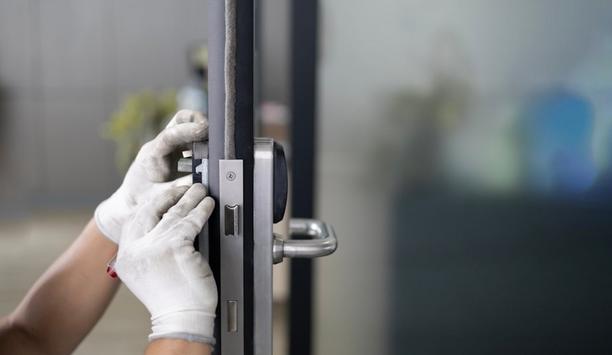
Installing physical security systems requires integrating diverse technologies (e.g., cameras, access control, alarms) that often use different protocols and must be adapted to a building's unique physical layout and legacy infrastructure. Specialized technical expertise is required for seamless networking and proper configuration. Hopefully, no important factors are overlooked in the installation process. We asked our Expert Panel Roundtable: What is the most overlooked factor when installing physical security systems?

In many cases, architectural design and layout dictate optimal placement of security devices like cameras, access control readers, and sensors. Poor design can lead to blind spots, reduced coverage, and ineffective surveillance. However, planning that involves all the various stakeholders can maximize both security and design elements. We asked this week’s Expert Panel Roundtable: When are building design and physical security systems complementary? When are they at odds?

While technology like cameras, alarms, and access control systems are crucial components, they are only as effective as the people who use and manage them and the systems that deploy them. When installing physical security systems, the focus should be on the holistic operation of the system rather than the functioning of individual components. However, in the end, overlooking critical factors can undermine the totality of system performance. We asked this week's Expert Panel Roundtable: What is the most overlooked factor when installing physical security systems?
Products




Videos
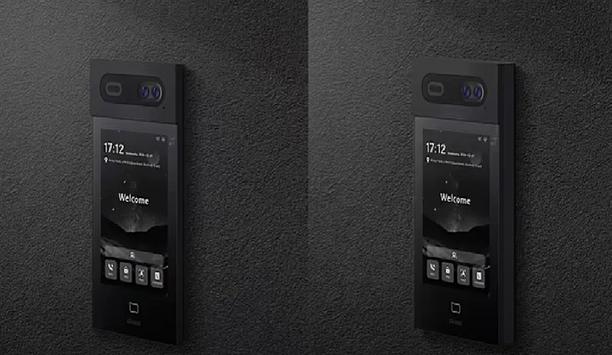


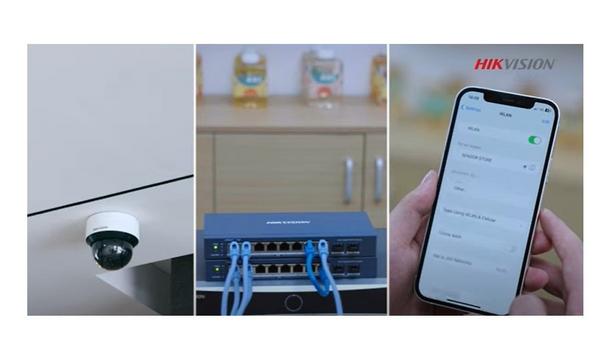
Security installation: Manufacturers & Suppliers
- Dedicated Micros Security installation
- VIVOTEK Security installation
- Panasonic Security installation
- UltraView Security installation
- Tamron Security installation
- Seagate Security installation
- Vicon Security installation
- Vanderbilt Security installation
- AV Costar Security installation
- Hanwha Vision Security installation
- Teleste Security installation
- Dahua Technology Security installation
- LTV Europe Security installation
- Sony Security installation
- Messoa Security installation
- Luxriot Security installation
- MOBOTIX Security installation
- Parabit Security installation
- Bosch Security installation
- Bolide Security installation