Artificial intelligence (AI)






News

GISEC Global 2026, the Middle East & Africa’s largest and most impactful cybersecurity event, concluded its 15th edition following three days of international collaboration, technology innovation and high-level dialog on the future of cyber resilience. Held for the first time at Dubai Exhibition Centre, Expo City Dubai, the 2026 edition welcomed thousands of visitors from more than 130 countries, alongside 750+ global cybersecurity brands and 350+ speakers. The international turnout brought governments, national cyber authorities, global CISOs, technology leaders, cybersecurity experts and emerging talent to Dubai, reinforcing GISEC Global’s role as an international meeting point for the cybersecurity community. National cyber authorities Under the theme ‘Cyber First: The New Digital Order’, GISEC Global examined how artificial intelligence, digital sovereignty, nation-state threats, critical infrastructure security and quantum technologies are reshaping national and enterprise cyber resilience. The inaugural Cyber First Leadership Summit brought ministers, national cyber authorities, global CISOs and technology leaders together to examine the geopolitical and economic implications of an increasingly contested digital environment. The program was complemented by the Global Leaders Series, including an invitation-only Global Leadership Roundtable bringing together H.E. Dr Mohamed Al Kuwaiti with senior cybersecurity leaders from Visa, Schneider Electric and Under Armor to examine AI sovereignty and the protection of the US$28 trillion digital economy. Building resilient digital economies Across three days, more than 350 speakers explored the implications of AI, digital sovereignty, operational resilience and quantum computing for cyber defense, while exhibitors, government partners and technology companies announced new partnerships and initiatives spanning threat intelligence, workforce development, secure AI adoption and national cyber resilience. H.E. Dr Mohamed Al Kuwaiti, Head of the UAE Cyber Security Council, said: “Cybersecurity challenges increasingly transcend borders, making international cooperation essential to building resilient digital economies. The participation of cybersecurity leaders and professionals from across more than 130 countries at GISEC Global reflects the importance of bringing the international community together to exchange knowledge, strengthen partnerships and develop coordinated responses to emerging threats. The UAE remains committed to advancing this dialogue and supporting a secure and trusted digital future.” Global cybersecurity business Trixie LohMirmand, Executive Vice President of inD and organiser of GISEC Global, said: “The attendance of international executives and cyber leaders at GISEC Global reaffirms the confidence in Dubai and the UAE as a global nexus of tech collaboration. Leaders from corporates, economies and governments from more than 130 nations came with renewed commitment and conviction, affirming this as the stage for global cybersecurity business and partnerships.” "That confidence carries real momentum, as Global Quantum X in partnership with the UAE Cyber Security Council joins GISEC Global in May 2027, bringing new quantum and cybersecurity dynamics to one stage. Before then, GITEX GLOBAL this December in Dubai converges the global tech ecosystem, closing an extraordinary year for innovation, investment and collaboration.” Security certification training Among the strategic partnerships announced at GISEC Global 2026, the UAE Cyber Security Council and Group-IB unveiled a collaboration spanning threat intelligence exchange, incident response and cybersecurity capacity building, alongside plans to establish a joint Innovation Center of Excellence in the UAE. GISEC Global also witnessed the launch of the second cohort of ‘She Protects’, the national cyber talent initiative led by Microsoft and CPX, a G42 company, with the support of the UAE Cyber Security Council. Building on the inaugural cohort, which graduated 50 women and helped more than 10 participants secure internships and full-time roles, the program will expand to welcome more than 150 university students and recent graduates from across the UAE. The initiative combines security certification training, threat education, immersive cyber simulations and career-readiness support to help build the next generation of cybersecurity talent. Discussions spanning sovereign AI As Lead Strategic Partner of GISEC Global 2026, Huawei showcased its approach to cybersecurity in the AI era through discussions spanning sovereign AI, security operations, cyber resilience and proactive defense. Huawei Cloud also launched its MaaS Security Whitepaper, outlining a shared-responsibility approach to secure large-scale enterprise AI adoption. As Official Government Cybersecurity Partner of GISEC Global, the Dubai Electronic Security Center (DESC) showcased a series of initiatives spanning government cyber capability, innovation and talent development. Strengthening deepfake detection capabilities The second edition of the Dubai Cyber Challenge Government Edition convened 30 teams from Dubai Government entities across web security, digital forensics, reverse engineering, cryptography and artificial intelligence. Digital Dubai secured first place, followed by the Federal Authority for Identity, Citizenship, Customs and Port Security – GDFRA Dubai in second, and the Roads and Transport Authority (RTA) in third, with AED 100,000 awarded to the top three teams. The School of Cyber Defense attracted more than 400 registrations from university students across the UAE, supporting aspiring cyber professionals with specialized skills and practical experience. In parallel, DESC unveiled SARAAB, the region’s first government-developed open-source AI model designed to detect deepfake videos, enabling researchers and developers to strengthen deepfake detection capabilities. The Centre also introduced the Dubai Cyber Skills Framework, establishing a unified reference for cybersecurity qualifications, certifications and career progression across the emirate. Quantum-secured communications GISEC Global 2026 also looked ahead to the next major shift in the global technology landscape with the announcement of Global Quantum X (GQX), a new event launching alongside GISEC Global in Dubai in 2027. Bringing together governments, researchers, technology companies and cybersecurity leaders, GQX will address quantum computing, quantum-secured communications and next-generation sensing, while its co-location with GISEC Global will put particular focus on post-quantum security, cryptographic transition, critical infrastructure protection and national quantum readiness. The launch builds on the quantum security discussions held at GISEC Global 2026 and extends the event’s focus from today’s cyber threats towards the technologies and security challenges expected to define the next decade. GISEC Global will return to Dubai Exhibition Centre, Expo City Dubai, from 4–6 May 2027.
DICE Corporation announces a new edge artificial intelligence platform that runs AI processing inside the customer's network and reports into Ceila.ai as a native component. The platform was previewed with corporate and national account clients at GSX 2026 in Atlanta this week. It is currently in trials with monitoring centers and enterprise accounts including Clear Watch, one of the industry's larger interactive virtual guarding services, with general availability planned for the first quarter of 2027. Most video monitoring deployments today rely on a round trip. The customer selects a third-party analytics provider, motion events are sent out to that provider for evaluation, and the result is forwarded into the monitoring platform. Separate vendor relationship The monitoring center becomes a destination for someone else’s decision, and the customer carries a separate vendor relationship, a separate bill, and a separate support path when something misses. DICE supports that model and will continue to, integrating whichever analytics provider a customer chooses. That already includes a wide range of edge and analytics platforms, such as OpenEye, Camect, and CloudEye. DICE remains camera-agnostic by design. The platform is built to the industry’s established protocols, including ONVIF, and where a device falls outside those standards it connects directly by RTSP, with events delivered into the center by SMTP. Rather than maintaining a fixed list of certified devices, DICE built to what the industry already runs on and kept a path open for everything else. DICE edge platform The DICE edge platform offers a second path. Processing happens on site, on DICE hardware, with results delivered directly into the same workflow that handles the alarm signal, the video, the audio, and the dispatch. There is no external analytics hop and no clip leaving the customer’s premises for evaluation elsewhere. Local processing also simplifies network configuration. Because the appliance operates inside the customer’s network and communicates outbound to DICE, cameras are reached across the LAN rather than through inbound access, which suits enterprise environments where IT policy restricts changes at the firewall. Custom detection projects The platform is built to carry the full DICE detection library on premise rather than a reduced subset. Beyond person and vehicle classification, the platform detects behaviours and interactions between objects, reads license plates, counts people and vehicle traffic, applies privacy masking to sensitive areas, processes thermal imaging, and performs safety and compliance review including personal protective equipment use and lifting technique. Detection models are developed by DICE and extended for individual customers, including custom detection projects built for Fortune 500 companies, national retailers, and municipal operations. Development has been driven by national retail chains and multi-site enterprise accounts DICE supports, where event volume and bandwidth cost make on-premise filtering essential. Over the past year DICE has seen a significant increase in monitoring centers and guarding operations migrating onto its platform, and the company has expanded its installation and onboarding capacity to meet a growing schedule of committed deployments. Co-pilot architecture Clear Watch runs its AI video detection on the DICE platform today and states publicly that it identifies more than three times the object types of any other provider. “In virtual guarding, our reputation is built on catching what matters and staying quiet about what doesn't. Three object classes never gave us the resolution to do that reliably,” said Glen Carter, President of Clear Watch. “Running DICE's full detection library on the edge means the call gets made on site, in real time — we're not dependent on a third party's turnaround to protect our clients.” Virtual guarding providers Ceila.ai extends its digital operator and co-pilot architecture to virtual guarding providers and enterprise GSOC teams. Because DICE manufactures its own PBX and softswitch, Ceila.ai evaluates live phone audio alongside live video in a single decision path, an integration DICE believes is unique in the industry. Dispatches are delivered through the DICE message broker, which is connected to more than 700 PSAPs and sends alarm dispatches directly into their CAD systems. “Everyone in this industry says they have AI. Most of them mean they have a connector to somebody who does,” said Cliff Dice, President, CEO, and Founder of DICE Corporation. “We built Ceila.ai with AI at the core of the event management platform rather than as a service we forward events to. If a customer wants to bring their own provider, we integrate it and we do that every day. But they should also be able to get it from the same company that handles their alarm, their video, their phone call, and their dispatch, with one throat to choke when something misses.” Global buildout of artificial intelligence The DICE platform runs entirely on Linux, on a runtime engine and virtualisation layer DICE developed itself, inside UL-listed hosting centers the company owns and operates. That architecture allows processing capacity to expand and contract automatically with load, which matters in an industry where event volume is uneven by hour, by season, and by incident. Development is performed by a United States based engineering team. The approach also gives DICE direct control over compute cost at a moment when the global buildout of artificial intelligence has made processing capacity significantly more expensive. In the round-trip model, a customer’s analytics cost is set by a third party and can be repriced at renewal. DICE provides the compute inside its own centers and prices it as part of the platform. GPU computing environment DICE has invested millions in the infrastructure behind the program, including its own GPU computing environment inside facilities it owns and operates, with the objective of keeping AI processing and the data governance around it under DICE’s control as the technology advances. The company has filed more than 20 patents tied to Ceila.ai, adding to a portfolio that includes patents for Video Arm/Disarm and Gatekeeper technology. DICE Corporation has been in business for 40 years and today supports approximately 3.5 million alarm subscribers and 6.5 million telecom subscribers, handling more than 10 million calls per month.

Godel Technologies (Godel) has announced a major strategic transformation of its business as it responds to the accelerating impact of artificial intelligence on the software engineering and technology services industry. The move represents one of the most significant changes in Godel’s history and will see the company evolve beyond the traditional software engineering services model on which it has built its business. AI-native approach Godel believes AI is fundamentally changing both how technology services are delivered and what businesses should expect from their technology partners. As a result, the company is repositioning around an AI-native approach designed to deliver greater speed, insight and measurable business outcomes for customers. The strategy will have a particular focus on the mid-market, where Godel believes AI has the potential to dramatically change the competitive landscape. Gareth Ainsworth, CEO of Godel Technologies, said; “AI isn’t simply another technology cycle. It is beginning to change the economics of our industry. For technology businesses like ours, there is a choice. We can use AI to make the traditional services model incrementally more efficient, or we can rethink what that model should look like altogether. We have chosen to rethink it. This is therefore much more than adding AI capabilities to our existing business. We are repositioning Godel around how we believe technology services will need to be delivered in an AI-native world.” Major enterprise technology programmes Godel believes the traditional relationship between the scale of a technology challenge and the people, time and cost required to solve it is beginning to break down. Historically, tackling complex technology and data problems has often required large teams, lengthy discovery programmes and significant investment. AI has the potential to radically compress that model. For Godel, this creates an opportunity to bring levels of insight, speed and capability previously associated with major enterprise technology programmes to a much broader section of the market. Ainsworth continued; “The mid-market is where this becomes particularly interesting. Many ambitious businesses face exactly the same technology and data challenges as much larger organizations, but they don’t necessarily have access to the same budgets, teams or resources. AI has the potential to change that equation. It can give these businesses access to levels of capability that historically would have required enormous investment. That is the opportunity we are building Godel around.” Traditional delivery models The new strategy also reflects Godel’s belief that the competitive advantage created by AI will not be evenly distributed. Companies able to understand, adopt and apply AI effectively will increasingly be able to move faster than larger competitors constrained by legacy technology, organizational complexity and traditional delivery models. This forms part of what Godel describes as a “fast eats slow” philosophy: the idea that the next generation of market leaders will be defined less by their size than by their ability to adapt and execute. Measurable business outcomes Godel’s approach will be built around three principles: working with businesses to adopt AI rather than imposing technology upon them; providing transparency rather than creating new technological black boxes; and focusing on measurable business outcomes rather than technology for technology’s sake. Its established engineering expertise will remain central to the business but will increasingly be applied through this new AI-native model. Ainsworth concluded: “We aren’t walking away from engineering. Quite the opposite. We are asking what world-class engineering looks like when AI becomes fundamental to how technology is understood, built and improved. We believe the answer will look very different from the traditional model.” “The businesses that recognize that early have an extraordinary opportunity. In the next technology cycle, being bigger won’t necessarily make you faster. And when technology is moving at this speed, fast eats slow.” Godel will reveal further details of its new proposition later this year.

Robox AI announced the Robox AI Video Intelligence Platform, a configurable AI-powered platform that transforms compatible existing camera infrastructure into real-time actionable intelligence for loss prevention, safety, security, compliance and business operations. Centralized intelligence layer Instead of requiring organizations to replace their existing camera infrastructure or deploy multiple single-purpose analytics products, Robox AI provides a centralized intelligence layer that supports multiple use cases across one location or an enterprise with many locations. Built on a flexible edge-cloud architecture that connects with compatible existing IP camera environments, Robox AI combines AI technology with real-world security, loss-prevention, and operational experience. Robox AI’s on-site edge processing supports low-latency AI analysis, while its centralized software provides configuration, alert management, evidence, reporting, and analytics across multiple locations. Enhancing video intelligence Robox AI believes effective video intelligence requires more than producing an alert. Organizations also need to determine who receives the information, what action should follow, how the event is documented, whether the issue was resolved, and what can be learned from the accumulated data. The Robox AI Video Intelligence Platform analyzes configured video streams, identifies events based on defined criteria, delivers relevant alerts and supporting event evidence to authorized personnel based on customer-defined rules, and connects those events to response, resolution, reporting, and analytics. Advances with the organization Robox AI goes beyond what a system detects on the day it is installed. As retail crime, criminal behavior, safety concerns, operational priorities, and customer requirements change, Robox AI works with customers to evaluate emerging problems, refine existing detection models and, where appropriate, develop or integrate additional capabilities, optimize workflows, and measure results through an AI intelligence platform that advances alongside the organizations using it. This continuous-improvement model is intended to reduce the risk of organizations becoming locked into a static set of capabilities while their operating environment continues to change. “We believe an AI platform should evolve, not be installed and then stand still while the problems around the customer continue to change,” said David Solomon, CEO of Robox AI. “Retail crime evolves. Safety risks evolve. Operational challenges evolve. Our responsibility should not end when the technology is deployed." “Robox AI is built around an ongoing relationship with the customer. We work to understand the problem, configure the intelligence around that environment, refine the models, measure the results, and evaluate new detection capabilities as needs change. The goal is not simply to give an organization the AI it needs today. It is to provide an intelligence platform that can continue advancing with its business,” Solomon concluded. Connects video with business data Robox AI integrates video intelligence with transaction and other business-system data. For retail and grocery environments, POS integration can add context for use cases such as sweethearting, scan anomalies, voids, refunds, and other transaction-related events. Combining visual intelligence with relevant business data can provide additional context, improve event confidence, and help organizations better understand what is occurring within the operation. Robox AI is designed around a broader operational workflow. When a configured event is identified, authorized personnel receive relevant alerts and event evidence based on customer-defined rules. The platform can then support the process beyond the initial detection through incident review, escalation, response documentation, resolution, reporting, historical analysis, and management accountability. This allows organizations to move beyond using video simply to determine what happened after an incident. Instead, video can become a proactive source of operational intelligence. Robox AI markets and use cases Robox AI can be configured to support a range of use cases depending on the customer’s environment, camera coverage, available data, operational priorities, and deployment requirements, including: Retail and Grocery: Shoplifting and concealment, cart push-outs, employee theft and sweethearting, self-checkout and transaction anomalies, loitering, crowd activity, fights and confrontations, queue conditions, out-of-stock conditions, unauthorized access, propped doors, slip-and-fall events, visible weapons, smoke or fire indicators, license plate recognition, and additional customer-specific operational events. Restaurants and Quick-Service Operations: Queue and occupancy conditions, loitering, fights and confrontations, visible weapons, unauthorized access, propped doors, slip-and-fall events, PPE compliance, smoke or fire indicators, and selected operational-process deviations. Warehouses, Distribution Centers, and Manufacturing: PPE compliance, restricted-area activity, worker-down or fall events, forklift and vehicle-related safety conditions, propped doors, crowd conditions, asset or material removal, smoke or fire indicators, and selected operational-process deviations. Schools and Other Public Environments: Visible weapons, fights and aggressive behavior, loitering, crowd activity, unauthorized access, perimeter events, smoke or fire indicators and license plate recognition, subject to applicable policies, laws and deployment requirements. Additional detections and integrations are evaluated based on customer requirements, camera placement, operating environment, data availability, and agreed deployment scope. Configurable rather than one-size-fits-all Robox AI customers select and prioritize capabilities based on individual locations, risks, policies, and operating objectives. A typical deployment may include: An edge AI appliance connected to compatible camera streams. Configured AI detection models. Real-time event alerts. Mobile and management access. Event clips and supporting evidence. Dashboards and analytics. Incident history and reporting. Customer-defined notification and escalation workflows. POS or other authorized data integrations. Multi-location management. Deployment and technical support. Ongoing model refinement. Evaluation of new customer-specific detections and capabilities. Availability The Robox AI Video Intelligence Platform is now available for customer evaluations, proof-of-value deployments, and commercial deployment. Organizations interested in evaluating the platform work with Robox AI to assess existing camera infrastructure, identify priority use cases, define detection and response requirements, establish measurable objectives, and develop an appropriate deployment architecture.
Expert commentary

Across many sectors, AI is transitioning from an experimental process to a trusted tool, but how will construction - and architectural ironmongery specifically - balance this technological opportunity with traditional practice? Artificial intelligence was once considered the trend of tomorrow, but it’s now here, and already it’s impacting the design, specification and management of the built environment. Following a period of refined development, the technology is emerging as a valuable tool for architectural professionals, with its growing role signifying far more than a passing industry trend. Passing industry trend According to the Royal Institute of British Architects’ (RIBA) Artificial Intelligence Report 2025, 59% of architectural practices now use AI on at least some projects, an increase from 41% in 2024. Furthermore, a global survey led by the Royal Institution of Chartered Surveyors in 2025 found that 56% of investors planned to increase AI investment, suggesting that the rate of adoption will continue to accelerate over the coming years. However, whilst innovation typically creates opportunity, there are challenges to address These findings represent a cultural shift, one where AI is firmly embedding itself into workflows and influencing the decision making process. However, whilst innovation typically creates opportunity, there are challenges to address. As more professionals equip themselves with an arsenal of AI-driven tools, are we in danger of becoming overly reliant on technology? Or are those reluctant to adapt likely to be left behind? Daniel May, Director at Consort Architectural Hardware, shares insight: Repetitive administration tasks “The development of the built environment has always relied on technical precision. Specifications naturally contain large volumes of product information and technical data, with professionals managing document-heavy tasks in the form of specification writing, door scheduling and BIM coordination in order to meet project requirements and compliance obligations. All of this data must be analyzed and processed accurately - often in line with demanding timescales - and it is here where AI can offer the greatest value.” “Where time was once consumed by repetitive administration tasks and information processing, professionals are now embracing AI as a means of working more efficiently. For architectural ironmongery specifically, where specification accuracy is critical, AI has the potential to support architects and specification professionals as they navigate the product selection process. As a tool, AI can streamline documentation by rapidly processing performance data and certification requirements, whilst also identifying inconsistencies and absent compliance information within schedules.” Complex project requirements “AI systems are helping professionals navigate increasingly complex project requirements quickly, accurately and consistently. As machine learning and autonomous models continue to advance, these tools may further reduce the administrative burden associated with architectural work models whilst improving accuracy and minimizing the risk of human error in the process. With that said, the effectiveness of AI software is very much reliant on the quality of the information it receives.” “With the sector so deeply tied to fire safety, accessibility, security and regulatory standards, the caution around adopting AI as common practice is of course justified. Historically, much of the construction industry has been measured in its adoption of new technology, partly due to the critical nature of compliance and the significant consequences of error. Though, AI feels somewhat different because of its pace and potential, and as such, organizations must be measured in their approach to it, ensuring that professional knowledge remains central to delivering safe, efficient and compliant building projects.” The human element As industry standards and the legislation surrounding the built environment continues to evolve, so too will the methods used to achieve high level design and compliance. Seemingly, AI looks set to have an increasingly prominent role, but it should be viewed as a collaborative partner capable of enhancing professional expertise as opposed to a system that can, or should, do it all. Daniel continues: “At this stage, AI alone simply can’t understand the nuances of individual projects and that has implications for both design and compliance. This is particularly relevant in the post-Grenfell regulatory landscape, where accountability, traceability and evidence-based decision-making have become fundamental to product specification and delivery.” Building greater trust “Although AI can assist with information processing, the technology is not ultimately responsible for the decisions being made. Accountability has rightly become a major focus point in construction, and as AI continues to disrupt practices, the industry must ensure that responsibility remains clearly defined. AI-driven errors could lead to serious penalties in relation to compliance, safety and project delivery, proving human expertise remains critical.” “Moving forward, greater transparency within AI systems will be key. If professionals are able to understand how or why AI recommendations have been generated, they can assess them with confidence, building greater trust in the technology.” Architectural design solutions “When it comes to architectural design, the emotional intelligence, contextual understanding and creative balance offered by a team of professionals far outweighs the speed that AI can offer. Already, AI is being used to support visualization and concept development for multi-layered projects in hospitality, healthcare and commercial environments to name a few, helping teams to explore ideas and communicate concepts at a quicker rate.” “However, can AI effectively develop architectural design solutions based on the bespoke requirements of a project, the operational needs of its users or even the general character of the building? Most would argue that it’s not conceivable, because AI lacks the lived experience and contextual understanding that comes from being present in the project itself.” Architectural ironmongery products “For architectural ironmongery products, professionals must regularly assess how products will function in real environments. Human intuition is impossible to replace and those informed design decisions, made by human professionals, will always be essential. Whilst some question whether AI could one day plan and deliver a project from concept to completion, perhaps the more important question should be whether future generations of professionals could lose the critical design and specification skills that are needed, should the industry become too dependent on AI.” “There is a growing sense of inevitability surrounding AI’s influence on architectural ironmongery and the wider built environment. As the industry continues to embrace this new wave of technological development, it is important to remember that innovation must complement the knowledge, judgement and accountability of the professionals who create safe and functional buildings, not replace it.”

In the modern world of intelligent security, AI cameras and processing units (often called "AI boxes" or "AI servers") are transforming surveillance. They can detect specific behaviors — like someone entering a restricted area, loitering, or a vehicle parking illegally — and send immediate alerts. This represents a significant leap from older systems that merely recorded video for later review. However, a common challenge arises when organizations use devices from multiple manufacturers. Each brand often comes with its own proprietary software, creating a fragmented ecosystem. Unified Video Management Software (VMS) platform Security personnel might need to switch between several different programs to monitor all their cameras. Furthermore, critical evidence — such as video clips triggered by an alarm — is typically stored locally on each device. If that device's storage fills up, new footage can overwrite the old, potentially erasing vital evidence before anyone has a chance to review it. Security personnel might need to switch between several different programs to monitor all their cameras This is where a Unified Video Management Software (VMS) platform becomes indispensable. Acting as a central nervous system, it integrates disparate devices into a cohesive operational framework. Solutions like SVMSPro exemplify this approach, seamlessly merging feeds from diverse AI hardware into a single, intuitive interface. Using SVMSPro as a case study, we can outline the core capabilities of a modern unified AI management platform: Simplified Multi-Brand Management Eliminate the complexity of managing multiple software applications. A unified platform provides a single dashboard to view, control, and manage all AI devices — regardless of manufacturer. This consolidation dramatically streamlines daily operations, reduces training overhead, and provides a holistic view of the entire security infrastructure. Unifying AI surveillance application. Centralized & Secure Evidence Storage Relying on the limited local storage of edge devices is a liability. Critical evidence from alarms is vulnerable to being overwritten and lost. SVMSPro solves this at the source. The moment any connected AI device detects an event — whether it’s intrusion, loitering, or object removal — SVMSPro receives the alert in real time and immediately triggers intelligent actions: Start high-quality alarm-triggered recording, Capture detailed snapshots, Activate PTZ tracking to track the subject automatically, And securely store everything on the centralized SVMSPro platform — not on fragmented front-end devices. This ensures evidence is permanently preserved and readily accessible. Users can swiftly search, review, and retrieve any alarm-related video or image via the web client or desktop application — anytime, anywhere. Illegal parking snapshot. Organized access & smart alerting Effective security is a team effort with tiered responsibilities. A unified platform enables precise, role-based access control. With SVMSPro, administrators can define user roles, create custom accounts, and assign specific video channels — even from different brands — to each operator. A guard may only access parking lot feeds, while a manager receives alerts for perimeter breaches. This granular control enhances operational efficiency, safeguards data privacy, and ensures team focus. Furthermore, real-time alerts can be pushed to mobile apps, guaranteeing immediate notification for the relevant personnel. User management. Integrated data analysis By aggregating data across all connected devices, a unified platform unlocks powerful analytics. It transforms scattered data points into actionable intelligence, generating comprehensive reports on event trends — from peak intrusion times in retail to occupancy heatmaps in large facilities. For instance, by ingesting people-counting data from AI cameras, SVMSPro can produce detailed daily, weekly, monthly, and annual traffic flow reports, supporting informed business and operational decisions. People flow statistics. Conclusion: From fragmented data to cohesive insight A unified management platform is the critical backbone for any multi-brand AI security deployment. It transforms a collection of isolated smart devices into a synchronized, intelligent network. The practical applications are vast: Retail: Combines loss prevention with customer behavior analytics. Transportation Hubs: Manages vehicle flow and enhances passenger safety. Manufacturing: Monitors compliance in restricted hazardous areas. Smart Cities: Correlates events across districts to provide a unified operational picture for public safety. By centralizing control, securing evidence, and delivering intelligent, role-specific alerts, platforms like SVMSPro empower organizations to evolve from simply observing events to understanding and acting upon them with unprecedented speed and clarity.

Artificial intelligence (AI) creates efficiencies throughout various industries, from managing teams to operating businesses. Key outcomes include faster investigations, fewer false alerts, automated operational checks, and quicker support experiences. These advancements free up valuable time for users, allowing them to focus on high-impact priorities that drive greater ROI. When it comes to surveillance, AI is most visibly powering a new generation of vision language-powered video analytics, a technology that has adapted systems meant solely for security into solutions capable of identifying actionable insights and streamlining workflows. Fast-moving AI landscape When choosing a surveillance system powered by AI, it’s vital to select an open platform. To stay ahead in the fast-moving AI landscape, it’s more important than ever for businesses to choose an open platform that empowers them to adapt and innovate. In contrast to closed systems, an open platform enables flexible integration with existing security and business systems. This offers businesses a greater return on their initial security investment while still providing an adaptable model built for the innovations of tomorrow. Below, we’ll look at the benefits provided by an open system in the age of AI, and how it can give you the strongest foundation to meet your goals. Supercharge Your Existing System An open platform also gives businesses the flexibility to scale security systems and add devices as needs evolve Having to invest in entirely new security infrastructure while simultaneously deploying AI technology presents a variety of problems and risks for businesses. Your team will have to manage both rollouts for your teams at the same time, driving up higher costs and more issues with training. By selecting an open platform, businesses can apply their newfound AI capabilities to existing cameras that weren’t built with analytics originally. Instead of having to completely replace your entire system, which can involve multiple weeks, months, or years of ripping out cabling and video security infrastructure, businesses can leverage analytics on the server itself to save valuable time while reducing deployment costs. This gives cameras a new lifespan by unlocking all the advantages video analytics brings, including basics like person and vehicle detection and line crossing analytics, to provide additional power to system alerts and visual search capabilities. An open platform also gives businesses the flexibility to scale security systems and add devices as needs evolve. This approach enables organizations to upgrade at a more optimal pace, bringing in new devices when it best fits the budget and operational priorities. Choose the Solution That Works Best for You With an open platform, businesses have the ability to find and select the AI solutions that work best for them. This gives organizations greater flexibility when implementing a video analytics solution. AI-enabled devices can be added in the timeframe that works best for your business or according to your needs. For example, if a business needs a camera with edge-based slip-and-fall analytics for just one area of their facilities, an open platform enables integration with the best solution for that specific need without having to replace the entire system. This approach ensures you get maximum value from your investment while gaining the targeted benefits of video analytics. They can also bring onboard several analytic-enabled cameras while keeping the majority of their existing system, test different analytics offerings, or slowly phase out their old system. This is all possible thanks to the open platform which gives businesses the freedom of choice to find the best solutions for their business needs. Stay Ready for What’s Next AI is a refined, intelligent technological triumph, and today is the lower level of skill it will ever produce Finally, an open platform is inherently ready for future innovations, allowing businesses to stay ready for what’s next. AI is an advanced, intelligent technological achievement, and today is the lowest level of performance it will ever produce. The system investment you make today will need to be capable of taking advantage of the unknown but, undoubtedly, compelling features in five years' time. As new technologies continue to emerge, businesses can expand their ecosystem through an open platform, allowing them to integrate the applications that matter most to their business without being constrained by a single proprietary solution. This reduces the risk businesses may feel by committing to a single platform. Instead, they can leverage existing technology, including hardware, lowering the overall cost up front and providing an opportunity to adopt and integrate future solutions down the road. This also helps keep your surveillance current and up to date while mitigating timeline issues with the rollout of new AI features and helping you get the most out of your investment. It also provides a way to test new solutions and continue optimizing your system for your business. Combining AI and an Open Platform The open video platform is one of the best ways to ensure your business is getting the most out of the exciting advancements in AI. With as many data points as there are provided by a modern security system, having a way to bring that information together in an integrated place is key. Thanks to AI, that information can be parsed more efficiently for proactive insights into potential optimizations and visibility during critical events. When finding the right video surveillance system for your business, be sure to select one that is not only AI-capable but also open. This will provide your organization with all of the benefits discussed above, including: Integrated Solutions: Thanks to the open platform, your business can still leverage existing hardware while using advanced video analytics on the recorder itself. Freedom of Choice: There’s no need to choose one system when it isn’t the best fit for your company. The open platform offers freedom of choice to leverage the best AI-powered technologies for your work. Futureproofed: As new innovations arise, you’ll be able to quickly integrate these cutting-edge technologies into your existing system without having to continually reinvent your system architecture.
Security beat

Deploying artificial intelligence (AI) tools should be seen as a business initiative rather than a technology initiative, says Martin Soukup, CTO of Solink, a cloud-based video security and data intelligence platform. The approach makes a difference that plays out in practical terms. A technology initiative is tactical and solution-oriented, often solving an isolated problem within a single department's silo. In other words, it might solve just a security problem. In contrast, a business initiative is cross-disciplinary, driven by executive leadership to impact the entire organization in a measurable way. “Viewing AI tools as a business initiative ensures they adapt to multiple departmental needs and drive high-level strategic growth rather than just fixing a localised technical issue,” says Soukup. AI platform combines video and business systems Demonstrating the value of embracing AI as a business initiative is Solink’s new video intelligence platform Demonstrating the value of embracing AI as a business initiative is Solink’s new video intelligence platform that combines video with business systems to detect threats and send real-time alerts. The capabilities are designed to help security teams operate smarter and more efficiently, supporting the next generation of lean, intelligence-driven security operations centers (SOCs). And benefits of the platform extend beyond security to include other parts of the business. “At the end of the day, video cameras only tell part of the story, much like looking at a 2D shape,” says Soukup. “They capture dimensions and colors, but only from a single perspective, even with powerful AI analysis providing traffic metrics, wait times, product interaction, and compliance logs. The addition of operational data, such as inventory, shipping, labor, and sales data, fills out that shape into 3D, adding critical context.” For example, while a camera simply shows three people standing in a line, and AI data flags that those individuals have been waiting for over five minutes, operational data lets you know also that a cashier has not checked into their shift yet. Combining these data streams gives businesses full situational awareness, turning passive observation into immediate, contextual intervention. AI agents handle repetitive tasks The Solink platform uses AI Agents, which are software that operates autonomously to handle manual, repetitive, or high-volume tasks based on specific instructions and tools. For Solink users, AI Agents unify their existing camera and data source investments into a single automated workflow. “AI Agents transform Solink from a security tool into an operational investment that benefits all departments,” says Soukup. “Modern operational leaders are turning to AI to scale productivity without increasing overhead.” Integrating business intelligence Operations checks compliance, loss prevention investigates theft, and security assesses threats Customers already use Solink to centralize video, integrate business intelligence, and trigger real-world responses like real-world alerts, two-way communication, or smart locks. AI Agents tie these pieces together, analyze the data and identify what matters most, and then take action either without human intervention or with humans in the loop. Businesses currently watch video manually across separate workflows. Operations checks compliance, loss prevention investigates theft, and security assesses threats. However, a human must always watch the footage to get results. Solink AI Agents automate this entire workflow. If an operational event can be seen on camera and matters to the business, a Solink Agent can be integrated to automatically review, assess, and trigger the next step in the workflow across hundreds or thousands of locations simultaneously. Calling all stakeholders to the discussion When discussing applications, stakeholders should include revenue and marketing officers, compliance officers, and line-of-business executives. Agents leverage existing infrastructure by adding an intelligent automation layer that drives efficiency and grows revenue across the entire organization without large capital investment. Solink AI Agents will not replace employees; they empower lean teams to maximize their existing resources. Job descriptions will shift toward human-in-the-loop workflows where humans and machines collaborate. The AI Agent handles the high volume, filtering out noise and processing data at scale. Human employees set up and guide the Agents, give feedback to improve performance over time, and step in to make final decisions, managing the nuanced situations that require critical thinking, empathy, and deep context. Passive data visualization In contrast, a Solink AI Agent is deployed with a clear mandate for a specific task, deliverable, or outcome Given the convergence of physical and digital security, AI Agents, not dashboards, are the right unit of enterprise AI deployment. Dashboards typically aggregate data without evaluating the context or importance of the source. Data looks identical whether it comes from 10 sources or 100. In contrast, a Solink AI Agent is deployed with a clear mandate for a specific task, deliverable, or outcome. This approach shifts the focus from passive data visualization to active intent, creating a direct path of accountability and clear attribution for business results. With dashboards, everyone can see the problem, but nobody owns it. An agent with a mandate either did the job or it did not, and you can audit exactly what it saw and why it acted or did not. Overcoming obstacles to deploy AI agents The primary obstacles to integrating AI Agents into the physical security workflow are change management, building trust, and system interoperability. Physical security requires absolute reliability, which demands rigorous initial configuration to establish trust. Furthermore, Agents are only as effective as the data they can access. Overcoming these hurdles requires comprehensive team training, shifting organizational mindsets, and ensuring seamless integration with existing tools so the Agents have the full context needed to execute tasks accurately and integrate with human workflows seamlessly. Addressing common security challenges Several use cases are driving the deployment of AI Agents among Solink's customers Several use cases are driving the deployment of AI Agents among Solink's customers. Overnight guarding, loss prevention, and store readiness will be the first wave of use cases. These are proven, high-frequency scenarios in which Solink provides pre-built template Agents to address common security challenges out of the box. The second wave of use cases will include highly customisable occupancy tracking, health and safety, and food quality. Pre-built template Agents are coming for these next. In addition, custom, niche operational use cases can be tailored to a specific business environment. Just like hiring a specialized contractor, companies can deploy custom Agents to tackle unique operational challenges rapidly across all locations. Measuring the effectiveness of AI agents The effectiveness of AI Agents can be measured by multiple factors. Core Accuracy, and consistency and accuracy of detections and automated outputs. Business Outcomes delivered, such as reduced inventory loss, reduced fraud, and faster incident resolution. Financial Impact, measured through recovered budget, reduced operational overhead, and increased per-store conversion. There is a perception that AI Agents possess predictive or flawless capabilities, like stopping crime before it happens or operating perfectly in dark, chaotic environments. Not true, says Soukup. AI cannot understand ambiguous requests like "look for suspicious activity." Success requires explicit parameters, tools, and skills, defining what is acceptable, what is unauthorized, and how to handle the gray areas. Another misconception is that Agents need a fundamentally different security model than people. “I run security for this company as well as engineering, and I hold our own Agents to the same standard I would hold a third-party vendor,” says Soukup. “That means least privilege, full audit trails, anomaly detection, random audits, and no action they can't explain after the fact.”
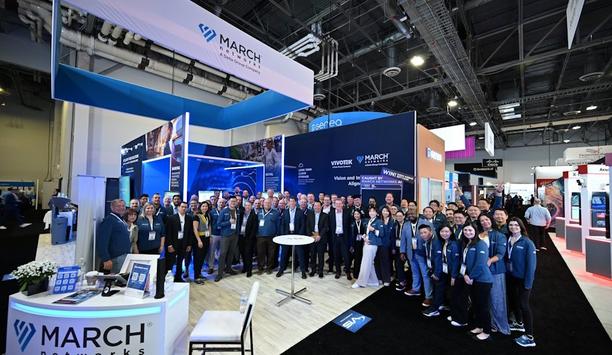
Combining VIVOTEK’s branded video security business with March Networks paves the way for the combined brands to meet customers’ increasing appetite for integrated solutions rather than individual components. The merger brings VIVOTEK's branded video security business together under one operating structure with March Networks’ enterprise-grade video surveillance, AI analytics, and cloud-managed security solutions. Customers now have access to a broader, more integrated portfolio spanning enterprise video management, advanced cameras, edge artificial intelligence (AI), cloud services, recording platforms, and business intelligence, says Net Payne, Chief Sales & Marketing Officer at March Networks and VIVOTEK. Distinct product strategies Given the combined companies, product development, sales, marketing, and customer support can move in step rather than in parallel. March Networks and VIVOTEK were already both part of the Delta Electronics family, but they previously operated as separate businesses with distinct product strategies, teams, and routes to market. March Networks and VIVOTEK announced the merger of their branded video security businesses last spring following Delta Electronics' acquisition of remaining VIVOTEK shares. “Aligning our complementary capabilities lets us innovate faster, simplify engagement, and respond more quickly to a market moving toward AI, cloud and intelligent video,” says Payne. This merger reflects a broader shift across the physical security industry, adds Payne. “Customers no longer see video purely as a tool for reviewing incidents after the fact,” he says. “They expect it to help identify risks earlier, simplify investigations, improve operations, and support better decisions across the organization.” Cloud video management Meeting customer expectations requires more than bolting AI features onto existing systems Meeting customer expectations requires more than bolting AI features onto existing systems. Rather, it requires cameras, edge intelligence, recording, software, cloud services, and business data working together as one coordinated platform. “By bringing March Networks and VIVOTEK together, we combine deep expertise across the full video technology stack while preserving the relationships, sector knowledge and customer focus both companies have built over many years,” says Payne. “Our goal is to make intelligent video more integrated, scalable, and practical for customers and partners worldwide.” Both entities bring strengths to the combined companies. March Networks brings experience in enterprise software, cloud video management and large-scale deployments; while VIVOTEK brings strength in imaging, camera technology and edge intelligence. Together they seek to ensure more choice when designing systems, a clearer path for future expansion, and technologies that work together more effectively without compromising the reliability, cybersecurity, and support customers expect from both companies. Advantages for channel partners Channel partners gain a broader portfolio to address a wider range of customer requirements, combining components as each deployment demands. Channel partners also benefit from expanded geographic reach, deeper technical expertise, and greater investment in training and enablement. “Importantly, this is designed to be a seamless transition,” says Payne. “Partners keep working with the teams and relationships they already know, while gaining access to new capabilities and certification opportunities. Over time, that alignment should make it easier to design, deploy and support complete solutions.” Because they are established and respected brands, March Networks and VIVOTEK branding will continue to be used. Rebranding is not a goal, and neither identity is being replaced by the other. Coordinated decision-making “The immediate priority is organizational alignment by making it easier for customers and partners to benefit from the combined portfolio,” says Payne. Product branding will continue to reflect the relevant portfolio and market context. As product roadmaps become more closely coordinated, customers can expect greater interoperability and a more cohesive experience, says Payne. Any future branding changes will be managed carefully and communicated clearly. Combining the businesses reduces duplication and enables coordinated decision-making across product strategy, engineering, sales, marketing, operations, and customer support. “Instead of developing capabilities independently, teams can share their expertise, align roadmaps, and direct investment to where it has the greatest customer impact,” says Payne. Combining specialized knowledge globally The combined organization operates across six continents and more than 75 countries The combined organization includes more than 300 research and development (R&D) engineers across four Centres of Excellence in Canada, Taiwan, Italy and Poland, thus bringing together a substantial base of specialist knowledge. The unified network also sharpens the ability to prioritise global opportunities, respond to regional needs and bring innovations to market faster. The combined organization operates across six continents and more than 75 countries, supported by more than 1,100 certified channel partners. That footprint provides greater capacity to support multinational customers while staying responsive to local market needs. Looking ahead, future growth will increasingly come from helping customers turn video into useful, actionable intelligence. “The market is moving beyond conventional surveillance toward solutions combining AI, cloud services, edge processing, video management and operational data — and our new structure brings these together as one connected solution rather than several isolated technologies,” says Payne. Broader technical expertise There will also be closer collaboration among specialists in imaging, hardware, software, analytics, and cloud, which is important given how much customer infrastructure, regulatory, and deployment requirements vary. The companies can support cloud, hybrid, and on-premise environments, giving organizations a practical path toward more intelligent video. More choice comes from bringing together complementary technologies across product groups. Greater scale is achieved through a larger engineering organization, broader technical expertise and more capacity to invest in innovation. Challenges for the industry at large Looking to the future for the industry at large, the greatest challenge will be managing the rapid growth of AI Looking to the future for the industry at large, the greatest challenge will be managing the rapid growth of AI responsibly, securely and at scale, says Payne. Video systems will generate more data and automate more decisions, but organizations must be able to trust how that intelligence is created, protected, and applied, he adds. “Cybersecurity, privacy, data sovereignty, system interoperability and AI accuracy are more important than ever,” says Payne. Addressing these elements requires expertise across the entire technology stack: from camera and edge processing to recording, cloud infrastructure, video management and analytics. “Together, March Networks and VIVOTEK can coordinate development across all these layers, giving customers flexible architectures that balance innovation with security, transparency and operational control,” says Payne.
Artificial Intelligence (AI) had a major presence at the ISC West 2026 show in Las Vegas. Almost every booth offered some variation on AI and how intelligence is transforming the physical security industry. Several industry leaders led the way, showcasing how they are tackling complex security challenges with smarter, more efficient solutions. Obviously, the security industry will never be the same. Milestone Systems: Responsible AI and open platforms Milestone has declared 2026 the "year of delivery” on previously announced developments and enhancements. A standout feature is their new natural language AI search, which is being integrated across XProtect, Arcules, and Briefcam platforms to simplify how users interact with vast amounts of video data. A core pillar of their strategy is responsible AI development, which prioritises using licensed data over "scraped" data. They have introduced new anonymisation tools that protect privacy by replacing faces with AI-generated characteristics like hair color while keeping the person unrecognisable. Furthermore, Milestone is moving workloads to Linux to reduce costs, transitioning toward an app marketplace, and has partnered with NVIDIA for the "Hafnia" project to ensure high-quality data to train AI models. Ambarella: Powering the edge with AI chips With their presence at ISC West in a meeting room near the trade show floor, Ambarella is the "engine" behind many high-performance intelligent video products, specializing in low-power AI chips like the N1 and CV7 families. Their technology is moving beyond cameras, where they provide systems-on-chips [SOCs] to many manufacturers. They have expanded into "AI boxes" that can process 64+ video channels simultaneously. A standout feature is the Natural Language technology, which allows users to search for specific objects or abstract scenes using simple prompts. To address modern security concerns, Ambarella has implemented "agentic" programming for a no-code development of automated workflows and media signing to combat AI-generated deepfakes by verifying video integrity through metadata. Motorola Solutions: Simplifying intelligence Motorola Solutions shows physical security evolving into a real-time enterprise intelligence layerMotorola Solutions is prioritising user accessibility by integrating natural language processing into its system configuration. Motorola's portfolio demonstrates how physical security technology is evolving into a real-time operational intelligence layer across the enterprise. Instead of requiring custom coding, operators can now use simple commands—like asking the system to "show me when someone fell down"—to set up advanced analytics and search parameters. The company is also deploying AI agents designed to aggregate data and automatically flag safety or compliance risks, such as perimeter breaches or blocked fire exits. To ensure maximum utility of the hardware, Motorola Solutions’ system can ingest massive, complex physical manuals and automatically generate monitoring rules based on those standard operating procedures. Furthermore, Motorola is focusing on interoperability, using industry-standard interfaces to ingest data from various hardware brands and networks. This approach aims to provide operators with clear, recommended next steps during critical events, streamlining the decision-making process in high-pressure environments. i-PRO: Putting generative AI at the edge i-PRO is bringing generative AI directly to the edge with a new fisheye camera, which processes complex analytics locally rather than relying solely on the cloud. These cameras, on display at ISC West, have moved beyond simple attribute-based tracking to identify complex behaviors like aggression, fighting, and slip-and-fall incidents. By running on the latest Ambarella chips, i-PRO cameras can use generative AI to improve image quality and analyze scenes in real-time without external processing. This focus on edge-based intelligence ensures high-performance analytics are available even in environments where constant cloud connectivity might be a challenge. Brivo: The rise of agentic AI Eagle Eye Video Assistant (EEVA) acts as a natural language AI agent that can monitor for specific threats Brivo and Eagle Eye Networks have officially unified under the Brivo name, focusing on streamlining the experience for large integrators. They are pioneers in agentic AI, introducing features that allow users to talk to their mobile apps to initiate lockdowns or add users. Their Eagle Eye Video Assistant (EEVA) acts as a natural language AI agent that can monitor for specific threats, such as a brandished weapon or a specific vehicle, and automatically trigger access control responses. By treating access and video as a unified system, Brivo enables users to connect specific video skills—like detecting a red car or a brandished weapon—to automated access control actions. They are also using AI to achieve "zero-cost integration," linking disparate cloud systems using AI-generated instructions. Everon: Emphasis on video monitoring Everon is making a massive investment in active video monitoring, using AI-driven systems to deter crime even before it happens. “The market is ripe for it, and customers are demanding it,” says David Charney, Everon’s Sr. Vice President, Video Command Center. Employing virtual guards who can use voice commands, lights, and horns to "shoo away" unauthorized individuals. The company has implemented senior-level leadership that has facilitated more than 5,000 video-based apprehensions. Everon, specializing in integrated systems for multi-site businesses, uses a rigorous selection process to choose AI providers that can accurately filter alerts for specific applications, such as identifying when a fire door is blocked. As a "trusted advisor" to their 300,000 customers, the company focuses on delivering professional-level results that move beyond basic recording to proactive threat mitigation. Hanwha: New hybrid VMS combines cloud and on-prem Hanwha Vision highlighted the official public launch of Blaze, a hybrid video management system (VMS). The platform uses a hybrid architecture to manage on-premise and cloud-connected devices across multiple sites without complex port forwarding. Blaze features native AI capabilities, including semantic search that allows operators to find specific incidents using natural language queries, such as "person with a safety jacket." The AI security platform lets teams search surveillance footage the way they search Google. AI similarity detection allows operators to quickly trace a person’s movement and investigate incidents faster (useful in active shooter behavior, medical emergencies, or crowd panic scenarios, and more). The system also provides a "histogram" view of traffic patterns to help security professionals quickly identify anomalies in historical footage. OpenEye: Operational intelligence and shift to OpEx OpenEye unveiled AI-powered features such as visual chat and scene analysisOpenEye is redefining video surveillance by moving intelligence from the camera level to the cloud, significantly reducing the need for on-site server management. At ISC West, OpenEye introduced new AI-driven tools like visual chat and scene analysis. Beyond security, these tools provide valuable operational alerts, such as identifying overflowing dumpsters, dirty tables in restaurants, or vehicles blocking dock doors. The system also utilizes natural language for search, allowing users to find specific attributes like "people wearing backpacks" within designated timeframes. OpenEye also highlighted an industry-wide shift toward operational expenditures (OpEx) billing models, as users increasingly prefer predictable monthly or yearly payments over large upfront capital expenditures (CapEx). This model aligns with their channel-based operations, meeting customers where they currently operate without the burden of high fees. IQSIGHT: New name, same mission for Bosch video Formerly Bosch Video, the newly named IQSIGHT seeks to maintain the “Bosch pedigree” under the new name. It’s the same engineering, manufacturing, etc. IQSIGHT also pledges to be "easier to do business with" by improving user interfaces and end-to-end user experiences. Despite the transition, the company has increased their pace of innovation and reinforced the open systems philosophy with enhanced integrations with Milestone, Genetec, and others. The major product release at the show is IVA Pro Context, which uses generative AI to provide human-level scene understanding. Through a partnership with Laelaps AI, a robotics startup, IQSIGHT is exploring autonomous dispatch and response. When a camera identifies a scene, it triggers a robot to provide a tailored response. Commercialisation is expected in 12 to 18 months. Verkada: How their system can solve a crime But how does AI operate in the real world? Verkada had a “themed” exhibit demonstrating how their system could solve a hypothetical theft at the Louvre museum in Paris. The exhibit took attendees through and showed how Verkada technologies (e.g., license plate recognition and search capabilities) could provide fast results to solve the crime. AI-powered tools, like their newest unified timeline, demonstrate value in the real world of investigations.
Case studies
The Adrian Public Schools Board of Education approved the renewal of its ZeroEyes AI-based gun detection and intelligent situational awareness platform during its April 13 meeting, continuing the use of artificial intelligence technology designed to enhance school safety by monitoring existing security camera systems for potential firearms. The deployment has been in place since 2023. ZeroEyes' AI gun detection and intelligent situational awareness software layers onto existing digital security cameras. If a gun is identified, images are instantly shared with the ZeroEyes Operations Center (ZOC), the industry's only U.S.-based, fully in-house operation center, which is staffed 24/7/365 by specially trained U.S. military and law enforcement veterans. Security safety enhancements If these experts determine the threat is valid, they dispatch alerts and actionable intelligence — including visual description, gun type, and last known location — to law enforcement and district officials as quickly as 3 to 5 seconds from detection. ZeroEyes is just one component of the multi-layered security safety enhancements that have taken place over the past few years. The District has implemented multiple safety enhancements including a full overhaul of its security camera systems, the addition of weapon detection K-9 support across school facilities, and the installation of bullet-resistant and shatter-resistant glass in key areas of school buildings. Proactive safety planning Superintendent Nate Parker stated that the District remains committed to proactive safety planning. “The safety of our students and staff remains our highest priority,” Parker said. “We continue to take intentional, layered steps to strengthen our security systems and ensure our schools are prepared and protected. The renewal of ZeroEyes reflects that ongoing commitment.” Officer Joshua Perry of the Adrian Police Department, who serves as a School Resource Officer and participates in District safety planning, said collaboration has been central to the District’s approach. “These improvements demonstrate a strong partnership between schools and law enforcement,” Perry said. “The combination of training, communication, and technology significantly strengthens our ability to keep students and staff safe.” Partnerships with innovative technology As these collaborative safety efforts continue to evolve, partnerships with innovative technology providers like ZeroEyes remain a key component of the district’s strategy. “Adrian Public Schools’ continued investment in layered, proactive security demonstrates a clear commitment to protecting students and staff,” said Mike Lahiff, CEO and co-founder of ZeroEyes. “By renewing their partnership with ZeroEyes, the district is strengthening its ability to identify and respond to potential threats in real time, giving first responders critical information when every second counts. We’re proud to support Adrian in creating a safer learning environment for its community."
ZeroEyes, the creators of the first AI-based gun detection video analytics platform to earn the full US Department of Homeland Security SAFETY Act Designation, announced now that Ki Charter has expanded its contract following initial success. ZeroEyes’ proactive gun detection and intelligent situational awareness solution will now be deployed across the school’s San Marcos campus. Largest residential treatment center Ki Charter is the premier educational provider for students who reside in residential facilities (RFs) and day centers across Texas. The school serves over 6,500 students annually (500% mobility rate) with a dedicated team of educators and staff. The San Marcos campus is located within the 65-acre San Marcos Treatment Center, the largest residential treatment center in Texas. The center houses approximately 200 residents (and community students) who attend Ki Charter, and employs 425 staff members, including 50 from Ki and 375 from the San Marcos Treatment Center. Level of real-time awareness “At Ki Charter, we serve a unique population of behaviorally challenged students, so our approach to security has to be comprehensive, proactive, and intentional,” said Dr. Jerry Lager, Superintendent of Ki Charter. “Our Safety and Security Committee, campus teams, mental health staff, and local law enforcement all play a role in preventing and de-escalating potential threats, but ZeroEyes added a level of real-time awareness we simply didn’t have before. After seeing how effective the technology was, expanding its use was an easy decision.” ZeroEyes' AI gun detection ZeroEyes' AI gun detection and intelligent situational awareness software layers onto existing digital security cameras. If a gun is identified, images are instantly shared with the ZeroEyes Operations Center (ZOC), the industry's only U.S.-based, fully in-house operation center, which is staffed 24/7/365 by specially trained U.S. military and law enforcement veterans. If these experts determine the threat is valid, they dispatch alerts and actionable intelligence — including visual description, gun type, and last known location — to law enforcement and local security teams as quickly as 3 to 5 seconds from detection. Multi-layered safety program “Ki Charter has built a thoughtful, multi-layered safety program, and we’re proud to continue to play a role in strengthening it,” said Mike Lahiff, CEO and cofounder of ZeroEyes. “Their leadership is deeply committed to protecting students and staff, and this expansion proves that they understand that proactive security is essential on a campus of this size and complexity.”
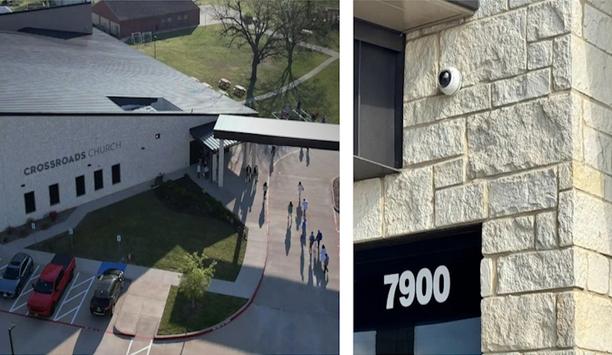
EnGenius Technologies Inc., a pioneer in advanced connectivity and cloud-managed networking solutions, today announced that Crossroads Church in Rowlett, Texas, has completed a comprehensive security and network modernization project using EnGenius AI cameras, multigigabit switches, and Wi-Fi 7 access points. The upgrade delivers complete visibility across the church’s 30,000-square-foot facility and 15-acre campus, providing staff, volunteers, and families with unprecedented peace of mind. Rapid Growth Drives Need for Enhanced Safety Serving more than 1,200 members and hosting daily activities including worship services, youth programs, daycare, and community outreach, Crossroads Church faced increasing challenges with its aging surveillance system. The church’s legacy NVR-based surveillance system left numerous blind spots and lacked the clarity, storage, and analytics needed to support a large, active campus. “With ministry happening every day and families trusting us with their children, we needed to be sure we could clearly monitor every part of our campus,” said the church’s Executive Pastor. “Our previous system simply couldn’t keep up.” A Unified EnGenius Solution Crossroads Church partnered with Smart Technology Solutions to implement a full-scale modernization built on EnGenius cloud-managed technology. The deployment includes: 57 EnGenius ECC100 AI surveillance cameras for complete indoor, outdoor, and parking-lot coverage Multi-gig EnGenius ECS2552FP and ECS2528FP switches supporting high-capacity video, livestreaming, and campus-wide traffic 12 EnGenius ECW536 Wi-Fi 7 access points providing fast and reliable wireless connectivity for staff, classrooms, and production teams A single-pane-of-glass cloud dashboard delivering centralized management, real-time monitoring, and instant event review “For the first time, we have total visibility,” said the Lead Pastor. “If something happens anywhere on our property, we can see it, isolate it, and respond immediately. That level of clarity is invaluable.” AI features unlock the future of campus security The church has begun using contextual AI analytics, including event detection, vehicle tracking, and customizable alerts. Over time, leadership plans to expand their use of EnGenius AI capabilities to detect human activity, interpret complex scenarios, analyze movement trends, and enhance after-hours oversight — further improving campus safety. Meet the AI that turns video into insight Ever spent hours scrubbing through video just to find one five-second moment? With EnGenius Cloud AI, those days are over. It eliminates the biggest headaches of traditional surveillance—false alerts, slow investigations, and endless manual review—by delivering real-time intelligence and natural language search. Instead of generic motion notifications, the system interprets what it sees, recognizing behaviors with context so the team receives fewer false alarms and earlier warnings when something seems off. And when it’s time to find footage, there’s no need to dig through timelines—simply enter a description like “person in a red hoodie with a black backpack,” and the system instantly retrieves the precise clips from any camera or location. This smarter, context-aware approach helps staff work faster, respond with confidence, and stay focused on what matters most. More than a camera system, it’s a smart security assistant that makes investigations faster, simpler, and far more effective. Key camera features 5MP HDR Clarity: Sony Starvis sensor ensures clear day-and-night visuals. Ultra-Wide Coverage: 132° view and 20m IR distance for versatile environments. 8GB eMMC Flash Storage + 4GB DDR4 Memory: Delivers reliable onboard flash storage and efficient multitasking for smooth, stable performance. Built-in Storage, No NVR Needed: ECC100 includes 256GB of reliable onboard storage, supporting continuous and event recording 24/7 for immediate footage access. Durable Build: IP67 weatherproof and IK10 vandal-resistant design. Cloud Access & Mobile Monitoring: Manage cameras anytime, anywhere. The next era of intelligent surveillance With the launch of its AI Cloud Surveillance Solution and ECC100 AI Camera, EnGenius once again sets a new benchmark for intelligent security—empowering businesses to stay one step ahead with smarter, faster, and more reliable protection. “What truly sets our system apart is its ability to analyze contextual sequences rather than just single-frame images, enabling preventive alerts before incidents occur,” said Roger Liu, Executive Vice President at EnGenius Technologies. “Whether it’s spotting loitering before theft, flagging escalating conflicts, or identifying fatigued workers on a factory floor, our system helps businesses act before incidents escalate.” Availability The ECC100 is available from EnGenius authorized resellers and distribution partners.
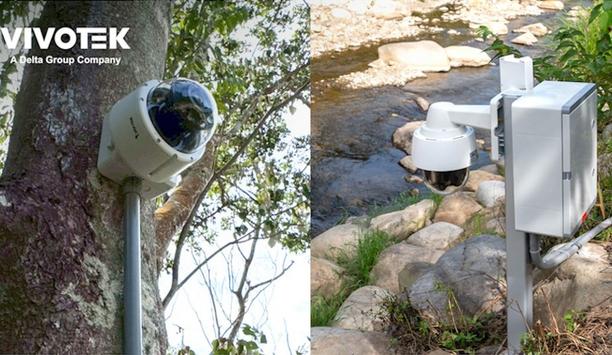
VIVOTEK, the pioneering security solution provider, actively integrates corporate social responsibility into its operations. This year marks the fifth “Safety Map” corporate sustainability event. For the first time, the team extended its efforts beyond urban communities to the natural environment of Zhonggua River in Guoxing Township, Nantou, Taiwan. Collaborating with the National Chung Hsing University’s (NCHU) University Social Responsibility (USR) team on “Environmental Resilience and Sustainability” and the precision AI agriculture partner DATAYOO, the team launched the “Zhonggua River Ecological Restoration Safety Map” project. VIVOTEK deployed its security solutions to monitor the ecosystem, successfully capturing rare footage of the endangered crab-eating mongoose in its natural habitat. Employees also helped remove invasive species, restore native plants, and construct ecological ponds, embedding sustainability into the company’s core security expertise – extending protection from human safety to habitats and biodiversity. “Returning land to the river:” Reviving the ecosystem After a typhoon in 2004, Zhonggua River’s banks were fortified with high walls and riverbed structures for flood control, which disrupted the ecosystem. Over time, cracks formed, foundations eroded, and exposed steel reinforced the risk. In 2018, Professors Chiou-Rong Sheue and Peter Chesson from NCHU’s Department of Life Sciences began living by the river and advocated a subtraction approach: dismantling walls to “return the land to the river,” balancing flood control with conservation. This effort culminated in 2023 with Taiwan’s first community-initiated river restoration project. Today, the USR team led by Professor Hsu continues ecological monitoring and habitat maintenance, while VIVOTEK contributes technology and manpower through the “Safety Map” initiative, jointly safeguarding the reborn river. Security technology supports restoration through action and care “VIVOTEK uses ‘Concern for Others’ Cares’ as a brand catalyst. During the 2010 Chile mining disaster, our cameras were deployed deep inside the mine to monitor the vital signs of trapped miners, transmitting real-time footage to rescue teams and contributing to the miraculous rescue efforts. In Parks Victoria, Australia, we applied AI solutions to observe seal habitats in Port Phillip Bay, monitoring potential threats such as fishing lines and ropes." "VIVOTEK partnered with the NCHU’s USR team to transform our original commitment to care and social safety into active conservation of the river ecosystem and wildlife, turning technology into a bridge for harmonious coexistence between humans and nature,” said Alex Liao, President of VIVOTEK. Building safe habitats, restoring nature’s vitality Under the guidance of the NCHU’s USR team, VIVOTEK employees observed aquatic insects, native plants, and changes in the river ecosystem, gaining insight into the impact of removing cement embankments on local wildlife. To accelerate ecological restoration, they split into teams to construct ecological ponds and build new homes for the Ayers’ tree frogs using bamboo tubes. At the same time, invasive plant species such as Mimosa pudica, fragrant orchids, and elephant grass were removed, while native species including reed orchids, wild peonies, honeysuckles, purple bead trees, Taiwan mountain laurels, and orange osmanthus were replanted to stabilize the soil and restore riparian vegetation. “Being able to personally contribute to ecological restoration and give back to nature is a source of pride as a VIVOTEKer,” shared Ben, an engineer who has participated in the Safety Map event for five consecutive years. Leveraging big data monitoring to deepen corporate impact “The Safety Map event has extended from neighborhoods, care facilities, schools, and historic settlements to Zhonggua River, engaging hundreds of employees in inspecting sites and proposing safety solutions. Through these efforts, we have expanded the definition of ‘safety’ from simply protecting people to also safeguarding wildlife and habitats, revealing the multidimensional nature of security." "Moving forward, we will continue to promote cross-industry collaboration, using our security expertise as a foundation to amplify social impact and create more inclusive safety values and practices,” said Allen Hsieh, VIVOTEK’s Spokesperson and Director of the CorpComm & Sustainability Office. This year, VIVOTEK further leveraged the expertise of DATAYOO, using its FarmiSpace PRO monitoring service and AI crop monitoring system to analyze various crop indices derived from satellite spectral data. These insights provide the NCHU’s USR team with a scientific basis for their ecological research at Zhonggua River, enabling a data-driven approach to natural habitat restoration and making technology a powerful tool for conservation. Industry and academia join forces to set a benchmark “VIVOTEK Proactively proposed initiatives and involving company employees in hands-on participation are the most powerful ways to implement ecological restoration. Through VIVOTEK’s security expertise, volunteer engagement, and AI-driven long-term ecological monitoring, we have accelerated the restoration of Zhonggua River’s ecosystem, allowing more people to witness the harmony between humans and nature,” said Chiou-Rong Sheue. The habitat restoration efforts have already shown tangible results, with the ecological ponds built by VIVOTEK employees quickly attracting creatures such as pond frogs, dragonflies, water striders, and damselflies. VIVOTEK has emerged as a key driver of environmental restoration through its security technology, demonstrating that safety is not only about protection but also stewardship and shared responsibility, and continues to foster a Safety Map where humans and nature coexist.
Round table discussion

If AI is the dominant buzzword in the physical security industry, it is the second letter (I for intelligence) that is having the biggest impact. Simply put, intelligence transforms computer systems, including those used for physical security, from rigid, rule-following calculators into adaptable, problem-solving partners to human operators. We asked our Expert Panel Roundtable: What is the changing role of intelligence in physical security?

At mid-year 2026, the broader economy tells a story of resilience under pressure. Conflict in the Middle East has triggered a shock to the energy supply, driving oil prices up and reigniting global inflation. However, a total downturn has been averted. Exceptional, historic levels of business investment and data center construction are providing a firm floor for growth, offsetting cooler consumer spending and keeping labor markets fundamentally stable. But how are changing economics impacting the physical security market? We asked our Expert Panel Roundtable: How do changes in the broader economic climate impact physical security?

In the simplest terms, technology modernization accelerates when older systems become too expensive to maintain or fail to support modern standards. Market competition pushes businesses to update their technologies to meet rising customer demands. Additionally, the rapid shift toward cloud-based infrastructures and artificial intelligence creates a fear of missing out, forcing companies to adapt or risk irrelevance. Focusing on the physical security market, we asked our Expert Panel Roundtable: What factors are accelerating technology modernisation in security?
Products
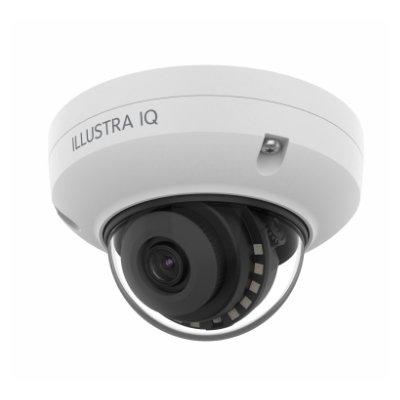


White papers

Technology's Role In Securing Banks And Financial Institutions
Download
Integrated Systems Enable Critical And Compliant Security For Transportation
Download
Security Technologies Promote Real-Time Awareness In K-12 Schools
Download
The 4 Pillars Of AI In Managing High-Stakes Critical Events
Download
How Biometrics Are Reshaping Security In A Connected World
Download
Using Artificial Intelligence (AI) To Automate Physical Security Systems
Download
2025 Trends In Video Surveillance
Download
The Role Of Artificial Intelligence To Transform Video Imaging
Download
Total Cost of Ownership for Video Surveillance
Download
5 Surprising Findings From OT Vulnerability Assessments
Download
Guide For HAAS: New Choice Of SMB Security System
Download
Integrating IT & Physical Security Teams
Download
Top 7 Trends To Watch In The Physical Security Industry
Download
2024 Trends In Video Surveillance
Download
How Intelligent Video Is Transforming Banking And Financial Institutions
Download

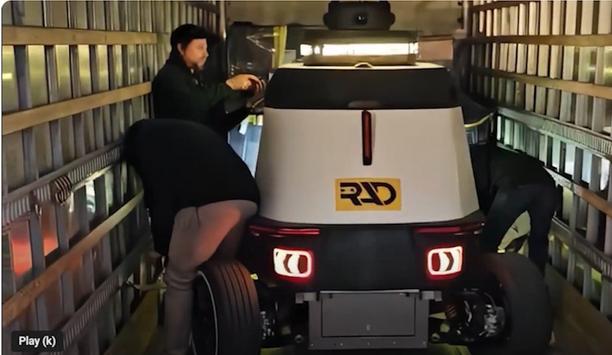
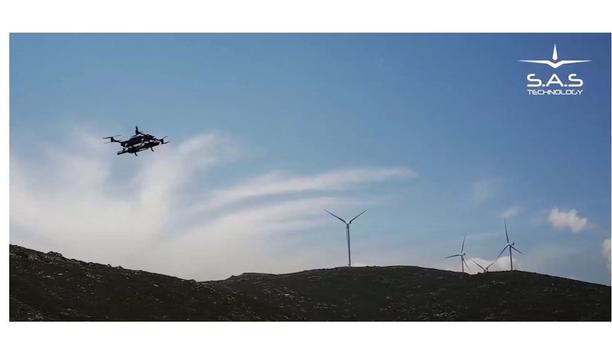
Artificial intelligence (AI): Manufacturers & Suppliers
- Dahua Technology Artificial intelligence (AI)
- Vicon Artificial intelligence (AI)
- LILIN Artificial intelligence (AI)
- WD Artificial intelligence (AI)
- Hikvision Artificial intelligence (AI)
- Anviz Artificial intelligence (AI)
- Avigilon Artificial intelligence (AI)
- Hanwha Vision Artificial intelligence (AI)
- IDIS Artificial intelligence (AI)
- Illustra Artificial intelligence (AI)