Network / IP security

ZeroEyes, creators of the multi-analytics weapons detection and threat intelligence platform, announces a partnership with Samson Security Fire & Facilities to expand the availability of ZeroEyes’ visual threat detection capabilities across the United Kingdom. The companies will demonstrate the technology in Booth F61 at the International Security Expo, taking place 29-30 September 2026 at Olympia London. Through the partnership, Samson will offer UK organizations access to ZeroEyes&r...

Camelot Secure and its parent company, DigiFlight Inc., announced Tuesday a partnership with the Baltimore Ravens, becoming the team’s “Proud Cyber Resilience Partner” and bringing decades of experience supporting national security and mission-critical operations to one of the National Football League’s (NFL’s) most recognized franchises. The partnership connects the two worlds of professional football and cybersecurity, where preparation, resilience and performanc...

DigiCert, a pioneer in intelligent trust, announces the general availability of DigiCert Quantum Central, part of the DigiCert ONE platform, that helps organizations manage and demonstrate progress toward post-quantum cryptography (PQC) readiness. First introduced in preview in July, Quantum Central offers expanded capabilities that help organizations move from finding cryptographic risks to managing them. Teams can bring together cryptographic data from multiple sources, apply their own securi...

Euralarm has published a new guidance document, Guideline on Disposal of Fire-Fighting Foam Media (UK & Europe), providing practical recommendations for the safe, compliant and environmentally responsible handling and disposal of fire-fighting foam media. The publication reflects the rapidly evolving regulatory landscape surrounding PFAS-containing firefighting foams and supports organizations in adopting best practice throughout the disposal process. The guidance has been developed for man...

Alibaba Cloud, a global provider of AI infrastructure and the intelligence backbone of Alibaba Group, today announced its latest global infrastructure expansion plan at the 2026 Apsara Conference, alongside a series of new AI capabilities designed to help enterprises build, deploy and scale AI applications more efficiently. The technology company has also announced its comprehensive collaboration with global enterprises including Panasonic Digital, Unity China, Lion Parcel, Loomi Entertainment...

Teledyne FLIR, part of Teledyne Technologies Incorporated, announces the launch of the Si2a-LD and Si2a-Pro, completing the new Si2a-Series portfolio of fixed-mount acoustic imaging solutions for continuous condition monitoring in industrial and utility environments. Designed to provide always-on visibility into asset health, the Si2a-LD and Si2a-Pro help organizations move beyond periodic inspections by continuously monitoring critical systems for developing issues. Integrated with the FLIR As...
News

i-PRO Co., Ltd., a pioneer in professional security and public safety solutions, announces its partnership with Kepler Vision Technologies, a developer of AI-driven patient safety applications, to help healthcare organizations enhance patient monitoring and support care teams facing persistent staffing pressures, particularly during night shifts. Through the partnership, the Kepler Night Nurse application will run on i-PRO's GenAI Fisheye Camera, powered by the Ambarella™ CV72 AI vision SoC. Combining advanced edge-AI processing with high-quality imaging, the solution helps care teams identify patient safety events sooner without requiring additional processing hardware. Supporting AI applications The application uses AI to recognize activity that may require caregiver attention, such as a patient attempting to leave a bed or a potential fall. When the system detects these events, it sends a real-time alert through a nurse calling system so caregivers can assess the situation and respond based on the patient's needs. This can help teams focus their attention where it is most needed, while reducing routine room checks that may disturb patients and add workload for staff. Kepler selected i-PRO's GenAI camera platform for its advanced edge processing capabilities, open architecture, and ability to support AI applications at the edge. Because i-PRO cameras are built on an open architecture, third-party applications such as Kepler Night Nurse can run directly on the camera, allowing healthcare organizations to deploy new AI-powered capabilities without the need for additional servers or processing equipment. In healthcare environments, where patient data privacy is paramount, this allows patient safety events to be processed at the edge without relying on external servers or cloud infrastructure. Sensitive healthcare environments This approach helps reduce unnecessary data movement while supporting real-time alerts and simpler deployment. i-PRO cameras are also designed with a strong focus on cybersecurity and responsible AI, supporting secure deployment in sensitive healthcare environments. Kepler Night Nurse will be available through a flexible licensing model. This provides healthcare organizations with a practical path to adopt AI-based patient safety monitoring without committing to a large infrastructure project upfront. Delivering actionable insights "At i-PRO, we believe technology should solve meaningful customer challenges while remaining simple, secure, and trusted," said Gerard Figols, Chief Operating Officer at i-PRO. "For healthcare providers facing growing care demands and workforce shortages, that means helping teams work more efficiently so caregivers can devote more time to patients. Our partnership with Kepler Vision Technologies demonstrates the power of our open edge-AI platform, enabling advanced applications such as Kepler Night Nurse to run directly on our GenAI cameras. The result is a scalable solution that delivers actionable insights at the edge while preserving privacy, strengthening cybersecurity, and simplifying deployment." Creating additional complexity “With growing pressure on healthcare staff, especially at night, technology must actively support caregivers rather than create additional complexity,” said Harro Stokman, CEO of Kepler Vision Technologies. “By partnering with i-PRO, we can bring Kepler Night Nurse to more care facilities worldwide, helping teams protect patients and work more efficiently despite ongoing staff shortages.” Kepler Night Nurse for i-PRO cameras will be available by October 2026 from selected authorized i-PRO resellers and channel partners.

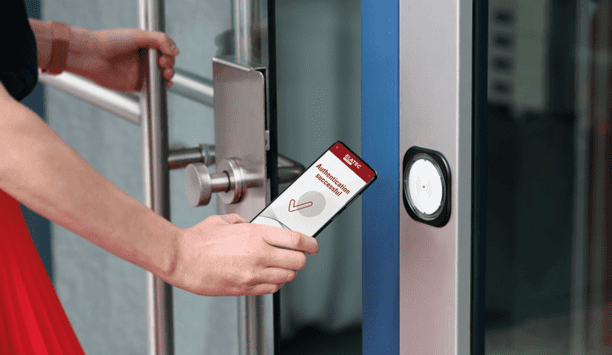
Award-winning global security manufacturer, Gallagher Security is excited to announce the launch of the new ASSA ABLOY IP lock integration, delivering simplified installation of access control in challenging environments. Launched today, the solution reduces the high costs and complexity of traditional wired access control, by removing the need for extensive cabling and door controllers. It simplifies installation, particularly in retrofit or hard-to-wire locations. Enterprise-grade access control The integration is particularly suited to US higher education environments, including residence halls, classrooms, and research spaces, where mixed online and offline operation, flexibility, and ease of deployment are essential. The solution is also applicable to government facilities, enterprise campuses, and institutional and healthcare environments that need reliable security across distributed sites. Gallagher Security, Executive Vice President – Americas Matt Butts says, "This integration reflects a shared vision between Gallagher and ASSA ABLOY to make security more accessible, flexible, and effective for our customers. By combining best-in-class door security with enterprise-grade access control, we're delivering a solution that reduces friction and empowers facilities with greater insight, faster response times and the confidence of connected technologies working together.” Confidence of connected technologies The integration supports ASSA ABLOY IN120 battery powered Wi Fi locks and IN220 PoE IP locks, which connect directly to an organization’s on premises IP network. Access privileges, credentials, schedules, and overrides are managed centrally in Gallagher’s Command Centre, streamlining day to day operations while maintaining visibility across the site. Local intelligence at each lock enables independent access decisions, ensuring continued operation during network outages, which is critical for environments such as residence halls, labs, secure offices, and remote buildings. Enabling proactive management Security and IT administrators benefit from full visibility into events, alarms, battery status, audits, and device health directly within Command Centre, enabling proactive management and faster response to issues. The Gallagher Security and ASSA ABLOY IP Lock integration is available now in the United States. For more information, contact the local Gallagher Security representative. ASSA ABLOY’s Head of Digital Access Solutions, Angelo Faenza says, “Our collaboration with Gallagher brings together two leaders in access control to solve a real world challenge for our customers. By integrating our IP enabled locks with Gallagher’s Command Centre platform, we’re delivering a streamlined, modern approach to securing doors across complex facilities. It’s a powerful example of how open, interoperable solutions can elevate both security and operational efficiency.”

Inovonics, a provider of wireless solutions for life safety and security applications, is celebrating 40 years of innovation and continued growth in commercial security, senior living e-call, multi-family submetering, and commercial monitoring markets. Founded in 1986, Inovonics has continued to advance 900 MHz wireless technology to develop solutions designed for life safety, intrusion detection, and environmental monitoring. “Inovonics has spent four decades building technology that performs when it matters most,” said Tom Chittenden, President of Inovonics. “We continue to pioneer new solutions using the latest advancements in wireless technology that deliver higher levels of performance, reliability, and versatility to solve real-world challenges.” Open integration options The next chapter for Inovonics builds on the same foundation of reliable hardware backed by cloud software and open integration options for systems integrators and other technology partners. "We're building the platform that will define the next 40 years for our company," Chittenden said. "Our newest Intrusion System and Duress Card reflect where we are headed, toward connected solutions that leverage the best in 900 MHz wireless, AI, and cloud technologies that our partners can trust today and grow into tomorrow." Noted Inovonics milestones over the past 40 years include: 1986: Inovonics Corporation founded in Boulder, CO by Steve Koonce & Don Hume to develop commercial wireless products leveraging frequency-hopping, spread spectrum RF technology. 1996: Inovonics trademarks Frequency Agile as the brand name for its proprietary 900 MHz wireless technology. 1997: Inovonics launches Wireless Guardian security control panel for small commercial security applications. 1998: Inovonics launches TapWatch wireless utility submetering software and pulse-meter transmitter solution to the multifamily market. 1999: Inovonics launches Comset and Comset Superlight wireless telephone headsets. 2000: Inovonics awarded ISO 9001 certification. 2001: Inovonics partners with 3M to create ergonomic wireless headset solutions for drive-thru restaurants. 2005: Inovonics ships millionth TapWatch transmitter. 2007: Inovonics launches EchoStream next-generation high-performance wireless mesh network. 2008: Inovonics develops commercial UL-listed wireless security sensors and repeaters. UL had not previously listed any commercial wireless universal transmitters or repeaters, making the EchoStream products uniquely qualified for the commercial marketplace. 2010: Millionth EchoStream sensor shipped. 2010: Patent No. 7,746,804 awarded for EchoStream directed messaging network architecture. 2010: Inovonics launches Remote Data Logger and TapWatch 3 software for utility subtering solutions. 2013: Inovonics launches EN6080 Gateway, one of the first PSIA-compliant wireless area gateways enabling IP and system integration. 2013: Inovonics launches TapWatch Cloud, the company’s first cloud-hosted software solution. 2015: Patent No. 9,111,432 awarded for mobile duress pendant management system. 2018: Awarded patents for the EN1221S-60, wearable emergency call device pendants specifically for the senior living industry. 2018: Over 3 million wireless pulse transmitters sold. Company releases EN1550EP Encoder Pulse Transmitter expanding IoT and building management utility products. 2022: Inovonics launches fall detection and alarm location solutions for senior living communities. 2024: Inovonics announces Advanced Location solution. 2025: Patent No. 12,367,757 issued for fall detection pendant systems and methods. 2026: Inovonics introduces groundbreaking Intrusion Detection and Duress Card solutions. Celebrates 40th anniversary.

The sell-out success of the 15th edition of GISEC Global, attended by thousands of cyber professionals from over 130 countries on the opening day at the Dubai Exhibition Centre (DEC) has reaffirmed the high international demand for tech collaboration in Dubai, catalysing the launch of a new show uniting the world’s quantum and cybersecurity sectors. Global Quantum X (GQX) by GITEX, announces, will convene governments, quantum technology leaders, national cybersecurity authorities, research institutions, enterprise adopters and investors to explore the technologies, applications and security frameworks shaping a new quantum era that could unlock trillions of dollars’ worth of global economic value. Global economic value GQX 2027 by GITEX is launched in partnership with GISEC Global – among the world’s top three largest cyber intelligence events – and GITEX, the world’s largest AI and tech ecosystem network. GQX 2027 will be hosted alongside GISEC Global 2027 in strategic partnership with UAE Cyber Security Council, converging the rapidly advancing worlds of quantum technology and cybersecurity as governments and businesses prepare for a new era of digital risk and opportunity. The announcement comes as quantum technology moves rapidly from scientific research towards commercial application. According to McKinsey's Quantum Technology Monitor 2026, one-third of global enterprises now allocate more than US$10 million annually to quantum initiatives, with quantum technologies potentially unlocking US$2.7 trillion in global economic value over the next decade. Protecting sensitive data For the cybersecurity community, however, the transition also presents an urgent challenge. The computing capabilities being developed today have the potential to transform industries from financial services and life sciences to logistics and advanced manufacturing, while requiring governments and organizations to rethink how they protect sensitive data, critical infrastructure and digital identities for the decades ahead. H.E. Dr Mohamed Al Kuwaiti, Head of the UAE Cyber Security Council, said: “As we welcome the world to GISEC Global’s largest edition yet, the transition to the post-quantum era is one of the most pivotal shifts our industry faces. Meeting it requires the same international collaboration we have championed through this show.” Accelerating commercial adoption “Launching Global Quantum X allows us to bring quantum-safe migration, sovereign cryptographic capability and national readiness testing to a truly global stage, and to help governments and enterprises everywhere close the gap between today’s defences and tomorrow’s threats.” GQX 2027 advances the growing focus on quantum security globally, where post-quantum readiness, sovereign cyber capability and the protection of critical systems form part of the wider Cyber First: The New Digital Order agenda this week at DEC Expo City Dubai. GQX formalises and accelerates this momentum, where the quantum technology and cybersecurity communities can address both sides of the transition – accelerating commercial adoption while developing the security, governance and cryptographic capabilities required to support it. Spanning quantum computing Trixie LohMirmand, Executive Vice President of inD, organiser of GISEC Global and GQX, said: “Quantum computing has crossed the threshold from scientific promise to commercial strategy, and the pace of that shift is accelerating faster than most enterprises have planned for. The same computing power that will unlock breakthroughs in medicine, materials and finance will also put today’s encryption at risk, which is why quantum and cybersecurity can no longer be dealt with separately. GQX by GITEX at GISEC Global creates a powerful convergence between the best minds and companies developing the next generation of computing and those responsible for securing it.” The introduction of GQX by GITEX alongside GISEC Global 2027 from 4-6 May 2027 at the Dubai Exhibition Centre will accelerate cross-border collaboration and investment into one of technology’s fastest-developing frontiers. GQX will focus on an emerging quantum ecosystem spanning quantum computing, quantum-secured communications and next-generation sensing, while its co-location with GISEC Global will create a particular focus on post-quantum security, cryptographic transition, critical infrastructure protection and national quantum readiness.

Robox AI announced the Robox AI Video Intelligence Platform, a configurable AI-powered platform that transforms compatible existing camera infrastructure into real-time actionable intelligence for loss prevention, safety, security, compliance and business operations. Centralized intelligence layer Instead of requiring organizations to replace their existing camera infrastructure or deploy multiple single-purpose analytics products, Robox AI provides a centralized intelligence layer that supports multiple use cases across one location or an enterprise with many locations. Built on a flexible edge-cloud architecture that connects with compatible existing IP camera environments, Robox AI combines AI technology with real-world security, loss-prevention, and operational experience. Robox AI’s on-site edge processing supports low-latency AI analysis, while its centralized software provides configuration, alert management, evidence, reporting, and analytics across multiple locations. Enhancing video intelligence Robox AI believes effective video intelligence requires more than producing an alert. Organizations also need to determine who receives the information, what action should follow, how the event is documented, whether the issue was resolved, and what can be learned from the accumulated data. The Robox AI Video Intelligence Platform analyzes configured video streams, identifies events based on defined criteria, delivers relevant alerts and supporting event evidence to authorized personnel based on customer-defined rules, and connects those events to response, resolution, reporting, and analytics. Advances with the organization Robox AI goes beyond what a system detects on the day it is installed. As retail crime, criminal behavior, safety concerns, operational priorities, and customer requirements change, Robox AI works with customers to evaluate emerging problems, refine existing detection models and, where appropriate, develop or integrate additional capabilities, optimize workflows, and measure results through an AI intelligence platform that advances alongside the organizations using it. This continuous-improvement model is intended to reduce the risk of organizations becoming locked into a static set of capabilities while their operating environment continues to change. “We believe an AI platform should evolve, not be installed and then stand still while the problems around the customer continue to change,” said David Solomon, CEO of Robox AI. “Retail crime evolves. Safety risks evolve. Operational challenges evolve. Our responsibility should not end when the technology is deployed." “Robox AI is built around an ongoing relationship with the customer. We work to understand the problem, configure the intelligence around that environment, refine the models, measure the results, and evaluate new detection capabilities as needs change. The goal is not simply to give an organization the AI it needs today. It is to provide an intelligence platform that can continue advancing with its business,” Solomon concluded. Connects video with business data Robox AI integrates video intelligence with transaction and other business-system data. For retail and grocery environments, POS integration can add context for use cases such as sweethearting, scan anomalies, voids, refunds, and other transaction-related events. Combining visual intelligence with relevant business data can provide additional context, improve event confidence, and help organizations better understand what is occurring within the operation. Robox AI is designed around a broader operational workflow. When a configured event is identified, authorized personnel receive relevant alerts and event evidence based on customer-defined rules. The platform can then support the process beyond the initial detection through incident review, escalation, response documentation, resolution, reporting, historical analysis, and management accountability. This allows organizations to move beyond using video simply to determine what happened after an incident. Instead, video can become a proactive source of operational intelligence. Robox AI markets and use cases Robox AI can be configured to support a range of use cases depending on the customer’s environment, camera coverage, available data, operational priorities, and deployment requirements, including: Retail and Grocery: Shoplifting and concealment, cart push-outs, employee theft and sweethearting, self-checkout and transaction anomalies, loitering, crowd activity, fights and confrontations, queue conditions, out-of-stock conditions, unauthorized access, propped doors, slip-and-fall events, visible weapons, smoke or fire indicators, license plate recognition, and additional customer-specific operational events. Restaurants and Quick-Service Operations: Queue and occupancy conditions, loitering, fights and confrontations, visible weapons, unauthorized access, propped doors, slip-and-fall events, PPE compliance, smoke or fire indicators, and selected operational-process deviations. Warehouses, Distribution Centers, and Manufacturing: PPE compliance, restricted-area activity, worker-down or fall events, forklift and vehicle-related safety conditions, propped doors, crowd conditions, asset or material removal, smoke or fire indicators, and selected operational-process deviations. Schools and Other Public Environments: Visible weapons, fights and aggressive behavior, loitering, crowd activity, unauthorized access, perimeter events, smoke or fire indicators and license plate recognition, subject to applicable policies, laws and deployment requirements. Additional detections and integrations are evaluated based on customer requirements, camera placement, operating environment, data availability, and agreed deployment scope. Configurable rather than one-size-fits-all Robox AI customers select and prioritize capabilities based on individual locations, risks, policies, and operating objectives. A typical deployment may include: An edge AI appliance connected to compatible camera streams. Configured AI detection models. Real-time event alerts. Mobile and management access. Event clips and supporting evidence. Dashboards and analytics. Incident history and reporting. Customer-defined notification and escalation workflows. POS or other authorized data integrations. Multi-location management. Deployment and technical support. Ongoing model refinement. Evaluation of new customer-specific detections and capabilities. Availability The Robox AI Video Intelligence Platform is now available for customer evaluations, proof-of-value deployments, and commercial deployment. Organizations interested in evaluating the platform work with Robox AI to assess existing camera infrastructure, identify priority use cases, define detection and response requirements, establish measurable objectives, and develop an appropriate deployment architecture.

Riverbed, the pioneer in AIOps for observability, announced new Riverbed intelligent network observability solutions that combine 360-degree network visibility with agentic AI to help network operations teams accelerate troubleshooting, identify root causes, predict emerging issues and increasingly prevent disruptions before they impact users. About Riverbed Network 360 The new Riverbed Network 360 offerings natively integrate the powerful agentic AI capabilities of Riverbed IQ and Q into Riverbed’s AppResponse and NetProfiler solutions while extending network visibility across remote users, Zero Trust and public cloud environments with NPM+. Together, these new offerings unify deep network evidence, expanded visibility across the enterprise, and causal, predictive, generative and agentic AI, to help NetOps teams prevent disruption. Integration benefit “For decades, network monitoring tools have surfaced the evidence, but network professionals have still had to manually connect the dots,” said Richard Tworek, Chief Technology Officer, at Riverbed. “That model can no longer keep pace as applications span data centers, public clouds and SaaS environments, employees work from anywhere, and Zero Trust architectures add new visibility gaps across networks IT may not own or control." "With Network 360, Riverbed is bringing agentic AI directly into network operations by turning deep network evidence from hybrid environments into contextual insight, faster root-cause identification, predictive awareness of emerging issues and recommended next actions. This is how we help NetOps teams move from tedious, reactive investigations that once took hours or days to guided, AI-driven workflows that accelerate resolution today and lay the foundation for increasingly autonomous action before disruptions impact users or the business.” Powerful agentic AI for network operations Riverbed NPM 360 addresses these challenges. Riverbed IQ is the intelligence layer behind NPM 360, applying causal, predictive, generative and agentic AI across connected operational data. It helps network teams correlate evidence, identify likely causes, anticipate emerging issues and determine appropriate actions. Riverbed Q provides a conversational, natural language interface to the Riverbed intelligence layer, allowing network professionals to accelerate investigations without navigating multiple dashboards, queries and tools. Together, IQ and Q analyze and correlate network evidence, recommend next steps and allow practitioners to drill into underlying flows, packets and other connected evidence when needed. Natively bringing AI to AppResponse and NetProfiler Riverbed AppResponse and Riverbed NetProfiler provide two foundational sources of network intelligence. AppResponse delivers full-fidelity packet capture and analysis, while NetProfiler provides enterprise-scale flow monitoring and analytics across complex network environments. With the new NPM 360 offering, Riverbed IQ and Riverbed Q become native capabilities within the AppResponse and NetProfiler intelligent network observability experience. This brings causal, predictive, generative and agentic AI directly into the products network teams already rely on to monitor, troubleshoot and optimize performance. Riverbed NPM+ extends visibility across remote users, Zero Trust architectures, data centers and cloud environments, significantly expanding the breadth and depth of network evidence available to NetOps teams. By unifying packet, flow and endpoint-derived network intelligence with AI-powered analysis and guidance, Riverbed NPM 360 helps IT teams rapidly isolate the source of performance issues, understand business and user impact, predict emerging risks, and accelerate resolution. Riverbed NPM 360 includes: Riverbed IQ: SaaS-based AI-driven intelligence and automation layer that pinpoints issues and speeds resolution—no additional infrastructure needed. Riverbed Q: A generative AI chat or conversational assistant that helps IT teams quickly investigate performance issues, uncover insights and take informed action using natural-language queries. NPM+: Endpoint-based network observability that extends visibility across remote users, Zero Trust, public cloud, and networks the enterprise does not own or control. Professional Services: Helps customers design, deploy and operationalize their Network 360 environment, together with AppResponse or NetProfiler, to deliver the right network and data coverage, workflows and operational outcomes from day one. Riverbed IQ Intelligence layer “Riverbed is in the upper echelon of companies redefining network operations through the application of AI,” said Whit Walters, Field CTO & AI Category Lead, GigaOm. “What makes Riverbed’s approach particularly compelling is that this intelligence isn’t isolated to network operations. The same Riverbed IQ intelligence layer extends across Riverbed Aternity and the digital employee experience. Combining network and employee experience intelligence through a common AI foundation creates a powerful opportunity for enterprises to transform IT operations.” 2026 GigaOm Radar Report Riverbed was recently recognized as a Leader and Fast Mover in the 2026 GigaOm Radar Report for Network Observability, underscoring the company's continued innovation and market leadership in intelligent observability solutions. The recognition highlights Riverbed's ability to deliver full-fidelity visibility, unified data, and AI-driven intelligence through its Network Observability suite, enabling organizations to gain deeper insights across increasingly complex enterprise networks and accelerate operational efficiency. Availability and additional resources NPM 360 is available immediately and is initially offered at no premium to current AppResponse and NetProfiler pricing, giving customers expanded AI and network visibility capabilities without increasing the price of the underlying offering.

Expert commentary

Europe has set an ambitious goal. With the European Green Deal, leaders aim to make the continent climate neutral by 2050. Ireland is following this lead, promising to cut greenhouse gas emissions by 51% before 2030. And solar energy is a key part of this plan. If you drive through rural Ireland today, you can see the changes happening. Solar farms now cover former grazing land and open fields. They work quietly and efficiently, providing clean electricity to homes, hospitals, schools, and businesses. Most of the time, these sites are empty. There are no workers patrolling the area and no lights in office windows at night. Clean energy supply That stillness, however, hides a growing risk. Each solar site holds millions of euros worth of equipment. Every megawatt of solar power relies on a complex network of copper cables, solar panels, inverters, and electrical systems. These parts are valuable, especially when copper prices are high. For thieves looking for quick profit, an unmanned solar farm can seem like an easy target. Just one act of trespassing or vandalism can lead to stolen wiring, damaged panels, and production shutdowns that last days or even weeks. Repairs are expensive, but the bigger problem is the impact on clean energy supply and trust in the infrastructure supporting Europe’s low-carbon future. Standard video cameras A report from PV Magazine says police in the United Kingdom have seen a sharp rise in solar-related crimes That stillness hides a growing risk. Each solar site holds millions of euros worth of equipment. A report from PV Magazine says police in the United Kingdom have seen a sharp rise in solar-related crimes, with cases increasing by 93% between 2021 and 2022. This trend is familiar: when commodity prices go up, rural energy sites attract more attention from criminals. While a passerby might see only glass and steel, others see scrap metal and resale value. For a long time, many of these sites and businesses did not prioritise security. They put up fences, used standard video cameras, and hired guards. These steps provided some reassurance, but often only responded after damage had already happened. Traditional cameras record events but rarely stop them. Guards cannot monitor every part of a large site, especially when solar farms cover hundreds of acres. Traditional security methods As renewable infrastructure expands, traditional security methods are no longer enough. The industry needs to change its approach. As Europe builds more renewable energy projects, security should become a main part of planning. Developers now consider not just energy output, but also how resilient a site will be. Communities want the infrastructure supporting their climate goals to run smoothly, and investors want to know that sites and assets are safe. New technology is now helping protect remote energy sites. One method uses video analytics along with live operators who watch camera feeds from remote centers. Instead of waiting for alarms to go off after a breach, these systems can spot unusual activity as it happens. For example, if someone lingers near a fence late at night, the system can send an alert that is different from one triggered by wildlife passing by earlier. Preventing similar problems This approach aims to move security from just recording events to actually stopping them When something suspicious happens, security teams can check the situation and decide if they need to respond. Sometimes, operators send a live audio message to let people know they are being watched. This can stop trespassing or theft because it takes away the feeling of being anonymous. This approach aims to move security from just recording events to actually stopping them. If a situation gets worse, staff can follow set procedures and keep watching until it is over. Afterward, they write incident reports. These records help with reviews, regulatory paperwork, insurance claims, and learning how to prevent similar problems in the future. Large solar projects Ireland already shows how this model works. Several large solar projects across the country now use integrated, remote monitoring from the very start of construction. At one major site, developers installed 170 cameras, investing nearly €1 million in security alone. This amount shows more than just caution. It marks a change in how the industry sees protection. Security is now as important as engineering and grid connection in project planning. Security is now as important as engineering and grid connection in project planning A solar farm that runs smoothly does more than just make electricity. It helps meet climate goals, boosts energy independence, and shows stability. If a site is left unprotected, the impact goes beyond one facility. It affects energy supply and public trust. That is why security should be a basic part of development. Providing reliable power As Ireland grows its solar capacity, it sets an example for the rest of Europe. Clean energy is not just about building infrastructure. It also requires steps to protect what has been built. The new fields of glass and steel are more than just power sources — they are shared commitment to a more sustainable future. Protecting that future requires ongoing effort. Europe is creating its clean energy landscape one panel and one field at a time. By caring for the security of these sites as much as their construction, these quiet areas will keep providing reliable power and support a stronger energy system for years ahead.

Modernizing security infrastructure requires research and planning to build intelligent, connected systems that are secure, scalable and positioned to take the organization into the future. Prioritising needs, total cost of ownership, interoperability, resilience and sustained value will help ensure that a surveillance system upgrade will deliver both protection and measurable operational impact. Before making that investment, however, security leaders must answer a few key questions to manage expectations, gain buy-in, and minimize disruptions or hurdles during the upgrade itself. What are our needs? First and foremost, leadership must define the overall need for a surveillance system. Some organizations use surveillance purely for security and protection. Others will have additional operational requirements or wants, such as streamlining visitor management, providing data to other departments, or automating specific operations. Defining current and potential future applications is an important starting point. First and foremost, leadership must define the overall need for a surveillance system Surveillance systems are more capable than ever of tackling applications beyond security, including safety, business intelligence, and operational efficiency. Therefore, security teams should loop those areas of business that may have a stake in the system into the discussion as early as possible to further determine must-haves and manage expectations. Managing specific access Next, security teams ought to consider lapses in the capabilities of their current system, along with protocols or compliance requirements already in place. Other considerations include determining how many locations and users will access the system (which is especially important if considering business intelligence opportunities), how many cameras and which types are necessary, and whether the organization plans to manage specific access. Unless already specified by their business, security leaders should also weigh the pros and cons of a cloud-based system, on-prem system or hybrid approach — taking into account the rising costs of memory and servers. How can we plan for the future? AI and advanced analytics have rapidly changed the security landscape AI and advanced analytics have rapidly changed the security landscape, enabling businesses to ramp up protection and operational efficiencies with just an upgrade. But, in order to take advantage of many of these intelligent advancements, security leaders have to verify that their surveillance system, and the manufacturing partners they are working with, can handle today’s — and tomorrow’s — technology. An open platform, open standards system gives security teams the flexibility to upgrade, add or integrate other systems or new technology over time as the organization’s needs evolve, technology advances or compliance changes. Open platform systems Flexibility can benefit organizations when it comes to video camera compression. For example, while much of the compression currently is driven by the H.264 codec, the industry is moving toward AV1. Considering cameras that handle multiple types of compression, including H.264, H.265 and AV1, empowers the organization to pivot and adapt without ripping and replacing all devices. Flexibility can benefit organizations when it comes to video camera compression When taking a long-term approach to planning, if a path toward interoperability could potentially help with operations, communication or workflows in the future, security leaders should confirm that a new surveillance system has those capabilities before upgrading. Open platform systems that support ONVIF open standards protocols, for example, allow organizations to create interoperable platforms with other systems across the enterprise, including mass notification, two-way audio, access control and HVAC systems. What infrastructure do we have in place? Understanding system capabilities is imperative to managing expectations and determining the best system for the organization, but it’s crucial for security leaders to look at the existing infrastructure in place, from cabling, network and servers to operations staffing and number of locations — all during the research and planning phase. It’s important to take a current assessment of existing equipment and complete a needs analysis to determine which systems should work together or be integrated with the surveillance system. These findings can change potential capabilities and budgetary requirements. Cutting-edge analytics Another consideration when looking at infrastructure is bandwidth and storage capabilities From a practical standpoint, evaluating the existing network, along with cabling and conduit, is critical to understanding if adding additional systems or devices are physically possible within the current infrastructure. Another consideration when looking at infrastructure is bandwidth and storage capabilities. If bandwidth and storage are pain points or roadblocks for a surveillance system, unless businesses are required to process at the server for compliance reasons, processing analytics at the edge could be more economically feasible. Some cameras come with built-in analytics for a wide range of applications and, with an open platform system, custom, cutting-edge analytics can be loaded directly onto the camera without purchasing additional servers as needs or technologies evolve. How can we manage cybersecurity across device lifecycles? In today’s world, with systems such as surveillance often living on a shared network or network governed by IT, it’s necessary for security teams to understand compliance requirements from a cybersecurity perspective. Researching manufacturing partners and their built-in protections to aid with compliance and tighter cybersecurity is an important consideration before any surveillance system investment. Features such as signed firmware prevent third parties from loading firmware that could contain malware onto a camera or other device on the network. Another feature such as secure boot assures that a device boots up using only software that is trusted by the original equipment manufacturer or OEM. Mitigating larger risks Security teams must also factor in when a manufacturer will stop supporting specific firmware Built-in cybersecurity features, health checks and batch updates are essential for ensuring the physical security technology is not the weak point on the network. Many video management systems can alert staff when a camera is not working or there is a problem with network communication. Cloud-based automated device management can perform health checks, track warranties and streamline updates. Security teams must also factor in when a manufacturer will stop supporting specific firmware and confirm that that timeline matches with the organization’s replacement strategy. Robust lifecycle management will not only address vulnerabilities and mitigate larger risks, but contribute toward a lower cost of ownership as well. Can we quantify our total cost of ownership? Tracking the total cost of ownership (TCO) of the organization's current surveillance system and planned upgrade empowers leadership to compare similar solutions to find the best long-term option, taking into account, purchase price, implementation, training, maintenance and hidden costs. TCO is much more than the cost of the hardware, itself, but the cost of bandwidth, storage, operations staffing, maintenance costs, and even energy consumption of the devices on the network. For example, if an organization has 1,000 cameras across the enterprise, quantifying the energy costs between devices and product offerings can add up to significant differences. New technology capabilities Third-party consultants can help organizations with planning and design Security stakeholders can turn to a number of resources to help them make an informed decision about upgrading their surveillance system, as well as to help ensure their current and future needs will be met. Third-party consultants can help organizations with planning and design. Some manufacturers have customer-facing teams and field sales engineers that can conduct site walks and help security teams understand new technology capabilities, current infrastructure and potential use cases. Researching case studies and custom applications both online and through manufacturers is another avenue that allows security leaders to see how specific technologies can help their organization. By remaining agile and understanding where to start and what possibilities exist before a surveillance system investment, security teams can justify the cost of ownership and future-proof their organization with stronger, more integrated, traceable security that leads to a strong return on investment.

Security is a top priority for any organization responsible for safeguarding critical infrastructure. However, recent events have highlighted the fragility of the global energy supply chain and the need for change. When tankers cannot safely navigate the Strait of Hormuz, fuel prices rise and public anxiety grows. This often results in long lines at the fuel pump and fears of shortages quickly becoming a self-fulfilling prophecy. The reality is that critical infrastructure will always be a target because those seeking to disrupt, cause harm or force change — militarily, economically, politically or socially — understand both its physical and psychological impact. Regulating for resilience While headlines focus on political debates over who should keep shipping lanes open, critical infrastructure organizations and governments are moving forward with new physical and cyber safeguards to protect sites closer to home. Before recent Middle East events, CISA’s 2025 review outlined efforts to strengthen U.S. securityWeeks before recent events in the Middle East, the U.S. Cybersecurity and Infrastructure Security Agency (CISA) released its 2025 review outlining major actions taken to strengthen national cyber and physical defences. Meanwhile, in Europe, the Critical Entities Resilience (CER) Directive will take effect across the EU in July, with member states such as Germany advancing early through its KRITIS framework to establish a model for CER compliance. These initiatives extend to energy supplies, from power stations (gas, electricity and nuclear), refineries and pipelines, substations, water treatment facilities, data centers and food production. And while increased investment in renewable energy may reduce reliance on overseas supply, wind and solar farms remain potential targets as well. Fortunately, the likelihood of missile strikes on critical infrastructure is low in many regions. But the risks of trespassing, espionage, sabotage, terrorism and protest activity are far higher. Protection and detection Security levels vary widely across critical infrastructure. A large power station may employ live-monitored CCTV, video analytics, alarms, sensors, access control, fencing and other heightened defences. In contrast, a rural electrical substation may rely on a single unmonitored camera, a perimeter fence and a basic alarm. Despite significant annual investment, organizations often lack the ability to connect these systems. Without integrated systems, real-time situational awareness — understanding what happened, how it began, what is occurring now and how to respond — is nearly impossible. Operators typically manage large portfolios of sites spread over vast and often challenging geographies. Only by integrating siloed systems and linking multiple sites into a centralized operation can true enterprise-wide visibility be achieved. Video management system A centralized insight layer (PSIM) ensures incidents are detected using all available resources For example, a perimeter breach at a substation might initially appear to be an isolated incident. But combined with a similar incident at another site, it could indicate the start of a coordinated attack. A centralized insight layer (often referred to as a PSIM — Physical Security Information Management system) ensures incidents are detected using all available resources. A perimeter alarm — triggered by a steel fence sensor or a 3D LiDAR system — initiates an alert and the video management system automatically displays the relevant live camera feed and recent footage. Operators can follow predefined workflows to lock down areas, dispatch first responders or initiate evacuations. Automated actions, such as playing recorded announcements over public address systems, can also occur. Rapid, effective response is essential for safety, security and ensuring uninterrupted service to customers. Resilient supply chains require security measures that function from the source to the point of service. Recent geopolitical and environmental events, such as severe flooding, have shown how quickly disruption to one link can trigger widespread consequences. However, critical infrastructure operators can strengthen resilience by leveraging the robust systems they already have, improving their ability to detect and respond to threats.
Security beat

The security landscape is undergoing a profound transformation, as evidenced by the innovations showcased at the ISC West Expo 2026. From dismantling of silos between physical and digital security to the ongoing transition to cloud and hybrid platforms, much of the discussion on the show floor was familiar, if somehow more urgent than ever. Clearly the industry is moving toward unified, cloud-native, and highly automated ecosystems. In a series of deep-dive meetings and demonstrations at the recent show, I got a first-hand glimpse of the future of the physical security marketplace. Spoiler alert: The future is now! HID Global: Tearing down the silos HID Global is addressing the long-requested convergence of physical and digital security. Recognizing that the industry has historically operated in silos, HID is now leading with a combined implementation team to leverage the power of both sides. HID is supporting the transition by combining its logical and physical security teams to help end users design secure, end-to-end journeys for their employees. By leveraging its massive existing footprint in physical access, HID is uniquely positioned to help organizations upgrade their cybersecurity posture without a total "rip and replace" of their hardware. HID is seeing a surge in demand for converged credentials that unite building access with digital identity. On the digital front, HID has implemented FIDO (Fast Identity Online) and passkeys to replace traditional passwords with more secure, biometric-backed authentication methods. Acre Security: Bridging the gap to the cloud Acre Security previewed a cloud-native video solution, reinforcing its cloud-first security strategyAcre Security is currently consolidating brands, bringing established names like Feenics and AccessIt under a single corporate umbrella. A primary theme for the company at ISC West is the migration of legacy systems to modern infrastructure. To facilitate the transition, they are launching "The Bridge," a technology designed to help on-premise customers transition to the cloud at a pace that suits their operational needs. The company is also expanding its portfolio into video. Attendees at the show received a preview of a new cloud-native video solution slated for release later this year, signaling Acre’s commitment to a holistic, cloud-first security suite. Acoem: Real-time acoustic threat detection With a 35-year foundation in vibration and acoustics—including military sniper detection—Acoem is providing gunshot detection through edge processing. Unlike systems that rely on the cloud and may suffer from latency, Acoem’s technology processes data at the sensor level for instant alerts. Their sensors are engineered for massive outdoor spaces, covering a 500-foot radius (roughly 11 football fields) and can detect high-powered rifle shots from up to half a mile away. The system provides critical intelligence by distinguishing between muzzle blasts and "mach noise" from bullet travel, delivering an audio file to the end-user that maps the location and direction of the threat. They use AI to filter out environmental false positives, such as skateboards hitting metal rails. Alarm.com: The all-in-one dealer ecosystem Beyond hardware, Alarm.com is leveraging AI to streamline the sales process Alarm.com is doubling down on "giving tools to dealers to help them be successful," with a focus on unified commercial solutions. A highlight at ISC West is their new fire communicator, which integrates fire monitoring into their single app, completing what they call the "fourth leg of the stool." The product allows fire systems to benefit from the same real-time customer engagement and push notifications that have long been available for intrusion and video. The key products, such as commercial-grade hardware, are now available for immediate purchase. Beyond hardware, Alarm.com is leveraging AI to streamline the sales process. Their new AI Proposal Builder uses customer meeting notes to automatically generate customized, value-driven sales proposals for dealers. Allegion: A global shift in credentialing Following the acquisition of ELATEC, Allegion is adopting a more global market approach and expanding its OEM business. The company is involved in the development of Aliro, the newly unveiled mobile credentialing standard. Allegion’s strategy is built on versatility: While Aliro serves the burgeoning mobile market, they also offer PKOC for plastic cards, allowing them to provide solutions regardless of the user's preferred credential type. The ELATEC acquisition has effectively filled previous gaps in their use-case portfolio, positioning them as a comprehensive provider for both physical and digital access needs. AtlasIED: Engineering for life safety Transitioning from audio to a fully automated threat detection company, AtlasIED showcased its new IPX line at ISC West. This modular platform uses a single PoE++ port to power various "plug-and-play" modules, allowing for easy system upgrades. Their gun detection technology achieves a 99% confidence rating by "stacking" AI models; it cross-references audio data with infrared signatures to detect muzzle flashes and air quality sensors for particulates. With systems already running in 80% of U.S. international airports, the company maintains 24/7 domestic engineering support to manage these "life-safety adjacent" environments. Axis Communications: Unifying connectivity Axis Communications is advancing network video with 4G/5G surveillance, reducing cabling needs Axis Communications continues to lead in network video, with a new focus on offering surveillance through 4G and 5G networks to eliminate the need for extensive cabling in long-range applications. Axis also introduced several specialized hardware pieces, including the P1486-LE global shutter camera for high-speed traffic monitoring and the Q2802-TE, which integrates thermal and visual monitoring into a single unit. To assist technicians, they launched a new installer app that uses Bluetooth for easier camera pairing and management directly from a mobile device. Axon: De-escalation through enterprise wearables Focusing on frontline safety, Axon is expanding from law enforcement into the enterprise sector with its retail and healthcare-focused body camera. Weighing only 0.25 lb, these cameras are designed to be less intimidating, using colorful designs and acting as a primary de-escalator for aggressive behavior. A clear front display signals when recording is active, striking a balance between safety and a non-intimidating appearance. These devices feature live-streaming and panic alarms that connect workers to a Global Security Operations Center (GSOC). To ensure the footage is legally viable, Axon maintains a rigorous audit trail that authenticates every action recorded. Genetec: The value of the unified platform Genetec is advocating for unified platforms that reduce the time between incident detection and resolution. They argue that AI is becoming a commodity and that the true value lies in unified platforms that reduce the time from incident to resolution. Their approach emphasises the "outcomes" customers need, such as allowing security teams to coalesce around an investigation quickly. Genetec remains a strong supporter of open systems for enterprise customers, ensuring they have the choice to integrate diverse technologies rather than being locked into a manufacturer’s “walled garden.” This flexibility is critical for high-end security environments that require tailored, responsive systems. Johnson Controls: Large-scale enterprise solutions Johnson Controls has made a significant push into the enterprise video market with C-Cure IQ, a standalone VMS designed for major hubs like airports and large campuses. Through a partnership with Scylla, they have integrated 11 advanced analytics—including facial recognition and weapons detection—directly into their cameras. They also showcased new multi-sensor panoramic cameras capable of "stitching" multiple images into a single 360-degree view. While innovating in video, Johnson Controls also confirmed modern upgrades to their intrusion line, including their legacy DSC Neo line. The new DSC PowerSeries Neo 5, a high-end residential and commercial platform, features an all-new user interface and built-in PowerG+. They have also begun shipping the IQ5 family lineup, which is powered by a Qualcomm DragonWing processor. ONVIF: Standardising the future of AI and cloud ONVIF continues to lead the charge in establishing common languages for the security industry. A major focus is their new "Cloud Profile," which enables cameras to connect directly to the cloud through a standardized protocol. They are also expanding into audio standards to ensure IP-based speakers can seamlessly connect to Video Management Systems (VMS). To combat the rise of sophisticated digital manipulation, ONVIF is developing "video signing" standards. ONVIF is actively seeking more diverse enterprise participation to help shape these emerging AI standardsThis feature protects the integrity of video for evidentiary purposes by embedding a digital signature and timestamp directly into the footage at the camera level. Additionally, the organization has formed an AI Working Group to develop common communication methods for "AI agents" within physical security systems. ONVIF is actively seeking more diverse enterprise participation to help shape these emerging AI standards. Roberto Licari is the new ONVIF Ambassador, seeking to attract new companies (even outside the security sector) to ONVIF as they look to expand their offerings. SwiftConnect: Bridging digital and physical identity SwiftConnect is redefining access control by shifting the focus from physical cards to digital identity. As a cloud-based "connected access network," the platform bridges the gap between IT identity providers (like Okta or Azure AD) and legacy physical access control systems. At the show's Security Experience Center demonstrations, SwiftConnect showcased its ability to integrate mobile credentials within Apple and Google Wallets across multiple technology platforms. By aligning physical security with Zero Trust principles, they ensure that access is governed by the same rigorous standards as digital networks. Their software-centric approach allows for a more seamless employee experience while simplifying the management of complex, multi-site building security. This emphasises a future where the mobile device becomes the primary tool for navigating the physical workspace. Wasabi Technologies: Redefining cloud storage economics With cloud technology becoming a baseline requirement at every booth, Wasabi Technologies highlighted its "hot cloud storage" as a cost-effective alternative to major hyperscalers. Their model claims to be 80% less expensive than competitors, notably removing hidden fees. Wasabi is increasingly bundled at the "back end" of security solutions through partnerships with integrators and end users. A key feature for law enforcement and high-security sectors is their "Object Lock" capability, which ensures that video evidence remains untampered with and immutable during defined retention periods. By providing high-performance storage without the unpredictable costs typically associated with the cloud, Wasabi is positioning itself as the foundational layer for data-heavy video surveillance applications that require long-term, secure retention. Wasabi is positioning itself as the foundational layer for data-heavy video surveillance applications ZKTeco USA: Versatile and integrated access ZKTeco USA showcased a range of integrated solutions, including turnstiles, visitor management, and access control. Their Atlas access control series offers versatility, supporting everything from traditional readers and keypads to QR codes and fingerprint scanning, with the flexibility to operate on-premise or in the cloud. For tight environments, they introduced the Mars 100 turnstile, which features a compact 2x3-foot footprint. They also highlighted the Omni series, an all-in-one standalone reader-controller that manages access, intercom, and visitor functions in a single device. Innovation in portability was evident in their new walk-through metal detectors, which consist of two poles with an 8-hour battery life—ideal for schools and temporary events. While they offer their own Armatura readers, ZKTeco emphasized that their solutions can integrate with other industry leaders to fit diverse customer needs.
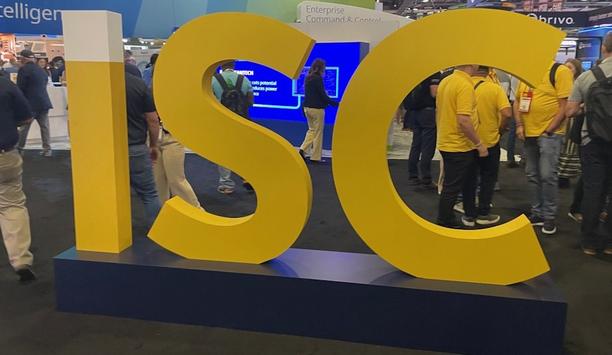
Artificial Intelligence (AI) had a major presence at the ISC West 2026 show in Las Vegas. Almost every booth offered some variation on AI and how intelligence is transforming the physical security industry. Several industry leaders led the way, showcasing how they are tackling complex security challenges with smarter, more efficient solutions. Obviously, the security industry will never be the same. Milestone Systems: Responsible AI and open platforms Milestone has declared 2026 the "year of delivery” on previously announced developments and enhancements. A standout feature is their new natural language AI search, which is being integrated across XProtect, Arcules, and Briefcam platforms to simplify how users interact with vast amounts of video data. A core pillar of their strategy is responsible AI development, which prioritises using licensed data over "scraped" data. They have introduced new anonymisation tools that protect privacy by replacing faces with AI-generated characteristics like hair color while keeping the person unrecognisable. Furthermore, Milestone is moving workloads to Linux to reduce costs, transitioning toward an app marketplace, and has partnered with NVIDIA for the "Hafnia" project to ensure high-quality data to train AI models. Ambarella: Powering the edge with AI chips With their presence at ISC West in a meeting room near the trade show floor, Ambarella is the "engine" behind many high-performance intelligent video products, specializing in low-power AI chips like the N1 and CV7 families. Their technology is moving beyond cameras, where they provide systems-on-chips [SOCs] to many manufacturers. They have expanded into "AI boxes" that can process 64+ video channels simultaneously. A standout feature is the Natural Language technology, which allows users to search for specific objects or abstract scenes using simple prompts. To address modern security concerns, Ambarella has implemented "agentic" programming for a no-code development of automated workflows and media signing to combat AI-generated deepfakes by verifying video integrity through metadata. Motorola Solutions: Simplifying intelligence Motorola Solutions shows physical security evolving into a real-time enterprise intelligence layerMotorola Solutions is prioritising user accessibility by integrating natural language processing into its system configuration. Motorola's portfolio demonstrates how physical security technology is evolving into a real-time operational intelligence layer across the enterprise. Instead of requiring custom coding, operators can now use simple commands—like asking the system to "show me when someone fell down"—to set up advanced analytics and search parameters. The company is also deploying AI agents designed to aggregate data and automatically flag safety or compliance risks, such as perimeter breaches or blocked fire exits. To ensure maximum utility of the hardware, Motorola Solutions’ system can ingest massive, complex physical manuals and automatically generate monitoring rules based on those standard operating procedures. Furthermore, Motorola is focusing on interoperability, using industry-standard interfaces to ingest data from various hardware brands and networks. This approach aims to provide operators with clear, recommended next steps during critical events, streamlining the decision-making process in high-pressure environments. i-PRO: Putting generative AI at the edge i-PRO is bringing generative AI directly to the edge with a new fisheye camera, which processes complex analytics locally rather than relying solely on the cloud. These cameras, on display at ISC West, have moved beyond simple attribute-based tracking to identify complex behaviors like aggression, fighting, and slip-and-fall incidents. By running on the latest Ambarella chips, i-PRO cameras can use generative AI to improve image quality and analyze scenes in real-time without external processing. This focus on edge-based intelligence ensures high-performance analytics are available even in environments where constant cloud connectivity might be a challenge. Brivo: The rise of agentic AI Eagle Eye Video Assistant (EEVA) acts as a natural language AI agent that can monitor for specific threats Brivo and Eagle Eye Networks have officially unified under the Brivo name, focusing on streamlining the experience for large integrators. They are pioneers in agentic AI, introducing features that allow users to talk to their mobile apps to initiate lockdowns or add users. Their Eagle Eye Video Assistant (EEVA) acts as a natural language AI agent that can monitor for specific threats, such as a brandished weapon or a specific vehicle, and automatically trigger access control responses. By treating access and video as a unified system, Brivo enables users to connect specific video skills—like detecting a red car or a brandished weapon—to automated access control actions. They are also using AI to achieve "zero-cost integration," linking disparate cloud systems using AI-generated instructions. Everon: Emphasis on video monitoring Everon is making a massive investment in active video monitoring, using AI-driven systems to deter crime even before it happens. “The market is ripe for it, and customers are demanding it,” says David Charney, Everon’s Sr. Vice President, Video Command Center. Employing virtual guards who can use voice commands, lights, and horns to "shoo away" unauthorized individuals. The company has implemented senior-level leadership that has facilitated more than 5,000 video-based apprehensions. Everon, specializing in integrated systems for multi-site businesses, uses a rigorous selection process to choose AI providers that can accurately filter alerts for specific applications, such as identifying when a fire door is blocked. As a "trusted advisor" to their 300,000 customers, the company focuses on delivering professional-level results that move beyond basic recording to proactive threat mitigation. Hanwha: New hybrid VMS combines cloud and on-prem Hanwha Vision highlighted the official public launch of Blaze, a hybrid video management system (VMS). The platform uses a hybrid architecture to manage on-premise and cloud-connected devices across multiple sites without complex port forwarding. Blaze features native AI capabilities, including semantic search that allows operators to find specific incidents using natural language queries, such as "person with a safety jacket." The AI security platform lets teams search surveillance footage the way they search Google. AI similarity detection allows operators to quickly trace a person’s movement and investigate incidents faster (useful in active shooter behavior, medical emergencies, or crowd panic scenarios, and more). The system also provides a "histogram" view of traffic patterns to help security professionals quickly identify anomalies in historical footage. OpenEye: Operational intelligence and shift to OpEx OpenEye unveiled AI-powered features such as visual chat and scene analysisOpenEye is redefining video surveillance by moving intelligence from the camera level to the cloud, significantly reducing the need for on-site server management. At ISC West, OpenEye introduced new AI-driven tools like visual chat and scene analysis. Beyond security, these tools provide valuable operational alerts, such as identifying overflowing dumpsters, dirty tables in restaurants, or vehicles blocking dock doors. The system also utilizes natural language for search, allowing users to find specific attributes like "people wearing backpacks" within designated timeframes. OpenEye also highlighted an industry-wide shift toward operational expenditures (OpEx) billing models, as users increasingly prefer predictable monthly or yearly payments over large upfront capital expenditures (CapEx). This model aligns with their channel-based operations, meeting customers where they currently operate without the burden of high fees. IQSIGHT: New name, same mission for Bosch video Formerly Bosch Video, the newly named IQSIGHT seeks to maintain the “Bosch pedigree” under the new name. It’s the same engineering, manufacturing, etc. IQSIGHT also pledges to be "easier to do business with" by improving user interfaces and end-to-end user experiences. Despite the transition, the company has increased their pace of innovation and reinforced the open systems philosophy with enhanced integrations with Milestone, Genetec, and others. The major product release at the show is IVA Pro Context, which uses generative AI to provide human-level scene understanding. Through a partnership with Laelaps AI, a robotics startup, IQSIGHT is exploring autonomous dispatch and response. When a camera identifies a scene, it triggers a robot to provide a tailored response. Commercialisation is expected in 12 to 18 months. Verkada: How their system can solve a crime But how does AI operate in the real world? Verkada had a “themed” exhibit demonstrating how their system could solve a hypothetical theft at the Louvre museum in Paris. The exhibit took attendees through and showed how Verkada technologies (e.g., license plate recognition and search capabilities) could provide fast results to solve the crime. AI-powered tools, like their newest unified timeline, demonstrate value in the real world of investigations.

IQSIGHT seeks to bring visual intelligence to environments where clarity, reliability, and trust matter the most, says CEO Sabrina Stainburn. Formerly Bosch Video Systems, IQSIGHT is an intelligence-first video security company, combining more than 60 years of engineering expertise with real-time intelligence to help organizations see clearly, act confidently, and improve outcomes in environments when every second matters. While the brand is new, the technology, reliability, and trust behind it are familiar— the products still carry the Bosch name, and the engineering teams remain the same to ensure the continuation of the Bosch legacy. As a result, customers can expect the same standards they rely on today. Embracing emerging technologies IQSIGHT is embracing emerging technologies. “We are applying AI where it delivers value by helping systems understand what is happening and surface the events and patterns that matter most—so customers can detect risk earlier, make faster decisions, and operate with confidence,” says Stainburn. With intelligence at the edge, the cameras act as sensors to secure premises, make buildings safer, and monitor perimeters — without requiring a cloud connection. Edge-based AI also supports integration into existing systems to add visual intelligence without a rip-and-replace — such as adding cameras with visual gun detection outside of entrances or supplementing systems with the ability to detect clothing color and other attributes. IQSIGHT combines the Bosch video portfolio with new AI-enabled capabilities AI-enabled capabilities IQSIGHT combines the Bosch video portfolio with new AI-enabled capabilities designed to remove blind spots IQSIGHT combines the Bosch video portfolio with new AI-enabled capabilities designed to remove blind spots and support earlier, better-informed decisions. The portfolio continues to include intelligent cameras, such as the FLEXIDOME, AUTODOME, DINION, and MIC models, AI-enabled Intelligent Video Analytics Pro (IVA Pro) offerings, and recording and video management solutions, such as BVMS software. This year, the portfolio will also expand with technologies and solutions built on IQSIGHT’s new intelligence-first platform. Vertical markets that are core to the strategy include government, critical infrastructure, education, and smart cities, all industries closely connected with safety, continuity, and operational performance. In these environments, visual intelligence helps organizations address practical challenges — securing perimeters, enhancing safety, and improving traffic flow — so they can operate securely and efficiently. Visual intelligence helps organizations address practical challenges Operating securely and efficiently “Reliability is essential in these industries, and our cameras are engineered to Bosch quality standards and designed to perform in demanding conditions, including extreme weather, while delivering dependable video and accurate analytics where it matters most,” says Stainburn. “These strengths make our video solutions ideal for any industry where security must be uncompromised.” IQSIGHT evolves from the sale of Bosch’s security and communications technology product business to European investment firm Triton on June 30, 2025. The product brands for video systems, access control, intrusion systems, and communications systems united under the roof of the new company Keenfinity Group. New organizational structure The Keenfinity Group now operates as a holding company consisting of four businesses In late 2025, Keenfinity Group introduced a new organizational structure designed to unlock the next chapter of growth and innovation. The Keenfinity Group now operates as a holding company consisting of four businesses, including the video systems business now called IQSIGHT. Bosch has a long history of partnerships and integrations, and partnerships will remain essential to how IQSIGHT delivers value and flexibility for customers. “We work closely with technology partners to ensure customers can use visual intelligence within the platforms and architectures that best fit their operations,” says Stainburn. Secure-by-design approach Deep integrations include VMS platforms, such as Genetec and Milestone, thus enabling real-time insights across on-premise and cloud environments. This approach gives customers choice — without compromising performance, security, or reliability, according to IQSIGHT. “Continually strengthening our existing partnerships is vital, and we regularly add capabilities to these integrations to deliver new features to enhance security and safety for customers,” says Stainburn. “Cybersecurity is not a feature for us — it’s a foundation,” Stainburn emphasises. “As video systems become more connected and intelligence moves closer to the edge, trust must be designed in from the start. We take a secure-by-design approach across our hardware, software, and integrations. That means protecting data at every stage — from capture to analysis to delivery.” Combining sight and intelligence Just as important, the company works closely with partners and customers to ensure systems fit into their broader security and IT strategies. “When organizations rely on video to make critical decisions, security and reliability must be non-negotiable,” says Stainburn. Stainburn sees video as evolving from traditional surveillance into “visual intelligence” — moving from simply recording events to understanding what is happening in real time. By combining sight and intelligence, organizations can see patterns, giving them the power to predict events that may happen. Proactively addressing risks Stainburn sees video as evolving from traditional surveillance into “visual intelligence” Traditionally, video security was based on video surveillance — an investigative tool for users to review what has already happened. With AI, users can take a different approach — looking at patterns to better secure their premises and have the foresight to intervene before incidents escalate. AI helps systems understand what is happening in a scene, enabling them to discern between a person standing at a train platform and an individual vandalising a train platform, someone holding a power drill versus someone holding a gun. “This level of visual intelligence brings clarity to unfolding events to assist users in proactively addressing risks,” says Stainburn. AI-enabled video systems With foresight, end users can prevent those events from occurring or other issues from escalating. The ability to discern patterns can also influence decisions around safety, resource use, and the customer experience, says Stainburn. “While security will always remain core, we expect visual intelligence to play an increasingly important role in improving operational efficiency across many environments over the next five years.” Not all AI-enabled video systems are equal. Edge, cloud, and GenAI-based tools have different strengths and selecting one approach over another depends on the application or the problem customers need to solve. IQSIGHT works closely with integrators and end users to understand the challenges they are addressing and to provide guidance on the best AI approach to reduce risks, lower response times, and improve operations. Proof of concept projects are important to demonstrating performance in the real world. That’s where IQSIGHT gains an advantage with solutions that deliver reliable results even in challenging conditions, says Stainburn.
Case studies

Milestone Systems, a provider of open platform video management software (VMS), is helping Columbia Borough, Pennsylvania, strengthen public safety through a community-wide video security system built on Milestone XProtect® VMS. For more than 16 years, Columbia has worked with Lancaster-area security integrator App-Techs to develop and expand a distributed wireless video network serving its downtown, public buildings, parks, and other borough facilities. Today, the system supports roughly 83 camera feeds, including 4K multi-lens and PTZ cameras, primarily from iPro. Distributed wireless architecture Located along the Susquehanna River in Lancaster County, Columbia is a historic borough of roughly 10,000 residents. As the community worked to revitalise its downtown and attract new businesses, borough leaders wanted safety and security to support that broader effort. Traditional wired infrastructure was impractical across Columbia’s geographically varied environment, requiring App-Techs to engineer a distributed wireless architecture. XProtect provides the video management foundation, with dedicated servers located in the municipal building and a remote park office. Officers can also access live camera feeds from laptops in patrol vehicles, while mobile access extends video to personnel during community events. Immediately dispatched officers Columbia’s dispatchers are the primary day-to-day operators of XProtect, monitoring cameras, and supporting officers in the field. In one incident, a dispatcher spotted someone breaking into a vending machine outside a laundromat and immediately dispatched officers. “Our staff member observed someone breaking into a vending machine just outside that building and was able to dispatch officers to the scene,” said Jack Brommer, Columbia Borough Police Department Chief. “Officers apprehended the individual, and it turns out this was a serial thief who had been breaking into vending machines across the tri-county area. So that single arrest helped resolve a number of thefts across multiple counties. That’s just the kind of impact this technology can have on a community.” The system also supports holding cells and interview rooms inside the police station, where microphones are integrated with cameras, as well as large community events. During Columbia’s annual “Thunder on the River” antique car show, Emergency Management personnel used the community camera network to support proactive monitoring and rapid response across the event. Gunshot-detection technologies Over time, Columbia’s video system has supported faster incident response, stronger evidence for prosecution and greater situational awareness for dispatchers and police officers. Borough leaders also use signage in parks and public areas to make camera coverage visible as a deterrent. “The data that I can point to is that we are trending downward, probably for the last five, six years, as far as call volume and crime trends. Those numbers have been very positive,” added Brommer. Looking ahead, Columbia plans to expand its use of video analytics, including object-search capabilities that can help investigators filter video by vehicle type, colour, and other attributes. The borough is also exploring emerging gunshot-detection technologies to further improve situational awareness.

After a major refurbishment, Benghazi Children's Hospital in Libya is preparing to deliver a safer, more connected, and more efficient healthcare experience. By adopting Hikvision's AIoT (AI-powered Internet of Things) technologies, the hospital is enhancing patient care, strengthening communication, supporting medical education, and improving operational efficiency throughout the facility. For more than four decades, Benghazi Children's Hospital has served local communities and families. Covering approximately 11,300 m², the hospital supports a wide range of inpatient and outpatient services. Its recent refurbishment—the first in over 40 years—was more than a maintenance project. The hospital set ambitious goals to modernise the environment, aiming for an 80% improvement in patient satisfaction, response times, and interdepartmental communication. Smart healthcare solution To support these objectives, the hospital has been working with the national distributor Al Motaheda to deploy an integrated Hikvision smart healthcare solution spanning patient communication, medical education, and fire protection. When a patient needs help, every second matters. To help caregivers respond quickly and efficiently, Benghazi Children's Hospital has deployed Hikvision's Nurse Call System across its two inpatient departments: the Observation Department and the Gastroenteritis Department. At 11 ward entrances, Doorway Terminals and LED indicators have been installed. Now, when a patient calls, room number and bed information will immediately appear in the corridor, helping nursing staff identify where assistance is needed. Delivering routine announcements A Nurse Station has been located between the two departments. From a single point, staff will be able to receive, prioritise, and respond to requests from all 11 wards, helping improve efficiency while ensuring patients receive timely attention. Beyond the nurse call system, the hospital also wants to strengthen communication between departments. 40 SIP Phones have been installed across examination rooms, operating rooms, labs, and offices, to keep every department connected for day-to-day coordination. 37 Ceiling Speakers will deliver routine announcements, visitor guidance, and emergency notifications. 26 Ceiling Access Points will provide hospital-wide wireless connectivity, supporting staff communications, connected devices, and future digital healthcare applications. Improving patient satisfaction Together, these systems have are creating a more connected healthcare environment where information reaches the right people at the right time. Hospital management expects the solution to play a key role in improving patient satisfaction while significantly reducing response times once the facility becomes fully operational. As a teaching hospital, Benghazi Children's Hospital also places strong emphasis on clinical education. However, limited space inside operating rooms can make it difficult for large groups of students to observe procedures firsthand. To address this challenge, the hospital has deployed a Live Surgery Broadcasting System built around the Hikvision Video Cart. Dedicated training hall This is a mobile unit that can be moved between all four operating rooms as needed. With appropriate patient consent and in accordance with hospital policies, it captures high-quality video and audio that can be transmitted live to a dedicated training hall. This will allow more medical students to observe operations without disrupting clinical activities or overcrowding operating rooms. In addition to live viewing, surgical procedures can – again, with consent – be recorded and stored for future training purposes. This will enable educators to build a growing library of teaching materials while giving more students access to practical clinical learning experiences. Centralized emergency management Fire safety has also been addressed by installing a comprehensive Hikvision fire protection solution. The system enables early fire detection, rapid alert distribution, and centralized emergency management. 203 Smoke Detectors cover every area of the building, from operating rooms to waiting areas to staff rooms. 24 Audible and Visual Alarms, and Manual Call Points have been placed at the ends of corridors and near all exits, where people moving toward evacuation routes will find them. A Fire Alarm Control Panel at the main reception provides centralized monitoring and control. A microphone at the same location will allow staff to broadcast live evacuation instructions to the entire hospital should it be needed. Effective medical education Together, these capabilities help ensure faster response during emergencies while supporting a safer environment for patients, visitors, and staff. Although the hospital has not yet officially opened following its refurbishment, feedback from hospital management and medical staff has been highly positive. As Taha Grgom, Project Manager at the Hospital put it: "The nurse call system will help us respond to patients more quickly, while the live surgery broadcasting system will open new possibilities for medical education. Together, these technologies are helping us build a more connected and efficient hospital." As Benghazi Children's Hospital prepares to welcome its first patients, it stands as a powerful example of how AIoT technologies can support better care, stronger collaboration, safer operations, and more effective medical education. More importantly, it shows what Tech for Good can mean in practice—using technology to make a meaningful difference where it matters most and help every child receive the care they deserve.

The challenge: Fifth Third Bank is one of America’s largest and fastest-growing financial institutions, with more than 1,500 financial centers and approximately 80 high-rise, high-density facilities across the United States. Referred to internally as financial centers, these branches serve as the primary touchpoint for customers and communities. As the bank expands beyond its Midwestern roots into the Southeast and Western markets, its security operations must scale without sacrificing reliability, compliance, or employee safety. “When we think about the branch of the future, we think about choices,” said Thomas Neltner, Director of Enterprise Workplace Services and Chief Security Officer at Fifth Third Bank. “March Networks gives us a strong foundation that lets us evolve at the right pace while maintaining the security and governance a bank requires.” That foundation is put to the test every day inside Fifth Third’s 24/7 Security Operations Center. Security concerns arise The solution: At the heart of Fifth Third’s security strategy is a centralized Security Operations Center that operates around the clock. It functions as the bank’s internal emergency response center, giving employees a direct line to live support when safety or security concerns arise. “Our Security Operations Center is the 911 center for Fifth Third,” said Darrin Steinmann, Vice President and Director of Corporate Security Investigations, Security Operations, and Security Strategy. “When employees call with a concern, we respond in real time with video, alarms, and coordination with law enforcement.” To support this mission across a rapidly expanding footprint, Fifth Third standardized on March Networks video surveillance and enterprise management software. Multi- sensor cameras Fifth Third has partnered with March Networks since 2004. Over more than two decades, its video infrastructure has evolved through multiple generations of technology, from early 4000 Series recorders to the 8000 Series and now the X-Series platform. This long-term approach has delivered continuity, stability, and a clear path for modernisation at scale. Today, March Networks supports more than 1,500 financial centers and 80 high-rise and high-density locations. The deployment includes more than 30,000 cameras and over 1,100 recorders, all centrally managed through a single platform. The camera environment is purpose-built for banking. It includes EL20 multi- sensor cameras for broad coverage, 360-degree cameras to eliminate blind spots, dome cameras for teller and lobby areas, and dedicated ATM cameras designed to capture clear facial images. “When you are responsible for security across this many locations, you need technology you do not have to worry about,” said Jason Walter, Senior Security Strategy Manager at Fifth Third Bank. “March Networks gives us that confidence.” Sharing critical information One of Fifth Third’s most impactful initiatives has been the rollout of exterior cameras across its branch network. Now approximately 60 percent complete, the program delivers full perimeter visibility around financial centers. That visibility has changed how the bank responds when incidents move beyond the branch interior. Teams can track suspects, identify vehicles, and share critical information with law enforcement in real time. “Our exterior cameras have changed the game,” Walter said. “They help protect our people, support law enforcement, and have driven apprehension rates above 80 percent.” Faster arrests also improve cash recovery and reduce long-term financial impact. Beyond investigations, exterior cameras support day-to-day operations. Property management teams use video to assess storm damage, snow removal, vandalism, and hurricane impacts without sending staff into unsafe conditions. Legal, retail, and fraud teams rely on video to verify incidents and resolve claims more efficiently. Law enforcement investigations Security at Fifth Third extends beyond the branch itself. Exterior coverage has strengthened the bank’s role as a community partner, providing video that supports law enforcement investigations for incidents occurring on or near bank property. From pedestrian accidents to crimes in adjacent areas, Fifth Third regularly assists local agencies through lawful video requests. The result is faster resolution, safer neighbourhoods, and a visible commitment to being a responsible corporate citizen in every market Fifth Third serves. Fifth Third’s technology strategy balances innovation with fiscal responsibility. The bank is midway through a multi-year upgrade from legacy 8000 Series DVRs to March Networks X-Series recorders. This phased approach extends the life of existing analog cameras while preparing the environment for future IP, hybrid, and cloud adoption. Health monitoring solution “The on-prem foundation gives us the control and cybersecurity confidence we need,” Walter said. “That puts us in a strong position to move toward hybrid and cloud solutions on our terms.” All locations are centrally managed through the March Networks Command platform. Security and IT teams can deploy firmware updates, apply patches, and monitor system health across the entire network without closing branches or disrupting operations. March Networks’ health monitoring solution also reduces unnecessary site visits by identifying issues remotely, helping lower operational costs and keep teams focused on higher-value work. Customer experience challenges Advanced use cases continue to emerge. In colder climates, for example, ATM vestibule loitering can create safety and customer experience challenges. Video analytics alert the Security Operations Center when someone remains in a vestibule without conducting a transaction. Analysts can verify the situation with live video, use two-way audio to request compliance, and escalate to law enforcement when necessary. “When an employee is dealing with a critical incident, having someone live on the phone, watching the video, makes a real difference,” Steinmann said. “That support matters in high-stress moments.” Safer banking environment The result: The relationship between Fifth Third and March Networks spans decades and is rooted in trust, accessibility, and collaboration. “I have worked with March Networks for over two decades,” Steinmann said. “They are not just a vendor. They are an extension of the Fifth Third family, and that level of access, support, and responsiveness matters.” As Fifth Third continues to evaluate AI, analytics, and cloud technologies, governance and compliance remain central to every decision. A strong on- premise foundation gives the bank flexibility to adopt hybrid and cloud solutions, including platforms like Searchlight Cloud, which links video with teller and ATM transactions for more intelligence, while meeting the cybersecurity requirements of a large financial institution. The result is a safer banking environment, stronger partnerships with law enforcement, and a scalable security strategy that supports Fifth Third’s continued growth.
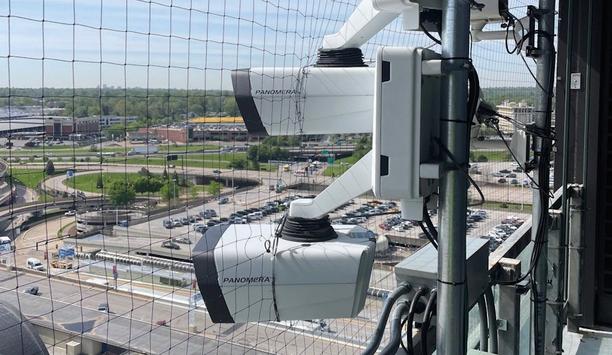
As Missouri’s largest and busiest aviation facility, St. Louis Lambert International Airport (STL) welcomed more than 15 million passengers in 2025. To implement a digital 360-degree surveillance system and secure over 70 million square feet of airport infrastructure, STL required a solution capable of covering vast spatial areas while significantly reducing infrastructure costs and complexity. At the same time, the airport aims to implement AI-applications to optimize its operations. With Dallmeier’s Panomera® multifocal sensor technology, STL achieved comprehensive high-resolution coverage with approximately 90 % fewer cameras and 75 % less infrastructure compared to the original surveillance design. Video security system Due to the continuous growth in passenger numbers, the STL Operations and Security Teams decided to modernise the existing video security system in June of 2018 in two areas: Firstly, in surface parking areas to increase customer safety and eliminate criminal activity such as vandalism and theft. The second solution targeted the airport’s four runways, the taxiways, and all terminal buildings to monitor the activities of aircraft, ground vehicles, and airport personnel. STL Airport Operations Team contacted their security integrator, Tech Electronics, to design and deploy an updated camera solution. The initial design used a combination of PTZ and single sensor IP cameras and would have required more than 130 cameras in total. From an infrastructure perspective, this would have required the installation of more than 42 new camera poles and the corresponding infrastructure (cable, network, power, etc.). The airside solution required significantly more technology to achieve the desired surveillance coverage. So, STL and Tech Electronics decided to look for another, more economical solution. Desired surveillance coverage During their technology search, STL discovered the Dallmeier Panomera® multifocal sensor technology, which was developed specifically for surveillance of large spatial areas using the fewest number of cameras to achieve the required surveillance coverage. David Kulinsky, Deputy Director of Operations & Maintenance at STL, recalls: “When we discovered Panomera® and saw that one Panomera® camera can capture large areas at high resolution and replace several single-sensor cameras, including the costly infrastructure, it became clear that Panomera® provided STL a more economical solution with higher quality images at a lower overall cost.” Intuitive user experience The test installation at the airport proved the image quality of the Panomera®. Kevin Hubble, Services Manager for STL with Tech Electronics, comments: “I was surprised at how few Panomera® cameras were needed to replace several PTZs and single sensor cameras and display the images in a much more user-friendly format. The SeMSy® Compact VMS software enables the user to view a single high-resolution image of the entire scene with simple digital PTZ controls to ‘zoom’ into any part of the image in greater detail. The result is an intuitive user experience resulting in greater operational efficiency – not to mention the superior high resolution video coverage.” To date, STL has installed more than 27 Panomera® cameras. Multiple IPS 10000 recording appliances and 5 user workstations with the SeMSy® Compact VMS client software complete the video system. Compared to the original planning, this resulted in approximately 90 % reduction in the number of cameras and approximately 75 % reduction in infrastructure required for the installation. Comprehensive situational awareness A particular highlight of the deployment is STL’s digital 360-degree surveillance concept. Using only ten Panomera® cameras, the airport achieves comprehensive situational awareness across large airside areas including runways, taxiways and apron operations. Unlike conventional camera concepts that require numerous PTZ and single-sensor cameras, Panomera® delivers a complete high-resolution overview in a single seamless image. This enables operators to monitor critical airport activities more efficiently across large spatial areas, while significantly reducing infrastructure complexity, maintenance effort and overall operating costs. AI-based video analysis Beyond security applications, STL is also evaluating Panomera® technology for operational process optimization inside the terminals. As part of a planned deployment in the ticketing area, a Panomera® V8 system will support AI-based video analysis functions such as passenger flow and waiting time analysis. The objective is to improve operational efficiency, optimize check-in processes and enhance the passenger experience — while leveraging the same high-resolution surveillance infrastructure already deployed throughout the airport. Video information technology David Kulinsky with STL summarises: “Any technology project at an airport must deliver a solution that is operationally efficient, resilient, and built for long-term performance. Our decision to deploy Panomera® cameras significantly enhanced overall surveillance coverage across the airport while reducing the technology and infrastructure footprint required to support it.” “The system also provides the ability to zoom into specific areas without sacrificing full-scene situational awareness or recording capabilities—an operational advantage over traditional PTZ cameras, which only record the field of view being actively monitored and can limit broader operational visibility.” In 1984, Dieter Dallmeier founded what is now Dallmeier electronic – not in the proverbial garage, but in a garden shed in Regensburg, Germany. Today, the company, which can justifiably call itself a hidden champion for video information technology "Made in Germany", has several hundred employees worldwide, more than 250 of them at the company headquarters in the center of Regensburg alone. Digital image storage system Dallmeier's camera, recording, software, and analysis solutions optimize security and processes for B2B end customers in a wide range of industries in over 60 countries. The focus is on users from the casino, smart city, airports, logistics, stadiums, and industrial sectors. But also, banks, critical infrastructure facilities as well as medium-sized companies from all sectors. With pioneering innovations, Dallmeier has succeeded time and again in placing itself at the forefront of technology: From the world's first digital image storage system with motion analysis in 1992, the patented "multifocal sensor technology" Panomera® with its "Mountera®" mounting system, to the latest Domera® camera family, which allows up to 300 camera variants with only 18 components. Complete manufacturing process These and many other innovations provide real, tangible customer benefits. And with a low Total Cost of Ownership (TCO) and a high Return on Investment (ROI) they can easily compete with systems produced and supplied from low-wage countries. With "Made in Germany", we also guarantee our customers the highest standards in data protection, cybersecurity, and ethical responsibility. With high quality and short supply chains, we also ensure – almost incidentally – sustainability and environmental protection. From our prestigious headquarters in the center of Regensburg, Dallmeier not only carries out its own research and development but also the complete manufacturing process – from component to product to solution.

Gozoki, a French family-owned company and pioneer in the freshly prepared meals market (Maison Briau, Maison Tino and other brands), has taken the step of investing to secure its industrial sites. At its facilities in Agen, the company now benefits from a state-of-the-art video surveillance system deployed by specialist integrator SDP, using Hanwha Vision hardware and software solutions. Production sites in the food manufacturing sector face stringent requirements for security, access control and traceability. Protecting staff, preventing intrusions, monitoring logistics flows and securing sensitive areas all present significant challenges. Present significant challenges As part of its ongoing commitment to improving its infrastructure, Gozoki began modernising its surveillance system in 2025 to enhance reliability, accuracy and responsiveness. “We needed a system capable of operating 24/7 in a demanding environment while delivering outstanding image quality. The Hanwha Vision solution meets these requirements perfectly,” says Nicolas Jeannesson, buildings and energy manager at Gozoki. To deliver the project, Gozoki selected SDP, a company renowned for its expertise in integrating electronic security solutions. SDP carried out the site survey, designed the network architecture, installed the equipment and completed its advanced configuration. The objective was to deliver a robust, scalable solution perfectly suited to the demands of a challenging industrial environment. “Our role is to provide a turnkey solution that is reliable and built to last. Hanwha Vision cameras enable us to deliver high levels of performance while simplifying maintenance,” says Pierre Albanese, managing director of SDP. Video analytics capabilities The cameras SDP and Gozoki chose to install were Hanwha Vision’s, and were selected for their exceptional image quality, even in challenging conditions, thanks to high-resolution sensors and WDR technologies. Advanced video analytics capabilities that enable intrusion detection, intelligent management of sensitive areas, and behavioral analysis, were also key features that Gozoki required. The reliability and durability of Hanwha Vision’s cameras are essential in industrial environments that are subject to fluctuations in temperature, humidity or lighting, such as Gozoki’s sites. Enhanced cybersecurity - a critical factor in preventing the risk of cyber attacks on connected systems - was also a vital element of the project’s requirements. The installed cameras cover all strategic areas, including vehicle entrances, loading bays, storage areas, internal traffic routes and external perimeters. “The integrated video analytics allow us to go far beyond simple monitoring. We now have a decision-support tool capable of anticipating risk situations,” adds Nicolas Jeannesson of Gozoki. Future regulatory requirements With the planned deployment of nearly 200 cameras across multiple sites around Agen, Gozoki now benefits from a modern video surveillance system that supports the company’s growth while meeting current and future regulatory requirements. “This project perfectly illustrates our commitment to supporting our customers over the long term with reliable, scalable technologies,” concludes Pierre Albanese. Together, SDP and Hanwha Vision delivered Gozoki a cohesive, high-performance and scalable solution, providing a clear, centralized view of security across its facilities.

Stadiums and arenas are no longer places that come to life only on an event day. Increasingly, they are becoming year-round hubs for concerts, conferences, hospitality, retail, and community activity. The Tottenham Hotspur Stadium is one such example of a venue generating additional revenue and audiences beyond football matches, with its 2025 commercial income rising from £255.2 million to £277.1 million, due to hosting four National Football League (NFL) franchises, high-profile boxing events, and a Beyoncé summer concert series. Positive visitor experience Yet, as these venues grow more complex and multifaceted, so does the challenge of keeping visitors and staff safe throughout the year. Security is no longer simply about responding to incidents.; Instead, it has become a strategic function that enables stadium leadership to tailor security to different event types and risk levels, keep on top of health and safety and maintenance, and add value to marketing, sales, operations, and more. More pointedly, venue operators will soon have to comply with the Terrorism (Protection of Premises) Act 2025, better known as Martyn's Law, which received Royal Assent in April 2025 and is expected to come into force in spring 2027. With less than a year before implementation is anticipated, organizations responsible for large publicly accessible venues are increasingly assessing how they can strengthen preparedness while maintaining a positive visitor experience. Wider readiness strategy Named in memory of Martyn Hett, a victim of the Manchester Arena attack in 2017, the legislation introduces new responsibilities for venue operators to consider the risk of terrorism and put appropriate measures in place to help prevent, respond to, and reduce the impact of a terrorist attack if it occurs. Notably, for venues with attendees of over 800 people, physical protection such as video surveillance, vehicle access control, ground security, and more, must be considered and evaluated on a regular basis. AI-powered video solutions can help organizations meet their obligation under Martyn’s Law as part of a wider readiness strategy. Video surveillance systems Traditional video surveillance systems have always played a critical role in venue security, but their effectiveness has often relied on human operators monitoring dozens, or even hundreds, of video feeds simultaneously. In busy environments, critical details can be missed, particularly when security teams are managing large crowds, multiple entry points, and fast-moving situations. With AI-powered cameras and video management systems (VMS), operators no longer need to continuously monitor multiple video, chat, and sensor data streams. Instead, AI does the monitoring, flagging any suspicious activity, unauthorized objects (people and vehicles), crowd congestion, and so on, for operators to respond to if needed. Operators are freed up to focus on other activities, while the system will quickly alert them to events that require intervention, helping them respond to events rapidly and prevent situations from escalating. Ground teams also benefit from contextual, AI-powered insights that can help them track and locate a person or vehicle of interest, such as clothing color, direction of travel, and if they are potentially carrying a weapon. Multi-directional models By enabling security teams to assess and respond to situations before they develop into something more serious, venues are better prepared for some of the objectives underpinning Martyn's Law. The legislation places particular emphasis on preparedness, requiring organizations to consider how they would respond to incidents through measures such as evacuation, lockdown procedures, and effective communication. Situational awareness is fundamental to all four. Modern-day cameras equip operators with high-definition footage of an event or object of interest. Most cameras available on the market start at 1080p definition, with 4MP, 6MP, 8MP or 4K resolution options. Camera form factors have also improved, with dome, flat eye, bullet, fish eye, pan-tilt-zoom (PTZ), thermal, and multi-directional models providing venues with a range of options to fit any sized area and surveillance need. Monitoring crowd movements Real-time intelligence from video surveillance provides operators with a clearer understanding of what is happening across a venue and its surrounding environment. Vitally, AI-powered video analytics and AI object detection help operators to avoid missing events that need their attention and action. During an emergency, security teams can monitor crowd movements, identify potential bottlenecks, move towards the last known location of a potential attacker, and direct the public away from dangerous areas. Information on an attacker’s location, physical appearance, and direction of travel, plus the location of any casualties or people hiding within the venue, can be shared with on-site personnel and emergency services, helping to coordinate a faster and more efficient response. Multiple analytics triggers To further refine operator response times and efficiency, alerts can be set based on multiple analytics triggers, for example, if a person is detected crossing a line and then remains in a pre-defined area for a set number of seconds. For post-event investigations, operators can search footage quickly using the metadata stored within video. For example, they can pull up all footage of all people wearing a grey top, or, to filter this further, a child wearing a grey top. This improves the efficiency and speed of carrying out investigations. Generative AI tool Moreover, if a video analytics tool supports it, operators can use an AI-powered search feature that enables them to input a phrase or sentence of what they are looking for, with the system showing them all relevant results. This feature, known as semantic search, is a more natural way of searching akin to prompting a generative AI tool to come to a result. Operators can also select a specific area of interest to view all footage related to that area, allowing them to quickly find motion within that area. They can see all motion within that section on all captured video footage, to see, for example, who left a suspicious package in a room. Some video analytics systems can also pull footage of similar objects across multiple cameras, which can help track the direction of a vehicle or person of interest as they move across a busy and large event space. Wider entertainment districts Modern venue security increasingly extends beyond the perimeter fence or turnstile. Many new stadium developments are embedded within wider entertainment districts, retail destinations, and mixed-use communities. As a result, operators are responsible for understanding activity not only inside a venue but also across surrounding public spaces where large crowds gather before and after events. AI-enabled video helps operators to monitor large areas efficiently, maintaining situational awareness across multiple locations and mixed-use premises (the arena, retail, transport links, storage and backroom areas, and so forth). Operators gain a comprehensive understanding of potential risks and a stronger ability to respond before issues escalate. AI-powered video analytics There are also value-added benefits to other departments, such as marketing, sales, maintenance, staffing, and cleaning. Understanding and predicting busy periods and crowd flow patterns, alerting to long queue lengths, identifying congestion points, and monitoring vehicle movements and parking spaces all help to improve the visitor experience and streamline event operations. This is particularly useful for multi-use venues where one day a football match may be hosted, the next day a corporate event, and the following day a concert, with different stadium areas being used each time. Operators need visibility of how people move through their spaces and where resources are best deployed. AI-powered video analytics can provide that intelligence in real time. Venue leaders have a short window of opportunity to strengthen their security strategies ahead of Martyn’s Law coming into force. Investing in AI-powered video security shifts security into a proactive, value-generating function that meets the needs of today’s multi-use event spaces and helps to deliver the visitor experience that attendees have become accustomed to.
Products
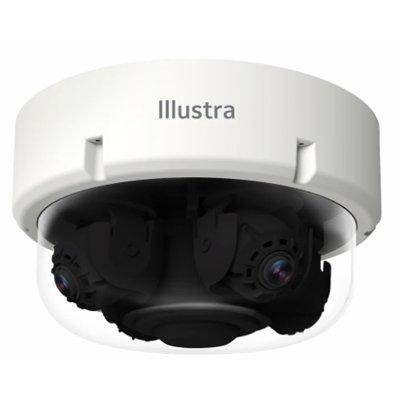
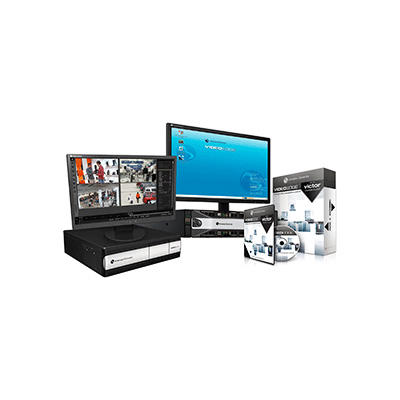
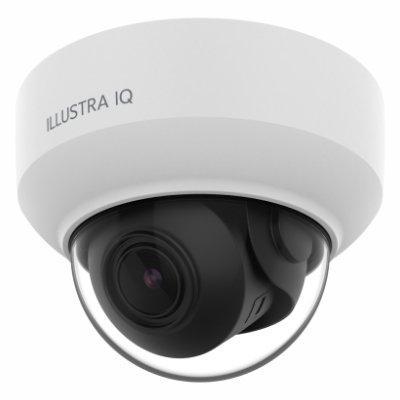
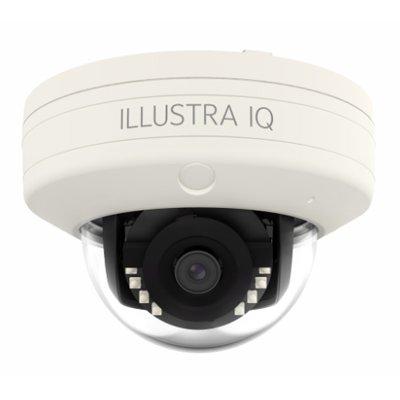
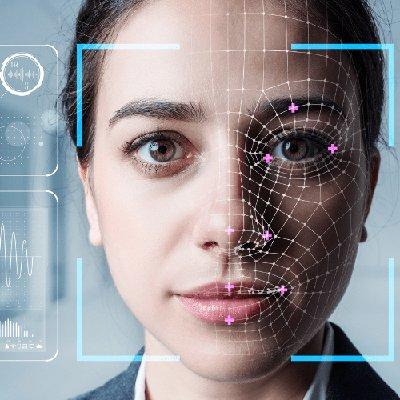
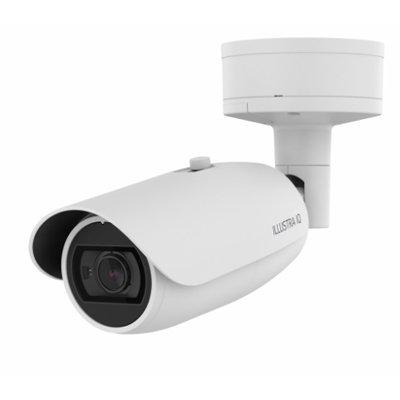
Round table discussion

Casinos are tasked with monitoring vast gaming floors, cashier cages, and access points. The market for casino security and surveillance demands software and hardware that provide high-definition, multi-angle visual coverage to ensure the integrity of the games and to protect players, staff, and the public. Like other vertical markets for physical security technology, the casino market is undergoing change and facing challenges. We asked our Expert Panel Roundtable: How are new technologies impacting the casino surveillance and security market?

Like other disciplines in the world of corporate security, executive protection is evolving from reactive to proactive. Unlike reactive bodyguards, modern executive protection professionals use a proactive approach focused on risk mitigation, advance planning, and threat intelligence to prevent incidents before they happen. What is the role of technology? We asked our Expert Panel Roundtable: How can physical security technology promote better executive protection?

Adequate video surveillance coverage depends entirely on a facility's layout, square footage, and security goals. Historically, better coverage required more cameras, but technology innovations are changing those expectations and undermining previously held rules of thumb. We asked our Expert Panel Roundtable: Do today's video systems generally require more cameras or fewer cameras, and why?
White papers

Technology's Role In Securing Banks And Financial Institutions
Download
Integrated Systems Enable Critical And Compliant Security For Transportation
Download
Modernizing Physical Access Control
Download
Access. Intrusion. One Estate.
Download
Minimizing Storage, Maximizing Focus
Download
Securing The Modern Data Center
Download
Security Technologies Promote Real-Time Awareness In K-12 Schools
Download
An End User's Guide To Physical Security For Data Centers
Download
Hospital Safety In A High Risk World
Download
How Digital Transformation Is Delivering New Opportunity
Download
Where Do We Go From Prox?
Download
The User-Centric Security Revolution
Download
Read This Before You Sign Off On A Weapons Detection System
Download
One System, One Card
Download
Aligning Physical And Cyber Defence For Total Protection
Download