Video analytics





White papers

Integrated Systems Enable Critical And Compliant Security For Transportation
Download
Minimizing Storage, Maximizing Focus
Download
Security Technologies Promote Real-Time Awareness In K-12 Schools
Download
An End User's Guide To Physical Security For Data Centers
Download
Understanding AI-Powered Video Analytics
Download
Open Credential Standards And The Impact On Physical Access Control
Download
What is a universal RFID reader?
Download
System Design Considerations To Optimize Physical Access Control
Download
Milestone Cloud Deployment Guide
Download
Using Artificial Intelligence (AI) To Automate Physical Security Systems
Download
Selecting The Right Network Video Recorder (NVR) For Any Vertical Market
Download
How Intelligent Video Is Transforming Banking And Financial Institutions
Download
The Real Cost Of An Outdated Video Security System
Download
Understanding The IT Needs Of Video Surveillance
Download
AI In Security Solution
Download
News

Scality, a pioneer in data infrastructure software for AI-era storage at scale, has joined the Common Vulnerabilities and Exposures (CVE™) Program as a CVE Numbering Authority (CNA) under the Root operated by the European Union Agency for Cybersecurity (ENISA). As a CNA, Scality assigns CVE Identifiers (CVE IDs) and publishes corresponding CVE Records for vulnerabilities discovered in all of its software products, including Scality RING, Scality ARTESCA and Scality ADI. Scality became a CNA on July 21, 2026, joining a growing number of European CNAs. It has also strengthened its vulnerability management processes, from providing accurate vulnerability information on the CVE List to moving vulnerabilities it previously disclosed in its technical bulletins into CVE Records, so customers can track them in their existing tools. Vulnerability management processes The reporting obligations of the EU Cyber Resilience Act (CRA) began on September 11, 2026. Under the CRA, manufacturers of products with digital elements available in the EU market must notify authorities of actively exploited vulnerabilities and severe incidents, starting with an early warning within 24 hours. Enterprise security teams track and prioritise vulnerabilities by CVE ID. Their scanners, ticketing systems and patch workflows are built around those records. Scality customers have directly asked for CVE coverage of Scality software. As a CNA, Scality now controls that path from end to end: it validates a reported vulnerability, assigns the CVE ID and publishes the corresponding CVE Record with affected versions and remediation guidance, coordinated with the release of a fix. Actively exploited vulnerabilities "Our customers run Scality in some of the most regulated environments in the world, and their security teams were clear about what they wanted: vulnerability information from the vendor, in the format their tools already use," said Anh Nguyen-Phuoc, chief information security officer, Scality. "Becoming a CNA means that when a vulnerability is found in Scality software, it gets its CVE ID and public CVE Record from the people who know the code best, at the moment the fix is ready. It also gives us a seat in the community that keeps the CVE system working, and we are glad to do that under the ENISA Root." CRA conformity milestones CNA status builds on the security practices behind Scality's products. Scality operates an ISO 27001-certified information security management system. Scality RING, Scality ARTESCA and Scality ADI are built on CORE5, Scality's five layers of cyber resilience from API to architecture. Scality also publishes a software bill of materials (SBOM) with every ARTESCA release and is on track with its CRA conformity milestones. "Storage holds the data an organization cannot afford to lose, so storage software has to meet the same disclosure standards as the rest of the security stack," said Paul Speciale, chief strategy officer, Scality. "Becoming a CNA is a practical commitment to our customers. When something in our software needs fixing, they hear about it from us directly, with an identifier their tools recognize and the guidance to act on it. It sits naturally alongside the cyber resilience we build into every product."

Gunnebo Safe Storage is strengthening its presence in the Swiss market through an expanded partnership with IMHOTEC Next Level Safes Engineering AG. Under the new arrangement, IMHOTEC will have an exclusive role for Chubbsafes and Primat across Switzerland. IMHOTEC will become the exclusive Swiss partner for certified Chubbsafes and the complete Starprim range from Primat. The two portfolios will be supported by Imhotec’s established engineering expertise, local stock and nationwide service organization, giving customers access to both ranges through a single, locally supported operation. Locally supported operation Says Robin Schneider, CEO of IMHOTEC Next Level Safes: "Twenty years ago the banking industry was largely convinced almost every asset would end up digital, and cash together with safe deposit lockers would gradually fade out. Digitalisation has advanced further, and crypto currency has arrived. Even so, the need to keep physical valuables safe has kept growing." “We’ve learned a great deal from working in demanding environments, and this experience is now being applied to private clients and high-risk sites beyond the banking sector. The requirements can vary from one site to another, but the fundamentals remain the same: a well-built safe, reliable performance and proper service over the long term.” Safe storage solutions IMHOTEC and Gunnebo Safe Storage have worked together since 2012, first as installation and service partner for SafeStore Auto systems, classic safe deposit lockers and vault construction. Distribution followed later, together with high-security locks, management software and certified safes, allowing Imhotec to deliver complete safe storage solutions from a single source. Together, the two companies have made their safe deposit solutions a standard across the Swiss and Liechtenstein banking landscape. IMHOTEC today services between 400 and 500 safe deposit installations in Switzerland and Liechtenstein, covering automated, electronic and mechanical systems and the vault rooms that house them. Automated safe storage Robin adds: "Some of the installations we look after were built by Gunnebo Safe Storage and Leicher close to thirty years ago, before my time in this industry, and they are still in daily use. With this agreement our customers get both portfolios from a single Swiss source, with the same team behind them for the life of the equipment." As bank branches have become more open and customer-focused, safe storage has become part of the wider service they offer. Automated safe storage gives customers direct access to their valuables, while allowing banks to provide an additional service alongside their core financial offering. Local market knowledge Viktoria Lövberg, Director Strategic Key Distributors & Defense, Gunnebo Safe Storage Europe, concludes: "The Swiss market continues to demonstrate the importance of safe storage for banks, businesses and private customers. Our collaboration with Imhotec has grown over many years, combining our expertise with their local market knowledge and technical capability." "The expansion of this partnership strengthens the availability of both Primat and Chubbsafes solutions across Switzerland. By working closely together from the initial design and specification stages through to installation and ongoing service support, we bring together the right expertise at every stage of a project to meet each customer's specific requirements."

Evolv Technology, a pioneer in AI-powered weapons screening, announces the release of Evolv eXpedite™ 3.0, the newest update to the company’s AI-powered bag screener. eXpedite 3.0 is built around three outcomes: showing operators exactly where to search when a bag alerts, delivering a stronger balance of knife detection against nuisance alerts, and providing one connected view of people and bag screening. Evolv’s Red Box guided search, a new detection algorithm, and an upgraded MyEvolv portal connection deliver these benefits to customers. Evolv eXpedite is an autonomous X-ray system that screens bags quickly without requiring staff to interpret X-ray images. The system analyzes each bag image, and, if it detects a potential threat, alerts staff for further inspection. In that moment, eXpedite 3.0 gives operators more context to resolve alerts with a Red Box identifying the area of potential concern. Standard search procedures Now see what alerted. Know where to search: Bag searches are high-pressure moments. Now operators start with direction rather than a guess. Every alert image carries a Red Box highlighting exactly where the system identified a potential threat in the bag, while operators follow their standard search procedures. Enhanced detection performance: eXpedite 3.0 gives customers greater flexibility with expanded sensitivity options to support enhanced knife detection, along with refined alerting that reduces alerts from common items such as binders. High-pressure moments “Transitioning to eXpedite 3.0 has reduced our alert volume by 50%. By limiting unnecessary interruptions, we’ve significantly reduced the operational burden on our staff while ensuring students transition smoothly and efficiently to the building," said Nino Dicandia, Director of Safety and Security Hillsboro School District (MO). The goal is to help customers find the threats and keep everything else moving. Five sensitivity levels let teams set detection to their own risk profile. People and bag screening. One connected operation. Alert images, tags, and screening data for bags now come together with Evolv Express people scanning data, reporting in MyEvolv and Evolv Insights. Security leaders can review alerts and analyze operations of their entire fleet – both Express and eXpedite - from a phone or desktop, in one view. Together, Evolv Express and Evolv eXpedite give security teams a layered approach to screening: Express screens people while eXpedite screens bags. With over 39 million bags screened across schools, hospitals, and entertainment venues, eXpedite 3.0 helps teams screen quickly, search with clarity, and keep people moving.

DigiCert, a pioneer in intelligent trust, releases findings from its global consumer study revealing fraudulent emails are affecting British shoppers and potentially costing retailers sales ahead of Black Friday. The study of 2,000 UK consumers found that 43% had deleted or abandoned an email in the past year because they were unsure whether it was genuine. Nearly one in five (18%) had delayed a purchase while 12% had shopped with another retailer. Busiest shopping periods The findings highlight a growing challenge for retailers during ahead of one of the busiest shopping periods of the year: just 3% of UK shoppers say they would open or click an offer they couldn’t verify came from a brand. A quarter (25%) would delete the email, while 23% would ignore or abandon the offer. Paul Holt, Group Vice President, EMEA at DigiCert, commented, “Black Friday is one of the biggest opportunities for retailers, but trust can make or break a sale before a customer even reaches the website. With shoppers increasingly wary of fraudulent offers, legitimate brands need to make it easier for customers to recognize authentic communications. Verified brand identities and stronger email authentication can give shoppers the confidence to engage, while making it harder for fraudsters to impersonate trusted businesses.” Most impersonated organizations Nine in ten UK (90%) consumers reported receiving a suspicious email in the past year, with delivery companies the most impersonated organizations. Among those who received suspicious emails, 63% had encountered messages claiming to come from parcel or delivery providers. Those messages can be especially convincing during the holiday shopping rush. Despite growing awareness of online fraud, 38% of UK consumers admitted taking an action before realising an email was fraudulent. More than a third (34%) of UK shoppers judge an email’s authenticity partly by whether they were expecting it, making fake delivery notices particularly convincing when they arrive at the exact moment a shopper expects a real parcel. AI-generated scams “Shoppers shouldn’t have to play detective every time an offer lands in their inbox,” said Al Iverson, Industry Research and Community Engagement Lead at Valimail, a DigiCert company. “Retailers can help by making their emails harder to impersonate and easier to recognize. When shoppers hesitate because they don’t know who to trust, even a legitimate offer can end up in the trash.” Nearly three quarters (73%) of UK shoppers believe they could spot a professionally written scam email. Yet 42% still rely on spelling and grammar to judge authenticity, a check AI-generated scams can easily pass. Despite this confidence, 38% of UK consumers have acted before realising an email was fraudulent, including 25% who clicked a link and 8% who made a payment or purchase. Offering similar promotion Verification could give retailers a competitive advantage, with 56% of UK consumers saying they would choose a brand that displays its official logo in the inbox over a competitor offering a similar promotion. More than eight in ten (81%) said knowing a logo had been independently verified would make them feel safer. But awareness remains a hurdle, with 38% of UK consumers unaware that verified inbox logos exist. Consumer doubts also reach product listings. More than a third (37%) of UK shoppers have decided not to buy because they were unsure whether an image or video was genuine. The research found how content credentials showing the origin of product images were more likely to earn trust and prompt a purchase than the same images without them. At checkout, 53% of UK consumers said a trust mark confirming who operates the website would make them more likely to complete a purchase.
Expert commentary

Control room operators face a tricky and ever-growing list of responsibilities. Every day, they're expected to monitor dozens, sometimes hundreds, of camera feeds, identify suspicious behavior, and respond quickly when something goes wrong. Add in a constant stream of alerts, many of which turn out to be false alarms, and it's easy to see how even the most experienced security professionals can become overwhelmed. Indeed, in the UK alone, there are an estimated six million CCTV cameras, with around one in 70 publicly owned. A human, or team of humans, cannot possibly be expected to keep on top of every single one of those devices without missing something. Monitoring multiple locations Recently, the UK's Centre for the Protection of National Infrastructure (CPNI), now part of the National Protective Security Authority (NPSA), uncovered a challenge faced by many security operators known as the vigilance decrement, where concentration can begin to decline after just 20 to 30 minutes of continuous monitoring. A study of 42 professional CCTV operators, published in Applied Ergonomics, found that they detected only around half of the target behaviours during a 90-minute video review task. For security teams working long shifts and monitoring multiple locations, this presents a significant challenge. Missing an incident can have serious consequences, yet expecting operators to maintain the same level of concentration throughout an entire shift simply isn't realistic. Identifying unusual activity The result is that operators spend less time reviewing routine activity, have faster responses to threats This is where AI-powered video analytics makes a huge difference. By automatically identifying unusual activity, filtering out unnecessary alerts, and highlighting events that require attention, AI can help operators work more effectively and focus on what matters most. The result is that operators spend less time reviewing routine activity, have faster responses to potential threats, and there are more opportunities for security professionals to apply their experience and judgement where it's needed. Breaking the cycle of alarm fatigue Traditional video surveillance systems have often relied on motion detection and basic rules to identify potential security incidents. While useful, these technologies can also generate large volumes of unnecessary alerts. A tree branch moving in the wind, an animal crossing a perimeter, or a delivery vehicle stopping near a building can all trigger a false alarm. Now imagine this happening across hundreds of cameras, throughout an eight- or twelve-hour shift. Operators can quickly find themselves dealing with a seemingly endless queue of notifications, most of which turn out to be harmless. Over time, this can lead to alarm fatigue. When operators are repeatedly presented with false alarms, they may become less responsive to new notifications, increasing the risk of a genuine threat being overlooked. This isn't a reflection of their professionalism or experience, but a natural response to information overload. Persistent alarm fatigue It can also make it harder for organizations to demonstrate the value of their security investments The consequences extend beyond missed incidents. Persistent alarm fatigue can contribute to stress and burnout, slow response times, and place additional pressure on security teams that may already be stretched. It can also make it harder for organizations to demonstrate the value of their security investments. Simply adding more cameras, hiring more operators, or increasing training isn't necessarily the answer. Instead, organizations need to consider how technology can reduce the volume of information operators must process and ensure that the alerts reaching them are genuinely useful. Smarter alerts, faster responses AI-powered video analytics is helping to address this challenge by making surveillance systems more intelligent and proactive. Rather than simply detecting movement, modern analytics can identify objects, recognize patterns and provide greater context around what's happening within a camera's field of view. For example, a traditional system might generate an alert every time something moves near a perimeter fence. AI analytics can help distinguish between an animal passing through, an authorized vehicle following its usual route, and someone loitering near a restricted entrance. Operators can then focus on the activity that warrants further investigation, rather than spending valuable time reviewing harmless events. Providing relevant information The system identifies potential concerns and provides relevant information Advances in vision-language models are taking this a step further. These technologies can interpret and describe activity within video footage, helping operators understand what's happening without having to manually review every camera feed. This shift is gaining momentum across the industry. The Security Industry Association's 2026 Security Megatrends report identifies the automation of security operations centres as a leading trend, highlighting opportunities for AI to support activities such as incident reporting and filtering lower-priority alarms. Importantly, the aim isn't to remove operators from the process. Much of this technology takes an agentive AI approach, where AI assists human decision-making rather than acting independently. The system identifies potential concerns and provides relevant information, while operators remain responsible for assessing situations and deciding how to respond. For security teams, this creates an opportunity to improve situational awareness while reducing the pressure of constant monitoring. Identifying threats before they escalate One of the most valuable capabilities of advanced video analytics is its ability to identify unusual behavior and patterns over time. Consider a vehicle driving slowly around a business park. On its own, this might not appear suspicious. However, if the same vehicle returns on three consecutive evenings, stopping near a restricted entrance before leaving, it could indicate someone assessing the site's security arrangements. An operator working a single shift might not notice the connection, particularly if the activity occurs across several days. But AI analytics can help identify recurring patterns and flag them for further investigation. Identifying recurring incidents These capabilities also offer benefits beyond immediate security monitoring The same principle applies to other scenarios. Someone repeatedly approaching a restricted area, a person remaining in an unusual location for an extended period, or a vehicle traveling against the normal flow of traffic could all trigger an alert based on predefined rules or patterns of behavior. With the right information available, security teams can investigate potential threats earlier and respond before an incident escalates. These capabilities also offer benefits beyond immediate security monitoring. Analytics can help organizations identify recurring incidents, understand how spaces are being used and make more informed decisions about patrols, staffing and security resources. For multi-site organizations, this can be particularly valuable, allowing security teams to identify trends across locations rather than treating each incident in isolation. Making investigations faster and more effective AI can also significantly reduce the time required to investigate incidents after they occur. Reviewing hours of recorded CCTV footage has traditionally been a painstaking process. Investigators may need to search through multiple camera feeds to identify a person, vehicle, or sequence of events, often under considerable time pressure. Advanced video search and synopsis technologies can simplify this process by condensing lengthy recordings into a much shorter visual summary. Events and objects captured at different times can be presented together, allowing investigators to identify relevant activity quickly while retaining links to the original footage and timestamps. For example, an investigator looking for a particular vehicle can search footage based on characteristics such as color, type, or direction of travel, rather than watching hours of recordings manually. For police forces, local authorities and private security teams, these capabilities can make a substantial difference to investigations, reducing the time spent searching through footage and helping important evidence reach the right people sooner. Demonstrating the value of intelligent video AI-powered video analytics can also deliver a measurable return on investment Alongside the operational benefits, AI-powered video analytics can also deliver a measurable return on investment. An Omdia survey of 140 end users across North America and Europe found that more than 85% of organizations achieved a return on investment from their video analytics deployments within one year. More than half reported seeing returns within the first six months, with banking and manufacturing reporting particularly strong results at 95% and 90%, respectively. Evidently, intelligent video can deliver value far beyond traditional surveillance. Improved incident detection Reducing false alarms can help operators use their time more effectively, while faster investigations can lower the resources required to review footage. Improved incident detection and response can also help organizations minimize disruption, protect assets and strengthen their overall security posture. There are benefits for installers and integrators too. By introducing advanced analytics into existing video management systems, they can help customers get more value from their security infrastructure, while offering additional capabilities that can evolve alongside operational needs. Rather than viewing video surveillance solely as a cost centre, organizations can increasingly use the intelligence it provides to improve security performance and inform wider operational decisions. Keeping people at the heart of security As AI becomes more capable, questions around human oversight and decision-making will become increasingly important. There is a distinction between AI that supports operators and fully autonomous systems that can independently make decisions and take action. While more agentic AI capabilities are emerging, many of the most practical applications in video security today are designed to assist people, not replace them. Making informed decisions This combination of machine intelligence and human experience is where the greatest value lies For instance, AI might identify a person behaving unusually near a restricted entrance, but an operator can assess the wider context, determine whether there is a genuine threat and decide on the appropriate response. Similarly, analytics can highlight a vehicle that has repeatedly visited a site, but it takes human judgement to establish whether that behavior is suspicious or entirely legitimate. This combination of machine intelligence and human experience is where the greatest value lies. AI can continuously analyze large volumes of footage, identify patterns across different cameras and shifts, and highlight events that deserve attention. Operators bring the contextual understanding, professional judgement and accountability needed to make informed decisions. An operator reviewing five relevant alerts, each supported by useful information, is in a much better position to respond effectively than someone attempting to process 50 notifications with little context. The goal is therefore not to automate every aspect of security, but to create a more effective partnership between people and technology. A smarter approach to security operations The demands placed on security teams are unlikely to decrease. Organizations are managing larger sites, more cameras and increasingly complex security environments, often without equivalent increases in staffing or resources. At the same time, the limitations of human attention remain unchanged. No matter how experienced or well-trained an operator may be, maintaining constant concentration across dozens of video feeds is an unrealistic expectation. AI-powered video analytics offers a way forward. By reducing unnecessary alerts, identifying suspicious patterns, and accelerating investigations, these technologies can help security teams become more proactive, efficient, and effective. Most importantly, they allow operators to concentrate on what they do best: understanding situations, making informed decisions and protecting people and places. The future of security isn't about replacing the people behind the screens. It's about giving them the intelligence and tools they need to do their jobs better.

One of the best business lessons I learned didn’t come from business journals or the boardroom. It came from a biography: Steve Jobs by Walter Isaacson. If you haven’t read it, you should! The book covers the full arc of Jobs’ career, and while many of the most talked about lessons center on his entrepreneurship, perfectionism, and brand building, the one that has stayed with me is his philosophy of design. Digital music player market I don’t mean design in the sense of aesthetics, although Apple certainly became famous for that. I mean design as an understanding of how people interact with technology. Examples of Jobs’ design philosophy appear throughout the book, but the chapters about the birth of the iPod are particularly compelling. If you’re too young to remember the era of downloading songs from Napster and loading them onto MP3 players, here’s the context. By the early 2000s, Apple was entering a crowded digital music player market. Companies like Sony, Creative and Rio had already introduced devices that were packed with technical innovation, and they were growing in popularity among college students, commuters, and early adopters who preferred the solid state devices over larger, glitchy portable CD players. Yet Jobs believed the entire MP3 player category possessed a fundamental flaw: all the products were too complicated. More intuitive experience In envisioning the iPod, Jobs became obsessed with creating a more intuitive experience Actually, Jobs used more blunt language. He said they all “were deeply flawed.” They held only a handful of songs, and users struggled with frustrating menu trees to access their most basic functions. As for the software managing the devices’ music libraries? To quote the book, “Only a genius could figure out half of their features.” Jobs saw something the existing manufacturers didn’t. Their MP3 players weren’t offering the one thing that consumers wanted the most, an easier way to listen to music. In envisioning the iPod, Jobs became obsessed with creating a more intuitive experience. He challenged his team to eliminate unnecessary complexity and established a simple rule for the user interface: if a person wanted a song or a function, they should be able to get there in no more than three clicks. Incredibly sophisticated technology The result was a product that felt completely different to use. Apple took an incredibly sophisticated technology and made it approachable. The complexity didn’t disappear; it was just moved behind the curtain where the user didn’t have to think about it. Despite being a late entrant to the MP3 industry, Apple quickly became the dominant manufacturer in the category because of the iPod’s unmatched usability. Plenty of successful companies cared about usability, but Jobs made simplicity a strategic priority. While competitors were adding features and complexity, Apple was asking, “How do we make this easier?” Twenty years later, I still think that’s one of the most important questions any technology company can ask, and one that is shaping the next generation of security technology. Stronger security practices Making a system more secure meant adding steps, procedures, and user responsibilities Which brings me to where I spend most of my time these days: Identity verification. For years, the security industry viewed convenience and security as competing priorities. Making a system more secure meant adding steps, procedures, and user responsibilities. What’s exciting about modern biometrics is that we’re increasingly able to improve both simultaneously. In many ways, we’re applying Jobs’ three click philosophy to identity verification, reducing the interaction required from the user without compromising the strength of the underlying security. And by reducing friction, organizations can implement more frequent identity verification that supports stronger security practices. Biometric authentication experience The simplicity of the biometric authentication experience can make people underestimate the sophistication of the technology behind it. Just as iPod users didn’t have to think about file formats, manually transferring songs to their device, or navigating cumbersome menus, users of modern biometric systems don’t have to think about how their faces, palms, or fingerprints are converted into encrypted, mathematical templates that cannot be reverse engineered. Or how the system verifies that a live person, not a photo, is standing in front of it. Or how AI quietly adjusts for the naturally occurring, gradual changes in a person’s appearance, whether from age, lifestyle, or a few extra pounds. Interacting with a biometric identity solution is like listening to music on an iPod or today, an iPhone. You don’t even think about the incredible technology working in the background that makes the experience possible. For example, with facial authentication, the most frictionless form of identity verification, you look at a reader without even stopping. In a fraction of a second, the system accurately matches you to your digital identity with a false match rate as low as 1 in 10 billion! I consider that more like a ‘zero click’ solution. Providing better protection The challenge for manufacturers will be resisting the temptation to make them more complicated As our industry embraces AI, we can expect to see a new generation of products that can automate more tasks, synthesise more data, and deliver more functionality than ever before. The challenge for manufacturers will be resisting the temptation to make them more complicated. Product teams should take a page from Jobs’ playbook. Instead of focusing on what the latest technology makes possible, they should be asking, “What do our customers genuinely want? And how can we use technology to make that experience better? Easier? Simpler? As effortless as using your face to access your phone?” That’s the lesson of the iPod, and why a guy who never developed a security product has provided one of the most important lessons for our industry. Companies that build products people want to use will also be creating solutions that are adopted more broadly, used more consistently, and ultimately provide better protection.

When news broke that a Renoir painting had been stolen from an exhibition in the south of France, days after 600 diamonds were taken from a museum in Vienna, few in the art or security worlds would have been surprised. Europol had recently published “Changing Tactics, Changing Targets: The Evolving Nature of Museum Heists,” highlighting criminals’ growing focus on high-value objects and their increasing use of force. The latest theft also echoes the Louvre heist almost a year ago, both in how quickly it unfolded and in the security lessons it exposes. When every second counts Both French museum thefts happened in broad daylight. Both were fast. CCTV from the Renoir museum shows the perpetrators cutting through the perimeter fence early in the morning. Police were reportedly on site within five minutes of the alarm being raised. It still wasn’t fast enough. That matters. For many museums and galleries, simply building higher walls or stronger fences isn’t an option As criminals become bolder, custodians of national treasures and high-value objects need to rethink where protection begins. For many museums and galleries, simply building higher walls or stronger fences isn’t an option. These buildings are often architectural landmarks and public spaces. Turning them into fortresses defeats the point. But there is another lever security teams can pull: earlier detection. A few extra seconds of warning could give on-site security or nearby police the time they need to intervene before a work of art disappears. Forget the Hollywood lasers The cover of Europol’s museum heist report shows a criminal wielding a mallet in front of artefacts protected by red laser beams. It is the kind of security system made famous by films including “Entrapment,” “Ocean’s Twelve” and “The Thomas Crown Affair.” Virtual perimeters aren’t science fiction. But the technology available today looks very different. Museums and galleries need stronger protection without compromising their architecture or the visitor experience. One technology attracting attention is LiDAR, a spatial sensing system that uses lasers to understand what is happening within a physical environment An invisible perimeter The technology sends out laser pulses and takes millions of spatial measurements every second LiDAR is already used in environments ranging from railway stations and prisons to electricity substations. Its appeal lies in its accuracy and flexibility. It can operate indoors and outdoors, integrate with existing cameras, alarms and sensors and strengthen security without major physical alterations to a site. The technology sends out laser pulses and takes millions of spatial measurements every second, building a three-dimensional picture of its surroundings. Security teams can use that data to create virtual zones around a building, room or individual exhibit. Those zones can be changed as the site changes. Three-dimensional picture A museum perimeter, for example, might remain protected around the clock. A gallery being prepared for a new exhibition could be temporarily excluded while authorized staff work inside it. Once the zone becomes active again, an intrusion can trigger an immediate alert. The same principle can work while a museum is open. If someone gets too close to an exhibit, crowds begin to form or a person remains in a sensitive area, the system can alert staff or bring up feeds from relevant cameras. That means security teams can focus their attention where it is needed instead of relying on someone to spot every incident across banks of CCTV screens. Seeing what cameras can miss During an attempted robbery, LiDAR can identify the location and movement of people and vehicles During an attempted robbery, LiDAR can identify the location and movement of people and vehicles, including their direction and speed. It also has a significant advantage over conventional CCTV: it does not depend on external light. Detection can continue in bright daylight or complete darkness. That makes the perimeter less about a physical barrier and more about knowing, instantly, when someone crosses a line they shouldn’t. Security before the doors even open The technology can do more than detect intruders. Walk-through simulations allow teams to move through a virtual version of a site much as they would navigate an open-world computer game. Before an exhibition changes, teams can test how a new layout could affect visitor movement, identify blind spots and bottlenecks and assess evacuation routes. That gives security teams the chance to find problems before visitors arrive, not after something goes wrong. Protect the art, not the fortress Museums and galleries face a fundamental tension: make art and culture accessible while protecting objects that can be culturally irreplaceable and financially priceless. The answer cannot simply be more barriers. The next generation of museum security needs to detect threats sooner without getting between visitors and the works they came to see. The strongest perimeter may be the one nobody notices.
Security beat
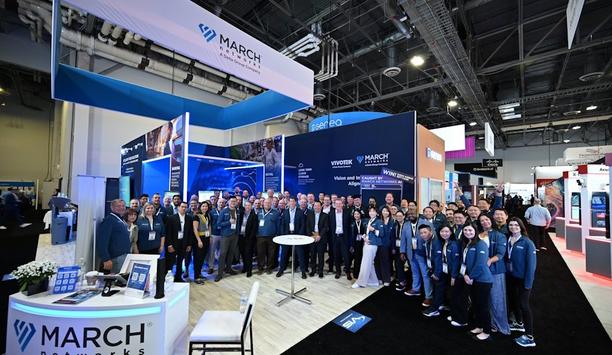
Combining VIVOTEK’s branded video security business with March Networks paves the way for the combined brands to meet customers’ increasing appetite for integrated solutions rather than individual components. The merger brings VIVOTEK's branded video security business together under one operating structure with March Networks’ enterprise-grade video surveillance, AI analytics, and cloud-managed security solutions. Customers now have access to a broader, more integrated portfolio spanning enterprise video management, advanced cameras, edge artificial intelligence (AI), cloud services, recording platforms, and business intelligence, says Net Payne, Chief Sales & Marketing Officer at March Networks and VIVOTEK. Distinct product strategies Given the combined companies, product development, sales, marketing, and customer support can move in step rather than in parallel. March Networks and VIVOTEK were already both part of the Delta Electronics family, but they previously operated as separate businesses with distinct product strategies, teams, and routes to market. March Networks and VIVOTEK announced the merger of their branded video security businesses last spring following Delta Electronics' acquisition of remaining VIVOTEK shares. “Aligning our complementary capabilities lets us innovate faster, simplify engagement, and respond more quickly to a market moving toward AI, cloud and intelligent video,” says Payne. This merger reflects a broader shift across the physical security industry, adds Payne. “Customers no longer see video purely as a tool for reviewing incidents after the fact,” he says. “They expect it to help identify risks earlier, simplify investigations, improve operations, and support better decisions across the organization.” Cloud video management Meeting customer expectations requires more than bolting AI features onto existing systems Meeting customer expectations requires more than bolting AI features onto existing systems. Rather, it requires cameras, edge intelligence, recording, software, cloud services, and business data working together as one coordinated platform. “By bringing March Networks and VIVOTEK together, we combine deep expertise across the full video technology stack while preserving the relationships, sector knowledge and customer focus both companies have built over many years,” says Payne. “Our goal is to make intelligent video more integrated, scalable, and practical for customers and partners worldwide.” Both entities bring strengths to the combined companies. March Networks brings experience in enterprise software, cloud video management and large-scale deployments; while VIVOTEK brings strength in imaging, camera technology and edge intelligence. Together they seek to ensure more choice when designing systems, a clearer path for future expansion, and technologies that work together more effectively without compromising the reliability, cybersecurity, and support customers expect from both companies. Advantages for channel partners Channel partners gain a broader portfolio to address a wider range of customer requirements, combining components as each deployment demands. Channel partners also benefit from expanded geographic reach, deeper technical expertise, and greater investment in training and enablement. “Importantly, this is designed to be a seamless transition,” says Payne. “Partners keep working with the teams and relationships they already know, while gaining access to new capabilities and certification opportunities. Over time, that alignment should make it easier to design, deploy and support complete solutions.” Because they are established and respected brands, March Networks and VIVOTEK branding will continue to be used. Rebranding is not a goal, and neither identity is being replaced by the other. Coordinated decision-making “The immediate priority is organizational alignment by making it easier for customers and partners to benefit from the combined portfolio,” says Payne. Product branding will continue to reflect the relevant portfolio and market context. As product roadmaps become more closely coordinated, customers can expect greater interoperability and a more cohesive experience, says Payne. Any future branding changes will be managed carefully and communicated clearly. Combining the businesses reduces duplication and enables coordinated decision-making across product strategy, engineering, sales, marketing, operations, and customer support. “Instead of developing capabilities independently, teams can share their expertise, align roadmaps, and direct investment to where it has the greatest customer impact,” says Payne. Combining specialized knowledge globally The combined organization operates across six continents and more than 75 countries The combined organization includes more than 300 research and development (R&D) engineers across four Centres of Excellence in Canada, Taiwan, Italy and Poland, thus bringing together a substantial base of specialist knowledge. The unified network also sharpens the ability to prioritise global opportunities, respond to regional needs and bring innovations to market faster. The combined organization operates across six continents and more than 75 countries, supported by more than 1,100 certified channel partners. That footprint provides greater capacity to support multinational customers while staying responsive to local market needs. Looking ahead, future growth will increasingly come from helping customers turn video into useful, actionable intelligence. “The market is moving beyond conventional surveillance toward solutions combining AI, cloud services, edge processing, video management and operational data — and our new structure brings these together as one connected solution rather than several isolated technologies,” says Payne. Broader technical expertise There will also be closer collaboration among specialists in imaging, hardware, software, analytics, and cloud, which is important given how much customer infrastructure, regulatory, and deployment requirements vary. The companies can support cloud, hybrid, and on-premise environments, giving organizations a practical path toward more intelligent video. More choice comes from bringing together complementary technologies across product groups. Greater scale is achieved through a larger engineering organization, broader technical expertise and more capacity to invest in innovation. Challenges for the industry at large Looking to the future for the industry at large, the greatest challenge will be managing the rapid growth of AI Looking to the future for the industry at large, the greatest challenge will be managing the rapid growth of AI responsibly, securely and at scale, says Payne. Video systems will generate more data and automate more decisions, but organizations must be able to trust how that intelligence is created, protected, and applied, he adds. “Cybersecurity, privacy, data sovereignty, system interoperability and AI accuracy are more important than ever,” says Payne. Addressing these elements requires expertise across the entire technology stack: from camera and edge processing to recording, cloud infrastructure, video management and analytics. “Together, March Networks and VIVOTEK can coordinate development across all these layers, giving customers flexible architectures that balance innovation with security, transparency and operational control,” says Payne.

IQSIGHT seeks to bring visual intelligence to environments where clarity, reliability, and trust matter the most, says CEO Sabrina Stainburn. Formerly Bosch Video Systems, IQSIGHT is an intelligence-first video security company, combining more than 60 years of engineering expertise with real-time intelligence to help organizations see clearly, act confidently, and improve outcomes in environments when every second matters. While the brand is new, the technology, reliability, and trust behind it are familiar— the products still carry the Bosch name, and the engineering teams remain the same to ensure the continuation of the Bosch legacy. As a result, customers can expect the same standards they rely on today. Embracing emerging technologies IQSIGHT is embracing emerging technologies. “We are applying AI where it delivers value by helping systems understand what is happening and surface the events and patterns that matter most—so customers can detect risk earlier, make faster decisions, and operate with confidence,” says Stainburn. With intelligence at the edge, the cameras act as sensors to secure premises, make buildings safer, and monitor perimeters — without requiring a cloud connection. Edge-based AI also supports integration into existing systems to add visual intelligence without a rip-and-replace — such as adding cameras with visual gun detection outside of entrances or supplementing systems with the ability to detect clothing color and other attributes. IQSIGHT combines the Bosch video portfolio with new AI-enabled capabilities AI-enabled capabilities IQSIGHT combines the Bosch video portfolio with new AI-enabled capabilities designed to remove blind spots IQSIGHT combines the Bosch video portfolio with new AI-enabled capabilities designed to remove blind spots and support earlier, better-informed decisions. The portfolio continues to include intelligent cameras, such as the FLEXIDOME, AUTODOME, DINION, and MIC models, AI-enabled Intelligent Video Analytics Pro (IVA Pro) offerings, and recording and video management solutions, such as BVMS software. This year, the portfolio will also expand with technologies and solutions built on IQSIGHT’s new intelligence-first platform. Vertical markets that are core to the strategy include government, critical infrastructure, education, and smart cities, all industries closely connected with safety, continuity, and operational performance. In these environments, visual intelligence helps organizations address practical challenges — securing perimeters, enhancing safety, and improving traffic flow — so they can operate securely and efficiently. Visual intelligence helps organizations address practical challenges Operating securely and efficiently “Reliability is essential in these industries, and our cameras are engineered to Bosch quality standards and designed to perform in demanding conditions, including extreme weather, while delivering dependable video and accurate analytics where it matters most,” says Stainburn. “These strengths make our video solutions ideal for any industry where security must be uncompromised.” IQSIGHT evolves from the sale of Bosch’s security and communications technology product business to European investment firm Triton on June 30, 2025. The product brands for video systems, access control, intrusion systems, and communications systems united under the roof of the new company Keenfinity Group. New organizational structure The Keenfinity Group now operates as a holding company consisting of four businesses In late 2025, Keenfinity Group introduced a new organizational structure designed to unlock the next chapter of growth and innovation. The Keenfinity Group now operates as a holding company consisting of four businesses, including the video systems business now called IQSIGHT. Bosch has a long history of partnerships and integrations, and partnerships will remain essential to how IQSIGHT delivers value and flexibility for customers. “We work closely with technology partners to ensure customers can use visual intelligence within the platforms and architectures that best fit their operations,” says Stainburn. Secure-by-design approach Deep integrations include VMS platforms, such as Genetec and Milestone, thus enabling real-time insights across on-premise and cloud environments. This approach gives customers choice — without compromising performance, security, or reliability, according to IQSIGHT. “Continually strengthening our existing partnerships is vital, and we regularly add capabilities to these integrations to deliver new features to enhance security and safety for customers,” says Stainburn. “Cybersecurity is not a feature for us — it’s a foundation,” Stainburn emphasises. “As video systems become more connected and intelligence moves closer to the edge, trust must be designed in from the start. We take a secure-by-design approach across our hardware, software, and integrations. That means protecting data at every stage — from capture to analysis to delivery.” Combining sight and intelligence Just as important, the company works closely with partners and customers to ensure systems fit into their broader security and IT strategies. “When organizations rely on video to make critical decisions, security and reliability must be non-negotiable,” says Stainburn. Stainburn sees video as evolving from traditional surveillance into “visual intelligence” — moving from simply recording events to understanding what is happening in real time. By combining sight and intelligence, organizations can see patterns, giving them the power to predict events that may happen. Proactively addressing risks Stainburn sees video as evolving from traditional surveillance into “visual intelligence” Traditionally, video security was based on video surveillance — an investigative tool for users to review what has already happened. With AI, users can take a different approach — looking at patterns to better secure their premises and have the foresight to intervene before incidents escalate. AI helps systems understand what is happening in a scene, enabling them to discern between a person standing at a train platform and an individual vandalising a train platform, someone holding a power drill versus someone holding a gun. “This level of visual intelligence brings clarity to unfolding events to assist users in proactively addressing risks,” says Stainburn. AI-enabled video systems With foresight, end users can prevent those events from occurring or other issues from escalating. The ability to discern patterns can also influence decisions around safety, resource use, and the customer experience, says Stainburn. “While security will always remain core, we expect visual intelligence to play an increasingly important role in improving operational efficiency across many environments over the next five years.” Not all AI-enabled video systems are equal. Edge, cloud, and GenAI-based tools have different strengths and selecting one approach over another depends on the application or the problem customers need to solve. IQSIGHT works closely with integrators and end users to understand the challenges they are addressing and to provide guidance on the best AI approach to reduce risks, lower response times, and improve operations. Proof of concept projects are important to demonstrating performance in the real world. That’s where IQSIGHT gains an advantage with solutions that deliver reliable results even in challenging conditions, says Stainburn.
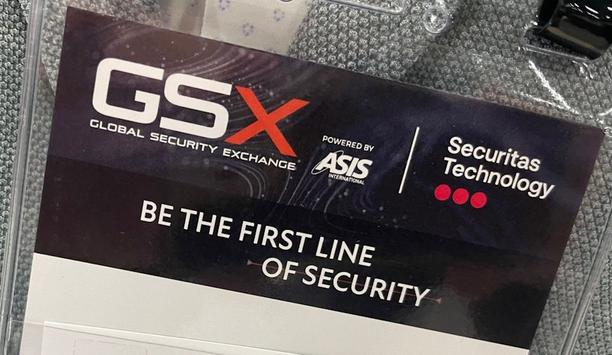
There was high-level energy at GSX 2025, befitting an industry undergoing massive change. Artificial intelligence (AI) was everywhere, but not so much in the booth signage. Rather, AI has made its way beyond marketing claims and solidly into the core of the products themselves. There were hundreds of examples of how AI is changing how security systems operate, all for the better. Clearly on display at GSX 2025 was an industry in the midst of metamorphosis. Deep integration of AI My conversations with companies across the security ecosystem revealed an industry heavily focused on leveraging advanced technologies like AI and the cloud to address increasingly complex global and localized threats. Several key themes emerged at the Global Security Exchange (GSX), sponsored by ASIS International, held Sept. 29–Oct. 1 at the Ernest N. Morial Convention Center in New Orleans, La. Themes I heard repeated throughout the show floor included deep integration of AI, the ongoing shift toward cloud-based and hybrid architectures, and a sharp focus on modernizing security systems to meet current challenges. AI and intelligent automation transform security The use of GenAI is moving beyond simple search functions into real-time decision support Companies are integrating AI and intelligent technologies to enhance analytics, streamline incident response, and improve internal efficiency. The use of Generative AI (GenAI) is moving beyond simple search functions into real-time decision support. For example, Bosch Video Systems introduced a "second tier" to its video analytics capabilities by combining highly sensitive edge detection with GenAI models in the cloud. For example, in visual gun detection, edge analytics might flag a potential gun (yellow), but the cloud-based GenAI then quickly reviews and confirms the threat (red), helping to filter out false alarms. Bosch is also using GenAI for more open-ended searches, such as a "Where's Waldo" application demonstrated at their booth. GenAI-powered system Eagle Eye Networks says they are focused on helping integrators "organize the AI chaos” through their cloud-based video platform. Their precision person and vehicle detection capabilities work across multiple cameras. Motorola Solutions introduced Inform, an AI-assisted incident response solution designed to bring clarity to the "noise" and help security teams respond to complex threats. They also offer Avigilon Visual Alerts, an on-prem GenAI-powered system that expands the natural language interface. AI internally to improve processes The Body Workforce Mini protects frontline workers and businesses "amid rising violence and theft." The Axon Body Workforce Mini, a small “computer with a lens” for non-police applications, is AI-capable and can perform real-time translations, automated report writing, and summarization, and can even act as a personal assistant by incorporating company policies. All those functions are built into a lightweight body-worn camera designed to safeguard frontline workers in retail and healthcare verticals. The Body Workforce Mini protects frontline workers and businesses "amid rising violence and theft." Beyond products, integration company Everon is using AI internally to improve processes, such as handling commoditized tasks, which they expect will result in better customer satisfaction. Everon wants to be known as a premier service provider and will be introducing new services in the video realm. AI-powered search and continuous system upgrades Genetec prefers the term Intelligent Automation (IA), instead of AI, to describe its empathetic interface, which can "know" what additional information a security professional needs when they click on an image, for example. Genetec says the advantages of the cloud include AI-powered search and continuous system upgrades. Their Security Center SaaS has had a fast and successful launch. It enables cloud-based systems with local storage. Genetec also highlighted the Cloudlink 210, a cloud-managed appliance designed to unify physical security operations that can be simply plugged in without involving IT staff. They call it a “headless appliance.” Cloud migration and the push for hybrid systems Hanwha debuted OnCAFE (Cloud Access for Everyone), a new cloud-based access control product The industry continues its strategic march toward the cloud, often through hybrid applications that blend on-prem strength with cloud flexibility. Acre's access control is described as "cloud-first technology," and they continue to focus on cloud solutions, incorporating AI. To help customers transition, they offer the "Bridge," a migration tool that allows systems to communicate throughout the move. At the same time, they are continuing to develop and enhance their core on-prem products – DNA Fusion and AccessIt!. Adding access control to supplement their video product line, Hanwha debuted OnCAFE (Cloud Access for Everyone), a new cloud-based access control product. The goal is to provide “access control that is easy;” It works alongside their OnCloud direct-to-cloud VMS as a Service platform. Future of video management The future of video management is increasingly hybrid. Milestone recently completed a three-year process of updating XProtect and building for the future of hybrid applications. At GSX, they showcased how their XProtect Evidence Manager seeks to "democratize evidence management" by collecting video, cell phone data, notes, and other metadata related to a case for easy sharing and prosecution. Also, Milestone’s “app center” enables additional features to enhance XProtect without involving integration. Milestone is also focusing on "Metadata Ingest," which collects and aggregates data from various manufacturers (including Genetec, Motorola, and Exacq) for use by AI. Strategic modernization and open integration Convergint and Genetec collaborated on a "2026 Technology Modernization Outlook" white paper A key theme for the future is the shift toward open systems and strategic modernization, enabling security professionals to better utilize new technology. Convergint and Genetec collaborated on a "2026 Technology Modernization Outlook" white paper, arguing that dealers and end-users need to think more strategically when buying technology. They predict that "2026 will be the year of modernization," with tangible results including unified intelligence, flexible deployment, and lower total cost of ownership. The call for open standards and architecture was also strong. What AI needs from open systems Johnson Controls noted that cloud, AI, and open standards are its three big focus areas. Their C-CURE IQ 3.10 is gaining adoption as it unifies access and video. OpenEye is seeking to address the "AI disruption anxiety" in the industry, focusing on what AI needs from open systems. The emphasis is on the value of a Model Context Protocol (MCP), an open standard and framework to enable AI systems to integrate and share data with external tools and sources. Addressing shifting global and local threats Allied Universal's "World Security Report 2025" highlights a risen focus on executive protection Companies unveiled solutions targeted at new security concerns, particularly the rising threat of violence, theft, and misinformation. Allied Universal's "World Security Report 2025" highlights an increased focus on executive protection and cites the rise of misinformation and disinformation as the number two threat. They noted that macro trends around instability and the political and social environment are driving security threats globally. To combat physical threats, Shooter Detection Systems introduced a new outdoor sensor, which is now generally available after a favorable feedback period that included an apprehension in one municipality. The company notes the unique challenge of developing technology for a "non-cooperative" threat like a person with a gun, in contrast to most security technologies that are "cooperative" and depend on user compliance. Implementation of integrated security Flock Safety is expanding its focus beyond license plate readers into solutions for retail, with a new initiative to automate and streamline investigative processes, which are often manual. The company also showcased "drones as automated security guards," which can be deployed within 90 seconds to provide "eyes" on a site and enhance safety. The system works on its own network and is firewalled away from the city system A tour of the City of New Orleans' Real Time Crime Center (RTCC), hosted by Axis Communications, demonstrated a mature implementation of integrated security. The RTCC uses Axis cameras, Genetec VMS, and is tied to a Motorola Solutions Command Center to enhance efficiency and effectiveness, operating independently of the police department. They measure success in terms of valuable hours saved in an investigation or even when an event is happening. The system works on its own network and is firewalled away from the city system. Rapidly changing industry on display The GSX 2025 highlights an industry that is moving toward more intelligent and integrated solutions. The investment in AI is shifting security from reactive monitoring to proactive, automated assistance. Throughout the show floor, the continued embrace of hybrid cloud architectures, coupled with an emphasis on open standards and modernization roadmaps, suggests a security ecosystem built for agility and future growth. These trends, and the GSX show itself, collectively underscore the industry's commitment to delivering scalable, next-generation solutions for a changing threat landscape.
Case studies

At the Golden Phoenix Casino in Northern Cyprus, first-class entertainment, hospitality, and security go hand in hand. With its Dallmeier video security solution, the casino has created the right conditions to reliably protect guests, employees, and assets while making the day-to-day work of the surveillance team more efficient. The Golden Phoenix Casino is part of the Limak Cyprus Deluxe Hotel, combining the upscale atmosphere of a luxury resort with a diverse casino experience. The property belongs to the portfolio of Limak Hotels, a Turkish hotel group operating upscale resorts and city hotels, primarily in Türkiye and Cyprus. Professionally organized operations For guests, the focus is on the experience: entertainment, excitement, and the unique atmosphere of a modern casino should be enjoyed with complete peace of mind. Behind the scenes, this requires a high level of security and professionally organized operations. Wherever large numbers of guests, gaming tables, slot machines, and cash transactions come together, security personnel need to maintain a clear overview of what is happening at all times. Video surveillance was considered an integral part of the overall concept from the very beginning, when the Golden Phoenix Casino was built. The Dallmeier solution was therefore designed from the outset to meet the specific requirements of casino operations. The goal was to combine a high level of security with efficient processes and reliable compliance with regulatory requirements. Comprehensive situational awareness Particular attention is paid to gaming tables, slot machines, cash handling areas, as well as entrances and exits. Across an area of approximately 1,200 m², security personnel need to reliably identify potential fraud or cheating, theft, disputes, and other suspicious activities. “In casino operations, it is essential to maintain a clear overview of all critical areas at all times. When an incident occurs, we need to be able to quickly reconstruct the relevant situation so that we can make informed decisions and respond without delays,” explains Kaan Kaşif Kavaloğlu, Chairman of the Executive Board at Limak Tourism Group. Together with Dallmeier Türkiye, a video security solution was developed that is specifically tailored to these requirements and provides comprehensive situational awareness. Key reasons for choosing Dallmeier included the company’s extensive experience in casino environments, reliable image quality, and the long-term stability of its systems. Video management system More than 120 single-sensor cameras and over 30 PTZ cameras monitor the casino’s relevant areas. Four IPS 10000 systems with JBOD storage provide the required recording retention period. The high-resolution recordings make it possible to review and reconstruct events afterward, providing evidence that can be used in court. A Dallmeier video management system is used to centrally control and manage the video surveillance system. It enables authorized personnel to directly access relevant camera images and recordings whenever needed. “A good video security solution in a casino is about more than just providing high-quality images. The real value lies in giving employees rapid access to the information they need to reliably assess a situation,” says Orhan Yörükoğlu, Director of Dallmeier Türkiye A.Ş. Critical control situations This time saving is one of the key benefits in day-to-day operations. In addition, automated monitoring tasks reduce the workload for employees and contribute to greater operational efficiency. For example, improved system response times, particularly during playback, have minimised customer wait times during critical control situations. “For us, the main benefit is being able to focus our attention on the events that actually require it. This makes our work easier and gives us a reliable basis for decision-making,” says Eren Oran, Surveillance Manager, Golden Phoenix Casino. Specified retention periods The direct collaboration between the Golden Phoenix Casino and Dallmeier Türkiye ensured an implementation that was consistently aligned with the actual requirements of casino operations. “Our goal was not to install as much technology as possible,” summarises Orhan Yörükoğlu. “What mattered was creating a solution that supports security personnel in their specific tasks while making processes throughout the casino more efficient.” In addition to operational and regulatory requirements, data protection and data security play a central role. The Dallmeier solution is designed to reliably meet the requirements of the General Data Protection Regulation (GDPR). This includes secure storage of video data, clearly defined access rights, and specified retention periods. In this way, the solution supports the compliant handling of video recordings. Efficient casino operations While guests can focus entirely on entertainment, excitement, and the casino’s distinctive atmosphere, security personnel maintain a clear overview of events behind the scenes. The Dallmeier video solution provides the Golden Phoenix Casino with a stable foundation for efficient casino operations – both today and in the future. Its long-term stability and scalability allow the system to adapt to new requirements and expand as needed. This provides investment protection while maintaining the flexibility needed going forward. In 1984, Dieter Dallmeier founded what is now Dallmeier electronic – not in the proverbial garage, but in a garden shed in Regensburg, Germany. Today, the company, which can justifiably call itself a hidden champion for video information technology "Made in Germany", has several hundred employees worldwide, more than 250 of them at the company headquarters in the center of Regensburg alone. Tangible customer benefits Dallmeier's camera, recording, software, and analysis solutions optimize security and processes for B2B end customers in a wide range of industries in over 60 countries. The focus is on users from the casino, smart city, airports, logistics, stadiums, and industrial sectors. But also, banks, critical infrastructure facilities as well as medium-sized companies from all sectors. With pioneering innovations, Dallmeier has succeeded time and again in placing itself at the forefront of technology: From the world's first digital image storage system with motion analysis in 1992, the patented "multifocal sensor technology" Panomera® with its "Mountera®" mounting system, to the latest Domera® camera family, which allows up to 300 camera variants with only 18 components. These and many other innovations provide real, tangible customer benefits. Complete manufacturing process And with a low Total Cost of Ownership (TCO) and a high Return on Investment (ROI) they can easily compete with systems produced and supplied from low-wage countries. With "Made in Germany", they also guarantee their customers the highest standards in data protection, cybersecurity, and ethical responsibility. With high quality and short supply chains, they also ensure – almost incidentally – sustainability and environmental protection. From their prestigious headquarters in the center of Regensburg, Dallmeier not only carries out its own research and development but also the complete manufacturing process – from component to product to solution.

Digitalising access presents a specific challenge in heritage buildings: how to protect these premises against 21st-century threats while preserving the unique building fabric? Choosing a programmable smart key system provided the solution at a historic Prague monastery. The Franciscan Monastery is a living space which, in addition to its spiritual mission, hosts exhibitions, baptisms, and community meetings. Managers must therefore effectively control access to individual parts of the building, to retain an overview of the movement of people, and at the same time react flexibly to events. Streamline key management The original access system could no longer meet their requirements. Key management was complex; there was a lack of clarity; and risks associated with the loss or non-return of site keys increased. They wanted to upgrade access security to streamline key management and minimize risks associated with missing keys. Another essential element was that any software for this enhanced control over key and space management should be user-friendly and operable even by non-technical staff. Above all, preserving the historic character of the building was non-negotiable. No invasive installation process was possible. Leaning into ASSA ABLOY expertise in the heritage sector helped monastery managers to identify the right solution. Combining mechanical robustness Based on these requirements, a CLIQ system was the preferred choice. The ASSA ABLOY eCLIQ smart key solution combines mechanical robustness with intelligent electronics; it enables modern access management without any need for cabling. “Even in historic buildings, our eCLIQ smart key system can be implemented efficiently while preserving safety, aesthetics, and flexibility,” explains Ondřej Gajdoš, Acquisition Sales Manager at ASSA ABLOY Opening Solutions. Thirty-five wire-free cylinders were installed and 90 programmable keys distributed, with everything now managed in intuitive software which allows staff to easily set and edit access rights according to evolving needs – whether for employees and visitors, or to stage one-off events. One CLIQ advantage for the monastery is the ability for staff to respond immediately to any risky situation. If someone loses their key, for example, its authorisations are quickly blocked without any need to replace cylinders – saving time and money while also safeguarding security. Streamlining daily operations The CLIQ solution is also wire-free, so installation took place without interfering with the historic structure. It fully respects the architectural value of the building. By deploying CLIQ, the monastery has gained a modern access management tool that significantly increases security while streamlining daily operations. The solution brought not only a higher level of security and more efficient key management, but also the necessary flexibility for more dynamic use of space around the site. If needed, expansion of their system in the future is totally seamless: the CLIQ system’s reach can scale as the monastery’s needs evolve.

Background - An educational institution in Mexico has experienced continuous growth in its campus infrastructure over recent years, expanding its facilities to support academic, administrative, and student activities. As the campus developed, the need for a reliable and scalable video surveillance system became increasingly critical to ensure safety, operational efficiency, and centralized security management across multiple buildings. The institution required a long-term security partner capable of supporting gradual expansion while maintaining system stability and performance. Video surveillance system Challenge - Initially, the institution did not have any video surveillance system in place. The first challenge was to deploy a reliable solution for a single building while ensuring that the system could be expanded in the future. As additional buildings were constructed, the surveillance system grew in scale, increasing the number of cameras and operational demands. The institution faced the challenge of migrating the entire system to a more modern platform without disrupting daily operations, while also ensuring centralized management, improved efficiency, and future readiness. Enhancing operational efficiency Solutions - VIVOTEK was initially selected to deploy the institution’s first video surveillance system, providing reliable IP cameras and a dedicated server to secure the first building on campus. Over time, the institution sought to strengthen campus-wide coverage and modernise its security operations. Building on the proven reliability of the existing VIVOTEK ecosystem, they opted to upgrade the entire system to the latest platform to enhance operational efficiency and support long-term growth. A key reason the institution chose VIVOTEK was the platform’s continuity and future-ready design. Compared to competing alternatives, VIVOTEK offered perpetual licenses, allowing the system to expand and evolve without incurring recurring licensing costs. This long-term upgradeability was an important differentiator and aligned with the institution’s need for a solution that could grow and modernise over time, confirming VIVOTEK’s commitment to seamless upgrade paths and technological continuity. Throughout this process, VIVOTEK’s flexible architecture and strong technical support ensured a smooth transition, reinforcing the customer’s confidence in their long-term investment and in the platform’s ability to support future integrations and enhancements. Providing a scalable foundation Result and customer feedback – “For the institution, the transition to VIVOTEK VSS has resulted in a significant improvement in both performance and operational efficiency. The upgraded platform has enhanced overall campus security and provided a scalable foundation that fits perfectly with its long-term growth plans. Today, the institution feels confident knowing that it has a reliable, future-proof system that ensures a safe environment for both students and staff.” “The institution is very satisfied with the continuity and upgradeability that VIVOTEK has offered over the years. The transition to VSS has validated the long-term value promised at the outset of the project. Looking ahead, they are eager to explore how their current infrastructure can be integrated with VORTEX and what additional services and solutions can benefit them. This confirms their confidence in choosing a platform that not only meets their current needs but also supports their future development.”- Eduardo Domínguez Alatorre, Special Projects – ECS Network.

Premier Inn, Ilford, has completed a major upgrade to its fire alarm infrastructure with the installation of Advanced MxPro 5 fire panels, providing comprehensive Category L1 protection throughout the nine‑storey hotel. As a busy hospitality environment accommodating guests around the clock, the hotel required a robust and reliable fire detection system capable of delivering early warning across all areas of the building. The project involved a full system upgrade, with new detection installed throughout communal spaces, guest bedrooms, kitchen and dining areas, and roof spaces, ensuring maximum protection for both guests and staff. Effective occupant warning The new fire system comprises three Advanced MxPro 5 panels, including two four‑loop panels and one single‑loop panel, networked to cover all nine floors of the hotel. Detection has been installed throughout communal areas and bedrooms, with sounder beacons provided within each bathroom and accessible room to support effective occupant warning. The system is also connected to a pager system to assist hard‑of‑hearing guests, enhancing inclusivity and safety. Haskell Fire & Security Ltd was responsible for the full design, installation, and commissioning of the fire alarm system. The team worked on site to complete the final stages of installation and commissioning as part of the hotel’s refurbishment program, delivering a modern fire system designed to meet the operational demands of a live hospitality setting. Live hospitality setting Lee Haskell, Managing Director at Haskell Fire & Security Ltd, said: “This project was all about delivering maximum protection without compromise. The MxPro 5 is a fantastic product, and it’s one we specify wherever possible. It gives us the flexibility, reliability and ease of commissioning we need, while providing the client with a system that’s simple to manage and built for the long term.” Advanced’s MxPro 5 was recommended as a replacement for the originally installed system, offering greater flexibility through its open‑protocol design and consistency with fire systems installed across other Premier Inn sites. With powerful processing, intuitive configuration software and extensive cause‑and‑effect capabilities, the panel is well-suited to complex, multi‑storey hospitality buildings. Robust fire protection Salvy Vittozzi, Advanced’s Regional Sales Manager for the South East, added: “Hotels place unique demands on fire systems, with high occupancy, varied risk areas and the need for clear, reliable protection at all times. The MxPro 5 is designed for exactly these environments, combining powerful performance with ease of use for installers and end users alike. The Premier Inn, Ilford installation is a great example of how the system can deliver Category L1 protection across a busy, multi‑floor site.” With the upgrade now complete, Premier Inn, Ilford, benefits from a modern, high‑performance fire alarm system that supports early detection, clear occupant warning and long‑term reliability. The installation demonstrates how Advanced’s MxPro 5 can be successfully deployed in hospitality settings to deliver robust fire protection and peace of mind.
Round table discussion

Inflation surged dramatically because of supply disruptions and high energy costs following the COVID pandemic and given the Russia-Ukraine conflict. More recently, inflation has cooled significantly, although it still has not achieved the historically targeted rate of 2%. Factors such as tariffs and the Iran war continue to drive broader inflation. The physical security market faces its own multiple trends that continue to drive inflation of the industry's products and services. We asked our Expert Panel Roundtable: What is the current state of price inflation in the security market, and what is the outlook for the near future?

Passwords originated in ancient times, used by Roman military forces around the first century BC. Since then, passwords have evolved from physical words to the computer access control tools used today. Passwords are easy to implement, widely supported, and familiar to users. However, they are easily forgotten, stolen through phishing, prone to reuse, and vulnerable to credential-harvesting or brute-force attacks. We asked our Expert Panel: What is the role of passwords in physical security?

Adequate video surveillance coverage depends entirely on a facility's layout, square footage, and security goals. Historically, better coverage required more cameras, but technology innovations are changing those expectations and undermining previously held rules of thumb. We asked our Expert Panel Roundtable: Do today's video systems generally require more cameras or fewer cameras, and why?
Products





Video analytics: Manufacturers & Suppliers
- Bosch Video analytics
- exacqVision Video analytics
- Avigilon Video analytics
- Hanwha Vision Video analytics
- Hikvision Video analytics
- Axis Communications Video analytics
- Honeywell Security Video analytics
- FLIR Systems Video analytics
- IndigoVision Video analytics
- March Networks Video analytics
- Videotec Video analytics
- VideoIQ Video analytics
- AV Costar Video analytics
- LTV Europe Video analytics
- AMAG Video analytics