IP transmission

The UK manufacturer of ruggedised HD, radar and thermal PTZ imaging cameras, 360 Vision Technology, has been instrumental in the migration of the expansive analog CCTV network of the New Forest to an economical and future-proofed IP solution – via the use of hybrid cameras and innovative 5G transmission technology. Covering the area’s towns and villages, as well as key parts of the county’s famous rural forest, 360 Vision hybrid technology has been used to ensure a simple upgr...

ChapsVision announces the appointment of Silvano Sansoni as Group General Manager. His mission will be to accelerate growth and structure the company for the next stage of its development both in Europe and internationally, thereby positioning ChapsVision as a global pioneer in Data and AI with European roots. Organic expansion and targeted acquisitions Recognized for its advanced technology platforms that support informed decision-making and deep industry expertise, Ch...

Altronix, the recognized pioneer in power and networking solutions, is showcasing its latest innovations that elevate security and system performance at ISC East Booth 713. Altronix will feature eFlow Pro Series auto-ranging power supply/chargers with enhanced features, Trove™ Access and Power Integration Solutions, and advancements in LINQ™ network power management, fiber, PoE, and long-range Ethernet for greater flexibility for a broad range of applications. Product enhancem...

VITEC is pleased to announce that its IPTV and digital signage system will power content at the Dubai Airshow 2025, 17-21 November, at Dubai World Central. VITEC’s solution will deliver real-time video streaming of live flight demonstrations, exhibitor presentations, television streams and event details, powering 4K content to displays across the show floor. The VITEC system comprises a centralized IPTV server, Head-end chassis with g45xx Series Satellite Gateways, ultra-low latency encod...

LifeSafety Power (LSP) continues to expand its FlexPower Unified Power Solutions partnership with Axis, adding support for additional controllers for complete integration of access control boards and power modules into a single enclosure. Unified Power Solutions for Axis integrates system power, lock power, and Axis controllers into one LifeSafety Power wall mount enclosure. The controller integrations include the A1210/1610/1710/1810/1710-B/1810-B series. Multiple LifeSafety Power devices can...
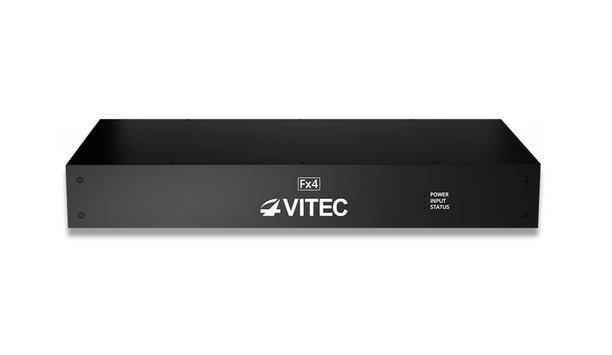
VITEC, a pioneer in Intelligence, Surveillance and Reconnaissance (ISR) video streaming solutions, will present its latest innovations at DSEI UK 2025, ExCel London, 9-12 September 2025. Visitors to stand S8-122 will experience the latest tactical video technologies, including the new VITEC Fx4 Series and VSN-Series video wall solutions. Also on show will be VITEC’s PRISM Transcoder, the TOUGH encoder family, and the MGW Diamond-H, all designed to meet the demands of the most challenging...
News

Cisco unveiled new innovations to help companies adapt and transform in the AI era. Enterprises are under pressure to accelerate secure AI adoption and drive value from AI investments. To help organizations meet these opportunities, Cisco continues to reimagine the datacenters and workplaces of the future. Infrastructure for the AI era “Cisco is delivering the critical infrastructure for the AI era—secure networks and experiences, optimized for AI that connect the world and power the global economy,” said Jeetu Patel, President and Chief Product Officer, Cisco. “We’re witnessing an unprecedented surge in innovation as organizations embrace agentic AI to automate workflows and solve complex problems. Cisco has a rich history of helping companies run their infrastructure; today, we’re building on that foundation to power the next generation of AI.” Cisco’s networking and security solutions Patrick Milligan, chief information security officer, Ford Motor Company, noted, “Agentic AI is being used across Ford’s business, from design to engineering to manufacturing and for customer support." "As we build, deploy, and manage sophisticated AI capabilities at scale, Cisco’s networking and security solutions are an important part of the overall technology infrastructure.” Range of new products and enhancements At Cisco Live, Cisco unveiled a wide range of new products and enhancements to help customers navigate the shift to agentic AI, including: Workplaces for the age of AI: Creating an intelligent workplace relies on modern network infrastructure that adapts to increased traffic, ensures always-on access, and delivers robust security. Meanwhile, organizations must empower people to work smarter and more effectively than ever. To meet these demands, Cisco announced new devices to power campus, branch, and industrial networks, and AI-powered unified management to help organizations move past reactive workflows to conducting autonomous, proactive network management. Additionally, Cisco's AI-powered Room Vision PTZ camera transforms meetings for a more cinematic experience. The Jira Workflow Automation in the Cisco AI Assistant for Webex Suite boosts efficiency, while the Webex AI Agent streamlines customer self-service with industry-specific templates. Read more here: The AI-Ready Enterprise: Building the Intelligent Workplace with Cisco. Simplified Operations for the age of AI with AgenticOps: Cisco is unveiling multiple AI-driven solutions to empower IT teams with simplicity, and automation, including Cisco AI Canvas, an industry-first generative user interface for real-time collaboration between network and security operations teams, and the Cisco AI Assistant, which provides conversational control across the Cisco suite. Core to the new capabilities is Cisco’s Deep Network Model — a domain-specific LLM trained on Cisco’s vast knowledge base, including Cisco U. courseware and Certified Internetwork Expert (CCIE) materials. The result is AI that understands networks and helps IT teams work more efficiently. Read more here: Welcome to the Agentic Era: People + Agents Achieving More, Together. Data Centers for the age of AI: Cisco unveiled continued innovation in its compute and network solutions for datacenters to support agentic AI, which places a premium on network bandwidth, latency, and power efficiency. To help drive adoption of AI solutions to strengthen the power grid, Cisco is joining the EPRI Open Power AI Consortium. Additionally, Cisco is introducing new capabilities to assist service providers to deliver and monetize new AI services. Read more here: Expanding the Edge of Possibility: Cisco Agile Services Networking for the AI Era. Security for the age of AI: Robust security has never been more critical, as enterprises navigate the complexity of a growing number of applications, a highly distributed and mobile workforce, and sophisticated AI-driven threats.Cisco is introducing innovations across its Hybrid Mesh Firewall and Universal Zero Trust Network Access (ZTNA) offerings; announced two new Firewalls, the 6100 series and 200 series, providing customers with best-in-class price performance; and unveiled capabilities across the Cisco Security Cloud to help customers meet the challenges of securing agentic AI. Read more here: Making Agentic AI Work in the Real World and Cisco Hybrid Mesh Firewall: Better Enforcement Points, Smarter Segmentation, and Multi-Vendor Policy. Digital Resilience at the Core: Several AI innovations, including enhanced capabilities in Splunk Observability Cloud and Splunk AppDynamics, along with deeper integrations between Cisco and Splunk solutions, are helping customers gain greater visibility into network health and performance. Key updates include a bidirectional integration between Splunk Observability, Cisco ThousandEyes Assurance and Cisco Enterprise Networks, enabling more resilient, insight-driven digital operations. Read more here: Cisco and Splunk Strengthen Enterprise Digital Resilience in the AI Era. Unified Management for the age of AI: The company is previewing Cisco Cloud Control, a new unified management platform spanning Cisco’s networking, security, and observability portfolios. Cisco Cloud Control will offer a cohesive experience anchored by AI native tools like Cisco AI Canvas, and the Cisco AI Assistant. With Cisco Cloud Control IT will be able to execute cross-product workflows, proactively identify and resolve issues, and manage infrastructure with ease.

Altech Corporation, a pioneer in industrial automation solutions, announces the release of its ATEX-IECEx approved terminal blocks, which are designed to provide greater safety and reliability in potentially explosive atmospheres. This extensive offering includes multiple connection technologies, providing versatile solutions for diverse industrial applications. Technical features Altech’s ATEX-IECEx-approved terminal blocks are designed for use in ATEX/IECEx The ATEX-IECEx Directive considers both electrical sources of explosion and potentially explosive concentrations of gas, vapor, mist and dust in the air. Altech’s ATEX-IECEx-approved terminal blocks are designed for use in ATEX/IECEx-certified enclosures with a minimum IP54 rating. Key specifications Temperature ranges: Terminal blocks feature a maximum service temperature of 110°C, with an ambient temperature range of −60° to +66°C at mounting position. For some models, the ambient temperature range is −40° to +40°C, with a service temperature range of −40° to +85°C. Insulation material: Polyamide 66, CTI 600/Material Group 1. Wire sizes: Wire sizes range from 24AWG up to 250kcmil, depending on the model. Marking: Altech Terminal Blocks with ATEX-IECEx approval are marked accordingly. For increased safety (“e”): Ex eb IIC Gb. Some are marked Ex ec IIC Gc, signifying robust construction to prevent ignition sources for hazardous gas environments. For intrinsic safety (“i”): Ex ib IIC Gb. Some are also marked Ex ic IIC Gc, indicating the circuit’s electrical and thermal energy is restricted to levels insufficient to cause ignition in an explosive atmosphere. Diverse product offerings Altech’s ATEX-IECEx-approved line includes various terminal block technologies to meet diverse application requirements. Specific products include: CP Series Push-In Terminal Blocks with tool-less connection technology, a stainless steel push-in spring and universal push-in jumper system. CX Series Spring/Cage Clamp Terminal Blocks, featuring a compact design and stainless steel spring. These blocks also utilize the universal push-in jumper system. CY Series Screw Clamp Terminal Blocks with a universal push-in jumper system, strong clamping system and snap-on ground blocks. CT Series Screw Clamp Terminal Blocks, featuring a traditional screw jumper system and large range of block types for various applications. In addition, Altech offers Ring Lug and Stud Terminals for severe vibration and large wire sizes, as well as Panel Mount and Mini Rail Terminal Blocks, which provide compact wiring solutions with both screw and spring/cage clamp technologies.

Secure Logiq is heading into the Asia-Pacific region with big plans and a clear focus on Australia and New Zealand. Helping to steer the company through this exciting new chapter is the newly appointed Regional Director, Graham Wheeler – a well-respected figure in the security and surveillance world with deep technical know-how and a sharp understanding of the APAC market. Graham’s appointment Graham’s appointment marks an exciting next step for Secure Logiq, as the company looks to build Graham’s appointment marks an exciting next step for Secure Logiq, as the company looks to build on its strong foundation in Europe and the Middle East and bring that same success to a region full of potential. With Australia and New Zealand already embracing tech innovation, it’s the perfect time to introduce smarter, more cost-effective ways of designing and deploying video surveillance systems. Secure Logiq performance solutions “At Secure Logiq, we don’t just provide hardware - we help our partners build better systems,” said Wheeler. “The ANZ market is ready for that kind of thinking. There’s a real hunger here for reliable, high-performance solutions that don’t come with inflated costs or over-complicated specs. I’m really excited to show people what we can do.” Secure Logiq well-informed partnerships The goal is to support local consultants, integrators, and end users with not just great products Secure Logiq is committed to building strong, well-informed partnerships. The goal is to support local consultants, integrators, and end users with not just great products, but real expertise - delivered through hands-on engagement, value-added distribution, and smart education. Unlike many in the server space, Secure Logiq doesn’t just ship boxes. It works closely with partners to create tailored, end-to-end solutions that deliver better performance and stronger long-term value. Secure Logiq’s surveillance systems “APAC has been on our radar for some time,” said Ben Yoxall, Joint-MD of Secure Logiq. “But it wasn’t about rushing in. We wanted the right person, the right plan, and the right timing—and with Graham on board, we’ve got all three. His depth of knowledge and network in the region are a huge asset.” The company is entering the market at a time when many surveillance systems are still over-engineered, under-optimized, or both - often costing far more than they should. Secure Logiq’s team believes there’s a better way. Secure Logiq planning to run workshops and sessions Secure Logiq is planning to run workshops and sessions across the region to share knowledge By designing systems with a clear understanding of how surveillance hardware should perform, they’re helping customers achieve more throughput, more storage and more resilience, without blowing the budget. Education will play a key role in this rollout, with Secure Logiq planning to run workshops and sessions across the region to share knowledge and elevate industry standards. The team will also be on the ground at two of the region’s biggest trade events: ASIAL Security 2025 in Sydney this August, and The Security Event Singapore in November. Secure Logiq's key concerns Australia is a natural fit for this next chapter. It’s a market that embraces innovation and sits in a prime spot for engaging with the wider APAC region. With increasing demand from government and enterprise sectors, especially where cybersecurity and total cost of ownership are key concerns - Secure Logiq is confident it can bring something different to the table. “I’m looking forward to hitting the ground running,” added Wheeler. “From industry events to partner visits and knowledge-sharing sessions, it’s all about showing up, listening, and proving we can add real value.”
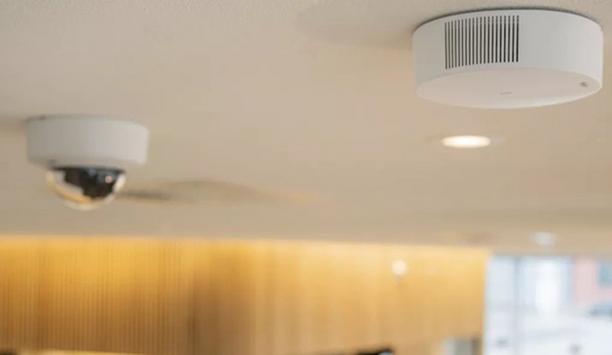
Axis Communications, a pioneer in network video, has announced the company’s first environmental sensors. The new sensors monitor multiple indoor air quality parameters, enabling efficient and appropriate response to indoor air quality issues, including vaping and smoking, and the proactive management and optimization of air quality in almost any indoor environment. Integrate with Axis solutions Axis two new sensors, both developed in-house, seamlessly integrate with existing Axis solutions The World Health Organization estimates that each year 3.2 million deaths are caused by indoor air pollution worldwide. Axis two new sensors, both developed in-house, seamlessly integrate with existing Axis solutions to monitor air pollutants such as particulate matter, volatile organic compounds, nitrogen oxides, and carbon dioxide, in addition to measuring relative humidity and temperature. Control of air quality parameters “Poor indoor air quality is a significant public health issue,” says Robert Woyar, Global Product Manager at Axis Communications. He adds, “Student vaping has reached epidemic levels within schools and needs to be detected and restricted effectively. Certain specific facilities, for example, data centers and controlled manufacturing environments, require precise control of air quality parameters, such as relative humidity, temperature, and the level of particulate matter. Our new indoor air quality sensor supports in all these areas and more.” AXIS D6210 Air Quality Sensor and AXIS D6310 Air Quality Sensor AXIS D6210, available in the first half of 2025, can be integrated with certain other Axis IP devices, including a number of cameras and a strobe siren and used in combination with Axis speakers. It is easily connected to compatible Axis IP devices without the need for additional IP addresses, switch ports, or power to give customers a cost-effective, “plug-and-play” solution to air quality monitoring and response. AXIS D6310, available by the end of 2025, has the same air quality sensing capabilities as AXIS D6210 but is a standalone IP network device – and can therefore be added independently to an existing Axis solution - with additional functionality. This includes a multi-LED strobe function for sensor status and alerts, an integrated speaker and microphone, Power-over-Ethernet (PoE)-out, a passive infrared (PIR) sensor, and AXIS Audio Analytics. Improved health, safety and operational efficiency Depending on the environment and use case, AXIS D6210 and AXIS D6310 will help to create a healthy and safe environment for employees and visitors, improve operational efficiency and energy consumption, and create data which delivers business intelligence to further support long-term operational planning. For instance, real-time indoor air quality monitoring enables immediate response to air quality issues that might present a health issue. Alerts from the sensor, along with live and prerecorded messages from IP speakers can clear specific areas of buildings until remedial action to improve air quality has been taken. Smart building planning and optimization Metadata created by the indoor air quality sensor, combined with other sensor data Insight into specific air quality parameters – such as temperature, relative humidity, and air pollutants – supports more precise management of heating, ventilation, and air conditioning (HVAC) systems, with the added benefit of improved energy efficiency. Over time, metadata created by the indoor air quality sensor, combined with other sensor data such as occupancy levels, will provide business intelligence for longer-term ‘smart building’ planning and optimization. Open Axis platform and innovative applications Robert Woyar concludes: "AXIS D6210 and AXIS D6310 Air Quality Sensors might be our first environmental sensors but won’t be the last. The potential for connecting data from multiple different sensors in health and safety, operational efficiency, and business intelligence is obvious and almost unlimited." He adds, "Our growing portfolio of IP devices, combined with the open Axis platform and innovative applications from our global partners will deliver ever-increasing value to customers."
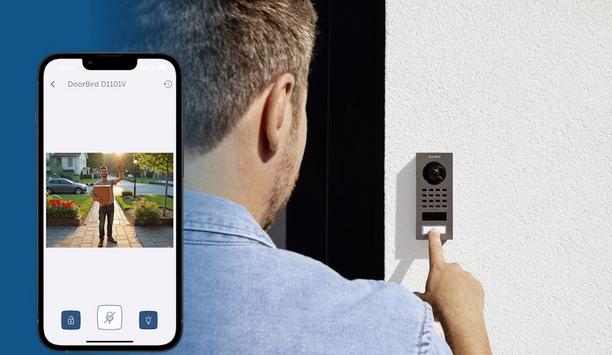
Access control is now getting even smarter: Cloud-to-cloud integration between DoorBird and Homematic IP has already been announced and will be released with the 3.5.12 Homematic IP app update. Users will benefit from improved convenience, increased security, and seamless communication right from the Homematic IP app. Homematic IP smart home system The multiple award-winning products are now becoming part of the Homematic IP smart home system DoorBird door stations are pioneering the field of door communication. The multiple award-winning products are now becoming part of the Homematic IP smart home system. The 3.5.12 update for the free Homematic IP app, which will be rolled out gradually from May 27, 2025, allows users to establish a secure cloud-to-cloud connection between their DoorBird video door station and their Homematic IP installation. This makes it all the more convenient and simple to control access to the smart home. Homematic IP door lock drive If a visitor comes to the door and rings the bell, the Homematic IP app will inform the residents by push notification. Then all they have to do is tap to speak to the guest directly: All video and audio signals are transmitted straight to the Homematic IP app. If users then want to let the visitor in, just one more tap will do the trick – simple, fast and secure. As a Homematic IP partner product, the DoorBird video door station can be freely combined with many components of the smart home system, for example, with a Homematic IP door lock drive. DoorBird device's integrated switching relay Free Homematic IP app from version 3.5.12, which will be gradually rolled out to all users from May 27, 2025 They can also use the DoorBird device's integrated switching relay, motion detector, or the doorbell button and the DoorBird device’s access module for intelligent automation as required. The integration is available to all customers with a Homematic IP Access Point, or a Homematic IP Home Control Unit and the free Homematic IP app from version 3.5.12, which will be gradually rolled out to all users from May 27, 2025. All D11 and D21-series DoorBird video door stations are supported. Outstanding security–made in Germany The cloud-to-cloud connection of both systems meets the highest standards of data protection and security. Ralph Bertelt, CEO of eQ-3 AG: "The entire communication between Homematic IP and DoorBird is fully encrypted and complies with the latest security standards, thereby preventing information from falling into the wrong hands." "The Homematic IP Cloud is also hosted exclusively on servers in Germany and is therefore subject to the highest security standards. In 2024, the VDE (Association for Electrical, Electronic & Information Technologies) certified our system in the areas of protocol, IT, and data security for the eighth time in a row.” IP video door stations DoorBird is raising the options that intelligent building automation has to offer with a high-quality key Sascha Keller, CEO of Bird Home Automation GmbH, adds: "As a German manufacturer, quality, data protection and design are a top priority for us, and these are values that we share with Homematic IP." "By integrating our IP video door stations into the Homematic IP system, we are offering our customers a particularly convenient way to combine security and smart home functionality." Intelligent building automation With Homematic IP, DoorBird is expanding the possibilities that intelligent building automation has to offer with a high-quality solution for IP door communication. This integration allows access to be seamlessly connected to smart home controls. Users benefit from increased security, greater convenience, and a fully networked home.
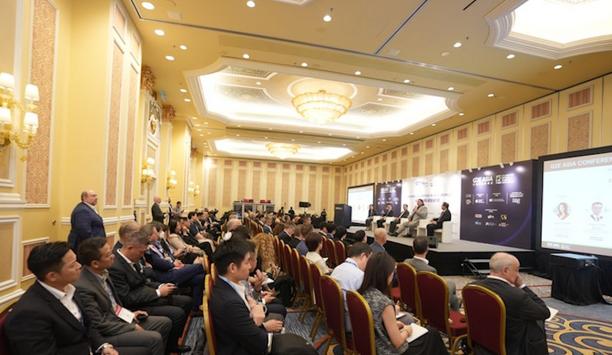
The G2E Asia Conference and Asian IR Summit are set to return this May, bringing top industry leaders together to tackle the most pressing issues and opportunities within the entertainment and integrated resort sectors. The G2E Asia Conference will be held from May 7-9, 2025, at The Venetian Macao, with the Asian IR Summit taking place from May 6-8, 2025, at the Galaxy International Convention Center. Experts and key decision-makers Both events will feature a refreshed lineup of over 100 speakers, including influential experts Both events will feature a refreshed lineup of over 100 speakers, including influential experts and key decision-makers, delivering actionable insights and thought leadership on the evolving landscape. To inaugurate the events, distinguished pioneers will take the stage as keynote speakers, offering exclusive, in-depth perspectives into industry trends. Chairman of Galaxy Group to kick off as keynote speaker The G2E Asia Conference proudly announces Francis Lui, Chairman of Galaxy Entertainment Group, as the opening keynote speaker, set to deliver invaluable insights on the evolving entertainment landscape. Gaming stands persist with an afternoon keynote address The G2E Asia Conference is pleased to welcome Ed Bowers, President of Global Development of MGM Resorts International, as the afternoon keynote speaker, continuing the exploration of gaming and market evolution. Macau reps to lead keynote address at Asian IR Summit The Asian IR Summit is also honored to welcome Maria Helena de Senna Fernandes, Director of Macao Government Tourism Office will share their expert perspectives on the future of integrated resorts. G2E Asia Conference highlights Three full days of G2E Asia Conference sessions will provide in-depth market analysis of markets Three full days of G2E Asia Conference sessions will provide in-depth market analysis of emerging markets and the outlook for Asian gaming markets, strategies around technology and innovations for the gaming industry, a Responsible Gaming Forum and the IAGA Best Practices Institute. Speakers include Wilson Wong, Vice President of Cyber Security, Asia of Sands China Ltd; Henry Yuen, Head of Enterprise Business Development – Hong Kong and Macao of Amazon Web Services; Brian Wyman, Executive Vice President of The Innovation Group; Fredric E. Gushin, Managing Director and CEO of Spectrum Gaming Group; Jerry Chan, SVP of Electronic Gaming & Special Project of Okada Manila; Shee Chean Ho, Partner of Ernst & Young and Praveen Choudhary, Managing Director of Morgan Stanley Asia Limited. Asian IR Summit highlights The Asian IR Summit will feature insightful sessions focusing on integrated resorts, the hospitality industry, emerging technologies, sportainment and the new era of entertainment. Speakers include Kevin Benning, Senior Vice President and Studio City General Manager, Melco Resorts & Entertainment; Jeffrey Jiang, EVP- Entertainment Services, Galaxy Entertainment Group; Crystal Wang, National Leading Partner, Deloitte China Sports Business; Jeremy Walker, Senior Vice President, Marketing and Event Services, Galaxy Entertainment Group; Kevin Chang, Senior Vice President and Head of Asia Pacific, UFC; Henry Kerins, CEO, EASL; Namkung Dan, CEO of Eternal Editions; Anna Robb, Executive Producer of Our Legacy Creations; Steven Wang, Founder & CEO, Mars Culture; Icy Wong, CEO of VS Media Limited; Wade Howk, COO of Inspire Entertainment Resort; Ben Wong, CMO, Greater China of Google; and Crystal Wang, National Leading Partner of Deloitte China Sports Business.

Expert commentary

The average business owner or investor has some kind of security precaution in place, especially in the after-hours when there are fewer deterrents to inhibit criminal activity. Security guards, video surveillance systems, motion sensor lights, or even just fake cameras placed around the property are some of the common options people choose. Future of overnight security Smart business owners are starting to realize, however, that some of these traditional security measures are becoming antiquated and no longer cutting. The now and future of overnight security is in remote guarding. Pioneered by companies like Los Angeles-based Elite Interactive Solutions, which was founded back in 2007, remote guarding is revolutionizing the overnight security business. Minimizing criminal activity Remote guarding is fast becoming the most popular choice among commercial end-user property owners Remote guarding utilizes a combination of cutting-edge technology, “digital guards,” highly trained security agents, and local law enforcement if and when necessary to minimize the potential of criminal activity. For those adequately enlightened to its overwhelmingly impressive crime prevention capabilities, remote guarding is fast becoming the most popular choice among commercial end-user property owners to secure and protect their investments. What Is Remote Guarding? Remote guarding is a revolutionary concept and increasing trend in security systems that utilize a combination of methods to effectively analyze potential threats to property. Cameras and/or other monitoring devices running highly advanced algorithmic software are installed in strategic areas or vulnerable places onsite and remotely located security agents are immediately notified of any activity within a designated perimeter of the property. A blend of AI, cybersecurity, and video analytics When properly deployed by an expert provider, the technology stack includes a proprietary blend of video analytics, artificial intelligence, cybersecurity, and more. Done right, “noise” is effectively filtered out, allowing agents to act on legitimate alerts and achieve zero false alarms communicated to first responders. Today, there are a lot of terms and descriptions tossed around about remote guarding, remote video, virtual guarding, etc., but those attributes must be present to represent the true definition of the offering and its many virtues. Realtime situational awareness Many systems have a two-way speaker that allows the security agent to give a verbal warning When specially trained security agents are alerted to trespassers, possible intruders, or other suspicious activity, they analyze the situation in real time and determine the necessary level of action. Many systems have a two-way speaker that allows the security agent to give a verbal warning, known as a voice-down, to the individual(s) that they are being watched. Most perpetrators, often believing the response is emanating directly from security personnel on the property itself rather than from a remote command center, flee immediately. However, if the threat persists, the security agent enlists local law enforcement to get on the scene. Customized remote guarding When properly deployed, remote guarding systems are also customized to specific properties. A team of consultants visits the client’s property to evaluate its vulnerabilities and where to best place cameras and/or other monitoring devices for system efficacy. Traditional Security Shortfalls According to Keith Bushey, a retired commander for the Los Angeles Police Department, there is much frustration between law enforcement officers and potential victims of crime due to the historically unreliable performance of traditional burglar alarm systems and central monitoring stations. He states about 90% of security-related calls are false alarms, a problem that has been well-documented through the years. Onsite challenges When a legitimate emergency does occur, the perpetrators have often already done their damage When a legitimate emergency does occur, the perpetrators have often already done their damage and/or escaped by the time law enforcement arrives. Onsite security guards are not the remedy either as they bring their own set of issues and challenges. Unexpected costs Traditional security systems can also have unexpected costs. The cost is not only in the security guards’ paycheck or the cost of the equipment itself. The cost comes when an actual incident occurs. In worst-case scenarios, the security guard(s) are injured, the business suffers inventory loss, and/or damage is sustained to the property. The medical and other costs for the security guard(s), the loss of inventory, property damage, deployment of law enforcement resources, and possible fallout of legal expenses all add up. Even in the best-case scenario, false alarm expenses incur if law enforcement is dispatched. These, among many others, are some of the primary issues that remote guarding resoundingly answers as a superior alternative. A Bounty of Benefits Remote guarding systems have been proven to cut costs and be more effective than traditional security systems. Even though the monthly monitoring costs of remote guarding are significantly higher than traditional intrusion detection system monitoring, the much higher effectiveness in crime reduction, elimination of false alarms, and augmenting or replacement of manned guards result in a substantially higher return on investment (ROI) to the end user. Easy tracking of threats The security cameras already have their image captured on record, making them easier to track down For example, case studies have demonstrated reduced security costs for clients by 60%, on average. These reductions have come from the costs of security staff, inventory, or property loss, plus saving money on insurance premiums and deductibles. The nature of remote guarding reduces the risk and costs of false alarms, with professional security agents able to determine an actual threat before law enforcement is called. In a rare instance when a perpetrator escapes before law enforcement arrives or can detain the individual(s), the security cameras already have their image captured on record, making them easier to track down and identify. Reduction of false alarms The significant reduction in false alarms is greatly appreciated by law enforcement, as it allows them to focus on real emergencies or crises. Better relationships are also developed between clients and law enforcement, as remote guarding systems are highly reliable in providing accurate and real-time information to officers as they approach the scene. In short, it assists law enforcement in doing their job more effectively, as well as more safely thanks to having eyewitness information before engaging in an active crime scene. Partnership When you combine the decreased cost with the increased efficiency and success rate, it is easy to see why many commercial end-user property owners across the country are making the shift to remote guarding. It’s also an outstanding opportunity for professional security dealers and integrators to partner with a remote guarding services provider to bring a superior solution to their end customers and pick up a recurring monthly revenue stream in the process.

The autumn equinox, which marks the start of autumn, occurs this weekend on Saturday, September 23. With darker evenings ahead, the experts at ADT have shared five ways to maximize your home's security. Author's quote Michele Bennett, General Manager at ADT UK&I comments: “Opportunistic thieves use darkness to their advantage, so it’s no surprise that the number of burglaries committed increases when the darker nights draw in." He adds, "Our 2022 burglary report found that burglaries are most common at night, with 58% of burglaries occurring between 6 p.m. and 6 a.m. Taking steps to optimize your home’s security before the clocks go back this year will provide reassurance that your property is as secure as possible.” Five ways to secure your property: Get a monitored alarm installed: A visible alarm system is a strong deterrent to potential burglars, as criminals are less likely to target a home that is protected. In the event of a break-in, a monitored alarm will alert you, your keyholders and depending on the package you take out, the police, ensuring a swift response to an alarm activation. Light up the dark: Well-lit exteriors make your home less appealing to potential intruders. Install motion-activated lights around any entry points, particularly porches and gardens, which alert you to movement on your property. This will also prevent burglars from operating under the cloak of darkness and increase the chance of a passerby spotting suspicious activity. Trim your garden landscape: Thieves look for escape routes and hiding spots when deciding which homes to break into, making gardens with high, overgrown hedges more likely to be targeted. This is especially true in the darker evenings, so be sure to give your garden a thorough tidy-up to make your property less likely to be targeted. It’s also advisable to ensure any tools are locked away in sheds and garages that could assist a burglar such as ladders, or a garden spade to force entry. Be smart with your lights: Using smart plugs allows you to turn on a few well-appointed lights and radios or televisions from any location from your phone. Used in conjunction with an outdoor camera or video doorbell, you can have lamps plugged into smart plugs come on when motion is detected. Programming lights to come on at different times throughout the night will help to deter burglars by making your property look occupied. Purchase a smart doorbell or outdoor camera: Smart doorbells are an effective way to deter burglars as they provide evidence in the event of a break-in, package theft, or other suspicious activity around your home. They also notify you when someone is at your door reducing the chance of you being caught out by a late evening or early morning robbery. Further encroachment Smart doorbells also act as a deterrent to unscrupulous door-to-door sellers and con artists, as video footage is recorded. In the event of a late-night door knock, you can see and speak to whoever is at your front door, without having to open the door. ADT’s new outdoor camera also has two-way audio and a high-pitch deterrent siren so you can warn off anyone from your property to deter any further encroachment.

Daniel May of Consort reviews the integration of access control systems in healthcare settings, outlining the benefits and key considerations decision-makers must make throughout product specifications. From patient safety and traversal to the protection of sensitive data and pharmaceuticals, healthcare environments are faced with several operational challenges. And where security remains at the forefront of decision-making, modern access control systems may often hold the answers. Physical security systems Hospitals in particular have developed into multi-faceted spaces that house hundreds to thousands of patients, staff, and visitors at any one time. In England for example, research has found in the three months leading to June 2023, an average of 44,626 people visited major hospital A&E departments each day, with over 16 million attendances typically recorded over the course of a year-not to mention an additional nine million logged at other minor units. For any building, this level of sustained footfall can request severe security difficulties For any building, this level of sustained footfall can invite severe security tests. With that, the need to deploy effective physical security systems in healthcare is clear. And so, as access control continues to become more readily adopted and new products enter the market, decision-makers are reminded to consider the requirements of their building, ensuring they select the solutions most suited to their settings and budget. Security controlled Patient safety will always remain the top priority in healthcare settings, and where matters of health and social care come into question, a diverse set of professional regulatory bodies are tasked with setting and maintaining high standards. When it comes to healthcare premises specifically, patient security and perimeter security often come hand in hand and are amongst the most pressing of challenges that decision-makers must face. To help address operational planning and potential design concerns in the NHS, the Health Building Note (HBN), provides general design guidance for healthcare buildings under HBN 00-01-citing the use of access control measures as a way of maintaining security and protecting the safety of patients, staff, and visitors. Use of access control Hospital buildings control varied levels of access for a number of security purposes Hospital buildings, for example, must control varied levels of access for a number of operational and security purposes. Routine scenarios exist where vulnerable patients are under monitoring and thus refrained from exiting the premises for their own safety, while at the same time, permitted staff must be able to reach their patients and medicines when required. For this, the use of access control is key. Equally, access credentials can also help management teams keep track of those who may be entering or exiting rooms with equipment and pharmaceutical supplies, deterring any unwanted visitors and opportunists in the process. Incorporation of access control systems On a similar note, regulations have set a minimum standard for how personal data should be stored and managed in healthcare environments, giving decision-makers an added responsibility to regulate staff-controlled areas with patient medical records. While instances of personal data breaches are rare, healthcare facilities and professionals are at legal risk should confidential data be found misused or missing. As such, the incorporation of access control systems has become essential in keeping data storage areas secure, with intuitive online systems capable of permitting access to staff with the correct credentials while simultaneously tracking who has requested clearance at digital entry points. HBN guidance Healthcare experts are better fitted to control the sheer volume of people entering and exiting To function effectively, healthcare facilities must always be perceived as safe places by the people who reside within them, and as HBN guidance implies, a unified physical security system can help address key safety and security concerns while enhancing patient and staff experience. Opportunely, access control systems are more accessible and adaptable than ever and combine several technologies such as mechanical locks and automatic doors with electronic access credentials in the form of smartphone apps, badge readers, and biometric scanners. By integrating these systems into the building’s existing infrastructure, healthcare professionals are better equipped to control the sheer volume of people entering and exiting the premises without impairing the general flow of movement and coordination around the facility. Better by design Despite the clear benefits offered to healthcare facilities, there are a number of considerations to be mindful of when choosing an access control solution. Poorly implemented systems can have an adverse effect on security and functionality - quickly costing healthcare organizations time and budget to rectify and replace the inadequate products that don’t meet the building’s requirements. For that reason, decision-makers and design teams are reminded that there is no single solution that fits all healthcare buildings. As such, it’s crucial for decision-makers to understand the systems that are being put in place throughout each of the touchpoints in their facility. Clear collaboration is required during periods of specification, where together, teams can ensure the selected product works on all angles, from meeting fire safety and sustainability standards to aesthetics and scalability. Modern access control products Scalability is a key area that decision-makers must review when selecting access control systemsFrequently overlooked, scalability is a key area that decision-makers must review when selecting access control systems. Such is their diverse nature; healthcare facilities can often change and develop as years go by, and by selecting a system that facilitates growth, such as a cloud-based solution-security and efficiency is long-established. While modern access control products are known for seamless integration, there are some systems that may restrict the ability to use different vendors throughout the remainder of the building’s infrastructure. This, in effect, causes a monopolization of products throughout the estate, which can have an adverse effect on growth by increasing costs and reducing the levels of service associated with the security system already in place. Improve security and safety A scalable and reliable access control system will continue to improve security and safety by adapting to a building’s new requirements-and all while having minimal impact on its operational network. And so, while technology will no doubt continue to influence and transform the access control market, healthcare facilities and their professionals must continue to remain educated on their own systems, ensuring they have the best options in place to keep their patients, staff, and visitors safe and secure for years to come.
Security beat

Casinos face multiple security issues caused by potential bad actors, everything from cheating to vandalism, from theft to vagrancy. A new intelligent technology can monitor for specific keywords and behaviors. The technology scans the entire casino premises constantly for potential threats and notifies key personnel when they happen. Casinos are among the environments deploying the OpticSense system by Huvr Inc., which uses special fiber optic technology called an interferometer to secure large areas. Imagine a very sensitive loop made of fiber-optic cables placed around the perimeter of a facility. System’s artificial intelligence Basically, it converts the entire facility into a highly sensitive microphone, detecting any slight disturbances, such as an unusual movement or sound. When the system senses something out of the ordinary, it immediately triggers cameras to look at the disturbance and record a short video. The system’s artificial intelligence (AI) then analyzes both the sound and video to determine what's happening. It compiles a detailed report and immediately sends the information to security teams. OpticSense OpticSense can hear, see, and analyze potential threats automatically before they get out of control. “This makes it possible for fewer people to do more,” says Herman C. DeBoard III, CEO and Founder of Huvr Inc, adding “When you don’t need as many personnel to monitor video feeds and analyze data, you can drastically reduce your labor costs. Best of all, when you optimize your resource allocation, your security teams can respond more effectively to each threat.” The system’s AI analyzes sound and video to define what's happening. Combining fiber optics and AI Huvr was originally designed as a platform to provide immersive virtual travel experiences Huvr was originally designed as a platform to provide immersive virtual travel experiences. However, with the acquisition of OpticSense and Grip Places, the company pivoted to integrate advanced fiber-optic technology and AI-driven analytics into a comprehensive security system. The system’s artificial intelligence and fiber-optic interferometer technology work together to detect and analyze real-time threats. When the Fiber Optic Ring Interferometer (FoRi) detects even minute audio abnormalities, it triggers AI analysis. In split seconds, the AI directs cameras to record 60 seconds of video, compiles a detailed report, and then texts the real-time intelligence to security teams and authorities. Intelligent security solutions The growing need for intelligent security solutions can help to drive Huvr's entry into the security marketplace. Advanced technology enables the company to meet the increasing concerns surrounding public safety and the growing need for real-time threat analysis. The AI system classifies each detected anomaly according to its severity and stores data from various incidents to improve its risk assessment abilities over time. This continuous learning enables the AI to become more adept at accurately identifying and responding to threats specific to the casino environment. AI system classifies each detected anomaly according to its severity. Simple and discreet installation The system involves installing fiber optic cables around the casino’s perimeter The system involves installing fiber optic cables around the casino’s perimeter. It’s a simple job that typically requires less than a day. “These cables allow the casino to establish a smart perimeter detection system without significant infrastructure alterations,” says DeBoard Casinos typically employ upwards of 6,000 cameras, but human security teams cannot feasibly monitor all the incoming data at once. Huvr's OpticSense product becomes like the brain of the casino, constantly monitoring disturbances and responding in real-time. Huvr’s fiber optic cables Huvr’s advanced detection algorithms work in tandem with a casino’s existing camera infrastructure, simply adding a layer of security that converts traditional security measures into an intelligent system that continuously monitors and analyzes video footage. With Huvr’s fiber optic cables easily hidden or buried and the server roughly the size of a shoe box, the system is designed to be extremely discreet. It can be operated by a single person using a small handheld device. The security system is simple to scale and manage without disrupting casino operations. Security system is simple to work without disrupting casino operations. Autonomy boosts productivity Huvr automates surveillance and anomaly detection to decrease the load on security teams Autonomy is an important aspect of this new technology. Traditional security systems have required constant human monitoring, but Huvr automates surveillance and anomaly detection to decrease the load on security teams. “Without any human direction, Huvr detects minute disturbances, triggering the AI system to direct cameras and analyze video footage instantaneously,” says DeBoard. He adds, “The intelligent system rapidly monitors every anomaly and accurately decides which present potential threats. When it detects an issue, it compiles a detailed report that includes the number of individuals involved, their appearances, direction of movement, and license plates. It takes only seconds to text this report to security teams and authorities.” Applications beyond casinos Beyond casinos, Huvr already provides proactive security in a wide variety of settings. In banks, the system monitors parking lots and ATM machines for suspicious activity. In large stadiums, it proactively detects target words such as “help” or “gun.” In schools, Huvr’s fiber optic ring interferometer secures campuses against unauthorized intrusions. In hospitals, it alerts medical staff when patients need immediate care. In airport terminals, it monitors for suspicious behavior. In restaurants or construction sites, the system learns to monitor for safety violations and health hazards. Smart perimeters around critical infrastructure The fiber optic cables also form smart perimeters around critical infrastructure like power grids, cell towers, and bridges to watch for physical disturbances or tampering. “Because the system can be customized to each new environment and can learn quickly, the applications are virtually limitless,” says DeBoard. {##Poll1728555696 - Do you believe AI-driven perimeter detection systems will significantly reduce security labor costs?##}
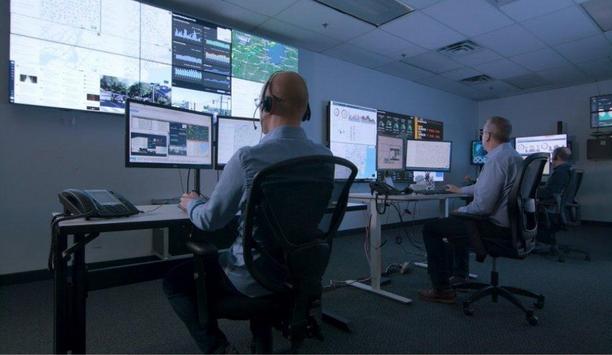
For an enterprise, addressing cyber security requires that stakeholders have immediate access to critical information compiled from multiple sources and presented where and how they need it. Various data sources monitor the cyber security status of a company’s computer systems to provide real-time visibility. Aggregating that data into visual dashboards and presenting it to operators enables any cyber security problems to be flagged quickly and resolved. Software system enhances cyber security Userful Corporation provides a software system that enhances cyber security operations for an enterprise Userful Corporation provides a software system that enhances cyber security operations for an enterprise, enabling stakeholders to envision various cyber security factors, such as application security, network security, cloud security and IoT (Internet of Things) security. The software system empowers operators to respond more efficiently. Working in conjunction with a company’s existing IT infrastructure, Userful software combines datasets from diverse systems into a visual format and delivers the information to a desktop computer, a video wall, or even to a home office. Real-time visibility “It provides a new dynamic to how cyber security issues are resolved,” said Shane Vega, Userful Corporation’s Vice President (VP) of Product Marketing, adding “The individuals who have flagged a cyber security issue may not be the ones to respond. Having real-time visibility provides more value to the overall response.” A typical cyber security operations center resembles a physical security command or emergency management hub – large video walls, individual desktop workstations, and operators that need to share information and respond quickly to any incident. Userful’s software helps in managing operations centers Userful’s software manages how data is presented in an operations center environment, without relying on proprietary hardware, operating outside an end-user customer’s IT infrastructure. Managing operations centers is a core offering for Userful Corporation, including command centers of all types, from traditional network operation centers to emergency network systems to security systems. The ability to use one software system throughout an enterprise is appealing to companies that have historically grappled with proprietary and siloed systems. Solutions that are easy to deploy, manage and scale Cyber security professionals need solutions that are easy to deploy, manage and scale" “We are a platform that can be utilized across the enterprise,” said Shane Vega, adding “Cyber security professionals need solutions that are easy to deploy, manage and scale, so they can manage all the threats every day.” Compiling and displaying information to an operations center has historically involved silos of proprietary audio/video (AV) hardware. Ironically, the hardware approach presents cyber security risks that undermine the very mission of protecting a company’s data and networks. The proprietary systems operate outside the company’s network infrastructure, and IT professionals do not have visibility into the systems. Security Orchestration, Automation and Response (SOAR) Instead of hardware, displaying information on Security Orchestration, Automation and Response (SOAR) can be accomplished using software running on off-the-shelf components, managed by the IT department and featuring all the cyber security protections required, throughout the enterprise’s network infrastructure. SOAR includes threat and vulnerability management, security incident response and security operations automation, enabling companies to collect threat-related data from several sources and automate the responses. Cyber security threats Possible threats might include an influx of packet generation, malware, someone seeking access to the network, or a malicious email. Various tools manage each threat, and each must be visualized. Because the threats are related, a comprehensive dashboard enables operators to create parallels and respond more efficiently. The software-as-a-service system ensures that all software is updated and can operate on the latest hardware In the Userful AV-over-IP scenario, an IT department takes full ownership of the computers and subsystems installed on the network. The software-as-a-service system ensures that all software is updated and can operate on the latest hardware. Companies always have an ecosystem of interconnectivity. Single platform/solution The single platform/solution also extends beyond operations centers to include meeting rooms and digital signage. All images are captured using existing protocols, such as Real Time Streaming Protocol (RTSP), HTTP Live Streaming (HLS), Web Real-Time Communication (WebRTC), and so forth. In contrast, the AV industry is hardware-centric and has been known to circumvent software approaches in order to justify selling more hardware. AV systems typically operate in terms of pixels rather than bytes of information and use proprietary software. Companies always have an ecosystem of interconnectivity Different departments in a company have historically installed their own specific AV systems, based on proprietary hardware, so that each department is siloed from the rest of the organization. Dangers of random hardware on a network Random hardware on a network, beyond the reach of the IT department, can provide access points to the network for hackers and other cyber security threats. Each proprietary hardware system exists outside the existing security protocols of the enterprise and each represents a cyber security vulnerability. Some companies end up with five or six different operations centers that involve three or four manufacturers, all siloed. Software versus hardware Our biggest challenge is to get people to understand what is possible with software versus hardware" “Our biggest challenge is to get people to understand what is possible with software versus hardware,” said Shane Vega, adding “The industry is inundated with hardware, and the risk is the unknown. Customers may not be familiar with a software solution that can accomplish what they have historically depended on hardware for.” Userful Corporation works through channel partners (integrators), who assemble complete systems using Userful software and other components, such as video screens, large-format commercial displays, groups of tiled displays, projectors – any type of display with an input. Corporate policy specifies security at every level Userful’s corporate policy specifies security at every level, including user authentication, encryption, endpoint security, air-gapped servers, information security policies, General Data Protection Regulation (GDPR), and a solution built on industry-leading IT standards. To spread the word about Userful Corporation’s capabilities related to cyber security, the company will be participating in Infosecurity Europe 2022, taking place from June 21 to June 23, 2022 at ExCeL, London, United Kingdom (UK).

The next chapter of the Pelco saga began in May when Pelco Inc. was acquired by Transom Capital Group, a private equity firm, from Schneider Electric. Since the acquisition, Transom Capital has been working with Pelco’s management and employees to define and direct that next chapter. “The more time we spend with the company, the more excited we are about the opportunity,” says Brendan Hart, Vice President, Operations, Transom Capital Group. In addition to his position with Transom, Hart has taken on an interim line role at Pelco as Vice President of Product and Strategy. After helping to oversee Pelco’s rebuilding phase, he expects to step away from daily involvement over time. “We have gained an appreciation for nuance [since the acquisition closed],” he said. “The channels, the relations, how people buy in this industry are very nuanced. Who’s gone where and who’s done what? The interplay of hardware and software. We have gained appreciation for the nuance. And we need to be surrounding ourselves with people who know the industry, who know the multi-dimensional areas.” Transition from analog to IP systems We have to focus on who our customers are specifically and understand their needs” It’s a “transformative moment in the industry,” says Hart, given industry changes such as price erosion and the transition from analog to IP systems. “We are about to go into the world of added intelligence. It’s an interesting time to buy a security company.” Hart says the Pelco brand still has value: “The market is rooting for us.” There is also a strong portfolio of people and products to build from. Pelco maintains its headquarters in Fresno, Calif., and has a presence in Fort Collins, Colo., near Denver, and a sales office in the New York area, not to mention many global employees who work remotely. A new CEO is being recruited; otherwise, “we have a great executive team” in place, including Brian McClain, COO and President, says Hart. “In defining the new company, we have to decide first and foremost what we want to be,” says Hart. “What can we provide customers? We have to focus on who our customers are specifically and understand their needs and use cases.” Part of defining the new company is to become more aligned with a specific set of verticals that fit with Pelco’s capabilities (although they are not saying which verticals those are yet). However, “we can’t ignore what we are today as we make the transition,” says Hart. Innovation in products We want customers to see innovation in products to a point when people will say ‘this is Pelco’" “We have to let the products and experience speak for themselves. We’re focused on getting our ducks in a row and going in a new direction, but actions speak louder than words,” he says. The changes will be “more organic;” don’t expect to see a big announcement. “We want customers to see innovation in products and customer support and get those things to a point when people will say ‘this is Pelco,’” says Hart. Although not exhibiting at GSX, I found Pelco occupying a meeting room near the show floor. The room gave the company a chance to respond to integrators and consultants at GSX who had questions about what was going on with the acquisition. “Everybody is rooting for us, and we wanted the ability to get out and say ‘we’re here, we’re doing things, and we’re excited about the future,’” said Stuart Rawling, Pelco’s Vice President, Market Strategy. “This is a time for people to come and see us who maybe haven’t seen us in a while.” By ISC West in the spring, Pelco expects to have a clear message of who they are and where they’re going, he says. Aligning needs of end user “We are excited about the work we are seeing internally,” which includes “aligning resources in the right way,” says Rawling. “The fruits of the labor are being seen internally now. We will be launching new products in the next eight months, although there will not be a defined moment in time when we say ‘this is it.’ It will just be happening. Next year will be an exciting time industry-wide, and product-wise, and Pelco will have a strong voice. Brendan and team have kept us extremely busy,” says Rawling, who also was part of Pelco in the “glory days” before the acquisition by Schneider Electric. We’re so optimistic, when you combine the people and the brand and what’s happening the market” “The work product has been so transformative mindset-wise for the employees. Everybody has had the opportunity to talk to the [new] owners about what type of company we are. We can set our own vision and get reenergized and get back to the core belief of what Pelco was and what it should be. We are the master of our own destiny, aligning needs of end user with the products we can deliver. We are putting the right processes in place that work for this market. It is an exciting prospect.” In the new era, Rawling expects to target marketing more toward end-users, because they have more influence on product selection than ever before, he says. End users often learn about new products online, so Pelco will be looking to target its marketing toward educating various vertical markets about available technologies and their use cases. “We’re so optimistic, when you combine the people and the brand and what’s happening the market,” says Hart. “We have to do the work. We’re excited about what we are seeing internally.”
Case studies
Matrix client, a pivotal divisional office within the Railways Department, manages railway operations across multiple divisions. Serving as the central administrative hub, the Divisional Railway Manager (DRM) office is dedicated to ensuring safe, efficient, and dependable train services, while addressing operational challenges and enhancing the passenger experience. This case study explores the DRM office’s adoption of innovative communication strategies and processes that optimize management, streamline operations, and elevate service delivery throughout the region. Requirements The DRM office sought a telecom solution to modernize their existing system, to enhance communication efficiency and reliability. The primary challenges they faced included: Outdated Communication Infrastructure: The existing system struggled to keep up with operational demands, causing frequent communication disruptions both within the office and with external entities. Need for Technology Integration: The office required a scalable, modern solution capable of merging traditional telephony with advanced VoIP systems, enabling seamless communication across all departments. Seamless System Compatibility: It was essential for the Matrix VoIP Gateway to integrate smoothly with the current third-party PBX, ensuring uninterrupted communication and compatibility with the existing setup. Improved Call Management: Reliable, real-time communication between the DRM office and other railway divisions was vital for coordinated operations and efficient management. Solution The Matrix solution, featuring the Matrix VoIP gateway, was seamlessly integrated with the existing third-party PBX system, successfully bridging modern communication technologies with legacy infrastructure. Key aspects of the solution include: Connection with Third-party PBX: The Matrix VoIP-PRI gateway (SETU VTEP) seamlessly integrated with the existing third-party PBX system, while the Matrix SIP phone (SPARSH VP510) connected effortlessly via LAN to support cohesive and efficient communication within the same PBX setup. Connection to Railway Network: The VoIP-PRI gateway established a dependable PRI network specifically for the Railways, efficiently managing multiple communication lines and ensuring robust connectivity across the network. Analog Network Integration: The Matrix FXO and FXS gateway (ETERNITY GENX12S) enabled analog connections, linking to the third-party PBX through a network switch to extend connectivity options, while maintaining a unified communication structure. This configuration allowed the DRM office to bridge modern digital and analog communication systems, ensuring reliable and adaptable connectivity across all platforms. Results The implementation of the Matrix VoIP Gateway in the DRM office's communication system brought significant operational improvements, achieving the following outcomes: Improved Reliability: The ETERNITY GENX12SAC ensured continuous connectivity across divisions, enabling a smooth and uninterrupted flow of information. This enhanced reliability improved coordination and accelerated decision-making processes. Effortless Integration: The Matrix VoIP Gateway integrated seamlessly with the existing third-party PBX system, creating a unified and efficient communication ecosystem that streamlined internal and external communications. Future-Ready Solution: Designed with scalable VoIP technology, the Matrix solution was built to support future growth, upgrades, and evolving communication needs. This future-ready approach provides the DRM office with long-term efficiency and adaptability without requiring major infrastructure changes. Matrix VoIP Gateway The Matrix VoIP Gateway delivered a robust, integrated, and future-ready communication system that not only addressed the office's current needs, but also strategically positioned it for future advancements and scalability.
Matrix's client, a pivotal divisional office within the Railways Department, manages railway operations across multiple divisions. Serving as the central administrative hub, the Divisional Railway Manager (DRM) office is dedicated to ensuring safe, efficient, and dependable train services, while addressing operational challenges and enhancing the passenger experience. This case study explores the DRM office’s adoption of innovative communication strategies and processes that optimize management, streamline operations, and elevate service delivery throughout the region. Requirements The DRM office sought a telecom solution to modernize their existing system, to enhance communication efficiency and reliability. The primary challenges they faced included: Outdated Communication Infrastructure: The existing system struggled to keep up with operational demands, causing frequent communication disruptions both within the office and with external entities. Need for Technology Integration: The office required a scalable, modern solution capable of merging traditional telephony with advanced VoIP systems, enabling seamless communication across all departments. Seamless System Compatibility: It was essential for the Matrix VoIP Gateway to integrate smoothly with the current third-party PBX, ensuring uninterrupted communication and compatibility with the existing setup. Improved Call Management: Reliable, real-time communication between the DRM office and other railway divisions was vital for coordinated operations and efficient management. Solution The Matrix solution, featuring the Matrix VoIP gateway, was seamlessly integrated with the existing third-party PBX system, successfully bridging modern communication technologies with legacy infrastructure. Key aspects of the solution include: Connection with Third-party PBX: The Matrix VoIP-PRI gateway (SETU VTEP) seamlessly integrated with the existing third-party PBX system, while the Matrix SIP phone (SPARSH VP510) connected effortlessly via LAN to support cohesive and efficient communication within the same PBX setup. Connection to Railway Network: The VoIP-PRI gateway established a dependable PRI network specifically for the Railways, efficiently managing multiple communication lines and ensuring robust connectivity across the network. Analog Network Integration: The Matrix FXO and FXS gateway (ETERNITY GENX12S) enabled analog connections, linking to the third-party PBX through a network switch to extend connectivity options while maintaining a unified communication structure. This configuration allowed the DRM office to bridge modern digital and analog communication systems, ensuring reliable and adaptable connectivity across all platforms. Results The implementation of the Matrix VoIP Gateway in the DRM office's communication system brought significant operational improvements, achieving the following outcomes: Improved Reliability: The ETERNITY GENX12SAC ensured continuous connectivity across divisions, enabling a smooth and uninterrupted flow of information. This enhanced reliability improved coordination and accelerated decision-making processes. Effortless Integration: The Matrix VoIP Gateway integrated seamlessly with the existing third-party PBX system, creating a unified and efficient communication ecosystem that streamlined internal and external communications. Future-Ready Solution: Designed with scalable VoIP technology, the Matrix solution was built to support future growth, upgrades, and evolving communication needs. This future-ready approach provides the DRM office with long-term efficiency and adaptability without requiring major infrastructure changes. The Matrix VoIP Gateway delivered a robust, integrated, and future-ready communication system that not only addressed the office's current needs but also strategically positioned it for future advancements and scalability.
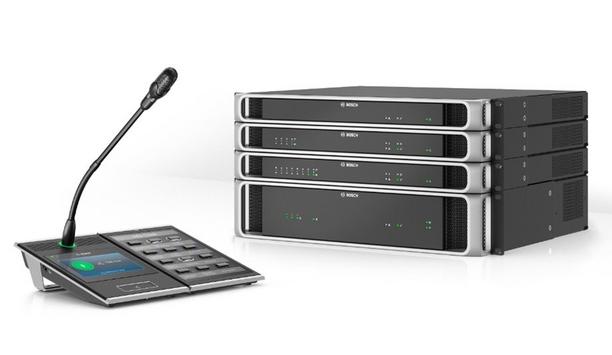
Chopin Airport in Warsaw, named after the famous Polish composer Frédéric Chopin, has recently undergone an impressive improvement in acoustic technology. System features The installation of an extensive Praesensa system from Bosch Building Technologies marks a turning point in the way information and music are transmitted and played in the airport building. The new system features advanced loudspeaker technology and a high level of automation, providing outstanding sound quality and clear, crisp voice transmission, which is of great benefit to the operator, passengers, and ground staff. Innovative technology for precise communication It uses LS1-OC100E-1 hemi-directional ceiling loudspeakers and LC1-UM12E8 built-in loudspeakers The new passenger information system is based on the Praesensa solution from Bosch. It uses LS1-OC100E-1 hemi-directional ceiling loudspeakers and LC1-UM12E8 built-in loudspeakers, which ensure that passengers at every gate are addressed with pinpoint accuracy and excellent intelligibility. Text-to-speech solution By integrating a text-to-speech solution from a third-party provider, the flight number, airline, destination, and boarding information are automatically retrieved from the central computer at Chopin Airport and reproduced in synthesized voice information. These are output in Polish and English as well as other available languages, achieving a previously unattainable sound quality. The result is a significant reduction in the workload of airport staff. Overcoming old challenges The modernization of the public address and voice alerting system was urgently needed The modernization of the public address and voice alerting system was urgently needed, as the old analog system had reached its limits. Information was often lost in an indistinct fog of sound, and manual announcements of boarding information were both time-consuming and labor-intensive. Enthusiasm for efficiency and quality The integration of the new system into the airport's existing infrastructure went smoothly, which significantly shortened the installation time. The automation and increased efficiency provided by the Praesensa system is appreciated by both staff and passengers alike. The scalability of the system ensures its suitability for future developments and requirements. “Chopin Airport now has a state-of-the-art public address system. The fact we could build on the existing IP infrastructure significantly reduced the amount of time for the installation work,” says Józef Bycul, Project Manager at Bosch Building Technologies.

A Government of India-owned multinational oil company with a registered office in Mumbai is ranked amongst the Fortune Global 500 list of the world’s biggest corporations. Owing to its consistent growth in refining capacity, the corporation is expanding at a rapid pace. Corporation challenges As a rapidly growing corporation, multi-location offices are a necessity. They have two large sheds within some distance from each other. Their other offices geographically away but in the same city had to be connected with the same telephone network. Multi-location communication can prove to be an expensive affair if communication devices are not chosen wisely. To elaborate on their challenges: Transition to modern communication with existing Infrastructure: Their investment in existing infrastructure needed protection while also a provision had to be made to modernize the communication using existing infrastructure. Managing different protocols: Interface with existing and different telecom networks requires managing different protocols, which can be cumbersome, time, and energy-consuming. Requirement of modern phone features: They required advanced features like Abbreviated Dialing, Call Pick Up, and Internal Call Restriction, to become efficient in day-to-day operations. Matrix's solution The solution offered was based on the fundamentals of Multi-location communication solutions Matrix Comsec in partnership with SMB Automation analyzed the challenges of communications and crafted a solution that was the best fit. The solution offered was based on the fundamentals of Multi-location communication solutions. This included the Matrix range of IP-PBX - ETERNITY PENX6SAC, VoIP - FXO - FXS Gateway - SETU VFX808 that optimized the feasibility of communication and helped the firm become more efficient. Products used The IP-PBX included ETERNITY PENX6SAC. This enabled them access to 4G VoLTE ports, up to 100 IP users, LDAP Client support, and much more. The VoIP - FXO - FXS Gateway included SETU VFX808 which enabled them a smooth transition to modern communication while maintaining existing infrastructure through features like 9 SIP accounts, peer-to-peer and proxy calling between distant locations, etc. The IP phones included SPARSH VP510E and SPARSH VP210. This came with features like an LCD Graphical display, Context-sensitive keys, Built-in 16 DSS Keys, Polyphonic ring tune, and much more. Application diagram Results The solution so implemented enabled the geographically distant properties to work as a single communication platform and proved to be beneficial in more than one way. The Hybrid IP-PBX enabled them to universal Network Connectivity through PSTN, GSM, and VoIP connectivity, LDAP Client Support to centralize and ease phonebook management, Logical Partitioning that prevents the conduct of any legal offenses related to Telecom regulations, and much more. The VoIP - FXO - FXS Gateway enabled them, VoIP access to traditional PBX, Multi-site connectivity with centralized telecom management, Next-generation conveyance facilities like call detail records of up to 2000 calls, Secure communication bridging with VoIP security over SRTP/TLS encryption, etc. The IP desk phones helped provide advanced features like Call Pick up, Call Forward, Call Waiting, and Call Transfer along with an Intuitive interface, that enabled employees to become efficient as well as enhanced user experience.

The proven “CAT” gaming analysis solution from German casino expert Dallmeier is also available for Sic Bo, in addition to Baccarat and Black Jack. The video-based solution offers a whole range of analysis options with which casino operators can increase the “game pace”, combat fraud, and gain valuable insights into the gaming action through real-time data collection. Optimization challenges Optimizing the gameplay at Sic Bo tables poses no small challenge to casino operators. These include potential cheating attempts, difficulties in tracking results, and operations such as late bets. Above all, however, gaming managers benefit from collecting and analyzing data that can be used to increase the game pace and optimize the efficiency of tables and dealers. “It's all about the data” Real-time tracking of important data and processes The information that can be used to optimize the gameplay at the Sic Bo table is manifold The information that can be used to optimize the gameplay at the Sic Bo table is manifold. For example, “CAT for Sic Bo” precisely records the game pace of each table based on the times for placing the bets, game phase, and payout and thus makes the performances of tables and dealers comparable. Additional information such as which fields are the most popular, information about the value of the top chip for quick identification of “high-value” bets, objective tracking of “late bets” and other events that regularly lead to discussions between players and casinos complete the portfolio. Data points from existing sources CAT for Sic Bo combines data points from existing Sic Bo consoles with CAT data captured by AI cameras above the table. In this way, data from all participating tables can be collected together and evaluated centrally. This can either be done via the Dallmeier SeMSy® casino software or the data is exported as a CSV file and can then also be evaluated by any other system. Automated Business Intelligence for the Gaming Manager This centralized capture and analysis of data provide gaming managers with insights that previously had to be laboriously collected manually by the PIT manager or were not accessible at all in a highly efficient and automated manner. This opens up a completely new field for gaming managers to optimize the profits of their Sic Bo tables: From a higher game pace to the objective evaluation of dealer performance, support in the fight against fraud to the data-driven optimization of table layout, placement, minimum bet levels, monitoring of compliance rules or promos.
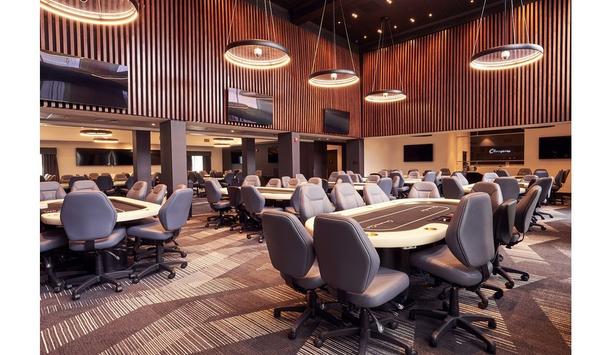
Athena Security’s Concealed Weapons Detection System was selected by Champions Club Texas to protect patrons, members, and staff at a first-of-its-kind hospitality destination in Houston that features a full-service hotel, lounge, and bar with Southern-inspired cuisine and private-membership poker. Located in Houston’s expanding Westchase community, Champions Club Texas is celebrating its grand opening as a destination offering something for everyone, from business travelers seeking comfortable accommodations with well-appointed amenities to locals looking for a unique night out. Weapons detection system Athena's Concealed Weapons Detection System (WDS)/Walk Through Metal Detector is engineered to detect a wide range of mass casualty threats like handguns, shotguns, and rifles without requiring individuals to stop as they pass through the detector. There is no need to have individuals remove phones, wallets, or other extraneous items from their pockets due to the proprietary multiple-sensor detection method. The system adheres to Federal Standards while allowing both auditory and visual alert options, as seen in the best practices of Homeland Security for WDS. The concealed weapons detection system is designed to scan walking at an average speed of one person per second. Unintimidating approach Athena Security is a solution that detects weapons upon entry and is one of the many layers of security “At Champions we are raising the bar in hospitality and gaming, and that includes ensuring the most comfortable and safe atmosphere for our valued customers,” said Trent Touchstone, Director of Security, Champions Club Texas. “Athena Security is a solution that detects weapons upon entry and is one of the many layers of security protocols in place at Champions that improves the operational efficiency of our security team as a workforce multiplier.” Athena Security’s low profile, unintimidating approach is a welcome differentiator from historic metal detector tech by eliminating the need to check cell phones and keys, allowing for a better flow into the venue. Modest-full time security team Advanced analytics and management protocols allow for deep visibility and flexibility to maintain staffing levels providing the highest level of safety. Touchstone, a 28-year veteran of the United States Marshals Service Chief with a long history of threat analysis, notes that given the hotel and membership club will require 24/7 attention with a modest-full time security team, he appreciates Athena Security’s ability to provide a feature-rich entryway security experience with the ability to automate and accomplish so much remotely.
Products
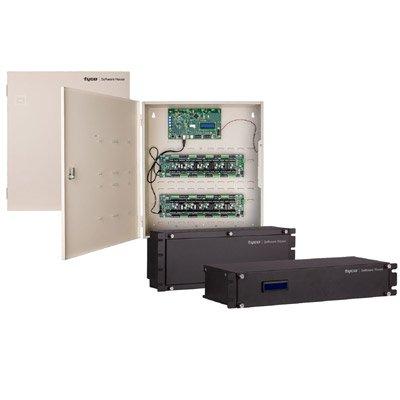
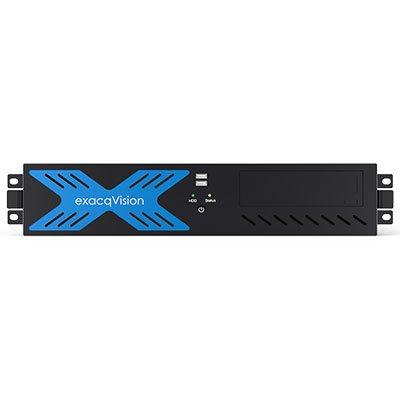


Round table discussion

Physical security is a large market overall, encompassing a range of diverse vertical markets, each with its own set of challenges and opportunities. The success of the security industry overall depends on the ability of companies and technologies to meet the specific needs of each vertical market. Some markets offer more lucrative opportunities than others. We asked this week’s Expert Panel Roundtable: Which vertical markets have the greatest potential for growth for physical security systems?

There is safety in numbers, or so the expression goes. Generally speaking, several employees working together tend to be safer than a single employee working alone. Even so, some environments require that workers complete their jobs alone, thus presenting a unique combination of security vulnerabilities. The U.S. Occupational Safety and Health Administration (OSHA) defines a lone worker as “an employee working alone, such as in a confined space or isolated location.” We asked this week’s Expert Panel Roundtable: How can security technologies help to protect "lone workers?"

In the United States, they are called license plate recognition (LPR) systems. In Europe, the more common term is automated license number-plate recognition (ANPR). In either case, the systems provide capabilities that can benefit a range of applications from schools to municipalities to parking lots. Newer technologies can even identify vehicle color, type, make, and model. We asked this week’s Expert Panel Roundtable: What's new with license plate recognition (LPR) and/or automated number-plate recognition (ANPR) systems?

Videos




IP transmission: Manufacturers & Suppliers
- exacqVision IP transmission
- BCDVideo IP transmission
- Vicon IP transmission
- Axis Communications IP transmission
- Software House IP transmission
- AMAG IP transmission
- Dahua Technology IP transmission
- Honeywell Security IP transmission
- Hikvision IP transmission
- Video Storage Solutions IP transmission
- OT Systems IP transmission
- Avigilon IP transmission
- Senstar IP transmission
- March Networks IP transmission
- Messoa IP transmission
- Hanwha Vision IP transmission
- IDIS IP transmission
- Dallmeier IP transmission
- Wavestore IP transmission
- LILIN IP transmission