Electronic access control





News

dormakaba announces strong order intake in the healthcare sector in fiscal year 2025/26. In line with dormakaba’s go-to-market strategy, the company has secured several projects across Norway, Germany, and the US, allowing the company to strengthen its healthcare vertical. dormakaba delivers solutions for doors, including locks, door hardware, door automation, access control, and mechanical locking systems. The combined total order volume is in the low double-digit million range (CHF). Multiple project details In Norway, the South-Eastern Norway Regional Health Authority has awarded dormakaba a contract with a scope that includes more than 5,500 doors. The contract is part of the New Aker hospital project, one of the largest construction projects in the Norwegian healthcare sector, with completion scheduled for 2031. Also, in Germany, dormakaba has secured a multi-site order with the m&i-Klinikgruppe Enzensberg. The project includes more than 4,500 doors to support advanced access control across several rehabilitation centers. In addition, the tender requires the system to align with the European Union’s NIS2 cybersecurity requirements. In the US, dormakaba’s New York Entrance Systems team has secured strategic partnerships with two major healthcare systems in New York. The agreements include service and refurbishment of entrance systems and expand into a broader collaboration around security, access control, and ongoing support. This strengthens dormakaba’s position as a trusted partner to the US healthcare sector. Growing demand for innovative access solutions Till Reuter, CEO of dormakaba, says: “Demand for our solutions in the healthcare sector is high, and our business is gaining momentum. These recent project wins demonstrate the growing demand for secure, efficient, and innovative access solutions. We are proud to support leading healthcare providers as their trusted partner. These orders further reinforce our position in the healthcare market and support our ongoing growth in this sector.”
Allegion US, a provider of security solutions, technology and services, will be exhibiting and demonstrating new interoperable electronic access control technologies and software at ISC West 2026 (booth #23051), the security industry’s most comprehensive and converged trade show occurring from March 23–27, 2026, at the Venetian Expo in Las Vegas. “Today, the access control industry demands more than just hardware, credentials or standalone software,” said Mark Casey, vice president of national electronic sales at Allegion. “Our commitment in 2026 is to deliver solutions—bringing together hardware, software and services to directly address the real-world pain points our customers face. By moving beyond traditional approaches and focusing on integrated, seamless access experiences, we empower our partners and end-users with true freedom of choice and enhanced security.” Seamless access experiences Allegion’s commitment to being the partner of choice is rooted in being able to serve customers holistically—from design and collaboration tools to hardware, software and the technology relationships that ultimately give customers the freedom of choice. Through the Allegion Alliance Network, Allegion develops collaborative relationships with other companies to provide a broader range of products and services. In addition, participation with Connectivity Standards Alliance (CSA) and the FiRA consortium provides cutting-edge, cross-industry collaboration with a focus on solving for end-user needs. And collaborations with companies like SwiftConnect provide customers with accelerated adoption of NFC mobile credentials and seamless access experiences. Mobile credential standard Allegion experts, including two SIA Women in Security Power 100 honourees, will be connecting with attendees and showcasing the company’s latest products and solutions, including: Schlage Mobile Credentials: Schlage offers a full portfolio of NFC credentials in Apple Wallet® and Google Wallet™ including Employee Badge, Student ID and Resident Key to provide users with high levels of convenience, enhanced security and seamless access. Schlage mobile credentials are available in iPhone® and Apple Watch® as well as Android™ phones and Wear OS smartwatches. Allegion is proud to work collaboratively with an increasing number of software and technology alliances to integrate Schlage mobile credentials and access control devices into their systems, ultimately bringing an entire solution to more customers than ever before. Aliro 1.0 Specification: Aliro enables users to experience the power of open access. During ISC West, Allegion will demo this new communication and mobile credential standard, which looks to create an environment where access control providers and mobile device manufacturers work together, eliminating barriers to innovation. Introducing a common credential and access technology defined by major mobile and access control OEMs to ensure best-of-class security, privacy and interoperability among certified smartphones, wearables and access control readers. Schlage XE360 with RealSync™: The future of flexible connectivity is here with RealSync. The XE360™ Series is the next generation of wireless locks from Schlage. The sleek design looks as good as it performs, at an affordable price. XE360 devices feature an interchangeable FleX Module™ that enables options for access control connectivity. Choose from two modes—offline via Bluetooth® or persistent (real-time) online via Wi-Fi®. Wi-Fi mode includes RealSync™, which has the groundbreaking ability to request and receive a lock's status and send a command to a lock and receive verification in seconds, with no additional hardware or wiring, saving time and costs. ZentraTM: An expert in multifamily access control with their Zentra Living and Zentra Connect product offerings, Zentra will now be expanding into commercial. The legacy Pure Access commercial access control software will soon become a part of the Zentra family with a rebrand to Zentra EdgeTM. Zentra Edge will be the dedicated Allegion platform for small to medium business access control needs with its key features of audit reporting, remote cloud monitoring and a suite of Schlage integrator hardware. Additional features to come after the rebrand are access to the Zentra app with Bluetooth credentials and Employee Badge in Apple and Google Wallet. LCN Senior Swing with AdaptivIQTM: Self-adjusting, self-calibrating, and fully-loaded. Introducing the next generation of automatic operator. The enhanced LCN Senior Swing is engineered to save time, minimize headaches, and improve performance. Powered by LCN’s AdaptivIQ technology, this operator automatically adjusts to external pressures like wind, carpet drag, and HVAC stack pressure, allowing smooth, consistent operation. Coupled with a Smart Power Boost, AdaptivIQ provides optimized latching for security and safety. Overtur™: Overtur is Allegion’s cloud-based suite and collaborative environment for managing door security, hardware, and key systems across the building lifecycle from any location. It unifies accurate opening data into a single, secure source of truth and connects project teams with real-time visibility from design through maintenance. Mobile tools for inspections, surveys, installation status, and punch lists streamline on-site verification and strengthen confident and timely decision-making. With nearly a decade of service, Overtur continues to evolve as an innovative and integrated trusted solution for partners seeking a smarter, more connected approach to managing security. Mission-Critical Data Centre Design Solutions: A dedicated section of the Allegion booth will feature secure and scalable offerings engineered for the unique demands of modern data centers, including the L Series Motorized Latch Retraction, the Schlage FSS1 High Security DPS, and the Von Duprin Outdoor Rated Series. Allegion representatives will be available to discuss the company’s service offering and how Allegion supports the design community by streamlining specifications, reducing project complexity, and improving speed to build. Improving school safety On March 26, the Security Industry Association (SIA) will be presenting new research from a first-of-its-kind analysis of school-based active shooter events conducted by Texas State University and SIA. Using FBI-identified events, the study examines patterns related to door status, access points and breach attempts—ultimately providing an evidence-based perspective on how secured access performs during real incidents. Additionally, show attendees can stop by the Partner Alliance for Safer Schools (PASS) stand #1128 to learn more about PASS’s efforts to improve school safety and security. PASS will be holding a town hall on March 26 to share several new initiatives and upcoming projects. Security professionals who will not be attending the show in person this year can utilize Allegion’s online resources including the Changing Face of School Security Podcast, the Solving for Multifamily Podcast, and a wide array of Virtual Trainings.
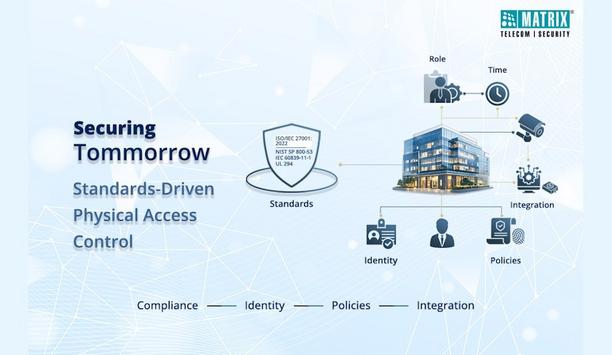
Security is most effective when it is invisible yet invincible. Today, Physical Access Control Systems (PACS) have evolved into an auditable, policy-driven layer of enterprise risk management—where every door event is a data point, and every credential decision is a control. Standards and frameworks increasingly expect this: ISO/IEC 27001:2022 explicitly calls for physical security perimeters to prevent unauthorized physical access to information and associated assets, pushing organizations toward defined zones, controlled entry points, and consistent enforcement. Physical access authorization In parallel, NIST SP 800-53’s Physical and Environmental Protection (PE) control family formalises practices like physical access authorization and access control at entry/exit points, reinforcing the need for identity-aligned access policies and review cycles—not ad-hoc badge exceptions. From a system assurance standpoint, modern deployments also lean on product and performance standards such as UL 294 (testing for access control system units) and IEC 60839-11-1 (minimum functionality and performance requirements for electronic access control). Net-net: when Physical access control systems are built on recognized controls and validated components, teams move fluidly, compliance becomes operationalised, and security infrastructure scales cleanly with growth—without becoming a bottleneck. Industry standards focus Understanding what industry standards actually require To remain future-ready, organizations must shift from reactive monitoring to proactive enforcement. Industry standards focus on three measurable outcomes: Authorized Access Only: Ensuring only verified individuals gain entry to specific zones. Auditable Activity: Maintaining a clear, provable record of every entry and exit. Evolutionary Security: Ensuring systems remain resilient as physical and cyber threats evolve. This aligns with globally recognized frameworks such as ISO/IEC 27001, which mandates physical access control systems as part of information security governance, and NIST SP 800-53, which outlines requirements for organizations handling sensitive assets. Frictionless and secure authentication One of the largest compliance gaps in legacy systems is outdated authentication. Modern Physical Access Control Systems are moving away from easily shared or cloned RFID cards and PINs toward high-assurance credentials. Mobile & Biometric Solutions: Utilising mobile NFC, fingerprints, or face recognition ensures that security is as easy as a glance or a tap. Reducing Risk: These methods significantly reduce the likelihood of credential sharing and unauthorized entry. Intelligence-driven policies: Role + location + time Industry-grade physical access control systems are never "one user = one door". Standards expect enforcement across multiple dimensions to ensure structured governance: Role-Based Access: Allowing only authorized staff into sensitive areas like R&D zones or server rooms. Temporal Control: Restricting access based on shifts or business hours. Zone Management: Limiting visitor movement beyond reception areas. Advanced features for regulated environments For industries such as banking, healthcare, and pharmaceuticals, certain preventive features are now the expected baseline: Advanced features for regulated environments Beyond the Basics While general standards provide the framework, niche regulations demand specialized execution. For example, In Manufacturing, their systems integrate with safety protocols to ensure that high-risk machinery zones are only accessible to personnel with valid, up-to-date safety certifications, grounding digital policy in physical reality. Auditability: If It Isn’t Logged, It Didn’t Happen A major red flag in modern audits is the inability to generate reports instantly. The system must provide: Real-Time Alerts: Immediate notifications for tamper attempts or forced-open doors. Instant Escalation: Automated notifications via email or SMS. Audit Trails: Downloadable historical reporting and incident traceability. The power of infrastructure and integration Modern Physical Access Control Systems no longer operate in isolation. They integrate directly into the IT backbone using IP-based networking and PoE-powered devices, simplifying expansion and improving uptime. Furthermore, integrating with fire alarms, video surveillance, and HR systems ensures that the security posture is holistic—where a fire alarm triggers an automatic unlock policy and a door event is verified by video. Matrix transforms the security from a standalone hardware setup into a unified IT backbone. By using IP-based networking and PoE-powered devices, they simplify the infrastructure while ensuring that a fire alarm can trigger an automatic unlock or a door event can be instantly verified by video. Conclusion: The matrix standard A modern physical security posture is more than a technical requirement; it is a commitment to excellence. When the Physical Access Control Systems are secure by design, policy-driven, and audit-ready, they become a silent partner in the business’s success. In this landscape, Matrix stands as a beacon for organizations seeking more than just hardware. Matrix provides a holistic ecosystem where physical security meets cutting-edge innovation—offering everything from biometric door controllers to cloud-based multi-site management. With Matrix, users don’t just meet the industry standards of today; they define the standards of tomorrow. Experience a world where security is seamless, compliance is effortless, and the facility is truly future-ready with Matrix.
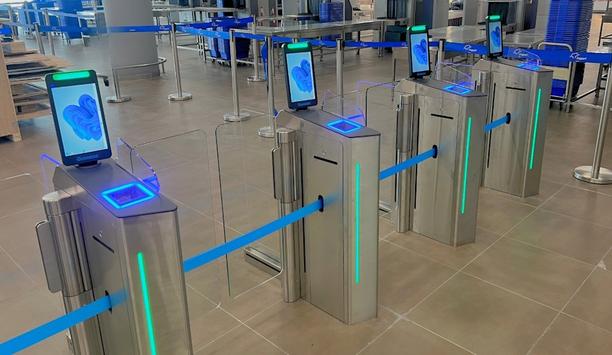
Gunnebo Entrance Control will return to Passenger Terminal Expo 2026, showcasing how latest intelligent entrance control solutions can support secure, efficient and passenger-friendly airport environments. Gate technologies On stand B290, as a global provider of stylish entrance control solutions, Gunnebo Entrance Control will demonstrate a range of boarding, pre-security and immigration gate technologies designed to respond to the operational, spatial and aesthetic challenges faced by smart terminals. Visitors to the stand will see several configurations from the AFL airport gate portfolio, highlighting flexibility in both performance and design. The AFL Ultra Compact in white, is a solution engineered for locations where space optimization is critical without compromising security or throughput. Entrance control solutions Nathan Anstee, VP of Mass Transit at Gunnebo Entrance Control, said, “Airports are under increasing pressure to process growing passenger volumes efficiently, while still delivering a safe, intuitive and comfortable experience. Our focus is on developing entrance control solutions that are intelligent, adaptable and designed around real operational needs." "By offering a range of gate formats, finishes and detection capabilities, we help airports create environments that improve flow, enhance security and remain flexible as requirements evolve.” AFL series on display The AFL Compact will be on display in black, demonstrating a balance of robust functionality and contemporary styling, while the AFL 3.6 in stainless steel will illustrate durability and suitability for high-traffic airport environments. The stand will also feature the AFL HS, a new system offering enhanced performance capabilities for demanding airport applications. Complementing the AFL range, ImmSec will be showcased in both black and white, underlining Gunnebo Entrance Control’s ability to deliver cohesive entrance control solutions that integrate seamlessly into a wide variety of terminal designs. The solutions on show at Passenger Terminal Expo demonstrate how entrance control can be tailored to suit different airport requirements, from space-restricted areas to high-traffic zones, while maintaining consistent security performance and passenger flow. Safe and future ready terminals Nathan added, “Passenger Terminal Expo is a vital platform for meaningful conversations with the global airport community. We look forward to welcoming visitors to demonstrate our latest entrance control solutions and to discuss how they can be tailored to support bespoke requirements and create safer, more efficient and future-ready airport terminals.” Passenger Terminal Expo Gunnebo Entrance Control invites attendees to visit stand B290 at Passenger Terminal Expo to experience the latest developments in airport entrance control and explore how its solutions can support evolving terminal requirements. PTE Expo takes place March 17 – 19 at Excel, London.
Expert commentary

A lot has been said about door security — from reinforced door frames to locking mechanisms to the door construction — all of which is crucial. But what security measures are in place beyond the perimeter door in case the worst happens and it’s somehow breached? Hopefully, many more levels of access control are in place to prevent, or at least slow down, a perpetrator’s ability to compromise protected assets. Additional interior layers Interior security measures must operate as an integrated, multilayered system that eliminates single points of failure. These inner protections safeguard not only the physical infrastructure but also the operational integrity, confidentiality, and availability of the systems housed within. Beyond simply preventing unauthorized individuals from getting inside, the goal is to create a controlled, monitored, and resilient environment in which every movement, action, and access attempt is verified, logged, and, when necessary, challenged. As modern buildings, data centers, and infrastructure sites host critical functions and potentially sensitive intellectual property, these additional interior layers become essential to protecting both organizations and their proprietary assets. Interior security controls One of the most important interior security controls is granular access segmentation One of the most important interior security controls is granular access segmentation. While a perimeter door may verify an individual’s right to enter the building, the interior should treat every room, cage, and corridor as its own security zone. Role-based access control and strict least-privilege principles should limit personnel to only the areas they absolutely require. For example, a network engineer may need access to routing equipment but not storage racks; a janitorial contractor might be allowed into shared hallways but not any equipment rooms at all. These access restrictions should be enforced using intelligent keys, biometric scanners, mantraps, and, at particularly sensitive locations, two-factor authentication. Segmenting access in this way limits the potential damage from a single compromised badge or insider threat and ensures that a single breach does not cascade into a total facility compromise. Low-light and infrared capabilities Biometric authentication within a building adds a layer of confidence beyond perimeter controls. Technologies such as facial identification help prevent the use of stolen, cloned, or borrowed credentials. These systems complement anti-tailgating measures, such as sally ports or mantraps, which ensure that only one authenticated person passes through at a time. Interior surveillance is another essential measure. High-resolution cameras equipped with low-light and infrared capabilities should cover every hallway, door, rack row, and logistical pathway. Camera feeds must be continuously recorded, and retention policies must align with regulatory requirements. Intelligent video analytics, such as motion pattern recognition and heat mapping, enable the detection of atypical behaviors — such as someone lingering near a cage they are not authorized to access or movement at odd hours. Physical tamper-detection mechanisms Cabinet security provides a vital layer of granularity in the access hierarchy, ensuring that even within secure facilities Integrating surveillance with access control systems creates a strong correlation; when someone successfully passes through a secured door and enters a room, the system can track whether the number of people seen on camera matches the number authenticated, and alert security if a discrepancy occurs. However, it is increasingly important that access control not stop at the room level, because the most sensitive assets are often housed in cabinets, racks, or storage units within already-secured spaces. Cabinet security provides a vital layer of granularity in the access hierarchy, ensuring that even within secure facilities, assets remain protected. Physical tamper-detection mechanisms on racks, cable trays, and server chassis add another dimension: they can detect if a panel is opened, a cable is unplugged, or a device is removed without authorization. Secure destruction protocols Another internal measure is the use of secure storage and chain-of-custody procedures for any components that contain intellectual property or personally identifiable information. Hard drives, backup media, and even printouts should be stored in locked cabinets accessible only to people with proper clearance. When decommissioning hardware, secure destruction protocols such as shredding or degaussing should be performed in controlled areas and thoroughly logged. Every movement of sensitive equipment should be traceable, from installation through end-of-life disposal. Such processes reduce the risk of data leakage from improperly discarded or undocumented devices. Consequences of improper behavior Staff should be trained to recognize social engineering attempts, unusual behaviors, and procedural deviations Operational security procedures also contribute significantly to interior protection. Background checks, ongoing employee vetting, and mandatory training ensure that individuals with access to sensitive areas understand their responsibilities and the consequences of improper behavior. Staff should be trained to recognize social engineering attempts, unusual behaviors, and procedural deviations. Maintaining a strict visitor escort policy prevents non-employees from wandering unobserved. All visitors should wear highly visible identification badges and be monitored continuously by authorized personnel. The building's interior should be treated as a controlled environment at all times, not merely a workspace. Continuous auditing and logging form Continuous auditing and logging form another pillar of interior security. Access logs from intelligent keys, biometrics, video, and environmental systems must be stored securely and evaluated regularly for anomalies. Automated systems can flag irregular patterns, such as repeated attempts to access unauthorized areas or entering rooms at odd hours. Manual audits validate that the access control list remains accurate, that no inactive or former employees retain credentials, and that documentation matches reality on the floor. These logs are indispensable during investigations, compliance assessments, and incident response efforts. Interior security controls Security networks should be isolated from the main IT networks to prevent a cyber incident Finally, redundancy and resiliency must be built into interior security controls. Electrical power for access control, intelligent keys, biometrics, and video systems should be backed by secondary sources, generators, or uninterruptible power supplies. Security networks should be isolated from the main IT networks to prevent a cyber incident from disabling physical protections. The goal is to ensure that interior security remains functional even during outages, disasters, or cyber disruptions. Multilayered approach Together, these additional interior measures create a layered defense that makes a secure building, data center, or infrastructure site extremely difficult to compromise. Rather than relying on a single barrier at the entrance, the environment becomes an ecosystem of mutually reinforcing controls — physical, operational, digital, and procedural. This multilayered approach allows structures to maintain high levels of protection even as threats evolve, ensuring that the systems inside remain secure, resilient, and trustworthy.
The healthcare infrastructure is ever evolving. Facilities are no longer single entities for one, they are sprawling ecosystems that serve a wide range of users, from medical staff and administrators to vulnerable patients, visitors and maintenance personnel. Safeguarding their safety and security, while providing seamless operation is a complex challenge - one frequently solved by access control. Use of access control Today’s security solutions play a central role in protecting people and mitigating risk across much of our built environment. An appropriately specified system is effective at regulating, monitoring and restricting entry and exits, and allows users to navigate an integrated network and its hardware to ensure the right access is provided to the right person at the right time. In healthcare buildings, the use of access control expands further, whereby a system can tackle a host of unique operational challenges - significantly contributing to fire safety, ease of movement and the theft prevention of equipment, medicine and sensitive patient data, and all while protecting human life and preserving privacy and dignity. In healthcare buildings, the use of access control expands. In doing so, access control can become the cornerstone of functionality, compliance and organization in any healthcare environment. Though, as the complexity of projects deepen, decision makers are reminded that coordination is key. Preparing and empowering users Between January and March 2025, there were over 832,000 patient safety events recorded in the NHS. While each of these events may not be directly linked to building security specifically, the healthcare industry is faced with a considerable number of safety incidents, which suggests greater monitoring and mitigation is needed across the board. Access control often provides staff with the vital means of retaining control without impeding care Patient well-being and security will always remain paramount in the sector, and access control often provides staff with the necessary means of retaining control without impeding care. Hospitals for example, sustain a high level of footfall across large campuses with multiple points of entry and on-site patient record systems, presenting a number of simultaneous security tests as a result. Though, unlike other public buildings, where rigid security measures are active at all times, many healthcare environments must strike a balance throughout their security framework to meet a host of one-of-a-kind demands. Use of access credentials With a continuous influx of patients, staff and visitors, healthcare groups are habitually required to remain accessible and inviting around the clock. At the same time, they must also be prepared to deter unwanted visitors in areas of restricted access and lock down intensive wards to ensure patients remain safe and secure under periods of monitoring. For this, the use of access credentials is critical and provides a regulated system for sensitive staff-controlled areas such as pharmacies, wards, and server rooms. By applying role, zone, or schedule-based access, decision makers can authorize personnel seamlessly, empowering facilities to manage patient care without compromising security in the process. Use of access credentials is critical and provides a regulated system for staff. Implementation of AI-powered tools and devices Modern systems may incorporate the use of keycards, biometric scanners, and mobile credentials When it comes to the operation of these systems, training gaps are a concern, however. Over the five years up to February 2025, numbers of NHS doctors rose by 26%, with nurses also up 25%, and this influx of new staff requires education towards the usage of access control. Modern systems may incorporate the use of keycards, biometric scanners, mobile credentials and in some cases, voice-activation, with the implementation of AI-powered tools and devices set to play a more prevalent role in the future. Each system presents its own benefits and may be better suited to certain projects and areas, but without consultation and proper user education, they can instead become a barrier. Strategy, scalability, performance To alleviate these operational threats, early-stage planning is fundamental. Just as end-user education and training should be built into project timelines, it’s important to consider the growing need for cooperation throughout the entire supply chain of an access control project. A collaborative approach becomes even more critical when innovative solutions enter the market All too often, a lack of evidence-based decision making can hinder the specification of a scheme and its accompanying hardware, whereby choices are made without understanding long-term performance or compliance requirements. Whether approaching a new or retrofit development, ongoing communication allows experts to come together and ensure that product decisions are aligned with the buildings intended use and user base. This collaborative approach becomes even more critical when innovative solutions enter the market and new sector challenges arise. Latest access control products With this in mind, trusted manufacturers will no longer simply deliver the latest access control products, but will aim to work alongside the architects, specifiers, contractors, and facility managers at each stage of the building’s lifecycle to ensure touchpoints are addressed. This is crucial in modern healthcare environments, where the added layer of complexity requires tailored security measures. One area that is often neglected is scalability, for example. As healthcare facilities manage fluctuating patient numbers and a growing level of patient data, along with new regulations, systems must be adaptable and allow for ongoing improvements and updates to the security infrastructure without the need for a complete overhaul. By adopting a scalable system that combines technology integration with ease of use, decision makers can future-proof their building’s security. Manufacturers will no longer simply deliver the latest access control products Complexity of the healthcare industry In truth, access control has become more than a means of restricting access. Modern systems are more equipped than ever before to deliver environments that support care, safety, and operational excellence. Nonetheless, the complexity of the healthcare industry and its buildings demands more than product innovation - it requires an industry-wide commitment to collaboration, from project conception to product installation and beyond.

If you were to ask people outside our industry what door and access security entails, chances are their answers would reflect their common encounters with locks, security guards, cameras, and maybe metal detectors, badges, or automatic doors. But if they were curious enough, they’d probably be astounded to learn how extensive, intricate, and interesting the business can be and, of course, how vital it is to life safety, physical security, and cybersecurity. Integrated, interoperable solutions They’d also discover that it’s not just about levers, deadbolts, and other products. Instead, it’s a system of many systems, integrated, interoperable security solutions that cover everything from access control, video surveillance, fire alarms, and communications to server rooms, IT networks, energy efficiency, and more. Partnerships to keep up with changing needs A manufacturer’s support of their customers is how prepared they are to respond with high-quality advice Integral to the future success of the openings solutions industry is how well manufacturers and security experts keep up with the changing threat landscape and their customers’ evolving needs. Part of a manufacturer’s support of their customers is how prepared they are to respond with high-quality advice, service, and innovations that address the questions and concerns that arise. That’s why more developers, designers, and end-users alike are leaning on partnerships with visionary manufacturing companies and systems integrators who proactively keep their ear to the ground and an eye on the future. Caution: curves ahead As we look toward that future here in North America, there will always be forces of change to contend with and the accompanying impact on people’s safety, security, health, and livelihoods that our industry will need to address. The forces range from the incessantly unfolding threat scenarios in our country and the world’s geo-political dynamics to climate change and a host of other shifting factors, including the ways we want to work post-pandemic. Bypassing tailored approach Commoditization poses risks to customized systems integration, good design, the environment Like many industries, ours has seen a change in the level of commoditization in recent years. While this may give some customers access to cheaper door products in the short term, it usually means bypassing a tailored and more effective approach to security solutions that better meet risk assessment needs for the long haul. It can also get in the way of fulfilling a customer’s forward-thinking requirements for sustainable and aesthetic building materials. In other words, commoditization, with its tendency toward “sameness” and dependency on less sustainable, corner-cutting materials and processes, poses risks to customized systems integration, good design, the environment, and potentially security itself. Change for the better Fortunately, change has its upside, especially as it applies to innovation, the counterforce to commoditization. It’s the primary reason why progressive architects, integrators, and security professionals in North America keep gravitating to manufacturers with the instincts and resources to make bold investments in people, new ideas, and processes that produce advanced, planet-friendly solutions. From our view of the door security industry, sustainability will be a central component of innovation from here on out, where the development of new solutions and products is guided by practices and values that reduce their environmental footprint and increase their positive impact. Sustainably-made solutions Transparency in the form of documentation and third-party certifications to back up sustainability claims Along with being a top-down priority for certain manufacturers, sustainably made solutions and products are in higher demand than ever from the design, building, security, and end-user communities. They want to know about the carbon footprint and health impact of product ingredients, their recyclability, and how responsibly things are being made, packaged, and delivered. And they expect transparency in the form of documentation and third-party certifications to back up sustainability claims. Resilience Along with sustainability, a greater focus on resilience has emerged. Climate change is being looked at as a key contributor to the increase in wildfires and the intensity of windstorms and flooding. There will continue to be an expanding need moving forward for FEMA-rated storm shelters, fire- and water-resistive doors, and even blast-resistant openings for certain locations. On the near horizon Facial recognition has long been in use in government and other high-security applications The door security industry is also seeing a fusion of technologies, including newer touchless/contactless opening solutions that incorporate improved biometric access credentials like facial recognition. Facial recognition has long been in use in government and other high-security applications, and we’re starting to see more adoption and willingness to use advanced biometrics devices for door access. Video sensing data and analytics Fortunately, there are new strides regarding the transparency of the algorithms relating to facial recognition. Reassurances about the prevention of bias will help further that adoption. Voice and video will also soon become more prevalent for building and security management by using video sensing data and analytics to inform door security solutions. These developments often stem from the convergence of application engineering and systems integration. Application engineering It also advances the de-commoditisation of security and access control solutions Openings solutions innovators and manufacturers receive vital feedback and insight from both channel partners and customers about the characteristics of a vertical market and/or region. Not only does this partnership require trust and close working relationships, but it yields near and longer-term advantages to all participants. It also advances the de-commoditization of security and access control solutions. Serving underserved communities Smaller businesses need to manage the security and safety of their personnel and assets just as larger operations do. The challenge has been how to offer the right fit of robust door security solutions that also fit these organizations’ budgets. Historically, they’ve been caught between having to choose an enterprise system that would provide the security they need but comes with a high price tag or settling for mechanical locking doors and a fire alarm system that will at least satisfy a certificate of occupancy requirement. Smart lock system Many small business owners want technology that’s simple to install, even DIY in some cases Many small business owners would like to add a smart lock system to enhance their company’s security which also gives them the flexibility to issue mobile credentials and manage employee and visitor access remotely. Ultimately, they’re looking for a higher level of functionality than what’s available at the low end but something with far less infrastructure and at a lower cost than what’s inherent with higher-end solutions. They also want technology that’s simple to install, even DIY in some cases. Scalable electronic access control Supporting these underserved customers requires developing scaled solutions to match the fewer doors, employees, and amount of space that smaller businesses need. This unique approach to electronic access control is new, but it’s already proving to be successful in helping organizations better manage their time, resources, and security. Training The need for expanded solutions awareness, product knowledge, and installation training is also growing The need for expanded solutions awareness, product knowledge, and installation training is also growing. Retirements and other changes within the locksmithing, systems integration, and facilities management sectors continue to affect how our industry needs to recruit, develop, and retain talent. So do technological advancements in electronic access control and door security hardware overall. Change, innovation, and learning A manufacturer or organization that can offer comprehensive training led by seasoned professionals will go a long way toward expediting the onboarding of new hires and providing continuing education for experienced professionals at all levels and from all disciplines connected to safety and security. Ultimately, door security experts and companies who embrace change, innovation, and learning will gain the extra edge customers are always looking for to add value to their investments in security.
Security beat

Multiple technology trends are transforming the physical access control market. There is a fundamental shift away from physical cards and keys toward digital identities — mobile credentials, digital wallets, biometrics, and cloud-native access platforms. These next generation access solutions are radically reshaping how buildings operate, protect staff, and perform functionally. At the same time, AI and analytics solutions are being layered onto these physical access control systems to support predictive threat detection and behavioral insights. Access data itself is becoming an asset for sustainability, space optimization, and smart building initiatives. Risk, impact operations and experience The annual HID Global Security and Identity Trends Report highlights these and other issues The annual HID Global Security and Identity Trends Report highlights these and other issues. The survey cites improving user convenience as a priority for nearly half of organizations, while 41% are focused on simplifying administration, and 28% struggle with system integration. These are not theoretical challenges, they are day‑to‑day friction points that add cost, increase risk, impact operations and experience, and, of course, must be addressed. HID Global’s commercial focus HID Global’s commercial focus is to help organizations digitize their access control — with mobile identities, biometrics, and cloud platforms — and then to use the data to deliver more value. “We are turning access control from an operational cost into a software-driven asset that improves efficiency, supports Environmental, Social, and Governance (ESG) goals and even creates new revenue opportunities,” says Steven Commander, HID Global’s Head of Consultant Relations. The impact of digital transformation Digital transformation is the method of moving access control from hardware and physical credentials Digital transformation is in the process of moving access control from hardware and physical credentials to a software-driven, integrated experience. The transformation strengthens security while also improving user convenience — transforming the “pavement to the desk” journey. HID enables this shift through mobile credentials, biometrics, cloud-native platforms, and solutions that allow third-party applications to run on door hardware. “This helps customers turn access data into operational and commercial outcomes, while also improving the overall user experience,” says Commander. Digital transformation in access control is not focused on chasing the latest trends. Rather, transformation is about turning software, data and integration into outcomes that matter to customers, says HID. “Security becomes stronger and more adaptive,” says Commander. “Operations become simpler and more cost‑effective. Experiences become seamless and consistent. Sustainability moves from ambition to action. And the financial case becomes clearer as efficiencies are banked and new value streams emerge.” The challenge of futureproofing with long lifecycles Given that physical security technologies will be in place for 15 to 20 years, it is important to plan for how systems can evolve over time. Considering how rapidly security threats, compliance standards, and user expectations change, 15 to 20 years is a long time. The decisions made at the beginning of a system’s lifecycle can either limit flexibility later (which will be costly) or enable long-term adaptability. Support for open standards such as Open Supervised Device Protocol (OSDP) is therefore important Choosing products and platforms that are open, interoperable, and designed for updates can enable future-proof projects. Support for open standards such as Open Supervised Device Protocol (OSDP) is therefore important. In addition, systems built on open controller platforms — such as Mercury — enable organizations to switch software providers or expand functionality without replacing core door hardware. Architectural openness is key to system lifecycles and maximizing the return on investment (ROI) from a chosen solution. Digital credentials and mobile access Flexibility and upgradeability should also be top of mind when it comes to endpoints like access control readers. While RFID cards are still commonplace, there is a clear trend toward digital credentials and mobile access. Readers that support both allow organizations to transition at their own pace, without committing to a full system overhaul. A long system lifecycle does not mean technology should remain static. Security, particularly cybersecurity, demands more frequent updates. Technologies that support firmware upgrades in the field extend the value of a deployment while helping organizations keep pace with emerging threats. In that sense, lifecycle thinking is not just about longevity — it’s about maintaining resilience and readiness over time. Applying biometrics and mobile identities Biometrics is becoming mainstream as a credential alternative, strengthening security without adding friction Biometrics is becoming mainstream as a credential alternative, strengthening security without adding friction. Many organizations are now deploying biometrics to support fast, seamless access journeys, with adoption already around 39% in access control according to HID’s recent research. In addition, 80% of organizations surveyed expect to deploy mobile identities within the next five years. Full technology integration enables tap‑to‑access without opening an app; the user journey becomes faster, safer, and more convenient. “It is where the industry is headed and we are at the vanguard of this,” says Commander. Ongoing challenge of cybersecurity At HID Global, cybersecurity is embedded into everything, from corporate processes and development practices to the solutions they bring to market. “Our approach ensures that customers can strengthen their overall security posture, not only by deploying secure products but by benefitting from HID’s commitment to the highest industry standards,” says Commander. HID holds multiple globally recognized certifications, including ISO 27001, ISO 14298, SOC Type 2, and CSA STAR, which demonstrate their robust information security and cloud security practices. In addition, HID’s SEOS® secure chipset is independently SEAL-certified, providing one of the most advanced levels of protection available on the market today. “Ultimately, this means organizations are not just purchasing isolated secure products; they are implementing solutions developed and delivered within a comprehensive, cybersecure framework,” says Commander. “When deployed according to best practices, HID solutions enable customers to achieve the highest levels of resilience against evolving physical and cyber threats.” Developing green and sustainable solutions A huge amount of waste is generated from the manufacture of plastic RFID access cards Digital credentials align with the sustainable solutions that everyone wants. A huge amount of waste is generated from the manufacture of plastic RFID access cards. Over 550 million access cards are sold annually. This creates 2,700 tons of plastic waste and 11,400 tons of carbon, based on a PVC card weighing 5 grams. Therefore, digital credentials self-evidently reduce the reliance on plastic cards (helping reduce carbon emissions by up to 75% according to HID’s research), while leveraging access control system data supports energy optimization by shutting down or reducing systems in unused spaces. Energy use and CO₂ emissions can be cut dramatically, showing how access systems can contribute to sustainability goals and green building certification. What is the latest in smart buildings? Smart buildings increasingly rely on mobile access control as the backbone for digital services. Real-time access data enables new services such as automated room bookings, HVAC control, lift/elevator calling, e-bike hiring, and so on. Smart buildings increasingly rely on mobile access control as the backbone for digital services The financial upside is clear; smart, digitally transformed buildings can deliver around 8% higher yields per square foot versus traditional office space. Operational savings accrue from reduced administration, the removal of card production and shipping, and lighter IT support. This creates a value cycle — better experiences drive adoption, adoption fuels monetization, and monetization funds further improvements. Achieving technology impact in the real world One standout project is One Bangkok – a $3.9 billion mixed-use development in Thailand – which demonstrates the scale of what can be achieved when access control data is used for optimization, particularly when it comes to monitoring facilities usage and occupier behaviors. By switching lights off or lowering the temperature in unused rooms, for example, the One Bangkok building demonstrates this potential with a 22% reduction in energy consumption, saving 17,000 MWh and 9,000 tons of CO₂ annually. Sustainability is a key factor in contributing to how properties are valued. And sustainability extends far beyond digital credentials having a lower environmental impact than plastic cards. Buildings with recognized sustainability certifications often command rental premiums of around 6%, and three‑quarters of security decision‑makers now consider environmental impact in their procurement assessments.

Security professionals are recognizing the intelligence value of leveraging publicly and commercially available information. This information can now be accessed more effectively from typically hard-to-reach regions. Also, the technological capabilities have matured in our age of artificial intelligence, machine learning, and data science. Intelligence has historically been based on classified data. However, today’s unclassified data, including open-source intelligence (OSINT), is increasingly being used to provide context and queuing for other types of intelligence. Advanced identity intelligence Babel Street is a technology company providing advanced identity intelligence and risk operations using an AI-enabled data-to-knowledge platform to unlock insights from a flood of data. The company provides advanced data analytics and intelligence for the world’s most trusted government and commercial organizations. Experts have predicted that by 2025 over 463 exabytes of data will be generated each day globally The sheer volume of data is growing exponentially. Experts have predicted that by 2025 over 463 exabytes of data will be generated each day globally. Not only are we seeing exponential growth in the volume of data, but there is also disparity in the veracity and the variety of data. This is being compounded by the ‘app economy’ in which data is created in a new format for every app added around the globe. Human language technology “The problem is that the data ‘junk’ and the ‘crown jewels’ are in the same bucket, and government and commercial entities need better and faster ways to extract intelligence from these torrents of data,” says Farid Moussa, VP, Strategy & Public Sector, Babel Street. Prior to joining Babel Street, Farid retired from the National Security Agency (NSA). He has guided video, image, speech, and text analytics (VISTA) and developed an appreciation for human language technology. An elusive source of data is the Dark Web, where every user, by design, is attempting to obfuscate their identity, and bad actors are hiding much better. “This presents a cat and mouse game – the cat must be smarter than the mouse, but the mouse is continually getting smarter,” says Moussa. Intelligence tools for data analysis SIGINT and HUMINT – while both vital – are also the most expensive forms of intelligence There are several intelligence tools for analyzing data. One of them is signals intelligence (SIGINT), which refers to electronic transmissions collected by ships, planes, ground sites, or satellites. Another is human intelligence (HUMINT), which is collected in a human-to-human fashion. Open-source intelligence (OSINT) is obtained by searching on topics or entities of interest that are publicly available on the Internet at large. Today, these various categories are often done in ‘silos of excellence.’ However, the best practice is using all forms together in a holistic fashion. SIGINT and HUMINT – while both vital – are also the most expensive forms of intelligence, while OSINT, which is growing in importance, is most cost-effective. All are vital forms of intelligence; OSINT is complementary and crucial to holistic intelligence practices. Holistic intelligence practices When it comes to physical security of people and places, OSINT has become a critical source of actionable information. Security directors leverage Publicly Available Information (PAI) to safeguard against threats to individuals, property, travel routes, and event sites. By monitoring PAI, security teams can detect and respond to potential dangers, including during and after events where thorough preparation is vital. Online information can contain warning signs of impending threats. It informs security professionals in uncovering digital traces, confirming intentions, and addressing risks across language barriers, ensuring proactive risk management for the protection of people and property. Role of Natural Language Processing (NLP) The Internet and social media were mostly English language by default, but that has changed exponentially Natural Language Processing (NLP) is a crucial capability that has evolved to recognize the richness and variety of words and names in multiple languages and scripts, and their use across cultures. Using machine learning and linguistics algorithms, the technology simultaneously considers numerous types of name variations. At one time, the Internet and social media were mostly English language by default, but that has changed exponentially. Babel Street’s world-class entity matching technology measures over 100 features to calculate the similarity of entities across multiple languages. Despite advances in data management and the cloud, there are still multiple challenges and complexities with integration of these data elements. Challenges include spelling variances/phonetics, language translation issues, criminal evasion, human error upon input, typos, etc. Accessing data from a scattered landscape While there have been advancements in cloud technologies, agencies utilizing open-source data are typically working within a highly scattered data landscape and must use a wide array of tools to get at the relevant pieces. This fragmentation makes it difficult to run analytics and apply AI and machine learning at scale in order to derive actionable insights. Unstructured and relationship data are visualised through advanced link analysis As with many disciplines, artificial intelligence (AI) is changing the game when it comes to intelligence. NLP and AI algorithms are employed to enhance datasets for greater quality, usability, and completeness. Unstructured and relationship data are visualized through advanced link analysis, geographic heat maps, influential entity carousels, topic clouds, and patterns by time and day. Geographic heat maps The advanced algorithms accurately score and prioritize critical entities within the relationship network while providing the citations from which an AI/ML-based decision was made. “With the democratization of AI, the world is becoming flat,” says Moussa. “Just like the most prosperous countries, even the poorest countries have the most advanced capabilities to do damage. Third-world economies often present a scenario where the financial gain of nefarious schemes and low-to-no regulation combine to incentivize bad actors.” The Challenges of Name Matching Identity has been an ongoing challenge for intelligence analysis due to the vast complexity of linguistics, spelling and cultural variances, human error, as well as human evasion. Technology and data science approaches are maturing, however machine translation can still struggle with meaning. The best-of-breed natural language processing capabilities run against the data while it still is in its native language. This minimizes the occurrence of analytic errors caused by inaccurate machine translations. This minimizes the occurrence of analytic errors caused by inaccurate machine translations It’s tempting to think that name matching is like doing a keyword search. The complexity of language makes it more challenging. New names are constantly created, with multiple spellings and no set of rules to encompass how names are formed. They are variable across languages, scripts, cultures, and ethnicities. Culturally specific nicknames and aliases add to the complexity. Replacing human involvement The investigation of the Boston Marathon Bombing in 2013 spotlighted an example of the significance of intelligence analysis. Even though the FBI had issued a detain alert for Tamerlan Tsarnaev back in 2011, Tsarnaev managed to travel to Russia in January 2012; and in July 2012, he returned to Boston. He was not detained on either occasion because there were too many names on the lists, and Tsarnaev’s last name had been spelled differently from the way it was on travel documents, thus enabling him to get through security. With the Internet, social media, and the dark web, there’s been an exponential increase in public communications in various languages, adding significantly to the amount of analysis required to keep societies safe. Name matching, using AI, analyses multiple contextual data points across languages to arrive at matches. Name matching, using AI, analyzes multiple contextual data points across languages to arrive at matches A common misconception is that this technology will replace human intelligence. “It’s more accurate to recognize its role as a force-multiplier, allowing humans to focus on the on the harder problems and/or vetting the results of AI,” says Moussa. “The technology can efficiently analyze massive volumes of data and distill it into actionable information in a timely manner. It augments human capabilities, enabling analysis at speed and scale beyond human capacity, without replacing human involvement.” Commercial Technology to the rescue “When it comes to threat and identity intelligence, we face a risk-confidence gap, underscored by the challenge of integrating traditional tactics with the modern digital landscape,” adds Moussa. “We cannot ‘hire’ our way out of this problem. Instead, it is imperative that we adopt technology to scale our efforts and free humans to solve the harder problems that machines cannot solve yet.” The public sector loves to build things, but there are time-to-value and return-on-investment considerations to the ‘build or buy’ decision. When commercial technology can be leveraged by government, it frees resources up to work on problems that the commercial world hasn’t yet figured out, says Moussa. “The public and private sectors need to come together – one team, one nation, working together with mutual trust and collaboration,” he says.
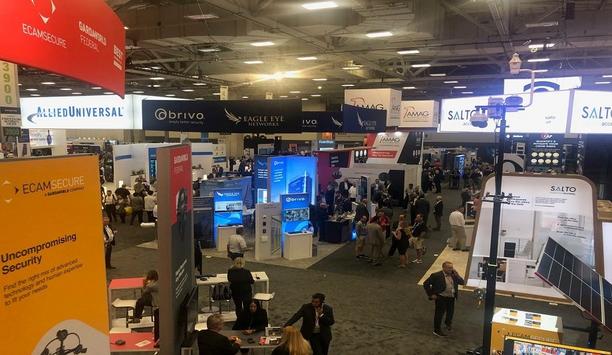
Companies at GSX 2023 emphasized new ways that technologies such as artificial intelligence (AI) and the cloud can address long-standing issues in the security market. Among the exhibitors at the event in Dallas were companies seeking creative ways to apply technology, lower costs, and make the world a safer place. Reflecting on the exhibition, here are some additional takeaways. Expanding AI at the edge i-PRO is a company reflecting the continued expansion of edge AI capability in the security market. Today, more than half of the company’s lineup supports AI at the edge so the customer has a wide choice of form factors when seeking to leverage the feature set. AI processing relay, extended warranty i-PRO is increasing their warranty period from 5 to 7 years, which could be a lifetime warranty in some cases I-PRO also has an “AI processing relay” device that accepts non-AI video streams and applies edge analytics. AI has progressed from a high-end technology to a feature available in a variety of cameras at different price points. i-PRO is also increasing its warranty period from 5 to 7 years, which could be a lifetime warranty in some cases depending on a customer’s refresh schedule and lifecycle management. Active Guard, MonitorCast The company’s video management system (Video Insight) is continuing to build new features including “Active Guard,” an integrated metadata sorter. Their access control platform, MonitorCast, is a Mercury-based solution that is tightly integrated with Video Insight. Their embedded recorders now have PoE built in. “We can move at a faster pace to fill out our product line since leaving Panasonic,” says Adam Lowenstein, Director of Product Management. “We can focus our business on adapting to the market.” Emphasis on retail and other verticals Shoplifting is a timely issue, and retail is a vertical market that got a lot of attention at GSX 2023. “We see a lot of retailers who are primarily interested in protecting employee safety, but also assets,” says Brandon Davito, Verkada’s SVP of Product and Operations. “Shrinkage is a CEO-level priority.” “Retailers are getting more engaged with security posture, instead of letting perpetrators walk,” Davito adds. Intrusion detection Verkada has an intrusion product that will notify a central station if there is an alarm On the alarm side, Verkada has an intrusion product that will notify a central station if there is an alarm, and operators can review videos to confirm the alarm. Other capabilities seeking to discourage trespassers include sirens, strobes, and “talkdown” capabilities. International expansion Verkada continues to expand internationally with 16 offices in all, including Sydney, Tokyo, and London. The core value proposition is to enable customers to manage their onsite infrastructure more simply, including new elements such as PTZ cameras, intercoms, and visitor management. Verkada emphasizes ease of use, including a mobile application to allow access to be managed across the user base. Forging partnerships “We are committed to the channel and industry, and we continue to build relationships and expand our reach,” says Davito. Among the industry relationships is a new partnership with Convergint, which was hinted at during the show and announced later the same day. They are also expanding their partnerships with Schlage, Allegion, and ASSA ABLOY. Working with other verticals They offer new features for K -12 schools, and a new alarm platform is easier to deploy and manage Verkada has also found success across multiple other verticals, notably healthcare, where they integrate with an electronic medical records system. They offer new features for K-12 schools, and a new alarm platform is easier to deploy and manage. They are integrating wireless locks to secure interior doors in schools, looking to secure the perimeter, and installing guest management systems. Transitioning the Mid-Market to the Cloud Salient is squarely focused on the “mid-market,” a large swath of systems somewhere between small businesses and enterprise-level systems. Pure cloud systems are not as attractive to this market, which has a built-out infrastructure of on-premise systems. Adding a camera to an existing system is easier and less expensive than tying it to the cloud. Benefits of cloud It’s a market that may not be ready for pure cloud, but there are benefits to be realized from adding a cloud element to existing systems. “We are continuing to augment our premise-based solutions with added cloud capabilities and flexibility,” says Sanjay Challa, Salient’s Chief Product Officer. The feedback Salient hears from their customers is “I want to own my data.” The hybrid cloud approach offers the right mix of control, flexibility, and unit economics. Cloud add-on capabilities We want to provide the flexibility for customers to go full-cloud as it becomes more economically attractive" Cloud add-on capabilities include bringing more intelligence about system operation to the user via the cloud. Over time, Salient expects to sell more cloud-centric offerings based on feedback from integrators and customers. “We want to provide the flexibility for customers to go full-cloud as it becomes more economically attractive over time,” says Challa. Vaidio AI technology Salient seeks to be a transition pioneer to help customers realize the path to the cloud. Their approach is “crawl, walk, run,” and helping customers make the transition at each stage. Salient has added AI to its product offering, incorporating Vaidio AI technology from IronYun into a powerful suite and broad array of on-premise analytics, which are gaining traction. The seamless approach makes it easy for customers to embrace AI analytics, although Salient remains broadly committed to open systems. Addressing ‘Soft’ Features for Integrators AMAG is in the process of enhancing its product line with the next generation of access control panels. However, “product” is just part of the new developments at AMAG. In addition to “hard” features (such as products), the company is looking to improve its “soft” features, too; that is, how they work with the integrator channel. Integrator channel Rebuilding a process to make your organization more efficient, is relatively easy; it just takes a lot of persistence" “We have the depth of our legacy customer base we can learn from, we just need to close the feedback loop quicker,” says Kyle Gordon, AMAG’s Executive Vice President of Global Sales, Marketing, and commercial Excellence, who acknowledges the value of reinstating face-to-face meetings after COVID. “We are laser-focused on nurturing our integrator channel,” he says. “Developing new features takes time, but rebuilding a process to make your organization more efficient, that’s relatively easy; it just takes a lot of persistence,” says Gordon. More cohesive internal communication is another useful tool, he says. Disrupting the cloud based on price Wasabi is working to make cloud applications less expensive by offering a “disruptive” price on cloud storage, $6.99 per terabyte per month (80% less than hyperscalers). Contending “hyperscalers” like AWS are charging too much for cloud storage, Wasabi is using its own intellectual property and server equipment co-located in data centers around the world. Wasabi sells “hot cloud storage,” which refers to the fact that they only have one tier of storage and data is always accessible. In contrast, a company such as AWS might charge an “egress fee” for access to data stored in a “colder” tier. Cloud storage “We saw that several video surveillance companies had not yet adopted cloud storage, and we saw an opportunity to make it easy to use,” said Drew Schlussel, Wasabi’s Senior Director of Product Marketing. “We just install a little bit of software that allows them to store data in the cloud and bring it back from the cloud.” Performance, protection (cybersecurity), and price Wasabi works with integrators, resellers, and distributors and also integrates with VMS companies Wasabi works with integrators, resellers, and distributors and also integrates with VMS companies such as Genetec and Milestone. Emphasizing performance, protection (cybersecurity), and price, their data centers are certified to SOC 2 and ISO 27001 standards. Faster throughput for weapons detection Xtract One is a young company focusing on weapons detection in a time of accelerated concern about gun issues post-COVID. Founded in Canada and based on technology developed at McMaster University, Xtract One has found a niche in providing weapons detection at stadiums and arenas. These customers already have budgets, and it is easy to shift the money to a newer, faster technology. Madison Square Garden in New York City is among its customers. Cost savings solution Xtract One can increase throughput to 30 to 50 people per entrance per minute (compared to 5 to 6 people per minute when using metal detectors). The solution doesn’t require anyone to empty their pockets and the system alarms on items beyond guns and knives. Using Xtract One allows customers to reduce the number of screening lanes and security staff, providing additional cost savings, all while getting fans through the screening process in half the time. Purpose-built sensors The system uses purpose-built sensors looking for specific characteristics, such as reflective and density properties In addition to stadiums and arenas, Xtract One, formerly Patriot One, is also getting “inbound” interest from schools, hospitals, manufacturers, and other verticals that makeup 50% of their business. “We’re on a rocket ride, mainly because the weapons issues are not going away,” says Peter Evans, CEO and Director at Xtract One. The system uses purpose-built sensors looking for specific characteristics, such as reflective and density properties, all correlated by an AI engine. Providing early warning of violence ZeroEyes is another company focused on weapons detection. Their AI gun detection system works with video images to identify if someone is “brandishing” (carrying) a weapon. In other words, the system does not detect concealed weapons. Identifying someone carrying a weapon provides early warning of a possible violent act. Increased response with AI-enables images Images are identified by AI and sent to a monitoring center where a human confirms the image before contacting first responders. Knowing the location of a shooter enables staff to lock entry points, move people to safety, and direct first responders. The company was founded to leverage existing camera views to stop mass shootings and gun violence by reducing response times.
Case studies

Palmetto Health Richland is a state of the art medical facility, located in Columbia, South Carolina. It is one of the largest and most progressive hospitals in the Southeast and is designated as one of only four Level 1Trauma Centers in the State. Palmetto Health Richland provides in-patient and out-patient services at its Columbia campus, which includes Palmetto Richland Memorial Hospital, Children’s Hospital and Heart Hospital. These hospitals and the other buildings on the campus are equipped with a card-based access control system that controls entry and exit activity to restricted or sensitive areas. Card access system The card system is also used for access to general employee areas, equipment closets, telecom rooms, IT closets and more. A set of master access control keys allow entry to any of the areas secured by the card access system and the hospital’s Security Services is responsible for provisioning these master keys. Keeping track of who has issued a master key and when/where it was used or returned had become a significant security issue for the hospital. According to Henry Simons, Director of Security and Volunteer Services for Palmetto Health, both engineering and security were stakeholders in the operational process but neither had an effective procedure for controlling or monitoring the master keys. Multiple tour capabilities “We really needed a system that would allow us to hold individuals accountable for a key and thereby lessen the risk of our master system being compromised,” said Mr. Simons. “The existing manual system was simply too ineffective and labor intensive and we needed better control of our master keys.” Mr. Simons’ search for a key control and management solution led him directly to Morse Watchmans, a company with whom he was already familiar. Morse Watchmans PowerCheck® Guard Tour System with its multiple tour capabilities, integrated functions and reporting options was in place as an established element of the hospital’s security operation. The Guard Tour System works with stations that are set up around the facility; as the officer walks by with the Guard Tour handheld device, the system reads and records the time. The device can be programmed to prompt either sequential or random tours for the officers, and the officer can enter a standardized code at any station to report incidents instantly. Key control system To resolve the hospital’s key control and management issues, Palmetto Health Richland selected the Morse Watchmans KeyWatcher® key control system for installation in the security and engineering departments. The system safely stores the master keys and automatically records the access history of each transaction, including user, date and time of checkout/return. The KeyWatcher cabinet can only be opened by individuals who have been pre-programmed into the system. To open the cabinet and access a key, the individual enters their authorized code and swipes their card access identification badge on the built-in proximity reader. By releasing assigned keys only to users with the proper authorization code and permission, accountability is ensured, along with safekeeping and integrity of the master keys. Proper authorization code “We were able to custom tailor the system to our needs which was very important,” said Mr. Simons. “In addition to the two-step entry process, the system is also designed to send an email alert if a key is not returned as scheduled. We were also able to integrate the KeyWatcher system with our card access system so any time the KeyWatcher cabinet is accessed; the activity pops up on the screen. The data from the KeyWatcher is also folded into the reports produced by the card access system to give us a complete picture for analysis or follow-up investigation.” Palmetto Health Richland is continually growing and expanding its services and Mr. Simons fully expects that the Morse Watchmans KeyWatcher system will grow right along with them.

Having an emergency response plan is essential for businesses of all sizes, across every industry. But in energy facilities, particularly those dealing with hazardous or explosive materials, it becomes a crucial, and often strictly regulated life safety requirement. In an emergency, not only is it critical to identify where all employees are located, but also that any visitors, contractors, or vendor partners are all accounted for and safely evacuated. When an alarm sounds, duty of care requirements and regulatory requirements dictate that companies have protocols in place to effectively respond to an emergency and know precisely who is on-site and that everyone can exit as quickly and safely as possible. Equally important is making sure that everyone at the facility is aware of and follows emergency guidelines. Challenge According to data compiled in the 2021 Guide to the Business of Chemistry from the American Chemistry Council, “Facilities in Texas and Louisiana produce 80 percent of the nation’s primary petrochemical supply, and Texas chemical production tops the nation by far, with chemical shipments valued at $117.5 billion, representing a major portion of the region’s economy, but also the potential for significant security risks and challenges.” Some petrochemical plants use a traditional, paper-based mustering solution for emergency response scenarios. These manual methods of notifying, mustering, and accounting for personnel can result in costly, potentially dangerous inefficiencies during an emergency. Site access control and visitor management processes are also typically stand-alone and do not communicate with each other, which forces manual processes to log and reconcile individuals when mustering during an emergency response evacuation or a required emergency drill. To do this, chemical plant security staff typically prints the logs from on-site access control and visitor management systems, then crosses off the names of individuals from the lists when they are accounted for manually. Each list is reconciled on its own and by hand. This outdated process can take hours to complete and holds a potentially high risk of error. Solution Everon is working with various Houston area petrochemical plants to update their emergency notification systems with innovative, cost-effective solutions. According to these customers, Everon provides comprehensive solutions to fit their needs, and maintains a level of professionalism and dedication to service excellence that other companies too often fail to meet. One solution Everon has proposed to combat this problem across chemical plant facilities consists of three integrated technologies that include: Cloud-Based Access Control: An access control system that is cloud-based may be easier to implement and have a lower cost of entry. This system provides a log of all badged personnel on site to the mustering system for accounting of personnel during an emergency. Visitor Management System: This system allows visitors to pre-register and be managed electronically when they come to the plant while providing visibility in case of an emergency. Mustering Software and Card Readers: These provide seamless management of emergency events, including electronic mustering, unit accountability, and ERT readiness. Access control logs from the cloud-based system With this solution, access control logs from the cloud-based system and visitor management logs can automatically tell plant operations how many people are on-site through the mustering software. A number of portable mustering units were commissioned with card readers, which allow for quick and easy confirmation of badge reads from fixed muster locations. In addition, warning lights and speakers were also added at plant entrances to alert personnel to emergency events. The mustering system’s mustering software takes the information directly from the access control and visitor management logs and communicates directly with the plant operators. This allows them to manage the entire emergency using the software, starting with an accurate count of who is in the plant and then quickly and easily managing individuals as they safely exit. Emergency response events can be initiated with the click of a button and significantly improve the amount of time needed to accurately count the number of people evacuating the plant. Installations are consistently performed with personal safety in mind. Everon believes that no work is worth doing if it’s not done safely and in full compliance with governing regulations and standards. No recordable injuries or lost-time events were recorded during any of the projects completed by Everon at any Houston area petrochemical plants. Results According to one client, "Our previous method of pen and paper was very inefficient and antiquated. Everon's solution with our emergency response protocol gives us the cutting edge in technology. Not only does it allow us to become well-organized and systematic, but safer." Emergency response drills at each petrochemical plant are now completed in minutes, not hours, and emergency responders receive visual confirmation when everyone is confirmed as safe. The plants consider having digital reports of employees that are on- and off-site at the plant a major bonus, along with the ability to deploy mass notifications between the plant and local communities. Said another client, "We are extremely satisfied with our choice of Everon as our life safety partner and are currently working with them to update analog cameras in our plant, as well as advance our infrastructure to bring other innovative security, health and operational monitoring technology solutions to our facility."
Comelit-PAC has partnered with Kings Group SW to deliver a bespoke video door entry solution at the historic Bridgwater Arts Center, a Grade I listed building renowned for its architectural and cultural significance. Situated in the heart of Bridgwater, now owned and operated by the Town Council, the Arts Center construction was in 1723 and established on its existing site since 1946 to run a theater program of performance, music and film. Enhancing video security and access To complete a renovation program, the Arts Center worked with Kings Group SW to upgrade its door entry system to incorporate a modular video design. “The Grade I listing of Bridgwater Arts Center means that any changes, however minor, must be carefully planned to protect the building’s historic character,” said Scott Mason, Director of Amenities at Bridgwater Town Council. “We involved our teams in the initial design and specification process to ensure the solution could be installed to seamlessly blend with its surroundings while enhancing video security and access.” Latest security standards Kings Group SW specified Comelit-PAC’s Ultra Door Entry system, a high-definition video intercom solution designed to allow staff to monitor all entry points via high-definition video intercoms, providing real-time visibility and secure access control. Adam Pitman, Security and Life Safety Systems Supervisor at Kings Group SW, added: “Every aspect of the door entry upgrade had to be approached sensitively. This included routing cables discreetly, installation and ensuring the system met the latest security standards. By choosing Comelit-PAC’s modular system, this could be achieved with minimal disruption to the building’s historic fabric while providing a flexible solution that can be adapted as the Center’s security needs evolve.” Configuration of the door entry solution The Ultra system was selected because its modular design enabled a simple configuration of the door entry solution to meet the specific requirements of the Arts Center. Its 2-Wire and ViP door stations allow a combination of audio, video, and button modules in a compact layout, giving the team flexibility to adapt the system to access points. Tony Berry, Business Development Manager at Comelit-PAC, concluded: “Working closely with Kings Group SW and Bridgwater Arts Center early on allowed us to tailor the solution specifically for this site. By understanding the needs of the team and how the building operates, we were able to deliver a system that functions seamlessly for staff, visitors and performers while integrating thoughtfully into the historic environment.”

Set in 33 hectares of woodland on the edge of Dartmoor National Park, the zoo is home to an impressive variety of exotic and native animals, including Amur tigers, African lions, and Amur leopards. New patented master key system On-site challenges before the introduction of the new patented master key system. Before implementing the new master key system, the zoo faced the challenge of ensuring secure and efficient access control to sensitive areas, particularly enclosures with potentially dangerous animals. The previous master key systems were outdated and did not provide the necessary security and flexibility required for the zoo's daily operations. Installation of EPS NP and its advantages The EVVA EPS NP system was installed in collaboration with local partner Sir Fix-a-Lock. This system offers robust patent protection, long-term key control and high reliability in demanding environments. A total of 192 Asec weatherproof padlocks were installed in a 6-level master key system. The flexibility of EPS NP enabled graduated key control across the entire site, including special levels for animal care. Advantages of the new patented key system for the zoo Thanks to the new master key system, the zoo has been able to implement a secure and practical solution that enables staff to work efficiently while maintaining strict access controls. The color-coded keys make it easy to quickly identify access authorisations, which is particularly advantageous in security-critical areas. The Asec weatherproof padlocks also offer high resistance to environmental influences, ensuring the longevity of the system. "EPS has revolutionized our access control and gives us the security and flexibility we need." The project at Dartmoor Zoo impressively demonstrates how EVVA's flexible master key systems can be adapted to specific requirements to ensure security, control and long-term protection.
Round table discussion

By linking human resource (HR) systems to physical security, access control systems can automatically update permissions based on employee changes, such as promotions, terminations, or department transfers. In fact, connecting HR and information technology (IT) systems to physical security can provide many significant benefits in terms of access control, incident response, compliance, cost savings, and employee experience. We asked this week’s Expert Panel Roundtable: How can organizations integrate physical security with other systems, such as IT and HR?

In the complex world of physical security systems, standards can enable disparate systems to be combined to function together as a cohesive whole. Standards help to ensure that all the “pieces” fit together to create a clear, unified picture. More broadly speaking, standards also play a role in ensuring best practices are deployed in a range of security-related situations. We asked this week’s Expert Panel Roundtable: Which standards have had the greatest positive impact on physical security?
Ideally, every new product or technology serves a need in the market, but not all new products are created equal. The impact of some new technologies is so profound that they make us rethink our preconceptions and may create a total transition in the broader market. These are the technologies we call “game changers” because they prompt a significant shift in the current manner of doing or thinking about security. We asked this week’s Expert Panel Roundtable: What current technology is a “game changer” for physical security?
Products
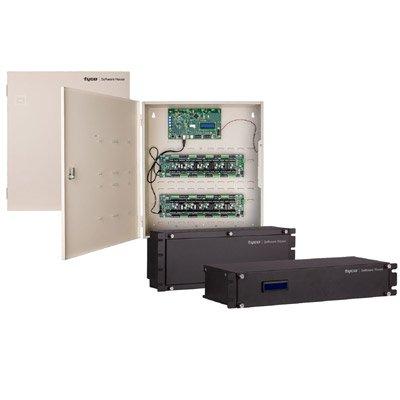
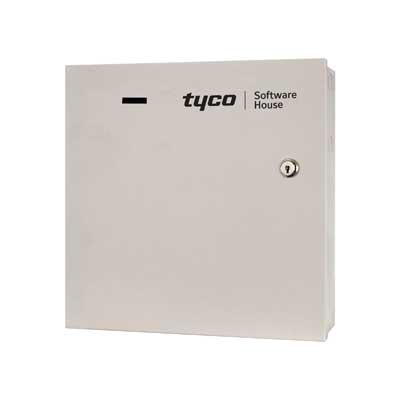
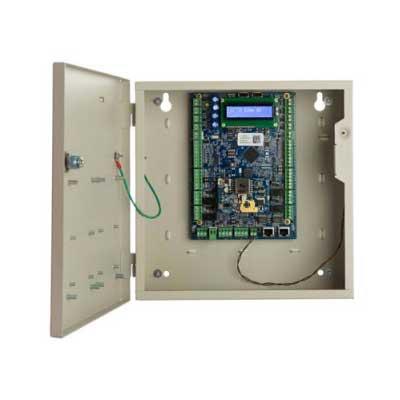
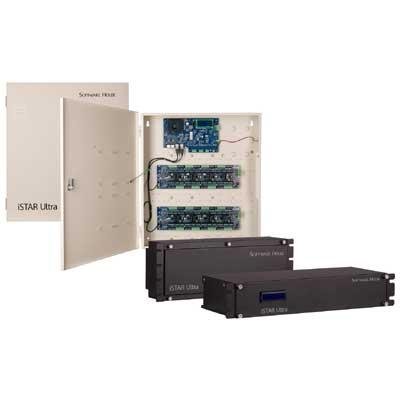
White papers

Technology's Role In Securing Banks And Financial Institutions
Download
Integrated Systems Enable Critical And Compliant Security For Transportation
Download
Modernizing Physical Access Control
Download
Access. Intrusion. One Estate.
Download
Securing The Modern Data Center
Download
Security Technologies Promote Real-Time Awareness In K-12 Schools
Download
Hospital Safety In A High Risk World
Download
How Digital Transformation Is Delivering New Opportunity
Download
Where Do We Go From Prox?
Download
The User-Centric Security Revolution
Download
One System, One Card
Download
Aligning Physical And Cyber Defence For Total Protection
Download
Modernizing Access Control
Download
Enhancing Physical Access Control Using A Self-Service Model
Download
Combining Security And Networking Technologies For A Unified Solution
Download




Electronic access control: Manufacturers & Suppliers
- Aiphone Electronic access control
- ASSA ABLOY Electronic access control
- CIVINTEC Electronic access control
- Software House Electronic access control
- CyberLock Electronic access control
- ACT Electronic access control
- Honeywell Security Electronic access control
- Bosch Electronic access control
- HID Electronic access control
- Paxton Access Electronic access control
- Vicon Electronic access control
- Alpro Electronic access control
- CLIQ - ASSA ABLOY Electronic access control
- Hikvision Electronic access control
- ASSA ABLOY - Aperio® Electronic access control
- CDVI UK Electronic access control
- Dahua Technology Electronic access control
- Codelocks Electronic access control
- Adams Rite Electronic access control
- OPTEX Electronic access control
