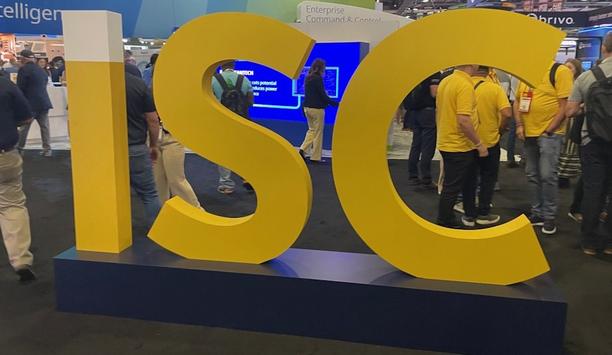

Anyone who has been in a proverbial cave for the last couple of years faced a language barrier at this year’s ISC West 2025 trade show. The industry’s latest wave of innovation has brought with it a new bounty of jargon and buzzwords, some of which I heard at ISC West for the first time.
As a public service, we are happy to provide the following partial glossary to promote better understanding of the newer terms. (Some are new to the security industry but have been around in the IT world for years.)
Obviously, if we can’t understand the meaning of the industry’s lexicon (and agree on the meaning of terms!), we will struggle to embrace the full benefits of the latest industry innovation. Not to mention we will struggle to communicate.
Generative AI
Generative AI can identify an object in an image based on its understanding of previous objects
This was perhaps the most common new(ish) term I heard bouncing around at ISC West. While the term artificial intelligence (AI) now rolls off everyone’s tongue, the generative “version” of the term is catching up.
Generative AI uses what it has learned to create something new. The name comes from the core function of this type of artificial intelligence: it can generate (or create) new content. It doesn’t just copy and paste; it understands the underlying patterns and creates something original based on that understanding. In the case of video, for example, generative AI can identify an object in an image based on its understanding of previous objects it has seen.
Video and security
Generative AI can tell you something digitally about what is happening in an environment. There is no longer a need to write “rules;” the system can take in data, contextualize it, and understand it, even if it does not exactly match something it has seen before.
In the case of video and security, generative AI offers more flexibility and better understanding. From 2014 to 2024, the emphasis was on detecting and classifying things; today AI is expanding to allow new ways to handle data, not so prescriptive and no more rules engines.
Agentic AI
Agentic AI refers to artificial intelligence systems that can operate autonomously to achieve specific goals
Agentic AI refers to artificial intelligence systems that can operate autonomously to achieve specific goals, with minimal to no direct human intervention. In addition to the capabilities of generative AI, agentic AI can take action based on what it detects and understands. Use of agentic AI typically revolves around an if/then scenario. That is, if action A occurs, then the system should proceed with action B.
For example, if an AI system “sees” a fire, then it will shut down that part of the building automatically without a human having to initiate the shutdown.
There is a lot of discussion in the industry about the need to keep humans involved in the decision-making loop, so use of truly autonomous systems will likely be limited in the foreseeable future. However, the ability of agentic AI to act on critical information in a timely manner, in effect to serve as an “agent” in place of a human decision-maker, will find its place in physical security as we move forward.
Inference
Inference is another common term related to AI. It refers to the process by which an AI model uses the knowledge it gained during its training phase to make predictions, classifications, or generate outputs on new, unseen data. The direct relationship of this term to physical security and video is obvious.
In the simplest terms, an AI system is “trained” by learning patterns, relationships, and features from a large dataset. During inference, the trained model is presented with new questions (data it hasn't seen before), and it applies what it learned during training to provide answers or make decisions. Simply put, inference is what makes AI systems intelligent.
Containerization
Dividing a massive security management system into several separate containers enables management of the various parts
In IT, containerization is a form of operating system-level virtualization that allows you to package an application and all its dependencies (libraries, binaries, configuration files) into a single, portable image called a container. This container can then be run consistently across any infrastructure that supports containerization, such as a developer's laptop, a testing environment, or a server in the cloud.
In the physical security industry, you hear “containerization” used in the context of separating out the various components of a larger system. Dividing a massive security management system into several independent containers enables the various parts to be managed, updated, and enhanced without impacting the larger whole.
Genetec’s SecurityCenter cloud platform
Think of it like shipping containers in the real world. Each container holds everything an application needs to run, isolated from other applications and from the underlying system. This ensures that the application will work the same way regardless of the environment it is deployed in.
“It took us five years to containerize Genetec’s SecurityCenter cloud platform, but containerization now simplifies delivering updates to products whenever we want,” says Andrew Elvish, Genetec’s VP Marketing. Among other benefits, containerization enables Genetec to provide more frequent updates--every 12 days.
Headless appliance
Headless appliance is a device that is managed and controlled remotely through a network or web interface
A headless appliance is a device that is managed and controlled remotely through a network or web interface. The device is like a “body without a head” in the traditional sense of computer interaction: It performs its intended function, but without any visual output or input device for local interaction. In physical security, such devices are increasingly part of cloud-based systems in which the centralized software manages and operates all the disparate “headless” devices.
A headless appliance does not have a Windows management system. “The whole thing is managed through the as-a-service cloud system,” says Elvish. With a headless device, you just plug it into the network, and it is managed by your system. You manage the Linux-based device remotely, so configuring and deploying it is easy.
Democratizing AI
You hear the term democratizing AI used by camera manufacturers who are looking to expand AI capabilities throughout their camera lines, including value-priced models. For example, even i-PRO’s value-priced cameras (U series) now have AI – fulfilling their promise to democratize AI. Another approach is to connect non-AI-equipped cameras to the network by way of an AI-equipped camera, a process known as “AI-relay.”
For instance, i-PRO can incorporate non-AI cameras into a system by routing/connecting them through an X-series camera to provide AI functionality. Bosch is also embracing AI throughout its video camera line and enabling customers to choose application-specific analytics for each use case, in effect, tailoring each camera to the application, and providing AI to everyone.
Context
Cloud system also enables users to ask open-ended queries that involve context, in addition to detection
Context refers to an AI system that can understand the “why” of a situation. For example, if someone stops in an area and triggers a video “loitering” analytic, the event might trigger an alarm involving an operator. However, if an AI system can provide “context” (e.g., he stopped to tie his shoe), then the event can be easily dismissed by the automated system without involving an operator. Bosch’s IVA-Pro Context product is a service-based model that adds context to edge detection.
The cloud system also enables users to ask open-ended questions that involve context in addition to detection. For example, rather than asking "do you see a gas can?" you can ask "do you see any safety hazards in this scene?" The pre-trained model understands most common objects, and understands correlations, such as "a gas can could be a safety hazard.” A scaled-down on-premise version of the IVA Context product will be available in 2026. Bosch showed a prototype at ISC West.
Most video data is never viewed by an operator. Context allows a system to look at all the video with "almost human eyes." Cameras are essentially watching themselves, and understanding why something happened and what we can do. All that previously unwatched video is now being watched by the system itself, boosted by the ability to add “context” to the system. Any meaningful information based on context can trigger a response by an operator.
Data lake
A data lake is a centralized repository that allows one to store vast amounts of structured, semi-structured, and unstructured data in its native format. In the case of the physical security marketplace, a data lake includes data generated by systems outside the physical security infrastructure, from inventory and logistics systems, for example.
A data lake is where an enterprise can accumulate all their data, from the weather to Point-of-Sale information to logistics, to whatever they can gather. Putting the data in one place (a “data lake”) enables them to mine that data and parse it in different ways using AI to provide information and insights into their business.
Notably, a data lake contains all a company’s data, not just security or video data, which opens up new opportunities to leverage the value of data beyond security and safety applications. Crunching the various information in a data lake, therefore, security technology can be used to maximize business operations.