Network Video Recorders

ClanTect, as part of the 3DX-RAY Ltd portfolio, has secured a significant contract to supply six ClanTect Human Presence Detection systems to support state border security operations in Eurasia. The award represents the first major contract secured by ClanTect since becoming part of 3DX-Ray and marks another important milestone in the continued international deployment of advanced clandestine detection technology. Intrusive inspection procedures ClanTect HPDS is designed to provide a fast, hi...

Inovonics, a provider of wireless solutions for life safety and security applications, is celebrating 40 years of innovation and continued growth in commercial security, senior living e-call, multi-family submetering, and commercial monitoring markets. Founded in 1986, Inovonics has continued to advance 900 MHz wireless technology to develop solutions designed for life safety, intrusion detection, and environmental monitoring. “Inovonics has spent four decades building technology that per...

XSponse, a provider of connected safety and emergency response technology, announces the appointment of Richie Perna as Chief Revenue Officer (CRO), effective September 19. Perna will lead XSponse’s national go-to-market strategy as the company moves into its next phase of growth and market expansion. Perna joins XSponse at a pivotal point in the company’s growth. Following a recent strategic investment from Armory Capital, XSponse is accelerating its national expansion and moving f...

Zimperium, the pioneer in AI-empowered mobile security, announces that its zLabs research team has uncovered RatHat, an advanced Android malware strain linked to threat actors believed to be operating in China. RatHat uses generative AI to adaptively navigate compromised devices, steal financial credentials and maintain persistent control even after a user attempts to uninstall the malicious application. Distributed through smishing, malvertising and deceptive third-party download sites, RatHat...

Five months after joining forces, March Networks®, a global pioneer in video surveillance and business intelligence, and VIVOTEK, a foremost global security solutions provider, will exhibit jointly at Global Security Exchange (GSX) 2026 for the first time. At booth 1823, September 14–16 at the Georgia World Congress Center in Atlanta, the combined organization will demonstrate how Connected Intelligence for Modern Security brings together video, AI, cloud, business intelligence a...

Inovonics, a foremost provider of wireless solutions for life safety and security applications, is displaying its expanded portfolio of wireless security solutions at GSX 2026 in Expo Suite #28 on the show floor. Featured solutions include the upcoming Inovonics Intrusion Detection System and the sleek, lightweight Duress Card, along with the company’s comprehensive portfolio of wireless transmitters and sensors. Wireless solutions “Inovonics wireless-first solutions deliver...
News

Cozaint Corporation, the Intelligent Video Lifecycle Management company, announced the commercial availability of its patented MARCIA™ platform for Milestone XProtect® video management software environments. About MARCIA MARCIA enables organizations using Milestone XProtect to extend video retention beyond traditional primary-storage limits while continuing to use XProtect exactly as they do today. MARCIA continuously replicates newly recorded video in the background to LTO-based long-term storage —typically within a couple of minutes of the original write— providing XProtect customers with what Cozaint believes is the lowest-cost architecture available for video surveillance retention. Challenges For enterprise security environments, video retention has historically been constrained by the economics of disk-only storage. As camera counts, resolutions, frame rates, compliance requirements, legal exposure, and AI analytics use cases continue to expand, organizations increasingly need an architecture that preserves video beyond the standard 30-, 60-, or 90-day overwrite cycle. Cozaint’s MARCIA platform addresses that challenge by providing Intelligent Video Lifecycle Management (IVLM) for enterprise surveillance environments. Long-term video lifecycle management “The surveillance industry has spent more than thirty years optimizing how little video it can afford to keep,” said Nauzad Sadry, Chief Technology Officer of Cozaint Corporation. “MARCIA changes that equation for Milestone XProtect customers. By extending XProtect environments with long-term video lifecycle management and LTO-based retention, organizations can preserve the video history they may need for investigations, compliance, legal defense, operational intelligence, and future AI analysis.” XProtect records the video. Within minutes, MARCIA is already preserving its future. Design and features MARCIA is designed to operate behind the scenes within the customer’s existing surveillance architecture. The VMS remains the day-to-day operational platform for live viewing, recording, user management, alarms, investigations, and security workflows. MARCIA extends the long-term value of the video managed by the VMS by enabling organizations to preserve video beyond normal retention windows and retrieve it when needed. Importantly, MARCIA does not interrupt XProtect’s normal recording workflow. Cameras continue recording into the customer’s existing XProtect primary storage environment. In near real time MARCIA operates in the background to replicate and organize newly recorded video onto LTO-based storage. This process occurs without interrupting ongoing XProtect recording. Security operators continue using XProtect normally for live monitoring, playback, alarms, and investigations, while MARCIA continuously builds the long-term retention copy behind the scenes. Milestone XProtect environments For Milestone XProtect environments, MARCIA supports long-term video retention workflows including automated tiered-storage management, LTO-based preservation, camera/date/time-based retrieval, metadata-aware recall, and restoration of historical video back into the XProtect workflow. The objective is simple: XProtect continues operating as XProtect, while MARCIA extends how long the organization can preserve and retrieve the video XProtect records. As AI and video analytics become increasingly important to physical security and business operations, historical video is becoming more valuable. However, AI cannot analyze video that has already been deleted. MARCIA helps organizations preserve the long-term visual history required for future analysis, pattern discovery, incident review, and business intelligence. Cozaint refers to this as Enterprise Visual Continuity, preserving Trusted Visual Evidence over time so organizations can continue using and learning from video long after it was recorded. Key benefits of MARCIA for Milestone XProtect environments Extended Video Retention: Preserve video for months or years instead of letting primary storage limits dictate the retention period. LTO-Based Long-Term Preservation: Use LTO to deliver the lowest-cost path to long-term video preservation. Reduced Disk Dependency: Avoid continuously expanding expensive primary storage simply to keep older video. Continuous Background Replication: MARCIA continuously replicates newly recorded XProtect video to long-term LTO storage in the background, typically within a couple of minutes of the original write, while normal XProtect operations continue uninterrupted. AI-Ready Historical Video: MARCIA helps preserve the historical video needed for future AI, analytics, investigations, compliance, and operational intelligence. Evidence Preservation: Organizations can better retain Trusted Visual Evidence for legal defense, incident review, risk management, and compliance-driven retention needs. Commercial availability MARCIA support for Milestone XProtect environments is commercially available from Cozaint Corporation.

ASSA ABLOY will be exhibiting at Global Security Exchange (GSX) 2026 from September 14 - 16 at the Georgia World Congress Center in Atlanta, Georgia. The company invites attendees to visit the ASSA ABLOY booth #1421, where it will showcase its latest innovations in digital access solutions and software, doors, frames, and mechanical hardware. Visit the booth to see first-hand the products and solutions that are transforming facility operations across the country. More secure environments “We greatly value and cherish every opportunity to connect with our customers in person and further develop those relationships,” says Angelo Faenza, Head of Digital Access Solutions at ASSA ABLOY. “GSX offers a unique and invaluable chance for these in-person interactions, and we are truly appreciative of this opportunity. This year, we are showcasing a comprehensive lineup aimed at helping end users enhance safety, improve efficiency, and create more secure environments. We’re looking forward to seeing you in Atlanta this year.” At GSX this year, ASSA ABLOY is showcasing its commitment to being Always There and how that’s reflected in a continuous drive to listen, adapt, and innovate. The company will bring together its latest access and security solutions, highlighting how the industry has evolved and where it is headed next. At Booth #1421, attendees can explore the technologies shaping the future of security and connect with ASSA ABLOY experts to learn how the company continues to provide solutions to meet the unique challenges for each market. Real-time monitoring Some of the latest solutions ASSA ABLOY will feature at GSX booth #1412 include: Corbin Russwin and SARGENT LNK100 with Aperio® technology - The LNK100 combines the reliability and flexibility of the Aperio® real-time wireless technology with the simplicity of a fully electrified escutcheon. It requires minimal prep and installs in minutes while providing real-time monitoring and control with a grade 1 mechanical lock, securing the openings with confidence without the high installation cost of traditional access control. Designed for interior applications that need electric locking and wireless access control, the LNK100 offers a streamlined alternative for securing openings. DoorBird D22 IP Video Door Intercom - The DoorBird D22 IP Video Door Intercom builds on the success of DoorBird's proven D21 series, delivering the next generation of premium entry communication. Combining the trusted performance that made the D21 a market favorite with enhanced technology, advanced security, and seamless connectivity, the D22 delivers a sophisticated entry experience. Featuring a crystal-clear 5 MP camera with an ultra-wide 180-degree field of view, the D22 provides exceptional visibility and enables seamless two-way communication and remote access via the DoorBird app. As the evolution of the bestselling D21 platform, the D22 offers installers a flexible, future-ready solution that enhances both convenience and security. Its sleek, modern design complements contemporary architecture, making it an ideal choice for projects where performance, reliability, and aesthetics are equally important. Control iD iDFace Max - With its modern design and elegant finish, iDFace Max is the ideal device for monitoring and controlling venue access through facial identification technology. Its advanced algorithm and high-quality cameras allow the identification of up to 100,000 faces (1:N) with face liveness detection and identification of users with and without a mask. iDFace Max has an integrated SIP intercom with TCP/IP and USB connectivity. The device also features a large 7-inch LCD touchscreen display, allowing for easy and intuitive navigation to configure access rules and view reports. SiteOwl - SiteOwl is a physical security lifecycle management platform that centralises how enterprise security teams and security integrators design, deploy, and manage security systems. It replaces disparate tools such as CAD drawings, spreadsheets, PDFs, emails, and paper records with a unified platform that connects digital floor plans, device data, project execution, and service history. Through every phase of the lifecycle, from system design to installation and ongoing maintenance, SiteOwl provides real-time visibility into project progress, field work, service history, and warranty information. SiteOwl enables security teams and their vendors to collaborate effectively, reducing errors in design while accelerating project and service delivery. By creating a complete digital record of every security device and project, SiteOwl helps organizations make better operational, maintenance, and capital planning decisions. SHH Option for SARGENT PE80 Series and Corbin Russwin PED4000 and PED5000 Series Exit Devices - Doors are among the most frequently used elements in a building, yet their impact on the acoustic environment is often overlooked. The new SHH option for SARGENT PE80 Series, Corbin Russwin PED5000 Series, and Corbin Russwin PED4000 Series exit devices was designed to help address operational noise at the opening while maintaining the durability, reliability, and Grade 1 performance expected from industry-leading exit devices. Certified to BHMA's Acoustic Hardware Standard and engineered to exceed the standard's minimum performance requirements, SHH provides a new solution for healthcare, education, commercial, and institutional environments where sound is an important design consideration. ASSA ABLOY experts will be at booth #1421, ready to answer any questions and showcase these technologies.

HiveWatch, a physical security software company reimagining how organizations keep their people and assets safe, announced today that Dinesh Coca has joined the company as GM & SVP, Product & Engineering – along with a wave of new capabilities and integrations built around one idea: operators shouldn’t spend their shifts digging through noise. HiveWatch will showcase all of these during GSX 2026, Sept. 14-16, in Atlanta, at booth #4459. Meet Dinesh Coca joins HiveWatch with the experience to lead these efforts: he has spent more than 20 years building and scaling technology products, starting as a software engineer before moving into product and leadership roles. “HiveWatch stood out because the problem is so clear,” said Coca. “Security teams already feel the pain of working across a dozen systems just to understand and respond to one incident. There’s a huge opportunity to make that experience dramatically simpler.” Dinesh spent nearly a decade at Medallia, helping grow the company from pre-Series A through the public markets. At BigPanda, he helped customers cut through noisy monitoring and observability data. Most recently, he built a new SaaS product line at Motive, taking it from zero to 500 customers in 18 months. “My focus is going to be listening closely to customers and making sure we’re building products they want to use, while also giving security leaders a clearer view into the value those products are delivering,” Coca said. Part of that effort will be building on the AI-centric focus of the platform. Let AI handle more of the noise HiveWatch is also focused on a common challenge in security operations centers: the hundreds (if not thousands) of calls that come into an enterprise organization’s security operations center (SOC). Many aren’t emergencies. Someone might be reporting a broken window, water leak, or another facility issue, something that needs to be documented and routed, but shouldn’t require a SOC operator to drop everything and respond. That’s changing with AI Operator Communicate, a new HiveWatch capability designed to handle and route incoming calls to SOCs. “There’s been plenty of conversation about using AI to replace people. That’s not how we think about it,” said Ryan Schonfeld, Co-Founder & CEO, HiveWatch. “The operator is still at the center of the experience. We’re using AI to clear away the boring, repetitive work around them, so they can spend more time on the situations where human judgment actually matters.” Answering incoming calls HiveWatch can now answer an incoming call, figure out what's happening, and guide the caller through a decision tree built on the organization's own security protocols and SOPs. It responds in the caller's language, too, with support for 40+ languages across global security operations. If the call is an emergency, it escalates immediately and brings a human operator into the loop. If it isn't, the platform documents the issue and routes it where it belongs without pulling an operator off more important work. Every interaction delivers a transcript and audit trail inside HiveWatch: what happened, what was said, and how the call was handled. The call-in capability is initially rolling out in beta with a major U.S. telecom company, which has seen early results better managing a monthly volume of 1000+ inbound calls. Keep making the operator’s job easier AI Operator Communicate is part of a broader push at HiveWatch to make the day-to-day operator experience simpler. A few more updates working toward the same goal: Program recommendations surface patterns that are easy to miss, such as recurring hardware issues, faulty alarm configuration rules, or risky employee behavior patterns. With this new feature, teams can track each recommendation through completion, building a clear record of how their security program is improving over time. One beta program customer decreased false incident volume by ~95% based on HiveWatch GSOC OS recommendations. Configurable workflows turn SOPs into step-by-step, dynamic instructions inside HiveWatch, with no digging through a PDF or hunting for a phone number mid-incident. Every incident response follows the SOP and documents it, automatically. Email alert ingestion for older systems without a clean API. If it can send an email, HiveWatch can ingest it, and bring that alert into the same operator workflow as everything else. Together, the updates reduce the manual work on operators and paint a clear picture of the next step. HiveWatch brings security stack into one place with key partnerships HiveWatch has always been built to work with the tools you already own, not replace them. New partnerships with Acre Security, Arcules Video Surveillance-as-a-Service from Milestone Systems, and Lumana add more ways to connect what's already there: Acre Security (booth #4170): HiveWatch can ingest access control events from acre security, bringing those events into the same queue where operators manage alarms and incidents from the rest of their physical security stack. Arcules VSaaS (Milestone Systems, booth #2312): Teams can bring video from the Arcules VSaaS into HiveWatch to add visual context around access control events and help operators understand what happened without jumping between systems. Lumana: HiveWatch can ingest Lumana video and video-based analytics, including alerts for scenarios such as slip-and-fall events, people of interest, license plate recognition, occupancy, traffic activity, and line crossing. Those alerts can then be standardized and managed alongside other security events inside HiveWatch. Join us at GSX 2026 Learn more about these product updates and integrations at GSX 2026, Sept. 14-16. Come find HiveWatch at booth #4459.

Acoem, a global pioneer in advanced acoustic threat detection solutions, announces the appointment of Mike ODea as Managing Director of its Acoustic Threat Detection (ATD) business. ODea brings more than 20 years of experience in public safety and physical security, with a focus on using emerging technologies to improve situational awareness and decision support. An expert in Smart and Safe Cities, he has led major video surveillance deployments and complex security integrations, with a particular focus on combining data from multiple technologies to support operators and first responders. Public safety agencies At Acoem, ODea will lead the growth of the ATD business and work to expand the use of its ATD technology among system integrators, public safety agencies, and enterprise security organizations. Acoem ATD builds on more than 30 years of acoustic technology development for military defense applications by Metravib Defense in its Protection Division. The system uses edge-based AI to detect and locate gunfire at the sensor and immediately direct a PTZ camera toward the source, giving security teams visual context alongside the initial detection. Modern physical security ecosystem “We’re very pleased to welcome Mike to lead Acoem ATD at an important point in the growth of the business,” said Frédéric Molliex, DCEO, Protection Division. “He brings a strong understanding of how technologies such as video, AI and acoustic detection need to work together to give security teams and first responders better situational awareness. Mike understands both the technology and the operational realities our customers face. That makes him the right person to build on Metravib’s 30 years of acoustic expertise and accelerate the adoption of Acoem ATD as an integral part of the modern physical security ecosystem.” Threat detection capabilities “I’ve spent much of my career bringing technologies together to give public safety and security teams better information when they need it,” said ODea. “That’s what drew me to Acoem ATD. The ability to detect and locate gunfire, immediately direct existing cameras to the source, and give those managing the response real-time information they can use is where I see real value. There is a significant opportunity to make acoustic threat detection a more established part of the security technology stack, and I’m looking forward to working with our integrator and technology partners to make that happen.” ODea will make his first major industry appearance with Acoem ATD at GSX 2026 (booth 4366), where the company will showcase its latest acoustic threat detection capabilities.

AMG Systems, a manufacturer of industrial Ethernet and fiber networking solutions, announces the launch of its AMG577 Series, a new family of industrial-grade Layer 2+ managed Ethernet switches designed to deliver high-performance networking, advanced Power over Ethernet (PoE), and exceptional reliability in demanding industrial environments. Purpose-built for space-constrained industrial 19-inch rack applications, including roadside cabinets, transportation infrastructure, utilities, and critical security networks, the AMG577 Series combines industrial networking performance and integrated power capabilities into a compact 1U rack-mount platform. Cabinet space requirements Unlike traditional deployments that can require 4U to 5U of rack space to accommodate an industrial Ethernet switch and separate DIN rail-mounted power supply, the AMG577 Series integrates a fully industrial managed switch and a 350W power supply within a single 1U enclosure. This innovative design simplifies installation, reduces cabinet space requirements, and lowers overall system complexity. The AMG577 Series features eight Gigabit RJ45 Ethernet ports and three multi-rate SFP uplink ports supporting 100Mb, 1Gb, and 2.5Gb connectivity, providing the flexibility required for modern industrial, transportation, security, utility, and critical infrastructure networks. Minimizing maintenance requirements Engineered for dependable operation in harsh environments, the AMG577 Series supports an extended operating temperature range of -40°C to +75°C. Advanced thermal engineering enables the switch to operate using a fully conduction-cooled, no-fan design, eliminating moving parts to maximize reliability while minimizing maintenance requirements. "Our new AMG577 Series reflects AMG's commitment to developing networking solutions that address real-world challenges faced by infrastructure operators and system integrators," said Steve Clarke, Managing Director of AMG Systems. "By combining a fully industrial managed switch, high-power PoE, multi-gigabit uplinks, and integrated power capabilities into a compact 1U platform, the AMG577 Series helps customers maximize available cabinet space without compromising performance or reliability." Edge computing equipment The AMG577 Series is available in multiple configurations, including non-PoE models and versions supporting IEEE 802.3at PoE+ (30W) and IEEE 802.3bt (60W and 90W PoE) standards. With a total PoE budget of up to 300W, the switches can power multiple high-demand devices such as IP cameras, wireless access points, industrial sensors, and edge computing equipment. To further simplify field deployments, selected models are available with an optional internal auxiliary power supply providing 65W or 120W of auxiliary output power at 12VDC, 24VDC, or 48VDC. This feature allows the AMG577 Series to directly power third-party equipment, reducing the need for additional power supplies and further minimizing rack space requirements. Intelligent traffic management With advanced Layer 2+ management capabilities, flexible power options, rugged industrial design, and industry-pioneer space efficiency, the AMG577 Series provides an ideal networking platform for transportation systems, intelligent traffic management, roadside cabinets, surveillance networks, utilities, industrial automation, and other mission-critical infrastructure applications. AMG Systems is a manufacturer of industrial Ethernet, fiber optic, wireless, and structured networking solutions for security, transportation, utility, industrial automation, and critical infrastructure applications. AMG products are designed to deliver reliable performance in the most demanding environments, helping organizations build resilient and secure communications networks.

Honeywell Technologies will showcase its latest security portfolio at GSX 2026, taking place Sept. 14-16 at the Georgia World Congress Center in Atlanta. At Booth #1805, attendees can see how Honeywell Technologies is helping organizations simplify security operations, modernise at scale and unlock more actionable insights across connected buildings. Built on trust and driven by innovation, Honeywell Technologies is advancing an open, flexible and intelligent security ecosystem that helps customers protect people and assets while preserving choice. From proven enterprise platforms to cloud-native and hybrid deployments, Honeywell Technologies is focused on helping organizations move at their own pace, connect critical systems and turn security data into faster, more informed action. Proven enterprise platforms Visitors will be able to experience demonstrations spanning access control, video management, cloud, mobile credentials, visitor management, connected cameras, advanced services and AI-enabled operations. Highlights include: Access Control and Video Management LenelS2 OnGuard v8.4 with Milestone VMS: Honeywell Technologies will showcase the latest evolution of its flagship enterprise security platform, highlighting expanded third-party integrations and an open architecture that gives organizations greater flexibility to connect access control with leading video management systems and broader security ecosystems. LenelS2 NetBox v6.4 with 35 Series eNVR: NetBox demonstrations will highlight browser-based access control, simplified workflows and video integration, including the 35 Series eNVR for scalable recording and security operations. Pro-Watch v6.6 SP1 and MAXPRO VMS R795 SP3: Honeywell Technologies will feature Pro-Watch and MAXPRO VMS together for organizations seeking centralised access control and video management across local, regional or global deployments. Cloud, Mobile and Visitor Management LenelS2 Elements: The cloud-native access control and video platform will be showcased as a flexible path for organizations at different stages of modernisation, from cloud-first deployments to paced, hybrid configurations that can connect with existing on-premises systems. LenelS2 Elements and Rhombus: Honeywell Technologies will highlight the unification of cloud-based video and access control through LenelS2 Elements and Rhombus, bringing direct-to-cloud video, AI analytics and access events into a more connected, single-pane experience for customers. LenelS2 BlueDiamond: BlueDiamond readers and mobile credentials will be featured as a secure, convenient way to support modern access experiences across facilities. SINE Visitor Management: SINE will demonstrate mobile-first visitor, contractor and site check-in workflows designed to simplify guest management and support site-level control. Cameras, hardware and services Honeywell 35 and 60 Series cameras: Demonstrations will include a range of Honeywell Technologies camera form factors, including the 60 Series ultra-low-light PTZ, 35 Series 180-degree dual-sensor camera, 60 Series outdoor camera, 35 Series microdome with HDMI and the award-winning 60 Series bi-spectrum camera. Innovations and previews LenelS2 Adaptive Intelligence Suite, including Forge Cognition: Honeywell Technologies will preview its vision for the future of security operations through an integrated, AI-enabled environment where video, access control, fire detection and building systems can work together. By layering agentic AI capabilities onto established platforms such as OnGuard, Honeywell Technologies is helping security teams automate event validation, reduce false alarms and take smarter, more informed actions. Related sneak peeks: Honeywell Technologies will also provide previews of upcoming capabilities across Pro-Watch 6.7, Pro-Watch 7, OnGuard 8.5 and LenelS2 Elements. Together, these demonstrations reflect Honeywell Technologies’ broader SAS vision: trusted security, simplified through insight-driven innovation and delivered through open, flexible solutions that help organizations adapt to changing security needs.

Expert commentary

The eagerness to adopt AI in physical security is increasing as teams want to implement technology solutions for faster, smarter operations. At the same time, the conversations surrounding AI have changed. The focus now includes not only efficiency gains but also concerns about accountability and trust. According to the Genetec 2026 State of Physical Security report, AI ranked alongside access control and video surveillance as a key priority. However, approximately 40% of the over 7,000 physical security leaders surveyed expressed concern about how AI systems use their data. The potential for malicious purposes followed close behind at 36%. You may recognize this tension in your own organization. There is an expectation that AI can help operations and an understanding that AI entails risks. Balancing the two includes careful deployment and policies. Higher stakes demand a higher standard AI can quickly spot the difference and elevate the event to the security team Most AI applications in physical security revolve around automation. Basic examples include triggering events, filtering and classifying alarms, and enabling faster searches across video and event data. These applications tackle the persistent security challenges of too much noise and too little context. AI takes on some of the lifting, cutting the false positives that overwhelm operators and adding context to the events that remain. For example, someone loitering near an entrance may not be a notable event. While someone loitering and trying door handles is a priority. AI can quickly spot the difference and elevate the event to the security team. From there, the human operator can confirm the issue and next steps. AI narrows the operator's focus rather than replacing their judgment. Higher standard of supervision While these uses improve operator efficiency, they need to be implemented responsibly. Irresponsible AI usage in physical security is more than a simple inconvenience. The outputs affect safety and security. AI applications within physical security demand a higher standard of supervision. This oversight is often referred to as “human in the loop,” but perhaps a better phrase is "expert in the loop." The person validating an output needs the knowledge to question it, contextualise it, and overrule it if needed. How to deploy responsible AI Deploying responsible AI starts by defining where AI can add value to your specific organization Deploying responsible AI starts by defining where AI can add value to your specific organization. AI works best as a tool with a defined job. What is the problem that needs to be solved? What challenges are holding back the team? Start by identifying the problems, then work backward to a solution. Otherwise, you may be implementing technology that doesn’t fully meet your needs. Next, define parameters around AI usage within your team. Document exactly what AI is permitted to do and not allowed to do within your operations. Information should include which use cases you've approved, what data the system can access, and how issues escalate. By defining these elements, your team has clear guidelines on when AI tools are part of your security procedures and for what purposes. Cross-functional monthly meetings Because AI can behave unpredictably, it’s good to prepare for when something does go wrong. Even a well-built model will eventually drift from its thresholds. This is where governance comes in. Governance is what keeps responsible AI holding up over time. It sets the review cycles that catch an issue before an incident does. Governance related to AI entails data privacy, liability, and regulation. Input from legal, compliance, cybersecurity, and IT teams is important. Getting these groups together starts with something as simple as cross-functional monthly meetings to review use cases and emerging challenges. Consider also working with other manufacturers, integrators, and end users across your ecosystem. In doing so, you create shared standards that make issues diagnosable. Responsible AI as a practice, not a project The goal is to protect individual rights and build trust without hampering technological advancement Responsible AI usage in security is not a box to check or a project to complete. It's an ongoing practice, especially as the compliance bar rises. As more AI security risks surface, governments are drafting legislation to regulate how organizations can develop and implement AI-enabled technology. The goal is to protect individual rights and build trust without hampering technological advancement. Identified risk category For example, the 2024 AI Act in the European Union (EU) sets obligations for various AI applications based on their identified risk category. These requirements include creating adequate risk assessments and mitigation practices, using high-quality training datasets to reduce bias, and sharing detailed documentation on models with governing authorities as needed. In the US, multiple states have implemented legislation on AI use, and national legislation has been discussed. Organizations can begin by implementing documented processes for guidelines and governance: Conduct risk assessments: Evaluate how automating a specific process may impact critical systems or safety protocols Identify non-critical applications: Start by implementing AI into processes that aren’t central to your most critical operations to curb major business disruptions Prioritise human-centred design: Ensure that AI applications always empower humans with the information they need to make the best decisions Design for explainability: Ensure AI decisions can be explained and traced, so the expert in the loop can question, verify, or overrule them when needed. Broaden data protection strategies: Apply cybersecurity measures and best practices to AI-enabled solutions, including regular audits and system updates Choose trusted vendors: Work with vendors who follow responsible AI principles, considering biases, data protection, and cybersecurity Core pillar of physical security The industry is slowly converging on shared standards for AI governance. This is good news for early adopters who wish to shape the industry rather than react to it. The potential applications of AI in security are exciting. But as this technology evolves, so do the risks. Strong governance builds trust, a core pillar of physical security. Responsible AI protects that trust and earns more of it. Start by defining your outcomes, building guardrails, and creating accountability structures to support your organization’s responsible use of AI technology.

For years, innovation in physical security has focused on what systems can do: higher-resolution cameras, AI-driven analytics, smarter access control, and cloud-based management. But across deployments, from residential systems to enterprise campuses, a more fundamental issue continues to undermine performance: Connectivity. It is increasingly clear that the effectiveness of modern security systems is not limited by sensors or software, but by the reliability, reach, and architecture of the networks that connect them. As security systems evolve toward real-time detection, automated response, and distributed intelligence, connectivity is no longer a supporting layer. It is the foundation and, too often, the weakest link. When security design is constrained by connectivity In theory, security systems are designed to maximize visibility, coverage, and response time. In practice, they are often designed around the limitations of network infrastructure. Nowhere is this more visible than in video surveillance. Cameras are frequently positioned not where risk is highest, but where connectivity is available. Dead zones in garages, basements, or perimeter edges force compromises in placement, reducing the effectiveness of the system. In some real-world deployments, traditional Wi-Fi has been shown to fail at a meaningful percentage of intended installation points, particularly in challenging environments or at the edges of coverage. This creates a disconnect between security intent and system reality. Instead of enabling proactive deterrence, such as detecting activity at the perimeter, systems are often relegated to recording events after they occur. The same pattern appears in access control. Many deployments rely on fragmented connectivity stacks, combinations of wired links, proprietary wireless protocols, and gateways, each optimized for a specific constraint such as range or power. While functional, these architectures introduce complexity, increase deployment costs, and create additional points of failure. Over time, these workarounds have become normalized. But as systems scale and expectations rise, their limitations are becoming harder to ignore. The hidden cost of fragmentation The consequences of unreliable or overly complex connectivity extend beyond performance. They impact the entire lifecycle of a security system. Advanced security features need consistent, reliable connectivity—not just bandwidthFor integrators, poor connectivity can mean longer installation times, more troubleshooting, and increased reliance on workarounds such as mesh networks or additional infrastructure. For vendors, it can translate into higher product return rates, increased support costs, and reduced customer satisfaction. For end users, the impact is more direct: systems that fail to connect reliably are systems that fail to deliver security. This is particularly critical as security solutions move toward more advanced use cases, including real-time alerts, remote management, and edge-based analytics. These capabilities depend not just on bandwidth, but on consistent, predictable connectivity across the entire deployment environment. Why traditional approaches are reaching their limits The industry has historically relied on a mix of connectivity options, each with its own strengths and tradeoffs. Wired infrastructure, such as Ethernet and PoE, offers reliability and performance but comes with higher installation costs and limited flexibility, particularly in large or distributed environments. Conventional Wi-Fi provides high throughput and seamless integration with IP networks but is optimized for short-range indoor use, where walls, distance, and interference can quickly degrade performance. Low-Power Wide-Area Networks (LPWAN) and cellular solutions extend range and coverage but often sacrifice throughput, increase latency, or introduce recurring operational costs. To compensate, many systems combine multiple technologies—layering gateways, protocol translation, and mesh architectures to bridge gaps. While effective in the short term, this approach increases system complexity and reduces long-term scalability. A shift toward simpler, more unified architectures In response, the industry is beginning to rethink connectivity, not as a patchwork of solutions, but as a unified foundation for modern security systems. The goal is straightforward: deliver long-range, reliable, and secure connectivity without adding architectural complexity. An example of this shift: Extending Wi-Fi beyond traditional limits One example of this shift can be seen in emerging Wi-Fi technologies designed specifically for long-range, low-power environments. Rather than replacing existing wireless approaches, these solutions aim to extend the familiar Wi-Fi model into new deployment scenarios where traditional networks struggle. Wi-Fi HaLow, based on the IEEE 802.11ah standard, is one such approach. Operating in sub-GHz spectrum, it enables significantly greater range and signal penetration compared to conventional 2.4 GHz and 5 GHz Wi-Fi, while maintaining native IP networking and established security frameworks. Wi-Fi trends reduce fragmentation and support data-heavy security systemsIn practical terms, this allows security devices, such as cameras and access control systems, to connect reliably across large properties, multi-building campuses, and outdoor environments without requiring dense access-point deployments or complex mesh configurations. It also supports higher data rates than many low-power wide-area technologies, enabling capabilities such as over-the-air updates, diagnostics, and increasingly, edge-based intelligence. At the same time, no single connectivity approach is universally optimal. Cellular remains essential for mobility, while LPWAN technologies continue to serve ultra-low-power sensing applications. Emerging Wi-Fi-based approaches highlight a broader industry direction: reducing fragmentation while supporting more demanding, data-rich security systems. From coverage to deterrence: A new security model One of the most significant implications of improved connectivity is the ability to rethink how security systems are deployed in the first place. Historically, limitations in wireless performance have pushed devices inward, closer to access points, inside buildings, and away from the perimeter. As a result, many systems are optimized for detection after the fact, rather than prevention at the edge. With more reliable long-range connectivity, this model begins to shift. Cameras and sensors can be placed where they are most effective—at entry points, along property boundaries, and in previously hard-to-reach areas. Combined with edge-based analytics, this enables earlier detection, faster response, and more effective deterrence. In this context, connectivity is not just an enabler of performance, it is a driver of fundamentally different security outcomes. Designing for the next generation of security systems As the industry moves forward, organizations deploying security systems should reassess how connectivity is factored into system design. Several principles are emerging: Prioritize reliability over peak performance Design for the perimeter, not just the interior Reduce architectural complexity Validate real-world performance, not just lab specifications The next wave of innovation in security will not be defined solely by smarter devices or more advanced analytics. It will be defined by whether those systems can connect, reliably, consistently, and at scale. Connectivity has long been treated as an invisible layer in security architecture. Today, it is becoming clear that it deserves far greater attention. As the industry rethinks its approach, one thing is certain: solving the connectivity challenge is not just a technical upgrade. It is a prerequisite for delivering on the full promise of modern security systems.

A security camera installed today has more AI processing power than the systems that guided early autonomous vehicle prototypes. And yet the operator who mounts that camera on a wall will, in all likelihood, never use most of that capability. Industry surveys bear this out: a wide gap persists between the number of security professionals who believe AI can improve outcomes and the much smaller share who have adopted it operationally. The reason has nothing to do with the silicon and everything to do with how the industry has asked people to configure these systems. The problem is not that the industry lacks algorithms. The problem is that physical security has never found a scalable way to personalize systems for each site. The personalisation dilemma hiding in plain sight The problem is that physical security has never found a scalable way to personalize systems for each site A surveillance deployment at an airport, a retail chain, a school campus, and a logistics yard can look strikingly similar in hardware terms. Each installation uses image sensors, edge processors, network connectivity, and a management layer. What changes is what the operator cares about. At a school entrance, the priority might be perimeter approach after hours and controlled access during the day. At a loading dock, the concern is tailgating, vehicle dwell time, and safety incidents near forklifts. At an airport, the operator may need queue-flow analytics one moment, unattended-item detection the next, and then a search for a specific person of interest carrying a particular bag. At a retail store, loss prevention teams want to correlate customer flow patterns with point-of-sale data and identify suspicious behavior near high-value merchandise. This range of needs forces a reality that the industry has acknowledged in principle but never resolved in practice: the application pool across the market is vast, yet each individual site typically requires only a narrow set of outcomes. Each deployment needs personalisation once, at commissioning, and then again whenever the environment or the risk profile shifts. The app store that never became a market For the better part of a decade, the industry’s most visible answer to the personalisation problem was the “app store” model. The logic was straightforward: curate a marketplace of trained neural network algorithms, let integrators browse a catalog, and download the right analytic for each job. Queue counting for a passport control hall. License plate recognition for a parking structure. Occupancy monitoring for a conference room. The concept borrowed directly from the consumer smartphone approach. In practice, it never matched physical security’s purchasing and operating rhythm. A phone owner discovers and downloads new apps continuously. A physical security deployment selects one or two analytics functions at installation and rarely revisits them. Another maintenance burden A queue-counting algorithm trained on airport data is excellent at queue counting The economic incentive to maintain, curate, and update a broad catalog across a fragmented ecosystem of camera OEMs, VMS platforms, and system integrators never materialised when the average buyer drew from only a thin slice of it. And the question of who would operate such a marketplace across that fragmented landscape was never satisfactorily answered. The deeper issue is that distribution was not the hard part. Personalisation was. A queue-counting algorithm trained on airport data is excellent at queue counting. It does not naturally become a general-purpose security tool for whatever the operator needs next. Once a model is trained for a narrow task, adaptation requires another project, another integration cycle, and another maintenance burden. AI-enabled cameras The examples that do exist are instructive. Schiphol Airport in the Netherlands has used trained camera systems for over a decade to measure queue length at passport control and alert staff when additional counters should open. Rome trailed AI-enabled cameras to track pedestrian wait times at crosswalks, measure bus queue length, and monitor parking occupancy to support active transport and reduce vehicle emissions. These are effective, well-regarded deployments. They also illustrate the limitation: each required its own trained model, its own integration effort, and its own maintenance cycle. The queue-counting camera at Schiphol cannot be redeployed to detect an abandoned bag. That is a separate algorithm, a separate procurement, and a separate project. What changes with agentic AI Applied to physical security, this translates into a simpler commissioning experience Agentic AI points to a fundamentally different approach. An agentic system can receive goals expressed in natural language, determine the appropriate actions to fulfill those goals, execute those actions using available tools, and verify the results. Applied to physical security, this translates into a simpler commissioning experience: the operator expresses intent in plain language, and the system configures itself to achieve that intent. Consider the practical implications. An installer commissioning cameras at a retail location could type or speak a set of instructions: “Alert the manager if more than five people are waiting at checkout for longer than two minutes.” A facilities director could ask the system to “Track vehicles that enter the east parking lot after 9 p.m. and flag any that remain for more than 30 minutes.” A school security coordinator might specify: “Notify campus police if anyone approaches the perimeter fence between midnight and 5 a.m.” Appropriate perception capabilities None of these instructions require the operator to select a specific analytic from a catalog, configure a detection model, or define pixel-level zones in a complex VMS interface. The system interprets the intent, selects the appropriate perception capabilities, configures thresholds and context, and validates behavior over time. When the operator’s needs change, a new instruction replaces the old one. The camera hardware stays the same. The AI adapts. This is the core of the shift: minimal user input, maximum flexibility, and a security system that personalises itself without requiring the operator to navigate the traditional customize-certify-deploy cycle. Vision language models make it practical A conventional neural network trained for people counting can count people The enabling technology is the vision language model, or VLM. A VLM combines visual encoders with language reasoning, allowing it to interpret images or video in the context of natural language prompts. This is a qualitative leap beyond traditional convolutional neural networks, which classify or detect predefined objects and have no mechanism for open-ended interpretation. A conventional neural network trained for people counting can count people. It cannot distinguish between a crowd of commuters exiting a train station and a crowd assembling in protest. A VLM, by integrating contextual reasoning with visual analysis, can draw inferences that a task-specific model cannot. It can assess behavioral patterns, interpret spatial relationships, and respond to queries about scenes it has never been explicitly trained to analyze. Where a neural network might register two people carrying objects, a VLM could infer whether the scene suggests travellers with luggage or workers transporting equipment, provided the visual context supports that inference. Supporting multimodal input This matters in physical security because operational questions are rarely phrased as taxonomy labels. Operators want to express outcomes. They want to say “show me anything unusual near the loading bay after hours,” and the system should be able to reason about what “unusual” means given the site context. VLMs also support multimodal input. Audio cues such as a raised voice, a scream, an alarm, or breaking glass can contribute to scene interpretation when paired with video. In security applications, where events routinely unfold across both visual and auditory channels, this capability adds a meaningful layer of situational awareness. The edge constraint that forces discipline Large language models in the cloud use hundreds of billions of parameters and consume hundreds of watts None of this works if the architecture assumes data center conditions. Most surveillance cameras operate under strict power and thermal limits. Power over Ethernet (PoE), the standard delivery mechanism, typically provides between 15 and 30 watts depending on the PoE class, and only a fraction of that budget is available for AI processing after the sensor, ISP, video encoder, and network stack have taken their share. In many installations, the AI workload must fit within a few watts. Large language models in the cloud use hundreds of billions of parameters and consume hundreds of watts. That scale does not translate to a camera mounted on a pole or embedded in a ceiling tile. For agentic AI to work at the edge of a physical security network, the models must be compact, efficient, and designed for the purpose. Neural network acceleration This is where smaller, domain-specific VLMs become essential. Models trained on industry-relevant image and text datasets, combined with techniques such as pruning, quantisation, and parameter-efficient fine-tuning, can deliver meaningful visual reasoning within the compute and memory constraints of an edge processor. The result is a VLM that fits inside a camera’s power budget and still responds to natural language instructions with useful accuracy. Ambarella’s CVflow AI architecture, now in its third generation, was designed for this class of workload. The architecture integrates advanced neural network acceleration with high-resolution image signal processing and video encoding on a single system-on-chip, allowing cameras to run complex AI inference alongside their core imaging functions without exceeding the thermal and power boundaries that define edge deployments. The company's latest addition to its portfolio, the 4-nanometer CV7, runs CNNs and vision language models concurrently across multiple video streams while consuming 20 percent less power than its predecessor. For infrastructure and robotic applications requiring heavier models, the 5-nanometer N1 family supports multimodal LLMs in multi-camera configurations. Distributing intelligence across far edge, near edge, and cloud This tier must respond in milliseconds and operate within a fixed power envelope A workable agentic architecture for physical security distributes intelligence across three tiers, each matched to the processing demands and latency requirements of its role. At the far edge, inside the camera itself, the processor handles real-time perception: object detection, tracking, zone logic, and initial event classification. This tier must respond in milliseconds and operate within a fixed power envelope. At the near edge, on a local gateway or network video recorder, a more capable processor orchestrates across multiple cameras, maintains state, correlates events, retrieves site-specific policies and procedures, and classifies incidents requiring more context than any single camera provides. At the cloud/server tier, available when connectivity permits, the system accesses heavier models for forensic analysis, fleet-wide analytics, model updates, and long-horizon reporting. Periodic cloud access This tiered approach keeps the most time-sensitive decisions local, where latency is lowest and data privacy is strongest. It also means agentic capabilities can scale incrementally. A small installation might run entirely at the far edge with periodic cloud access. A large campus might employ all three tiers, with near-edge orchestration coordinating PTZ patrol patterns across dozens of cameras while the cloud generates shift summaries and updates models based on fleet-wide telemetry. In practice, a security workflow built on this pattern often combines real-time detection at the far edge, behavior-tree orchestration at the near edge for multi-camera coordination, local retrieval over site playbooks, and conservative safe-mode escalation when system confidence is low. The discipline of deterministic guardrails and structured verification loops is essential in security operations, where unpredictable system behavior is not acceptable. A hybrid future, with VLMs orchestrating specialist models The transition to agentic AI does not eliminate specialized neural networks The transition to agentic AI does not eliminate specialized neural networks. Purpose-trained models will continue to deliver superior accuracy for well-defined, high-frequency tasks such as license plate recognition, face matching, and fire and smoke detection. In a mature agentic system, the VLM acts as an orchestrator. It handles open-ended perception and natural language interaction while routing to specialized models when a task demands their precision. A PTZ camera at a transportation hub might receive the instruction “monitor the west concourse for unattended items.” The VLM interprets the request, manages the interface, and reasons over broader scene context. Real-time video processing When it identifies a candidate object, it routes to a dedicated abandoned-item classifier optimized for that specific validation step. The VLM orchestrates. The specialist model validates. The operator receives a refined, actionable alert. That hybrid pattern places specific demands on the silicon. The processor must support both traditional CNN inference and generative AI workloads simultaneously while maintaining real-time video processing within the same power envelope. The value of a tightly integrated SoC, one that combines an advanced ISP, a deep learning accelerator, and a video encoder on a single die, is that it eliminates the multi-chip complexity and power overhead that would otherwise make this approach impractical at the edge. Making agentic AI deployable for the ecosystem Ambarella’s Developer Zone, launched at CES 2026, provides a centralized portal of tools Physical security is built on a broad ecosystem of camera OEMs, VMS providers, independent software vendors, module builders, and system integrators. For agentic AI to reach the market at scale, these participants need model-ready tooling, reference workflows, and a practical path from prototype to production. This is where developer ecosystems become part of the story. Ambarella’s Developer Zone, launched at CES 2026, provides a centralized portal of tools, optimized AI models, agentic blueprints, low-code templates, and documentation aimed at accelerating edge AI application development on Ambarella’s SoCs. Common software stack ISVs and integrators can evaluate models, prototype applications, and deploy using a common software stack that spans the company’s CV7 and N1 SoC families through the Cooper development platform. That consistency across the product range reduces per-project engineering cost and accelerates time-to-market for partners building perception and analytics solutions. The point is broader than any single portal: agentic systems require components that have already been tested and optimized for edge deployment, so that integrators can focus on solving their customers' problems rather than rebuilding the AI pipeline from scratch. The ecosystem participants who lead the transition to agentic AI in physical security will be the ones with access to tooling that fits into their existing development and deployment processes. What comes next Physical security has searched for years for a scalable answer to personalisation Physical security has searched for years for a scalable answer to personalisation. The app store model did not provide it. Manual configuration, while functional on a per-site basis, scales poorly across large portfolios of cameras and changing operational requirements. Agentic AI offers a credible path forward because it aligns with how operators actually think. They express outcomes, not model specifications. They want systems that adapt to new requirements without repeated engineering cycles. Traditional neural networks With VLMs as the interface layer, smaller domain-specific models at the far edge, orchestration at the near edge, and disciplined verification loops throughout, personalisation can become a standard part of deployment rather than a custom project. The building blocks are now in place. Power-efficient edge AI processors can run VLMs and traditional neural networks simultaneously. Developer ecosystems are maturing to support rapid prototyping and deployment. Reference architectures for distributing intelligence across far-edge, near-edge, and cloud tiers are solidifying. For an industry that already installs vast numbers of AI-capable cameras each year, the opportunity is to make the intelligence already embedded in those endpoints genuinely usable for the people who rely on them every day.
Security beat
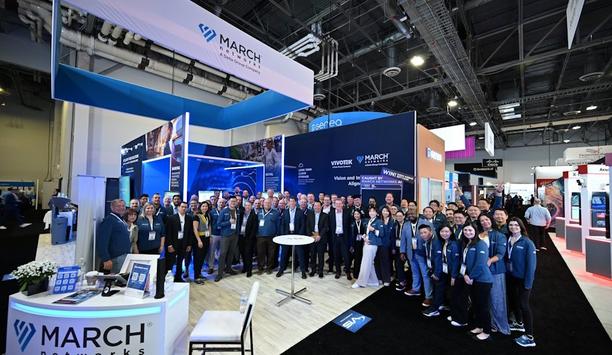
Combining VIVOTEK’s branded video security business with March Networks paves the way for the combined brands to meet customers’ increasing appetite for integrated solutions rather than individual components. The merger brings VIVOTEK's branded video security business together under one operating structure with March Networks’ enterprise-grade video surveillance, AI analytics, and cloud-managed security solutions. Customers now have access to a broader, more integrated portfolio spanning enterprise video management, advanced cameras, edge artificial intelligence (AI), cloud services, recording platforms, and business intelligence, says Net Payne, Chief Sales & Marketing Officer at March Networks and VIVOTEK. Distinct product strategies Given the combined companies, product development, sales, marketing, and customer support can move in step rather than in parallel. March Networks and VIVOTEK were already both part of the Delta Electronics family, but they previously operated as separate businesses with distinct product strategies, teams, and routes to market. March Networks and VIVOTEK announced the merger of their branded video security businesses last spring following Delta Electronics' acquisition of remaining VIVOTEK shares. “Aligning our complementary capabilities lets us innovate faster, simplify engagement, and respond more quickly to a market moving toward AI, cloud and intelligent video,” says Payne. This merger reflects a broader shift across the physical security industry, adds Payne. “Customers no longer see video purely as a tool for reviewing incidents after the fact,” he says. “They expect it to help identify risks earlier, simplify investigations, improve operations, and support better decisions across the organization.” Cloud video management Meeting customer expectations requires more than bolting AI features onto existing systems Meeting customer expectations requires more than bolting AI features onto existing systems. Rather, it requires cameras, edge intelligence, recording, software, cloud services, and business data working together as one coordinated platform. “By bringing March Networks and VIVOTEK together, we combine deep expertise across the full video technology stack while preserving the relationships, sector knowledge and customer focus both companies have built over many years,” says Payne. “Our goal is to make intelligent video more integrated, scalable, and practical for customers and partners worldwide.” Both entities bring strengths to the combined companies. March Networks brings experience in enterprise software, cloud video management and large-scale deployments; while VIVOTEK brings strength in imaging, camera technology and edge intelligence. Together they seek to ensure more choice when designing systems, a clearer path for future expansion, and technologies that work together more effectively without compromising the reliability, cybersecurity, and support customers expect from both companies. Advantages for channel partners Channel partners gain a broader portfolio to address a wider range of customer requirements, combining components as each deployment demands. Channel partners also benefit from expanded geographic reach, deeper technical expertise, and greater investment in training and enablement. “Importantly, this is designed to be a seamless transition,” says Payne. “Partners keep working with the teams and relationships they already know, while gaining access to new capabilities and certification opportunities. Over time, that alignment should make it easier to design, deploy and support complete solutions.” Because they are established and respected brands, March Networks and VIVOTEK branding will continue to be used. Rebranding is not a goal, and neither identity is being replaced by the other. Coordinated decision-making “The immediate priority is organizational alignment by making it easier for customers and partners to benefit from the combined portfolio,” says Payne. Product branding will continue to reflect the relevant portfolio and market context. As product roadmaps become more closely coordinated, customers can expect greater interoperability and a more cohesive experience, says Payne. Any future branding changes will be managed carefully and communicated clearly. Combining the businesses reduces duplication and enables coordinated decision-making across product strategy, engineering, sales, marketing, operations, and customer support. “Instead of developing capabilities independently, teams can share their expertise, align roadmaps, and direct investment to where it has the greatest customer impact,” says Payne. Combining specialized knowledge globally The combined organization operates across six continents and more than 75 countries The combined organization includes more than 300 research and development (R&D) engineers across four Centres of Excellence in Canada, Taiwan, Italy and Poland, thus bringing together a substantial base of specialist knowledge. The unified network also sharpens the ability to prioritise global opportunities, respond to regional needs and bring innovations to market faster. The combined organization operates across six continents and more than 75 countries, supported by more than 1,100 certified channel partners. That footprint provides greater capacity to support multinational customers while staying responsive to local market needs. Looking ahead, future growth will increasingly come from helping customers turn video into useful, actionable intelligence. “The market is moving beyond conventional surveillance toward solutions combining AI, cloud services, edge processing, video management and operational data — and our new structure brings these together as one connected solution rather than several isolated technologies,” says Payne. Broader technical expertise There will also be closer collaboration among specialists in imaging, hardware, software, analytics, and cloud, which is important given how much customer infrastructure, regulatory, and deployment requirements vary. The companies can support cloud, hybrid, and on-premise environments, giving organizations a practical path toward more intelligent video. More choice comes from bringing together complementary technologies across product groups. Greater scale is achieved through a larger engineering organization, broader technical expertise and more capacity to invest in innovation. Challenges for the industry at large Looking to the future for the industry at large, the greatest challenge will be managing the rapid growth of AI Looking to the future for the industry at large, the greatest challenge will be managing the rapid growth of AI responsibly, securely and at scale, says Payne. Video systems will generate more data and automate more decisions, but organizations must be able to trust how that intelligence is created, protected, and applied, he adds. “Cybersecurity, privacy, data sovereignty, system interoperability and AI accuracy are more important than ever,” says Payne. Addressing these elements requires expertise across the entire technology stack: from camera and edge processing to recording, cloud infrastructure, video management and analytics. “Together, March Networks and VIVOTEK can coordinate development across all these layers, giving customers flexible architectures that balance innovation with security, transparency and operational control,” says Payne.

The security landscape is undergoing a profound transformation, as evidenced by the innovations showcased at the ISC West Expo 2026. From dismantling of silos between physical and digital security to the ongoing transition to cloud and hybrid platforms, much of the discussion on the show floor was familiar, if somehow more urgent than ever. Clearly the industry is moving toward unified, cloud-native, and highly automated ecosystems. In a series of deep-dive meetings and demonstrations at the recent show, I got a first-hand glimpse of the future of the physical security marketplace. Spoiler alert: The future is now! HID Global: Tearing down the silos HID Global is addressing the long-requested convergence of physical and digital security. Recognizing that the industry has historically operated in silos, HID is now leading with a combined implementation team to leverage the power of both sides. HID is supporting the transition by combining its logical and physical security teams to help end users design secure, end-to-end journeys for their employees. By leveraging its massive existing footprint in physical access, HID is uniquely positioned to help organizations upgrade their cybersecurity posture without a total "rip and replace" of their hardware. HID is seeing a surge in demand for converged credentials that unite building access with digital identity. On the digital front, HID has implemented FIDO (Fast Identity Online) and passkeys to replace traditional passwords with more secure, biometric-backed authentication methods. Acre Security: Bridging the gap to the cloud Acre Security previewed a cloud-native video solution, reinforcing its cloud-first security strategyAcre Security is currently consolidating brands, bringing established names like Feenics and AccessIt under a single corporate umbrella. A primary theme for the company at ISC West is the migration of legacy systems to modern infrastructure. To facilitate the transition, they are launching "The Bridge," a technology designed to help on-premise customers transition to the cloud at a pace that suits their operational needs. The company is also expanding its portfolio into video. Attendees at the show received a preview of a new cloud-native video solution slated for release later this year, signaling Acre’s commitment to a holistic, cloud-first security suite. Acoem: Real-time acoustic threat detection With a 35-year foundation in vibration and acoustics—including military sniper detection—Acoem is providing gunshot detection through edge processing. Unlike systems that rely on the cloud and may suffer from latency, Acoem’s technology processes data at the sensor level for instant alerts. Their sensors are engineered for massive outdoor spaces, covering a 500-foot radius (roughly 11 football fields) and can detect high-powered rifle shots from up to half a mile away. The system provides critical intelligence by distinguishing between muzzle blasts and "mach noise" from bullet travel, delivering an audio file to the end-user that maps the location and direction of the threat. They use AI to filter out environmental false positives, such as skateboards hitting metal rails. Alarm.com: The all-in-one dealer ecosystem Beyond hardware, Alarm.com is leveraging AI to streamline the sales process Alarm.com is doubling down on "giving tools to dealers to help them be successful," with a focus on unified commercial solutions. A highlight at ISC West is their new fire communicator, which integrates fire monitoring into their single app, completing what they call the "fourth leg of the stool." The product allows fire systems to benefit from the same real-time customer engagement and push notifications that have long been available for intrusion and video. The key products, such as commercial-grade hardware, are now available for immediate purchase. Beyond hardware, Alarm.com is leveraging AI to streamline the sales process. Their new AI Proposal Builder uses customer meeting notes to automatically generate customized, value-driven sales proposals for dealers. Allegion: A global shift in credentialing Following the acquisition of ELATEC, Allegion is adopting a more global market approach and expanding its OEM business. The company is involved in the development of Aliro, the newly unveiled mobile credentialing standard. Allegion’s strategy is built on versatility: While Aliro serves the burgeoning mobile market, they also offer PKOC for plastic cards, allowing them to provide solutions regardless of the user's preferred credential type. The ELATEC acquisition has effectively filled previous gaps in their use-case portfolio, positioning them as a comprehensive provider for both physical and digital access needs. AtlasIED: Engineering for life safety Transitioning from audio to a fully automated threat detection company, AtlasIED showcased its new IPX line at ISC West. This modular platform uses a single PoE++ port to power various "plug-and-play" modules, allowing for easy system upgrades. Their gun detection technology achieves a 99% confidence rating by "stacking" AI models; it cross-references audio data with infrared signatures to detect muzzle flashes and air quality sensors for particulates. With systems already running in 80% of U.S. international airports, the company maintains 24/7 domestic engineering support to manage these "life-safety adjacent" environments. Axis Communications: Unifying connectivity Axis Communications is advancing network video with 4G/5G surveillance, reducing cabling needs Axis Communications continues to lead in network video, with a new focus on offering surveillance through 4G and 5G networks to eliminate the need for extensive cabling in long-range applications. Axis also introduced several specialized hardware pieces, including the P1486-LE global shutter camera for high-speed traffic monitoring and the Q2802-TE, which integrates thermal and visual monitoring into a single unit. To assist technicians, they launched a new installer app that uses Bluetooth for easier camera pairing and management directly from a mobile device. Axon: De-escalation through enterprise wearables Focusing on frontline safety, Axon is expanding from law enforcement into the enterprise sector with its retail and healthcare-focused body camera. Weighing only 0.25 lb, these cameras are designed to be less intimidating, using colorful designs and acting as a primary de-escalator for aggressive behavior. A clear front display signals when recording is active, striking a balance between safety and a non-intimidating appearance. These devices feature live-streaming and panic alarms that connect workers to a Global Security Operations Center (GSOC). To ensure the footage is legally viable, Axon maintains a rigorous audit trail that authenticates every action recorded. Genetec: The value of the unified platform Genetec is advocating for unified platforms that reduce the time between incident detection and resolution. They argue that AI is becoming a commodity and that the true value lies in unified platforms that reduce the time from incident to resolution. Their approach emphasises the "outcomes" customers need, such as allowing security teams to coalesce around an investigation quickly. Genetec remains a strong supporter of open systems for enterprise customers, ensuring they have the choice to integrate diverse technologies rather than being locked into a manufacturer’s “walled garden.” This flexibility is critical for high-end security environments that require tailored, responsive systems. Johnson Controls: Large-scale enterprise solutions Johnson Controls has made a significant push into the enterprise video market with C-Cure IQ, a standalone VMS designed for major hubs like airports and large campuses. Through a partnership with Scylla, they have integrated 11 advanced analytics—including facial recognition and weapons detection—directly into their cameras. They also showcased new multi-sensor panoramic cameras capable of "stitching" multiple images into a single 360-degree view. While innovating in video, Johnson Controls also confirmed modern upgrades to their intrusion line, including their legacy DSC Neo line. The new DSC PowerSeries Neo 5, a high-end residential and commercial platform, features an all-new user interface and built-in PowerG+. They have also begun shipping the IQ5 family lineup, which is powered by a Qualcomm DragonWing processor. ONVIF: Standardising the future of AI and cloud ONVIF continues to lead the charge in establishing common languages for the security industry. A major focus is their new "Cloud Profile," which enables cameras to connect directly to the cloud through a standardized protocol. They are also expanding into audio standards to ensure IP-based speakers can seamlessly connect to Video Management Systems (VMS). To combat the rise of sophisticated digital manipulation, ONVIF is developing "video signing" standards. ONVIF is actively seeking more diverse enterprise participation to help shape these emerging AI standardsThis feature protects the integrity of video for evidentiary purposes by embedding a digital signature and timestamp directly into the footage at the camera level. Additionally, the organization has formed an AI Working Group to develop common communication methods for "AI agents" within physical security systems. ONVIF is actively seeking more diverse enterprise participation to help shape these emerging AI standards. Roberto Licari is the new ONVIF Ambassador, seeking to attract new companies (even outside the security sector) to ONVIF as they look to expand their offerings. SwiftConnect: Bridging digital and physical identity SwiftConnect is redefining access control by shifting the focus from physical cards to digital identity. As a cloud-based "connected access network," the platform bridges the gap between IT identity providers (like Okta or Azure AD) and legacy physical access control systems. At the show's Security Experience Center demonstrations, SwiftConnect showcased its ability to integrate mobile credentials within Apple and Google Wallets across multiple technology platforms. By aligning physical security with Zero Trust principles, they ensure that access is governed by the same rigorous standards as digital networks. Their software-centric approach allows for a more seamless employee experience while simplifying the management of complex, multi-site building security. This emphasises a future where the mobile device becomes the primary tool for navigating the physical workspace. Wasabi Technologies: Redefining cloud storage economics With cloud technology becoming a baseline requirement at every booth, Wasabi Technologies highlighted its "hot cloud storage" as a cost-effective alternative to major hyperscalers. Their model claims to be 80% less expensive than competitors, notably removing hidden fees. Wasabi is increasingly bundled at the "back end" of security solutions through partnerships with integrators and end users. A key feature for law enforcement and high-security sectors is their "Object Lock" capability, which ensures that video evidence remains untampered with and immutable during defined retention periods. By providing high-performance storage without the unpredictable costs typically associated with the cloud, Wasabi is positioning itself as the foundational layer for data-heavy video surveillance applications that require long-term, secure retention. Wasabi is positioning itself as the foundational layer for data-heavy video surveillance applications ZKTeco USA: Versatile and integrated access ZKTeco USA showcased a range of integrated solutions, including turnstiles, visitor management, and access control. Their Atlas access control series offers versatility, supporting everything from traditional readers and keypads to QR codes and fingerprint scanning, with the flexibility to operate on-premise or in the cloud. For tight environments, they introduced the Mars 100 turnstile, which features a compact 2x3-foot footprint. They also highlighted the Omni series, an all-in-one standalone reader-controller that manages access, intercom, and visitor functions in a single device. Innovation in portability was evident in their new walk-through metal detectors, which consist of two poles with an 8-hour battery life—ideal for schools and temporary events. While they offer their own Armatura readers, ZKTeco emphasized that their solutions can integrate with other industry leaders to fit diverse customer needs.
Artificial Intelligence (AI) had a major presence at the ISC West 2026 show in Las Vegas. Almost every booth offered some variation on AI and how intelligence is transforming the physical security industry. Several industry leaders led the way, showcasing how they are tackling complex security challenges with smarter, more efficient solutions. Obviously, the security industry will never be the same. Milestone Systems: Responsible AI and open platforms Milestone has declared 2026 the "year of delivery” on previously announced developments and enhancements. A standout feature is their new natural language AI search, which is being integrated across XProtect, Arcules, and Briefcam platforms to simplify how users interact with vast amounts of video data. A core pillar of their strategy is responsible AI development, which prioritises using licensed data over "scraped" data. They have introduced new anonymisation tools that protect privacy by replacing faces with AI-generated characteristics like hair color while keeping the person unrecognisable. Furthermore, Milestone is moving workloads to Linux to reduce costs, transitioning toward an app marketplace, and has partnered with NVIDIA for the "Hafnia" project to ensure high-quality data to train AI models. Ambarella: Powering the edge with AI chips With their presence at ISC West in a meeting room near the trade show floor, Ambarella is the "engine" behind many high-performance intelligent video products, specializing in low-power AI chips like the N1 and CV7 families. Their technology is moving beyond cameras, where they provide systems-on-chips [SOCs] to many manufacturers. They have expanded into "AI boxes" that can process 64+ video channels simultaneously. A standout feature is the Natural Language technology, which allows users to search for specific objects or abstract scenes using simple prompts. To address modern security concerns, Ambarella has implemented "agentic" programming for a no-code development of automated workflows and media signing to combat AI-generated deepfakes by verifying video integrity through metadata. Motorola Solutions: Simplifying intelligence Motorola Solutions shows physical security evolving into a real-time enterprise intelligence layerMotorola Solutions is prioritising user accessibility by integrating natural language processing into its system configuration. Motorola's portfolio demonstrates how physical security technology is evolving into a real-time operational intelligence layer across the enterprise. Instead of requiring custom coding, operators can now use simple commands—like asking the system to "show me when someone fell down"—to set up advanced analytics and search parameters. The company is also deploying AI agents designed to aggregate data and automatically flag safety or compliance risks, such as perimeter breaches or blocked fire exits. To ensure maximum utility of the hardware, Motorola Solutions’ system can ingest massive, complex physical manuals and automatically generate monitoring rules based on those standard operating procedures. Furthermore, Motorola is focusing on interoperability, using industry-standard interfaces to ingest data from various hardware brands and networks. This approach aims to provide operators with clear, recommended next steps during critical events, streamlining the decision-making process in high-pressure environments. i-PRO: Putting generative AI at the edge i-PRO is bringing generative AI directly to the edge with a new fisheye camera, which processes complex analytics locally rather than relying solely on the cloud. These cameras, on display at ISC West, have moved beyond simple attribute-based tracking to identify complex behaviors like aggression, fighting, and slip-and-fall incidents. By running on the latest Ambarella chips, i-PRO cameras can use generative AI to improve image quality and analyze scenes in real-time without external processing. This focus on edge-based intelligence ensures high-performance analytics are available even in environments where constant cloud connectivity might be a challenge. Brivo: The rise of agentic AI Eagle Eye Video Assistant (EEVA) acts as a natural language AI agent that can monitor for specific threats Brivo and Eagle Eye Networks have officially unified under the Brivo name, focusing on streamlining the experience for large integrators. They are pioneers in agentic AI, introducing features that allow users to talk to their mobile apps to initiate lockdowns or add users. Their Eagle Eye Video Assistant (EEVA) acts as a natural language AI agent that can monitor for specific threats, such as a brandished weapon or a specific vehicle, and automatically trigger access control responses. By treating access and video as a unified system, Brivo enables users to connect specific video skills—like detecting a red car or a brandished weapon—to automated access control actions. They are also using AI to achieve "zero-cost integration," linking disparate cloud systems using AI-generated instructions. Everon: Emphasis on video monitoring Everon is making a massive investment in active video monitoring, using AI-driven systems to deter crime even before it happens. “The market is ripe for it, and customers are demanding it,” says David Charney, Everon’s Sr. Vice President, Video Command Center. Employing virtual guards who can use voice commands, lights, and horns to "shoo away" unauthorized individuals. The company has implemented senior-level leadership that has facilitated more than 5,000 video-based apprehensions. Everon, specializing in integrated systems for multi-site businesses, uses a rigorous selection process to choose AI providers that can accurately filter alerts for specific applications, such as identifying when a fire door is blocked. As a "trusted advisor" to their 300,000 customers, the company focuses on delivering professional-level results that move beyond basic recording to proactive threat mitigation. Hanwha: New hybrid VMS combines cloud and on-prem Hanwha Vision highlighted the official public launch of Blaze, a hybrid video management system (VMS). The platform uses a hybrid architecture to manage on-premise and cloud-connected devices across multiple sites without complex port forwarding. Blaze features native AI capabilities, including semantic search that allows operators to find specific incidents using natural language queries, such as "person with a safety jacket." The AI security platform lets teams search surveillance footage the way they search Google. AI similarity detection allows operators to quickly trace a person’s movement and investigate incidents faster (useful in active shooter behavior, medical emergencies, or crowd panic scenarios, and more). The system also provides a "histogram" view of traffic patterns to help security professionals quickly identify anomalies in historical footage. OpenEye: Operational intelligence and shift to OpEx OpenEye unveiled AI-powered features such as visual chat and scene analysisOpenEye is redefining video surveillance by moving intelligence from the camera level to the cloud, significantly reducing the need for on-site server management. At ISC West, OpenEye introduced new AI-driven tools like visual chat and scene analysis. Beyond security, these tools provide valuable operational alerts, such as identifying overflowing dumpsters, dirty tables in restaurants, or vehicles blocking dock doors. The system also utilizes natural language for search, allowing users to find specific attributes like "people wearing backpacks" within designated timeframes. OpenEye also highlighted an industry-wide shift toward operational expenditures (OpEx) billing models, as users increasingly prefer predictable monthly or yearly payments over large upfront capital expenditures (CapEx). This model aligns with their channel-based operations, meeting customers where they currently operate without the burden of high fees. IQSIGHT: New name, same mission for Bosch video Formerly Bosch Video, the newly named IQSIGHT seeks to maintain the “Bosch pedigree” under the new name. It’s the same engineering, manufacturing, etc. IQSIGHT also pledges to be "easier to do business with" by improving user interfaces and end-to-end user experiences. Despite the transition, the company has increased their pace of innovation and reinforced the open systems philosophy with enhanced integrations with Milestone, Genetec, and others. The major product release at the show is IVA Pro Context, which uses generative AI to provide human-level scene understanding. Through a partnership with Laelaps AI, a robotics startup, IQSIGHT is exploring autonomous dispatch and response. When a camera identifies a scene, it triggers a robot to provide a tailored response. Commercialisation is expected in 12 to 18 months. Verkada: How their system can solve a crime But how does AI operate in the real world? Verkada had a “themed” exhibit demonstrating how their system could solve a hypothetical theft at the Louvre museum in Paris. The exhibit took attendees through and showed how Verkada technologies (e.g., license plate recognition and search capabilities) could provide fast results to solve the crime. AI-powered tools, like their newest unified timeline, demonstrate value in the real world of investigations.
Case studies

Introduction - Lightkeepers of Henry County is a grassroots nonprofit organization based in New Castle, Indiana. It began informally in 2020 with a community vigil, where organizers realised that local residents wanted more activities centred on culture, diversity, and understanding. Lightkeepers became a registered 501(c)(3) nonprofit in 2023 and soon afterward acquired its own building. Guided by its core values of equity, education, diversity, and empathy, Lightkeepers aims to provide a safe place where everyone in the community feels appreciated and has a sense of belonging. Its programs focus on marginalised communities, including low-income residents, people with disabilities, and the LGBTQIA+ community. The organization hosted the first Juneteenth celebration in Henry County, organises New Castle Pride, and runs food and blanket drives, festivals, and community meetings. Following historic flooding in the area, it is also hosting home damage assessments for affected residents. Limited police patrols The challenge - Lightkeepers is based in the former Westminster Community Center, a two-story cement building that has long been a staple of the neighborhood. Over the years, it has served as an elementary school, a community center with after-school programs and classrooms, and most recently a food pantry. The building includes a large gym, several ground-floor rooms, an upstairs kitchen, classroom area, and offices, and an attached garage. Before Lightkeepers took it over, the building had been largely vacant, opening for only a few hours, two days a week, for food distribution. It is located in a low-income area with limited police patrols, and the parking lot was so poorly lit that the team repaired the light themselves. A city park directly behind the building had become a meeting place for illegal and unsafe activity. Limited police patrols Today, the building is in use throughout the day. With no set opening hours, it hosts fundraisers, community meetings, training sessions, birthday parties, and baby showers, with anywhere from four to more than 120 people inside at any one time. Festivals and other events also take place in the parking lot. During summer 2026, Lightkeepers partnered with fellow nonprofit Live Coalition to run the Hangout Hub, a weekday program offering activities and free meals for children aged 10 and over. Lightkeepers needed a way to protect the building and its contents, and to keep children and visitors safe while they were on-site. Board members, who often come and go outside of normal hours, needed to see what was happening in the building and parking lot before arriving or leaving. As an older building with boiler heating, the property was also at risk from problems that could go unnoticed when nobody was there. “After we acquired the building, we knew that we would need to be able to watch what we had, because of the neighborhood it’s in. We definitely needed some sort of security, and we wanted safety for the kids in the gym,” says Mary Nicholson Tait, President, Lightkeepers of Henry County. Monitored intrusion detection The solution -Lightkeepers worked with 3xLOGIC and SONITROL to install video surveillance and monitored intrusion detection across the building, parking lot, and perimeter. The system was completed in 2024. A mix of 3xLOGIC indoor and outdoor cameras watches the building inside and out. A 360-degree camera mounted in the center of the gym ceiling gives full visibility of the space, while a camera in the entrance lobby covers the main entry point. Outside, cameras cover each side of the building, including edge-based deep learning cameras that, if required, can detect people and vehicles and identify details such as vehicle make, model, and color. Deep learning analytics A 3xLOGIC VISIX 5MP InterACT camera on the front of the building overlooks the parking lot. The camera combines high-quality video with edge-based deep learning analytics and built-in deterrence features, including sirens, white or red and blue lights, two-way audio for talk-down, and custom messaging. Its analytics can detect loitering, intrusion, and vehicles in prohibited areas, with real-time alerts allowing potential incidents to be addressed early. SONITROL’s patented audio intrusion sensors inside the building provide 24/7 monitored intrusion detection. When a sensor is triggered, SONITROL operators can listen in to verify activity and dispatch police when required. Allowing potential incidents Mary can view live footage remotely using the 3xLOGIC mobile app on her phone and access the cameras from a desktop workstation in her office at the building. The SONITROL app, meanwhile, may be used on-site to arm and disarm the alarm system. “I’ve got the desktop set up in my office at the building, so if we have activities in the gym, we don’t have to go down and see what’s going on. We can just click on the camera and see what’s happening,” explains Mary. Monitored intrusion detection Results gained - Since installation, Lightkeepers can see what’s going on at the building from anywhere. Mary regularly uses the mobile app to keep an eye on the parking lot, and because the team does not keep regular business hours, board members can check the cameras before heading out to their cars at night. “We’ve got a lot of women on our board, and we’re over there at all hours. It’s nice for everybody to be able to see what they’re about to walk into before they leave the building,” says Mary. Late one Sunday night, an intruder forced their way in through the gym door. SONITROL’s monitored intrusion detection picked up the activity, operators called Mary, and police were dispatched. Officers were at the building before Mary, who lives five minutes away, could get there. The intruder fled without taking anything. Low winter temperatures In another incident, during unusually low winter temperatures, copper pipes in the building burst. SONITROL’s sensors detected the noise and alerted the team, and Mary checked the lobby camera on the 3xLOGIC mobile app, where she saw water coming out of the room. This meant the team could get someone to the building quickly and limit the damage. No repainting or structural repairs were needed, and no fittings needed to be thrown away. “Had it not been for the security system, we would not have known about the flooding. I was able to look from my app and see there was water, and we were able to get over there and take care of the problem. It saved us a lot of money in repairs and made a huge difference,” explains Mary. Deter nuisance activity The cameras, the repaired light, and the extra activity on-site have helped deter nuisance activity in the wider area, so the park behind the building is now somewhere local children can play. Residents across the street have welcomed the cameras, reporting fewer people coming into their yards and a decrease in illegal activity. “We were afraid they were going to be so mad at us because there were cameras over here. It was completely the opposite. The neighbours were really happy that they could see the cameras, because it provided safety for their properties. They actually thanked us,” Mary concludes. Additional camera coverage Future plans - Lightkeepers is preparing to partner with the Boys and Girls Club to deliver after-school programs from the building, to bring more young people on-site regularly. The organization is also working with its integrator to assess additional camera coverage and to make full use of the InterACT camera’s siren, talk-down, and custom alarm features to actively deter unwanted activity in the parking lot.

Milestone Systems, a provider of open platform video management software (VMS), is helping Columbia Borough, Pennsylvania, strengthen public safety through a community-wide video security system built on Milestone XProtect® VMS. For more than 16 years, Columbia has worked with Lancaster-area security integrator App-Techs to develop and expand a distributed wireless video network serving its downtown, public buildings, parks, and other borough facilities. Today, the system supports roughly 83 camera feeds, including 4K multi-lens and PTZ cameras, primarily from iPro. Distributed wireless architecture Located along the Susquehanna River in Lancaster County, Columbia is a historic borough of roughly 10,000 residents. As the community worked to revitalise its downtown and attract new businesses, borough leaders wanted safety and security to support that broader effort. Traditional wired infrastructure was impractical across Columbia’s geographically varied environment, requiring App-Techs to engineer a distributed wireless architecture. XProtect provides the video management foundation, with dedicated servers located in the municipal building and a remote park office. Officers can also access live camera feeds from laptops in patrol vehicles, while mobile access extends video to personnel during community events. Immediately dispatched officers Columbia’s dispatchers are the primary day-to-day operators of XProtect, monitoring cameras, and supporting officers in the field. In one incident, a dispatcher spotted someone breaking into a vending machine outside a laundromat and immediately dispatched officers. “Our staff member observed someone breaking into a vending machine just outside that building and was able to dispatch officers to the scene,” said Jack Brommer, Columbia Borough Police Department Chief. “Officers apprehended the individual, and it turns out this was a serial thief who had been breaking into vending machines across the tri-county area. So that single arrest helped resolve a number of thefts across multiple counties. That’s just the kind of impact this technology can have on a community.” The system also supports holding cells and interview rooms inside the police station, where microphones are integrated with cameras, as well as large community events. During Columbia’s annual “Thunder on the River” antique car show, Emergency Management personnel used the community camera network to support proactive monitoring and rapid response across the event. Gunshot-detection technologies Over time, Columbia’s video system has supported faster incident response, stronger evidence for prosecution and greater situational awareness for dispatchers and police officers. Borough leaders also use signage in parks and public areas to make camera coverage visible as a deterrent. “The data that I can point to is that we are trending downward, probably for the last five, six years, as far as call volume and crime trends. Those numbers have been very positive,” added Brommer. Looking ahead, Columbia plans to expand its use of video analytics, including object-search capabilities that can help investigators filter video by vehicle type, colour, and other attributes. The borough is also exploring emerging gunshot-detection technologies to further improve situational awareness.

In a sector where budgets are always a focus of attention, delivering concrete returns to every investment is crucial. By digitalising access, healthcare premises – whether large hospitals or small clinics – can benefit from day one. They can improve staff and patient safety; quickly implement more efficient, time-saving workflows; and painlessly meet compliance demands. Healthcare sites always present complex access challenges. They must be welcoming, accessible public spaces. They often occupy large, sprawling areas; unfamiliar faces and first-time visitors are around every single day. At the same time, these premises inevitably have valuable and/or sensitive assets, including confidential data and medicines, which must be secured. Patients, doctors, nurses and support staff must feel safe. In labs and treatment suites, restricted materials and valuable equipment need both security and a compliant system for logging every access event. This has always been healthcare’s ‘business-as-usual’: it is a complex environment for any security manager. Meeting compliance demands Modern hospitals and clinics, however, now face an extra level of challenges – and opportunities. Their access system may benefit from integration with fire detection, CCTV and other building solutions, for example. With so many temporary and contract workers employed on-site, access is in constant motion. It needs to be tailored to specific and very different needs and, equally, revoked when any time-limited tasks are complete. In case of a security breach, rapid investigation is essential. Tracing and logging access to specific areas may also be a legal requirement, especially with new NIS2 regulations introduced for critical infrastructure, which demand proactive “hybrid” cyber/physical security frameworks for many healthcare premises. Relying on manual or siloed systems to complete these tasks could eat up hours or even days for security and even medical staff. Happily, there is a better way to work. Digital access devices The solution is access digitalisation. Digital access devices and credentials help to keep every hospital user safe. Unauthorized access is minimised because unapproved key copies rarely circulate and lost credentials are canceled with a click. Employees and equipment are safer because more access points may be digitally secured. Issuing contractors and temporary staff with digital or even mobile credentials can further simplify the granting, amending and revoking of site access. Security teams waste less time handing out and collecting keys. Intelligent, intuitive software helps facilities managers stay in control even while they are off-site. Logging access to specific assets or areas becomes quick and simple: a few clicks rather than the laborious process of keeping manual logs up to date. “Access is such an important part of any holistic approach to safety,” says David Moser, SVP and Head of Digital Access Solutions at ASSA ABLOY Opening Solutions EMEIA. “Digitalising access immediately puts powerful tools in the hands of hospital management, delivering tangible daily benefits to meet security challenges head-on, improving efficiency and regulatory compliance at the same time.” Implementing digital access “There’s now a device to extend existing systems with digital control at almost any access point, whatever building solution is in place. Alternatively, we can equip customers with whole solutions to implement digital access from scratch, without invasive installation. So many efficiency and security benefits are within reach.” Below are three of many real-life examples which illustrate the ways healthcare premises have benefited from digital access beyond the most obvious security and safety aspects. By choosing ASSA ABLOY’s Aperio® wireless locks, integrated natively with an ARD access management solution, Centre Hospitalier Métropole Savoie (CHMS) could issue access rights tailored to individual staff and contractors and implement real-time control, helping to boost site safety. Because Aperio locks are wireless, the hospital introduced more layers of security without incurring excessive installation or operating costs, including for sensitive offices and drug stores. Access point functionality at CHMS now includes real-time management logs and remote door opening. Real-time management logs For convenience, staff now carry one credential programmed with their individual tailored permissions. “Having just a single badge, and not having to carry around heavy keys, has been a major advantage for us,” explains Béatrice Dequidt, Health Executive at CHMS. “We have implemented internal HR management procedures, creating badges that are automatically integrated into ARD's operating software,” adds Alain Gestin, CHMS’s IT Systems Architect. Aperio and ARD maintain compatibility of credentials with the French government’s electronic Health Professional Card (CPS), for added staff and management convenience. Personalized access permissions Hospital MAZ, in Zaragoza, also implemented a new ASSA ABLOY digital solution, SMARTair®, with real-time access functionality. Their online wireless access management system saves security managers’ time because they can implement all changes via the central system in real time, without needing to waste time walking through the hospital. Staff convenience is further enhanced: they now carry a smartcard programmed with their personalized access permissions. Custom-made cards double as employee IDs, so 625 staff and approximately 100 contractors only need to carry one. Their ASSA ABLOY system is also mobile access ready, making it easy for the hospital to issue and manage mobile keys in the future without hardware changes. “Digitalisation presents opportunities for healthcare organizations of every size and type to improve security while they also reduce costs ‘hidden’ in daily workflows,” explains David Moser. Convenient secure access Managing physical keys can impact nursing care, as pharmacy managers at Queen Elizabeth Hospital, Birmingham discovered. An older, mechanical system made it difficult for them to keep track of who held the right key. Searching for that person wasted time. They identified a better solution for convenient secure access to controlled medicines: programmable keys. With their CLIQ programmable key access solution, power to digital and electromechanical locks is supplied by a standard battery inside every key, so no wires are required – making it an ideal retrofit solution for hospital doors, cabinets and mobile drug trolleys. Audit trails for locks and padlocks are available on demand: nurse managers can quickly see who has accessed cabinets or drug trolleys. Key access solution “The message from all nursing staff is that patients are getting medicines much easier and in a more timely fashion,” says Inderjit Singh, Chief Pharmacist at QE Birmingham. “For us, the key return on investment is the quality of service we’re providing.” “Our expertise in access, established over decades, enables us to work with customers to get their access ready for what’s ahead,” adds David Moser. “With ASSA ABLOY, they digitalise with confidence.”

After a major refurbishment, Benghazi Children's Hospital in Libya is preparing to deliver a safer, more connected, and more efficient healthcare experience. By adopting Hikvision's AIoT (AI-powered Internet of Things) technologies, the hospital is enhancing patient care, strengthening communication, supporting medical education, and improving operational efficiency throughout the facility. For more than four decades, Benghazi Children's Hospital has served local communities and families. Covering approximately 11,300 m², the hospital supports a wide range of inpatient and outpatient services. Its recent refurbishment—the first in over 40 years—was more than a maintenance project. The hospital set ambitious goals to modernise the environment, aiming for an 80% improvement in patient satisfaction, response times, and interdepartmental communication. Smart healthcare solution To support these objectives, the hospital has been working with the national distributor Al Motaheda to deploy an integrated Hikvision smart healthcare solution spanning patient communication, medical education, and fire protection. When a patient needs help, every second matters. To help caregivers respond quickly and efficiently, Benghazi Children's Hospital has deployed Hikvision's Nurse Call System across its two inpatient departments: the Observation Department and the Gastroenteritis Department. At 11 ward entrances, Doorway Terminals and LED indicators have been installed. Now, when a patient calls, room number and bed information will immediately appear in the corridor, helping nursing staff identify where assistance is needed. Delivering routine announcements A Nurse Station has been located between the two departments. From a single point, staff will be able to receive, prioritise, and respond to requests from all 11 wards, helping improve efficiency while ensuring patients receive timely attention. Beyond the nurse call system, the hospital also wants to strengthen communication between departments. 40 SIP Phones have been installed across examination rooms, operating rooms, labs, and offices, to keep every department connected for day-to-day coordination. 37 Ceiling Speakers will deliver routine announcements, visitor guidance, and emergency notifications. 26 Ceiling Access Points will provide hospital-wide wireless connectivity, supporting staff communications, connected devices, and future digital healthcare applications. Improving patient satisfaction Together, these systems have are creating a more connected healthcare environment where information reaches the right people at the right time. Hospital management expects the solution to play a key role in improving patient satisfaction while significantly reducing response times once the facility becomes fully operational. As a teaching hospital, Benghazi Children's Hospital also places strong emphasis on clinical education. However, limited space inside operating rooms can make it difficult for large groups of students to observe procedures firsthand. To address this challenge, the hospital has deployed a Live Surgery Broadcasting System built around the Hikvision Video Cart. Dedicated training hall This is a mobile unit that can be moved between all four operating rooms as needed. With appropriate patient consent and in accordance with hospital policies, it captures high-quality video and audio that can be transmitted live to a dedicated training hall. This will allow more medical students to observe operations without disrupting clinical activities or overcrowding operating rooms. In addition to live viewing, surgical procedures can – again, with consent – be recorded and stored for future training purposes. This will enable educators to build a growing library of teaching materials while giving more students access to practical clinical learning experiences. Centralized emergency management Fire safety has also been addressed by installing a comprehensive Hikvision fire protection solution. The system enables early fire detection, rapid alert distribution, and centralized emergency management. 203 Smoke Detectors cover every area of the building, from operating rooms to waiting areas to staff rooms. 24 Audible and Visual Alarms, and Manual Call Points have been placed at the ends of corridors and near all exits, where people moving toward evacuation routes will find them. A Fire Alarm Control Panel at the main reception provides centralized monitoring and control. A microphone at the same location will allow staff to broadcast live evacuation instructions to the entire hospital should it be needed. Effective medical education Together, these capabilities help ensure faster response during emergencies while supporting a safer environment for patients, visitors, and staff. Although the hospital has not yet officially opened following its refurbishment, feedback from hospital management and medical staff has been highly positive. As Taha Grgom, Project Manager at the Hospital put it: "The nurse call system will help us respond to patients more quickly, while the live surgery broadcasting system will open new possibilities for medical education. Together, these technologies are helping us build a more connected and efficient hospital." As Benghazi Children's Hospital prepares to welcome its first patients, it stands as a powerful example of how AIoT technologies can support better care, stronger collaboration, safer operations, and more effective medical education. More importantly, it shows what Tech for Good can mean in practice—using technology to make a meaningful difference where it matters most and help every child receive the care they deserve.

Bournemouth and Poole College, the largest provider of further education and apprenticeships in the Dorset area, has installed Hochiki's ESP addressable fire detection range across its four-storey site, protecting a diverse mix of teaching environments including IT suites, kitchens, workshops and engineering bays. The installation was specified and delivered by SFA Fire and Security, working closely with the college to design a system capable of handling the varied fire risks found across further education provision. Subjects such as catering, automotive maintenance, construction and engineering carry a higher risk of nuisance alarms from dust and fumes, while IT and digital media spaces rely heavily on electrical equipment. A tailored approach was needed to protect the site without interrupting learning. Protecting valuable teaching time ESP's common mounting base allowed SFA's installers to work through the site using a single standard base across most devices, reducing the range of parts held on site and helping installation stay on schedule despite the complexity of the building. In kitchens and workshops, LPCB and VdS approved heat sensors were used to distinguish genuine fire risk from cooking activity and dust, reducing false alarms and protecting valuable teaching time. ESP's textual identifier gives staff the exact location of an activated device, supporting fast and accurate evacuation decisions in a large site with high footfall. Wall-mounted VADs, certified to EN 54-23, added audio and visual alerts throughout the college, ensuring alarms reach staff and students regardless of location or impairment. Where cabling access was limited by drop beams, wireless technology was integrated onto the ESP loop, avoiding extensive drilling and preserving the building's original structure. Successful projects together Naomi Fell, Projects Director at SFA Fire and Security, said: "This project presented numerous challenges due to the complexity of each room and storey within the college. Our extensive experience with Hochiki's products, combined with the consistently positive feedback from our end-users, made Hochiki the clear choice for this project. We met the college's stringent deadlines with minimal disruption to teaching and learning." Ryan Baulcomb, Regional Sales Manager at Hochiki, added: "Hochiki and SFA have a strong, long-term partnership, built on years of successful projects together. This installation shows what that partnership can deliver on a genuinely complex site. We're proud that our products continue to give installers and end-users the reliability and support they expect." Bournemouth and Poole College now benefit from a fire detection system tailored to the specific demands of each corridor, room and storey across the site, with the flexibility to adapt as the college continues to grow.

In a move to modernise campus operations and create a smoother experience for students and staff, Peru’s National Agrarian University has deployed a comprehensive Hikvision smart campus solution. From streamlined access to safer transportation, the university is building a safer, connected and efficient campus environment. Universidad Nacional Agraria La Molina (National Agrarian University) is one of Peru's most respected academic institutions. Its 102-hectare campus operates more like a small city than a traditional university, serving eight faculties, around 8,000 students, and about 600 teachers every day. Campus bus operations As campus activity continued to grow, the university wanted a more modern and efficient way to manage daily operations. Previously, visitor and vehicle access relied heavily on manual checks and handwritten records. The university also wanted better visibility over campus bus operations and more effective support for security teams patrolling the large campus area. Their goals included: Streamlining pedestrian and vehicle access Equipping patrol teams with mobile tools to enable them to respond to incidents faster Enhancing safety and visibility across campus bus operations Centralizing management through a single unified platform To achieve these, the university worked with system integrator Consorcio Valtar Security y Serinfortel to deploy a unified Hikvision smart campus solution. Anti-tailgating functions To improve pedestrian access, the university installed 18 Hikvision Pro Swing Barriers (DS-K3B530X) and 28 Face Recognition Terminals (DS-K5671-ZV) at the main and side entrances. The solution helps students and staff move through gates quickly while improving entry management. The facial recognition terminals support recognition speeds of less than 0.2 seconds per user and accuracy rates above 99%. Anti-tailgating functions, which prevent people slipping in behind others, helps ensure only authorized individuals can enter. LED indicators, meanwhile, provide visual indicators guide people through the turnstiles in order to avoid bottlenecks. To further streamline visitor handling, the university deployed a Visitor Terminal (DS-K5032-D) together with an Enrolments Station (DS-K1F600U-D6E-F) at the main entrance. The dual-screen visitor terminal supports paperless registration, helping security staff process guests more efficiently while reducing manual paperwork. At the same time, the enrollment station simplifies face enrollment and user management through an easy-to-use touch-screen interface. Anti-hitting protection mechanisms For vehicle access, Hikvision deployed 6 ANPR Cameras (DS-TCG406-E(S)) together with 6 Barrier Gates (DS-TMG520-H/B) at two campus entrances. The system automatically recognises license plates and manages vehicle access in real time, helping reduce waiting times and improve traffic flow. Staff vehicles can be pre-registered through the university’s app, allowing smoother entry during peak hours. Adjustable barrier speeds and multiple anti-hitting protection mechanisms also help improve operational safety. To further improve the driver experience, LED Screens (DS-TVL224-4-5Y) display welcome messages and vehicle information in real time. Because of the campus’s large size, motorcycle patrol teams play an important role in maintaining daily operations and responding quickly across different areas. To support these teams, the university has deployed 10 Hikvision Ultra Series Body Cameras (DS-MH2311) together with 2 Dock Stations (DS-MDS001). Several features make this solution particularly suitable for mobile patrol work: Clear 2 MP video recording with a wide 129° horizontal field of view Up to 8 hours of recording with a removable 3,300 mAh battery Wireless connectivity for improved communication Real-time positioning support through GPS Centralized charging, storage, and evidence upload through dock stations Professional campus operations The cameras are mainly used during routine motorcycle patrols and when responding to incidents on campus. Recorded footage helps clearly document security procedures and provides reliable records of how situations were handled, supporting transparent and professional campus operations. The university has also upgraded safety across its fleet of 11 campus buses with Hikvision onboard solutions. Each bus is equipped with: Mobile Dome Cameras (DS-2XM6726G1-IM/ND) and Mobile Network Cameras (DS-2XM6522G1-ID): These provide real-time HD video coverage inside and outside the buses, helping operators monitor passenger boarding, alighting, and road conditions clearly. DSM Camera (AE-VC1B1I-ISF(RJ45)): This improves driving safety by detecting critical safety indicators such as fatigue, distractions, and smoking. When potential risks are identified, alerts are immediately issued to the driver, helping encourage safer driving practices during daily routes. Touch Monitor (AE-MW1203): Drivers can view live camera feeds through the monitor. The display automatically switches to relevant views when doors open or when reversing, helping drivers monitor passenger movement and blind spots more effectively. Alarm Button (DS-1530HMI(AE)(O-NEU)): It allows drivers to immediately notify the control center for rapid assistance in emergency situations. Mobile NVR (AE-MN5043(1T/SSD)(RJ45)(O-STD)): This records and stores video while also supporting GPS positioning, geofencing, and route monitoring through Google Maps integration. Campus bus management Every solution, from access control and patrol operations to campus bus management, is centrally managed through HikCentral Professional. From this single platform, the university can: Monitor access events in real time Manage user permissions and visitor records Track campus buses through GIS-based maps Receive centralized alarms and event notifications Coordinate faster responses across campus According to the university, the solution has significantly improved operational visibility and coordination across the campus. “With Hikvision’s smart campus solution, we now have a much more efficient and connected way to manage daily campus operations,” says Joseph Jimy Ordóñez Blanco, General Coordinator of the University’s Security Unit. “From access management to transportation safety, the platform gives our teams better visibility, faster response capabilities, and greater confidence in maintaining a safe environment for students and staff.”
Round table discussion

Adequate video surveillance coverage depends entirely on a facility's layout, square footage, and security goals. Historically, better coverage required more cameras, but technology innovations are changing those expectations and undermining previously held rules of thumb. We asked our Expert Panel Roundtable: Do today's video systems generally require more cameras or fewer cameras, and why?

Access control, video surveillance, and intrusion detection systems evolved largely independently in the physical security industry. Integrating those systems to the benefit of an enterprise's overall security has traditionally fallen on security integrators working in cooperation with manufacturers. However, today's market has also evolved to include companies that provide "unified platforms,” bringing together various disparate security systems and functions under a single, centralized management interface. We asked our Expert Panel Roundtable: What are the advantages of installing physical security systems as a unified platform?

The role of audio in physical security is multifaceted and increasingly vital, offering a layer of intelligence and interaction that access control and/or video surveillance alone cannot provide. Sounds provide crucial context to visual events. For instance, someone running might appear suspicious on video, but audio could reveal they are shouting for help, changing the interpretation entirely. Even so, historically speaking, audio has been an underused component in physical security. How is the situation changing? We asked our Expert Panel Roundtable: Is audio an underused component in today’s physical security systems? What obstacles are keeping audio from expanding?
Products
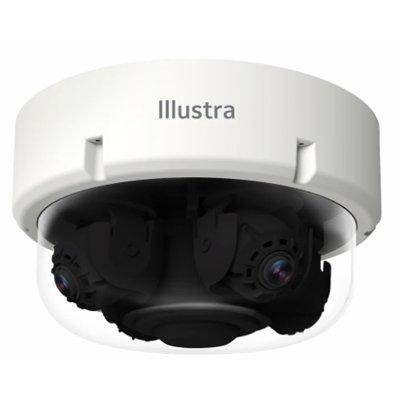
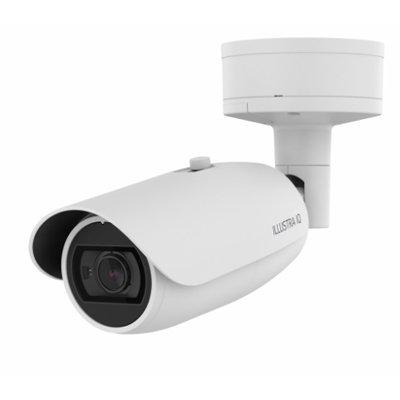
White papers

Minimizing Storage, Maximizing Focus
Download
Combining Security And Networking Technologies For A Unified Solution
Download
Selecting The Right Network Video Recorder (NVR) For Any Vertical Market
Download
Improving City Mobility Using Connected Video Technology
Download
Video Technology: Making Cities Safer & Improving Lives
Download
Protecting Dormitory Residents and Assets
Download
Choosing the Right Storage Technology for Video Surveillance
Download
Video Surveillance As A Service: Why Are Video Management Systems Migrating to the Cloud?
Download
11 Reasons Video Surveillance Is Moving To The Cloud
Download
The Borderless Control Room
Download
Wireless Access Control eBook
Download
Six Things To Look For When Adding AI Cameras To Your Operation
Download
The Inevitability of The Cloud
Download
Security Investments Retailers Should Consider For Their 2021 Budget
Download
Enhanced Ethernet Technology (ePoE)
DownloadVideos



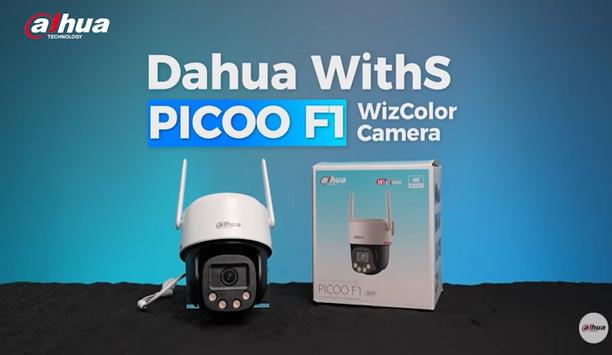
Network Video Recorders: Manufacturers & Suppliers
- Hikvision Network Video Recorders
- exacqVision Network Video Recorders
- Dahua Technology Network Video Recorders
- Honeywell Security Network Video Recorders
- Vicon Network Video Recorders
- Hanwha Vision Network Video Recorders
- IDIS Network Video Recorders
- Axis Communications Network Video Recorders
- Avigilon Network Video Recorders
- LILIN Network Video Recorders
- Milesight Network Video Recorders
- i-PRO Network Video Recorders
- Climax Technology Network Video Recorders
- American Dynamics Network Video Recorders
- MOBOTIX Network Video Recorders
- Uniview (UNV) Network Video Recorders
- Verkada Network Video Recorders
- Illustra Network Video Recorders
- Bosch Network Video Recorders
- FLIR Systems Network Video Recorders