Network cameras

HackerOne, a pioneer in Continuous Threat Exposure Management (CTEM), today released its 10th annual HackerOne Security Research Report, revealing that on the H1 Platform, the backlog of validated, unresolved vulnerabilities grew 131% in two years, even as average resolution time improved 54%. This year's report, Exposure Debt: The Next Challenge in Cybersecurity, introduces the urgent challenge security teams are grappling with in the race to stay ahead of attackers. AI has changed what securi...

dormakaba is giving organizations and their employees more ways to capture and manage time and labor across its workforce platform used by more than 6 million people every day. SMILE, the new app for dormakaba B-COMM™ HCM, will launch at HR Tech 2026, October 20-22 in Las Vegas. Attendees can experience the technology at dormakaba Booth #7605. SMILE broadens the ways employees can interact with the B-COMM platform while remaining connected to the Human Capital Management (HCM) and enterpr...

Tenable® Holdings, Inc., the exposure management company, today announced the expansion of the CyberAgents Exchange, powered by Tenable, to further accelerate enterprise security adoption of open-source AI agents, skills and MCP servers. Engineered by Tenable using OpenAI GPT cyber models, the CyberAgents Exchange AI Inspector (Exchange Inspector) evaluates selected AI components listed on the Exchange, including an enterprise-grade safety review, which is designed to help organizations mor...

Scality, a global pioneer in data infrastructure software for AI storage at scale, announces the availability of Scality AI Inference Factory, an open-code software stack for deploying and operating AI inference on enterprise-owned infrastructure. The solution gives enterprises, government agencies and neo-cloud providers a supported alternative to cloud-based AI services, without having to assemble, integrate and maintain the entire software stack themselves. As AI moves from experimentation i...

Colt Technology Services, the global digital infrastructure company, announces that it is the first network service provider to offer a fully managed service for the proven enterprise networking technology solution named SCION (Scalability, Control and Isolation on Next Generation Networks) in Europe, North America and Asia. SCION technology has been developed in Switzerland by technology company Anapaya and is widely used across critical infrastructure, including the Swiss financial community....

F5, the global pioneer in delivering and securing every app and API, announces enhanced cloud-native network functions and new observability capabilities that help service providers modernise critical network services as they move from virtualised infrastructure to Kubernetes and cloud-native architectures. Service providers are under pressure to support growing 5G, edge, IT, and emerging AI workloads, boost efficiency, and maintain the performance, security, and operational control required fo...
News

SwiftConnect, the connected access network for places and spaces, announces that international law firm Watson Farley & Williams (WFW) has launched company badges across major digital wallets for mobile-only access at its new London office at 25 Moorgate. As WFW prepared to relocate, more than 450 of their lawyers and staff were provisioned with a mobile credential ahead of their move-in. “Using mobile access at 25 Moorgate from day one is another example of how Watson Farley & Williams is investing in forward-thinking technology across the firm,” said Steven Bridger, Global Head of IT Projects and Change at WFW. “Working with SwiftConnect meant we could give our people an easy and secure way to access the building using their Apple and Android devices versus fumbling for a plastic badge at the turnstile, office doors, smart lockers and printers.” Manually managing plastic cards SwiftConnect’s connected access network integrates the firm’s IT and access control systems, HID credentials and readers, and the mobile app for an effortless Street-to-Seat® experience: WFW employees can now access everything from the base building lobby turnstiles to office spaces and lockers with Vecos Adaptive Workplace Storage technology–all using their mobile devices. Phoenix Trescray led the installation and configuration of the firm’s access control system in their new building. “Watson Farley & Williams wanted a mobile wallet and Street-to-Seat access experience done properly, and we are glad they turned to SwiftConnect, putting WFW among other security-conscious enterprises who look to us to deliver intuitive and modern solutions,” said Brandon Arcement, Vice Chairman at SwiftConnect. “Our connected access network enables an on-demand, self-service access experience that removes friction for employees and frees security administrators from time-consuming, manual processes.” The deployment contributes to the firm’s vision to create a technology-first, experience-driven workplace, while advancing their sustainability goals–empowering them to remotely issue and revoke digital passes versus printing and manually managing plastic cards.

Acoem, a pioneer in advanced acoustic threat detection solutions, announces two software updates for its Acoustic Threat Detection (ATD) Gunshot Detection System, introducing individual sensor-level elevation tuning and enhanced acoustic analytics to address anomalies that can resemble gunshot detection signals. False positives remain an operational challenge for organizations using acoustic threat detection across campuses, critical infrastructure, utilities and communities, particularly in environments where hills, buildings and other environmental changes that affect the surrounding skyline can complicate classification. For security teams, those conditions can mean more alerts to review and more time spent determining which events actually require a response. Accurately classify fireworks Acoem’s latest Cadence software release addresses this challenge by allowing administrators to set elevation and horizon thresholds for individual sensors based on their surrounding environment. This is useful in areas where loud noises like fireworks are common, as their acoustic characteristics can be similar to gunshots. The elevation threshold helps the system more accurately classify fireworks and other skyline noise as non-threats. Across larger deployments, administrators can also tailor individual sensors to local conditions rather than applying the same settings across an entire fleet. Acoem is also refining its AI methodology with changes to acoustic signal and noise analytics intended to further detect anomalies and reduce false positives. The update builds on the company’s data science expertise to improve how the system distinguishes potential gunfire from surrounding noise. Backend server infrastructure These changes provide better and more accurate information and build on existing Acoem ATD capabilities including: Dual-detection capability: Employs shockwave-enhanced muzzle-blast detection to analyze acoustic signatures, ensuring highly reliable gunshot verification across both urban and rural environments. 96-attribute analysis: Uses an onboard AI neural network to instantly analyze acoustic events and filter out ambient noise and urban distractions. Edge-based processing: Verifies threats locally at the sensor in real time, eliminating latency and reducing reliance on backend server infrastructure. PTZ camera integration: Instantly directs connected PTZ cameras toward the origin of a detected acoustic threat, delivering immediate visual confirmation for actionable situational awareness. Backend server infrastructure “The volume of security system alarms are one of the biggest drains on security resources today. This update highlights how we leverage our deep data science expertise to continuously evolve our technology alongside our customers,” said Mike ODea, Managing Director, Acoem ATD. “By giving teams the ability to adapt detection to their specific environments, we're delivering the most flexible, accurate acoustic threat protection available to keep communities and critical infrastructure safe.” The software updates will be available in Q4 2026 for existing customers and they will have the option to apply the updates through the Cadence software platform. System administrators will receive official release notes ahead of the rollout, with over-the-network updates delivered directly to edge sensors without requiring additional backend server infrastructure. To learn more about Acoem Acoustic Threat Detection or to schedule an environment-tuning presentation, visit acoemATD.com or contact Acoem ATD representative.

Altronix, the recognized pioneer in power and data transmission products for the professional security industry, has launched ReServ24B, an innovative automatic 24VDC transfer switch with built-in rapid battery charging designed to provide uninterrupted power and maximize system backup for critical security applications. "Power disruptions shouldn't compromise a facility's safety or stop daily operations," said Ronnie Pennington, Director of Sales for the Americas, Altronix. "The ReServ24B gives integrators an easy-to-deploy solution while providing facility managers and end users peace of mind that their access control and security systems will remain online and recover quickly." Extended battery charging This new solution supports applications where constant power is unavailable due to power switching, or when extended battery charging is required. It ensures continuous operations during a power loss by supporting two 24VDC power supplies, instantaneously transferring from the first to the secondary power input to avoid interruptions. When primary power is restored, ReServ24B automatically switches connected devices back to the primary power source while using excess available power to rapidly recharge SLA or LiFePO4 backup batteries, extending backup. This intelligent power management solution ensures 24/7 operation. It can be easily integrated into new or existing security or access control systems to optimize battery backup and improve overall system resilience. ReServ24B also includes an Altronix LINQ™ Network Management Interface, enabling remote monitoring, control and reporting via Altronix LINQ2 network communication module.

Hirsch, a global manufacturer of high-assurance electronic security solutions, announces its merger with Prysm, the French software editor behind the AppVision command-and-control platform and a specialist in intelligent video monitoring. Effective 1 January 2027, the transaction will establish the new Prysm by Hirsch brand. The objective is to better meet the needs of Hirsch and Prysm customers and partners alike, including system integrators, end users, OEMs and VARs, through an even more comprehensive security offering and enhanced support delivered closer to the field. Electronic security solutions The merger strengthens Hirsch's ability to support customers and partners across the entire security value chain, from perimeter protection, access control, intrusion detection and Video Management Systems (VMS) to command-and-control solutions. It also creates a new business activity dedicated to monitoring services. This merger will ensure the long-term development and accelerate the growth and commercialisation of the AppVision command-and-control platform, which will now be marketed under the Prysm by Hirsch brand. It will also strengthen synergies between Hirsch France's security portfolio and its command-and-control offering. The move is part of a strategy that Hirsch has successfully implemented in the past, transforming the complementarity of its technologies into growth opportunities, particularly through the integration of Sorhea, Til Technologies and, more recently, Foxstream. Intelligent video monitoring Hirsch reaffirms its commitment to maintaining the continuity of the relationships Prysm has built with its OEM and VAR customers and partners. Teams, sales contacts and existing commitments will remain unchanged. The merger is designed to strengthen the resources and capabilities available to them while fully respecting the independence of their distribution model. The merger also creates a new Hirsch business line dedicated to intelligent video monitoring, led by the teams historically associated with ESI. This new activity further strengthens Hirsch's portfolio and addresses the growing market demand for dedicated monitoring services. Dedicated monitoring services “This merger is fully aligned with Hirsch’s strategy of bringing together complementary expertise to build an increasingly integrated security offering,” said Olivier Reyre, CEO of Hirsch France. “By integrating Prysm’s command-and-control and intelligent video monitoring expertise, we are further strengthening our ability to support our customers and OEM and VAR partners across the entire security value chain, from perimeter protection to monitoring services, including access control, intrusion detection, video management and command-and-control solutions.” “Joining Hirsch enables our teams and our AppVision technology to benefit from the resources and international reach of a global brand, while preserving what has made us successful for more than 25 years: our product expertise and our close relationships with customers,” added Jean-François Galtier, CEO of Prysm. “It also creates new opportunities for our international network of value added resellers to bring the full Hirsch portfolio to new markets.”

HID, a pioneer in trusted identity solutions, is rolling out enhancements across its FARGO® DTC ID card printers, including the DTC1250e, DTC4500e and DTC1500 models, to help organizations issue secure, professional-quality ID cards faster, with less IT support and the ability to easily scale as needs evolve. Organizations that issue ID cards — from schools and healthcare systems to government offices, corporate campuses and others — need printers that are easy to operate, produce consistently high-quality credentials and keep pace with growing security requirements. The latest enhancements address each of those priorities. Growing security requirements Speed and reliability are essential for high-volume credential issuance. Printing more cards in less time with fewer interruptions, these printers have been updated with newer, faster hardware and electronics platforms. Support for high-capacity ribbons also streamlines the issuance workflow and maintains high productivity, reducing reloads and lost time. For front-desk and HR staff who issue dozens of badges a day, this means shorter lines and less time waiting on a stalled print job. “We’ve been at this for a long time. For more than three decades, organizations have trusted us to power their ID badging programs,” said Apryl Erickson, VP and Head of FARGO. “With thousands of printers in the field worldwide, we’re excited to build on that legacy by delivering enhanced solutions that provide greater value to our end users and support their mission-critical issuance processes.” Safeguarding cardholder data Card quality matters just as much as issuance speed. With 300 x 600 dpi resolution, an enhanced color profile and adjustable K-panel printing, organizations benefit from having professional-quality ID cards that look sharper, have crisper text, cleaner logos and more accurate color. When an organization issues credentials, they need to enhance card security and safeguard cardholder data. As such, all DTC printers offer enhanced AES-256-GCM encryption and resin scramble data protection. On the DTC1500 and DTC4500e, a built-in, customisable watermark overlay adds a layer of security at no added cost. Integrated diagnostic utility Reliable and sustainable, the enhanced DTC printers are backed by three-year product warranties, provide ongoing printer health monitoring, and are specifically engineered for efficient energy use. Organizations also need to keep operator maintenance low. An integrated diagnostic utility and Color Assist tool are now built directly into the printer driver, so common issues can be identified and resolved without a support call. An optional OLED SmartScreen on the DTC1250e further simplifies day-to-day operation, helping non-technical staff be productive from day one with no IT ticket required. Cloud-based card printing platform Programs rarely remain static, and organizations need to scale as their needs grow without incurring the cost of new hardware. FARGO DTC printers offer field-upgradable dual-side printing and encoding options that let organizations start with what they need and add capabilities later, without having to buy new base hardware, as programs expand. These upgrades build on more than 30 years of DTC printing expertise. The portfolio also integrates with HID's broader ecosystem for access control and identity management, helping organizations expand their credentialing programs as needs evolve. The DTC1500 and DTC4500e are also compatible with FARGO Connect™, a secure, cloud-based card printing platform that provides real-time fleet visibility. Accessible entry point The enhanced DTC printer portfolio is commercially available now. Product availability for enhanced FARGO DTC1250e and DTC4500e printers is slated for late October/early November, varying by region. Enhanced FARGO DTC1500 units will follow later in Q4 2026. Building on these enhancements, HID plans to further expand the FARGO DTC portfolio later this year with a streamlined, single-sided printer designed for organizations with lower-volume issuance needs. It will not be available in the United States and Canada. It will be offered only in select regions outside these markets. The new model will bring the same reliability and ease of use while providing an accessible entry point into the broader FARGO portfolio. FARGO printers are available through HID's partner and distributor network.

The increased adoption of electric vehicles (EVs) is transforming the roads, but as with any innovation, it is also creating new opportunities for criminals. Within the EU, EV sales increased 31% YoY from 2024 to 2025, spurred on by Government grants, tax and road toll exemptions, and investment in public charging infrastructure. Yet, it is this infrastructure that is increasingly targeted for its valuable equipment and components, notably copper within the charging cables. Combined with vandalism driven by anti-EV sentiment, this can cost thousands per unit for a charging operator to replace. The impact can extend far beyond the immediate cost of replacing broken equipment. A single incident can disrupt an entire charging site, leaving multiple bays unavailable and creating frustration for drivers who rely on accessible and reliable charging. In a market where customer experience and availability are critical to building trust in EV adoption, prolonged downtime can directly affect revenue, reputation and long-term customer loyalty. Public charging infrastructure The scale of the challenge is growing. German operator EnBW alone recorded more than 900 cases of cable theft at over 130 locations in 2025, resulting in damages amounting to several million euros. Danish energy company OK reported a three-fold rise in charging cable theft in the first half of 2025. And across the UK, more than 200 incidents of theft and vandalism against EV chargers were reported between 2022 and mid-2025. This figure is likely only part of the picture, with many incidents going unreported and some police forces unable to provide relevant data. The issue is not limited to the UK. In Germany, charging operator EnBW reported more than 900 cases of cable theft across more than 130 locations in 2025, resulting in damages of several million euros. As charging networks continue to expand, the number of vulnerable assets available to criminals will inevitably increase. Personal charging cables There are several reasons why EV charging infrastructure is under threat, from the high scrap value of copper and the ease of removing this from charging stations, to the remote locations of many charging stations that make it difficult for operators to continuously monitor. In minutes, thieves can use bolt cutters to remove charging cables. Personal charging cables are also targets, being unplugged while in use at charging stations or when left in the boot of a car. Some charging operators have also reported vandalism linked to opposition towards EV adoption. Plus, unlike traditional petrol forecourts, many EV charging locations operate without permanent staff presence. Chargers are often installed in car parks, retail locations, roadside areas and other remote sites where incidents can occur without immediate intervention. Advanced video analytics Investing in a comprehensive video security solution can make a significant difference, supporting operators in a proactive approach that prevents damage from occurring in the first place. Video surveillance in car park environments can reduce crime by up to 37% and by up to 52% if the system is actively monitored. Modern cameras are equipped with advanced video analytics and AI that help operators identify unusual activity, spot repeat offenders, and provide real-time alerts to aid faster intervention from ground teams. Positioning such cameras to provide complete coverage of charging bays, entrances and exits ensures that operators can maintain visibility across the entire charging environment. AI-powered analytics can identify unusual behavior, such as a person entering a charging bay when no vehicle is present or a vehicle remaining in a charging area for an extended period without actively using the charger. Virtual alarm zones Real-time alerts can help security teams respond quickly, while integrated deterrence measures, such as triggered lighting or audible warnings, can help prevent incidents before significant damage is caused. This type of intelligent monitoring enables security teams to focus on genuine exceptions rather than constantly reviewing hours of footage. For example, virtual alarm zones can automatically adjust based on expected activity. When a vehicle is charging normally, the system recognises the activity as expected. Once the vehicle leaves, the area can automatically return to an active monitoring state, triggering an alert if someone enters the space without a legitimate reason. Cloud-based recording Jack Turnell, Commercial Product Manager agrees, stating that “The real value comes from turning intelligent detection into a coordinated response. By connecting camera analytics with cloud-based monitoring, alarm management and remote incident tools, operators can protect distributed charging sites from anywhere while also improving uptime and operational efficiency.” Taking a more proactive approach to EV charging station security offers benefits beyond theft prevention. When incidents do occur, cloud-based recording and remote incident management provide operators with critical evidence to support investigations and insurance claims. Evidence can also be shared with law enforcement to prevent repeat offences and wider gang-related targeting. Monitoring charging infrastructure health Security systems can also support wider operational efficiency by monitoring charging infrastructure health. Through integration with charging units, operators can receive proactive notifications when equipment requires attention, helping reduce unexpected outages and maintain availability. As John Lutz Boorman, Head of Product and Marketing at Hanwha Vision Europe, explains, “Video has evolved beyond being merely a cost centre. When intelligently deployed, it can deliver a measurable return by helping operators prevent costly incidents, reduce downtime and maintain the availability of their charging network. By combining high-quality video with intelligent analytics and integration with charging infrastructure, operators gain greater visibility of their assets and can act earlier when something is wrong. The result is a security investment that can help reduce operational costs while protecting revenue, customer experience and the long-term value of the charging network.” AI-powered analytics As EV adoption continues to grow, protecting charging infrastructure will become increasingly important. Reliability is not just a technical requirement; it is a fundamental part of building confidence among drivers and businesses investing in a new EV. A smarter approach to security can help operators stay ahead of emerging threats. By combining high-quality cameras, AI-powered analytics and proactive monitoring, EV charging providers can protect valuable assets, minimize disruption and create safer, more dependable charging experiences for everyone.

Expert commentary

There was a time when physical security and cybersecurity occupied two very different worlds. One was concerned with the nuts and bolts of locks, doors and perimeter protection. The other focused on networks, software and digital threats. Today’s modern access control systems – used in everything from offices and hotels to hospitals and data centres – combine the two, fusing mechanical engineering and cloud platforms. That means that a door is no longer simply a physical barrier. Instead, it’s a connected endpoint within a much wider digital ecosystem. And it’s changing expectations across the industry. Increasingly, developers, architects and operators are turning their backs on separate products in favour of integrated access solutions that combine doors, locks, access controls, environmental monitoring and digital management into a single, connected system. A new connected approach to security This change is part of a wider shift in the way that security itself is perceived This change is part of a wider shift in the way that security itself is perceived. Traditionally, physical security was about keeping unauthorized people out. Today, it’s about making sure the right people have the freedom to move within a restricted space. That is particularly important in places such as hospitals, data centres and other critical infrastructure, where security helps protect essential services while minimizing disruption. And it’s why our Research & Security Center (R&S) in Berlin, Germany, brings together both disciplines under one roof. Their job is to test products against both physical attacks and cyber threats. Employing unconventional tactics Sometimes, that means employing unconventional tactics, such as using professional lockpickers to test the security and resilience of new physical products. While modern locks are still based on mechanical engineering, they are more advanced than they look. Improvements in design, materials, and manufacturing mean they are stronger, more reliable, and harder to tamper with. But there’s more to locks than just security. Some systems can even use the motion of inserting and turning a key to generate a small amount of electrical energy, which provides energy to power extra functions without wiring or batteries. This means they are not just standalone locks but can also be used as part of wider digital access systems. Bridging physical and digital security For instance, great strides have been made recently in terms of biometric authentication However, as everyone knows, digital systems have their own security risks, especially now that artificial intelligence (AI) is part of the emerging threat. This means the cybersecurity team needs to ensure that systems are robust enough to withstand a wide range of risks – from attempts to breach access platforms to phishing attacks – as well as other tactics designed to exploit human behavior. It’s here that researchers adopt a ‘hacker’s mindset’ to keep systems safe. And that means continuously testing, probing, and strengthening systems to identify vulnerabilities against existing real-world threats while also anticipating what might be around the corner. Mobile-based access control systems For instance, great strides have been made recently in terms of biometric authentication, including facial recognition and fingerprint scanning. Similarly, smartphones are increasingly being used to secure credentials for mobile-based access control systems. But improvements in technology also come with their own risks. For instance, For instance, AI-generated deepfake videos and voices are becoming more convincing, making it easier to trick people into giving access, sharing information or approving actions they should not. And as I alluded to earlier, criminals are now using AI and automated tools to identify weaknesses and exploit them much faster than before, sometimes with little or no human involvement. But it’s also true that it’s being used to bolster defences. Work is currently underway to use AI to analyze data in real time to identify unusual entry times, identify multiple failed authentication attempts, or spot any other anomalies that might suggest someone is trying to gain entry illegally. Modern access control Cloud-based platforms allow security teams to issue and revoke credentials remotely Increasingly, the value of modern access control lies not just in the hardware, but in the software that sits behind it. Cloud-based platforms allow security teams to issue and revoke credentials remotely, monitor activity across multiple sites and respond quickly to emerging threats. This makes security a real-time, always-on, continuously managed service rather than a collection of standalone products installed and largely forgotten about. The importance of regulation and compliance This is something that policymakers are aware of. In the European Union, for example, the EU’s NIS2 Directive relates to cybersecurity protecting network and information systems and significantly broadens both the scope and the obligations for compliance. It also takes an “all-hazard” approach to security, which means protecting not just digital networks and systems, but also the physical environments in which they operate. Similarly, the EU’s Cyber Resilience Act is designed to ensure that all digital products are safe from cyber threats. Its goal is to ensure that connected devices and software are built, updated, and maintained with security in mind, helping protect users in an increasingly connected world. And by introducing clearer requirements and standards, the CRA will help consumers and organizations identify products with strong security features and configure them more securely from the outset. Security by design Security can no longer be treated as something that is bolted on at the end of the development process In both cases, it is incumbent on vendors not only to meet or exceed these rules and regulations but also to keep customers, the wider industry, and other stakeholders informed about developments. For me, these regulations also reflect a broader shift in thinking. Security can no longer be treated as something that is bolted on at the end of the development process or addressed only after a vulnerability has been identified. Instead, it needs to be considered from the very beginning and maintained throughout a product's lifecycle. For manufacturers, that means continuously assessing risks, testing products against emerging threats and ensuring they remain resilient as technology and the threat landscape evolve. As I said at the beginning, the reason is simple. Today's buildings are no longer just bricks and mortar. They are connected environments where doors, locks, cameras, sensors and access control systems increasingly communicate with one another and with cloud-based platforms. You might want to think about that the next time you walk into a secure building.

The biggest return on investment from an AI-enabled camera might have nothing to do with security. Organizations are increasingly discovering that the same cameras installed to protect people and property can also improve safety, streamline operations, automate routine workflows, and generate valuable business intelligence. Security remains the primary mission, but it is increasingly only the first customer for the intelligence these systems produce. AI-enabled cameras are rapidly becoming distributed IoT sensors that continuously observe, interpret, and describe their surroundings. Instead of simply producing video, they generate rich metadata about people, vehicles, objects, movement, and activities. That information has value far beyond surveillance. As organizations look for better ways to improve efficiency, reduce costs, enhance safety, and automate routine operations, they are discovering that the same camera installed to monitor a doorway or parking lot may also become one of the most valuable operational sensors on the network. From video to metadata For years, higher resolution dominated the conversation around video technology For years, higher resolution dominated the conversation around video technology. More pixels promised better evidence and clearer images. While image quality remains important, AI has fundamentally changed where the real value lies. Modern edge AI processes video directly inside the camera, identifying people, vehicles, objects, behaviours, and countless other attributes as events unfold. Instead of transmitting every frame for centralized analysis, the device generates lightweight metadata that describes what it sees. That metadata can be searched, filtered, shared, and consumed by other applications without requiring operators to review hours of video footage. This fundamentally changes the role of the camera. Rather than acting as a passive recorder, it becomes an intelligent sensor that continuously feeds structured information into operational workflows. Once organizations begin thinking in terms of metadata instead of video, entirely new applications emerge. Movement of critical equipment The security department may have purchased the camera, but it is increasingly supporting decisions made by operations, facilities, safety, transportation, and executive leadership. In healthcare, cameras can do far more than document incidents. AI applications can detect when someone has fallen, help staff locate misplaced wheelchairs, count ambulances arriving at emergency departments, or monitor the movement of critical equipment throughout a facility. These capabilities improve patient care while reducing the time staff spend searching for resources. AI-enabled cameras As an IoT sensor, the camera has become a shared resource across multiple departments Logistics organizations are seeing similar benefits. AI-enabled cameras can monitor for compliance issues, automate gate operations using license plate recognition, validate vehicle movements, and track pallet or trailer activity throughout a distribution center. Security remains important, but the same infrastructure also improves throughput, reduces manual processes, and provides operational visibility across the facility. Barnet Council in the United Kingdom initially modernised its video infrastructure to improve safety and security. Today, the same cameras generate people and vehicle counts that support planning decisions for parks, transportation, libraries, festivals, and other public spaces. Rather than serving only security personnel, the system supplies operational data that helps city planners make better infrastructure and investment decisions. As an IoT sensor, the camera has become a shared resource across multiple departments. Metadata is only valuable when it drives action Collecting more information just because it’s possible is not the objective. Organizations are already overwhelmed with data. The real opportunity lies in intelligent automation. The greatest operational value comes when AI-generated metadata automatically triggers meaningful workflows rather than simply identifying people or vehicles. When a person enters a restricted area after hours, a PTZ camera can automatically focus on the activity while lighting activates to deter loitering. Security personnel receive alerts only if the individual remains in the area. License plate recognition AI handles repetitive operational tasks while people remain responsible for judgment and response When a worker collapses inside a manufacturing facility, safety personnel are immediately notified while responders receive precise location information. At a logistics gate, license plate recognition can validate vehicle credentials, update operational systems, and document the transaction automatically. In each example, AI handles repetitive operational tasks while people remain responsible for judgment and response. This transition from detection to intelligent automation may ultimately deliver greater value because it focuses on outcomes rather than observations. The business case is getting stronger Perhaps the most significant consequence of this evolution is organizational rather than technical. Historically, video projects were often justified solely through security budgets. Return on investment depended largely on reducing theft, improving investigations, or strengthening compliance. Today, the value proposition reaches far beyond the security department. Facilities managers use camera data to understand occupancy and space utilization, operations teams streamline workflows, safety officers monitor hazardous activities, transportation managers optimize vehicle movement, and executives gain measurable operational metrics that support planning and resource allocation. The same camera infrastructure can now deliver value to multiple departments, making investment decisions easier to justify while improving long-term utilization of existing assets. Open ecosystems will determine who benefits most Metadata creates the greatest value when it flows freely between systems As cameras become operational sensors, another requirement becomes increasingly important: openness. Metadata creates the greatest value when it flows freely between systems. An AI-enabled camera may generate valuable operational information, but that information becomes significantly more useful when it integrates with video management systems, access control, public safety platforms, business intelligence software, facility management applications, or other third-party operational systems. Organizations want the flexibility to add new AI applications as needs evolve without replacing existing hardware. Developers benefit from standardized platforms that allow applications to run consistently across different environments, while integrators need the freedom to build solutions that reflect each customer's unique operational requirements rather than forcing every deployment into the same proprietary framework. Open architectures make that possible. Looking beyond security AI is expanding the role of the camera far beyond traditional security. Organizations are increasingly treating AI-enabled cameras as operational infrastructure that improves safety, streamlines workflows, and supports better decision-making across the enterprise. Every day, AI-enabled cameras observe facilities, generate metadata, automate workflows, and provide actionable information that helps organizations make faster, better decisions. Security remains the foundation, but the same intelligence now supports business operations, public safety, healthcare, logistics, transportation, and smart city initiatives. Organizations that recognize this shift early will find that one of the richest sources of operational intelligence is already installed throughout their facilities. They simply need to start thinking beyond security.

In logistics hubs, production facilities and distribution centers, the access control system is invisible—until it isn't. For decades, the 125 kHz card has been the workhorse of industrial credentialing: inexpensive, reliable and universally understood. It does exactly what it has always done. That consistency has served many organizations well, even as security needs and credential From authentication to smart buildings, gain expert insights about unified access. The same card technology that opened the warehouse gate in 2005 is opening it today. And while operations teams have upgraded conveyors, ERP systems and warehouse management platforms, the front door has often remained on technology selected for an earlier era. Major operational event Why? It is rarely about a lack of awareness. More often, organizations are balancing cost, time and operational risk. In a facility that never stops, a full systemwide upgrade can feel less like a routine project and more like a major operational event. The path forward is continuous modernisation: deploying an agile access layer that adapts to new security requirements and credential technologies over time, rather than replacing everything at once. Universal reader technology makes that possible, without the “Big Bang” shutdown. Why legacy systems can benefit from modernisation The 125 kHz card (also named proximity, prox or low-frequency) helped set a practical standard for convenience and broad compatibility, but many organizations are now evaluating where its security model can be improved by newer options: Increased cryptographic protection. Traditional low-frequency credentials transmit a fixed identifier, which can make them harder to align with today’s expectations for encrypted and dynamic authentication. Increased credential validation. Traditional proximity systems do not provide the kind of mutual authentication or challenge‑response mechanisms that are increasingly common in newer credential platforms. Better protection from duplication/cloning. Because the credential model is comparatively simple, 125 kHz cards present fewer barriers to duplication or cloning than modern encrypted credentials which are inherently designed to better distinguish authorized users from copied identifies. An opportunity to secure the full path. Many legacy deployments also rely on Wiegand communication between reader and controller, creating a strong case for modernisation to encrypted, supervised protocols that help protect credential data in transit. Keeping the interoperability benefit of Prox. Newer open standard provides the same interoperability benefits while addressing improved security. The opportunity for the front door At the same time, security teams face an expanding threat landscape and compliance requirements A traditional access control upgrade is not just a technology swap. It means new readers at every door, new credentials issued to every employee and contractor, platform reconfiguration and installation labor across a facility that cannot afford to stop. Against that backdrop, the rational choice is often to do nothing. At the same time, security teams face an expanding threat landscape and compliance requirements that increasingly demand encrypted credentials. And with Apple Wallet corporate badges and BLE mobile credentials moving into the mainstream, employees and contractors will soon expect to use their phone as their badge, at least as an option if not the primary means of credential presentation. Four specific friction points keep organizations locked in place long after they know they should move. The logistical bottleneck - Replacing a proximity-based system has traditionally meant doing everything at once: new readers, new credentials, new platform configuration, every employee and contractor rebadged before the cutover date. For a site running 24/7 with extensive staff and rotating contractors, that isn’t just an upgrade. It’s a logistical nightmare requiring a hard shutdown. The rebadging event alone, coordinating hundreds or thousands of people through a credential transition on a fixed timeline, can consume weeks of HR and security operations bandwidth. The Credential Soup - Most logistics organizations are not running one clean credential population. They are running three or four: legacy prox for permanent staff, a different format inherited from an acquisition, a contractor badge system managed by a third party, a mobile pilot that never fully rolled out. None of them talk to each other, and no single reader handles all of them. Frozen Infrastructure - Static readers support only the credential formats they shipped with or have limited format support for updates. When a new vulnerability is disclosed or a new mobile standard is released, the hardware has no path to adapt. The only option is physical replacement, which means another capital project, more installation labor, and the same shutdown risk all over again. The Cyber-Physical Gap - IT departments run zero-trust architectures and encrypt everything on the network. Then the same organization unlocks its server room with a Wiegand-protocol reader transmitting credentials in plain text. The IT security perimeter ends at the network edge. The physical front door is a different conversation entirely, and often nobody's budget. The way forward: Continuous modernisation of access credentials A continuous modernisation plan is both easier and more cost-effective than a one-time “rip-and-replace” event The answer to the Big Bang problem is not a better-planned Big Bang. It is a fundamentally different approach to access infrastructure that treats modernisation as an ongoing capability rather than a one-time event. A continuous modernisation plan is both easier and more cost-effective than a one-time “rip-and-replace” event. It significantly lowers the labor and logistical costs of rebadging the entire organization at once and eliminates the need for forced downtime entirely. Instead, organizations upgrade incrementally (by site, by department, or as credentials expire), keeping operations running and spreading costs over time. And with future-proof universal reader technology, the reader stops being a fixed asset and becomes a platform that continues to evolve as needs change. Start with a universal infrastructure The foundation of continuous modernisation is a universal reader that can handle whatever credentials are already in the building (legacy proximity, modern smart cards, mobile credentials) while remaining ready for whatever comes next. As access technologies continue to evolve, support for additional credential formats and security approaches can be added through firmware updates rather than hardware replacement, ensuring a secure and future-proof access system. The burden can further be eased by the use of a universal credential that can support existing formats along with new formats, enabling the credentials to work on existing readers as well as new readers. Let old and new credentials coexist Legacy 125 kHz cards continue to function in parallel until the organization is ready to retire them With a multi-technology reader in place, the rebadging process becomes a rolling transition rather than a synchronized event. New employees get modern credentials from day one. Existing staff transition as badges are renewed or departments are prioritised. Legacy 125 kHz cards continue to function in parallel until the organization is ready to retire them. Eventually, 125 kHz support or insecure credential support can be switched off, cleanly and deliberately, via a remote firmware update. That means no forced downtime, and no mass confusion at the turnstiles. This applies equally to secure migration to either modern symmetric credentials (such as HID Seos or LEAF) or emerging asymmetric credentials (such as PKOC, Aliro or LEAF Verified). Secure the whole chain, not just the card Upgrading credentials without addressing the communication layer is only half the job. Moving from Wiegand to OSDP Secure Channel (a bidirectional, AES-128 encrypted protocol) closes the replay attack vulnerability and adds tamper detection between reader and controller. Modern credentials and a secure communication layer together protect the entire authentication chain, from the card or smartphone all the way to the access control platform. This becomes critical when the reader is handling the decryption of a secure credential and then communicating to the panel in clear text. OSDP encrypts this last step of communication, while also offering industry best practices for managing reader devices. Choose infrastructure that doesn't choose for you Interoperability is not just a convenience feature. It is a strategic asset Interoperability is not just a convenience feature. It is a strategic asset. A facility running universal reader infrastructure compatible with most transponder technologies and credential formats (physical and mobile) is insulated from vendor lock-in and the next credential transition. Universal readers also act as merger-and-acquisition insurance: when a company acquires a facility running a different badge system or a contractor arrives with an unfamiliar card format, existing readers can be configured to accept the new credentials from day one. As access technologies and credential standards continue to evolve, organizations with adaptable reader infrastructure will absorb that shift as a firmware update. Those without it will face another capital project. A market in motion: beyond legacy credentials Emerging open standards (which reduce vendor dependency) and widely adopted proprietary platforms are both moving the market toward stronger cryptography. These credentials can be delivered on physical smart cards, mobile devices or both. Organizations selecting reader infrastructure today should ensure it is prepared to support this transition without requiring a hardware swap. Several initiatives are gaining significant traction: LEAF Identity: An interoperable credential framework built on strong symmetric encryption, already deployed across a meaningful number of installations and a proven replacement path for legacy proximity systems LEAF Verified: A next‑generation physical access credential platform built on NXP’s MIFARE DUOX that uses public‑key cryptography to eliminate traditional shared key management and enable interoperable, vendor‑neutral access control. PKOC (Public Key Open Credential): An open, vendor-agnostic credential specification from the Physical Security Interoperability Alliance using asymmetric public key cryptography, in which the private key never leaves the device and a derivative of the public key is the credential Aliro: An open mobile-first credential standard released in February 2026 by the Connectivity Standards Alliance (CSA), the organization behind the Matter smart home standard. Backed by Apple, Google, Samsung, and 220+ industry members providing native wallet, offline device support and mailbox features on top of asymmetric public key cryptography. HID Seos: A widely deployed proprietary credential platform that continues to drive responsible, large-scale secure symmetric-based encrypted deployments across small to enterprise environments for both card and mobile deployment, including wallet. Security that scales The same principles apply equally to a single site or a logistics operator running 5,000 employees The same principles apply equally to a single site or a logistics operator running 5,000 employees across a dozen sites. Because no single cutover date is required, a large organization can sequence the migration by site, by department or by credential expiry cycle. The operational risk that makes a traditional upgrade unthinkable at scale becomes manageable when the transition is invisible to the people walking through the doors. The pressure to act is reaching a tipping point. Apple Wallet corporate badges and BLE mobile credentials are arriving in earnest in 2026, as well as asymmetric smart card options. These technologies are rapidly moving from isolated pilots into mainstream enterprise deployment across logistics, manufacturing and production environments. Evolve security infrastructure Organizations that have already invested in universal reader and credential infrastructure that is firmware-updateable and mobile-ready will absorb that shift without a second thought. Those that haven't will face another rip-and-replace decision just as the mobile credential wave hits. Organizations that have already invested in universal reader and credential infrastructure Continuous modernisation is not a one-time project. It is a permanent capability: the ability to evolve security infrastructure at the organization's own pace, without forced downtime, without mass rebadging events, and without being held hostage to the next credential transition. Organizations that build that capability today are not just solving a security problem. They are future-proofing the way their facilities move. Universal access from ELATEC ELATEC's TWN4 universal readers are built on an agnostic design strategy: multi-technology, multi-frequency, and software-configurable, so organizations are not locked into a single credential technology or vendor. Key capabilities across the TWN4 family: Support for 100+ physical and mobile credentials and 60+ transponder technologies RFID, NFC, and BLE in a single reader platform Software-configurable via the ELATEC DevPack: credential formats, encryption settings, and security protocols can be updated remotely without hardware replacement Supports backward and forward compatibility as new standards emerge Available in a range of form factors for door access, desktop enrollment, OEM integration, and industrial applications
Security beat
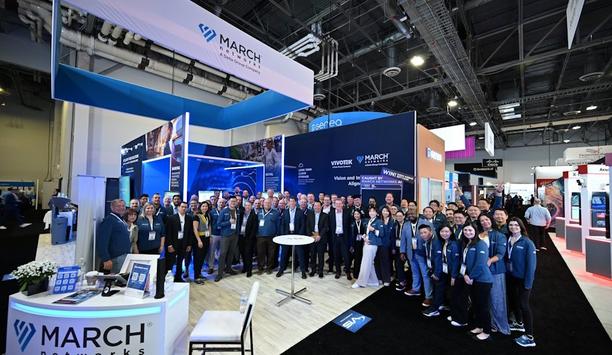
Combining VIVOTEK’s branded video security business with March Networks paves the way for the combined brands to meet customers’ increasing appetite for integrated solutions rather than individual components. The merger brings VIVOTEK's branded video security business together under one operating structure with March Networks’ enterprise-grade video surveillance, AI analytics, and cloud-managed security solutions. Customers now have access to a broader, more integrated portfolio spanning enterprise video management, advanced cameras, edge artificial intelligence (AI), cloud services, recording platforms, and business intelligence, says Net Payne, Chief Sales & Marketing Officer at March Networks and VIVOTEK. Distinct product strategies Given the combined companies, product development, sales, marketing, and customer support can move in step rather than in parallel. March Networks and VIVOTEK were already both part of the Delta Electronics family, but they previously operated as separate businesses with distinct product strategies, teams, and routes to market. March Networks and VIVOTEK announced the merger of their branded video security businesses last spring following Delta Electronics' acquisition of remaining VIVOTEK shares. “Aligning our complementary capabilities lets us innovate faster, simplify engagement, and respond more quickly to a market moving toward AI, cloud and intelligent video,” says Payne. This merger reflects a broader shift across the physical security industry, adds Payne. “Customers no longer see video purely as a tool for reviewing incidents after the fact,” he says. “They expect it to help identify risks earlier, simplify investigations, improve operations, and support better decisions across the organization.” Cloud video management Meeting customer expectations requires more than bolting AI features onto existing systems Meeting customer expectations requires more than bolting AI features onto existing systems. Rather, it requires cameras, edge intelligence, recording, software, cloud services, and business data working together as one coordinated platform. “By bringing March Networks and VIVOTEK together, we combine deep expertise across the full video technology stack while preserving the relationships, sector knowledge and customer focus both companies have built over many years,” says Payne. “Our goal is to make intelligent video more integrated, scalable, and practical for customers and partners worldwide.” Both entities bring strengths to the combined companies. March Networks brings experience in enterprise software, cloud video management and large-scale deployments; while VIVOTEK brings strength in imaging, camera technology and edge intelligence. Together they seek to ensure more choice when designing systems, a clearer path for future expansion, and technologies that work together more effectively without compromising the reliability, cybersecurity, and support customers expect from both companies. Advantages for channel partners Channel partners gain a broader portfolio to address a wider range of customer requirements, combining components as each deployment demands. Channel partners also benefit from expanded geographic reach, deeper technical expertise, and greater investment in training and enablement. “Importantly, this is designed to be a seamless transition,” says Payne. “Partners keep working with the teams and relationships they already know, while gaining access to new capabilities and certification opportunities. Over time, that alignment should make it easier to design, deploy and support complete solutions.” Because they are established and respected brands, March Networks and VIVOTEK branding will continue to be used. Rebranding is not a goal, and neither identity is being replaced by the other. Coordinated decision-making “The immediate priority is organizational alignment by making it easier for customers and partners to benefit from the combined portfolio,” says Payne. Product branding will continue to reflect the relevant portfolio and market context. As product roadmaps become more closely coordinated, customers can expect greater interoperability and a more cohesive experience, says Payne. Any future branding changes will be managed carefully and communicated clearly. Combining the businesses reduces duplication and enables coordinated decision-making across product strategy, engineering, sales, marketing, operations, and customer support. “Instead of developing capabilities independently, teams can share their expertise, align roadmaps, and direct investment to where it has the greatest customer impact,” says Payne. Combining specialized knowledge globally The combined organization operates across six continents and more than 75 countries The combined organization includes more than 300 research and development (R&D) engineers across four Centres of Excellence in Canada, Taiwan, Italy and Poland, thus bringing together a substantial base of specialist knowledge. The unified network also sharpens the ability to prioritise global opportunities, respond to regional needs and bring innovations to market faster. The combined organization operates across six continents and more than 75 countries, supported by more than 1,100 certified channel partners. That footprint provides greater capacity to support multinational customers while staying responsive to local market needs. Looking ahead, future growth will increasingly come from helping customers turn video into useful, actionable intelligence. “The market is moving beyond conventional surveillance toward solutions combining AI, cloud services, edge processing, video management and operational data — and our new structure brings these together as one connected solution rather than several isolated technologies,” says Payne. Broader technical expertise There will also be closer collaboration among specialists in imaging, hardware, software, analytics, and cloud, which is important given how much customer infrastructure, regulatory, and deployment requirements vary. The companies can support cloud, hybrid, and on-premise environments, giving organizations a practical path toward more intelligent video. More choice comes from bringing together complementary technologies across product groups. Greater scale is achieved through a larger engineering organization, broader technical expertise and more capacity to invest in innovation. Challenges for the industry at large Looking to the future for the industry at large, the greatest challenge will be managing the rapid growth of AI Looking to the future for the industry at large, the greatest challenge will be managing the rapid growth of AI responsibly, securely and at scale, says Payne. Video systems will generate more data and automate more decisions, but organizations must be able to trust how that intelligence is created, protected, and applied, he adds. “Cybersecurity, privacy, data sovereignty, system interoperability and AI accuracy are more important than ever,” says Payne. Addressing these elements requires expertise across the entire technology stack: from camera and edge processing to recording, cloud infrastructure, video management and analytics. “Together, March Networks and VIVOTEK can coordinate development across all these layers, giving customers flexible architectures that balance innovation with security, transparency and operational control,” says Payne.

The security landscape is undergoing a profound transformation, as evidenced by the innovations showcased at the ISC West Expo 2026. From dismantling of silos between physical and digital security to the ongoing transition to cloud and hybrid platforms, much of the discussion on the show floor was familiar, if somehow more urgent than ever. Clearly the industry is moving toward unified, cloud-native, and highly automated ecosystems. In a series of deep-dive meetings and demonstrations at the recent show, I got a first-hand glimpse of the future of the physical security marketplace. Spoiler alert: The future is now! HID Global: Tearing down the silos HID Global is addressing the long-requested convergence of physical and digital security. Recognizing that the industry has historically operated in silos, HID is now leading with a combined implementation team to leverage the power of both sides. HID is supporting the transition by combining its logical and physical security teams to help end users design secure, end-to-end journeys for their employees. By leveraging its massive existing footprint in physical access, HID is uniquely positioned to help organizations upgrade their cybersecurity posture without a total "rip and replace" of their hardware. HID is seeing a surge in demand for converged credentials that unite building access with digital identity. On the digital front, HID has implemented FIDO (Fast Identity Online) and passkeys to replace traditional passwords with more secure, biometric-backed authentication methods. Acre Security: Bridging the gap to the cloud Acre Security previewed a cloud-native video solution, reinforcing its cloud-first security strategyAcre Security is currently consolidating brands, bringing established names like Feenics and AccessIt under a single corporate umbrella. A primary theme for the company at ISC West is the migration of legacy systems to modern infrastructure. To facilitate the transition, they are launching "The Bridge," a technology designed to help on-premise customers transition to the cloud at a pace that suits their operational needs. The company is also expanding its portfolio into video. Attendees at the show received a preview of a new cloud-native video solution slated for release later this year, signaling Acre’s commitment to a holistic, cloud-first security suite. Acoem: Real-time acoustic threat detection With a 35-year foundation in vibration and acoustics—including military sniper detection—Acoem is providing gunshot detection through edge processing. Unlike systems that rely on the cloud and may suffer from latency, Acoem’s technology processes data at the sensor level for instant alerts. Their sensors are engineered for massive outdoor spaces, covering a 500-foot radius (roughly 11 football fields) and can detect high-powered rifle shots from up to half a mile away. The system provides critical intelligence by distinguishing between muzzle blasts and "mach noise" from bullet travel, delivering an audio file to the end-user that maps the location and direction of the threat. They use AI to filter out environmental false positives, such as skateboards hitting metal rails. Alarm.com: The all-in-one dealer ecosystem Beyond hardware, Alarm.com is leveraging AI to streamline the sales process Alarm.com is doubling down on "giving tools to dealers to help them be successful," with a focus on unified commercial solutions. A highlight at ISC West is their new fire communicator, which integrates fire monitoring into their single app, completing what they call the "fourth leg of the stool." The product allows fire systems to benefit from the same real-time customer engagement and push notifications that have long been available for intrusion and video. The key products, such as commercial-grade hardware, are now available for immediate purchase. Beyond hardware, Alarm.com is leveraging AI to streamline the sales process. Their new AI Proposal Builder uses customer meeting notes to automatically generate customized, value-driven sales proposals for dealers. Allegion: A global shift in credentialing Following the acquisition of ELATEC, Allegion is adopting a more global market approach and expanding its OEM business. The company is involved in the development of Aliro, the newly unveiled mobile credentialing standard. Allegion’s strategy is built on versatility: While Aliro serves the burgeoning mobile market, they also offer PKOC for plastic cards, allowing them to provide solutions regardless of the user's preferred credential type. The ELATEC acquisition has effectively filled previous gaps in their use-case portfolio, positioning them as a comprehensive provider for both physical and digital access needs. AtlasIED: Engineering for life safety Transitioning from audio to a fully automated threat detection company, AtlasIED showcased its new IPX line at ISC West. This modular platform uses a single PoE++ port to power various "plug-and-play" modules, allowing for easy system upgrades. Their gun detection technology achieves a 99% confidence rating by "stacking" AI models; it cross-references audio data with infrared signatures to detect muzzle flashes and air quality sensors for particulates. With systems already running in 80% of U.S. international airports, the company maintains 24/7 domestic engineering support to manage these "life-safety adjacent" environments. Axis Communications: Unifying connectivity Axis Communications is advancing network video with 4G/5G surveillance, reducing cabling needs Axis Communications continues to lead in network video, with a new focus on offering surveillance through 4G and 5G networks to eliminate the need for extensive cabling in long-range applications. Axis also introduced several specialized hardware pieces, including the P1486-LE global shutter camera for high-speed traffic monitoring and the Q2802-TE, which integrates thermal and visual monitoring into a single unit. To assist technicians, they launched a new installer app that uses Bluetooth for easier camera pairing and management directly from a mobile device. Axon: De-escalation through enterprise wearables Focusing on frontline safety, Axon is expanding from law enforcement into the enterprise sector with its retail and healthcare-focused body camera. Weighing only 0.25 lb, these cameras are designed to be less intimidating, using colorful designs and acting as a primary de-escalator for aggressive behavior. A clear front display signals when recording is active, striking a balance between safety and a non-intimidating appearance. These devices feature live-streaming and panic alarms that connect workers to a Global Security Operations Center (GSOC). To ensure the footage is legally viable, Axon maintains a rigorous audit trail that authenticates every action recorded. Genetec: The value of the unified platform Genetec is advocating for unified platforms that reduce the time between incident detection and resolution. They argue that AI is becoming a commodity and that the true value lies in unified platforms that reduce the time from incident to resolution. Their approach emphasises the "outcomes" customers need, such as allowing security teams to coalesce around an investigation quickly. Genetec remains a strong supporter of open systems for enterprise customers, ensuring they have the choice to integrate diverse technologies rather than being locked into a manufacturer’s “walled garden.” This flexibility is critical for high-end security environments that require tailored, responsive systems. Johnson Controls: Large-scale enterprise solutions Johnson Controls has made a significant push into the enterprise video market with C-Cure IQ, a standalone VMS designed for major hubs like airports and large campuses. Through a partnership with Scylla, they have integrated 11 advanced analytics—including facial recognition and weapons detection—directly into their cameras. They also showcased new multi-sensor panoramic cameras capable of "stitching" multiple images into a single 360-degree view. While innovating in video, Johnson Controls also confirmed modern upgrades to their intrusion line, including their legacy DSC Neo line. The new DSC PowerSeries Neo 5, a high-end residential and commercial platform, features an all-new user interface and built-in PowerG+. They have also begun shipping the IQ5 family lineup, which is powered by a Qualcomm DragonWing processor. ONVIF: Standardising the future of AI and cloud ONVIF continues to lead the charge in establishing common languages for the security industry. A major focus is their new "Cloud Profile," which enables cameras to connect directly to the cloud through a standardized protocol. They are also expanding into audio standards to ensure IP-based speakers can seamlessly connect to Video Management Systems (VMS). To combat the rise of sophisticated digital manipulation, ONVIF is developing "video signing" standards. ONVIF is actively seeking more diverse enterprise participation to help shape these emerging AI standardsThis feature protects the integrity of video for evidentiary purposes by embedding a digital signature and timestamp directly into the footage at the camera level. Additionally, the organization has formed an AI Working Group to develop common communication methods for "AI agents" within physical security systems. ONVIF is actively seeking more diverse enterprise participation to help shape these emerging AI standards. Roberto Licari is the new ONVIF Ambassador, seeking to attract new companies (even outside the security sector) to ONVIF as they look to expand their offerings. SwiftConnect: Bridging digital and physical identity SwiftConnect is redefining access control by shifting the focus from physical cards to digital identity. As a cloud-based "connected access network," the platform bridges the gap between IT identity providers (like Okta or Azure AD) and legacy physical access control systems. At the show's Security Experience Center demonstrations, SwiftConnect showcased its ability to integrate mobile credentials within Apple and Google Wallets across multiple technology platforms. By aligning physical security with Zero Trust principles, they ensure that access is governed by the same rigorous standards as digital networks. Their software-centric approach allows for a more seamless employee experience while simplifying the management of complex, multi-site building security. This emphasises a future where the mobile device becomes the primary tool for navigating the physical workspace. Wasabi Technologies: Redefining cloud storage economics With cloud technology becoming a baseline requirement at every booth, Wasabi Technologies highlighted its "hot cloud storage" as a cost-effective alternative to major hyperscalers. Their model claims to be 80% less expensive than competitors, notably removing hidden fees. Wasabi is increasingly bundled at the "back end" of security solutions through partnerships with integrators and end users. A key feature for law enforcement and high-security sectors is their "Object Lock" capability, which ensures that video evidence remains untampered with and immutable during defined retention periods. By providing high-performance storage without the unpredictable costs typically associated with the cloud, Wasabi is positioning itself as the foundational layer for data-heavy video surveillance applications that require long-term, secure retention. Wasabi is positioning itself as the foundational layer for data-heavy video surveillance applications ZKTeco USA: Versatile and integrated access ZKTeco USA showcased a range of integrated solutions, including turnstiles, visitor management, and access control. Their Atlas access control series offers versatility, supporting everything from traditional readers and keypads to QR codes and fingerprint scanning, with the flexibility to operate on-premise or in the cloud. For tight environments, they introduced the Mars 100 turnstile, which features a compact 2x3-foot footprint. They also highlighted the Omni series, an all-in-one standalone reader-controller that manages access, intercom, and visitor functions in a single device. Innovation in portability was evident in their new walk-through metal detectors, which consist of two poles with an 8-hour battery life—ideal for schools and temporary events. While they offer their own Armatura readers, ZKTeco emphasized that their solutions can integrate with other industry leaders to fit diverse customer needs.
Artificial Intelligence (AI) had a major presence at the ISC West 2026 show in Las Vegas. Almost every booth offered some variation on AI and how intelligence is transforming the physical security industry. Several industry leaders led the way, showcasing how they are tackling complex security challenges with smarter, more efficient solutions. Obviously, the security industry will never be the same. Milestone Systems: Responsible AI and open platforms Milestone has declared 2026 the "year of delivery” on previously announced developments and enhancements. A standout feature is their new natural language AI search, which is being integrated across XProtect, Arcules, and Briefcam platforms to simplify how users interact with vast amounts of video data. A core pillar of their strategy is responsible AI development, which prioritises using licensed data over "scraped" data. They have introduced new anonymisation tools that protect privacy by replacing faces with AI-generated characteristics like hair color while keeping the person unrecognisable. Furthermore, Milestone is moving workloads to Linux to reduce costs, transitioning toward an app marketplace, and has partnered with NVIDIA for the "Hafnia" project to ensure high-quality data to train AI models. Ambarella: Powering the edge with AI chips With their presence at ISC West in a meeting room near the trade show floor, Ambarella is the "engine" behind many high-performance intelligent video products, specializing in low-power AI chips like the N1 and CV7 families. Their technology is moving beyond cameras, where they provide systems-on-chips [SOCs] to many manufacturers. They have expanded into "AI boxes" that can process 64+ video channels simultaneously. A standout feature is the Natural Language technology, which allows users to search for specific objects or abstract scenes using simple prompts. To address modern security concerns, Ambarella has implemented "agentic" programming for a no-code development of automated workflows and media signing to combat AI-generated deepfakes by verifying video integrity through metadata. Motorola Solutions: Simplifying intelligence Motorola Solutions shows physical security evolving into a real-time enterprise intelligence layerMotorola Solutions is prioritising user accessibility by integrating natural language processing into its system configuration. Motorola's portfolio demonstrates how physical security technology is evolving into a real-time operational intelligence layer across the enterprise. Instead of requiring custom coding, operators can now use simple commands—like asking the system to "show me when someone fell down"—to set up advanced analytics and search parameters. The company is also deploying AI agents designed to aggregate data and automatically flag safety or compliance risks, such as perimeter breaches or blocked fire exits. To ensure maximum utility of the hardware, Motorola Solutions’ system can ingest massive, complex physical manuals and automatically generate monitoring rules based on those standard operating procedures. Furthermore, Motorola is focusing on interoperability, using industry-standard interfaces to ingest data from various hardware brands and networks. This approach aims to provide operators with clear, recommended next steps during critical events, streamlining the decision-making process in high-pressure environments. i-PRO: Putting generative AI at the edge i-PRO is bringing generative AI directly to the edge with a new fisheye camera, which processes complex analytics locally rather than relying solely on the cloud. These cameras, on display at ISC West, have moved beyond simple attribute-based tracking to identify complex behaviors like aggression, fighting, and slip-and-fall incidents. By running on the latest Ambarella chips, i-PRO cameras can use generative AI to improve image quality and analyze scenes in real-time without external processing. This focus on edge-based intelligence ensures high-performance analytics are available even in environments where constant cloud connectivity might be a challenge. Brivo: The rise of agentic AI Eagle Eye Video Assistant (EEVA) acts as a natural language AI agent that can monitor for specific threats Brivo and Eagle Eye Networks have officially unified under the Brivo name, focusing on streamlining the experience for large integrators. They are pioneers in agentic AI, introducing features that allow users to talk to their mobile apps to initiate lockdowns or add users. Their Eagle Eye Video Assistant (EEVA) acts as a natural language AI agent that can monitor for specific threats, such as a brandished weapon or a specific vehicle, and automatically trigger access control responses. By treating access and video as a unified system, Brivo enables users to connect specific video skills—like detecting a red car or a brandished weapon—to automated access control actions. They are also using AI to achieve "zero-cost integration," linking disparate cloud systems using AI-generated instructions. Everon: Emphasis on video monitoring Everon is making a massive investment in active video monitoring, using AI-driven systems to deter crime even before it happens. “The market is ripe for it, and customers are demanding it,” says David Charney, Everon’s Sr. Vice President, Video Command Center. Employing virtual guards who can use voice commands, lights, and horns to "shoo away" unauthorized individuals. The company has implemented senior-level leadership that has facilitated more than 5,000 video-based apprehensions. Everon, specializing in integrated systems for multi-site businesses, uses a rigorous selection process to choose AI providers that can accurately filter alerts for specific applications, such as identifying when a fire door is blocked. As a "trusted advisor" to their 300,000 customers, the company focuses on delivering professional-level results that move beyond basic recording to proactive threat mitigation. Hanwha: New hybrid VMS combines cloud and on-prem Hanwha Vision highlighted the official public launch of Blaze, a hybrid video management system (VMS). The platform uses a hybrid architecture to manage on-premise and cloud-connected devices across multiple sites without complex port forwarding. Blaze features native AI capabilities, including semantic search that allows operators to find specific incidents using natural language queries, such as "person with a safety jacket." The AI security platform lets teams search surveillance footage the way they search Google. AI similarity detection allows operators to quickly trace a person’s movement and investigate incidents faster (useful in active shooter behavior, medical emergencies, or crowd panic scenarios, and more). The system also provides a "histogram" view of traffic patterns to help security professionals quickly identify anomalies in historical footage. OpenEye: Operational intelligence and shift to OpEx OpenEye unveiled AI-powered features such as visual chat and scene analysisOpenEye is redefining video surveillance by moving intelligence from the camera level to the cloud, significantly reducing the need for on-site server management. At ISC West, OpenEye introduced new AI-driven tools like visual chat and scene analysis. Beyond security, these tools provide valuable operational alerts, such as identifying overflowing dumpsters, dirty tables in restaurants, or vehicles blocking dock doors. The system also utilizes natural language for search, allowing users to find specific attributes like "people wearing backpacks" within designated timeframes. OpenEye also highlighted an industry-wide shift toward operational expenditures (OpEx) billing models, as users increasingly prefer predictable monthly or yearly payments over large upfront capital expenditures (CapEx). This model aligns with their channel-based operations, meeting customers where they currently operate without the burden of high fees. IQSIGHT: New name, same mission for Bosch video Formerly Bosch Video, the newly named IQSIGHT seeks to maintain the “Bosch pedigree” under the new name. It’s the same engineering, manufacturing, etc. IQSIGHT also pledges to be "easier to do business with" by improving user interfaces and end-to-end user experiences. Despite the transition, the company has increased their pace of innovation and reinforced the open systems philosophy with enhanced integrations with Milestone, Genetec, and others. The major product release at the show is IVA Pro Context, which uses generative AI to provide human-level scene understanding. Through a partnership with Laelaps AI, a robotics startup, IQSIGHT is exploring autonomous dispatch and response. When a camera identifies a scene, it triggers a robot to provide a tailored response. Commercialisation is expected in 12 to 18 months. Verkada: How their system can solve a crime But how does AI operate in the real world? Verkada had a “themed” exhibit demonstrating how their system could solve a hypothetical theft at the Louvre museum in Paris. The exhibit took attendees through and showed how Verkada technologies (e.g., license plate recognition and search capabilities) could provide fast results to solve the crime. AI-powered tools, like their newest unified timeline, demonstrate value in the real world of investigations.
Case studies

Genetec Inc., the pioneer in enterprise physical security software, announces that the City of Carmel, Indiana, has deployed Genetec™ Security Center to unify security and operational systems across more than 40 municipal sites, helping city departments coordinate resources, improve emergency response, and manage day-to-day operations more efficiently. Carmel’s public safety teams use Security Center to monitor video, alarms, emergency calls, response vehicles, and IoT sensors through an interactive city map. First responders can access the same information from mobile devices, helping teams coordinate resources and respond more efficiently when incidents occur. Direct first responders That coordination proved especially valuable when a rare tornado struck Carmel. Using Security Center, city teams quickly mapped the storm’s path and assessed its impact across the community. They identified the hardest-hit areas and used that information to direct first responders, utility crews, and public works resources where they were needed most. “By bringing all our departments onto one city-wide platform, we’ve reduced complexity. The result is better decisions for our community, higher response efficiency, and more cost-effective operations that benefit our residents,” said Morgan Rinehart, Network Architect at the City of Carmel. Making informed decisions Beyond public safety, Carmel is using Security Center to support services across the community. With information from multiple systems available through a unified platform, departments can better understand conditions across the city and make informed decisions about how to deploy resources. For example: Engineering and street teams can monitor road conditions, coordinate snow removal, and manage traffic during construction detours without sending personnel into the field to assess conditions Parks teams can monitor crowd levels, facility usage, and safety across the city’s waterpark and trails Public events teams can monitor pedestrian traffic in community plazas and during gatherings The unified platform also gives Carmel’s IT team a centralized view of system health. Teams can monitor device status, identify potential vulnerabilities, review cybersecurity information, and manage firmware and software updates from one platform, helping the city manage its growing number of connected devices. Providing additional flexibility Carmel is also taking a hybrid approach to its security infrastructure, with the cloud-based Security Center SaaS platform providing additional flexibility when temporary projects or large events require expanded video coverage. The city can deploy mobile cameras and connect with systems operated by local schools, sports organizations, and critical infrastructure partners. Looking ahead, Carmel plans to continue expanding the platform as its smart city initiatives evolve. This includes connecting more systems and community partners. By building on an open platform, the city can add new capabilities as its needs change while maintaining a consistent approach to security and operations.

Milestone Systems, a provider of open platform video management software (VMS), is helping Columbia Borough, Pennsylvania, strengthen public safety through a community-wide video security system built on Milestone XProtect® VMS. For more than 16 years, Columbia has worked with Lancaster-area security integrator App-Techs to develop and expand a distributed wireless video network serving its downtown, public buildings, parks, and other borough facilities. Today, the system supports roughly 83 camera feeds, including 4K multi-lens and PTZ cameras, primarily from iPro. Traditional wired infrastructure Located along the Susquehanna River in Lancaster County, Columbia is a historic borough of roughly 10,000 residents. As the community worked to revitalise its downtown and attract new businesses, borough leaders wanted safety and security to support that broader effort. Traditional wired infrastructure was impractical across Columbia’s geographically varied environment, requiring App-Techs to engineer a distributed wireless architecture. XProtect provides the video management foundation, with dedicated servers located in the municipal building and a remote park office. Officers can also access live camera feeds from laptops in patrol vehicles, while mobile access extends video to personnel during community events. Immediately dispatched officers Columbia’s dispatchers are the primary day-to-day operators of XProtect, monitoring cameras, and supporting officers in the field. In one incident, a dispatcher spotted someone breaking into a vending machine outside a laundromat and immediately dispatched officers. “Our staff member observed someone breaking into a vending machine just outside that building and was able to dispatch officers to the scene,” said Jack Brommer, Columbia Borough Police Department Chief. “Officers apprehended the individual, and it turns out this was a serial thief who had been breaking into vending machines across the tri-county area. So that single arrest helped resolve a number of thefts across multiple counties. That’s just the kind of impact this technology can have on a community.” Large community events The system also supports holding cells and interview rooms inside the police station, where microphones are integrated with cameras, as well as large community events. During Columbia’s annual “Thunder on the River” antique car show, Emergency Management personnel used the community camera network to support proactive monitoring and rapid response across the event. Over time, Columbia’s video system has supported faster incident response, stronger evidence for prosecution and greater situational awareness for dispatchers and police officers. Borough leaders also use signage in parks and public areas to make camera coverage visible as a deterrent. Gunshot-detection technologies “The data that I can point to is that we are trending downward, probably for the last five, six years, as far as call volume and crime trends. Those numbers have been very positive,” added Brommer. Looking ahead, Columbia plans to expand its use of video analytics, including object-search capabilities that can help investigators filter video by vehicle type, color, and other attributes. The borough is also exploring emerging gunshot-detection technologies to further improve situational awareness.

Genetec Inc, the pioneer in enterprise physical security software, announces Cairo Bank has successfully deployed the Genetec Security Center platform transforming how the financial institution monitors, manages, and optimizes operations across one of Egypt’s largest branch networks. Cairo Bank is one of the largest and oldest financial institutions in Egypt, serving over three million customers through more than 230 branches. The security advancement was driven by new regulatory requirements from the Central Bank of Egypt, alongside Cairo Bank’s broader digital transformation agenda aligned with Egypt Vision 2030. Beyond compliance, the bank needed a scalable operational intelligence foundation to strengthen oversight, improve customer experience, and support long-term expansion and financial inclusion. Necessary operational foundation The implementation unifies video surveillance, access control, and intrusion detection into a single platform, allowing operators to centrally manage more than 6,000 cameras across 122 active branches, with deployment across the full network nearing completion. The platform provides the necessary operational foundation for a centralized Command and Control Room, where operators can monitor branch activity, coordinate response, and support decision-making across the institution. The system also separates operational responsibilities. IT and security teams can monitor device health and system status without accessing sensitive video feeds, supporting strict data governance and privacy requirements. “Unification and scalability were just the starting points. From day one, I knew we wanted functionalities that add value to all aspects of our operations. Security Center delivered everything we wanted in one easy-to-use solution,” said Major General Hesham Tawfiq, Head of Security at Cairo Bank. Enhancing operational consistency Beyond traditional surveillance, the platform introduces automation and analytics capabilities that support both security and operational decision-making across its branch network. These capabilities are now embedded across the entire branch network, helping Cairo Bank strengthen compliance reporting, improve risk detection, and enhance operational consistency at scale. The platform also provides insights into branch activity patterns, customer flow, and operational trends, extending the value of security data beyond incident monitoring while keeping governance and operational control central to the deployment. Existing infrastructure investments Security Center’s open architecture allowed Cairo Bank to integrate best-of-breed hardware while preserving existing infrastructure investments. It also enables the bank to add technologies and expand the deployment over time without standardising on a single hardware provider. “We are honored to work with a forward-thinking institution like Cairo Bank that continuously seeks new ways to leverage technology,” said Firas Jadalla, Regional Director, Middle East & Africa at Genetec Inc. “By unifying systems, the bank is building a consistent operational foundation for its branch network, allowing it to respond to changing regulatory and operational requirements while retaining control over how its environment evolves.” Providing technical support Integrated Technics, the systems integrator responsible for delivering the project, led the proof of concept, system design and implementation. The company continues to provide technical support and system optimization as the deployment expands. “The Command and Control Room gives Cairo Bank a real-time operational hub built on Security Center, bringing video surveillance, access control and intrusion detection into a single interface. This enables operators to monitor activity across the branch network, coordinate responses and make faster, more informed decisions,” said Walid Alagamy, CEO of Integrated Technics.

Milestone Systems, a provider of open platform video management software (VMS), is helping Columbia Borough, Pennsylvania, strengthen public safety through a community-wide video security system built on Milestone XProtect® VMS. For more than 16 years, Columbia has worked with Lancaster-area security integrator App-Techs to develop and expand a distributed wireless video network serving its downtown, public buildings, parks, and other borough facilities. Today, the system supports roughly 83 camera feeds, including 4K multi-lens and PTZ cameras, primarily from iPro. Distributed wireless architecture Located along the Susquehanna River in Lancaster County, Columbia is a historic borough of roughly 10,000 residents. As the community worked to revitalise its downtown and attract new businesses, borough leaders wanted safety and security to support that broader effort. Traditional wired infrastructure was impractical across Columbia’s geographically varied environment, requiring App-Techs to engineer a distributed wireless architecture. XProtect provides the video management foundation, with dedicated servers located in the municipal building and a remote park office. Officers can also access live camera feeds from laptops in patrol vehicles, while mobile access extends video to personnel during community events. Immediately dispatched officers Columbia’s dispatchers are the primary day-to-day operators of XProtect, monitoring cameras, and supporting officers in the field. In one incident, a dispatcher spotted someone breaking into a vending machine outside a laundromat and immediately dispatched officers. “Our staff member observed someone breaking into a vending machine just outside that building and was able to dispatch officers to the scene,” said Jack Brommer, Columbia Borough Police Department Chief. “Officers apprehended the individual, and it turns out this was a serial thief who had been breaking into vending machines across the tri-county area. So that single arrest helped resolve a number of thefts across multiple counties. That’s just the kind of impact this technology can have on a community.” The system also supports holding cells and interview rooms inside the police station, where microphones are integrated with cameras, as well as large community events. During Columbia’s annual “Thunder on the River” antique car show, Emergency Management personnel used the community camera network to support proactive monitoring and rapid response across the event. Gunshot-detection technologies Over time, Columbia’s video system has supported faster incident response, stronger evidence for prosecution and greater situational awareness for dispatchers and police officers. Borough leaders also use signage in parks and public areas to make camera coverage visible as a deterrent. “The data that I can point to is that we are trending downward, probably for the last five, six years, as far as call volume and crime trends. Those numbers have been very positive,” added Brommer. Looking ahead, Columbia plans to expand its use of video analytics, including object-search capabilities that can help investigators filter video by vehicle type, colour, and other attributes. The borough is also exploring emerging gunshot-detection technologies to further improve situational awareness.

Genetec Inc., the global pioneer in enterprise physical security software, announces that TEPCO Power Grid has deployed Genetec™ Security Center as the foundation for a next-generation physical security platform that supports its broader digital transformation strategy and scales with its growing operational requirements. The platform will centralize management of more than 30,000 cameras and support future innovation across the TEPCO Power Grid network of 1,600 substations and service centers. TEPCO Power Grid manages and operates the transmission and distribution network that delivers electricity from power plants to homes and businesses across the Tokyo metropolitan area. The company is using advanced technologies to improve operational efficiency, strengthen disaster response, and modernise critical infrastructure. Modernising critical infrastructure As its camera network expanded over the years, TEPCO Power Grid needed a platform capable of supporting large-scale camera management, integrating with image analysis technologies, and expanding access to video across a broader range of devices. After evaluating several options, the company selected Genetec Security Center for its functionality, scalability, proven track record, and customization capabilities through its software development kit. “The response from users has been very positive, and we're already seeing new ideas emerge for how the system can be used across the organization. Beyond supporting our current operations, we see an opportunity to leverage accumulated video data alongside AI technologies to support future operational and technology initiatives, and we look forward to continuing our collaboration with Genetec,” said Tomoyuki Soma, Group Manager, System Development General Affairs Group, System Development Center, DX Promotion Department, TEPCO Power Grid. Improving operational efficiency TEPCO Power Grid selected Security Center for its scalability and open architecture. The platforms broad camera support allowed the company to bring together camera models from multiple manufacturers into a unified environment, helping preserve existing hardware investments while giving teams room to evolve. The Security Center software development kit also enables the company to customize the system and integrate additional technologies as requirements evolve. Security Center gives TEPCO Power Grid a unified view of its camera network while allowing teams across the region to support sites in their respective areas. Activities such as adding cameras and updating maps, which were previously managed centrally, can now be performed by individual workplaces, helping improve operational efficiency. Digital transformation strategy Authorized personnel can also use the Security Center web app to view video from computers and mobile devices. During an incident or emergency, managers and field teams can remotely assess the situation and coordinate their response. The platform also helps teams identify camera malfunctions across the network, making it easier to locate and address issues TEPCO’s 1,600 geographically dispersed sites. In addition to video management, the company sees potential opportunities to leverage accumulated video data and integrate emerging technologies as operational requirements evolve. The company is also evaluating additional capabilities available within the Security Center platform as part of its longer-term digital transformation strategy.

The Honourable Society of Lincoln’s Inn is one of the four Inns of Court and operates as an active and thriving society of lawyers, sprawling across 11 acres in central London and dating as far back as 1422. The title of “Lincoln’s Inn” refers both to the Society and the location, which houses the Society’s own facilities, numerous barristers’ chambers and several solicitors’ offices. The Inns of Court originally provided accommodation for law students who learned their craft by attending court. Different levels of security Today, the Inns exist to aid students in pursuing the legal profession and serve as landlord, custodian of historic buildings, banqueting and events venue, and tourist attraction. To fulfill these many functions, Lincoln’s Inn required security that would meet their own high standards while protecting buildings that had been in continuous operation for centuries. As the Inn not only provides services to law students, but also operates as an attraction and a hosting venue, many different levels of security need to be in place for a variety of users—full-time employees, temporary contractors, event staff, students, and others. For this reason, it was essential that Lincoln’s Inn have a comprehensive system to track and monitor their many keys for the extensive venue. Improving key control For some time, keys at Lincoln’s Inn were managed manually through an analog system, with staff retrieving keys from an open cabinet and recording key usage with pen and paper. However, because at times manual recordkeeping can be less than diligent, this allowed for confusion as to who had what keys when, and made it possible for keys to be stashed away or used by unauthorized persons. With the variety and quantity of people moving throughout Lincoln’s Inn on any given day, a more secure solution was needed. To update and improve key control, Chief Porter Nicholas Bracey turned to the KeyWatcher Touch key control system by Morse Watchmans. Key storage and management “KeyWatcher Touch provides us with a fully secure means of key storage and management. We considered a number of products on the market and found the Morse Watchmans solution to be the most flexible and easy to use system,” said Mr. Bracey. “The high quality and ease of scalability were two of the top features we required, and the KeyWatcher Touch was a perfect fit for our key control needs.” Lincoln’s Inn installed two KeyWatcher Touch units configured for a total of 192 keys or keyrings in January 2016, and the system has been in daily use since the installation. It utilizes the Inn’s IT network and is fully integrated with the PCs in the security office and the office of the Chief Porter in order to provide maximum flexibility and ease of use. Providing maximum flexibility Tracking keys as they were removed and returned was a top concern, so the ability of the KeyWatcher to record who has removed what key and when was exceptionally important. “The keys are always secure, rather than being openly accessible to staff. There is no longer paperwork to be managed for logging, it is all taken care of with the KeyWatcher software,” continued Mr. Bracey. “Audits and reports are fast and accurate, and it has led to our staff becoming more responsible overall.” KeyWatcher Touch has provided Lincoln’s Inn with the functionality and security it requires to easily manage its 192 keys, while also providing an easily accessible audit trail. In addition, the system has proven hardy and resilient in daily use over two years. “We have had continuity with Morse Watchmans since day one,” finished Mr. Bracey. “Demonstrations of function, installation, and training were all handled almost entirely by the same representative, in addition to subsequent orders. The continuously exceptional service has ensured that we were getting exactly the product that would best serve Lincoln’s Inn and provide us with the security we need.” KeyWatcher Touch Features: Email and SMS Notifications Scheduled Reports via Email or SMS Centralized User Database Scalable, Modular Design
Round table discussion

The most common wearable device deployed by security professionals is the body-worn camera. Traditionally used by law enforcement professionals, these devices are finding more and more uses in the corporate security world, and even impacting issues such as customer service. However, the term “wearables” also encompasses a range of other devices, including many worn by consumers. We asked this week’s Expert Panel Roundtable: How are wearable technologies impacting the security market?

Every day, the physical security industry succeeds in applying technologies that make the world a safer place. Manufacturers, integrators, and end users are eager to share their success stories, and their successes can inspire others to implement the same technology solutions. But, occasionally, technology does not live up to expectations and, in fact, fails to perform as promised. We asked this week’s Expert Panel Roundtable: How has the physical security industry failed to meet customer needs?

For many years, security systems produced their share of "data exhaust." Every access control action and each video image became a data point to be stored in perpetuity, with no practical way to use the data. More recently, systems have been developed to enable organizations to analyze data from sensors and other connected devices to gain valuable insights into how their systems are being used, to identify potential vulnerabilities; and even to provide insights into broader enterprise operations. We asked this week’s Expert Panel Roundtable: How are data analytics changing the course of the security marketplace?
Products
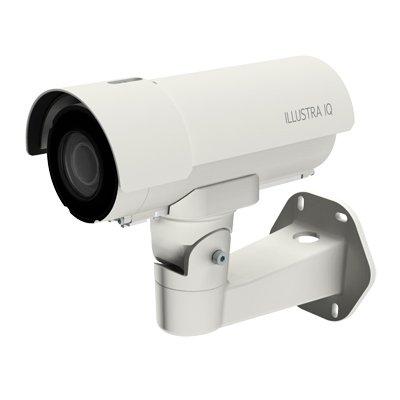
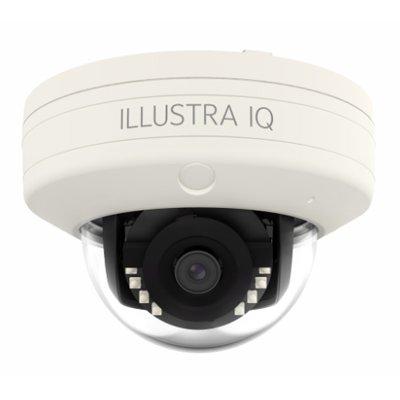
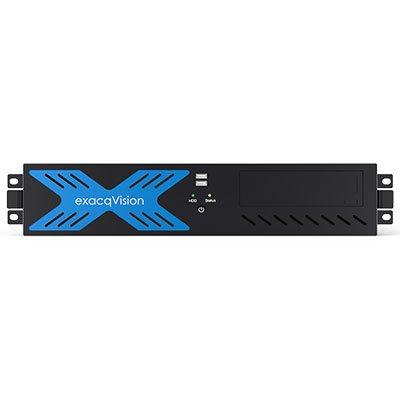


White papers

Combining Security And Networking Technologies For A Unified Solution
Download
Video Technology: Making Cities Safer & Improving Lives
Download
Integrated Access Control: Reap The Benefits Of Connected Security
Download
Securing Unmanned Infrastructure at the Network Edge
Download
Connected Video Technology for Safe Cities
Download
10 Top Insights In Access, Cloud And More
Download
Protecting Dormitory Residents and Assets
Download
11 Reasons Video Surveillance Is Moving To The Cloud
Download
How To Migrate To An IP-based Access Control System
Download
The Inevitability of The Cloud
Download
Making Sense of Today’s Security Camera Options
Download
Smart Security Cameras: Excellence in Retail
Download
Access Control & Intelligent Vehicle Screening
Download
How To Get Buy-In From IT Departments On IP Video Installations
Download
Hikvision DarkFighter Technology For High-quality Images At Night
DownloadVideos


Network cameras: Manufacturers & Suppliers
- Hikvision Network cameras
- Dahua Technology Network cameras
- exacqVision Network cameras
- Axis Communications Network cameras
- Honeywell Security Network cameras
- Bosch Network cameras
- Hanwha Vision Network cameras
- VIVOTEK Network cameras
- LILIN Network cameras
- AV Costar Network cameras
- IDIS Network cameras
- Messoa Network cameras
- Panasonic Network cameras
- Milesight Network cameras
- Vicon Network cameras
- eneo Network cameras
- i-PRO Network cameras
- Sony Network cameras
- American Dynamics Network cameras
- Uniview (UNV) Network cameras