Round table discussions

Passwords originated in ancient times, used by Roman military forces around the first century BC. Since then, passwords have evolved from physical words to the computer access control tools used today. Passwords are easy to implement, widely supported, and familiar to users. However, they are easily forgotten, stolen through phishing, prone to reuse, and vulnerable to credential-harvesting or brute-force attacks. We asked our Expert Panel: What is the role of passwords in physical security?

Critical national infrastructure encompasses sectors such as energy, utilities, healthcare, and data centers – environments that underpin economic stability and public safety. With so much at stake, the importance of effective security systems is that much higher. We asked our Expert Panel Roundtable: What are the unique aspects of the critical infrastructure market, and how should the security industry adapt?

Biometrics today provide better security and frictionless user experiences. Biometric identifiers like fingerprints, facial recognition, and iris scans are unique and difficult to forge. They eliminate the vulnerabilities of traditional authentication and streamline secure access control. Identity verification reliably protects sensitive digital information and physical entry. We asked our Expert Panel Roundtable: How is the role of biometrics evolving in physical access control?

Casinos are tasked with monitoring vast gaming floors, cashier cages, and access points. The market for casino security and surveillance demands software and hardware that provide high-definition, multi-angle visual coverage to ensure the integrity of the games and to protect players, staff, and the public. Like other vertical markets for physical security technology, the casino market is undergoing change and facing challenges. We asked our Expert Panel Roundtable: How are new technologies...

Like other disciplines in the world of corporate security, executive protection is evolving from reactive to proactive. Unlike reactive bodyguards, modern executive protection professionals use a proactive approach focused on risk mitigation, advance planning, and threat intelligence to prevent incidents before they happen. What is the role of technology? We asked our Expert Panel Roundtable: How can physical security technology promote better executive protection?
If AI is the dominant buzzword in the physical security industry, it is the second letter (I for intelligence) that is having the biggest impact. Simply put, intelligence transforms computer systems, including those used for physical security, from rigid, rule-following calculators into adaptable, problem-solving partners to human operators. We asked our Expert Panel Roundtable: What is the changing role of intelligence in physical security?

Adequate video surveillance coverage depends entirely on a facility's layout, square footage, and security goals. Historically, better coverage required more cameras, but technology innovations are changing those expectations and undermining previously held rules of thumb. We asked our Expert Panel Roundtable: Do today's video systems generally require more cameras or fewer cameras, and why?

At mid-year 2026, the broader economy tells a story of resilience under pressure. Conflict in the Middle East has triggered a shock to the energy supply, driving oil prices up and reigniting global inflation. However, a total downturn has been averted. Exceptional, historic levels of business investment and data center construction are providing a firm floor for growth, offsetting cooler consumer spending and keeping labor markets fundamentally stable. But how are changing economics impacting th...

In the simplest terms, technology modernization accelerates when older systems become too expensive to maintain or fail to support modern standards. Market competition pushes businesses to update their technologies to meet rising customer demands. Additionally, the rapid shift toward cloud-based infrastructures and artificial intelligence creates a fear of missing out, forcing companies to adapt or risk irrelevance. Focusing on the physical security market, we asked our Expert Panel Roundtable:...

Traditional security models protected a perimeter like a castle moat, assuming anyone inside was safe. Zero trust removes that implicit trust entirely, recognizing that threats can exist both outside and inside a facility. Zero trust is a routine and accepted concept in cybersecurity. Given the importance of information technology and the increasing convergence of physical and logical security, the tenet is becoming a dominant principle in physical security, too. We asked our Expert Panel Roundt...

Artificial intelligence (AI) transforms physical security from a passive, reactive function into an autonomous, proactive one. Rather than just alerting human guards after an event, new systems driven by intelligent agents analyze, decide, and act in real time—handling routine deterrence, investigating anomalies, and reducing alarm fatigue. We asked our Expert Panel Roundtable: What is agentive (or agentic) AI and how is it changing physical security?

In the world of cybersecurity, ethical hacking proactively identifies security vulnerabilities before malicious actors (i.e., unethical hackers) can exploit them. By simulating real-world attacks, organizations can strengthen defences, protect sensitive data, and maintain public trust. In the physical security world, ethical hacking can transform cybersecurity of security systems from a reactive struggle into a strategic safeguard. We asked our Expert Panel Roundtable: What is the role of ethica...
False alarms are the security industry's oldest and most persistent challenge. Industry estimates suggest that as many as 95% to 98% of security system activations are non-emergencies. The high rate stems from a combination of human behavior, environmental triggers, and technical limitations. However, newer technologies are finally addressing the challenge of false alarms. We asked our Expert Panel Roundtable: What are the new solutions to security's oldest challenge, reducing false alarms?

Modernising a legacy physical security system requires a transition from isolated, hardware-dependent silos to an integrated, data-driven ecosystem. This transition involves shifting toward open architecture and encrypted communication to ensure long-term scalability and resilience. Other elements to facilitate upgrading a legacy system include leveraging cloud and hybrid topologies and ultimately moving toward more predictive analytics. Our Expert Panelists offer plenty of ideas for making the...

ISC West (International Security Conference & Exposition), March 25–27, 2026, at The Venetian Expo in Las Vegas, is widely regarded as the most important event in the security industry. The yearly exhibition serves as the primary launchpad for new technology and as the central meeting point for global security professionals. We asked our Expert Panel Roundtable: What will be the big topics of discussion at ISC West 2026?

Historically, physical security systems have protected retail companies’ assets, people, and profits. Security prevents theft (shrinkage), while maintaining order and ensuring a safe environment for customers and staff. Today’s retail business is changing by leaps and bounds, driven in large part by technology advances. Newer physical security systems are finding new ways to deter crime and provide operational data, in the process preserving brand reputation and ensuring the business...

Next-generation (Next-Gen) technologies are products, services, or infrastructures that represent a significant leap forward rather than a small, incremental update. In the physical security industry, NextGen products are those that enable disruptive change, breakthrough performance, and a fundamental change that renders previous products obsolete. We asked our Expert Panel Roundtable: What is the next generation of physical security solutions, and how will they change the industry?

When working in the technology marketplace, it’s always good to expect the unexpected. Increasingly, readiness to anticipate and embrace uncertainty is the baseline for survival in the world of technology. If we in the physical security industry know anything, it is that technology is in a state of perpetual disruption. Therefore, looking ahead to the next 12 months, surprises are inevitable. We turn to our Expert Panel Roundtable for guidance, asking our panelists: What will be the bigges...

Physical security innovation is accelerating due to the convergence of AI-driven automation and IoT connectivity. The trend makes you wonder: How far will physical security technologies evolve in the next decade? Already, modern systems are shifting from reactive recording to proactive prevention via real-time analytics. Additionally, the need for hybrid cloud scalability and integration with IT infrastructure is driving rapid hardware-to-software modernisation. We asked our Expert Panel Roundta...
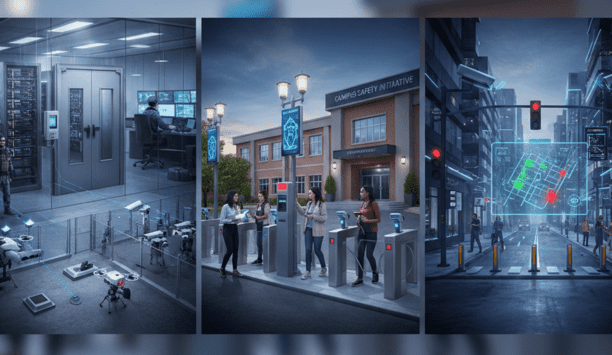
To serve various vertical markets and industries effectively, security professionals must recognize that each sector has unique assets, risks, compliance requirements, and operational needs. Instead of offering a one-size-fits-all solution, security system providers must tailor their products, services, and integration strategies to address the distinct requirements of vertical markets. We asked our Expert Panel Roundtable: Which vertical markets have the greatest growth potential for physical s...
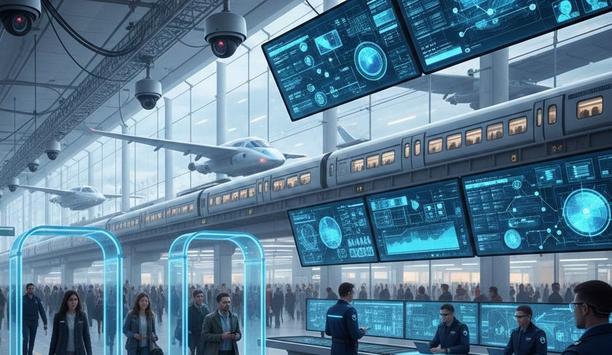
Transportation systems need robust physical security to protect human life, to ensure economic stability, and to maintain national security. Because transportation involves moving large numbers of people and critical goods across vast, often interconnected infrastructure, it presents a highly attractive target for various threats. More threats equate to a greater need for security. We asked our Expert Panel Roundtable: What are the emerging applications of physical security in the transportation...
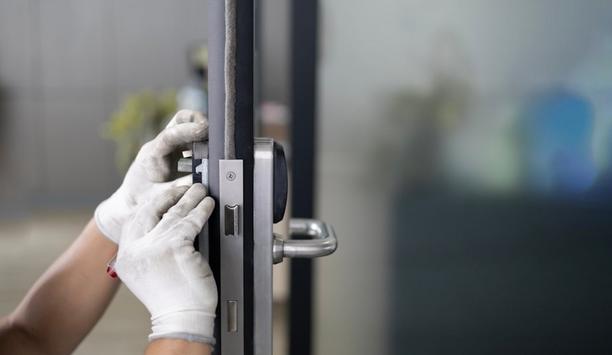
Installing physical security systems requires integrating diverse technologies (e.g., cameras, access control, alarms) that often use different protocols and must be adapted to a building's unique physical layout and legacy infrastructure. Specialized technical expertise is required for seamless networking and proper configuration. Hopefully, no important factors are overlooked in the installation process. We asked our Expert Panel Roundtable: What is the most overlooked factor when inst...

The healthcare industry faces unique and significant security challenges. Healthcare security professionals must balance an open, welcoming environment for patients and visitors with the need to protect valuable assets and personnel in a high-stress, 24/7 setting. These requirements direct the physical security technologies deployed in medical facilities. We asked our Expert Panel Roundtable: What are the unique aspects of the healthcare market, and how should the physical security industry ad...

Emphasizing proactive rather than reactive security shifts the focus from dealing with crises and damage control to prevention. Advantages of a proactive approach include cost efficiency, better business continuity, and fewer crises that draw attention away from strategic improvements. Staying ahead of threats is a core mission of the security department, and technology has evolved to enable security professionals to deliver on that mission better than ever. We asked our Expert Panel Roundtable:...

The cloud fundamentally changes how organizations acquire and use technology, offering a powerful mix of financial, operational, and strategic advantages that traditional on-premises infrastructure cannot match. Specific to physical security systems, there are additional advantages transforming how technologies and systems are delivered to customers. We asked our Expert Panel Roundtable: Which factors are driving the deployment of cloud-based systems in physical security?

Data overload is real. Sometimes it seems we are bombarded by the sheer volume, velocity, and variety of data available in our personal lives, and in our work lives. The solution is to figure out how to make sense of the data and transform it into real information we can use. In the case of physical security systems, new opportunities are emerging every day to utilize data to make our businesses safer and better managed. We asked our Expert Panel Roundtable: What is the expanding role of...

Students deserve a safe and positive environment where they can learn and thrive. Teachers and administrators should be able to focus on their primary role of educating students because they feel supported and protected by a comprehensive security plan. Staff require a clear protocol for responding to emergencies. And parents deserve peace of mind that their children are safe during the school day. One of the tools for safer schools is physical security technology. We asked our Expert Panel Roun...

Physical security and cybersecurity are deeply intertwined in today’s systems. A weakness in one realm can quickly lead to a breach in the other, and vice versa. However, given the symbiotic relationship, why do physical security systems so often fall short when it comes to cybersecurity protection? We asked our Expert Panel Roundtable: Why does cybersecurity continue to be a weak link for physical security systems?

Ethics can impact a company's reputation, profitability, and overall sustainability. Ethics extend beyond the law to encompass doing the "right thing" even when it is not legally mandated. As technologies such as artificial intelligence and data sharing continue to impact the physical security industry, a focus on ethics today is timelier than ever. A commitment to moral principles is critical to build a successful, sustainable, and respected industry. We asked our Expert Panel Roundtable: What...
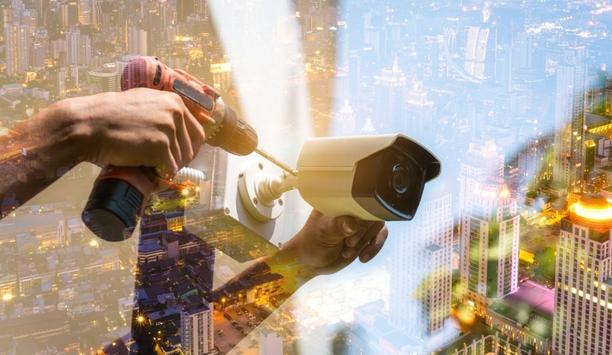
A system's lifecycle is the journey it takes from planning and design through to decommissioning. Considering the entire lifecycle of a system can encourage integrators and end users to embrace higher-quality technologies with an eye toward maximizing their value over time rather than focusing on lower-priced equipment. For additional insights, we asked our Expert Panel Roundtable: How does consideration of system lifecycles impact the choice of physical security technologies?
Security experts