Security management
Sector-led film brings university leaders, security specialists and frontline officers together to explain what institutions should be doing now. The Association of University Chief Security Officers (AUCSO) is launching a new video urging universities and higher education institutions to use the implementation period for Martyn’s Law to ensure their security and emergency arrangements are ready. Supporting higher education institutions The film brings together university leaders, strat...

Riverbed, the pioneer in AIOps for observability, announced new Riverbed intelligent network observability solutions that combine 360-degree network visibility with agentic AI to help network operations teams accelerate troubleshooting, identify root causes, predict emerging issues and increasingly prevent disruptions before they impact users. About Riverbed Network 360 The new Riverbed Network 360 offerings natively integrate the powerful agentic AI capabilities of Riverbed IQ and Q into Rive...

Fime announces the acquisition of Red Alert Labs, taking a further step in its strategy to become a global Digital Trust Provider. The acquisition adds cybersecurity evaluation, certification expertise and compliance automation to Fime’s established capabilities across payments, smart mobility and digital identity. Trust infrastructure As digital ecosystems become increasingly interconnected, trust can no longer be addressed in silos. Payments, digital identities, connected devices...

As autonomous agents make the digital world more dangerous, Rubrik, the Security and AI Operations Company, unveils Rubrik Code Guardian, a custom Claude Mythos 5 harness that red-teams customers’ code based on an air-gapped copy of their repository. Bringing cyber resilience up to speed of AI “Rubrik is one of the partners we are working with to put Claude Mythos 5's cyber capabilities in defenders' hands, so they can find and validate attack paths before attackers do," said Micha...
As AI agents take on more of the work inside the enterprise, the biggest barrier to adoption isn’t capability – it's confidence. Customers need to trust that AI is secure, governed, and worth the cost before they let it run at scale. Today, Cisco closes that gap through new Splunk innovations, giving customers the ability to safely and cost-efficiently scale AI wherever their data already lives. This includes an expanded partnership with NVIDIA to bring Splunk AI to on-...
ASSA ABLOY has acquired Pacific Lock Company, a US padlock and security hardware manufacturer. Expert insight "I am very pleased to welcome PACLOCK to ASSA ABLOY. This acquisition delivers on our strategy to strengthen our position in mature markets through adding complementary products and solutions to our core business,” says Nico Delvaux, President and CEO of ASSA ABLOY. "PACLOCK is recognized for delivering high-quality security products that combine reliability, durability, a...
News

ASIS International, the world’s largest association for security management professionals, opened its 2026 Global Security Exchange (GSX) conference at the Georgia World Congress Center in Atlanta. The event continues through 16 September and features more than 200 education sessions and over 500 exhibitors from more than 150 nations. The conference opened with two days of pre-conference programming on Saturday and Sunday, including ASIS Volunteers’ Day and the ASIS Awards of Excellence and the Outstanding Security Performance Awards (OSPAs), which recognized excellence in security leadership, innovation, and service. Security management professionals 2026 ASIS President, Eddie Sorrells, CPP, PCI, PSP, took the stage with a tribute to those who lost their lives on September 11, 2001, commemorating the 25th anniversary of the tragedy. "The events of that day directly impacted people around 100 countries, reminding us that 9/11 was not an attack on one nation, but a moment of global consequence." "That understanding has helped define and move us into the modern era of the security profession. Public-private collaboration, once perhaps seen as helpful, is now essential to how we anticipate threats, strengthen resilience, and respond when lives and livelihoods are at stake." Sorrells left attendees with a call to approach the future with curiosity, agility, and optimism. Public-private collaboration Sorrells was joined on stage by ASIS International CEO Bill Tenney, who also spoke about September 11, 2001, as a pivotal moment in the evolution of the security profession. He emphasized the importance of future-focused leadership rooted in connection and human impact. "Beyond the policies, technologies, and operating models that followed, September 11 did something deeply human. It brought this profession closer together," he said. “I have seen this profession from different vantage points: as a veteran, in government service, in the private sector, and now in the privileged role of leading this extraordinary organization. Each experience has reinforced the same truth: security cannot advance in isolation.” Tenney said. World of accelerating change Peter Diamandis, MD, Founder and Executive Chairman, XPRIZE Foundation and Executive Founder and Director, Singularity University, opened Monday’s General Session, sponsored by Allied Universal, with keynote on the mindset shifts required of security leaders in a world of accelerating change. Discussing how exponential thinking and emerging technologies are reshaping security challenges and creating new possibilities for protection, resilience, and organizational transformation, Diamandis energised the audience with a bold vision of technology's role in building the future. "The takeaway right now for everybody in the security business is reinventing your agent-governance program," he said. Reshaping security challenges The exhibit hall welcomed over 530 organizations from over 15 countries, featured four dedicated exhibit floor learning stages including the Career HQ, X Stage, Threat Intelligence Zone, and the School Security Zone, offering attendees focused programming in the heart of the action. Monday's Game Changer session with Jeremy Baumann, CPP, Joe M. Olivarez Jr., and Manish Mehta, moderated by Rachel Briggs, titled, "The Next Generation of Leadership: What Tomorrow’s Security Leaders Need to Know," highlighted how corporate security teams can use data-driven insights, emerging trends, and industry benchmarks to strengthen and inform organizational planning, gleaning insights from the annual CSO Survey from The Clarity Factory. Informing organizational planning Education sessions covered topics from across the security profession, including Intelligence, Organizational Resilience, Information Security, Site Security, Supply Chain Security, Personnel Security, Investigations, Executive Protection, and Governance. This year for the first time, ASIS International is offering the ANSI/ASIS School Security Standard to all schools K-12 in the conference's host state of Georgia, free of charge. Program highlights for Tuesday’s GSX lineup include: General Session: Upgrading Your Decision-Making with AI and Data Press Availability: Interview opportunities with ASIS International Subject Matter Experts on School Security, Executive Protection, Intelligence, and more. Game Changer: What to Watch: Mapping Risk Priorities Using ESRM Education Sessions Preview: Drugs, Arms, and Human Trafficking: When Organized Criminal Groups Use Your Shipments for Smuggling Illicit Cargo The Rise of Physical AI: How to Leverage 3D Spatial Intelligence in Modern Security What to Watch: Mapping Risk Priorities Using ESRM Lead With Hospitality: Transforming Security Operations Into Experience-Driven Risk Management ASIS Celebrates! at the Georgia Aquarium.

Kindoo, an innovator turning any electric door into a smartphone-operated smart door, is showcasing its complete cloud-based access control solution at GSX 2026 in booth 1454. Proven in thousands of installations worldwide, Kindoo eliminates many of the costs and complexities of conventional access control, including extensive wiring, dedicated network infrastructure and physical credentials. The scalable solution can be deployed in new installations, for system expansions, or alongside existing access systems. Secure access credential “Modern access control shouldn’t require a dedicated IT team or endless runs of conduit,” said Michael Chaftari, Partner at Kindoo. “People always have their smartphones at hand. By turning the smartphone into a secure access credential, Kindoo aligns physical security with how people naturally live and work—delivering a full-featured solution that deploys in minutes and fundamentally simplifies access management.” Complete access control for virtually any door At GSX 2026, Kindoo is demonstrating its complete access control solution for new and existing installations. The compact Kindoo Actuator works with existing electronic locking devices, while wired and battery-operated surface-mounted strikes accommodate doors with crash bars. A battery-operated door handle with embedded Kindoo access software provides another option for expanding access control without requiring new wiring or infrastructure. The Kindoo Smartphone App replaces traditional keys, cards and fobs with mobile credentials, and cloud-based management enables centralized control of users, permissions and access across doors and locations. The platform allows organizations to: Issue, update or revoke access remotely Manage users, permissions and schedules Grant temporary access to visitors, vendors and contractors Centrally control multiple doors and locations Scale access control as organizational needs evolve Reduce the need for costly infrastructure, servers and IT resources Kindoo makes it simple and cost-effective to deploy, expand and manage smartphone access control across multiple doors and locations. GSX 2026 Visit Kindoo in booth 1454 at GSX 2026 for a hands-on demonstration of its complete smartphone-based access control solution.

Inovonics, a foremost provider of wireless solutions for life safety and security applications, is displaying its expanded portfolio of wireless security solutions at GSX 2026 in Expo Suite #28 on the show floor. Featured solutions include the upcoming Inovonics Intrusion Detection System and the sleek, lightweight Duress Card, along with the company’s comprehensive portfolio of wireless transmitters and sensors. Wireless solutions “Inovonics wireless-first solutions deliver higher levels of performance, speed, accuracy, and cost-efficiency for daily security applications and operations,” said Tom Chittenden, President of Inovonics. “Our new Intrusion Detection System and Duress Card being demonstrated here at GSX 2026 are next-generation solutions that combine the best of Inovonics’ proven technologies with new and evolving platforms and capabilities that users and resellers can effectively scale into the future.” Next-generation solutions GSX 2026 attendees can explore Inovonics’ comprehensive portfolio of wireless transmitters and sensors for intrusion detection, environmental monitoring, and panic notification. Built on proven EchoStream® 900 MHz wireless technology, Inovonics’ products provide reliable, long-range communications with the flexibility to support new installations, system expansions, and upgrades. The new Inovonics Duress Card combines a sleek, lightweight design with enhanced panic notification capabilities. Users can activate up to three different alarm conditions from a single device. When paired with integrated security systems leveraging Inovonics’ cloud-based Advanced Location services, the Duress Card also provides location and real-time tracking capabilities to help pinpoint where an emergency is taking place. The Duress Card provides seamless one-to-one integration with most existing systems. Inovonics is also showcasing its upcoming Intrusion Detection System, a wireless-first solution built around the new EN6091 Gateway Mark II panel. Supporting up to 256 zones, the hybrid system combines EchoStream® wireless with cellular, Ethernet, and Wi-Fi communications, cloud-based administration, over-the-air programming and updates, and mobile management. It is designed to simplify installation and ongoing management for new systems, expansions, and takeovers. Visit Inovonics in Expo Suite #28 at GSX 2026 to experience its latest wireless security solutions.

DMP launched VK VMS, a new cloud-based, integrated video management solution that delivers live video viewing and on-site device management to DMP’s flagship Virtual Keypad platform. The launch introduces AlarmVision subscription tiers and XV Plus Gateways, enabling professional monitoring in DMP’s growing video platform. Activated through the new XV Plus Gateway hardware, dealers can offer VK VMS independently of DMP’s patented AlarmVision technology, which is now a suite of analytic subscriptions. Feedback given, solution provided “We heard our dealers clearly,” said Ken Francis, DMP Executive Vice President of Video Solutions. “They want more video management functionality and flexibility in how they deploy and quote AlarmVision. VK VMS and the new AlarmVision options are a direct response to that feedback.” Separating VK VMS from AlarmVision By separating VK VMS from AlarmVision, dealers gain more affordable and flexible ways to build video systems specifically for monitoring. They can offer VK VMS for surveillance and video management, AlarmVision for intelligent detection, or combine them to add continuous recording to zone-linked events – allowing users to detect and classify activity, review footage and preserve video for future investigation. DMP restructured its previous AlarmVision subscription into two new options: AlarmVision Plus and AlarmVision Pro. Dealers can match video intelligence and cost to an individual customer’s need, while offering advanced features like Dynamic Slicing and contextual description. The next evolution “AlarmVision Plus is the natural next evolution of the award-winning AlarmVision technology,” said Brad Tucker, Vice President of Product Management and Support at DMP. “Designed with VUE Plus Cameras in mind, the subscription allows cameras to serve as zones within the alarm system, enabling smart detection and scene awareness.” About AlarmVision Pro AlarmVision Pro builds on those capabilities with AI that understands activity in context, generates detailed event descriptions and allows users to search recorded video using natural language and specific attributes. For example, users can search for a person based on clothing, appearance, activity or location rather than manually reviewing hours of footage. Dynamic Slicing preserves full-resolution image detail for earlier, more accurate detection at greater distances. Expanded Gateway family The expanded Gateway family includes the XV Plus-20, XV Plus-80 and rackmounted XV Plus-80R. The XV Plus-20 supports up to 20 rated camera megapixels and includes 1 TB of video storage. The XV Plus-80 and XV Plus-80R support up to 80 rated camera megapixels and include 4 TB of storage, with desktop and rackmount options available. All models simplify installation eliminating the need for inbound ports, port forwarding or a separate VPN appliance. Learn more at the DMP booth (#3205) at GSX, 9/14 – 9/16

Cozaint Corporation, the Intelligent Video Lifecycle Management company, announced the commercial availability of its patented MARCIA™ platform for Milestone XProtect® video management software environments. About MARCIA MARCIA enables organizations using Milestone XProtect to extend video retention beyond traditional primary-storage limits while continuing to use XProtect exactly as they do today. MARCIA continuously replicates newly recorded video in the background to LTO-based long-term storage —typically within a couple of minutes of the original write— providing XProtect customers with what Cozaint believes is the lowest-cost architecture available for video surveillance retention. Challenges For enterprise security environments, video retention has historically been constrained by the economics of disk-only storage. As camera counts, resolutions, frame rates, compliance requirements, legal exposure, and AI analytics use cases continue to expand, organizations increasingly need an architecture that preserves video beyond the standard 30-, 60-, or 90-day overwrite cycle. Cozaint’s MARCIA platform addresses that challenge by providing Intelligent Video Lifecycle Management (IVLM) for enterprise surveillance environments. Long-term video lifecycle management “The surveillance industry has spent more than thirty years optimizing how little video it can afford to keep,” said Nauzad Sadry, Chief Technology Officer of Cozaint Corporation. “MARCIA changes that equation for Milestone XProtect customers. By extending XProtect environments with long-term video lifecycle management and LTO-based retention, organizations can preserve the video history they may need for investigations, compliance, legal defense, operational intelligence, and future AI analysis.” XProtect records the video. Within minutes, MARCIA is already preserving its future. Design and features MARCIA is designed to operate behind the scenes within the customer’s existing surveillance architecture. The VMS remains the day-to-day operational platform for live viewing, recording, user management, alarms, investigations, and security workflows. MARCIA extends the long-term value of the video managed by the VMS by enabling organizations to preserve video beyond normal retention windows and retrieve it when needed. Importantly, MARCIA does not interrupt XProtect’s normal recording workflow. Cameras continue recording into the customer’s existing XProtect primary storage environment. In near real time MARCIA operates in the background to replicate and organize newly recorded video onto LTO-based storage. This process occurs without interrupting ongoing XProtect recording. Security operators continue using XProtect normally for live monitoring, playback, alarms, and investigations, while MARCIA continuously builds the long-term retention copy behind the scenes. Milestone XProtect environments For Milestone XProtect environments, MARCIA supports long-term video retention workflows including automated tiered-storage management, LTO-based preservation, camera/date/time-based retrieval, metadata-aware recall, and restoration of historical video back into the XProtect workflow. The objective is simple: XProtect continues operating as XProtect, while MARCIA extends how long the organization can preserve and retrieve the video XProtect records. As AI and video analytics become increasingly important to physical security and business operations, historical video is becoming more valuable. However, AI cannot analyze video that has already been deleted. MARCIA helps organizations preserve the long-term visual history required for future analysis, pattern discovery, incident review, and business intelligence. Cozaint refers to this as Enterprise Visual Continuity, preserving Trusted Visual Evidence over time so organizations can continue using and learning from video long after it was recorded. Key benefits of MARCIA for Milestone XProtect environments Extended Video Retention: Preserve video for months or years instead of letting primary storage limits dictate the retention period. LTO-Based Long-Term Preservation: Use LTO to deliver the lowest-cost path to long-term video preservation. Reduced Disk Dependency: Avoid continuously expanding expensive primary storage simply to keep older video. Continuous Background Replication: MARCIA continuously replicates newly recorded XProtect video to long-term LTO storage in the background, typically within a couple of minutes of the original write, while normal XProtect operations continue uninterrupted. AI-Ready Historical Video: MARCIA helps preserve the historical video needed for future AI, analytics, investigations, compliance, and operational intelligence. Evidence Preservation: Organizations can better retain Trusted Visual Evidence for legal defense, incident review, risk management, and compliance-driven retention needs. Commercial availability MARCIA support for Milestone XProtect environments is commercially available from Cozaint Corporation.

Altronix, the recognized pioneer in power and data transmission products for the professional security industry, is highlighting its innovative power and data solutions at GSX 2026 in booth 2833. The company is showcasing power, networking and infrastructure technologies that enhance security systems and streamline deployments. Altronix solutions on display at GSX 2026 NEW eFlow™ Pro Series Universal Power Supply Charger supports a wide range of security and access control applications with 90VAC–256VAC auto-ranging input and selectable 12VDC at 14A or 24VDC at 10A output. Along with SLA or lithium battery charging, eFlow Pro features fire alarm disconnect, short circuit and overload protection, low power cut-off, and a LINQ™ network management interface for remote power monitoring, control and reporting of system diagnostics. NEW ReServ24B Automatic Transfer Switch with Rapid Battery Charging provides redundant low-voltage power with built-in rapid charging for SLA or LiFePO4 backup batteries. Supporting two 24VDC power supplies, ReServ24B automatically transfers to a secondary power source when needed and recharges batteries when primary power is restored. An integrated LINQ™ Network Management Interface enables remote monitoring, control and reporting. Trove™ Access and Power Integration Solutions combine Altronix power distribution with access controllers from more than 50 leading manufacturers in flexible wall- and rackmount configurations. Pre-wired and pre-configured kits reduce installation time and simplify wiring, service and maintenance, further streamlining deployment. NetWay™ Spectrum Hardened PoE Solutions deliver power and data to devices in remote, industrial and outdoor locations with up to 90W per port and fiber connectivity for extended distances. 277VAC input options expand deployment flexibility, while compatibility with the Altronix EBC48 Rapid Battery Charger accelerates battery recovery and maximizes system uptime. A new network I/O relay module (LINQ4RM) enables remote monitoring and control of essential system devices and accessories from virtually anywhere. Pace™ Long-Range Ethernet Solutions make it possible to deploy IP devices over new or existing cabling at distances far beyond conventional Ethernet limits. Pace extends range up to 500m over structured cable or 1000 meters over single-pair Ethernet (SPE) without repeaters. Pace offers a practical way to expand security and building automation networks, also supporting T1L industrial devices, without having to rip and replace cabling – saving time and labor. Circ™ Automatic Transfer Switch adds high-voltage power redundancy for critical systems by automatically switching between two independent 115VAC or 230VAC power sources. Seamless transfer helps keep connected equipment operating when the primary source is interrupted. LINQ™ Network Power Management integrated with Milestone XProtect brings Altronix power and device intelligence directly into the XProtect Smart Client. Users can centrally view connectivity, voltage thresholds, service alerts and battery conditions, providing faster insight into system health and potential issues. GSX 2026 Attendees can explore these Altronix solutions at GSX 2026 booth 2833. Altronix is also announcing the release of a new A/E partner portal for direct access to generate CSI specs, manage projects, and utilize helpful tools.

Expert commentary
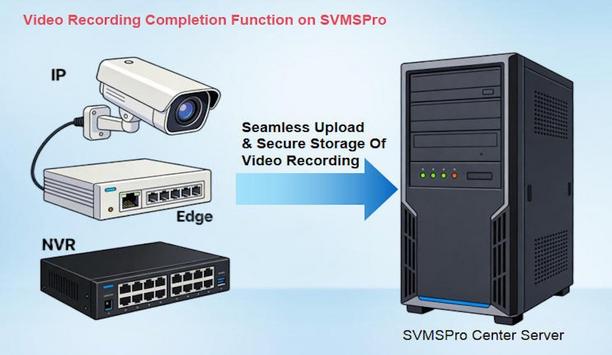
In mobile surveillance, remote sites, and environments with unstable networks, video recordings often suffer from "time gaps" due to network interruptions, a longstanding technical challenge for security systems. Under traditional architectures, central servers rely on real-time streams for storage. Once the network connection is lost, the recording timeline experiences an irrecoverable interruption, leading to the loss of footage of critical events. This creates a fundamental flaw in post-event auditing, forensics, and operational analysis. Recording Completion feature The "Recording Completion" feature was created precisely to address this deficiency. This feature aims to ensure the integrity of recordings by uploading locally stored video to the central server. Even during network instability or complete outages, video can first be stored on local storage of front-end devices, such as the camera's SD card. When the network is restored, these local recordings are uploaded to the central server, filling in the previously missing segments. This ensures that surveillance video remains complete and continuous in the central storage, thereby technically solving the problem of recording loss. SVMSPro platform Taking the SVMSPro platform as an example, its technical principles and workflow are as follows: The core of this feature lies in the intelligent enhancement of the "Edge-Center" collaborative storage architecture: Dual-Path Recording Guarantee: During normal network conditions, the video stream is simultaneously written to local storage on the edge device (e.g., the IPC's SD card, NVR/IVR's hard drive) and the central server. Handling Network Outages: When the system detects a network interruption between the edge device and the central server, the real-time stream recording on the central server automatically pauses. However, the local recording on the edge device continues without any interruption. During the network outage, the front-end edge device continues to record video. Gap-Filling Synchronization: After the network connection is restored, the SVMSPro central platform proactively initiates a "handshake" communication with the edge device. It searches for the recordings on the edge device and then uploads the corresponding video files from the local storage of the edge device to the central server, inserting them into the correct timeline position. During the network outage, the front-end edge device continues to record video Key Technical Advantages and Value: Ensures Data Integrity and Builds a Trustworthy Audit Trail: Fundamentally eliminates video loss caused by temporary network failures, ensuring an absolutely continuous and complete recording timeline from edge to center. This meets the stringent requirements of judicial forensics and compliance audits for data originality and continuity. Enhances System Robustness in Harsh Network Environments: This feature is specifically designed for mobile scenarios (such as rail transit, patrol vehicles/vessels) and remote sites with weak network infrastructure (such as mines, oil fields, and mountainous base stations), freeing their surveillance systems from dependence on network availability. Unifies Centralized Security Management with Local Reliability: All recorded evidence ultimately converges on the central platform, which is protected by physical and network security measures, facilitating unified management, analysis, and long-term archiving. Simultaneously, it reduces the risk of permanent data loss due to theft, damage, or tampering of edge devices. Provides Flexibility in Deployment and Operation: Users can flexibly choose incremental or full synchronization strategies based on actual business importance, network bandwidth costs, and storage planning, achieving an optimal balance between cost and benefit. Typical Application Scenarios: Rail Transit: Ensures seamless indoor and outdoor surveillance footage on trains when entering/exiting tunnels or stations. Mobile Policing and Emergency Vehicles: Ensures the entire journey of车载 video is traceable during patrols or while en route to incident sites. Energy and Infrastructure: Overcomes the instability of public wireless connections (e.g., 4G/5G) at unattended remote sites such as transmission lines, pumping stations, and wind turbines. Temporary and Event Security: Addresses potential network congestion or temporary outages in temporary deployment scenarios like large-scale events or construction sites. Conclusion The introduction of the "Recording Completion" feature marks a new phase for video surveillance systems in facing uncontrollable network environments, transitioning from "passively tolerating interruptions" to "actively ensuring continuity." It is not merely the addition of a single function but represents a substantial reinforcement of the overall reliability and data trustworthiness architecture of surveillance systems.
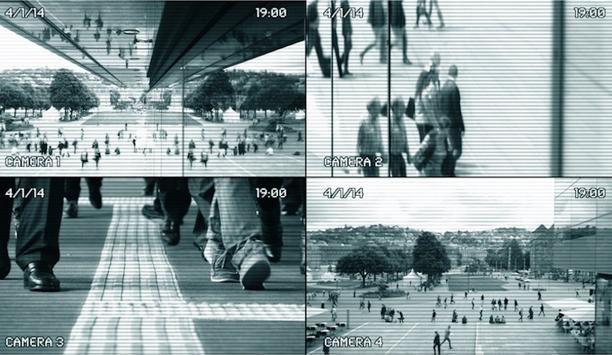
The terrorism threat in the UK is very real. In fact, since July 2019, the threat level has never dropped lower than “substantial” or “severe.” To ensure preparedness across public places and events, the UK government has introduced the new Terrorism (Protection of Premises) Act 2025, more commonly known as Martyn’s Law in memory of Martyn Hett, a victim of the 2017 Manchester Arena bombing. Overarching aim The new legislation requires operators of public spaces and events to immediately assess and improve their readiness to respond to a terrorist attack. The overarching aim: being better prepared, protected and ready to respond should an attack occur. Everything from busy shopping centers to large stadiums must comply with Martyn’s Law by April 2027, and the Security Industry Authority (SIA) is charged with enforcing the rules. Upgraded security systems The smaller venues and events are only required to enforce low-cost solutions with no physical measures There are different rules depending on the capacity of public premises or the event, ranging from a standard-duty premises (200 – 799 people, including staff) to an enhanced-duty premise (over 800). The smaller venues and events are only required to implement low-cost solutions with no physical measures. Enhanced environments, however, must provide monitoring in and around the facility and document public protection measures. Many organizations will likely invest in upgraded security systems. However, effective responses depend not only on hardware but also on situational awareness and training, helping staff identify potential threats and respond effectively under pressure. Physical security information management systems Terror-related attacks are rare and unpredictable, and the most experienced personnel are not always on shift when something does occur. Even if they are, the most seasoned security professionals can’t ensure every decision they make is the right one. One solution gaining attention is physical security information management (PSIM) systems, which integrate siloed security tools — such as CCTV, access control, and fire sensors — into a unified platform. PSIMs enable rapid information processing, automated workflows and coordinated responses to incidents, whether routine or critical. Use PSIMs to handle emergencies PSIM systems have been around for many years and have been embraced by large airports and mass transit organizations PSIM systems have been around for many years and have been embraced by large airports, mass transit organizations and critical infrastructure companies. However, these systems are ideally suited to any larger-scale environment, such as those classified as an enhanced-duty premise by Martyn’s Law. For example, airports use PSIMs to handle emergencies, locate missing persons or assess potential threats like unattended luggage. Similarly, PSIMs can improve situational awareness for stadiums, shopping centers and event venues, aiding crowd management, emergency evacuations and collaboration with police or emergency services. External stakeholder intervention Should an incident require external stakeholder intervention, the PSIM becomes a mission-critical collaboration tool, enabling real-time information (including video footage) to be shared with decision-makers, emergency control rooms and first responders en route to the scene. This ensures they arrive with the appropriate resources and can deploy faster to the right places. PSIM systems also facilitate post-incident analysis, helping organizations improve protocols, demonstrate compliance and fulfill their duty of care. Impacted by terror-related tragedies Martyn’s Law aims to eliminate the complacent mindset of “it won’t happen here” when assessing the risks associated with public gatherings. Communities impacted by terror-related tragedies serve as a stark reminder that such incidents can and do occur. Within the security sector, it is crucial to promote discussions on how new approaches, technologies, and training can enhance preparedness. Equally important is the responsibility to raise awareness about Martyn’s Law and its role in fostering safer public spaces.
As the world’s security landscape grows ever more complex, the need for a dynamic, comprehensive, and globally minded gathering of thought pioneers and practitioners has never been more pronounced. Enter the Global Security Exchange (GSX) 2025, hosted by ASIS International, a signature event representing seven decades of commitment to advancing the security profession. This year marks a historic milestone, as GSX and ASIS International both celebrate 70 years of shaping the future of security, with New Orleans serving as the perfect host city for this anniversary celebration; making the 2025 conference not only a convergence of expertise but a tribute to the security profession’s evolution and resilience. Setting the stage: A global gathering with a rich legacy GSX has established itself as a premier international forum, bringing together security professionals Since its inception, GSX has established itself as a premier international forum, bringing together security professionals from nearly 100 countries across the globe. This diversity is both a testament to the universal importance of security and a reflection of GSX’s core objective—unifying security and business professionals under a shared mission: to elevate the industry through education, collaboration, and innovation. GSX’s member-driven approach GSX’s programming is carefully curated each year through a rigorous speaker proposal submission process by security professionals for security professionals. ASIS International consults extensively with its global membership and prior attendees to assess shifting educational needs and emerging industry priorities. This member-driven approach ensures that GSX continually evolves, remaining attuned to the rapidly changing security environment and the real-world concerns of professionals in every corner of the globe. Programming highlights: Education at the core The agenda features more than 200 sessions, giving a masterclass in the most pressing and transformative topics The heart of GSX 2025 lies in its robust educational offerings. This year, the agenda features more than 200 sessions, presenting a masterclass in the most pressing and transformative topics facing the security sector today. Three standout speakers Ian Bremmer, Sol Rashidi, and General Paul Nakasone - luminaries in geopolitics, artificial intelligence, and cybersecurity respectively—will headline the event, offering insights that bridge current realities with future opportunities. These keynote presentations promise to set the tone for an event dedicated to thought leadership and actionable intelligence. GSX 2025’s challenges and emerging trends GSX 2025’s educational framework is structured around nine distinct track themes. Each track addresses a critical area of security management, capturing both enduring challenges and emerging trends: Crime: Delving into the latest strategies for preventing, detecting, and responding to criminal activity in a world where threats are increasingly complex and transnational. Digital Transformation: Exploring the integration of cutting-edge technologies into traditional security operations, including automation, analytics, and the digitalization of security infrastructure. Information Security/Digital Risk: Addressing the ever-expanding need to protect data, intellectual property, and privacy against cyber threats and breaches. Law/Ethics: Focusing on the legal and ethical dilemmas that security professionals navigate, from compliance to responsible innovation. Managing Organizations: Providing strategies for effective leadership, organizational change, and operational excellence within security teams and entities. National Security: Examining the intersection of corporate, governmental, and civic security with a global lens on terrorism, conflict, and cross-border risks. Physical/Operational Security: Reinforcing the foundations of asset protection, site security, and crisis response through practical case studies and new methodologies. Professional Development: Empowering attendees to advance their careers through skills training, certifications, and leadership development. Risk Management: Mapping techniques to assess, mitigate, and manage risks in a broad array of operational contexts. Together, these tracks create a comprehensive curriculum spanning the complete landscape of contemporary security—from foundational principles to emerging innovations, from physical infrastructure to digital domains, all viewed through an authentically international lens. Innovation in action: Beyond the classroom One of the hallmarks of GSX 2025 is its commitment to making education not just informative, but immersive and accessible. Attendees will find a wealth of learning opportunities woven directly into the Exhibit Hall itself. No longer confined to traditional classrooms, education pulses throughout the venue, with exhibitors invited to showcase their latest insights and real-world solutions to the industry’s most urgent trends. With approximately 500 exhibitors represented, this expansion transforms the Exhibit Hall into a vibrant nexus of exchange, discovery, and hands-on engagement. GSX’s broader ethos No special gear needed, just bring your device and headphones to access live AI-powered captions To further enhance inclusivity and participation, GSX 2025 is pioneering the use of real-time translations through Wordly, for 35 select sessions over the course of this three-day event. This feature ensures that language barriers do not hinder the sharing of ideas, enabling attendees from around the world to fully engage with content and collaborate across borders. This digital transformation is emblematic of GSX’s broader ethos: embracing innovation and experimentation to create greater access to professional development tools within the security profession. No special gear needed, just bring your device and headphones to access live AI-powered captions and translations. Specialized zones and rapid learning GSX 2025's Exhibit Hall transforms into a vibrant ecosystem of discovery, where dedicated learning stages create immersive worlds of specialized knowledge. Journey through the School Security Zone to unlock cutting-edge solutions protecting our educational communities; experience the Organizational Resilience Zone where tomorrow's adaptive strategies come to life; and energize at the X Stage, where security pioneers and integrators accelerate their expertise through lightning-fast, game-changing insights that drive real-world impact. Signature events and unique experiences No GSX experience would be complete without opportunities to connect, celebrate, and unwind No GSX experience would be complete without opportunities to connect, celebrate, and unwind. This year, “ASIS Celebrates!” will take place at the historic National WWII Museum, providing a unique backdrop for networking, reflection, and community building. Beyond formal programming, GSX 2025 pays attention to the “little touches” that make a big difference—such as the Security SyncUP Lounge, where attendees can relax, recharge, and reconnect in a welcoming setting that fosters meaningful exchanges and new friendships. The future of security, united GSX 2025 stands as a testament to seventy years of progress, learning, and community in the global security profession. As participants converge from every corner of the world, the event offers not just a forum for knowledge-sharing, but a catalyst for innovation, collaboration, and progress. With an agenda shaped by its members, a program rich in content and diversity, and a spirit of experimentation and inclusion, GSX 2025 is poised to once again set the standard for what it means to protect, connect, and inspire in a rapidly changing world.
Security beat
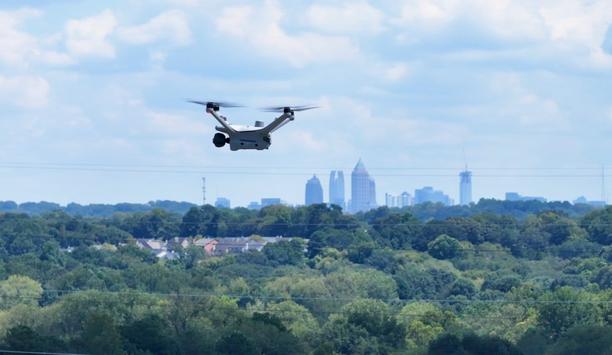
Drones are poised to fill long-standing gaps in physical security. Fixed cameras leave blind spots, and human guards cannot quickly cover large or complex properties during high-risk moments. Drones fill the gaps, providing a missing mobile layer, offering unmatched speed, broad aerial visibility, and proactive coverage that elevates security from reactive to truly responsive and deterrent. As an added element in security systems, drones complement fixed cameras, access control, and license plate recognition (LPR) systems by serving as dynamic, rapid-response assets that reach areas other technologies cannot. Integrated with existing alarms and sensors, drones can auto-launch on triggers to deliver near-instant, real-time aerial video for accurate threat verification, giving security teams critical information before taking action. Drones as first responders Drones as first responders (DFR) are a new tool in Flock’s suite of security technologies “Drones are a natural fit for physical security because they provide teams with fast, flexible visibility that fixed cameras and human patrols cannot always deliver, especially on large properties,” says Keith Kauffman, Senior Director of DFR Strategy at Flock Safety. Drones as first responders (DFR) are a new tool in Flock’s suite of security technologies, which includes LPR, video surveillance, and gunshot detection systems. “Drones act as a force multiplier, improving coverage without increasing head count,” says Kauffman. “Scaling is easy with the ability for one pilot to control multiple drones stationed at multiple locations.” Drones as a force multiplier Drones reduce manpower needs by offering wide-area coverage that would normally require several guards or patrol vehicles. Drones boost security team productivity and safety by automating the most dangerous and tedious tasks, such as alarm verification. Acting as a first responder, a drone can clear a significant portion of false alarms, allowing human guards to concentrate on high-priority roles, complex issues, or confirmed intrusions with real-time aerial intelligence. This improves personnel deployment and cuts down workload, risk, and costly overtime. Drones also significantly improve efficiency and safety for security personnel, says Kauffman. A drone system delivers real-time aerial intelligence in seconds, enabling guards to respond wisely and safely. Initial threat verification Some drone systems' yearly costs are similar to a single mid-level guard's salary Some drone systems' yearly costs are similar to a single mid-level guard's salary, but they can cover up to 38 square miles. This investment provides ROI by reducing large-scale losses and allowing human guards to focus on high-touch roles, while the drone handles initial threat verification. Flock Safety entered the drone space after acquiring Aerodome DFR in October 2024, with their private-sector drone as automated security (DAS) system rolling out in Q3 2025. And because the drones plug directly into FlockOS and work alongside other tools like license plate recognition (LPR) and gunshot detection, they can launch automatically on alerts, creating a smarter, faster response workflow. Immediate intelligence to combat false alarms Drones fundamentally change false alarm management by providing security teams with immediate, real-time aerial intelligence. When an alarm triggers, the drone can be dispatched to the exact location in seconds, allowing operators to verify instantly the threat's legitimacy via a live HD or thermal video feed. This capability enables staff to safely clear or ignore false alarms remotely, preventing guards from wasting time and resources on unnecessary, lengthy, or potentially dangerous physical checks. This process can significantly reduce alarm fatigue and allow personnel to reallocate their time to genuine security threats. Emerging drone use cases enhance security operations Emerging drone use cases enhance security operations by integrating with existing systems and enabling novel applications. One key area is Post-Storm Damage Assessment, where drones provide rapid, safe aerial visuals of expansive sites, documenting damage for insurance claims far faster than ground inspections. Another area is Ecosystem Integration via platforms such as FlockOS, where the drone automatically launches in response to alerts from other security sensors (LPR, gunshot detection). This creates a powerful, automated workflow that unifies responses, enabling quicker incident interruption, better evidence capture, and a proactive security posture without increasing the number of human patrol staff. Evolving regulations expanding drone usage Evolving FAA regulations and corporate airspace policies impact the usage of drones Evolving Federal Aviation Administration (FAA) regulations and corporate airspace policies impact the usage of drones. Today, operating drones beyond the visual line of sight (BVLOS), at night, and over-people/roadway operations requires special FAA waivers. However, the trend — Remote ID, expanded FAA Part 107 allowances, and growing BVLOS exemptions proven in drones as first responders (DFR) — reduces overhead and allows more automation. Combined with enterprise standard operating procedures (SOPs), geofencing, and data governance, drone adopters can standardize flights, minimize risk, and integrate with other technologies. “In practice, that means automated dock-based dispatch on verified alerts, scheduled perimeter sweeps, and incident-to-incident coverage without on-site pilots,” says Kauffman. “The results are faster detection-to-dispatch, stronger evidentiary chains, and lower costs per incident — unlocking 24/7 remote operations across campuses, logistics, and sites.” Winning Over Public Acceptance Public perception plays an important role in how communities embrace drone technology, which is why transparency and clear policy are essential. When employees and community members understand the drone’s purpose — responding to alarms, patrolling after hours, and deterring crime — they tend to view it much as they do security cameras or access control: a safety tool, not surveillance. Flock’s system is event-driven, privacy-minded, and used only by authorized personnel, and every flight is logged, documented, and fully audit-traceable for accountability. “With clear communication and responsible use, drones become a reassuring layer of protection rather than a cause for concern,” says Kauffman. Drones are extremely safe, actually reducing human risk by acting as a first responder to scout ahead of personnel. They come with layers of protection, such as geofencing, obstacle avoidance, precision landing, autonomous deconfliction with aircraft, and automated safety modes. Smartest approach For security teams considering adding drones, the smartest approach is to choose a system built specifically for 24/7 security operations. That usually means the drone provider handles FAA paperwork, writes clear procedures, develops sound policy, and trains customers’ staff so everything runs smoothly. “With the right partner, drones become a safe, compliant, and incredibly helpful part of your security toolkit,” says Kauffman. Flock ramps up drone production Flock Safety’s immediate focus is ramping production of its U.S.-designed and assembled Flock Alpha hardware, which is already NDAA-compliant and built to meet the growing demand for American-made drone solutions. At the same time, the next six to 12 months will center on releasing key software updates, such as automated scheduled patrols. Together, increased hardware production and these software advancements will move the DAS product line toward full capability and broader commercial availability. Flock DAS Flock DAS essentially provides a guard’s vantage point from above, with the ability to instantly fly to any corner of a property. “And it doesn’t sleep on duty or call in sick,” says Kauffman. “Picture your traditional security measures: cameras are your static sentries; guards are your roaming patrollers. Now add Flock DAS: it’s your mobile, flying camera that can respond anywhere, anytime.” Just as a dispatcher coordinates police calls, Flock DAS serves as an aerial dispatcher for the security team, triaging alerts and providing eyes on the scene before anyone sets foot into potential danger. It gives the security team immediate, property-wide awareness so they can make safer, more informed decisions during any incident.

Anyone who has been in a proverbial cave for the last couple of years faced a language barrier at this year’s ISC West 2025 trade show. The industry’s latest wave of innovation has brought with it a new bounty of jargon and buzzwords, some of which I heard at ISC West for the first time. As a public service, we are happy to provide the following partial glossary to promote better understanding of the newer terms. (Some are new to the security industry but have been around in the IT world for years.) Obviously, if we can’t understand the meaning of the industry’s lexicon (and agree on the meaning of terms!), we will struggle to embrace the full benefits of the latest industry innovation. Not to mention we will struggle to communicate. Generative AI Generative AI can identify an object in an image based on its understanding of previous objects This was perhaps the most common new(ish) term I heard bouncing around at ISC West. While the term artificial intelligence (AI) now rolls off everyone’s tongue, the generative “version” of the term is catching up. Generative AI uses what it has learned to create something new. The name comes from the core function of this type of artificial intelligence: it can generate (or create) new content. It doesn’t just copy and paste; it understands the underlying patterns and creates something original based on that understanding. In the case of video, for example, generative AI can identify an object in an image based on its understanding of previous objects it has seen. Video and security Generative AI can tell you something digitally about what is happening in an environment. There is no longer a need to write “rules;” the system can take in data, contextualize it, and understand it, even if it does not exactly match something it has seen before. In the case of video and security, generative AI offers more flexibility and better understanding. From 2014 to 2024, the emphasis was on detecting and classifying things; today AI is expanding to allow new ways to handle data, not so prescriptive and no more rules engines. Agentic AI Agentic AI refers to artificial intelligence systems that can operate autonomously to achieve specific goals Agentic AI refers to artificial intelligence systems that can operate autonomously to achieve specific goals, with minimal to no direct human intervention. In addition to the capabilities of generative AI, agentic AI can take action based on what it detects and understands. Use of agentic AI typically revolves around an if/then scenario. That is, if action A occurs, then the system should proceed with action B. For example, if an AI system “sees” a fire, then it will shut down that part of the building automatically without a human having to initiate the shutdown. There is a lot of discussion in the industry about the need to keep humans involved in the decision-making loop, so use of truly autonomous systems will likely be limited in the foreseeable future. However, the ability of agentic AI to act on critical information in a timely manner, in effect to serve as an “agent” in place of a human decision-maker, will find its place in physical security as we move forward. Inference Inference is another common term related to AI. It refers to the process by which an AI model uses the knowledge it gained during its training phase to make predictions, classifications, or generate outputs on new, unseen data. The direct relationship of this term to physical security and video is obvious. In the simplest terms, an AI system is “trained” by learning patterns, relationships, and features from a large dataset. During inference, the trained model is presented with new questions (data it hasn't seen before), and it applies what it learned during training to provide answers or make decisions. Simply put, inference is what makes AI systems intelligent. Containerization Dividing a massive security management system into several separate containers enables management of the various parts In IT, containerization is a form of operating system-level virtualization that allows you to package an application and all its dependencies (libraries, binaries, configuration files) into a single, portable image called a container. This container can then be run consistently across any infrastructure that supports containerization, such as a developer's laptop, a testing environment, or a server in the cloud. In the physical security industry, you hear “containerization” used in the context of separating out the various components of a larger system. Dividing a massive security management system into several independent containers enables the various parts to be managed, updated, and enhanced without impacting the larger whole. Genetec’s SecurityCenter cloud platform Think of it like shipping containers in the real world. Each container holds everything an application needs to run, isolated from other applications and from the underlying system. This ensures that the application will work the same way regardless of the environment it is deployed in. “It took us five years to containerize Genetec’s SecurityCenter cloud platform, but containerization now simplifies delivering updates to products whenever we want,” says Andrew Elvish, Genetec’s VP Marketing. Among other benefits, containerization enables Genetec to provide more frequent updates--every 12 days. Headless appliance Headless appliance is a device that is managed and controlled remotely through a network or web interface A headless appliance is a device that is managed and controlled remotely through a network or web interface. The device is like a “body without a head” in the traditional sense of computer interaction: It performs its intended function, but without any visual output or input device for local interaction. In physical security, such devices are increasingly part of cloud-based systems in which the centralized software manages and operates all the disparate “headless” devices. A headless appliance does not have a Windows management system. “The whole thing is managed through the as-a-service cloud system,” says Elvish. With a headless device, you just plug it into the network, and it is managed by your system. You manage the Linux-based device remotely, so configuring and deploying it is easy. Democratizing AI You hear the term democratizing AI used by camera manufacturers who are looking to expand AI capabilities throughout their camera lines, including value-priced models. For example, even i-PRO’s value-priced cameras (U series) now have AI – fulfilling their promise to democratize AI. Another approach is to connect non-AI-equipped cameras to the network by way of an AI-equipped camera, a process known as “AI-relay.” For instance, i-PRO can incorporate non-AI cameras into a system by routing/connecting them through an X-series camera to provide AI functionality. Bosch is also embracing AI throughout its video camera line and enabling customers to choose application-specific analytics for each use case, in effect, tailoring each camera to the application, and providing AI to everyone. Context Cloud system also enables users to ask open-ended queries that involve context, in addition to detection Context refers to an AI system that can understand the “why” of a situation. For example, if someone stops in an area and triggers a video “loitering” analytic, the event might trigger an alarm involving an operator. However, if an AI system can provide “context” (e.g., he stopped to tie his shoe), then the event can be easily dismissed by the automated system without involving an operator. Bosch’s IVA-Pro Context product is a service-based model that adds context to edge detection. The cloud system also enables users to ask open-ended questions that involve context in addition to detection. For example, rather than asking "do you see a gas can?" you can ask "do you see any safety hazards in this scene?" The pre-trained model understands most common objects, and understands correlations, such as "a gas can could be a safety hazard.” A scaled-down on-premise version of the IVA Context product will be available in 2026. Bosch showed a prototype at ISC West. Most video data is never viewed by an operator. Context allows a system to look at all the video with "almost human eyes." Cameras are essentially watching themselves, and understanding why something happened and what we can do. All that previously unwatched video is now being watched by the system itself, boosted by the ability to add “context” to the system. Any meaningful information based on context can trigger a response by an operator. Data lake A data lake is a centralized repository that allows one to store vast amounts of structured, semi-structured, and unstructured data in its native format. In the case of the physical security marketplace, a data lake includes data generated by systems outside the physical security infrastructure, from inventory and logistics systems, for example. A data lake is where an enterprise can accumulate all their data, from the weather to Point-of-Sale information to logistics, to whatever they can gather. Putting the data in one place (a “data lake”) enables them to mine that data and parse it in different ways using AI to provide information and insights into their business. Notably, a data lake contains all a company’s data, not just security or video data, which opens up new opportunities to leverage the value of data beyond security and safety applications. Crunching the various information in a data lake, therefore, security technology can be used to maximize business operations.

The pattern of veins in the hand contains unique information that can be used for identity. Blood flowing through veins in the human body can absorb light waves of specific wavelengths. Irradiating the human palm with near-infrared light waves yields an image of the vascular pattern. A venous distribution map can be processed and compared to pre-registered data to match and confirm identity. Palm vein biometrics The idea of palm vein biometrics goes back to the 1980s when palm vein scanners emerged as commercial products in the 1990s. The devices gained some traction in military-grade and high-security applications, although the technology was too expensive to become popular among mainstream applications such as physical access control. Anviz Global is expanding palm vein technology into mainstream applications, featuring a lower price point that will open new market opportunities. Palm vein technology “Palm vein technology has been viewed as a boutique product because it is costly and has not developed as a mainstream product,” says Mark Vena, Senior Director of Business Strategy and Development for Anviz Global. “With a more compelling price point, the market can see the technology more broadly. We can change the game in terms of how people think about palm vein technology.” FAR and FRR Palm vein technology is more accurate than either fingerprint (0.0001% FAR) or facial recognition (0.001% FAR) Iris recognition is considered the gold standard in biometric identification, but palm vein technology can almost achieve the accuracy of iris. The false accept rate (FAR) for palm vein technology is 0.00008%, compared to 0.00005% for iris recognition systems. The false reject rate (FRR) is comparable at 0.01% for either technology. Palm vein technology is more accurate than either fingerprint (0.0001% FAR) or facial recognition (0.001% FAR). Palm vein identification occurs in less than half a second. M7 Palm “Anviz is seeking to bring a high level of capability to more mainstream commercial applications,” says Vena, specifically providing a lower-cost palm vein unit. The M7 Palm by Anviz can achieve next-generation biometric access control for greater security and intelligence. The door-mounted unit combines palm vein recognition with an RFID card reader and PIN code (using a 17-button keypad), all configurable for multi-factor authentication. Outdoor applications The robust unit, including a narrow metal exterior design, provides strong vandal resistance (IK10) and stability for outdoor applications. To ensure a weatherproof design, the IP66 rating indicates the product is completely protected against dust and can withstand strong jets of water from any direction. Power-over-ethernet (PoE) enables centralized power management and the ability to remotely reboot devices. Wiegand-out interface The unit communicates using RS-485 or TCP/IP and can connect locks, exit buttons, door contacts, doorbells, etc The unit communicates using RS-485 or TCP/IP and can connect locks, exit buttons, door contacts, doorbells, etc. The Wiegand-out interface can connect to standard third-party controllers, or a built-in relay can trigger a lock directly. Capacity is 500 users. Because palm vein recognition originates from the physiological characteristics of the human body, it represents a “credential” that cannot be forged, lost, or left at home. It is not easily counterfeited or worn out. Multi-factor authentication Applications include industries requiring high security such as government, judicial, and banking. Multi-factor authentication eliminates fraud and ensures safety at banks, data centers, airports, prisons, and government. An end user might opt for higher levels of access control for a laboratory or server room. For dealers and integrators, palm vein technology, including multi-factor authentication, provides an additional option for customers seeking to protect high-security areas on a large campus. Card readers Card readers may suffice for most of the doors, but an important laboratory or cash-handling area requires more protection. Palm vein technology can secure a casino cash cage or a room containing corporate secrets. Time of Flight ToF laser-ranging uses a laser to measure the distance to an object by calculating the time Time of Flight (ToF) laser-ranging achieves accurate measurement to ensure the right distance for operation. ToF laser-ranging uses a laser to measure the distance to an object by calculating the time it takes for the laser light to travel to the object and back. Palm vein technology operates in the range of 10 to 30cm (4 to 12 inches). The proprietary BioNANO palm vein recognition algorithm enables accurate and fast scanning speed. Non-contact biometric The non-contact biometric performs in touchless environments and does not contribute to lingering health concerns in the post-COVID world. The technology is accurate across all hand types and skin tones. Users may feel more comfortable scanning their hands than their eyes. Optimal human-machine interaction M7 Palm’s optimal human-machine interaction and user experience include a low-power-consumption OLED screen to deliver clear text notifications to the user. Advantages of M7 Palm include accuracy, stability, security, and privacy. Features include easy installation with standard processes and no special tools, centralized power management, simplified cabling, and less maintenance. Managing the system is expedited by integration with the Anviz CrossChex Standard access control and time management dashboard, used by more than 30,000 enterprises, and the system can be integrated with any access control system. Security for SMBs Anviz Global is a converged intelligent security provider for SMBs and enterprise organizations Anviz Global is a converged intelligent security provider for small- and medium-sized businesses (SMBs) and enterprise organizations. The company’s product line includes biometrics, video surveillance, and security management solutions based on the cloud, Internet of Things (IoT) and artificial intelligence (AI) technologies. Privacy concerns Anviz is part of the Xthings family of companies, which includes Ultraloq (smart locks), Utec (smart home), Bright (smart lighting), Secu365 (SaaS Platform), and Ulticam (smart cameras). Privacy concerns are minimized because palm vein recognition does not directly store the original image but rather extracts feature information through algorithmic models. Personal data is protected through obfuscation and encryption.
Case studies
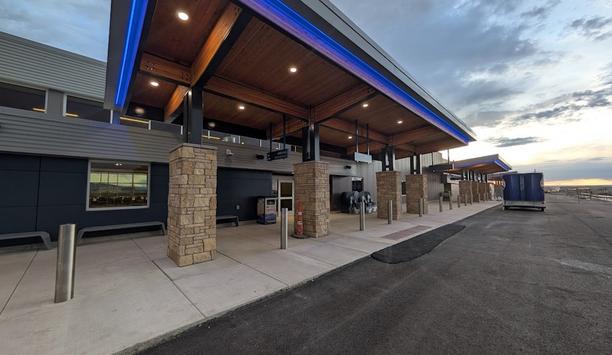
Genetec Inc., the global pioneer in enterprise physical security software, announces that Southwest Wyoming Regional Airport (RKS) has modernised its physical security operations using Genetec™ Security Center. The airport selected Genetec as part of its terminal modernization project to support future expansion, evolving Transportation Security Administration (TSA) requirements, and potential new carriers and flight routes. Located outside Rock Springs in Sweetwater County, Wyoming, the regional airport supports more than 11,000 annual flight operations and serves more than 50,000 passengers annually. The airport recently completed a $43 million commercial terminal modernisation project. As part of the upgrade, airport leaders wanted to replace aging video surveillance and access control systems with an open and flexible platform that would allow them to expand security infrastructure without being locked into proprietary systems. Terminal modernization project Working with systems integrator Incline Technology, the airport deployed Genetec Security Center to unify video surveillance, access control, and alarms in a single interface. According to Nic Hasler, Founder and President of Incline Technology, “Our vision from the start was to deliver a system for RKS that’s easy to operate and support, and ready for future expansion.” With Security Center, the RKS team now has full visibility across the airport terminal, weather station, fuel station, and Sweetwater Aviation facility. This allows them to improve visibility across the airport, respond faster to incidents, and streamline day-to-day security management from one platform. Security and airport operations “Genetec Security Center brings everything into one place, which helps us manage security and airport operations much more efficiently than before. We’re only scratching the surface of what the system can do. This is the foundation we needed to keep adding capabilities and enhancing our operations,” said Devon Brubaker, Airport Director at Southwest Wyoming Regional Airport. Airport staff is also using the Quick Search feature in Security Center to accelerate investigations and reduce the time spent reviewing footage after incidents. After a reported theft in the airport micro market, the team used Quick Search to review footage, identify when the inventory changed, and confirm within minutes that the item had been purchased but mislabelled. “We might be a small airport, but investing in Genetec Security Center allows us to operate like a much larger one. The platform helps us work more efficiently today and sets us up to say yes to new opportunities in the future,” said Brubaker.

Paderborn/Lippstadt Airport plays a central infrastructural role in the East Westphalia-Lippe region of Germany. In order to meet the growing requirements of the German Aviation Security Act (LuftSiG), the airport comprehensively modernised its existing video surveillance system. The objective was to ensure efficient monitoring of critical areas such as the apron, access roads, car parks, and terminal entrances – with minimal resource use. Together with systems integrator Horn Sicherheitstechnik, Dallmeier developed a solution that allows gradual migration to IP-based components such as the multifocal sensor system Panomera®, without the need to immediately replace existing analog technology. The solution complies with all applicable security and data protection requirements and is designed for future scalability. Secure airport operations Roughly six million people live within the catchment area of Paderborn/Lippstadt Airport. As a regional transportation hub, the airport provides vital connectivity to both tourist and business destinations. Scheduled and charter flights as well as business, private, and cargo traffic are all part of daily operations. This makes the airport not only an important infrastructure facility but also a regional employer and mobility partner. Smooth operations and full compliance with legal obligations – such as the Aviation Security Act (§5 and §8), the General Data Protection Regulation (GDPR), and the NIS-2 Directive – form the foundation for secure airport operations. Increasing regulatory requirements The decision to upgrade and extend the video security infrastructure was driven by increasing regulatory requirements and technological advancement. The focus was on reliable video coverage of the approximately 65,000 square metre apron area, as well as other critical zones such as access roads, car parks, terminal entrances and the so-called aviation security boundaries – the transition point for passengers from landside to airside. Analog systems were not replaced in one step; instead, a step-by-step migration to IP technology was planned and implemented – in a manner that was flexible and adapted to the airport’s existing infrastructure and operational needs. Modern IP cameras The implementation was carried out by experienced systems integrator Horn Sicherheitstechnik in collaboration with Dallmeier electronic. At the heart of the project is a hybrid system architecture that combines existing analog components with modern IP cameras. Video recording is handled by Dallmeier recording appliances such as the DMS 2400 and IPS 10000, which enable simultaneous operation of both analog and IP technologies. To monitor sensitive zones, various camera models are used – including Domera®, fisheye, and bullet cameras, as well as Panomera® systems from the W4 and S8 series. Panomera® enables wide-area coverage with a minimum number of cameras while still delivering high-resolution detail – a major advantage for large apron areas where both overview and detailed monitoring are essential. Video management is handled via SeMSy® Compact in combination with the SeMSy® Event Manager. Additionally, door and alarm contacts were integrated using Moxa devices to enable functional synergies and alarm forwarding – particularly at the aviation security boundaries. Aviation security boundaries With the new system, the airport fully meets the requirements of §5 and §8 of the German Aviation Security Act – for example, in monitoring aviation security boundaries, access roads and other sensitive operational areas. The hybrid system architecture allows targeted expansion of the existing infrastructure. One key benefit: Thanks to Panomera®, the number of cameras required was significantly reduced – without sacrificing field of view or image quality. This results in savings not only in installation and operational costs but also in ongoing maintenance. The modular system design supports step-by-step migration and offers long-term flexibility. “With the Dallmeier solution, we were able to seamlessly modernise our existing infrastructure while efficiently meeting new security requirements. We were particularly impressed by the flexibility to integrate both analog and IP systems,” explains Paul Sawatzki, Head of IT & Technology at Paderborn/Lippstadt Airport. AI-driven technologies The Dallmeier solution meets all requirements set forth by the GDPR and the NIS-2 Directive – especially in terms of data protection, IT security, and system availability. As an ISO-certified company – including certification to ISO/IEC 27001 for information security management systems – Dallmeier delivers the highest standards in the handling of sensitive data. These certifications provide a reliable foundation for deploying the technology in critical infrastructure environments. Additionally, Dallmeier’s in-house development and production in Germany (“Made in Germany”) ensures transparency and legal certainty for operators. Another key advantage of the new system is its future-proof design. Beyond surveillance alone, AI-based analytics for process optimization and cost savings are increasingly in focus. The airport plans to deploy AI-driven technologies such as the Dallmeier “Attribute Finder”, which can be seamlessly integrated into the existing infrastructure. High integration capability The project at Paderborn/Lippstadt Airport demonstrates how intelligent planning and cutting-edge technology can bridge the gap between legacy infrastructure, system modernisation, and long-term readiness. The “Made in Germany” solution delivers durability, efficiency, and high integration capability – representing a successful deployment of modern video technology in a critical infrastructure environment. Horn Sicherheitstechnik also draws a positive conclusion: “Thanks to close coordination with all project stakeholders and the use of Dallmeier’s PlanD camera planning tool, we always had full control over the project. The tool gave us complete planning reliability right from the design phase,” says Michael Horn, Managing Director of Horn Sicherheitstechnik. Video information technology In 1984, Dieter Dallmeier founded what is now Dallmeier electronic – not in the proverbial garage, but in a garden shed in Regensburg, Germany. Today, the company, which can justifiably call itself a hidden champion for video information technology "Made in Germany", has several hundred employees worldwide, more than 250 of them at the company headquarters in the center of Regensburg alone. Dallmeier's camera, recording, software, and analysis solutions optimize security and processes for B2B end customers in a wide range of industries in over 60 countries. The focus is on users from the casino, smart city, airports, logistics, stadiums, and industrial sectors. But also, banks, critical infrastructure facilities as well as medium-sized companies from all sectors. Image storage system With pioneering innovations, Dallmeier has succeeded time and again in placing itself at the forefront of technology: From the world's first digital image storage system with motion analysis in 1992, the patented "multifocal sensor technology" Panomera® with its "Mountera®" mounting system, to the latest Domera® camera family, which allows up to 300 camera variants with only 18 components. These and many other innovations provide real, tangible customer benefits. And with a low Total Cost of Ownership (TCO) and a high Return on Investment (ROI) they can easily compete with systems produced and supplied from low-wage countries. With "Made in Germany", they also guarantee their customers the highest standards in data protection, cybersecurity, and ethical responsibility. With high quality and short supply chains, they also ensure – almost incidentally – sustainability and environmental protection. From their prestigious headquarters in the center of Regensburg, Dallmeier not only carries out its own research and development but also the complete manufacturing process – from component to product to solution.
Willis Tower, an iconic symbol in Chicago for over 50 years, has undergone significant transformations to become a modern workplace and community hub that delivers the best experiences for its tenants, area residents and visitors. Originally known as Sears Tower, it was renamed Willis Tower after a change in ownership in 2009. Major renovations took place in 2017, culminating in a complete transformation in 2022. Currnetly, Willis Tower offers a range of amenities from short-term workstations to traditional leases, as well as dining, retail, and entertainment spaces. The Skydeck on the 103rd floor, 1,353 feet above street level, provides breathtaking views of up to 50 miles across four states, attracting millions of visitors annually. Challenge As part of Willis Tower’s transformation, the structural separations between the office and Skydeck areas were eliminated, creating a more open and accessible space for visitors and tenants. Recognizing the need for a customized strategic security plan, Director of Security Keith Kambic, CPP, spearheaded efforts to find the right partners to ensure the safety and security of tenants, visitors, and employees. Kambic’s first step was to engage with the national security and technology consulting firm Guidepost Solutions. The next priority was to establish a strong partnership with a Chicago-based integration partner and to identify the best security solutions in the market. Kambic chose 4S Security as the integration partner because of their holistic approach to achieving optimal results. The partnership with 4S Security elevated the security measures at Willis Tower to new heights. “We are different than the average integrator,” said Leor Elfassy, Director of Business Development at 4S. “We have software developers on staff who write integrations, and as a matter of business principle for the last 30 years, we only work with software manufacturers that allow us to do so.” Solution The upgrade to Willis Tower involved retrofitting the access control system to a cloud-based solution and the new Video Management System (VMS), Salient CompleteView, was selected based on its ability to integrate seamlessly with the access control platform. “In the end the client wants a single pane of glass that they can work from and Salient’s CompleteView is well-designed to let integrators bring their vision to life,” continued Elfassy. Salient’s open architecture was an essential factor in the decision, along with product features like Dynamic Resolution Scaling (DRS), a powerful bandwidth management tool, and agnostic integration to analytic platforms for future system enhancements. Specific features like snapshot and CompleteView’s interactive mapping feature were also important selection factors. While all of these product capabilities are important, in the end it came down to the personal attention of Salient team members – from the President to the system engineer – and their efforts to go above and beyond in every way. Salient’s dedication to working cohesively with the Willis Tower and 4S teams created an effective partnership that propelled the project forward. Kambic said, “when we selected Salient, we did so not only for their product, but because we could tell that both of our companies were cut from the same cloth – great service, and great people.” Both Salient and 4S provided learning tools prior to implementation to ensure a seamless transition to the new VMS for the Willis Tower security team. 4S created customized training videos and pamphlets and held onsite training sessions, while Salient educated the security team through its YouTube training videos. Results The result of the partnership between 4S and Salient was a 40% reduction in bandwidth usage across the Willis Tower network. In addition, the integrated system provided immediate awareness of events such as forced-open doors, tailgating, and panic alarms. Ongoing top-notch local support from both Salient and 4S ensures smooth and timely software release updates and exploration of new technological capabilities, advancing video surveillance through CompleteView. Pleased with the results, the Willis Tower team attests to the success of the partnership, efficacy of Salient’s product, andoutstanding level of service from Salient both before and after the sale.
In alignment with the State of Mississippi’s mission of “Empowering Mississippi citizens to stay connected andengaged with their government,” Salient's CompleteView Video Management System (VMS) is being installedthroughout more than 150 state boards, commissions, and agencies in order to ensure safety for thousands ofconstituents who access state services daily. Challenge Determining the right path to success wasn’t a quick process. The elaborate undertaking of converting all State of Mississippi buildings from its legacy video system, which included analog cameras across a disparate video platform, to match their standard of excellence took a lot of planning. This involved researching and interviewing multiple manufacturers of IP cameras and video management systems. The plan was strategic, as it was important to State officials to find an open architecture solution that could utilize as much existing technology as possible, thereby preserving current taxpayer investment. Solution After a thorough evaluation, the decision came down to three competitive VMSs, all based on total cost-of ownership, scalability requirements, software performance capabilities, along with support assessments. Salient’s CompleteView was ultimately determined the top choice. “In the selection process, three VMS manufacturers were deemed a reasonable fit. The choice of CompleteView over these competitors came down to one critical component, partnership. The culture at Salient embodies an unmatched support you don’t typically see in an industry leader. Their greatest value-add is that open line of communication between the RSM, technical support, and engineering. If I need something, I know I can pick up the phone and get immediate assistance” said Mike Cooper with MS Department of Public Safety. Once CompleteView was selected, another strategic decision was made to have personnel from The Statehandle the design and installation of CompleteView internally rather than engage outside consulting. This hasproved to be an effective option, allowing them to tailor each installation to suit individual property needs. The State works through the channel for procurement, then handles all programming and administration internally. This offers them the most flexibility while still achieving uniformity across each deployment as well as complete control of the process. Result The conversion to CompleteView is underway and will take approximately 3-5 years to complete. The State now benefits from a centralized platform that allows for greater administrative control, as well as a product that meets the State of Mississippi standard for NDAA compliance. According to Cooper, “we now have a platform that is easily managed and visibly organized in an efficient manner. We also appreciate having a system that’s permission based with tighter controls.” Finally, The State’s technical team is committed to keeping the system updated as Salient releases newer versions of its software each quarter. These upgrades ensure they are taking advantage of all security enhancements and feature improvements that CompleteView has to offer. The State has also planned integration of its access control system, Open Options, with CompleteView, tying video directly to specific door openings. This gives State personnel an enhanced view into their security operations, with quick and easy auditing of badge events through a single interface. Further initiatives will explore the addition of AI video analytics to add weapons detection, appearance search, and cross-camera tracking — all to help speed up investigations. Salient’s open platform makes these integrations possible. Staying present on these new releases and innovative integrations ensures an advanced level of protection from potential threats and works to achieve the ultimate end game – keeping community members safe.
The Community Builders (TCB) is a nonprofit organization whose mission is to build and sustain strong communities where all people can thrive. They work with businesses, institutions, and public officials to revitalize neighborhoods in ways where all people can live in healthy homes with equitable access to resources and opportunities to pursue their dreams. Their partnership with Salient Systems exemplifies the use of video technology in vulnerable neighborhoods to help achieve these goals. Challenge TCB operates and manages 150 sites and properties across the country, employing over 600 staff members. These locations range from campus environments to individual buildings, each presenting unique security challenges to ensure overall resident safety. The primary focus for implementing a video management system is not only to ensure safety and security but also prevent property maintenance issues. Under Joe Giggey’s leadership as senior director of Information Technology, TCB established enterprise- level security standards. These standards enabled access to video remotely through smartphones, iPads, and laptops for a central team of sites in 30 cities. Additionally, seamless integration with existing cameras and access control systems was required, considering TCB’s extensive network of 30+ access control systems and about 6,800 different camera models. Affordability was another crucial factor, as is often the case for nonprofit organizations. Having an easy-to-administer VMS, reliable search and video export functionalities, scalability for future property acquisitions, and centralized management in a distributed environment were also significant requirements. Solution Salient’s CompleteView VMS met all the specified criteria, marking the beginning of the partnership between TCB and Salient in 2016. The deployment of CompleteView has grown to 85 site recording servers and over 2,300 camera licenses. Given the widespread nature of TCB’s properties, certified regionalized integrators have been selected to install CompleteView across TCB locations. These integrators have been trained and received certification from Salient Systems professional trainers on installation, executing upgrades, expanding systems, and customizing the deployment ensuring effective implementation and ongoing support. In addition, manufacturer support by Salient’s own System Engineering team has been utilized and according to TCB personnel, “has been phenomenal.” Results TCB staff help address complaints, educate residents on lease rules, and avoid evictions. Salient’s CompleteView has assisted in resolving disputes, and investigating incidents. In addition, the ability to verify details of incidents in progress helps pinpoint the location and gives first responders details about the situation they may face on arrival. Video footage provided by Salient’s VMS, CompleteView has proven invaluable in multiple instances and according to Giggey “The VMS paid for itself immediately, highlighting the effectiveness and value of this partnership.” The collaboration between TCB and Salient Systems has become an exemplar of how technology can be harnessed for the greater good, building trust and effecting positive changes in vulnerable neighborhoods. With ongoing support from Salient Systems, TCB is committed to making a lasting impact and ensuring strong communities where all people can thrive.

Security chiefs nationwide are addressing emerging workplace issues of white-collar crime and computer security. Theft, by internal and external perpetrators, has taken on a new and expensive face with the advent of lightweight computers. On site slips, falls and vehicular accidents lead to expensive liability lawsuits. Increasing pressure on the bottom line has led many security chiefs to turn to contract labor, which offers its own set of supervisory challenges. Security magazine stated “At least seven in 10 of their readers use private protection officers…and more than one in three of these respondents say they use more security officers than they did three years ago.” Monitoring equipment temperatures These changes have occurred in an era of economic growth where corporate mergers and acquisitions are commonplace. Over a relatively short period of time, the security chief is likely to see the size and make-up of the buildings and workforce change, dramatically. A new list of threats, increased reliance on contract labor, and rapid changes in scope and responsibilities force security chiefs to demand more of the security systems they use. Client: When David Weihe, Chief of Corporate Security, joined Kentucky Fried Chicken in 1992, he inherited a thirty-five-station guard tour system that was worn out and problematic. Weihe had a large area to protect – two buildings totaling 325,000 square feet on 35 square acres in Louisville, KY. He also had special responsibilities, such as monitoring equipment temperatures. In addition, one of the two KFC buildings lacks a sprinkler system, so fire extinguisher checks are crucial. Largest restaurant system When Weihe joined the company, KFC’s corporate parent was PepsiCo, Inc. In January 1997, PepsiCo, Inc. announced the spin-off of its quick service restaurants – KFC, Taco Bell and Pizza Hut – into an independent restaurant company called TRICON Global Restaurants Inc. TRICON (NYSE: YUM) is the world’s largest restaurant system with nearly 30,000 restaurants. Weihe is now responsible for all of TRICON Global’s corporate locations, including the restaurant support center in Louisville, which employs more than 1,200. The physical sites include two original KFC buildings, which house KFC’s Research and Development unit, a document management center, and another processing facility. He uses 14 contract security officers to maintain a 24/7 presence. Universal product indicator Project: Back in 1992, Weihe knew that he needed a guard tour system that was robust and expandable with state-of-the art data capabilities. Handheld units had to be slim-line, user friendly and tough enough to withstand stand up to constant use by a variety of personnel. The system’s software had to offer fast, comprehensive reports that would help Weihe pinpoint incidents and keep track of every contract employee on every shift and every checkpoint station. Weihe considered several solutions. He rejected systems that required officers to carry multiple pieces of equipment – strips or buttons – because he considered them complicated and difficult to maintain. He also rejected systems based on UPC (universal product indicator) codes because he considered them too fragile. In 1993, and again this year, Weihe chose a Morse Watchman guard tour system. Management patrol software Provider: The Morse Watchman tour guard system is made up of three components: designated checkpoint stations, placed in fixed locations throughout the facilities, a handheld data recorder carried on rounds and uses to check into the key stations and record information; and management patrol software, which converts data recorder information to printable custom reports. Morse Watchman guarantees its checkpoint stations for life. They’re built out of impact-resistant Lexan(r), the material used for professional football helmets. The PowerCheck 3002, which Weihe upgraded to this year, features Auto Pilot, a user selectable option that displays the next station to visit. The system also gives the customer the option of preprogramming up to 99 different incident reports, all of which can be keyed in by officers on tour. Implementation: When the PowerCheck system was ready, training proved simple, thanks to documentation provided by Morse Watchman and the fact that most of the new system’s checkpoint stations were placed in the same locations as the old. Four different tours Using the system’s Auto Pilot feature, Weihe has programmed four different tours, three of which guide officers to stations in specific order. The fourth records tour data in random order. In any given week, Sunday through Saturday, Weihe’s officers run close to 50 tours, which equals 3,000 station checks per week. The new PowerCheck 3002 system can hold up to 8,000 transactions before it must be downloaded. Benefits: It didn’t take long for Weihe’s contract security officers to appreciate the PowerCheck 3002. “They like the fact that the holster used to hold the recorder has got a clip or an arm-band, offering more options for comfort. The recorders are lighter. The key stations are smaller, and the officers are able to record temperatures of coolers, freezers, and other equipment right into the recorder,” Weihe admitted. Providing details of problems In fact, Weihe’s Morse Watchman system has increased the efficiency of the company’s maintenance staff. The maintenance incident report Weihe downloads from the system is essentially a work order, providing details of problems. The system’s ability to record a myriad of incidents helps in other unanticipated ways, such as when contract cleaners don’t put wet floor signs down after mopping up. Weihe expects his officers to record such data, as well as put down a floor sign. If someone complains they have fallen because of a wet floor, Weihe has hard data to prove who is actually responsible. Variety of contract personnel The biggest result of the Morse Watchman system, though, is to help Weihe make sure his contract security officers are on the job, where they should be, when they should be. The effect, Weihe feels, has been to help keep security incidents to a minimum at TRICON Global, because the system helps ensure a security presence that, while not predictable, is predictably strong. Weihe sets a schedule for his officers so those tour patterns are not created. All in all, Weihe is pleased with the Morse Watchman system, and its reliability. His two recorders are used 24/7 by a variety of contract personnel. Weihe said the system’s handheld recorders have proven to be durable. “They have to be severely knocked around to crack the LCD display,” Weihe told. In the past, when a recorder was damaged, Morse Watchman loaned him a free spare, shipped overnight, until his unit had been repaired. Guard tour system Satisfaction: Weihe fits the definition of a satisfied customer. He bought a Morse guard tour system, used it for seven years, then upgraded this year. He’s found the company to be supportive at every turn. “I can say that it has always been extremely pleasant,” Weihe voiced of his communications with Morse Watchman. As for the system itself, Weihe announced, “I haven’t seen one that could beat it, so until I hear even remotely of something, it’s going to be Morse Watchman products.”
Round table discussion

Data overload is real. Sometimes it seems we are bombarded by the sheer volume, velocity, and variety of data available in our personal lives, and in our work lives. The solution is to figure out how to make sense of the data and transform it into real information we can use. In the case of physical security systems, new opportunities are emerging every day to utilize data to make our businesses safer and better managed. We asked our Expert Panel Roundtable: What is the expanding role of data in physical security systems? Why does it matter?

A system's lifecycle is the journey it takes from planning and design through to decommissioning. Considering the entire lifecycle of a system can encourage integrators and end users to embrace higher-quality technologies with an eye toward maximizing their value over time rather than focusing on lower-priced equipment. For additional insights, we asked our Expert Panel Roundtable: How does consideration of system lifecycles impact the choice of physical security technologies?

Access control, video surveillance, and intrusion detection systems evolved largely independently in the physical security industry. Integrating those systems to the benefit of an enterprise's overall security has traditionally fallen on security integrators working in cooperation with manufacturers. However, today's market has also evolved to include companies that provide "unified platforms,” bringing together various disparate security systems and functions under a single, centralized management interface. We asked our Expert Panel Roundtable: What are the advantages of installing physical security systems as a unified platform?
Products






White papers

The Ultimate Guide To Mastering Key Control
Download
Cybersecurity For Enterprise: The Essential Guide To Protecting Your Business
Download
How To Create A Successful Physical Security Roadmap
Download
A Guide To Moving Physical Security Into The Cloud
Download
Safeguard Students With New Techniques And Technology
Download
Intelligent Video Security Solutions
Download
How To Implement A Physical Security Strategy With Privacy In Mind
Download
Access and Security In The Age of Hybrid Working
Download
Cybersecurity in Keyless Access Management
Download
Understanding Key Control Systems And Best Practices
Download
IoT Connectivity
Download
Smart Surveillance In The Workplace
Download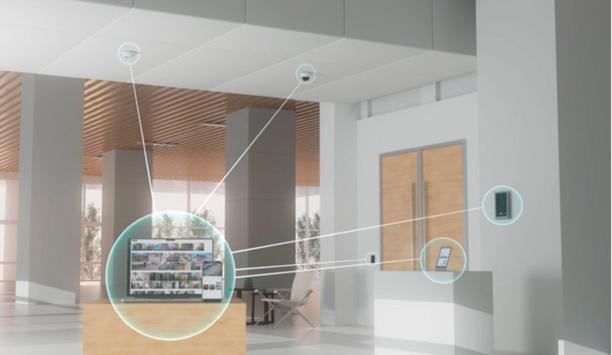
5 Ways To Strengthen Physical Security With An Integrated System
Download
11 Advantages Of A Combined System For Access Control And Intrusion
Download
Wireless Access Control eBook
DownloadVideos


Security management: Manufacturers & Suppliers
- Dahua Technology Security management
- Vicon Security management
- Seagate Security management
- ABLOY Security management
- Bosch Security management
- CEM Systems Security management
- IFS Security management
- Hikvision Security management
- VIVOTEK Security management
- Vanderbilt Security management
- Parabit Security management
- BCDVideo Security management
- Pelco Security management
- ComNet Security management
- AV Costar Security management
- TESA Security management
- Hanwha Vision Security management
- OPTEX Security management
- DSC Security management
- Messoa Security management