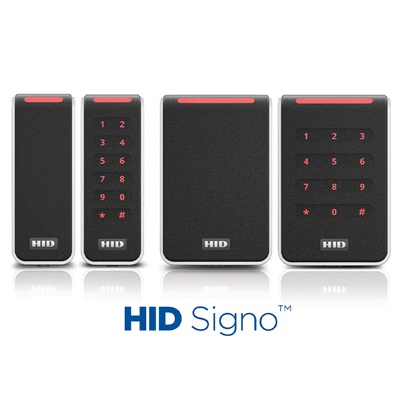



For the security market, the ‘fine ranging’ capabilities of ultra-wideband (UWB) technology opens up a range of new uses based on the ability to determine the relative position and distance of two UWB-equipped devices with pinpoint accuracy – within centimeters.
UWB is more accurate and secure, even in challenging environments full of interference, compared to narrow band wireless technologies. UWB technology transmits a large amount of data over short distances using a small amount of energy. It will be used in seamless access control, location-based services, and device-to-device services across industries including smart homes, cities, retail services, and healthcare.
Increasing the accuracy of ranging measurements
UWB technology will support any application that benefits from knowing the precise location of a connected deviceUltra-wideband is a mature radio technology that transmits information spread over a large bandwidth, as described by the IEEE 802.154 standard. A new, enhanced amendment to the standard – IEEE 802.15.4z – focuses on improvements to existing modulations to increase the integrity and accuracy of ranging measurements.
Moving forward, UWB technology will support any application that benefits from knowing the precise location or presence of a connected device or object. This reflects a move from data communication to secure sensing.
New capabilities of UWB are largely unfamiliar to the market, but a new Consortium – the FiRa Consortium – has a mission to educate the market, provide use cases, and promote UWB technology.
Delivering interoperability across devices
“With a consortium, we can better deliver interoperability across devices, software, and chipsets,” says Ramesh Songukrishnasamy, Director and Treasurer of the FiRa Consortium, and SVP & CTO of HID Global. “This creates a frictionless experience for the user, which is vitally important with a new technology. People are more likely to adopt emerging technology when it runs smoothly without interruptions or errors.”
The FiRa consortium is ensuring new use cases for fine ranging capabilities can thrive"
An industry consortium can create a UWB ecosystem of interoperable technologies instead of individual companies launching products that consumers struggle to make work together, says Songukrishnasamy. “Simply, the FiRa consortium is ensuring new use cases for fine ranging capabilities can thrive.”
Founding members of the FiRa consortium
ASSA ABLOY and HID Global, pioneers in secure access and identity solutions, are founding members of the consortium. Their technology manages access to physical and digital places, things, and identities. Another founding consortium member, NXP Semiconductors, is a pioneer in secure connectivity solutions for embedded applications.
Other founding members are Samsung, which creates top-of-the-line TVs, smartphones, wearables, and other connected devices; and the Bosch Group, a global supplier of technology and services that is at the forefront of IoT innovations. Sony Imaging Products & Solutions Inc., LitePoint and the Telecommunications Technology Association (TTA) are the first companies to join the newly formed organization.
Immune to radio frequency interference
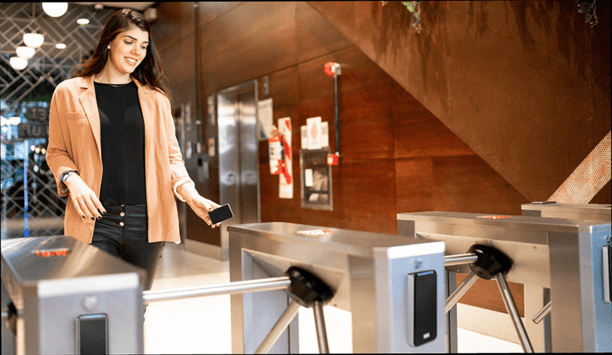
UWB is also immune to radio frequency interference, so it functions in high traffic settingsUWB introduces higher levels of accuracy in positioning capabilities and increased security for ranging data exchange compared to existing technologies. Fine ranging with UWB technology can localize devices and objects to 10 centimeters of accuracy with or without line of sight. UWB is also immune to radio frequency interference, so it functions in high traffic settings. These capabilities will enable a variety of use cases like secure, hands-free access control in hospitals, location-based services for ride sharing, and targeted marketing for retailers. FiRa will demonstrate UWB technology at upcoming trade shows.
The FiRa Consortium aims to build on IEEE’s work with an interoperable high rate physical layer (HRP) standard, including defining an application layer that discovers UWB devices and services and configures them in an interoperable manner. The consortium also plans to develop service-specific protocols for multiple verticals and define necessary parameters for applications including physical access control, location-based services and device-to-device services.
Promoting the adoption of UWB solutions
As a consortium, FiRa is not just setting standards but actively championing use cases for UWB technology. Creating the consortium addresses the need to develop interoperability and implementation standards; brings key players together to create a rich UWB ecosystem; allows for the sharing of intellectual property; and promotes the adoption of UWB solutions.
The FiRa Consortium is committed to educating and promoting new use cases"
“Since UWB is a mature technology with new potential uses, there is a general lack of awareness of potential applications that take advantage of the technology,” says Songukrishnasamy. “The FiRa Consortium is committed to educating and promoting new use cases.” The FiRa name comes from Fine Ranging to highlight UWB technology’s use cases and distinction from older UWB technologies and solutions.
Enhanced security in challenging environments
Fine ranging powered by UWB can outperform other technologies in terms of accuracy, power consumption, robustness in wireless connectivity, and security, especially in challenging, high density environments. UWB previously served as a technology for high data rate communication and as such was in direct competition with Wi-Fi. Since then, UWB has undergone several transformations:
- UWB has evolved from an OFDM-based data communication to an impulse radio technology specified in IEEE 802.15.4a (2ns pulses with Time of Flight); and
- A security extension being specified in IEEE 802.15.4z (at PHY/MAC level) makes it a unique secure fine ranging technology.
Moving from data communication to secure ranging allows ‘spatial context capability’ to be utilized by a variety of applications: seamless access control, location-based services, and device-to-device (peer-to-peer) services. Information is available at firaconsortium.org.
Learn why leading casinos are upgrading to smarter, faster, and more compliant systems

- Network / IP
- Physical security
- Hospital security
- Healthcare security
- Security devices
- Security access systems
- Radio frequency Identification
- Identity management
- Security training
- Retail security
- Security software
- Security service
- Security communication
- Mobile communications
- Internet of Things (IoT)
- City Surveillance
- Smart home