Smart home



News

Identiv, Inc., a global pioneer in RFID- and BLE-enabled Internet of Things (IoT) solutions, today announced the expansion of its ID-Tiny product family, a portfolio of ultra-miniaturised HF/NFC inlays and tags designed to bring secure digital intelligence to compact products, small components, and high-value items where space is extremely limited. The expansion opens new possibilities for connecting physical objects that have historically been too small, too design-sensitive, or too irregularly shaped for conventional RFID and HF/NFC deployments. From jewelry and eyewear to surgical instruments, pharmaceutical vials, wireless earbuds, and personal care product caps, ID-Tiny enables brands and manufacturers to add secure digital functionality without changing how a product looks, feels, or functions. Without compromising performance “ID-Tiny is about making digital identity possible in places where it simply wasn’t practical before,” said Dr. Manfred Mueller, CSO of Identiv. “When you can bring secure, smartphone-readable HF/NFC functionality into form factors no larger than a grain of rice, you unlock entirely new use cases – from verifying a luxury ring’s authenticity to tracking the use of a surgical instrument or connecting a patient to dosage instructions from a vial – without compromising performance. That is the power of miniaturisation: it makes the smallest physical objects part of the digital world.” Across use cases, ID-Tiny helps turn compact products into secure, verifiable touchpoints – enabling authenticity checks, usage tracking, tap-to-pair experiences, patient engagement, and lifecycle visibility in applications where conventional RFID has been difficult to deploy. Surgical instrument tracking For luxury goods and fashion brands, ID-Tiny can enable discreet digital certificates of authenticity, Digital Product Passport (DPP) compliance, extended warranty registration, insurance activation, ownership verification, and protection against counterfeiting and gray market diversion. In healthcare, ID-Tiny can support surgical instrument tracking, sterilisation cycle monitoring, medical consumable authentication, pharmaceutical vial tracking, and patient-facing digital instructions. In consumer electronics and smart home applications, ID-Tiny can enable product pairing, accessory verification, replacement part authentication, and lifecycle service support. Designed for real-world deployment For food, beverage, beauty, and personal care brands, ID-Tiny can help protect product integrity while creating new consumer touchpoints – from authenticity checks and anti-refill protection to usage instructions, loyalty experiences, and post-purchase engagement. This can help organizations reduce counterfeit losses, lower warranty and fraud costs, improve operational efficiency, accelerate authentication processes, improve recall management, and ultimately strengthen consumer trust. The expanded ID-Tiny portfolio includes eight distinct tags across multiple form factors – one of the industry’s broadest selections of miniature HF tags – giving customers flexibility to integrate HF functionality into a wide range of compact products, surfaces, and materials. The family supports ISO15693 and is compatible with leading IC technologies including NXP ICODE® 3 and STMicroelectronics ST25TV, with label sizes smaller than a pencil eraser. Ultra-miniaturised RFID design Identiv supports customers from design through deployment with encoding and personalisation services, application testing, rapid prototyping, and scalable manufacturing capacity. This enables customers to move from concept to production while addressing the RF performance, integration, and manufacturing challenges that come with ultra-miniaturised RFID design. “Smaller tags do more than solve a space problem. They make HF functionality possible in places where there was never room for it before,” continued Mueller. “Every connected object starts with a digital identity. By making it practical to add that identity to smaller and often more challenging form factors, ID-Tiny expands what organizations and end users can connect, track, authenticate, and engage with across the physical world.”
ADT, the pioneer in smart home security solutions, announced it has joined the Board of Directors of the Connectivity Standards Alliance (CSA), the global organization behind Matter, Zigbee and Aliro — foundational standards shaping the future of connected living. The appointment places ADT alongside leading technology innovators, including Apple, Google, Amazon, Samsung and LG, reinforcing the company’s role in guiding the next era of secure, smart home experiences. Alexander Crettenand, ADT’s VP of Software Engineering, and Tai Nguyen, Senior Director of Firmware Engineering, will represent ADT on the CSA Board. A market built on connection — and protection The smart home market continues to expand rapidly, creating new opportunities for consumers and providers alike. Today, 63% of U.S. households own at least one smart home device, and global smart home spending continues to accelerate toward a projected $633 billion market by 2032. At the same time, home security has become a mainstream necessity, with 61% of U.S. households now having at least one security camera, up from 52% in 2024.1 While tens of millions of households have adopted smart home devices and sensors, sustained investment is increasingly tied to ongoing services that deliver real peace of mind and protection, such as 24/7 professional monitoring, emergency response and AI-driven insights. About 40% of security device owners subscribe to premium services, highlighting the shift from one-time purchases to continuous protection models.2 ADT’s position on the CSA Board reflects this evolving reality that the value of smart homes is no longer defined by devices alone, but by how effectively those devices work together to deliver trusted security and protection outcomes. This is essential to ensuring that security-grade performance is embedded into the foundations of the connected home. Solving fragmentation where it matters most As the smart home ecosystem expands, fragmentation remains one of the industry’s most significant challenges. Without interoperability and common standards, consumers are often forced to act as the “integration layer” between disconnected systems, leading to inconsistent experiences and reduced reliability. For security applications, those gaps can carry real consequences. Interoperability in security is not just about connecting devices. It is about systems agreeing on what is happening and what action to take when every second counts. From alert verification to notifying first responders, delays or inconsistencies can directly impact outcomes. That’s why ADT continues to support open standards, ensuring our customers benefit from an ever-growing set of options for their homes. “Open standards are the foundation for a smart home that truly works for the people living in it,” said Gilles Drieu, ADT's Chief Technology Officer. “As the industry embraces Matter and other shared protocols, our role is to make sure security, the layer where seconds matter most, is built into that foundation from the start, not added on afterward.” Join ADT at Unify 2026

The Connectivity Standards Alliance (Alliance) officially welcomed attendees to Unify, its premier public event created to accelerate the adoption of open standards across the Internet of Things (IoT). Taking place in Austin, Texas, Unify brings together the companies, innovators, and Alliance Members from around the world to explore the future of secure, interoperable connectivity. As Alliance technologies continue to define the future of open standards and connected experiences, Unify puts them to work, accelerating the next era of the IoT across homes, buildings, energy, and emerging smart environments. At a time of rapid transformation, the event creates a dedicated space to combine the technologies, partnerships, and shared vision shaping the future in connected living. Redefining connected technologies A powerhouse lineup of visionaries, analysts, and market experts will take the stage to define what lies ahead for the IoT. Kevin Ashton, the technologist who coined the term “Internet of Things,” opens with a fireside chat with Alliance President and CEO Tobin Richardson on how far the idea has come and where it goes next. A slate of influential analysts follows, delivering critical insight into the market forces redefining connected technologies. Jennifer Kent, Ph.D. of Parks Associates, will reveal what consumers and businesses are demanding from the next wave of innovation. Bill Curtis of Moor Insights & Strategy maps how emerging markets reshape the global landscape. Jennifer Pattison Tuohy of The Verge will press ecosystem leaders in a moderated discussion on the future of open standards. Consumer Reports’ Stacey Higginbotham leads a hard look at product and cybersecurity, while colleague Dan Wroclawski brings the leaders of Bluetooth, Wi-Fi, Thread, and the Alliance onto one stage—the people driving how connectivity works. Jitesh Ubrani from International Data Corporation (IDC) will present data and lead a conversation on global smart home trends. Tech Insights’ Jack Narcotta moderates a panel on what industry certification actually guarantees, and demystifies the moving parts. Radu Marculescu, who holds the Laura Jennings Turner Chair in Engineering and is Professor of Electrical and Computer Engineering at the University of Texas at Austin, closes the event with a fireside chat about what decision-makers should do over the next 12 months and how to read the shift underway. Open standards wave “The Alliance and its membership are at the forefront of the open standards wave, accelerating innovation in connected things,” said Tobin Richardson, Alliance President and CEO. “We built Unify to help forge the next chapter, giving decision-makers the clarity to move fast enough to be the foundation everything else gets built on.” “What makes Unify so significant is not only the technologies on display, but the collective effort required to bring them to life,” said Musa Unmehopa, Alliance Board Chair and Head of Wireless Standards & Regulations at Signify. “The Alliance and its Members are proving that open standards can unlock new markets, drive deployment, and create more trusted experiences for consumers worldwide.” IoT value chain The Alliance is proud to welcome ADT and Telink as two pivotal additions to its leadership in open standards, joining a distinguished group of executives on its Board of Directors and building out an already industry-pioneer cadre of technology innovators. With more than 900 global Members across the entire IoT value chain, the Alliance reflects the growing demand for interoperable, scalable, and secure technologies, from silicon providers and platform companies to retailers and regulators. “As a leader in security for more than 150 years, ADT understands what it means to protect the places people care about most. We believe the future of security is built on open standards, which are essential to realising the full potential of the IoT. Joining the Connectivity Standards Alliance Board of Directors lets us bring our security expertise to help shape the next generation of interoperable, scalable technologies that consumers and businesses can trust,” said Gilles Drieu, Chief Technology Officer, ADT. Delivering innovative solutions “Telink has been deeply engaged in [Alliance] technology and related industries since the company’s start, continually striving to deliver innovative solutions that make connected living seamless and accessible. Upgrading our membership and joining the board is both an honor and a major milestone for us; it underscores our unwavering commitment to advancing open standards that foster collaboration across the industry.” “By contributing to the development of global interoperable standards, we aim to empower device makers, developers, and consumers alike with technologies that are reliable, secure, and future ready. This step reflects our vision of a truly connected world where smart devices work together effortlessly, creating meaningful value for households and businesses everywhere”, said Wenjun Sheng, CEO of Telink. Global interoperable standards Unify is where the Alliance is launching the latest advancements in its technology portfolio – moving open standards and the industry forward on interoperability, security, and large-scale IoT deployment. This year’s event marks the latest releases of Matter and Product Security. Building on the momentum of previous Matter releases, Matter 1.6 continues to expand the foundation for more intelligent, interoperable, and context-aware connected environments. This focused feature release enhances how devices interact across ecosystems, improves their ability to adapt to user preferences, and provides a deeper understanding of device status, offering greater visibility into the information consumers need to confidently manage their smart home experience. Smart home experience Additionally, in response to the growing complexity of global IoT cybersecurity requirements, the release of Product Security 1.1 is the latest evolution of its Product Security Certification Program. Designed to help manufacturers navigate increasingly fragmented regulatory landscapes, version 1.1 expands the program beyond individual devices to support complete IoT systems, including apps, gateways, and remote processes, while introducing new levels of security assurance through independent testing pathways. Looking ahead, the Alliance is expanding its influence into new domains with its recent launch of Aliro, the new industry-standard communication protocol designed to create a secure and consistent experience for mobile credentials, allowing smartphones and wearables to act as universal keys for doors and openings. Beyond mobile credentials, Aliro lays the foundation for a new era of connected access, streamlining entry across commercial and industrial spaces. Automate energy delivery The Alliance continues expanding its impact in the Smart Energy sector, advancing technologies designed to optimize and automate energy delivery while supporting sustainability and decarbonisation initiatives. Through ongoing enhancements to Matter and Zigbee, and a liaison agreement with OpenADR Alliance, advancement continues toward a more connected and intelligent energy ecosystem. Commercial and industrial IoT is where the Alliance’s influence is expanding fastest, with open standards enabling intelligent building automation and large-scale deployments across previously disconnected environments. As Matter adoption continues, it remains the foundation for this growth, simplifying development for manufacturers while increasing compatibility for consumers. Real-world market progress As AI and the IoT increasingly converge, Unify shows how open standards turn that convergence into real-time intelligence, predictive insights, and more autonomous operation in connected systems. By convening the organizations shaping connectivity across the global value chain, the Alliance is helping transform open standards into tangible, real-world market progress. From consumer devices to commercial infrastructure, the collaboration and innovation featured throughout Unify will accelerate a more secure, scalable, and interoperable future for all.

Technology is changing the way we experience our living and working spaces. KNX has become a flexible, globally adopted standard for building automation, helping streamline everything from smart lighting to HVAC management. Within the KNX ecosystem, DNAKE offers a distinct advantage: the ability to control both your intercom system and home automation together through one cloud-based app – the DNAKE Smart Pro App. In this article, we’ll explore the key benefits of KNX and why DNAKE’s KNX product range is a solid choice for residential and commercial projects. What Is KNX and how does it work? KNX is an open protocol for building automation, recognized with CE certification and widely accepted in global markets. It allows various devices and systems — including lighting, heating, ventilation, and security — to be wired together into a single, cohesive platform. KNX relies on a decentralized communication model. Sensors, actuators, and other devices talk directly to each other over a shared BUS. This distributed design makes KNX highly reliable, easily scalable, and suitable for buildings of any size, from small offices to large commercial complexes. Thanks to its CE marking and adherence to international standards, KNX remains one of the most durable and future‑proof automation systems available. The advantage of DNAKE KNX Solutions Unlike most KNX vendors that focus solely on indoor automation, DNAKE combines smart home control with powerful access management. With the DNAKE KNX gateway module, you can manage both your intercom and KNX smart home automation through the DNAKE Smart Pro App and cloud platform – simplifying daily use while strengthening security. Thanks to its background in video intercom and access control, DNAKE offers a unified cloud platform (DNAKE CLOUD) that handles everything from KNX lighting, blinds, HVAC, and scenes to cloud‑based video intercom – so you can see, talk to, and remotely unlock the door for visitors whether you are at home or away. All of this is managed through the DNAKE Smart Pro App: one app, one cloud account, one seamless experience. This integration is a major differentiator for large residential communities and high‑end commercial projects. Comprehensive KNX capabilities Like any standard KNX system, DNAKE supports broad interoperability with RS485 devices (via a converter) and offers fine‑grained comfort control: personalized lighting scenes, automated blinds based on weather, and intelligent temperature scheduling. These features are well‑known in the KNX world, so we won’t repeat them at length here. What truly sets DNAKE apart is the community‑wide connectivity described above. Conclusion DNAKE KNX solutions bring together seamless intercom integration, a unique community‑to‑home cloud platform, and all the proven benefits of KNX into one easy‑to‑manage system. These advantages make DNAKE KNX a future‑ready choice for any residential or commercial project – especially those that demand a unified experience from the community gate all the way to the bedroom. If you are considering KNX for your next project, DNAKE can help you create a tailored solution that addresses today’s requirements and grows with your future needs.
Expert commentary
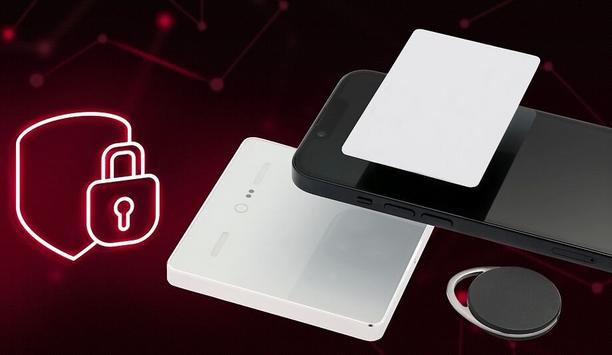
In logistics hubs, production facilities and distribution centers, the access control system is invisible—until it isn't. For decades, the 125 kHz card has been the workhorse of industrial credentialing: inexpensive, reliable and universally understood. It does exactly what it has always done. That consistency has served many organizations well, even as security needs and credential From authentication to smart buildings, gain expert insights about unified access. The same card technology that opened the warehouse gate in 2005 is opening it today. And while operations teams have upgraded conveyors, ERP systems and warehouse management platforms, the front door has often remained on technology selected for an earlier era. Major operational event Why? It is rarely about a lack of awareness. More often, organizations are balancing cost, time and operational risk. In a facility that never stops, a full systemwide upgrade can feel less like a routine project and more like a major operational event. The path forward is continuous modernisation: deploying an agile access layer that adapts to new security requirements and credential technologies over time, rather than replacing everything at once. Universal reader technology makes that possible, without the “Big Bang” shutdown. Why legacy systems can benefit from modernisation The 125 kHz card (also named proximity, prox or low-frequency) helped set a practical standard for convenience and broad compatibility, but many organizations are now evaluating where its security model can be improved by newer options: Increased cryptographic protection. Traditional low-frequency credentials transmit a fixed identifier, which can make them harder to align with today’s expectations for encrypted and dynamic authentication. Increased credential validation. Traditional proximity systems do not provide the kind of mutual authentication or challenge‑response mechanisms that are increasingly common in newer credential platforms. Better protection from duplication/cloning. Because the credential model is comparatively simple, 125 kHz cards present fewer barriers to duplication or cloning than modern encrypted credentials which are inherently designed to better distinguish authorized users from copied identifies. An opportunity to secure the full path. Many legacy deployments also rely on Wiegand communication between reader and controller, creating a strong case for modernisation to encrypted, supervised protocols that help protect credential data in transit. Keeping the interoperability benefit of Prox. Newer open standard provides the same interoperability benefits while addressing improved security. The opportunity for the front door At the same time, security teams face an expanding threat landscape and compliance requirements A traditional access control upgrade is not just a technology swap. It means new readers at every door, new credentials issued to every employee and contractor, platform reconfiguration and installation labor across a facility that cannot afford to stop. Against that backdrop, the rational choice is often to do nothing. At the same time, security teams face an expanding threat landscape and compliance requirements that increasingly demand encrypted credentials. And with Apple Wallet corporate badges and BLE mobile credentials moving into the mainstream, employees and contractors will soon expect to use their phone as their badge, at least as an option if not the primary means of credential presentation. Four specific friction points keep organizations locked in place long after they know they should move. The logistical bottleneck - Replacing a proximity-based system has traditionally meant doing everything at once: new readers, new credentials, new platform configuration, every employee and contractor rebadged before the cutover date. For a site running 24/7 with extensive staff and rotating contractors, that isn’t just an upgrade. It’s a logistical nightmare requiring a hard shutdown. The rebadging event alone, coordinating hundreds or thousands of people through a credential transition on a fixed timeline, can consume weeks of HR and security operations bandwidth. The Credential Soup - Most logistics organizations are not running one clean credential population. They are running three or four: legacy prox for permanent staff, a different format inherited from an acquisition, a contractor badge system managed by a third party, a mobile pilot that never fully rolled out. None of them talk to each other, and no single reader handles all of them. Frozen Infrastructure - Static readers support only the credential formats they shipped with or have limited format support for updates. When a new vulnerability is disclosed or a new mobile standard is released, the hardware has no path to adapt. The only option is physical replacement, which means another capital project, more installation labor, and the same shutdown risk all over again. The Cyber-Physical Gap - IT departments run zero-trust architectures and encrypt everything on the network. Then the same organization unlocks its server room with a Wiegand-protocol reader transmitting credentials in plain text. The IT security perimeter ends at the network edge. The physical front door is a different conversation entirely, and often nobody's budget. The way forward: Continuous modernisation of access credentials A continuous modernisation plan is both easier and more cost-effective than a one-time “rip-and-replace” event The answer to the Big Bang problem is not a better-planned Big Bang. It is a fundamentally different approach to access infrastructure that treats modernisation as an ongoing capability rather than a one-time event. A continuous modernisation plan is both easier and more cost-effective than a one-time “rip-and-replace” event. It significantly lowers the labor and logistical costs of rebadging the entire organization at once and eliminates the need for forced downtime entirely. Instead, organizations upgrade incrementally (by site, by department, or as credentials expire), keeping operations running and spreading costs over time. And with future-proof universal reader technology, the reader stops being a fixed asset and becomes a platform that continues to evolve as needs change. Start with a universal infrastructure The foundation of continuous modernisation is a universal reader that can handle whatever credentials are already in the building (legacy proximity, modern smart cards, mobile credentials) while remaining ready for whatever comes next. As access technologies continue to evolve, support for additional credential formats and security approaches can be added through firmware updates rather than hardware replacement, ensuring a secure and future-proof access system. The burden can further be eased by the use of a universal credential that can support existing formats along with new formats, enabling the credentials to work on existing readers as well as new readers. Let old and new credentials coexist Legacy 125 kHz cards continue to function in parallel until the organization is ready to retire them With a multi-technology reader in place, the rebadging process becomes a rolling transition rather than a synchronized event. New employees get modern credentials from day one. Existing staff transition as badges are renewed or departments are prioritised. Legacy 125 kHz cards continue to function in parallel until the organization is ready to retire them. Eventually, 125 kHz support or insecure credential support can be switched off, cleanly and deliberately, via a remote firmware update. That means no forced downtime, and no mass confusion at the turnstiles. This applies equally to secure migration to either modern symmetric credentials (such as HID Seos or LEAF) or emerging asymmetric credentials (such as PKOC, Aliro or LEAF Verified). Secure the whole chain, not just the card Upgrading credentials without addressing the communication layer is only half the job. Moving from Wiegand to OSDP Secure Channel (a bidirectional, AES-128 encrypted protocol) closes the replay attack vulnerability and adds tamper detection between reader and controller. Modern credentials and a secure communication layer together protect the entire authentication chain, from the card or smartphone all the way to the access control platform. This becomes critical when the reader is handling the decryption of a secure credential and then communicating to the panel in clear text. OSDP encrypts this last step of communication, while also offering industry best practices for managing reader devices. Choose infrastructure that doesn't choose for you Interoperability is not just a convenience feature. It is a strategic asset Interoperability is not just a convenience feature. It is a strategic asset. A facility running universal reader infrastructure compatible with most transponder technologies and credential formats (physical and mobile) is insulated from vendor lock-in and the next credential transition. Universal readers also act as merger-and-acquisition insurance: when a company acquires a facility running a different badge system or a contractor arrives with an unfamiliar card format, existing readers can be configured to accept the new credentials from day one. As access technologies and credential standards continue to evolve, organizations with adaptable reader infrastructure will absorb that shift as a firmware update. Those without it will face another capital project. A market in motion: beyond legacy credentials Emerging open standards (which reduce vendor dependency) and widely adopted proprietary platforms are both moving the market toward stronger cryptography. These credentials can be delivered on physical smart cards, mobile devices or both. Organizations selecting reader infrastructure today should ensure it is prepared to support this transition without requiring a hardware swap. Several initiatives are gaining significant traction: LEAF Identity: An interoperable credential framework built on strong symmetric encryption, already deployed across a meaningful number of installations and a proven replacement path for legacy proximity systems LEAF Verified: A next‑generation physical access credential platform built on NXP’s MIFARE DUOX that uses public‑key cryptography to eliminate traditional shared key management and enable interoperable, vendor‑neutral access control. PKOC (Public Key Open Credential): An open, vendor-agnostic credential specification from the Physical Security Interoperability Alliance using asymmetric public key cryptography, in which the private key never leaves the device and a derivative of the public key is the credential Aliro: An open mobile-first credential standard released in February 2026 by the Connectivity Standards Alliance (CSA), the organization behind the Matter smart home standard. Backed by Apple, Google, Samsung, and 220+ industry members providing native wallet, offline device support and mailbox features on top of asymmetric public key cryptography. HID Seos: A widely deployed proprietary credential platform that continues to drive responsible, large-scale secure symmetric-based encrypted deployments across small to enterprise environments for both card and mobile deployment, including wallet. Security that scales The same principles apply equally to a single site or a logistics operator running 5,000 employees The same principles apply equally to a single site or a logistics operator running 5,000 employees across a dozen sites. Because no single cutover date is required, a large organization can sequence the migration by site, by department or by credential expiry cycle. The operational risk that makes a traditional upgrade unthinkable at scale becomes manageable when the transition is invisible to the people walking through the doors. The pressure to act is reaching a tipping point. Apple Wallet corporate badges and BLE mobile credentials are arriving in earnest in 2026, as well as asymmetric smart card options. These technologies are rapidly moving from isolated pilots into mainstream enterprise deployment across logistics, manufacturing and production environments. Evolve security infrastructure Organizations that have already invested in universal reader and credential infrastructure that is firmware-updateable and mobile-ready will absorb that shift without a second thought. Those that haven't will face another rip-and-replace decision just as the mobile credential wave hits. Organizations that have already invested in universal reader and credential infrastructure Continuous modernisation is not a one-time project. It is a permanent capability: the ability to evolve security infrastructure at the organization's own pace, without forced downtime, without mass rebadging events, and without being held hostage to the next credential transition. Organizations that build that capability today are not just solving a security problem. They are future-proofing the way their facilities move. Universal access from ELATEC ELATEC's TWN4 universal readers are built on an agnostic design strategy: multi-technology, multi-frequency, and software-configurable, so organizations are not locked into a single credential technology or vendor. Key capabilities across the TWN4 family: Support for 100+ physical and mobile credentials and 60+ transponder technologies RFID, NFC, and BLE in a single reader platform Software-configurable via the ELATEC DevPack: credential formats, encryption settings, and security protocols can be updated remotely without hardware replacement Supports backward and forward compatibility as new standards emerge Available in a range of form factors for door access, desktop enrollment, OEM integration, and industrial applications
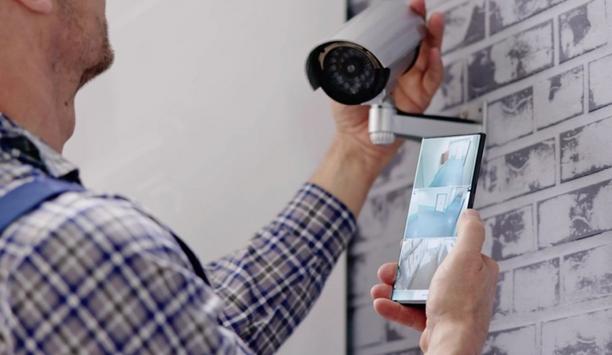
As part of ever-evolving technological advancements and the increase in digitization, home security systems remain a vital piece of equipment for at least 39 million households in the U.S., and as many as 13 million more households may install new security systems in the next 12 months. Global home security market In addition, a recent study found that 60% of burglars are deterred from attempting a burglary when a home has a security system, looking for alternative targets that are easier. Another similar study found homes without security systems are 300% more likely to experience a burglary. It’s estimated the global home security market is expected to grow to $84.4 billion as more and more people install home security systems as a way to ensure their safety. High-tech security devices Home security systems and the technology behind them will continue to expand and integrate further With the ongoing need for home security systems and the introduction of technology such as Artificial Intelligence (AI), home security companies are finding new and innovative ways to improve the home security experience by installing high-tech security devices. These devices are changing how we protect our homes, valuables, families, pets, and more. As we look ahead to the future, home security systems and the technology behind them will continue to expand and integrate further within the home as AI evolves and takes on a more meaningful and deeper role in the home security industry. Features of AI-based home security systems Most home security systems already use AI regularly for features like smart cameras, motion sensors, and alarms. These offerings incorporate AI to detect and respond to potential security threats, differentiating between everyday activities and potential suspicious behavior and then alerting homeowners based on the activity. As AI expands the capabilities of critical security features such as facial recognition, voice control connectivity, and enhanced video capabilities, it will significantly improve the traditional security systems we use today, providing additional means of not only protecting homes but also streamlining the overall home security system. Future advancements in AI home security systems Increased integration of security devices through AI As AI continues to evolve, we can expect to see increased integration and connectivity of devices included in a home security system and home – all powered by AI. This includes hardware such as cameras, motion detectors, keypads, sensors, and smart locks, as well as software, such as digital apps. This increased connectivity will not only make it easier for homeowners to manage their security system but also to customize their home and home security to meet their evolving needs. Voice control connectivity The new hands-free approach to home security enhances the user experience and opens up new possibilities Voice control connectivity is yet another key feature that is gaining popularity in AI-powered home security systems. Security system users can control and monitor their security systems using voice commands similar to how Amazon’s Alexa works, making security systems more convenient and user-friendly. The new hands-free approach to home security not only enhances the user experience but also opens up new possibilities for seamless integration with other smart home devices and mobile devices. AI will help personalize and individualize security settings Relying more heavily on facial recognition technology, AI algorithms integrated into home security systems will become more personalized and tailored to individual users based on their preferences. Imagine a security system that recognizes each member of your family and adjusts its settings and alerts based on each user’s unique preferences and habits. Thanks to facial recognition improvements in recent years, this new level of customization will enhance security and improve the ease of use, making home security more intuitive and user-friendly. By incorporating personalization via AI into home security systems, simple tasks like disarming the system when returning home or arming the system before going to bed at night will be much more efficient, and security settings will be saved based on each user’s preferences. AI will analyze threats before they become emergencies AI-powered automation will play a heightened role in the future of home security systems as it learns to proactively analyze and respond to potential threats, security breaches, and emergencies like fires or carbon monoxide leaks. Through real-time monitoring, AI will begin to predict and prevent security breaches before they occur, working efficiently with human counterparts for an effective approach to security monitoring. Security monitoring AI linked to a carbon monoxide detector may notice the levels rising before they reach a dangerous level For example, through camera monitoring, AI will learn how to tell the difference between normal and suspicious activities, automatically adjusting your security settings and alerting you of a potential risk. Similarly, AI linked to a carbon monoxide detector may notice the levels rising before they reach a dangerous level and alert the security system user and monitoring service in advance. The AI evolution of home security The traditional idea of home security systems, with physical locks, keypads, and alarms, is rapidly changing into a more intelligent system powered by AI. Just as the cell phone industry revolutionized communication by making phones constantly accessible to us all, AI is on the cusp of transforming our home security systems into a much safer and more user-friendly experience. Shortly, we’ll see a world where every aspect of home security systems is easily accessible on one or multiple devices within the home or even on mobile devices, boosted by the help of AI. From keyless entry systems that recognize our faces to AI assistants that communicate with us and adjust settings based on our preferences, the possibilities are truly endless. A safer, smarter, and more secure future As AI continues to advance and becomes more integrated into home security systems and life in general, the future will bring enhanced safety, security, convenience, and peace of mind for homeowners. As we move towards a future where AI plays a larger role in our daily lives, we can expect to see a shift in the way we think about and approach home security systems – in fact, it’s already happening. The traditional security setup of the past is being replaced by a new era of intelligent, interconnected, and proactive home security systems that work seamlessly. With AI as our ally and incorporated into our home security systems, we can look forward to a safer, smarter, and more secure future for our communities, homes, and loved ones.

Changing customer needs can make specifying an alarm system that will continue to deliver in the long term a challenge. However, the latest modular alarm solutions provide the opportunity to build a more individualized system from the outset, as well as offering the ability to up-scale in the future without causing disruption. Martin Wilson, North EMEA Regional Director at Resideo, looks at how alarm specialists can use this style of solution to both benefit customers and build their own business opportunities. Holistic sense of home security An alarm system no longer needs to function on one level, alerting only to a break-in taking place In a survey of 1,000 homeowners undertaken by Resideo, the results revealed that, although deterring burglary was still a top priority, consumers were moving to a more holistic sense of home security, wanting to bring convenience, and property and life safety, into the mix. Indeed, an alarm system no longer needs to function on one level, alerting only to a break-in taking place. The latest modular alarm systems offer the flexibility to create a scalable security and life safety platform for homes and small businesses, as well as giving installers the ability to suggest future update options that can be added as and when budget or requirement allows. Valuable up-scales Finding an alarm that can be scaled over time has the obvious business benefit of ensuring it is easy to revisit and add to as customers naturally expand their existing security. With many modular designs connected via WiFi, this not only means installers can opt for the right mix of sensor options from the get-go but also that any additions can be connected to the panel and system with ease. Many control hubs have winning features in their own right. The ProSeries security panel by Resideo, for instance, has an intuitive touchscreen, easy-to-read, full-color display to reduce false alarms, plus a built-in camera, speaker and microphone, intuitive icons, and even five-day weather alerts. The ProSeries security panel by Resideo has an intuitive touchscreen Natural up-scale opportunities For instance, for those in a property prone to flooding, a flood sensor may be a worthwhile addition For the installer, it has a plug-in power connection, trouble-shooting videos, and end-user-replaceable batteries to reduce unnecessary callouts. However, to build a scalable system, this needs to be coupled with the right, flexible solutions to tackle customer concerns. Taking the time to find out what is important to the end user is vital here and can lead to natural up-scale opportunities. For instance, for those in a property prone to flooding, a flood sensor may be a worthwhile addition. Similarly, a panic button and even medical transmitters may be of benefit to others. All this, as well as other options, such as glass break detectors, door and window sensors, and indoor and outdoor MotionViewers™, are available within the ProSeries range, and can be updated or added to an installation as needed or as a property grows with minimum disruption. Adding life safety The ability to propose an alarm system that can bring together alerts for different threats – for both the home and life – under one platform, also has real appeal. Indeed, in a survey of 1,000 homeowners undertaken on behalf of Resideo, a system’s ability to alert to the dangers presented by fire and CO was mentioned as an important part of the decision-making process by 41% of participants. For many, this increased awareness may stem from the many regulation updates regarding smoke and carbon monoxide (CO) alarms that took place in 2022. In Scotland, for instance, carbon monoxide detectors were required to be fitted in any room with a carbon-fueled appliance in all homes, rented or owned. Social housing properties In England, smoke and carbon monoxide alarms were required in all social housing properties In England, from the 1st of October 2002, smoke and carbon monoxide alarms were required in all social housing properties, with carbon monoxide alarms now mandatory in the private rented sector. Wales followed suit in December for rented accommodation. The new guidance for England and Wales requires at least one smoke alarm to be installed on each storey of a property, to help alert to domestic fires more quickly, ensuring a quicker evacuation and reduced risk of fatality. For professionals, systems such as ProSeries, can be connected to a series of smoke and carbon monoxide detectors, in a ‘one-go-all-go’ setup that means the alarm will go off if one of these threats are identified. Smart and connected benefits The total Connect 2.0 app gives ProSeries end-users the ability to view and control the security platform remotely. The Resideo Pro app currently gives installers the ability to view the system and connect to the central monitoring system. The platform also supports home automation as it works with Zwave devices. The platform also supports home automation as it works with Z-wave devices. The platform also supports home automation as it works with Z-wave devices There are also extra benefits for alarm professionals too. The AlarmNet 360™platform on which ProSeries is configured gives greater insight to improve business operations, increase efficiency and deliver insights on accounts to identify additional upsell opportunities and ongoing services. Providing the ability to remotely diagnose brings valuable time-saving options and avoids unnecessary callouts. It also means the ProSeries panel and peripherals programming can be accessed anytime, anywhere, using the cloud, allowing ease of programming, troubleshooting and account management on the go. Needs and future possibilities Changing a complete alarm system to apply new functions is never going to feature highly with the end user, nor does it work where longevity and sustainability is concerned. Having the ability to build a modular system and add to this as needed, whether this is at a property or a small business, provides benefits for both customers and professionals when it comes to meeting immediate needs and future possibilities. Add connectivity and remote access to this and you have a platform that can help streamline business operations, putting professionals more in touch with customers, and helping to spot future opportunities.
Security beat

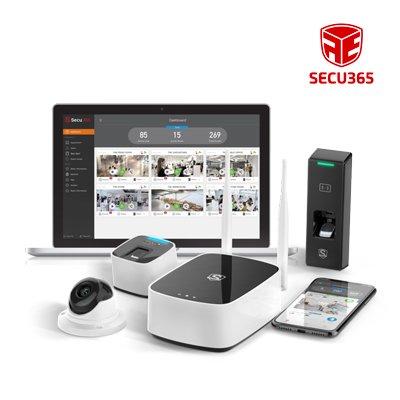
The pattern of veins in the hand contains unique information that can be used for identity. Blood flowing through veins in the human body can absorb light waves of specific wavelengths. Irradiating the human palm with near-infrared light waves yields an image of the vascular pattern. A venous distribution map can be processed and compared to pre-registered data to match and confirm identity. Palm vein biometrics The idea of palm vein biometrics goes back to the 1980s when palm vein scanners emerged as commercial products in the 1990s. The devices gained some traction in military-grade and high-security applications, although the technology was too expensive to become popular among mainstream applications such as physical access control. Anviz Global is expanding palm vein technology into mainstream applications, featuring a lower price point that will open new market opportunities. Palm vein technology “Palm vein technology has been viewed as a boutique product because it is costly and has not developed as a mainstream product,” says Mark Vena, Senior Director of Business Strategy and Development for Anviz Global. “With a more compelling price point, the market can see the technology more broadly. We can change the game in terms of how people think about palm vein technology.” FAR and FRR Palm vein technology is more accurate than either fingerprint (0.0001% FAR) or facial recognition (0.001% FAR) Iris recognition is considered the gold standard in biometric identification, but palm vein technology can almost achieve the accuracy of iris. The false accept rate (FAR) for palm vein technology is 0.00008%, compared to 0.00005% for iris recognition systems. The false reject rate (FRR) is comparable at 0.01% for either technology. Palm vein technology is more accurate than either fingerprint (0.0001% FAR) or facial recognition (0.001% FAR). Palm vein identification occurs in less than half a second. M7 Palm “Anviz is seeking to bring a high level of capability to more mainstream commercial applications,” says Vena, specifically providing a lower-cost palm vein unit. The M7 Palm by Anviz can achieve next-generation biometric access control for greater security and intelligence. The door-mounted unit combines palm vein recognition with an RFID card reader and PIN code (using a 17-button keypad), all configurable for multi-factor authentication. Outdoor applications The robust unit, including a narrow metal exterior design, provides strong vandal resistance (IK10) and stability for outdoor applications. To ensure a weatherproof design, the IP66 rating indicates the product is completely protected against dust and can withstand strong jets of water from any direction. Power-over-ethernet (PoE) enables centralized power management and the ability to remotely reboot devices. Wiegand-out interface The unit communicates using RS-485 or TCP/IP and can connect locks, exit buttons, door contacts, doorbells, etc The unit communicates using RS-485 or TCP/IP and can connect locks, exit buttons, door contacts, doorbells, etc. The Wiegand-out interface can connect to standard third-party controllers, or a built-in relay can trigger a lock directly. Capacity is 500 users. Because palm vein recognition originates from the physiological characteristics of the human body, it represents a “credential” that cannot be forged, lost, or left at home. It is not easily counterfeited or worn out. Multi-factor authentication Applications include industries requiring high security such as government, judicial, and banking. Multi-factor authentication eliminates fraud and ensures safety at banks, data centers, airports, prisons, and government. An end user might opt for higher levels of access control for a laboratory or server room. For dealers and integrators, palm vein technology, including multi-factor authentication, provides an additional option for customers seeking to protect high-security areas on a large campus. Card readers Card readers may suffice for most of the doors, but an important laboratory or cash-handling area requires more protection. Palm vein technology can secure a casino cash cage or a room containing corporate secrets. Time of Flight ToF laser-ranging uses a laser to measure the distance to an object by calculating the time Time of Flight (ToF) laser-ranging achieves accurate measurement to ensure the right distance for operation. ToF laser-ranging uses a laser to measure the distance to an object by calculating the time it takes for the laser light to travel to the object and back. Palm vein technology operates in the range of 10 to 30cm (4 to 12 inches). The proprietary BioNANO palm vein recognition algorithm enables accurate and fast scanning speed. Non-contact biometric The non-contact biometric performs in touchless environments and does not contribute to lingering health concerns in the post-COVID world. The technology is accurate across all hand types and skin tones. Users may feel more comfortable scanning their hands than their eyes. Optimal human-machine interaction M7 Palm’s optimal human-machine interaction and user experience include a low-power-consumption OLED screen to deliver clear text notifications to the user. Advantages of M7 Palm include accuracy, stability, security, and privacy. Features include easy installation with standard processes and no special tools, centralized power management, simplified cabling, and less maintenance. Managing the system is expedited by integration with the Anviz CrossChex Standard access control and time management dashboard, used by more than 30,000 enterprises, and the system can be integrated with any access control system. Security for SMBs Anviz Global is a converged intelligent security provider for SMBs and enterprise organizations Anviz Global is a converged intelligent security provider for small- and medium-sized businesses (SMBs) and enterprise organizations. The company’s product line includes biometrics, video surveillance, and security management solutions based on the cloud, Internet of Things (IoT) and artificial intelligence (AI) technologies. Privacy concerns Anviz is part of the Xthings family of companies, which includes Ultraloq (smart locks), Utec (smart home), Bright (smart lighting), Secu365 (SaaS Platform), and Ulticam (smart cameras). Privacy concerns are minimized because palm vein recognition does not directly store the original image but rather extracts feature information through algorithmic models. Personal data is protected through obfuscation and encryption.
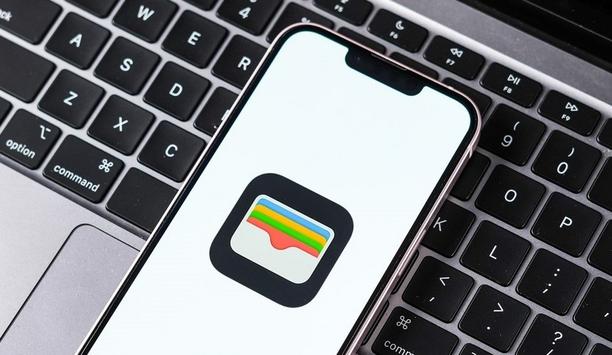
In the competitive world of physical access control, Big Tech companies are seeking to play a larger role. Physical access competition Apple Wallet continues to stake its claim on mobile credentialing. Amazon One Enterprise is pushing a palm-based identity service. Google/Nest offers smart locks for home access control, with identity and access management provided in the Google Cloud. The entry of these big companies in the historically fragmented physical access control market is causing disruption and foreboding new levels of competition. Apple Wallet Impacting Credentialing Trends The popularity of mobile wallets and contactless technologies in general has grown, creating more demand At Apple’s Worldwide Developer Conference in June 2021, the company announced support for home, office, and hotel keys, including corporate badges and student ID cards, in Apple Wallet. Later, the company announced Hyatt as the first hotel partner to support the technology. Since then, the popularity of mobile wallets and contactless technologies in general has grown, creating more demand for a seamless solution such as Apple Wallet. Easy access In 2023, HID Global announced the availability of their employee badge in Apple Wallet, allowing staff and guests to easily access corporate spaces with their iPhone or Apple Watch, including doors, elevators, turnstiles, etc. Employees just need to hold their iPhone or Apple Watch near the reader to unlock. Factors affecting the rate of adoption However, implementing and maintaining an Apple Wallet-based access control system can incur costs for hardware updates, software licensing, and ongoing maintenance. Factors affecting the rate of adoption include the need to upgrade existing infrastructures to accommodate the technology, and the necessity for access control manufacturers to develop and implement integrations with Apple Wallet. Benefits of Adoption Keys in Apple Wallet take full advantage of the privacy and security built into the iPhone and Apple Watch With larger companies leading the way, some smaller ones might take longer to catch up. There is also a need to educate building owners and administrators to see the value and benefits of switching to Apple Wallet-based access control. Convenience and greater security can accelerate adoption. Keys in Apple Wallet take full advantage of the privacy and security built into the iPhone and Apple Watch. Sensitive data protection A compatible app, specific to the building’s access control system, is needed. Once added, credentials are securely stored in the iPhone's Secure Enclave, a dedicated hardware chip designed for sensitive data protection. Holding an iPhone near an NFC-enabled reader enables the transmission of encrypted credentials. In addition to Near Field Communication (NFC), some systems also utilize Bluetooth Low Energy (BLE) for added security, longer read range, and hands-free unlocking. Phones need sufficient battery charge to function. Amazon One Enterprise Enables Palm-Based Biometrics In November 2023, Amazon Web Services Inc. (AWS) announced an identity service providing comprehensive and easy-to-use authentication for physical and digital access control. The system enables users to employ their palm as an access control credential, allowing organizations to provide a fast and contactless experience for employees and others to gain access to physical locations as well as digital assets. Physical and digital locations Physical locations include data centers, office and residential buildings, airports, hotels, resorts Physical locations include data centers, office and residential buildings, airports, hotels, resorts, and educational institutions. IT and security administrators can easily install Amazon One devices and manage users, devices, and software updates using AWS’s Management Console. Elimination of physical credentials An advantage of the Amazon approach is the elimination of physical credentials such as fobs and badges, and digital elements such as personal identification numbers (PINs) and passwords. AWS says security is built into every stage of the service, from multi-layered security controls in the Amazon One device, which is the same technology used in the Amazon Go retail stores, where shoppers can pay for purchases by scanning the palm of their hands. The devices combine palm and vein imagery for biometric matching and deliver an accuracy rate of 99.9999%, which exceeds the accuracy of other biometric alternatives, says the company. AI and ML The palm-recognition technology uses artificial intelligence and machine learning to create a “palm signature” that is associated with identification credentials such as a badge, employee ID, or PIN. Boon Edam, a revolving door and turnstile manufacturer, offers Amazon’s palm biometric technology on its equipment, and IHG Hotels & Resorts uses the technology to provide employees a convenient way to identify themselves and gain access to software systems. Google and Nest Devices in Access Control When the Nest × Yale Lock is connected to the Nest app, a resident can unlock a door from their phone Google’s Nest devices include smart locks for home access control. The Google Nest × Yale Lock allows access control via both physical keys and passcodes accessible through the Google Home app. When the Nest × Yale Lock is connected to the Nest app, a resident can unlock a door from their phone. Passcodes can be created for family, guests, and other trusted persons. Alerts can be provided whenever someone unlocks and locks the door. When Nest “knows” a resident is away, the door can lock automatically. Voice control, Google Home app Voice control, using Google Assistant integrated with various Nest devices, enables the use of voice commands to lock and unlock doors, thus adding another level of convenience. Smart home devices from various manufacturers can be controlled through the Google Home app. SMART Monitoring ADT’s Self Setup smart home security systems integrate Google Nest smart home products with ADT security and life safety technology, including SMART Monitoring technology. Microsoft Azure is another company that could impact access control. The Microsoft Azure Active Directory is an identity and access management platform that could be extended to physical access control, leveraging existing user credentials. Long-Range Impact on the Security Marketplace Big Tech companies are creating platforms for managing access control data, integrating with other security systems Increasingly, Big Tech companies are creating platforms for managing access control data, integrating with other security systems, and offering analytics for optimizing security and building operations. Big Tech is also actively researching and developing new technologies for access control, such as facial recognition, voice authentication, and AI-powered anomaly detection. Access control communication and integration As their involvement in physical access control grows, Big Tech companies could potentially gain more influence in setting industry standards for access control communication and integration, similar to how they have become dominant in other areas such as mobile platforms. Given their expertise in user interface design and data analysis, Big Tech companies could help to direct how future access control systems are managed and how users interact with them, including more intuitive and user-friendly operations. Future of physical access control Existing concerns about privacy, security, and potential dominance by a few Big Tech companies could spill over into physical access control. However, traditional security companies, startups, and industry consortiums are also actively developing innovative solutions. Ultimately, the future of physical access control will likely be shaped by a combination of many different players and technologies – large and small.

The sale of Carrier’s Global Access Solutions to Honeywell in December amounted to a dramatic finish to a big year in 2023 for mergers and acquisitions (M&A) in the physical security market. In the transaction between two industry giants, Honeywell sought to enhance and strengthen its building automation capabilities with the acquisition of Carrier’s Global Access Solutions business for $4.95 billion, in an all-cash transaction. Honeywell acquires Carrier Access business The acquisition, which includes both hardware and software solutions, will mean a new corporate owner for the LenelS2 brand, a pioneering business for over 25 years in commercial and enterprise access solutions, including well-known offerings Onguard and Netbox. In addition, the acquisition covers the Onity brand of electronic locks, including hospitality access, mobile credentials, and self-storage access; and the Supra brand of cloud-based electronic real estate lockboxes. ADT sells commercial business, which rebrands as Everon ADT Inc. announced the sale of its commercial security, fire, and life safety business unit to GTCR ADT Inc., another industry giant and a trusted brand in smart home and small business security, announced the sale of its commercial security, fire, and life safety business unit to GTCR, a private equity firm, for a purchase price of $1.6 billion. ADT Commercial, a security integrator and premier provider of commercial security, fire, and life safety in the United States, announced that it will move forward as a standalone organization and rebrand as Everon. Bosch to sell building technologies products Bosch Building Technologies announced in 2023 that it is realigning its Building Technologies division to focus solely on its regional integrator business, with solutions and services for building security, energy efficiency, and building automation. Therefore, Bosch plans to sell most of the Building Technologies division’s product business. At year-end, Bosch was seeking a buyer who would take on all three business units with their associates and locations. This includes the Video, Access and Intrusion, and Communication business units, and affects some 4,300 associates at more than 90 locations worldwide. Building its integrator business earlier in 2023, Bosch announced the acquisition of Paladin Technologies, Inc., headquartered in Vancouver, Canada, a provider of security and life safety solutions and system integration services in North America. Motorola acquires IPVideo, creator of HALO Sensor In another deal emerging late in 2023, Motorola Solutions acquired IPVideo Corp., Bay Shore, N.Y., the creator of the HALO Smart Sensor, an all-in-one intelligent sensor that detects real-time health and safety threats. The powerful capabilities of the HALO sensor extend Motorola’s end-to-end physical security offering by integrating a non-video threat detection product into the safety and security ecosystem. IDIS acquires Costar Technologies Costar has a sales channel of over 100 distributors and 1,000 systems integrators across the U.S. Korean video manufacturer IDIS and U.S. company Costar Video Systems had enjoyed a long-term existing ODM (original design manufacturer) relationship, and approximately 60% of Costar Video products were already made by IDIS. Therefore, it made sense when IDIS Co., Ltd. and Costar Technologies Inc. announced an agreement and plan to merge, with IDIS acquiring Costar. Leveraging Costar's established distribution networks and sales channels in the U.S. gives a significant boost to IDIS' growth strategy, which is founded on building long-term relationships with systems integrators. Costar has a sales channel of over 100 distributors and 1,000 systems integrators across the U.S. that will benefit from IDIS’ NDAA-compliant and 100% Korean-made technology. SECOM invests in Brivo and Eagle Eye Eagle Eye Networks, a cloud video surveillance company, and Brivo, a provider of cloud-based access control and smart space technologies, announced one of the largest investments to date in cloud physical security in 2023. SECOM CO., LTD, based in Japan and one of the largest security integration companies in the world, has made a primary equity investment of $192 million in the two companies, $100 million in Eagle Eye Networks, and $92 million in Brivo. $100M primary equity investment Brivo will also use the additional investment to continue expanding in Europe, Latin America, and Asia Pacific Eagle Eye Networks, a global pioneer in cloud video surveillance, announced it will use the $100M primary equity investment to expand its suite of AI-powered products, fund geographic expansion, and enhance its enterprise features. Brivo will use the investment to grow sales and marketing, accelerate product development scale support and operational functions, and evaluate strategic acquisitions. Brivo will also use the additional investment to continue expanding in Europe, Latin America, and Asia Pacific, and enhance the smart spaces and AI functionality in the Brivo Access Platform. ACRE buys PremiSys Portfolio ACRE, a security company built on acquisitions, is continuing to broaden its portfolio and serve the expanding needs of its customer base. In 2023, ACRE acquired the PremiSys software and hardware portfolio and assets from IDenticard. PremiSys’ technologies enable organizations to self-manage door access and view integrated video and lockdown facilities. The acquisition extends opportunities for ACRE in healthcare, education, data centers, and senior living facilities. Qognify is a part of Hexagon Qognify extends Hexagon’s real-time monitoring and security reach to detect, assess, and respond Qognify, a provider of video (VMS) and enterprise incident management (EIM) solutions announced that it has become a part of Hexagon. Qognify joins the Safety, Infrastructure & Geospatial division of Hexagon, following the completion of its acquisition originally announced on Dec. 19, 2022. Qognify extends Hexagon’s real-time monitoring and security reach to detect, assess, and respond to incidents, providing a more robust offering. ASSA ABLOY continues its acquisition trend ASSA ABLOY continued to acquire companies in 2023 to strengthen its position in mature markets by adding complementary products and solutions to the core business. Among the companies acquired in 2023 were Ghost Controls, a U.S. supplier of automated residential gate openers, and Securitech Group, a manufacturer of high-security mechanical and electronic door hardware products in the U.S. Door and fencing ASSA ABLOY also acquired Leone Fence, a Canadian manufacturer, distributor, and installer of fencing products for commercial and residential applications, and Lawrence Hardware and Gallery Specialty, providers of commercial hinges, locksets, exit devices, and door hardware accessories in Canada. Another new acquisition is Inovadoor Portas Industriais Ltda, a Brazilian manufacturer of sectional and high-speed doors. Earlier in 2023, ASSA ABLOY completed the acquisition of Spectrum Brands’ Hardware and Home Improvement division and the divestment of Emtek and the Smart Residential business in the U.S. and Canada to Fortune Brands.
Case studies

Slavija Residence Luxury, a premium residential complex in Novi Sad, Serbia, has implemented its security infrastructure with DNAKE’s cutting-edge smart intercom systems. The installation covers 16 high-end apartments, combining sleek design with advanced technology to enhance resident safety and access control. The solution In the connected world, modern residents prioritize both security and convenience—demanding access control that’s not just robust but also effortlessly integrated into their lifestyles. DNAKE’s smart intercom systems deliver exactly that, blending advanced protection with intuitive technology for a smarter living experience. Unmatched Security: Facial recognition, instant video verification, and encrypted access management ensure residents’ safety is never compromised. Effortless Connectivity: From HD video calls with visitors to remote door release via smartphone, DNAKE keeps residents connected and in command, anytime, anywhere. Designed for Simplicity: With an Android-powered interface, sleek indoor monitors, and the Smart Pro App, every interaction is streamlined for users of all tech levels. Installed products S617 8” Facial Recognition Android Door Station H618 10” Android 10 Indoor Monitor Smart Pro APP

KOLEJ NA 19, a modern residential development in the heart of Warsaw, Poland, aimed to provide enhanced security, seamless communication, and cutting-edge technology for its 148 apartments. Prior to the installation of the smart intercom system, the building lacked integrated, modern solutions that could ensure secure and reliable access control for residents and enable effective communication between visitors and residents. The solution Residents can now enjoy an intuitive and seamless way to communicate with visitors DNAKE smart intercom solution, specifically tailored for the KOLEJ NA 19 complex, integrates advanced facial recognition technology, SIP video door stations, high-quality indoor monitors, and the Smart Pro app for remote access. Residents can now enjoy an intuitive and seamless way to communicate with visitors and neighbors in a modern, high-tech environment. In addition to the contactless access provided by facial recognition, which eliminates the need for traditional keys or cards, the Smart Pro app offers even more flexible access options, including QR codes, Bluetooth, and more. Installed products: S615 4.3” Facial Recognition Android Door Station C112 One-button SIP Door Station 902C-A Master Station S213K SIP Door Station with Keypad E216 7" Linux-based Indoor Monitor Smart Pro Cloud-based Intercom App

New investment of the highest standard. Three buildings, 69 premises in total. The project wants to ensure consistency in the use of smart home devices for controlling lighting, air conditioning, roller blinds, and more. To achieve this, each apartment is equipped with a Gira G1 smart home panel (KNX system). Additionally, the project is looking for an intercom system that can secure the entrances and integrate seamlessly with Gira G1. The solution Integration allows for centralized control of intercom and smart home controls via a single panel Oaza Mokotów is a high-end residential complex offering fully secured and seamless access, thanks to the integration of DNAKE’s intercom system and Gira’s smart home features. This integration allows for centralized management of both intercom and smart home controls through a single panel. Residents can use the Gira G1 to communicate with visitors and remotely unlock doors, significantly simplifying operations and enhancing user convenience. Installed products: 902D-B6 10.1” Facial Recognition Android Door Station S615 4.3” Facial Recognition Android Door Station C112 One-button SIP Door Station 902C-A Master Station
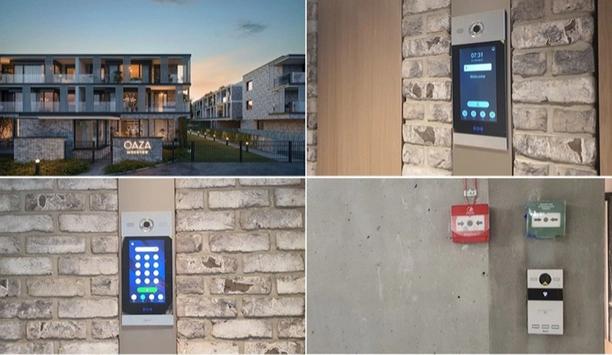
New investment of the highest standard. Three buildings, 69 premises in total. The project wants to ensure consistency in the use of smart home devices for controlling lighting, air conditioning, roller blinds, and more. To achieve this, each apartment is equipped with a Gira G1 smart home panel (KNX system). Additionally, the project is looking for an intercom system that can secure the entrances and integrate seamlessly with Gira G1. The solution Oaza Mokotów is a high-end residential complex offering fully secured and seamless access, thanks to the integration of DNAKE’s intercom system and Gira’s smart home features. This integration allows for centralized management of both intercom and smart home controls through a single panel. Residents can use the Gira G1 to communicate with visitors and remotely unlock doors, significantly simplifying operations and enhancing user convenience. Installed products 902D-B6 10.1” Facial Recognition Android Door Station S615 4.3” Facial Recognition Android Door Station 902C-A Master Station
Products