Security training

Invicti Security announces the launch of Invicti AppSec Core, an all-in-one application security platform designed to cut through scanner noise and keep AppSec teams focused on real, exploitable runtime risks throughout the software development lifecycle (SDLC). Built for lean security teams, AppSec Core delivers unified visibility and control with all the essential tools needed to secure web and API applications, from code to cloud to runtime. AppSec Core addresses the key security challenges...

The Association of University Chief Security Officers (AUCSO) has agreed a major new sector collaboration with the National Association for Healthcare Security (NAHS) and Nu-ology Training to deliver accredited counter-terrorism protective security training for university and healthcare security professionals. The partnership marks an important step forward for both the university and healthcare security sectors. After many years of recognizing the value of closer alignment, AUCSO and NAHS have...

Skills for Security is at The Security Event to highlight the importance of structured training and apprenticeships, supporting skills and competence across the fire and security sectors. With a football theme in honor of the World Cup, on stand 4/P10, positioned between the fire and security areas of the show, the UK’s provider of fire and security training and apprenticeships will feature a dedicated area, designed to engage installers from across the UK. It will showcase how upskilling...

At CES 2026 in Las Vegas, demonstrations of Flir’s next-generation iXX-Series app-enabled thermal cameras will outline how users can transform electrical and mechanical inspections across manufacturing, industrial, commercial, datacenter, and utility environments. In combination with Flir Assetlink browser-based software, iXX users can leverage asset-centric structured data to expedite workflows and decision making. Get ready to think about thermal inspection in a whole new way. From Boot...

Skills for Security has partnered with C-TEC to strengthen the training opportunities for apprentice fire and security technicians through greater access to current technologies and direct engagement with industry expertise. C-TEC’s involvement will include providing equipment for training, technical resources and the expertise of its engineering and product development teams. Apprentices will benefit from demonstrations and discussions that show how design choices affect performance, usa...

i-PRO Co., Ltd. (formerly Panasonic Security), a pioneer in professional security and public safety solutions, now shared its predictions for the security industry in 2026. The year ahead will continue to be defined by rapid advances in AI performance at the edge, growing demand for continuous education across the channel, and a persistent focus on cybersecurity as the basis for every security workflow. While AI, cloud, and cybersecurity remain central themes, 2025 marked the point where these...
News
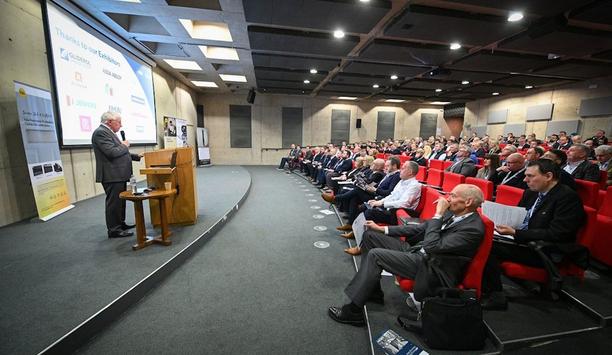
As 2025 draws to a close, the Door & Hardware Federation (DHF) is reflecting on a hugely productive year. Indeed, it has been defined by achievement and collaboration, and by a tireless commitment to the people and industries it serves. From achieving ISO 9001 certification, to publishing the long-awaited Competence Framework and launching a pioneering new qualification, the Federation has continued to strengthen its foundations while looking confidently to the future. Excitement and possibility “2025 began with a sense of excitement and possibility,” explains DHF’s Commercial Director, Patricia Sowsbery-Stevens. “In February, DHF hosted its first Members’ Conference at the Royal Air Force Museum Cosford, where more than 200 members and industry professionals gathered for a highly enjoyable day of insight, discussion and connection.” Invaluable guidance on employment law The event brought together a program of workshops and speakers, including Dafydd Williams from the Ministry of Housing, Communities and Local Government, who shared the government’s response to Grenfell, and Gillian McAteer from Citation, who offered invaluable guidance on employment law. A moving moment came from Flight Lieutenant, John Nichol, whose keynote address about his experience as a British prisoner of war during the Gulf War was both humbling and inspiring. Alongside the talks, an exhibition hall filled with leading names from across the sector created opportunities for collaboration and the sharing of knowledge that will carry forward into the year ahead. DHF’s enduring mission In April, the launch of the ABBE Level 3 Award in Compliance and Safety of Fire-Resisting Roller Shutter Doors marked a major milestone. Developed by DHF to strengthen competence within this highly specialized area, the qualification has already seen remarkable uptake from companies determined to uphold the highest standards of safety and compliance. It reflects DHF’s enduring mission to support professional growth and align industry practice with a focus on building safety and competence. CLC Competence Framework for Doors “Another defining achievement came with the completion of the Construction Leadership Council’s (CLC) Competence Framework for Doors, Gates and Shutters. Developed in close partnership with the Automatic Door Suppliers Association (ADSA) and guided by the Sector Lead Group 10,” explains Patricia. “The project represented eighteen months of careful collaboration and consultation. Led by DHF and ADSA, and supported by our Senior Training and Compliance Officer, Steve Hill, the framework establishes clear, practical standards for competence across installation, maintenance and servicing." "For DHF members, this work has real impact. More and more organizations, for example, Amazon and Heathrow Airport, are now requiring evidence of individual competence for both installation and maintenance. The framework and accompanying National Occupational Standards help ensure DHF members can demonstrate the professional skill and assurance expected of them.” DHF’s growing role The summer brought one of the Federation’s proudest moments. DHF achieved ISO 9001 certification, confirming its position as an organization that leads by example. This recognition of quality management and continuous improvement reinforces DHF’s reputation for professionalism and integrity in all that it does. In September, a further milestone followed with authorization to provide Blue Skilled Worker cards for the Dock Leveller industry. This step has brought well-deserved recognition for individuals working in this specialist area and underlines DHF’s growing role in supporting competence and training across every corner of its sector. Innovation and excellence within the fencing community “Throughout 2025, DHF has remained close to its members and partners,” says Patricia. “We have attended key national events including The Security Event, The FIT Show, Fencex, and the MLA Expo, meeting members face-to-face, sharing updates and listening to feedback. DHF also continued its proud sponsorship of the Automated Gate category at the AFI Awards, celebrating innovation and excellence within the fencing community." "Member engagement has remained central to our purpose, with a series of members’ open days around the UK. One particularly meaningful initiative saw Steve Hill spend several weeks in Ireland, offering training and support to members across the Republic. His visit received outstanding feedback and further strengthened DHF’s ties with the Irish market.” National Insurance contributions While the year brought challenges, including increased National Insurance contributions and a slowdown in construction, the outlook among DHF members has remained encouraging. Many report steady order books and continued demand within commercial and industrial markets, a reminder of the sector’s resilience and its ability to adapt and thrive even when conditions are uncertain. “No reflection on the year would be complete, of course, without recognizing the people who make DHF what it is,” says Patricia. “As the year draws to a close, DHF prepares to say farewell to Nick Perkins, whose knowledge and expertise have left a lasting mark on the industry. Nick’s retirement will be felt by colleagues and members alike, and he departs with the Federation’s gratitude and warmest wishes”. Organization’s commercial insight and engagement Earlier in the year, the Federation wished a fond farewell to Helen Skelding, whose calm professionalism and loyal service earned her the respect and affection of all who worked with her. The team was joined by Eddie Payne as Finance Manager, bringing fresh perspective and experience to support DHF’s continuing growth. Later in the year, Jason Smith moved on after many valued contributions, and the Federation welcomed Jonathan Colen as its first Commercial Manager, strengthening the organization’s commercial insight and engagement. Within the Membership Department, Olivia Juxon began maternity leave in November, and we were delighted to welcome Charlotte Winsper to the team to ensure members continue to receive excellent support. DHF’s educational portfolio “As we move into 2026, DHF stands ready for the next chapter,” concludes Patricia. “With ISO 9001 certification achieved, the Competence Framework completed, the Level 3 Award launched, and authorization secured to issue Blue Skilled Worker cards for the Dock Leveller industry, DHF has laid strong foundations for the future." "The coming year will see the introduction of a new Ofqual-regulated training program for the building hardware industry, extending DHF’s educational portfolio and offering a clear route to recognized qualifications. Above all, DHF remains committed to raising standards, supporting members, and strengthening the sector it proudly represents.”
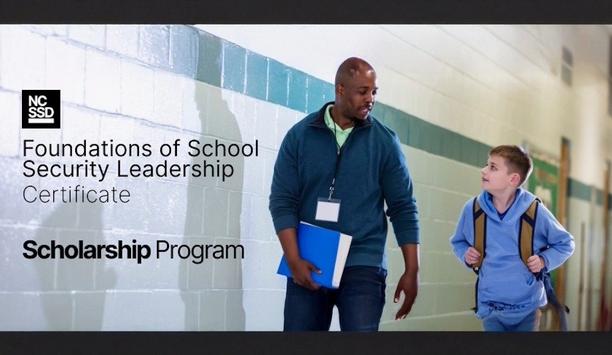
HID and the National Council of School Safety Directors (NCSSD) are proud to announce that HID has underwritten 1,000 scholarships for the Foundations of School Security Leadership Certificate course. Through this initiative, which will continue throughout 2026, HID is reducing financial barriers that may limit access to essential training to help professionals learn how to protect schools against an emerging threat landscape while still maintaining an open and nurturing environment. In addition, the program will also provide the recipients with a one-year NCSSD membership to further support their professional development. Practical solutions and measurable results “HID is proud to partner with NCSSD in advancing school safety, a critical discipline dedicated to protecting students, teachers and staff,” said Mike Garcia, K-12 Evangelist HID. “Our team is dedicated to helping educate those responsible for safeguarding our schools, and this program represents a meaningful step forward in driving practical solutions and measurable results in K-12 safety.” Application of school safety and security Created by pioneering school security professionals within NCSSD, the Foundations Certificate is a nine-part, self-paced online course built around the Path to Safer Schools framework. It equips participants with a holistic understanding and practical application of school safety and security—covering prevention, preparedness, response and recovery. This course is designed for every person directly or indirectly responsible for safety and security in both public and private schools—including directors, administrators, coordinators, specialists and staff. Address safety challenges “School administrators know how to run schools, but they are not security experts,” said Jason Stoddard, Board President, NCSSD. “They must rely on trained security professionals who are prepared to address any safety challenges that arise on K–12 campuses. The scholarships funded by HID will help ensure that school security coordinators and pioneers receive the comprehensive training they need to respond to unexpected events in real time, meet emerging challenges, and manage their aftermath effectively.” Enrollment is now open.

DigiCert, a pioneer in intelligent trust, unveiled its 2026 Security Predictions, forecasting how AI, quantum computing, and automation will reshape global trust frameworks. The predictions highlight a pivotal shift toward AI integrity, resilience, and quantum readiness as core tenets of intelligent trust. DigiCert’s full predictions and outlook for the new year can be found at DigiCert’s blog. 1. AI Integrity Becomes the New Trust Standard: AI authenticity will overtake data confidentiality as the top enterprise trust concern. Organizations will require verifiable identity, provenance, and tracking for every model, dataset, and autonomous agent. 2. Resilience Becomes the New Compliance: Resilience will shift from an IT goal to a board-level mandate as regulations like Digital Operational Resilience Act (DORA) and new global standards tighten expectations. Organizations will be required to prove that their DNS, identity, and certificate systems can withstand disruption, with uptime and recoverability directly tied to financial and operational stability. 3. Automation Accelerates as Certificate Lifespans Shrink: With TLS certificate lifetimes reducing to 200 days as part of the phased reduction to 47 days, the effort associated with manual renewal doubles. Organizations will adopt full-stack automation to eliminate outages and create self-healing trust ecosystems. 4. Quantum Computing Puts Encryption on Notice: The first practical quantum computer capable of solving meaningful problems will emerge. Organizations beginning their initial pilots will discover interoperability hurdles as certificate and software ecosystems adapt to quantum-safe requirements. 5. Content Authenticity Moves from Principle to Policy: Governments and major platforms will begin enforcing C2PA for AI-generated and edited content. Watermarking and cryptographic provenance will become required for distribution across news, social, and commerce. 6. Federated PKI Reinvented for the Post-Chrome Era: Organizations will modernize private PKI as Chrome phases out legacy client authentication and Microsoft sunsets old CA architectures. Identity will shift toward cloud-native, automated, and passwordless trust models. 7. Email Trust Redefined: Verified Identities Take the Lead: AI-driven phishing will push enterprises to standardize on Verified Mark Certificates and strict DMARC enforcement. Verified sender identity will become the baseline expectation for secure, enterprise-grade communication. 8. Machine Identities Outnumber Humans 100:1, and PQC Becomes Mandatory: Connected devices and AI agents will surpass human identities by two orders of magnitude. PQC-ready identity frameworks will become mandatory as standards bodies embed quantum-safe algorithms into device ecosystems. Integrity across every digital interaction “Security in 2026 won’t just be about protecting systems, it will be about proving integrity across every digital interaction,” said Jason Sabin, Chief Technology Officer at DigiCert. “As AI accelerates, machine identities multiply, and quantum computing advances, intelligent trust will become the foundation that keeps businesses resilient, verifiable, and secure. The organizations that embrace automation, provenance, and quantum-safe readiness now will define the trust landscape for the next decade.”

Camelot Secure, a revolutionary cybersecurity company, now announced that Stan Oliver, President/CEO of Camelot Secure, Phoenix, and DigiFlight, has been selected as a board member to the Duke University Cybersecurity Master of Engineering Program’s Industry Advisory Board. The Board’s mission is to provide expert guidance that supports and fosters innovation and excellence in curriculum, student internships, entrepreneurship, graduate outcomes, and related areas. Evolving cyber challenges “I’m honored to join the Duke University Cybersecurity Master of Engineering Program’s Industry Advisory Board and to contribute to shaping the next generation of cybersecurity professionals,” Oliver said. “With decades of experience supporting government and defense programs, I’m particularly excited to help bridge the gap between academic learning and real-world application. By strengthening internship pathways and hands-on experiences, we can ensure that students graduate ready to meet today’s evolving cyber challenges with confidence and purpose.” Next generation of cybersecurity Board members play an essential role in helping Duke establish the program as a center of excellence in educating the next generation of cybersecurity pioneers. Duke is privileged to have globally recognized pioneers on its Cybersecurity Industry Advisory Board. “I’m delighted to announce that Mr. Stanford Oliver has joined our Cybersecurity Advisory Board,” said Art Ehuan, Executive Director of the program. “Stan brings exceptional leadership, deep cybersecurity expertise, and invaluable perspective to our students and faculty. We’re honored to have him join our distinguished board of nationally recognized cybersecurity pioneers.” Real-world cybersecurity scenarios In addition to his advisory role, Oliver will leverage his companies to actively collaborate with Duke’s Pratt School of Engineering and its Engineering Graduate and Professional Programs to support student success beyond the classroom. As part of this initiative, Camelot Secure and DigiFlight will work with faculty to offer students opportunities to participate in final projects and capstone engagements that build on program coursework while challenging students to apply their knowledge to real-world cybersecurity scenarios. These experiences will expose learners to mission-aligned cyber operations, complex threat environments, and emerging technologies, further strengthening the pipeline of highly prepared, industry-ready graduates poised to make an immediate impact in the field.

ASIS International, the world's largest association for security management professionals, is pleased to announce the opening of its Call for Proposals for the Global Security Exchange (GSX) 2026, inviting industry experts, thought leaders, and practitioners to submit cutting-edge presentations across critical security domains. Additionally, the association is seeking distinguished security professionals to serve as proposal reviewers, furthering the conference's commitment to delivering exceptional educational content. Next era of security “I’m deeply grateful to Jamie Ridenhour, CPP, who is chairing the GSX 2026 Selection Review Committee, and the incredible volunteers who will serve on this committee, integral to attracting security professionals from nearly 100 countries,” said Joe Olivarez, Jr., MBA, 2025 President, ASIS International. “GSX isn’t just an event - it’s where the global security community shapes the future. What makes GSX unique is that its education is driven by practitioners from every corner of the world, representing diverse industries and expertise. This is a truly global collaboration, and your insights can help define the next era of security. If you have ideas, innovations, or lessons that can elevate our profession, now is the time - submit your proposal and be part of the conversations that will transform security worldwide.” Key security challenges The GSX 2026 Conference seeks innovative submissions addressing key security challenges and emerging trends and thought leadership, with areas of focus spanning: Intelligence Organizational Resilience Information Security Site Security Supply Chain Security Personnel Security Investigations Executive Protection Governance Evolution and transformation The proposal reviewers will evaluate submissions based on relevance, innovation, practical applicability, and potential to advance security practices globally. “For GSX 2026, we’re looking for proposals that don’t just inform - they inspire evolution and transformation,” stated Jamie Ridenhour, CPP, Chair, GSX 2026 Selection Committee. “We want interactive sessions that spark creativity, address critical security challenges, and deliver practical, measurable results and favorable outcomes. Bring us your best ideas, real-world case studies, and forward-thinking strategies that empower professionals to lead with confidence and clarity in an evolving landscape.” Important dates to note Call for Reviewers: The application period for the GSX 2026 Proposal Review Committee opens 3 December 2025 and closes 14 January 2026. Call for Proposals: Proposals must be submitted electronically through the GSX 2026 proposal submission portal. The submission window runs from 3 December 2025 and closes 14 January 2026. Accepted presenters and all other submitters will be notified by mid-April 2026. GSX 2026 will be held 14-16 September at the Georgia World Congress Center in Atlanta, Georgia, USA.

Magenta Security Services marked its 30th anniversary in style last night at the Security & Fire Excellence Awards, where the company was named Security & Fire Sustainability Champion for the third year running. The Security & Fire Awards for Excellence are recognized across the sector as a benchmark for outstanding performance, innovation and best practice in both security and fire. The Sustainability Champion category honors organizations that demonstrate leadership in environmental responsibility and long-term commitment to sustainable operations. Magenta first secured the title in 2023 and retained it in 2024 before completing the hat trick in 2025. Security and sustainability “Winning the Sustainability Champion title for the third year in a row, while celebrating 30 years in business, is an incredible milestone for everyone at Magenta,” said Abbey Petkar, Managing Director of Magenta Security Services. “From the very beginning we believed that security and sustainability must go hand in hand. This recognition shows that our approach is working for our clients, our people and the planet.” Magenta’s sustainability journey Magenta’s sustainability journey is woven through its three decades in business. The company was one of the first security providers to certify to ISO 14001, embedding environmental management into its core operations rather than treating it as an add-on. That discipline enabled Magenta to reach carbon zero status in 2022, three years ahead of its public 2025 target and without relying on offsetting. Key measures include a fully electric fleet supported by on-site solar charging at its headquarters, a switch to 100 per cent renewable electricity across its estate, deep energy-efficiency upgrades and a fully paperless office environment that saves more than 150 trees each year. Cyber Essentials certification Recognising that modern risk and sustainability span both physical and digital domains, Magenta has also invested in Threat Evolution, its dedicated cyber security training and consulting arm. Threat Evolution supports clients with Cyber Essentials certification, penetration testing, vulnerability scanning and tailored cyber awareness training, extending Magenta’s commitment to resilience, governance and data protection. Magenta’s approach Transparency is another cornerstone of Magenta’s approach. The company publishes its emissions data through the Carbon Database Initiative (CaDI), inviting scrutiny and sharing practical lessons on topics such as phasing electric vehicles, mapping energy use in older buildings and designing out paper from guarding processes. Magenta also supports Police Community Clubs locally and sponsors children internationally, aligning commercial success with long-term social value. Own environmental performance Abbey Petkar added, “Sustainability is not a project for us. It is how Magenta works, from the vehicles we drive and the energy we use to the way we support communities and help clients improve their own environmental performance." "To receive this award again, in our 30th year, is both a proud moment and a powerful motivation to keep raising the bar.”

Expert commentary

A lot has been said about door security — from reinforced door frames to locking mechanisms to the door construction — all of which is crucial. But what security measures are in place beyond the perimeter door in case the worst happens and it’s somehow breached? Hopefully, many more levels of access control are in place to prevent, or at least slow down, a perpetrator’s ability to compromise protected assets. Additional interior layers Interior security measures must operate as an integrated, multilayered system that eliminates single points of failure. These inner protections safeguard not only the physical infrastructure but also the operational integrity, confidentiality, and availability of the systems housed within. Beyond simply preventing unauthorized individuals from getting inside, the goal is to create a controlled, monitored, and resilient environment in which every movement, action, and access attempt is verified, logged, and, when necessary, challenged. As modern buildings, data centers, and infrastructure sites host critical functions and potentially sensitive intellectual property, these additional interior layers become essential to protecting both organizations and their proprietary assets. Interior security controls One of the most important interior security controls is granular access segmentation One of the most important interior security controls is granular access segmentation. While a perimeter door may verify an individual’s right to enter the building, the interior should treat every room, cage, and corridor as its own security zone. Role-based access control and strict least-privilege principles should limit personnel to only the areas they absolutely require. For example, a network engineer may need access to routing equipment but not storage racks; a janitorial contractor might be allowed into shared hallways but not any equipment rooms at all. These access restrictions should be enforced using intelligent keys, biometric scanners, mantraps, and, at particularly sensitive locations, two-factor authentication. Segmenting access in this way limits the potential damage from a single compromised badge or insider threat and ensures that a single breach does not cascade into a total facility compromise. Low-light and infrared capabilities Biometric authentication within a building adds a layer of confidence beyond perimeter controls. Technologies such as facial identification help prevent the use of stolen, cloned, or borrowed credentials. These systems complement anti-tailgating measures, such as sally ports or mantraps, which ensure that only one authenticated person passes through at a time. Interior surveillance is another essential measure. High-resolution cameras equipped with low-light and infrared capabilities should cover every hallway, door, rack row, and logistical pathway. Camera feeds must be continuously recorded, and retention policies must align with regulatory requirements. Intelligent video analytics, such as motion pattern recognition and heat mapping, enable the detection of atypical behaviors — such as someone lingering near a cage they are not authorized to access or movement at odd hours. Physical tamper-detection mechanisms Cabinet security provides a vital layer of granularity in the access hierarchy, ensuring that even within secure facilities Integrating surveillance with access control systems creates a strong correlation; when someone successfully passes through a secured door and enters a room, the system can track whether the number of people seen on camera matches the number authenticated, and alert security if a discrepancy occurs. However, it is increasingly important that access control not stop at the room level, because the most sensitive assets are often housed in cabinets, racks, or storage units within already-secured spaces. Cabinet security provides a vital layer of granularity in the access hierarchy, ensuring that even within secure facilities, assets remain protected. Physical tamper-detection mechanisms on racks, cable trays, and server chassis add another dimension: they can detect if a panel is opened, a cable is unplugged, or a device is removed without authorization. Secure destruction protocols Another internal measure is the use of secure storage and chain-of-custody procedures for any components that contain intellectual property or personally identifiable information. Hard drives, backup media, and even printouts should be stored in locked cabinets accessible only to people with proper clearance. When decommissioning hardware, secure destruction protocols such as shredding or degaussing should be performed in controlled areas and thoroughly logged. Every movement of sensitive equipment should be traceable, from installation through end-of-life disposal. Such processes reduce the risk of data leakage from improperly discarded or undocumented devices. Consequences of improper behavior Staff should be trained to recognize social engineering attempts, unusual behaviors, and procedural deviations Operational security procedures also contribute significantly to interior protection. Background checks, ongoing employee vetting, and mandatory training ensure that individuals with access to sensitive areas understand their responsibilities and the consequences of improper behavior. Staff should be trained to recognize social engineering attempts, unusual behaviors, and procedural deviations. Maintaining a strict visitor escort policy prevents non-employees from wandering unobserved. All visitors should wear highly visible identification badges and be monitored continuously by authorized personnel. The building's interior should be treated as a controlled environment at all times, not merely a workspace. Continuous auditing and logging form Continuous auditing and logging form another pillar of interior security. Access logs from intelligent keys, biometrics, video, and environmental systems must be stored securely and evaluated regularly for anomalies. Automated systems can flag irregular patterns, such as repeated attempts to access unauthorized areas or entering rooms at odd hours. Manual audits validate that the access control list remains accurate, that no inactive or former employees retain credentials, and that documentation matches reality on the floor. These logs are indispensable during investigations, compliance assessments, and incident response efforts. Interior security controls Security networks should be isolated from the main IT networks to prevent a cyber incident Finally, redundancy and resiliency must be built into interior security controls. Electrical power for access control, intelligent keys, biometrics, and video systems should be backed by secondary sources, generators, or uninterruptible power supplies. Security networks should be isolated from the main IT networks to prevent a cyber incident from disabling physical protections. The goal is to ensure that interior security remains functional even during outages, disasters, or cyber disruptions. Multilayered approach Together, these additional interior measures create a layered defense that makes a secure building, data center, or infrastructure site extremely difficult to compromise. Rather than relying on a single barrier at the entrance, the environment becomes an ecosystem of mutually reinforcing controls — physical, operational, digital, and procedural. This multilayered approach allows structures to maintain high levels of protection even as threats evolve, ensuring that the systems inside remain secure, resilient, and trustworthy.
The terrorism threat in the UK is very real. In fact, since July 2019, the threat level has never dropped lower than “substantial” or “severe.” To ensure preparedness across public places and events, the UK government has introduced the new Terrorism (Protection of Premises) Act 2025, more commonly known as Martyn’s Law in memory of Martyn Hett, a victim of the 2017 Manchester Arena bombing. Overarching aim The new legislation requires operators of public spaces and events to immediately assess and improve their readiness to respond to a terrorist attack. The overarching aim: being better prepared, protected and ready to respond should an attack occur. Everything from busy shopping centers to large stadiums must comply with Martyn’s Law by April 2027, and the Security Industry Authority (SIA) is charged with enforcing the rules. Upgraded security systems The smaller venues and events are only required to enforce low-cost solutions with no physical measures There are different rules depending on the capacity of public premises or the event, ranging from a standard-duty premises (200 – 799 people, including staff) to an enhanced-duty premise (over 800). The smaller venues and events are only required to implement low-cost solutions with no physical measures. Enhanced environments, however, must provide monitoring in and around the facility and document public protection measures. Many organizations will likely invest in upgraded security systems. However, effective responses depend not only on hardware but also on situational awareness and training, helping staff identify potential threats and respond effectively under pressure. Physical security information management systems Terror-related attacks are rare and unpredictable, and the most experienced personnel are not always on shift when something does occur. Even if they are, the most seasoned security professionals can’t ensure every decision they make is the right one. One solution gaining attention is physical security information management (PSIM) systems, which integrate siloed security tools — such as CCTV, access control, and fire sensors — into a unified platform. PSIMs enable rapid information processing, automated workflows and coordinated responses to incidents, whether routine or critical. Use PSIMs to handle emergencies PSIM systems have been around for many years and have been embraced by large airports and mass transit organizations PSIM systems have been around for many years and have been embraced by large airports, mass transit organizations and critical infrastructure companies. However, these systems are ideally suited to any larger-scale environment, such as those classified as an enhanced-duty premise by Martyn’s Law. For example, airports use PSIMs to handle emergencies, locate missing persons or assess potential threats like unattended luggage. Similarly, PSIMs can improve situational awareness for stadiums, shopping centers and event venues, aiding crowd management, emergency evacuations and collaboration with police or emergency services. External stakeholder intervention Should an incident require external stakeholder intervention, the PSIM becomes a mission-critical collaboration tool, enabling real-time information (including video footage) to be shared with decision-makers, emergency control rooms and first responders en route to the scene. This ensures they arrive with the appropriate resources and can deploy faster to the right places. PSIM systems also facilitate post-incident analysis, helping organizations improve protocols, demonstrate compliance and fulfill their duty of care. Impacted by terror-related tragedies Martyn’s Law aims to eliminate the complacent mindset of “it won’t happen here” when assessing the risks associated with public gatherings. Communities impacted by terror-related tragedies serve as a stark reminder that such incidents can and do occur. Within the security sector, it is crucial to promote discussions on how new approaches, technologies, and training can enhance preparedness. Equally important is the responsibility to raise awareness about Martyn’s Law and its role in fostering safer public spaces.

The healthcare infrastructure is ever evolving. Facilities are no longer single entities for one, they are sprawling ecosystems that serve a wide range of users, from medical staff and administrators to vulnerable patients, visitors and maintenance personnel. Safeguarding their safety and security, while providing seamless operation is a complex challenge - one frequently solved by access control. Use of access control Today’s security solutions play a central role in protecting people and mitigating risk across much of our built environment. An appropriately specified system is effective at regulating, monitoring and restricting entry and exits, and allows users to navigate an integrated network and its hardware to ensure the right access is provided to the right person at the right time. In healthcare buildings, the use of access control expands further, whereby a system can tackle a host of unique operational challenges - significantly contributing to fire safety, ease of movement and the theft prevention of equipment, medicine and sensitive patient data, and all while protecting human life and preserving privacy and dignity. In healthcare buildings, the use of access control expands. In doing so, access control can become the cornerstone of functionality, compliance and organization in any healthcare environment. Though, as the complexity of projects deepen, decision makers are reminded that coordination is key. Preparing and empowering users Between January and March 2025, there were over 832,000 patient safety events recorded in the NHS. While each of these events may not be directly linked to building security specifically, the healthcare industry is faced with a considerable number of safety incidents, which suggests greater monitoring and mitigation is needed across the board. Access control often provides staff with the vital means of retaining control without impeding care Patient well-being and security will always remain paramount in the sector, and access control often provides staff with the necessary means of retaining control without impeding care. Hospitals for example, sustain a high level of footfall across large campuses with multiple points of entry and on-site patient record systems, presenting a number of simultaneous security tests as a result. Though, unlike other public buildings, where rigid security measures are active at all times, many healthcare environments must strike a balance throughout their security framework to meet a host of one-of-a-kind demands. Use of access credentials With a continuous influx of patients, staff and visitors, healthcare groups are habitually required to remain accessible and inviting around the clock. At the same time, they must also be prepared to deter unwanted visitors in areas of restricted access and lock down intensive wards to ensure patients remain safe and secure under periods of monitoring. For this, the use of access credentials is critical and provides a regulated system for sensitive staff-controlled areas such as pharmacies, wards, and server rooms. By applying role, zone, or schedule-based access, decision makers can authorize personnel seamlessly, empowering facilities to manage patient care without compromising security in the process. Use of access credentials is critical and provides a regulated system for staff. Implementation of AI-powered tools and devices Modern systems may incorporate the use of keycards, biometric scanners, and mobile credentials When it comes to the operation of these systems, training gaps are a concern, however. Over the five years up to February 2025, numbers of NHS doctors rose by 26%, with nurses also up 25%, and this influx of new staff requires education towards the usage of access control. Modern systems may incorporate the use of keycards, biometric scanners, mobile credentials and in some cases, voice-activation, with the implementation of AI-powered tools and devices set to play a more prevalent role in the future. Each system presents its own benefits and may be better suited to certain projects and areas, but without consultation and proper user education, they can instead become a barrier. Strategy, scalability, performance To alleviate these operational threats, early-stage planning is fundamental. Just as end-user education and training should be built into project timelines, it’s important to consider the growing need for cooperation throughout the entire supply chain of an access control project. A collaborative approach becomes even more critical when innovative solutions enter the market All too often, a lack of evidence-based decision making can hinder the specification of a scheme and its accompanying hardware, whereby choices are made without understanding long-term performance or compliance requirements. Whether approaching a new or retrofit development, ongoing communication allows experts to come together and ensure that product decisions are aligned with the buildings intended use and user base. This collaborative approach becomes even more critical when innovative solutions enter the market and new sector challenges arise. Latest access control products With this in mind, trusted manufacturers will no longer simply deliver the latest access control products, but will aim to work alongside the architects, specifiers, contractors, and facility managers at each stage of the building’s lifecycle to ensure touchpoints are addressed. This is crucial in modern healthcare environments, where the added layer of complexity requires tailored security measures. One area that is often neglected is scalability, for example. As healthcare facilities manage fluctuating patient numbers and a growing level of patient data, along with new regulations, systems must be adaptable and allow for ongoing improvements and updates to the security infrastructure without the need for a complete overhaul. By adopting a scalable system that combines technology integration with ease of use, decision makers can future-proof their building’s security. Manufacturers will no longer simply deliver the latest access control products Complexity of the healthcare industry In truth, access control has become more than a means of restricting access. Modern systems are more equipped than ever before to deliver environments that support care, safety, and operational excellence. Nonetheless, the complexity of the healthcare industry and its buildings demands more than product innovation - it requires an industry-wide commitment to collaboration, from project conception to product installation and beyond.
Security beat
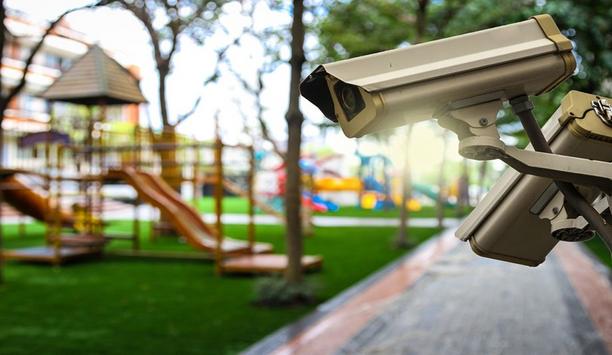
Active shooter situations grab the most attention, but there is a long list of other threats facing schools, including bullying, vandalism and emergency medical situations. Broadly speaking, a comprehensive approach to school security should prioritize prevention, preparedness and response to all threats. Holistic security approach “Fostering a culture of safety within a school, which involves strong relationships, trust, and communication, is highly effective and does not require significant costs,” says Christin Kinman, End User Sales Consultant with Allegion, a security manufacturer. “It is crucial to educate stakeholders about the unintended consequences of quick fixes, like barricade devices, to ensure informed decision-making and a holistic security approach. The goal should be to promote safety and security for all, every day, in every situation.” Integrated and successful security plans While this might solve a particular challenge, it can also create unintentional conflicts" "Creating an integrated security plan requires a multi-faceted approach," says Kinman. "Too often, security measures are implemented as a reaction to either an event or a specific vulnerability. While this might solve a particular challenge, it can also create unintentional conflicts," adds Kinman. “Creating a successful security plan involves a comprehensive approach,” she says. “An effective, systematic approach begins with assessing, identifying, and valuing assets, identifying threats and vulnerabilities, quantifying the impact of a loss, analysis, and prioritization, and finally, development of mitigation measures.” Safety and Security An effective resource is the Partner Alliance for Safer Schools (PASS), which provides a framework to help with school assessments, including identifying and valuing assets, identifying external threats and internal vulnerabilities, assessing the impact of loss, and analyzing and prioritizing mitigation measures. Safety and security are words used seemingly interchangeably when it comes to schools, but they mean different things. “How we define these terms influences planning and addressing challenges,” says Kinman. “It is easiest to think of these terms as being either external or internal to the individual.” Coordinated security Safety is internal to the individual and relates to the individual’s perception of being free from harm Security is external to the individual and encompasses the protective physical, emotional, and environmental measures implemented in conjunction with policies, procedures, and training, as well as mental health measures and social and emotional learning. Safety is internal to the individual and relates to the individual’s perception of being free from harm or danger. Coordinated security measures create an environment of safety. Four main elements of physical security Kinman lists four main elements of physical security, often referred to as the 4D’s. These elements are deter, detect, delay, and deny: Deter refers to measures implemented to prevent an attack or threat from happening. These are usually visual deterrents that communicate legitimate use. Detect refers to measures that can detect the presence of a threat, such as video surveillance and monitoring. Delay refers to measures that slow down an attack or increase the level of effort needed for an incident to occur. Finally, deny refers to measures that prevent or restrict access to valued assets. Four layers of ground perimeter A layered approach to school security creates “layers” that must be defeated for an event to occur, says Kinman. Typically, the four layers are the ground perimeter, the private grounds around the building, the building perimeter, and the building interior. The ground perimeter layer demarcates public vs private space, and deterrence is the primary objective. The grounds layer allows for identification of legitimate vs illegitimate users and detection is the primary objective. The building perimeter layer prevents illicit users’ intent on harm from gaining access. The primary objectives at this layer are delay/deny. The building interior protects the most valuable assets, and the denial of an unauthorized individual is the primary objective. Report on Indicators of School Crime and Safety The second element is impact, also rated on a scale of 1-5 and ranging from negligible to catastrophic “Quantifying loss and assessing risk is one of the most important steps in creating an integrated security plan,” says Kinman, who explains that the two elements that guide this step are probability and impact. Probability is the likelihood that an event will occur, typically rated on a scale of 1-5 ranging from rare to almost certain. The second element is impact, also rated on a scale of 1-5 and ranging from negligible to catastrophic. “Probability multiplied by impact equals risk, which has a score ranging from 1-25,” says Kinman. “The higher the score, the higher the risk.” An analysis of vulnerabilities and threats using a matrix yields a systematic approach to prioritize improvements and identify mitigation measures. For statistics on crime and safety in schools, visit the Report on Indicators of School Crime and Safety: 2022. Security improvements “The costs of school security encompass various aspects, including physical measures, personnel, training and policy enforcement,” says Kinman. “While there is no fixed amount, it often involves investments in technology, such as access control and emergency response systems. Many security improvements do not require additional funding, like training staff and students on security protocols and implementing policies to create a culture of safety.” Generally, funding for public school security is a shared responsibility among federal, state, and local governments; communities also contribute. “Striking a balance between shared responsibility and ensuring adequate resources is crucial for effective school security,” says Kinman. K-12 school security Community members and parents can donate by being vigilant and noting any suspect activities Various stakeholders play crucial roles in enhancing K-12 school security in addition to schools and communities. Stakeholders include community members, parents, local government, local law enforcement, first responders, and non-profit organizations. “Engaging these stakeholders fosters a comprehensive approach to school security,” says Kinman. Community members and parents can contribute by being vigilant and reporting any suspicious activities. Local government can support schools with funding and resources, while local law enforcement and first responders can provide expertise, conduct drills, and establish emergency response protocols. Safe and secure learning environment In addition, non-profit organizations can offer valuable resources, training, and support programs to address specific security concerns. “By involving all these stakeholders, schools can tap into a diverse range of expertise, resources and perspectives, pioneering to a more effective and comprehensive approach to school security,” says Kinman. “Collaboration and communication among these entities are vital to ensure a safe and secure learning environment for students and staff.”
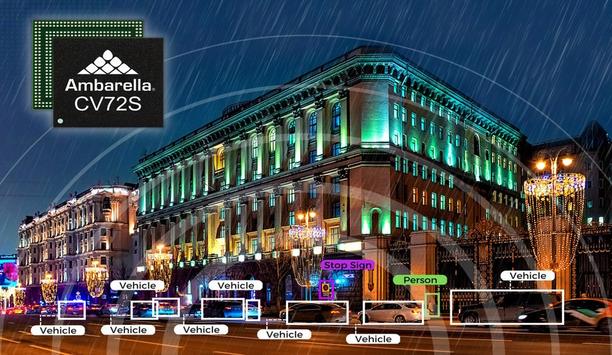
When it comes to security cameras, the end user always wants more—more resolution, more artificial intelligence (AI), and more sensors. However, the cameras themselves do not change much from generation to generation; that is, they have the same power budgets, form factors and price. To achieve “more,” the systems-on-chips (SoCs) inside the video cameras must pack more features and integrate systems that would have been separate components in the past. For an update on the latest capabilities of SoCs inside video cameras, we turned to Jérôme Gigot, Senior Director of Marketing for AIoT at Ambarella, a manufacturer of SOCs. AIoT refers to the artificial intelligence of things, the combination of AI and IoT. Author's quote “The AI performance on today’s cameras matches what was typically done on a server just a generation ago,” says Gigot. “And, doing AI on-camera provides the threefold benefits of being able to run algorithms on a higher-resolution input before the video is encoded and transferred to a server, with a faster response time, and with complete privacy.” Added features of the new SOC Ambarella expects the first cameras with the SoC to emerge on the market during early part of 2024 Ambarella’s latest System on Chip (SOC) is the CV72S, which provides 6× the AI performance of the previous generation and supports the newer transformer neural networks. Even with its extra features, the CV72S maintains the same power envelope as the previous-generation SoCs. The CV72S is now available, sampling is underway by camera manufacturers, and Ambarella expects the first cameras with the SoC to emerge on the market during the early part of 2024. Examples of the added features of the new SOC include image processing, video encoders, AI engines, de-warpers for fisheye lenses, general compute cores, along with functions such as processing multiple imagers on a single SoC, fusion among different types of sensors, and the list goes on. This article will summarize new AI capabilities based on information provided by Ambarella. AI inside the cameras Gigot says AI is by far the most in-demand feature of new security camera SoCs. Customers want to run the latest neural network architectures; run more of them in parallel to achieve more functions (e.g., identifying pedestrians while simultaneously flagging suspicious behavior); run them at higher resolutions in order to pick out objects that are farther away from the camera. And they want to do it all faster. Most AI tasks can be split between object detection, object recognition, segmentation and higher-level “scene understanding” types of functions, he says. The latest AI engines support transformer network architectures (versus currently used convolutional neural networks). With enough AI horsepower, all objects in a scene can be uniquely identified and classified with a set of attributes, tracked across time and space, and fed into higher-level AI algorithms that can detect and flag anomalies. However, everything depends on which scene is within the camera’s field of view. “It might be an easy task for a camera in an office corridor to track a person passing by every couple of minutes; while a ceiling camera in an airport might be looking at thousands of people, all constantly moving in different directions and carrying a wide variety of bags,” Gigot says. Changing the configuration of video systems Low-level AI number crunching would typically be done on camera (at the source of the data) Even with more computing capability inside the camera, central video servers still have their place in the overall AI deployment, as they can more easily aggregate and understand information across multiple cameras. Additionally, low-level AI number crunching would typically be done on camera (at the source of the data). However, the increasing performance capabilities of transformer neural network AI inside the camera will reduce the need for a central video server over time. Even so, a server could still be used for higher-level decisions and to provide a representation of the world; along with a user interface for the user to make sense of all the data. Overall, AI-enabled security cameras with transformer network-based functionality will greatly reduce the use of central servers in security systems. This trend will contribute to a reduction in the greenhouse gases produced by data centers. These server farms consume a lot of energy, due to their power-hungry GPU and CPU chips, and those server processors also need to be cooled using air conditioning that emits additional greenhouse gases. New capabilities of transformer neural networks New kinds of AI architectures are being deployed inside cameras. Newer SoCs can accommodate the latest transformer neural networks (NNs), which now outperform currently used convolutional NNs for many vision tasks. Transformer neural networks require more AI processing power to run, compared to most convolutional NNs. Transformers are great for natural language processing (NLP) as they have mechanisms to “make sense” of a seemingly random arrangement of words. Those same properties, when applied to video, make transformers very efficient at understanding the world in 3D. Transformer NNs require more AI processing power to run, compared to most convolutional NNs For example, imagine a multi-imager camera where an object needs to be tracked from one camera to the next. Transformer networks are also great at focusing their attention on specific parts of the scene—just as some words are more important than others in a sentence, some parts of a scene might be more significant from a security perspective. “I believe that we are currently just scratching the surface of what can be done with transformer networks in video security applications,” says Gigot. The first use cases are mainly for object detection and recognition. However, research in neural networks is focusing on these new transformer architectures and their applications. Expanded use cases for multi-image and fisheye cameras For multi-image cameras, again, the strategy is “less is more.” For example, if you need to build a multi-imager with four 4K sensors, then, in essence, you need to have four cameras in one. That means you need four imaging pipelines, four encoders, four AI engines, and four sets of CPUs to run the higher-level software and streaming. Of course, for cost, size, and power reasons, it would be extremely inefficient to have four SoCs to do all this processing. Therefore, the latest SoCs for security need to integrate four times the performance of the last generation’s single-imager 4K cameras, in order to process four sensors on a single SoC with all the associated AI algorithms. And they need to do this within a reasonable size and power budget. The challenge is very similar for fisheye cameras, where the SoC needs to be able to accept very high-resolution sensors (i.e., 12MP, 16MP, and higher), in order to be able to maintain high resolution after de-warping. Additionally, that same SoC must create all the virtual views needed to make one fisheye camera look like multiple physical cameras, and it has to do all of this while running the AI algorithms on every one of those virtual streams at high resolution. The power of ‘sensor fusion’ Sensor fusion is the ability to process multiple sensor types at the same time and correlate all that information Sensor fusion is the ability to process multiple sensor types at the same time (e.g., visual, radar, thermal, and time of flight) and correlate all that information. Performing sensor fusion provides an understanding of the world that is greater than the information that could be obtained from any one sensor type in isolation. In terms of chip design, this means that SoCs must be able to interface with, and natively process, inputs from multiple sensor types. Additionally, they must have the AI and CPU performance required to do either object-level fusion (i.e., matching the different objects identified through the different sensors), or even deep-level fusion. This deep fusion takes the raw data from each sensor and runs AI on that unprocessed data. The result is machine-level insights that are richer than those provided by systems that must first go through an intermediate object representation. In other words, deep fusion eliminates the information loss that comes from preprocessing each individual sensor’s data before fusing it with the data from other sensors, which is what happens in object-level fusion. Better image quality AI can be trained to dramatically improve the quality of images captured by camera sensors in low-light conditions, as well as high dynamic range (HDR) scenes with widely contrasting dark and light areas. Typical image sensors are very noisy at night, and AI algorithms can be trained to perform excellently at removing this noise to provide a clear color picture—even down to 0.1 lux or below. This is called neural network-based image signal processing, or AISP for short. AI can be trained to perform all these functions with much better results than traditional video methods Achieving high image quality under difficult lighting conditions is always a balance among removing noise, not introducing excessive motion blur, and recovering colors. AI can be trained to perform all these functions with much better results than traditional video processing methods can achieve. A key point for video security is that these types of AI algorithms do not “create” data, they just remove noise and clean up the signal. This process allows AI to provide clearer video, even in challenging lighting conditions. The results are better footage for the humans monitoring video security systems, as well as better input for the AI algorithms analyzing those systems, particularly at night and under high dynamic range conditions. A typical example would be a camera that needs to switch to night mode (black and white) when the environmental light falls below a certain lux level. By applying these specially trained AI algorithms, that same camera would be able to stay in color mode and at full frame rate--even at night. This has many advantages, including the ability to see much farther than a typical external illuminator would normally allow, and reduced power consumption. ‘Straight to cloud’ architecture For the cameras themselves, going to the cloud or to a video management system (VMS) might seem like it doesn’t matter, as this is all just streaming video. However, the reality is more complex; especially for cameras going directly to the cloud. When cameras stream to the cloud, there is usually a mix of local, on-camera storage and streaming, in order to save on bandwidth and cloud storage costs. To accomplish this hybrid approach, multiple video-encoding qualities/resolutions are being produced and sent to different places at the same time; and the camera’s AI algorithms are constantly running to optimize bitrates and orchestrate those different video streams. The ability to support all these different streams, in parallel, and to encode them at the lowest bitrate possible, is usually guided by AI algorithms that are constantly analyzing the video feeds. These are just some of the key components needed to accommodate this “straight to cloud” architecture. Keeping cybersecurity top-of-mind Ambarella’s SoCs always implement the latest security mechanisms, both hardware and software Ambarella’s SoCs always implement the latest security mechanisms, both in hardware and software. They accomplish this through a mix of well-known security features, such as ARM trust zones and encryption algorithms, and also by adding another layer of proprietary mechanisms with things like dynamic random access memory (DRAM) scrambling and key management policies. “We take these measures because cybersecurity is of utmost importance when you design an SoC targeted to go into millions of security cameras across the globe,” says Gigot. ‘Eyes of the world’ – and more brains Cameras are “the eyes of the world,” and visual sensors provide the largest portion of that information, by far, compared to other types of sensors. With AI, most security cameras now have a brain behind those eyes. As such, security cameras have the ability to morph from just a reactive and security-focused apparatus to a global sensing infrastructure that can do everything from regulating the AC in offices based on occupancy, to detecting forest fires before anyone sees them, to following weather and world events. AI is the essential ingredient for the innovation that is bringing all those new applications to life, and hopefully leading to a safer and better world.

Technology is driving new opportunities in the security industry. Innovation trends include artificial intelligence (AI), edge-based systems, mobile systems, a greater focus on software, and efforts to simplify operation of security systems, even as capabilities become more complex. ISC West 2022 reflected these changing trends. “In addition to emphasizing technology innovation, ISC West also reflected an industry that is resilient, dedicated and passionate,” said Mary Beth Shaughnessy, the Event Director of ISC Security Events. ISC West 2022 “Almost 12,000 dealers, installers, integrators, end users and consultants reconnected at ISC West 2022, and there were nearly 20,000 total industry professionals in attendance (including manufacturers),” adds Mary Beth Shaughnessy. The 550 exhibitors and brands on display reflected an industry that has come through the COVID-19 pandemic in better shape than ever, poised for even greater success in the years ahead. Turning video and access control into knowledge Deployment of AI to ‘watch video’ can inform users of what’s happening in real-time Motorola Solutions emphasized several themes that were heard repeatedly throughout the show. “One trend is fulfilling the need to turn video and access control into sources of knowledge, inside the enterprise,” said John Kedzierzski, Motorola Solutions’ Senior Vice President of Video Security and Access Control. Deployment of AI to ‘watch video’ can inform users of what’s happening in real-time, while monitoring access control yields the equivalent of an operating system inside a building. Using the Cloud offers consumer ease-of-use to systems The second trend listed by Motorola Solutions is working to bring the consumer ease-of-use experience into enterprise security solution applications. Professional security systems were previously complicated to buy, install, manage and upgrade. However, using the Cloud, even distributed enterprises can bring consumer ease-of-use to systems, from improving the out-of-box installation experience to boosting the ability to manage the system. Transition to ‘mobile first’ interfaces The third trend emphasized by Motorola Solutions is transition to ‘mobile first’ interfaces, reflecting the need for busy security executives to be on-the-go, but with full access to their systems, without being chained to their desks. Since the last springtime ISC West show in 2019, Motorola Solutions has grown rapidly, both organically and through acquisition of IndigoVision, Pelco, Openpath, Envysion, and Ava Security. Cloud-based Orchestrate system Integration is simple through a ‘drag-and-drop’ approach that doesn’t involve writing code In addition, the company is making it easier to integrate video and access control systems with Motorola’s radio systems, typically carried by security guards. The cloud-based Orchestrate system translates ‘events’ from access control and video, to trigger notifications on a mobile radio. Integration is simple through a ‘drag-and-drop’ approach that doesn’t involve writing code. Simplifying implementation of AI Artificial Intelligence (AI) has traditionally been associated with the use of large servers or even intelligence in the Cloud. Several exhibitors at ISC West helped to change that misconception. For example, Oosto offers a simpler and more economical approach. They supply edge appliances for AI. The purpose-built Vision AI appliance, a small box, puts intelligence at the ‘near edge’, by connecting to up to five cameras. Easy and dependable ‘failover’ ensures redundancy without a big investment, and the system can work with any IP camera, including an end user’s installed base of cameras. Oosto’s TCO (total cost of ownership) calculator Oosto’s TCO (total cost of ownership) calculator spells out how much a customer can save versus using a big server, including lower costs such and power and cooling. AI was probably the biggest buzzword at ISC West, but there was also emphasis on the practical results of applying AI to physical security. Artificial Intelligence (AI) - the biggest buzzword at ISC West I believe our purpose is to bring buzzwords, like Cloud and AI together in a way that is useful to end-users" “What surprises me (at the show) is that there is a lot of generic marketing of AI, but we are trying to step back from our analytics and look at applications that serve certain end-users,” said Jeff Corrall, Vice President - Product Management at March Networks, adding “As an industry, we are still at the stage of AI as a buzzword.” Jeff Corrall further said, “I believe our purpose is to bring buzzwords, like Cloud and AI together in a way that is useful to end-users. We have to live with the buzzwords, but what we really want is to apply them. That creates a stickiness with the end-user — when high technology is making a difference.” March Networks Labs address specific end-user problems and then apply their systems to provide a solution. Jeff Corrall adds, “A lot of AI is responding to what the customer is asking for, and we are stepping back and making sure the end-user will use it on a consistent basis.” ‘Edge versus cloud’ was a common theme at ISC West Edge versus Cloud ‘Edge versus cloud’ was a common theme at ISC West, pondering where in a system the ‘intelligence’, such as AI and machine learning, as well as other functionality, should reside. Among the companies addressing the quandary was Axis Communications, which focused on the issue using a racing theme at their presentation to the industry press. The winner of the ‘race?’ - The combination of both approaches working together as a team, of course. AXIS Speed Monitor on exhibit One introduction at the show was the AXIS Speed Monitor, a speed detection app available using ACAP Axis Communications also highlighted the deep learning analytics of the ARPEC 8 camera chip (introduced during the COVID-19 pandemic), which will be deployed across their camera line. One introduction at the show was the AXIS Speed Monitor, a speed detection app available using ACAP (Axis Camera Application Platform), the capability to load ‘apps’ onto camera chips at the edge. They also introduced the D4100-E Network strobe siren (a smart edge device), the Audio Manager Pro (a cloud-based software system enabling zoning and callouts for specific areas in a building), the W101 body worn cameras with GPS capabilities, and a Barcode Reader for doorstop applications (another ACAP app). ‘App Store’ approach to expanding applications Azena is at the center of expanding applications at the edge, promoting new applications through an ‘App Store’ approach that sells software apps that can be loaded onto cameras that are equipped with Azena’s operating system. In the last couple of years, the company (formerly known as Security and Safety Things) has expanded its offerings. There are currently 108 apps in the store from 30 to 40 app developers. There are 14 camera models (from six manufacturers) that are commercially available and run their operating system. The newest camera is a fisheye model from Vivotek. “What we have seen is that a lot of the use cases are pretty unique,” said Fabio Marti, Vice President - Marketing for Azena. Two examples are an application that monitors a flame to ensure it is burning cleanly (no smoke). Another system monitors nets covering fish farms to avoid birds getting tangled up in the nets. Fabio Marti said “A challenge is to find new business avenues for integrators. Everybody is not eager to look beyond their comfort zone.” Focusing on software to ensure user experience Software systems are one of the major focal points for innovation in security systems Software systems are one of the major focal points for innovation in security systems and Verkada is focusing on how software innovation can improve systems. “For decades, innovation was on the hardware front,” said Filip Kaliszan, Verkada’s Founder and Chief Executive Officer (CEO), adding “We saw an opportunity for more innovation on the software side. The customer experience revolves around software.” Ensuring an end-to-end experience “We want to guarantee an end-to-end experience,” adds Filip Kaliszan. As a new company with a ‘hybrid cloud’ approach, Verkada focused on appealing to end users to convince them of the value proposition. Once an end user was convinced, Verkada brought in an integrator partner to deliver the solution. In effect, Verkada finds demand and brings that demand to the integrator. Software-centric operation of a modern building Verkada is broadly focused on ‘software-centric operation of a modern building.’ After starting out in video, Verkada has since expanded into systems for access control, alarm systems, and other categories. They use a combination of third-party hardware and equipment that is custom designed to work seamlessly with their software systems. Verkada’s end goal is to put the various systems together into a platform. They will continue building each product category, which will eventually be unified into ‘the operating system for the building of the future.’
Case studies

Allied Universal®, the world’s pioneering security and facility services provider, has been selected by Seton Hall University™ to provide campus security programs. This moves strengthens the University’s commitment to providing a safe, secure, and welcoming environment for students, faculty, staff, and visitors. New security program Allied Universal will deliver comprehensive campus security services, including trained personnel, safety patrols, and emergency response support. The new security program is designed to enhance the University’s existing safety infrastructure, while helping to ensure that the campus community benefits from Allied Universal’s expertise in proactive risk management and security operations. New partnership “On behalf of Allied Universal, I want to express our sincere appreciation for this new partnership and for our shared commitment to creating a safer campus community,” said Steve Jones, Allied Universal Global Chairman and CEO. He adds, “As the pioneering security provider for higher education, we are excited to have been chosen to work with Seton Hall University as a higher education campus safety partner.” Seton Hall’s ongoing commitment The selection of Allied Universal builds on Seton Hall’s ongoing commitment to campus safety, combining the University’s strong public safety framework with Allied Universal’s proven expertise in higher education security. Together, the collaboration aims to provide a proactive, community-focused approach that reinforces a secure, welcoming environment for everyone on campus. Seton Hall’s mission “Allied Universal brings deep experience supporting higher education institutions across the country,” said Sergio Oliva, Associate Vice President for Public Safety and Security, adding “Their approach emphasises professionalism, training, and engagement with the communities they serve, values that align closely with Seton Hall’s mission and our own Public Safety philosophy.”

Allied Universal®, the security and facility services company announced its collaboration with Clery Center to support programs and initiatives that help create safer higher education campuses across the U.S. “Our continued collaboration with Clery Center enables Allied Universal to expand its position as a security provider for higher education campuses,” said Mahsa Karimi, director of higher education for Allied Universal. Campus safety awareness and training “The Clery Center partnership provides our security professionals with the training and resources they need to better understand compliance requirements." "As we continue to grow our campus partnerships, campus safety awareness and training for our campus partners and safety professionals is essential. We make campus safety a priority.” Improve campus safety Providing security professionals with the training and resources needed to better understand compliance Allied Universal will work with the Clery Center’s board of directors and members to help ensure that college and university officials meet the standards of the Jeanne Clery Act. The Jeanne Cleary Act requires colleges and universities to report campus crime data, support victims of violence, and publicly outline the policies and procedures they have in place to improve campus safety. Providing security professionals with training and resources needed to better understand compliance requirements, supports efforts to enhance overall campus safety. Safe environment for students, faculty, and staff “We are pleased to continue our long-standing collaboration with Allied Universal in 2025,” said Jessica Mertz, executive director of Clery Center. “With over 30 years of experience in campus safety, Clery Center is dedicated to fostering safer environments for students, faculty, and staff. Joining forces with organizations like Allied Universal allows us to build on shared expertise and advance this important mission.”
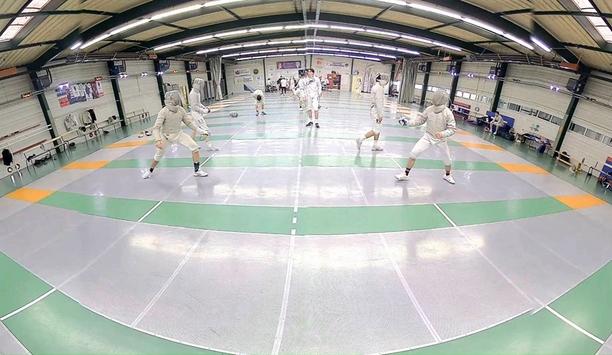
Located in the French suburb of Talence near Bordeaux, within a 15-hectare estate, the Center for Resources, Expertise, and Sports Performance (CREPS) of Bordeaux is a local public training institution specializing in sports and youth training. The institution, which hosts nearly 450 athletes across 25 training areas, chose Hanwha Vision and its cameras to assist coaches in the training and preparation of athletes. The objective Enhancing athlete performance with video analysis The CREPS of Bordeaux regularly welcomes delegations of French and international athletes who come to prepare for major events, such as the Olympic and Paralympic Games, World Championships, and European Championships. To improve athletes' performance, video intelligence is used by the institution, offering athletes the ability to review their training sessions, playback actions, and complete recordings of their sessions for later analysis. The challenge was to find cameras with a performance level that met the different requirements of various sports disciplines. Challenges at Bordeaux's Fencing Hall This camera is needed to ensure image quality without distortion and with precision, particularly for saber fencing In the CREPS of Bordeaux's fencing hall, which hosts Olympic and world medalists for training, the most challenging task was finding a camera capable of capturing the entire combat area, including 14-meter-long pistes with little space for positioning. This camera is needed to ensure image quality without distortion and with precision, particularly for saber fencing where bouts often occur at the ends of the piste. The solution Implementation of high-resolution 180° panoramic multi-sensor cameras E-Novon, a company specializing in sports video and a long-time partner of Hanwha Vision, tested different types of cameras in real situations to meet coaches' needs. "After analyzing with the coaches, the PNM-9022V camera was the most suitable due to its angle with minimal guaranteed distortion," according to Romain Briffa, Director at E-Novon. Offering a 180° view reconstructed from four high-resolution video sensors, this camera provides a highly detailed image across its entire field of view, without distortion. Additionally, it requires very little space behind the filmed scene. Conclusion and results CREPS enhances its cutting-edge video tools for greater efficiency After evaluating several solutions, Cyril Faucher, Coordinator of the Performance Support Mission within the high-level department of CREPS, concludes, "Due to the quality and fluidity of the images, the solution provided by E-Novon and Hanwha Vision fully satisfies CREPS in optimizing training in the fencing hall." Currently being deployed for fencing and modern pentathlon training, this solution opens up promising perspectives due to the insights being made available, including tracking fencers on the piste, providing statistics, and more.
ZeroEyes, the creators of the only AI-based gun detection video analytics platform that holds the US Department of Homeland Security SAFETY Act Designation announced that its proactive AI gun detection and intelligent situational awareness platform has been selected by Woodbine Community School District in Woodbine, Iowa, to protect students, faculty, and staff from individuals attempting to bring illegal guns onto the campus. U.S. school shooting rates continue to surge. Enhancing school safety Woodbine Community School District, a rural pre-K-12 public school district that operates two schools and serves 500+ students, adopted ZeroEyes to address these growing safety concerns. “We are dedicated to enhancing school safety so that our teachers can focus on education and students can concentrate on learning,” said Justin Wagner, superintendent, of Woodbine Community Schools. Instant verification, validation, and communication Step in a series of proactive mitigation and safety precautions we are taking to keep students and staff safe" “Choosing ZeroEyes means instant verification, validation, and communication to local law enforcement of anyone wishing to harm students or staff with a gun." "Their outstanding team and 24/7/365 in-house operations center provide us with the utmost confidence that we are providing the most advanced notification system available. This is an important step in a series of proactive mitigation and safety precautions we are taking to keep students and staff safe.” Actionable intelligence If ZeroEyes detects a gun on campus, the software will instantly send images to the ZeroEyes Operation Center (ZOC), staffed by specially trained U.S. military and law enforcement veterans, 24/7/365. These experts will verify the threat and dispatch alerts and actionable intelligence, including visual description, gun type, and last known location, to local Woodbine staff and first responders in as fast as 3 to 5 seconds from detection. AI gun detection technology "We're proud to see Woodbine Community Schools adopt our AI gun detection technology,” said Mike Lahiff, CEO and co-founder, of ZeroEyes. “We see it as our duty to help create a safer learning environment for children. We hope to see a day where schools are free from violence, ensuring students, parents, and staff can live without fear of gun-related threats.”

Screencastify, the end-to-end video creation platform announced its partnership with Modern Classrooms Project, a nonprofit organization that empowers educators to build classrooms that respond to every student’s needs. Student-centered learning Screencastify’s video creation tools will enable MCP educators with fresh resources to improve teaching outcomes and fuel the future of K-12 learning. The partnership provides all educators who are enrolled in Modern Classrooms Project’s Virtual Mentorship program with unlimited premium access to Screencastify, helping more teachers open new possibilities by creating dynamic, differentiated instruction and student-centered learning. End-to-end platform An end-to-end platform that makes recording, editing, sharing, assessing, and viewing video simple and accessible Screencastify, an original video creation tool via an internet browser, has become an end-to-end platform that makes recording, editing, sharing, assessing, and viewing video simple and accessible, so anyone can become a more effective communicator. Nearly 13 million users worldwide have used Screencastify to make nearly 500 million videos since 2016. Full access to creative tools “Screencastify has always had a singular goal of empowering teachers and students of all kinds to improve learning through the power of video,” said Vishal Shah, CEO of Screencastify. “This next evolution of our partnership with Modern Classrooms Project ensures that teachers and mentors within their program will have full access to our entire suite of creative tools to create the best video possible for students. We’re excited to continue to build on our partnership with Modern Classrooms Project and do our part in building the modern classroom and helping shape the classroom of the future.” Modern Classrooms Project Modern Classrooms Project has trained and certified over 700 Expert Mentors and Distinguished Educators Modern Classrooms Project is a nonprofit organization that leads a movement of educators in implementing video to drive blended instruction in a self-paced, mastery-based instructional model that leverages technology to foster human connection, authentic learning, and social-emotional growth. Modern Classrooms Project has trained and certified over 700 Expert Mentors and Distinguished Educators who implement its instructional model effectively in classrooms all around the world. New methods “Anyone who has spent time in the classroom knows that the task at hand perpetually feels unconquerable. But one place to start is in equipping educators with new methods that fundamentally restructure how they use space and time in the classrooms,” said Kareem Farah, CEO and co-founder of Modern Classrooms Project. According to a 2021 survey, the Modern Classrooms Project has helped 85% of teachers enjoy teaching more and feel more optimistic about their future in education and has made 72% more likely to continue teaching as a career. Video creation tools “With our partnership with Screencastify, the Modern Classrooms Project is investing in supporting teachers and unleashing their capacity." The partnership puts simple yet powerful video creation tools into the hands of leading K -12 educators who will implement the classroom of the future. Seamless assignments Each educator chosen was allowed to learn how to use instructional videos to carry on the mission “Screencastify is very intuitive. So, going into the Modern Classrooms Project mentoring program having already used Screencastify, it just made the assignments flow seamlessly,” said Cecelia Gillam, a teacher at St. Charles Parish School Board and MCP expert mentor. In 2021, Screencastify used $25,000 to recognize and sponsor 50 educators to learn the nonprofit organization’s innovative and research-backed instructional model. Each educator chosen was allowed to learn how to use instructional videos to carry on the Modern Classrooms Project’s mission to improve learning outcomes for every student and give them more control over their education. Flexibility to pause and rewind “Screencastify does a great job of giving students the flexibility to pause and rewind the video and make notes … and give them a sense of control of their own pace of learning,” said Monte Woodard, Science Teacher at The Field School in Washington, D.C. and MCP expert mentor. Screencastify has remained laser-focused on helping empower K -12 educators with the right tools to implement blended and hybrid classroom environments that are necessary today. Screencastify is used by educators in more than 70% of U.S. school districts.
Alarming increases in vehicle thefts, unsolved traffic collisions, and stolen cargo in the Mexican State of Tlaxcala, motivated the Executive Commission of the State Public Security System (CESESP) to expand and upgrade its video security system. To counter the rise in crime, the CESESP sought a flexible, scalable, open-platform video management system (VMS) that could seamlessly incorporate existing cameras as well as over 800 new cameras and edge devices from a range of hardware and software providers. Tlaxcala Located in East-Central Mexico, Tlaxcala is one of 32 states within the Federal Entities of Mexico. With a population of approximately 1,343,000, based on the 2020 census, Tlaxcala is the smallest yet one of the most densely populated states in Mexico. The CESESP of Tlaxcala is tasked with safeguarding residents across the state's 60 municipalities. C4 center C4 center has multiple teams of six security professionals who monitor the system around the clock At the core of all security operations, including the 911 emergency response and 089 confidential tip line, is the CESESP's Control, Command, Communications, and Computing Center (C4). The state’s C4 center has multiple teams of six security professionals who monitor the system around the clock on a large, 24-screen video wall. The C4 also houses the system’s HP and Lenovo servers. Flexibility, scalability, and budget “Flexibility, scalability, and strictly adhering to the budget were top requirements for this critical, state-wide project,” said Maximino Hernández Pulido, Executive Commissioner of the State Public Security System. “We considered a variety of proposals and providers, but we ultimately followed the advice of our integrator, Digital Information Systems, and selected XProtect Corporate from Milestone Systems.” XProtect Corporate The new system includes cameras from Hanwha Vision, Bosch Security and Safety Systems, Hikvision, and Pelco The new system includes cameras from Hanwha Vision, Bosch Security and Safety Systems, Hikvision, and Pelco, all integrated within the system and managed by XProtect Corporate VMS from Milestone Systems. The system is also fully integrated with the BriefCam Video Analytics Platform, delivering video intelligence for system managers to identify, monitor, investigate, and visualize incidents plus video data to make smarter decisions. Efficient and cost-effective integration “Because state officials rely on their video system 24/7, the update needed to be gradual with no downtime. As new cameras were integrated into the Milestone platform, the previous system slowly disappeared,” said Isaac Sánchez Morales, an engineer at Digital Information Systems (SDI), an integrating company. “The XProtect Corporate open platform VMS allowed us to leverage our existing cameras and servers, integrate new equipment and devices, making the process very efficient and cost-effective, and we never had a gap in service.” Data-driven video for fast response times BriefCam video analytics technology The solution detects, identifies, and classifies video metadata to drive more efficient investigations The BriefCam video analytics technology seamlessly integrates into Milestone’s XProtect Smart Client. The solution detects, identifies, and classifies video metadata to drive more efficient investigations and business decisions, such as finding missing persons, investigating vandalism, theft, assaults, accidents, injuries, or acts of violence, as well as extracting and analyzing through heatmaps, dashboards, and visualizations. The analytics have proven beneficial in accelerating investigations, attaining situational awareness, and optimizing operational intelligence for enhanced video search, alerting, and data visualization. Real-time alerts, situational awareness “We installed the BriefCam Insights and Investigator products, and regularly use the platform’s RESPOND and RESEARCH capabilities. One of the advantages of all these XProtect-integrated analytics is that operators do not have to open additional windows or enter new credentials to access them,” said Sánchez. “With this integration of technologies, operators can trigger real-time alerts based on complex object classifications and filter combinations to increase situational awareness meaning authorities can react to events as they unfold.” Proactive policing with LPR With the BriefCam RESPOND solution, object characteristics and license plate recognition tools can be used" Sánchez added, "With the BriefCam RESPOND solution, object characteristics such as vehicle, person, or animal, and license plate recognition tools can be used to trigger rule-based alerts." "These tools can help overcome the challenges of urban video surveillance and drive proactive policing in Tlaxcala." Video technologies reduce state crime rates Following the comprehensive expansion of the security infrastructure, statistics from the Executive Secretariat of the National Public Security Systems revealed Tlaxcala boasted the lowest crime rate nationwide. With the modernized system in place, officials documented a 93% reduction in pilfered freight from transport companies. Similarly, vehicle theft declined by 22.5%. A cost-efficient and flexible way Milestone Interconnect provides a cost-efficient and flexible way to gain central surveillance According to Sánchez and the SDI team, it is expected that each municipality within the territory will soon have its own locally focused VMS. With the use of Milestone Interconnect, all the municipality subsystems will integrate directly with the state-wide platform. Milestone Interconnect provides a cost-efficient and flexible way to gain central surveillance of multiple sites spread across a region. C4 video surveillance operation “The integrated solution delivered through Milestone is a robust, efficient, and secure system that provides all the necessary tools for the C4 video surveillance operation,” added Executive Commissioner Hernández-Pulido. “In addition, the excellent technical and post-sales support from Milestone and SDI has led us to meet the system and performance goals we set for ourselves.”
Round table discussion

Technology automates tasks, streamlines processes, and improves efficiency in various fields, including physical security. But the success of today’s latest technologies depends on our ability to use them responsibly and efficiently. Optimising our industry’s use of technology requires that the industry’s workforce have the needed skills to operate the latest equipment. We asked this week’s Expert Panel Roundtable: How does technology innovation in security systems impact the skillsets needed by security operators and officers?

Headlines of violence in our schools are a reminder of the need to keep educational institutions safe. In fact, if there is a positive aspect to the constant bombardment of headlines, it is that it keeps our attention perpetually focused on how to improve school security. But what is the role of physical security systems? As the new school year begins, we asked this week’s Expert Panel Roundtable: Are schools safer because of physical security systems? Why or why not?

As physical security technologies become more complex, it is incumbent on the dealer/integrator to have the skills and expertise needed to ensure that a system operates smoothly. The value of integrators increasingly rests on the skill sets they bring to bear when installing a system. If the skills are missing, there is a problem. We asked this week’s Expert Panel Roundtable: What missing skills among security integrators can cause problems for customers?