Mobile communications

In the world of cybersecurity, ethical hacking proactively identifies security vulnerabilities before malicious actors (i.e., unethical hackers) can exploit them. By simulating real-world attacks, organizations can strengthen defences, protect sensitive data, and maintain public trust. In the physical security world, ethical hacking can transform cybersecurity of security systems from a reactive struggle into a strategic safeguard. We asked our Expert Panel Roundtable: What is the role of ethica...

Zimperium, the world pioneer in mobile security, now released new threat research exposing a growing wave of mobile-targeted phishing attacks that weaponize PDF documents delivered via SMS and MMS. The findings reveal how threat actors are exploiting user trust in PDFs and gaps in mobile security controls to harvest credentials and sensitive data at scale. Zimperium’s zLabs research team According to Zimperium’s zLabs research team, attackers are increasingly using PDFs as a deli...
Detection Technology, a pioneer in X-ray detector solutions, announces that its pioneering all-in-one CT detector system, AIDA, has advanced into customer evaluation — a major step toward its commercial rollout in early 2026. The move into evaluations also highlights AIDA’s mission to solve one of photon-counting CT’s (PCCT) biggest challenges: managing and transmitting massive data flows. Strong customer interest confirms the hardware-software platform’s suitability for...

Reliable broadband connectivity is essential for emergency services and public protection and disaster relief (PPDR) organizations to coordinate responses, share real-time information, and maintain situational awareness during critical incidents. Frequentis, a global safety-critical solutions expert, and Lyfo, a Dutch network technology specialist, are entering into a strategic partnership to advance network connectivity over 4G/5G for safety-critical applications and enable high-capacity mobil...
Zimperium, the global pioneer in mobile security, revealed findings from its zLabs team showing that thousands of popular Android applications — including top travel, airline, and weather apps — are still using an outdated mapping component that could put users and enterprises at risk. The investigation, titled “Follow the Map to Enterprise Risk: What’s Inside Popular Android Apps,” found that a legacy library known as libmapbox-gl.so, once part of Mapbox GL Native...
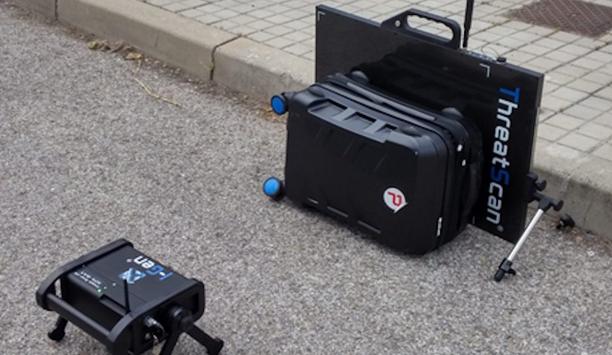
3DX-RAY, a pioneer in advanced X-ray imaging technology, is pleased to announce the successful acquisition of a significant double-digit unit contract with the esteemed Indian partner for the ThreatScan LS1 system. This innovative solution has been selected for its impressive size, ruggedness, and exceptional capability to efficiently handle Passive Infrared (PIR) devices activated by X-ray technology. EOD and security applications The ThreatScan LS1 is an advanced X-ray imaging system specif...
News
Zimperium, the global pioneer in mobile security, released new research from its zLabs team revealing a sharp rise in mobile threats tied to the holiday shopping season. The Mobile Shopping Report: From Carts to Credentials highlights how cybercriminals are exploiting the seasonal surge in e-commerce and mobile app activity to target both consumers and enterprises. According to zLabs’ analysis, mishing (mobile phishing) remains the most widespread and effective mobile attack vector. Smishing messages and fake delivery alerts impersonating trusted retail and logistics brands surged up to 4x during the 2024 holiday shopping period, with attackers using urgency-driven messages like “Your package is delayed, click here” to trick users into revealing credentials or downloading malicious apps. Expanding malware families The report also finds that malware families are expanding beyond banks to target shopping and payment apps, using overlays and accessibility permissions to steal credit card data, intercept one-time passwords (OTPs), and compromise digital wallets. Meanwhile, legitimate retail apps continue to expose users and enterprises through misconfigured SDKs, hardcoded private keys, and vulnerable third-party libraries. These are all weaknesses that can be exploited for data theft or remote code execution. “These findings confirm what we’ve been tracking throughout the year: attackers are taking full advantage of the mobile commerce boom,” said Kern Smith, SVP of Global Solutions Engineering at Zimperium. “What begins as a fake shipping alert or counterfeit shopping app can quickly evolve into a corporate breach when employees shop or click from work-connected devices.” Consumer and enterprise risk The zLabs team also warns that the holiday season now blurs the boundary between consumer and enterprise risk. Employees using BYOD or corporate-enabled devices to shop, track packages, or manage payments introduces new pathways for credential theft and brand impersonation scams. “As mobile and enterprise ecosystems converge, security teams must treat the holiday season as a critical risk window, not just for consumers, but for the business itself,” said Ignacio Monta, SVP, Strategy & Threat Intelligence at Zimperium.
Oculeus, a major provider of innovative software solutions for telecommunications service providers, announced that the company has deployed its Captura NG solution for ONATi, the incumbent telecommunications service provider in French Polynesia. ONATi provides national and international fixed line, mobile, wholesale transit and broadband services. The company provides its communications services under the VINI brand across the entire territory of French Polynesia, deploying advanced technologies to support high quality service delivery to 75 geographically dispersed islands. ONATi is a subsidiary of Office des Postes et Télécommunications de Polynésie Française (OPT), the state-owned organization responsible for the country’s postal and communications infrastructure and services. Captura NG ONATi has migrated the management of its interconnect voice traffic and national and international partner management to the Captura NG solution from Oculeus. Captura NG provides ONATi with a single, converged platform to manage all interconnect billing, settlement and routing optimization activities. The platform utilizes advanced tools and automated processes for ONATi to achieve improved cost and revenue assurance for its interconnect business, while providing real-time reporting intelligence. AI-powered features The functionality of Captura NG includes AI-powered features to assist in critical operational tasks, such as the ingestion of partner pricing offers, and significantly reduces the risk of manual errors and billing disputes with partners. For this, Captura NG streamlines workflow processes through an integrated email portal for the direct publication of price and code offers and the automated exchange of interconnect invoices. The routing optimization features further enable ONATi to maximize its margins, by delivering its outbound international voice traffic according to a controllable blend of lowest supplier cost backed by quality guarantees. Ttechnology partner “We are pleased to confirm Oculeus as our selected technology partner to further modernize our interconnect operations,” stated Olivier Chungue, Head of International Development at ONATi. “The deployment of Captura NG has been a critical project for ONATi and will directly support our commitments to delivering excellence in both national and international voice activities.” “We are excited to welcome ONATi as another new Captura NG customer and pleased with the immediate impact our solution is having on ONATi’s interconnect business,” said Arnd Baranowski, CEO at Oculeus. “ONATi joins our community of more than 60 live customers benefitting from the advanced technologies of our latest NG version of Captura.”

The international cybersecurity and medical imaging IT company Sectra announces the launch of Sectra Tiger/E Managed Service—a sovereign, fully managed collaboration platform designed to meet the evolving needs of authorities, municipalities, essential entities, and corporations. The new solution enables secure, scalable, and easy-to-use mobile communication for sensitive but unclassified information. It supports calls, video, and chat with strong encryption, provides endpoint security, and is designed for high availability and broad usability. Secure, flexible, and mobile collaboration “Organizations today face increasing demands for secure, flexible, and mobile collaboration, especially when handling sensitive information outside traditional classified environments. Sectra Tiger/E Managed Service fills a critical gap by providing a modern, service-based platform that complements existing classified systems and makes secure collaboration accessible across sectors.” “As we have seen in recent conflicts, such as the war in Ukraine, secure solutions must be easily accessible as well as simple and intuitive to use—otherwise, they risk not being used at all,” says Magnus Skogberg, President of Sectra Communications. End-to-end encrypted communication Sectra Tiger/E Managed Service combines hardened Samsung Knox devices, a dual-environment architecture, and a quantum-resilient VPN in a service model that strengthens national resilience. By separating two secure zones—one for sensitive collaboration and one for everyday tasks—the platform lets users work securely without losing usability or mobility. Altogether, the service ensures high availability, end-to-end encrypted communication, strong endpoint security and an infrastructure designed for national resilience and regulatory compliance. As it is a fully managed service by Sectra, it reduces the burden on internal IT teams and ensures the reliability essential for organizations that can’t afford downtime. Supporting sensitive communication Designed to support both everyday sensitive communication and time-critical collaboration, Sectra Tiger/E Managed Service gives users the flexibility and mobility to work securely—whether handling business secrets, coordinating daily operations, or responding in a crisis. The solution is built on Sectra’s long-standing experience in developing RESTRICTED, SECRET, and TOP SECRET solutions. While not intended for classified communication, it brings proven security practices and threat analysis methodology into a robust platform designed for sensitive collaboration. The Sectra Tiger/E (where "E" stands for "essentials") complements the suite of established solutions, such as Sectra Tiger/S (SECRET). In this context, "essentials" refers to information that requires enhanced security for sensitive communication and collaboration. Sectra Tiger/E Managed Service is available now to support organizations seeking to enhance security, ensure jurisdictional control, and enable encrypted collaboration in a rapidly changing threat landscape.
Zimperium, the world pioneer in mobile security, highlighted the growing threat of mobile bots operating inside trusted apps. These bots represent a new form of automation that bypasses traditional defenses, such as CAPTCHAs, rate limits, and MFA, making them nearly impossible to distinguish from legitimate users and enabling fraud at scale. Unlike web-driven bots that flood networks with suspicious traffic, mobile bots run on the client side, inside the app itself. By exploiting APIs, sessions, and app logic, they blend seamlessly with real user behavior, leaving backend servers to interpret every action as genuine. Mobile bots The result is account takeovers, loyalty abuse, and payment fraud executed from within insecure or under-protected apps that were never designed to detect them. Mobile bots use a wide range of techniques to stay invisible and expand their reach, including: Emulators & Device Farms – mimic thousands of real devices at once Runtime Injection Tools – alter app logic in real time to bypass security checks Repackaged Apps – embed bot code into cloned versions of legitimate apps Malware on Devices – intercept app traffic and automate in-app actions Accessibility Abuse – programmatically tap, type, and navigate inside apps. Each method makes bots harder to spot and easier to scale. Wide scale use of mobile apps Mobile apps have become the front door for customer interactions: logins, bookings, payments, loyalty, and even health records. Others power critical enterprise operations. That makes mobile bots more than a nuisance, they are a growing enterprise risk. Some run from attacker-controlled infrastructure on emulators and device farms, while others live on compromised devices, quietly performing fraudulent actions or spreading malicious links. With more than 600 bot samples and 50+ droppers spotted in recent campaigns, the threat is accelerating.

Since most businesses use online platforms like websites, mobile apps, or APIs for their client interactions, they are prone to cybercrime a lot through the internet. To protect them from such threats, Indusface is using its advanced technology-driven platform, reports such vulnerabilities and threats to the users, and provides virtual protection and security until the software vulnerability is fixed. Analytics Insight has engaged in an exclusive interview with Ashish Tandon, CEO, and Co-founder of Indusface. How does your company’s strategy facilitate the transformation of an enterprise? We are living in a digital world where opportunities, as well as risks for digital businesses, are constantly on the rise. Our client’s businesses use online platforms such as websites, mobile apps, or an API to interact with their subscribers, partners, vendors, or employees. Indusface, using its advanced technology-driven platform provides virtual protection and security Since these applications and platforms are exposed to the internet, they are also vulnerable to a lot of security risks and cybercrimes. This is where Indusface, using its advanced technology-driven platform, reports such vulnerabilities and threats to the users and provides virtual protection and security until the software vulnerability is fixed. We have built an award-winning fully managed platform integrating a web application scanner, web application firewall, DDoS, BOT Mitigation, CDN, and threat intelligence engine to provide holistic support and safety to more than 3000 customers across the globe. Which industry verticals are you currently focusing on? And what is your go-to-market strategy for the same? As an Application Security SaaS company, Indusface serves a diversity of clientele across almost all major verticals. At the current time, digital operations are a must for every enterprise, and that makes every company a potential client for us. Currently, some of our major clients include TCS, ICICI Bank, HDFC Ergo, Aegon Life, Aditya Birla Finance, Larsen and Toubro, Marico, Titan, Tata Power, Start TV, etc as well as Start-Ups and SaaS companies such as Darwinbox (Unicorn), SastaSundar (a Flipkart company), NamasteCredit, Qwikcilver (A PineLabs Company), Shopclues, etc., among others. We are attracting customers across the world through our experienced sales team as well as a Channel Network comprising of Managed Security Providers like TCS, Tata Communications, etc, and Distributors/ VARs like Redington, etc. What is your leadership mantra? Indusface has walked down a journey from 1 Million ARR ( Annual recurring revenue) to 5 Million ARR. The process of achieving the right product that fits the market took almost 2.5 years. Over the years, leading one successful venture after another has taught me several leadership lessons. I believe that nothing can be overpowering if we have the will to do it. The key is to be a team player, choose the right teammates, and do the homework on what needs to be done, who will do it, and how. At no point in time should one be overawed by the competitors’ offering or scale. These thoughts have held me in good stead throughout my journey. What are some of the challenges faced by the industry? We use big data, and analytics to ensure that our solutions can identify and respond to evolving threats The only thing constant with technology is that it is changing. Therefore, the security landscape, tools, and risks are all dynamically altering themselves each day. In such a scenario, it is the biggest challenge to build the right kind of software and service combination which addresses the customer’s concerns and offers efficient, effective, and quick protection. We have been using best-in-class technologies, big data, and analytics to ensure that our solutions can identify and respond to evolving as well as future threats. What are the key changes that you have brought into the analytics domain at Indusface? We have built a high-performance Big Data Analytics platform. Big Data Pipeline will be used for all cases needing complex analytics. eg. DDOS and bot mitigation, behavior analysis, and customs requirements. In near future, this will be extended to use advanced Machine Learning techniques to provide fully automated, real-time, high-quality protection. What have been the most significant challenges that you have faced at the forefront of analytics? The most important challenge was to organize the data for the high-performance Big Data Analytics platform. The industry is seeing the rising importance of Big Data Analytics and AI. How do you see these emerging technologies impacting the business sector? The success of any cyber security solution is going to be dependent on the integration of AI and big data analytics In the wake of the pandemic, there has been a real surge in digital transformation. Companies are hurriedly adopting new technologies and launching platforms to connect with their audiences. More often than not, security is only considered an afterthought. As security solutions providers, it is important to quickly and accurately identify vulnerabilities and threats in the new normal. That’s where big data analytics and AI offer advantages that have helped us create superior and robust cyber threat analysis and prevention systems. The diversity of data gathered from sources like applications, networks, computers, cloud platforms, IoT sensors, APIs, databases, etc is enabling the security analysts and system administrators to plan a framework that can cope with existing and emerging threats. There is no doubt that the success of any cyber security solution is going to be dependent on the integration of AI and big data analytics in the times to come. What would you advise aspiring big data and analytics candidates? I would advise all aspirants to focus on outcome-oriented actionable use cases while implementing Big Data and Analytics projects.
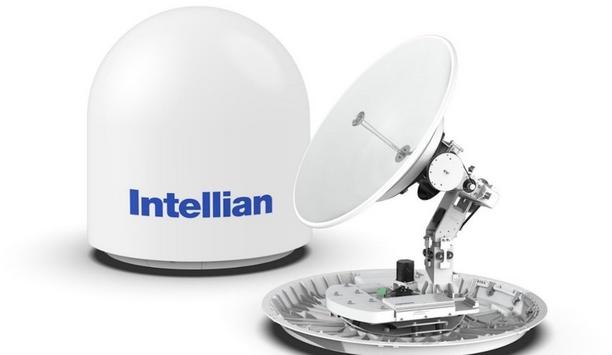
Intellian, the pioneer of mobile satellite communication antenna systems, is introducing the new 1.5m Ku to Ka convertible VSAT terminal. The world’s first and only 1.5m Ku to Ka convertible VSAT, v150NX, is a future-proof system supporting 2.5GHz Wide Ka-band networks as well as GEO (Geostationary Earth Orbit), MEO (Medium Earth Orbit) and LEO (Low Earth Orbit) constellations. Best RF performance Its highly efficient design delivers the best RF performance of any 1.5m system on the market now for ship owners, operators and network providers. It is easily converted to Ka-band by changing the RF Assembly and Feed, as the reflector and radome are optimized for operation across both frequency bands. GEO/MEO/LEO tracking capability At this year’s Satellite Show, which is held at the Walter E. Washington Convention Center in DC this week, May 6-9, 2019 (booth #925), Intellian is displaying its new product’s Ka-band version, the v150NX Ka. This state-of-the-art terminal is also compatible with future 2.5GHz Wide Ka-band networks and has delivered speeds of 830Mbps in trials already. With GEO/MEO/LEO tracking capability, the v150NX Ka delivers unmatched performance now and is ready for operation with forthcoming new high-speed and low-latency networks. Land gateway antenna system Both the v150NX and v150NX Ka enable reliable, high-throughput broadband at sea and can be quickly installed to deliver precise, cost-effective satellite tracking as a land gateway antenna system. With its ability to track any satellites on mobile and fixed platforms, and includes smart satellite handover capability enabled by an embedded mediator. New NX platform Operators can now provide a seamless network with high-speed bi-directional IP connectivity. Additionally, the antenna can be interconnected with no loss of signal even at longer distances, using the Intellian Fiber Link Solution. Moreover, with the new NX platform, Intellian’s 1.5m satellite communication systems use a single cable, which combines Tx, Rx, and DC power, to simplify installation. A cutting-edge modular design results in lower cost of ownership throughout the entire lifecycle, while improving reliability and streamlining maintenance. New and innovative satellite communication technologies Eric Sung, CEO of Intellian, said, “The industry-pioneering performance, simplified installation and ensured compatibility with future constellations and networks positions our new 1.5m antennas as one of the most innovative, flexible and cost-effective connectivity platforms available for diverse users on land and at sea.” Alongside the new v150NX Ka, Intellian will also highlight the expansion of its diverse portfolio with the launch of more new and innovative satellite communication technologies at Satellite 2019, including; the LP100, man-portable, military spec land terminal; the all new GX100NX for use on the Global Xpress network; and the OW70 for LEO constellations.

Expert commentary

When a bomb detonated in the Port of Beirut, I had hundreds of employees under my care inside the blast zone. Within just two hours, I was able to determine who was impacted, understand their safety conditions, and share resources for on-the-ground support—all thanks to mobile technology. For Chief Security Officers, receiving calls like these launches a variety of protocols and necessary decision-making with the safety and security of people and assets as a top priority. And these calls are only becoming more common. Dependence on threat intelligence Mobile phones have dominated the post-COVID environment where people work from anywhere Threats ranging from natural disasters to geopolitical conflicts are becoming more frequent and complicate the responsibility organizations have in keeping their people safe. To meet these needs CSO’s are staying ahead of negative outcomes through creating a greater dependence on threat intelligence. In these times, effective, real-time risk management depends on hyper-local data from technology that is accessible, portable, and dynamic – such as cell phones. Mobile phones have revolutionized the way people live and work. They allow us all to walk around with a computer in our pocket, bringing the world to our fingertips and eliminating digital borders for over 90% of the world's population. Mobile phones have dominated the post-COVID environment where people work from anywhere and have geographically distributed teams but are also more vulnerable to threatening events. Mobile-friendly risk management platforms Mobile technology assigns workers with easy entry to data that can help keep them and their teams safe As we approach 2024, many organizations are adopting comprehensive risk management tools that empower personnel across the organization with the intelligence and knowledge they need to stay safe wherever they are. Mobile-friendly risk management platforms, such as Crisis24 Horizon, provide always-on awareness, on-hand threat intelligence, and immediate communications and distress signaling through location monitoring. Users receive location risk assessments and push notifications directly to their devices about nearby issues and threats no matter if they are on or off the job. While only select risk managers have complete control of the platform and all sensitive employee data is protected through encryption, the app distributes critical intel to foster a culture of shared awareness and responsibility. Thus, mobile technology empowers employees with easy access to information that can help keep them and their teams safe. Creating a culture of mobile technology adoption In the last few years, the world has proven the importance of being well-informed of risks and mitigation plans to minimize harm. However, psychological barriers tend to trump physical barriers when it comes to accessing the vast array of tools our mobile devices offer. World has proven the matter of being well-informed of risks and relief plans to minimize harm Adopting this technology and establishing a culture that enforces risk management across an organization is a daunting challenge that demands substantial commitment from leadership to be successful. Some companies have tackled this challenge by positioning security technology as part of the organization’s employee benefits package, such as commuter benefits and health insurance, to encourage people to take advantage of these resources and learn how to use them. Cohesive risk management culture Technology is only as effective as the people whose actions it informs, which is why adoption and integration are so important. When a cohesive risk management culture meets a powerful technology platform, individuals are enabled to receive threat alerts and counter their impacts, letting others know when and how to take the necessary precautions to protect themselves and their team. For more information on mobile technology and other security trends, check out the Global Risk Forecast, an annual report by Crisis24 that provides a comprehensive analysis of key events around the world most likely to affect operations in the coming year.

Daniel May of Consort reviews the integration of access control systems in healthcare settings, outlining the benefits and key considerations decision-makers must make throughout product specifications. From patient safety and traversal to the protection of sensitive data and pharmaceuticals, healthcare environments are faced with several operational challenges. And where security remains at the forefront of decision-making, modern access control systems may often hold the answers. Physical security systems Hospitals in particular have developed into multi-faceted spaces that house hundreds to thousands of patients, staff, and visitors at any one time. In England for example, research has found in the three months leading to June 2023, an average of 44,626 people visited major hospital A&E departments each day, with over 16 million attendances typically recorded over the course of a year-not to mention an additional nine million logged at other minor units. For any building, this level of sustained footfall can request severe security difficulties For any building, this level of sustained footfall can invite severe security tests. With that, the need to deploy effective physical security systems in healthcare is clear. And so, as access control continues to become more readily adopted and new products enter the market, decision-makers are reminded to consider the requirements of their building, ensuring they select the solutions most suited to their settings and budget. Security controlled Patient safety will always remain the top priority in healthcare settings, and where matters of health and social care come into question, a diverse set of professional regulatory bodies are tasked with setting and maintaining high standards. When it comes to healthcare premises specifically, patient security and perimeter security often come hand in hand and are amongst the most pressing of challenges that decision-makers must face. To help address operational planning and potential design concerns in the NHS, the Health Building Note (HBN), provides general design guidance for healthcare buildings under HBN 00-01-citing the use of access control measures as a way of maintaining security and protecting the safety of patients, staff, and visitors. Use of access control Hospital buildings control varied levels of access for a number of security purposes Hospital buildings, for example, must control varied levels of access for a number of operational and security purposes. Routine scenarios exist where vulnerable patients are under monitoring and thus refrained from exiting the premises for their own safety, while at the same time, permitted staff must be able to reach their patients and medicines when required. For this, the use of access control is key. Equally, access credentials can also help management teams keep track of those who may be entering or exiting rooms with equipment and pharmaceutical supplies, deterring any unwanted visitors and opportunists in the process. Incorporation of access control systems On a similar note, regulations have set a minimum standard for how personal data should be stored and managed in healthcare environments, giving decision-makers an added responsibility to regulate staff-controlled areas with patient medical records. While instances of personal data breaches are rare, healthcare facilities and professionals are at legal risk should confidential data be found misused or missing. As such, the incorporation of access control systems has become essential in keeping data storage areas secure, with intuitive online systems capable of permitting access to staff with the correct credentials while simultaneously tracking who has requested clearance at digital entry points. HBN guidance Healthcare experts are better fitted to control the sheer volume of people entering and exiting To function effectively, healthcare facilities must always be perceived as safe places by the people who reside within them, and as HBN guidance implies, a unified physical security system can help address key safety and security concerns while enhancing patient and staff experience. Opportunely, access control systems are more accessible and adaptable than ever and combine several technologies such as mechanical locks and automatic doors with electronic access credentials in the form of smartphone apps, badge readers, and biometric scanners. By integrating these systems into the building’s existing infrastructure, healthcare professionals are better equipped to control the sheer volume of people entering and exiting the premises without impairing the general flow of movement and coordination around the facility. Better by design Despite the clear benefits offered to healthcare facilities, there are a number of considerations to be mindful of when choosing an access control solution. Poorly implemented systems can have an adverse effect on security and functionality - quickly costing healthcare organizations time and budget to rectify and replace the inadequate products that don’t meet the building’s requirements. For that reason, decision-makers and design teams are reminded that there is no single solution that fits all healthcare buildings. As such, it’s crucial for decision-makers to understand the systems that are being put in place throughout each of the touchpoints in their facility. Clear collaboration is required during periods of specification, where together, teams can ensure the selected product works on all angles, from meeting fire safety and sustainability standards to aesthetics and scalability. Modern access control products Scalability is a key area that decision-makers must review when selecting access control systemsFrequently overlooked, scalability is a key area that decision-makers must review when selecting access control systems. Such is their diverse nature; healthcare facilities can often change and develop as years go by, and by selecting a system that facilitates growth, such as a cloud-based solution-security and efficiency is long-established. While modern access control products are known for seamless integration, there are some systems that may restrict the ability to use different vendors throughout the remainder of the building’s infrastructure. This, in effect, causes a monopolization of products throughout the estate, which can have an adverse effect on growth by increasing costs and reducing the levels of service associated with the security system already in place. Improve security and safety A scalable and reliable access control system will continue to improve security and safety by adapting to a building’s new requirements-and all while having minimal impact on its operational network. And so, while technology will no doubt continue to influence and transform the access control market, healthcare facilities and their professionals must continue to remain educated on their own systems, ensuring they have the best options in place to keep their patients, staff, and visitors safe and secure for years to come.

Security systems represent a significant investment, yet many organizations still only use a small percentage of their physical security systems’ capabilities. That’s before we even begin to consider the different ways that the likes of video, access control, and ANPR can add additional value beyond security by serving the needs of other business functions. Whether that be to obtain additional insight, streamline compliance, or drive operational efficiencies. Consumption gap When users aren’t tapping into the full power of the solution they bought, they aren’t realizing their full return on investment. This creates a consumption gap. It’s a situation that has the potential to go in one of two very different directions. A misunderstanding of a system, its capabilities and functionality can quickly result in user dissatisfaction Left unchecked a consumption gap can create frustration for system integrators, manufacturers, and end users alike. A misunderstanding of a system, its capabilities and functionality can quickly result in user dissatisfaction. Leading to a greater likelihood that they’ll look to change or focus investment into overlapping and likely competing solutions. Customers’ security goals Addressed appropriately it can help manufacturers, system integrators, and end users to build trusted partnerships in which everybody wins. Understandably, systems integrators are primarily focused on installation—delivering reliable solutions that meet customers’ security goals to ensure their long-term success. However, engagement can go beyond deployment. Closing the consumption gap can be a strategic way to differentiate yourself from competitors. The deeper you understand your customer’s business, the better advice you’re able to offer—and the stronger the partnership you form. Why do consumption gaps exist? For customers, finding the time to learn multiple capabilities of a security system can be time-consuming. Often, taking advantage of new tools and solutions takes a backseat to the urgency of daily tasks. Often, taking advantage of new tools and solutions takes a backseat to the urgency of daily tasks There are many reasons why customers may not be taking full advantage of the features available to them in their security platform. They may feel overwhelmed by a steep learning curve after deployment and might delay diving into the additional system features. Sometimes, there might be a lack of awareness of the technology’s full capabilities, and despite a willingness to learn, there are few options for training. Often, it can simply be they are not aware of the benefits of their system or are too busy with day-to-day and urgent tasks to learn other features. Bridging the consumption gap Systems are built to deal with a wide variety of use cases and broaden market appeal, but the goal isn’t to get everyone to use all the features of every product. You want to guide your customers toward the features and functionality that best meet their needs. This could entail reducing the friction they experience in their day-to-day operations, solving unique issues related to their business, or addressing their most important challenges. Having these conversations with your customers deepens your relationship and can organically open up new revenue streams. Continuous engagement allows you to recommend other relevant products or services that they may find helpful. Customized training plan Customers can learn at their own pace and gradually expand their understanding of their system Furthermore, customers are often not able to implement all features at once. You can help by proposing a plan to gradually evolve systems and processes over time. This could include a customized training plan to get the most value from their investment. Some manufacturers are also now providing learning management tools that system integrators can pass on to their customers. Customers can learn at their own pace and gradually expand their understanding of their system in accordance with their bandwidth. This allows them to get more out of their system. Simplifying deployment With the right software partners, systems integrators can focus on solving customer problems, not reactively troubleshooting issues. Look for manufacturers who offer good support systems for integrators. This includes not only quality technical support but also configuration and training services you can build on. Look for partners that offer tools and consultation services you can use to complement your value-added services, either to spend less time on the basics or for specialized expertise on complex projects. Beyond support and services, one telling sign is the configuration interface and tools that you as an integrator will primarily interact with. Ask yourself whether the manufacturer invests in their back-end tools and their primary user interface. Is there a noticeable difference between these two interfaces in terms of look and feel? Does one feel more dated? Widening consumption gap The harder it is to implement upgrades, the more reticent customers are to make the changes If the end user interface is easy to use but changes on the back end are difficult, the resulting friction can contribute to the widening consumption gap. It can become too time-consuming or difficult to upgrade or make changes to the system. The harder it is to implement upgrades, the more reticent customers are to make the changes. Configuration should be painless. If the system has a solid graphical user interface, you’ll be able to interact with the software in a fluid and intuitive way. When the system is intuitive for both you and your customers, you spend less time on setup and training. You can invest more attention in value-added activities. Conclusion A consumption gap could be a sign that technological innovation is outpacing people's ability to implement them in their day-to-day lives. You can work with your customers to simplify the adoption of the innovations so they can more easily implement them and realize the full value of their investment. By reviewing opportunities to bridge the consumption gap for your customers, you increase the likelihood of growing and renewing your system and service contracts. You also build relationships as a trusted partner. Customers will turn to you when looking to expand their security system and proactively solve new and incipient problems.
Security beat
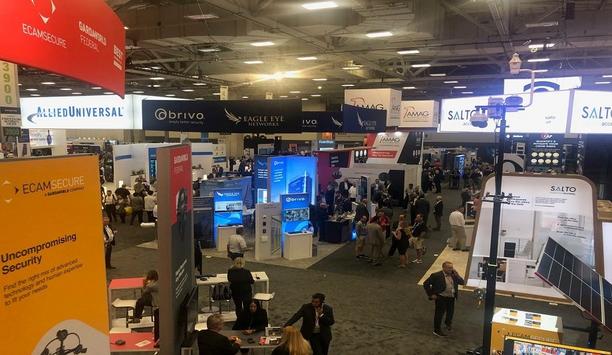
Companies at GSX 2023 emphasized new ways that technologies such as artificial intelligence (AI) and the cloud can address long-standing issues in the security market. Among the exhibitors at the event in Dallas were companies seeking creative ways to apply technology, lower costs, and make the world a safer place. Reflecting on the exhibition, here are some additional takeaways. Expanding AI at the edge i-PRO is a company reflecting the continued expansion of edge AI capability in the security market. Today, more than half of the company’s lineup supports AI at the edge so the customer has a wide choice of form factors when seeking to leverage the feature set. AI processing relay, extended warranty i-PRO is increasing their warranty period from 5 to 7 years, which could be a lifetime warranty in some cases I-PRO also has an “AI processing relay” device that accepts non-AI video streams and applies edge analytics. AI has progressed from a high-end technology to a feature available in a variety of cameras at different price points. i-PRO is also increasing its warranty period from 5 to 7 years, which could be a lifetime warranty in some cases depending on a customer’s refresh schedule and lifecycle management. Active Guard, MonitorCast The company’s video management system (Video Insight) is continuing to build new features including “Active Guard,” an integrated metadata sorter. Their access control platform, MonitorCast, is a Mercury-based solution that is tightly integrated with Video Insight. Their embedded recorders now have PoE built in. “We can move at a faster pace to fill out our product line since leaving Panasonic,” says Adam Lowenstein, Director of Product Management. “We can focus our business on adapting to the market.” Emphasis on retail and other verticals Shoplifting is a timely issue, and retail is a vertical market that got a lot of attention at GSX 2023. “We see a lot of retailers who are primarily interested in protecting employee safety, but also assets,” says Brandon Davito, Verkada’s SVP of Product and Operations. “Shrinkage is a CEO-level priority.” “Retailers are getting more engaged with security posture, instead of letting perpetrators walk,” Davito adds. Intrusion detection Verkada has an intrusion product that will notify a central station if there is an alarm On the alarm side, Verkada has an intrusion product that will notify a central station if there is an alarm, and operators can review videos to confirm the alarm. Other capabilities seeking to discourage trespassers include sirens, strobes, and “talkdown” capabilities. International expansion Verkada continues to expand internationally with 16 offices in all, including Sydney, Tokyo, and London. The core value proposition is to enable customers to manage their onsite infrastructure more simply, including new elements such as PTZ cameras, intercoms, and visitor management. Verkada emphasizes ease of use, including a mobile application to allow access to be managed across the user base. Forging partnerships “We are committed to the channel and industry, and we continue to build relationships and expand our reach,” says Davito. Among the industry relationships is a new partnership with Convergint, which was hinted at during the show and announced later the same day. They are also expanding their partnerships with Schlage, Allegion, and ASSA ABLOY. Working with other verticals They offer new features for K -12 schools, and a new alarm platform is easier to deploy and manage Verkada has also found success across multiple other verticals, notably healthcare, where they integrate with an electronic medical records system. They offer new features for K-12 schools, and a new alarm platform is easier to deploy and manage. They are integrating wireless locks to secure interior doors in schools, looking to secure the perimeter, and installing guest management systems. Transitioning the Mid-Market to the Cloud Salient is squarely focused on the “mid-market,” a large swath of systems somewhere between small businesses and enterprise-level systems. Pure cloud systems are not as attractive to this market, which has a built-out infrastructure of on-premise systems. Adding a camera to an existing system is easier and less expensive than tying it to the cloud. Benefits of cloud It’s a market that may not be ready for pure cloud, but there are benefits to be realized from adding a cloud element to existing systems. “We are continuing to augment our premise-based solutions with added cloud capabilities and flexibility,” says Sanjay Challa, Salient’s Chief Product Officer. The feedback Salient hears from their customers is “I want to own my data.” The hybrid cloud approach offers the right mix of control, flexibility, and unit economics. Cloud add-on capabilities We want to provide the flexibility for customers to go full-cloud as it becomes more economically attractive" Cloud add-on capabilities include bringing more intelligence about system operation to the user via the cloud. Over time, Salient expects to sell more cloud-centric offerings based on feedback from integrators and customers. “We want to provide the flexibility for customers to go full-cloud as it becomes more economically attractive over time,” says Challa. Vaidio AI technology Salient seeks to be a transition pioneer to help customers realize the path to the cloud. Their approach is “crawl, walk, run,” and helping customers make the transition at each stage. Salient has added AI to its product offering, incorporating Vaidio AI technology from IronYun into a powerful suite and broad array of on-premise analytics, which are gaining traction. The seamless approach makes it easy for customers to embrace AI analytics, although Salient remains broadly committed to open systems. Addressing ‘Soft’ Features for Integrators AMAG is in the process of enhancing its product line with the next generation of access control panels. However, “product” is just part of the new developments at AMAG. In addition to “hard” features (such as products), the company is looking to improve its “soft” features, too; that is, how they work with the integrator channel. Integrator channel Rebuilding a process to make your organization more efficient, is relatively easy; it just takes a lot of persistence" “We have the depth of our legacy customer base we can learn from, we just need to close the feedback loop quicker,” says Kyle Gordon, AMAG’s Executive Vice President of Global Sales, Marketing, and commercial Excellence, who acknowledges the value of reinstating face-to-face meetings after COVID. “We are laser-focused on nurturing our integrator channel,” he says. “Developing new features takes time, but rebuilding a process to make your organization more efficient, that’s relatively easy; it just takes a lot of persistence,” says Gordon. More cohesive internal communication is another useful tool, he says. Disrupting the cloud based on price Wasabi is working to make cloud applications less expensive by offering a “disruptive” price on cloud storage, $6.99 per terabyte per month (80% less than hyperscalers). Contending “hyperscalers” like AWS are charging too much for cloud storage, Wasabi is using its own intellectual property and server equipment co-located in data centers around the world. Wasabi sells “hot cloud storage,” which refers to the fact that they only have one tier of storage and data is always accessible. In contrast, a company such as AWS might charge an “egress fee” for access to data stored in a “colder” tier. Cloud storage “We saw that several video surveillance companies had not yet adopted cloud storage, and we saw an opportunity to make it easy to use,” said Drew Schlussel, Wasabi’s Senior Director of Product Marketing. “We just install a little bit of software that allows them to store data in the cloud and bring it back from the cloud.” Performance, protection (cybersecurity), and price Wasabi works with integrators, resellers, and distributors and also integrates with VMS companies Wasabi works with integrators, resellers, and distributors and also integrates with VMS companies such as Genetec and Milestone. Emphasizing performance, protection (cybersecurity), and price, their data centers are certified to SOC 2 and ISO 27001 standards. Faster throughput for weapons detection Xtract One is a young company focusing on weapons detection in a time of accelerated concern about gun issues post-COVID. Founded in Canada and based on technology developed at McMaster University, Xtract One has found a niche in providing weapons detection at stadiums and arenas. These customers already have budgets, and it is easy to shift the money to a newer, faster technology. Madison Square Garden in New York City is among its customers. Cost savings solution Xtract One can increase throughput to 30 to 50 people per entrance per minute (compared to 5 to 6 people per minute when using metal detectors). The solution doesn’t require anyone to empty their pockets and the system alarms on items beyond guns and knives. Using Xtract One allows customers to reduce the number of screening lanes and security staff, providing additional cost savings, all while getting fans through the screening process in half the time. Purpose-built sensors The system uses purpose-built sensors looking for specific characteristics, such as reflective and density properties In addition to stadiums and arenas, Xtract One, formerly Patriot One, is also getting “inbound” interest from schools, hospitals, manufacturers, and other verticals that makeup 50% of their business. “We’re on a rocket ride, mainly because the weapons issues are not going away,” says Peter Evans, CEO and Director at Xtract One. The system uses purpose-built sensors looking for specific characteristics, such as reflective and density properties, all correlated by an AI engine. Providing early warning of violence ZeroEyes is another company focused on weapons detection. Their AI gun detection system works with video images to identify if someone is “brandishing” (carrying) a weapon. In other words, the system does not detect concealed weapons. Identifying someone carrying a weapon provides early warning of a possible violent act. Increased response with AI-enables images Images are identified by AI and sent to a monitoring center where a human confirms the image before contacting first responders. Knowing the location of a shooter enables staff to lock entry points, move people to safety, and direct first responders. The company was founded to leverage existing camera views to stop mass shootings and gun violence by reducing response times.

A pioneer in the access control sector since 1971, AMAG Technology is looking to the future and the next generation of products that will expand its services to customers. “In our vision, we have advanced approaches that will not only provide our partners with advanced technologies but also ones that are easier to install with tools to expand their services,” says David Sullivan, who was appointed President of the venerable access control company in September 2022. New challenges at AMAG Sullivan brings a new outlook to the AMAG business, a part of Allied Universal, and a new vision to lead the company into the future. We caught up with David Sullivan to discuss his new challenges at AMAG and the journey ahead as the company looks to the future. Q: How does your background inform your approach to leading AMAG? I believe that it helps me to define a vision for AMAG that will be unique and on the leading edge of our industry David Sullivan: With the exception of only a few short years, my career has been in access control. I have experience with several systems and have had the privilege to manage several successful access control companies. As a result, I bring a great deal of experience into my role at AMAG. I believe that it helps me to define a vision for AMAG that will be unique and on the leading edge of our industry. Q: How would you describe AMAG’s journey over the last several years and how do you see the future? Sullivan: Prior presidents of AMAG always shared their leadership vision and direction with senior leaders located in the United Kingdom. This had an impact on the full direction of the business, sometimes limiting its ultimate success. Before I became a part of AMAG, these senior leaders that were located in the UK retired, placing for the first time the full management responsibilities of the president. This has allowed me to integrate the business into a single team, with single objectives, and a single vision. We expect to begin to reveal this new vision in the coming weeks. We are excited about the future of AMAG and believe we will surprise the industry with our new products and approach in the coming months and years. Q: How important is it that a manufacturer provides both hardware and software solutions? How does AMAG’s approach (in general) differentiate it in the market? We can design the complete solution, providing functionality that others may find more difficult to accomplish Sullivan: Regardless of the manufacturer, we all provide hardware and software. An access control solution is not complete without both. Some of us choose to make our panels, and others do not. Those who are dependent on third-party suppliers are restricted to the developments and direction of that company, and while it might be perceived to be an open technology, it still is proprietary to the hardware manufacturer. AMAG has controlled its manufacturing of panels from day one. The result means that we can design the complete solution, providing functionality that others may find more difficult to accomplish. Q: How does the breadth of AMAG’s product suite provide advantages to customers and/or integrators? Sullivan: AMAG’s product portfolio is unique and provides the end user with an end-to-end identity management solution from one company. Our Control Room PSIM, Symmetry CONNECT Identity Management Solution, Symmetry Access Control, and Symmetry GUEST solutions all integrate to provide the user with a broad set of features and capabilities from a single provider. There is no finger-pointing when we come to support your system. We hold full responsibility for making it work and can quickly provide a resolution to any application difficulties the user may be experiencing. Q: How does AMAG address the divide between on-prem and cloud systems? How do you help customers make the transition and/or plan for the future? We are in the early stages of developing our next generation of access control in which we intend to provide on-prem Sullivan: In our current product portfolio, we have three products that are cloud-based. Our mobile credential platform (Symmetry Mobile), our visitor management solution (Symmetry GUEST), and our physical identity and access management solution (Symmetry CONNECT) are all offerings that operate in the cloud. We are in the early stages of developing our next generation of access control in which we intend to provide on-prem, web client, and cloud-based offerings. One of the primary objectives is to ensure that the large installed base of systems that are out there today will be able to migrate not only to our next generation but as well to the cloud if the client so desires. Q: What is AMAG’s approach to mobile credentialing? Sullivan: As an access control provider, adding Symmetry Mobile credentialing to our portfolio just made sense. We want our customers to have a forward-thinking solution with the opportunity to save money not only on the physical badges but the cost of printing and distributing badges. Mobile credentials can be easily issued and revoked remotely, reducing administrative overhead, and eliminating the need for physical inventory management. Organizations can centrally configure what devices are used and the read range for each type of device and operating system, thus providing flexibility. Symmetry Mobile offers a customized questionnaire that controls access and reduces liabilities. Q: What has surprised you the most in your first year or so leading AMAG? Not many companies are blessed with such a broad portfolio that is supported by a resource-rich company Sullivan: I wouldn’t say I was surprised by this as much as happy to see, but I would say that the quality of our people was a pleasant surprise. As well, the AMAG product offering is broad and has some unique elements. When coupled with the depth of the resources that we have in AMAG, I know that we are second to none. Not many companies are blessed with such a broad portfolio that is supported by a resource-rich company that has so many talented people. Q: Please describe your dealer channel, and how you are seeking to expand it. Sullivan: The AMAG products are sophisticated and typically are installed for higher-end applications. With this sophistication comes a need to be well able to install such a solution. We have a strong group of certified and loyal partners who help us to deliver these enterprise solutions. We desire to provide our existing partners with updated and competitive systems to offer to their end users. Q: What is the security industry’s (and/or AMAG’s) biggest challenge in the next five years? We need to find ways to provide both our channel partners and the customers with solutions that are easily integrated Sullivan: I believe that the advancements that we are seeing in technology provide our industry with the opportunity to truly change how security is provided to our collective customers. As we advance these solutions, we will need to do so responsibly and in a way that helps the channel’s abilities. We need to find ways to train our partners to both install and support these more complex solutions. At the same time, we need to find ways to provide both our channel partners and the customers with solutions that are easily integrated, moving away from proprietary closed systems to open and cohesive solutions. This will ensure that the users get the best, and most complete solutions. Q: What does the industry as a whole misunderstand about AMAG -- time to set the record straight! Sullivan: Well, I am not ready to openly share where we are heading. We are in the process of putting together some advanced approaches to how we will do business with our partners. We are focused on providing tools that will enhance their services to their customers, and with products that are leading edge. I can only state that all should keep their eyes on AMAG, because over the next few years, we are going to surprise some people, and more importantly make our loyal partners quite powerful.

New buzzwords were abundant in the articles that generated the most clicks on our website in 2022. From the metaverse to the Internet of Things, from frictionless access control to artificial intelligence (AI), the topics most popular among our site’s visitors were at the cutting edge of change and innovation in the physical security marketplace. Here is a review of the Top 10 Articles of 2022, based on reader clicks, including links to the original content: Metaverse will promote collaboration and enable more efficiencies for security Metaverse is a familiar buzzword currently, but few people grasp what it means. In the simplest terms, the metaverse is an online “place” where physical, virtual, and augmented realities are shared. The term, Metaverse, suggests a more immersive online environment that combines elements of augmented reality (AR) and virtual reality (VR). For the physical security industry, the looming creation of a complex online environment offers possibilities and challenges. Establishing identity will be a central principle of the metaverse, and various biometrics are at the core of ensuring the identity of someone interacting in the virtual world. Cybersecurity elements are also key. On the benefits side, the security market is already taking advantage of technologies related to the eventual evolution of the metaverse. For example, the industry has deployed AR to provide information about a door lock’s status on a screen, headset, or smart glasses as a patrolling guard walks by. What are the security challenges of the transportation industry? Because transit agencies rely on several IoT devices, they get exposed to higher cybersecurity risks Rapid technological advancement, increasing urbanization, and the growing expectations of commuters and governments are pressuring transit industry players to modernize. Commuters, urban planners, first responders, and other stakeholders want to use transit data to support their decision-making. Transit agencies’ security and operations teams need closer collaboration to stay ahead. However, for many years, most transit agencies have relied on siloed, proprietary systems. Because transit agencies rely on an ever-growing number of Internet of Things (IoT) devices, they also get exposed to higher cybersecurity risks as there are more network access points to manage. The future is here: ADT’s innovation lab evaluating robots and indoor drones New robots and indoor drones for security applications are on the horizon, based on the work of ADT Commercials’ Innovation Lab, which is evaluating the latest technologies’ value to customers and some typical use cases. The ideal use of humanoid robots is to perform jobs that are considered repetitive, dirty, dangerous, and/or mundane. In security, that describes most security guard positions. As the name implies, autonomous indoor drones are focused on flying indoors versus the outdoor environment, which is heavily regulated by the U.S. Federal Aviation Administration (FAA). Flying autonomously indoors not only eliminates FAA oversight but also will enable ADT Commercial to offer another choice to customers to further reduce their dependencies on and costs of human guards. Innovative security: the key to business efficiency, cost savings, and more Organizations have shifted business focus countless times since the onset of the pandemic. While many leaders have been primarily concerned with the immediate health and safety of their customers and employees, 2022 has given rise to a new trend. More than ever, business leaders are seeking security solutions that increase operational efficiency and cost savings as well as improve logistics and business insight. As working environments become more complex, organizations looking to drive higher productivity and profitability margins should consider security upgrades that prioritize integrated analytics and automation. Shoplifting today is more sophisticated, and so are the tools to fight it One tool to fight shoplifting is analytics, which can be used to determine where shrink is occurring Shoplifting is often viewed as petty theft by individuals, but that is not always the case. Overall, shoplifting is becoming more sophisticated and coordinated. Traditional “shoplifting” has two major differences when compared to organized retail crime (ORC). The differences are numbers and motivation. ORC consists of groups working together to monetize theft, very different than an individual taking an item they need. One tool to fight to shoplift is analytics, which can be used to determine where shrink is occurring. Understanding where crimes take place helps retailers make strategic decisions about where to place their loss prevention efforts. Oosto offers 10 reasons to switch to frictionless access control in commercial buildings Access control for buildings is nothing new. It’s only in recent years that the urgency to implement smarter, more efficient, and more convenient forms of access control has increased, in the context of public and private sector digital transformation. Upheavals from the COVID-19 pandemic have forced organizations to re-think, pivot, and invest in new technology solutions that will incorporate Artificial Intelligence (AI) and Machine Learning, to gain speed in their operations, glean actionable insights from their video analytics, and enhance productivity with their teams. Which security trend is here to stay? Technologies and trends in the security marketplace come and go with some regularity. But how can you tell which trends are gaining traction and which amount to “the flavor of the month.” For example, while many physical security departments were hesitant to consider cloud-connected solutions in the past, they now better understand the benefits these solutions bring and how they can help them utilize their resources to achieve business goals while minimizing overall operational complexity. Other technologies mentioned in the article include mobile credentials, AI-based analytics, video management systems, cybersecurity, and a new emphasis on data. What do these technology trends have in common? They are opening new possibilities for greater system efficiency and functionality. In short, they are playing a role in transforming our industry. GSX 2022 reflects changing technologies and evolving role of security The role of the security director increasingly will encompass facets of cybersecurity and physical security GSX 2022 in Atlanta highlighted the changing role of security in the enterprise. The role of the security director increasingly will encompass facets of cybersecurity as well as physical security. Transitioning to an operation that incorporates both disciplines requires a workforce that embraces education and building new skills. Education and the opportunity to build new skills are evident everywhere at GSX, including in the hundreds of education sessions and also in the knowledge shared on the show floor in the exhibit hall. Consolidation changing the face of the security market Consolidation is a dominant trend in the security marketplace. Large companies typically swallow up smaller companies as a means of expanding both their technology portfolios and their geographic reach. Sometimes a big fish is swallowed up by an even bigger fish. Despite the pandemic and resulting economic challenges, the security market has continued to be a desirable environment for both big players and startups, which then provide abundant acquisition targets for larger companies. This article highlighted recent mergers and acquisition news. Six trends at the intersection of video and AI Video has evolved beyond the capabilities of advanced imaging and performance to include another level: Artificial Intelligence. Video imaging technology combines with AI, delivers a wealth of new data, not just for traditional physical security applications, but for a much deeper analysis of past, present, and even future events across the enterprise. This is more than a big development for the physical security industry; it is a monumental paradigm shift that is changing how security system models are envisioned, designed, and deployed. Much of the heightened demand for advanced video analytics is being driven by six prevalent industry trends.
Case studies
Operating in 26 countries, with partnerships in 55 more, Vodafone is one of the world’s pioneering mobile communications providers. The company made the first-ever mobile phone call on 1 January 1985, and now delivers mobile communications to almost 444 million customers. Jake Francis, Head of Technology Security for the Information Security Technology Group (ISTG) for Vodafone in Ghana, initially approached RiverSafe to help with some log monitoring. Team’s monitoring processes The company had been using Splunk in its environment for two years. While some of Vodafone Ghana’s systems were being analysed by Splunk, many crucial systems including Bluecoat, VPN, email servers, routers and switches and firewall logs were not—leaving blind spots in the team’s monitoring processes and leaving them unable to see the complete picture. “There were gaps or loopholes which create opportunities for theft,” Jake explains. “These can then be easily manipulated by those who understand where they are and how to penetrate them.” Real-time anti-fraud capability Jake added: “Every transaction that goes onto the system needs to be vetted to make sure that it’s a legitimate transaction. This is especially important in Ghana where we operate a prepaid market and need to ensure that authorization for data and payments are legitimate.” “For example, if a customer has paid for one gigabit of data then this is what should be issued to their account. What we found, however, was that some of the retail shops were raising fraudulent claims. We now have the ability to see this more easily.” Jake realised that Vodafone needed better real-time anti-fraud capability in order to prevent internal fraud between Vodafone’s retail stores and its back office systems. “We found that there wasn’t a Splunk app available to combat internal fraud,” recalls Jake, “and we needed this so that we could effectively reconcile revenue.” The solution To tackle this costly action, Jake again turned to RiverSafe to develop a new anti-fraud app. RiverSafe developed scripts and analytics that would address Vodafone Ghana’s unique needs. This additional layer of checks and balances is particularly crucial in Ghana, where the IT and telco infrastructure is developing and often underserved. RiverSafe also reviewed Vodafone’s existing log management scripts, including configured searches and logic. This data was then mapped to documented use cases and consumer requirement reporting, enabling the company’s Revenue Assurance team could verify revenue growth against usage. The outcome With RiverSafe’s help, Vodafone have now implemented bespoke new criteria, metrics, analytics and reporting around fraud trends. The team now also has access to in-depth forensic data so that the ISTG can assist other departments with any internal fraud issues. “Now I can store all this information in my server and go back and write a script against these logs to find out what’s happened if I believe there’s an issue. This enables us to look out for possible trends and scenarios. Now we’re being proactive, not just reactive, and helping the fraud department with reconciliation and revenue assurance.” Other parts of Vodafone The anti-fraud app is now being rolled out to other Vodafone Ghana offices, with plans to implement it in other parts of Vodafone in Africa and Asia, where there is also a large prepaid market. “RiverSafe helped us to meet our security audit requirements… now we’re being proactive, not just reactive. The team has been terrific and their expertise and support has been second to none,” Jake Francis, Head of Technology Security for the Information Security Technology Group (ISTG) Vodafone.

Durham, UK-based Northumbrian Water Group (NWG) has announced that it has selected global connected safety technology leader Blackline Safety Corp. to help uncover safety hazards and protect lone workers at two of its water treatment sites. The water company – which provides clean water and wastewater treatment services to nearly five million people across northeast and southeast England – is the eighth of the UK’s 12 water companies to choose Blackline’s safety devices. G7c personal gas monitor Blackline’s pioneering cloud-connected G7c personal gas wearable and EXO area monitor The technology includes Blackline’s pioneering cloud-connected G7c personal gas wearable and EXO area monitor, enabling NWG to consolidate gas detection, communication, and lone worker connectivity into a single device. NWG’s decision to turn to Blackline was spurred by the risks inherent in its operations, including exposure to gases, hazardous or contaminated water, explosions from hot work or combustible gas, confined space entry, and lone work. Robust and versatile safety solution An explosion at a different company’s treatment plant within the wider water industry, where four workers died, also prompted the company to invest in a robust and versatile safety solution. “Feedback we were getting from the team on-site was that they just want to do their jobs but had too many devices, apps and things to think about, and anything we could do to simplify the process would be beneficial for everyone,” said Dan Woodward, Process Safety Business Partner at NWG. Mobile phones to maintain communication Workers had walkie-talkies, adding both complexity and cost with an additional device to manage Woodward added: “We were looking for a solution that addressed the need for gas detection and lone working features within one device and could significantly improve our safety and operational efficiency.” While NWG had in the past used portable gas monitors to detect hazardous gases, and mobile phones to maintain communication with workers, these devices had limitations – from cross-sensitivity issues that led to missed or faulty detection, operational downtime due to needing to send the devices off-site for calibrations, and mobile phones posing an ignition hazard in biogas-rich environments. Workers also had walkie-talkies, adding both complexity and cost with an additional device to manage. Remotely monitor gas levels Blackline’s all-in-one solution has significantly simplified the process for the water company. The EXO monitors, for example, remotely monitor gas levels in known high-risk areas. The G7 wearables enable multi-gas detection and reduce downtime as they can be calibrated on-site. The personal devices’ integrated capabilities – such as remote monitoring and instant worker location identification – significantly boost lone worker safety, and push-to-talk capabilities (using the device like a walkie-talkie) means workers now have reliable communication while only needing to carry one device. Benefits of Blackline’s solution NWG was able to respond immediately by issuing a ‘stop work’ order, notifying workers NWG is already seeing the benefits of Blackline’s solution. With the help of EXO, they discovered a previously unidentified hazardous area on-site, reaching 75% of the explosive limit during operations. Upon receiving a high gas alert from EXO, NWG was able to respond immediately by issuing a ‘stop work’ order, notifying workers and safely evacuating the area. Preventative measures were then able to be implemented. Integrated into daily operations NWG also noted that the Blackline devices have seamlessly integrated into their daily operations, staying connected even in underground environments where cellular signal strength can be problematic. Analytics reports from collected device data highlight areas of concern, such as previously unknown high-gas exposure zones. Northumbrian Water will join Blackline Safety at the Health & Safety Event in Birmingham, UK, on April 9, 2025, to share insights on their decision to enhance worker safety through connected technology.
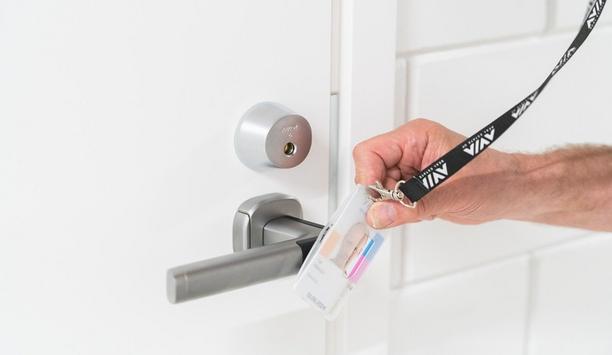
Managing access to and around Helsinki Airport is a complex task. Around 15,000 people work there daily pre-pandemic passenger numbers hovered around 60,000 to 70,000. Challenges faced Only authorized people should have access to many areas at an airport. The management of movement — by passengers, staff, and contractors— is critical to Finavia’s mission to deliver an efficient service. They sought new access solutions to help. Finavia staff and customer safety is paramount. In addition, every new access control device must: Facilitate the move to keyless security at the airport, which aims to enhance user convenience. Offer compatibility so Finavia can secure all types of openings, from doors and cabinets to fences and cargo. Integrate seamlessly with the existing access control system and software used at Helsinki Airport. Meet essential requirements for securing such a sensitive site: safety, functionality, durability and usability. Solution With Aperio H100 battery-powered handles, all types of airport doors are connected Partnering with ASSA ABLOY gave Finavia a vast choice of solutions to meet its complex security needs. With Aperio H100 battery-powered handles, all types of airport doors are connected to their access control system. This Aperio solution with inbuilt RFID capability was easy to install without the cabling that traditional devices require. “We see in real-time who will open the lock and when, and we can modify and grant access rights, remotely,” explains Kari Mäkinen. Programmable, secure ID cards Authorized building users come and go with programmable, secure ID cards. It’s much more convenient than a mechanical key, “The access cards of both Finavia personnel and staff of other companies are easily programmed with necessary access rights,” he adds. “When employees change, their access is disabled. Or if the card gets lost, it can be completely removed from the system. With mechanical keys, that process is much harder.” Durability, security of supply, and usability Multiple compatible ASSA ABLOY solutions are deployed alongside wireless Aperio and CLIQ door devices. Keyless, mobile-operated padlocks secure fencing and cargo. An antimicrobial coating on door handles helps to prevent germ spread and reassures staff. The availability of all these solutions from a single manufacturer helped Finavia to create a unified, integrated system at Helsinki Airport. “Safety, functionality, durability, security of supply, and usability were the reasons we chose the ASSA ABLOY solution,” said Kari Mäkinen, Senior Access Control Specialist at Helsinki Airport.
Intellicene, the pioneer in intelligent security management platforms announced that Cass County, Iowa, has deployed the Intellicene Symphia mobile dispatch and response communication platform to enhance emergency operations and drive more informed, rapid response across the region. EMS challenges Cass County, a rural area encompassing 565 square miles of primarily agricultural land, has faced recent challenges in providing timely emergency medical services (EMS) due to decreased volunteers and reduced manpower. The county’s wide geographic area has further complicated emergency response efforts. However, growing risks and a burgeoning population have facilitated the need for robust emergency operations and response. Iowa United First Aid (IUFA) program Cass County implemented Symphia NowForce, a state-of-the-art dispatch and response platform The State of Iowa’s implementation of the Iowa United First Aid (IUFA) program allowed Cass County to address the critical gaps in its emergency response infrastructure. Developed by Lieutenant Governor Adam Gregg, IUFA aims to bridge crucial gaps in emergency services. With the support of IUFA, Cass County implemented Symphia NowForce, a state-of-the-art dispatch and response platform, to address these challenges and modernize its emergency response services. Symphia NowForce NowForce offers unparalleled situational awareness by seamlessly integrating real-time data into a single view. Using live and historical event data, GIS maps, responder positions, reporter inputs, and other external source information, security teams can efficiently dispatch the closest, best-equipped, and most appropriate personnel and help stakeholders remain informed and connected regardless of location. Quick response time “Whether it’s an emergency, accident, natural disaster, fire, or another safety event, an accurate and immediate response is critical,” said Erik Johnson, Cass County First Aid program Coordinator. “Cass County is committed to ensuring its residents and businesses remain protected and have access to emergency services whenever needed." Public safety Cass County’s implementation of Symphia sets a precedent for improved operational effectiveness "Symphia NowForce has empowered us to reduce response times to approximately three minutes from the time of the 9-1-1 call. This expedited response time ensures greater safety, saves lives, and enhances collaboration between our first responders.” Cass County’s implementation of Symphia sets a precedent for improved operational effectiveness and public safety, showcasing the system’s critical role in bridging gaps in emergency services. Real-time situational awareness “Access to the right data at the right time is the difference between informed, rapid response and delayed operations. Symphia’s dispatch and response solution saves lives by ensuring quick responses to incidents and revolutionizes how the country handles security events." "With technology like Symphia, emergency personnel can respond more intelligently, view real-time on-site situations, and share information instantly.”

When students come to study at the prestigious Les Roches Marbella campus in Spain, they are not just attending one of the world’s major hospitality business schools, they are also enveloped in extraordinary innovation and sophisticated living to mirror the exceptional experiences they are being prepared to facilitate in their future careers. Real-life training site The institution aims to serve up “academic rigor with a twist of innovation and entrepreneurship” to its 1,000+ students from all corners of the planet who collectively represent more than 80 nationalities. This real-life training site for elite hospitality professionals must offer an authentic, hands-on experience to its students — one that reflects the luxurious living and progressive comforts expected from high-end hospitality properties and their employees. Digital badge One particular aspect they sought to enrich was integrating “digital badge” access across the coastal Mediterranean To ensure Les Roches is always ahead of the curve and a model campus when it comes to exemplary learning based on cutting-edge technologies, administrators wanted to evolve its mobile ecosystem. One particular aspect they sought to enrich was integrating “digital badge” access across their coastal Mediterranean property in Spain. Project objective The project’s objective was to migrate to a mobile credentials-based system where a student’s plastic access card is replaced by a digital ID on a smartphone. This would serve as the verification for daily physical access and digital touchpoints (e.g., building access, vending machines, restaurant reservations, etc.). This effort would also allow the school to steer digital transformation and student efficiencies throughout its security and administrative functions. Catering to student experience “Everything here is about the student experience,” said Mano Soler, Director of Student Services and Operations at Les Roches Marbella. “It is our main driver and the reason we embrace and foster innovation because innovation makes our students’ lives easier and supports their well-being through secure technology. The students will eventually leave this campus and, in turn, take that know-how and excellence into the world with them.” Case study challenge The team wanted a mobile solution to fit specific campus requirements such as swift access For 10 years, Les Roches Marbella relied on an RFID (radio frequency identification) card-based system to identify and grant access to students. This was a fundamental tool that nearly 1,000 individuals needed to have with them at all times to validate themselves day in and day out. Supporting their quest for digital transformation, as part of the school’s Spark incubator program, the leadership team wanted a mobile solution to fit specific campus requirements such as swiftly granting/removing accesses, avoiding disruption when students lose/forget cards, and accommodating a multi-system environment. Need for a mobile credentials-based system Management also wanted to drive improvements through back-office processes and procedures to save time and resources and enhance everyday life on campus through modern technology. One of the most pressing factors for this particular mobile initiative was to achieve higher efficiency around the school’s new student intake registration/check-in process each semester. Loading ID credentials individually onto RFID cards, then printing each of the 1,000+ cards, meant corrections along the way were inevitable. System re-adaptation Yet, the transition to mobile didn’t come without a series of obstacles and serious considerations. Each touchpoint where a card was to be replaced with smartphone technology required deep analysis and complex integration work, specifically involving seven to eight different brands whose products were already deployed throughout the premises (e.g., printers, vending machines, security technologies, door access, laundry facilities, parking garages and more). Les Roches required an access partner with solutions compatible with the many other products already in play within its existing infrastructure, and an ability to successfully address former system re-adaptation. iOS and Android support The mobile technology needed to support both Android and iOS phones, as well as physical card technology In addition, the mobile technology needed to support both Android and iOS phones, as well as physical card technology (the RFID ecosystem would remain intact for non-student purposes and serve as a migration path for other areas not yet mobile). The school wanted a single company to supply both the hardware and software elements. And, as a higher education establishment with upscale expectations and an outstanding reputation, the Les Roches decision-makers required a proven partner of this same ilk. HID solution To transform technologies and reach new degrees of onsite productivity and novel amenities, Les Roches Marbella selected HID for its unmatched mobile access portfolio. As a market pioneer in trusted identification and authentication, and with a network of partnerships that spans the globe, HID’s experts designed a system to meet each requirement from the school resulting in a tremendous collection of 40+ access points featuring mobile identification, app, portal, and reader technologies. Mobile components from HID The integration project was completed within an accelerated time frame to ensure it was in place before students set foot onto campus that fall. HID components that comprise this robust mobile ecosystem include HID OMNIKEY® readers and reader modules (OMNIKEY 5427, OMNIKEY 5127CK Mini, OMNIKEY 5127 Reader Core), HID Signo™ access control readers, HID Seos® mobile credentials, Aperio® locks from ASSA ABLOY and Aero™ X100 door modules. HID access technologies With a slight tap or wave of their smartphone, students interact easily with the mobile ecosystem and via the digital Seos credential to authenticate themselves as they move throughout the property each day. HID access technologies are embedded in: Parking garage systems Building entrances Vending machines Laundry facilities Printers Point-of-sale at restaurants/on-campus eateries Restaurant access control Class attendance tracking Dorm room door locks Mobile-first world “You cannot discount the value of mobile when it comes to today’s student populations,” said Soler. “It is their way of life. They were ‘born digital’ and they have an expectation when it comes to smart living, for them, it’s a mobile-first world. We get it. We embrace it. And, we intend to attract and retain students by offering them an unparalleled educational experience while here in Marbella.” Efficiencies and integration “We not only transformed our campus with epic mobile access technology but also drove important efficiencies and integration into everything we touched." "The value and inventiveness HIDexperts contributed to constructing this complicated mobile ecosystem is completely in line with our ongoing quest to ensure that innovation is at the heart of the Les RochesWay of Life," said Carlos Diez de la LastraGeneral Manager Les Roches Marbella. Results achieved HID credentials available via a smartphone make scaling individual access up and down significantly easier Tying back to one of the original reasons for this mobile initiative, registration check-ins are streamlined, and Les Roches Marbella has gained immediate improvements around this important event that takes place each semester. 100% of students use the mobile access system on campus. Students register digitally with the option to do so in-person, ahead of time, or remotely with no human interaction. HID credentials available via a smartphone make scaling individual access up and down significantly easier for IT, faculty, and students. A unique, homegrown handheld tool On a case-by-case basis, Les Roches Marbella is already finding ways to apply its in-house ingenuity to foster disruptive thinking. The school used 3D printers to design a customized case to house phones/tablets alongside HID access modules creating a unique, homegrown handheld tool that easily allows campus security personnel to check IDs as required. This safety support tool came about when there was no suitable offering available on the market to meet the school’s specific needs for security checkpoints. Automated student attendance tracking The flexibility and power of HID components enabled the team to re-imagine and invent an original Les Roches security product to, as always, improve the student experience. Many new use cases are in the works to fuel future “wins” across the premises. Automated student attendance tracking is already at the beginning of each class period and serves as another way to further support and protect students. Mini computers and readers were installed in each classroom so students could use their mobile ID (via their smartphone) to mark attendance. API-based interfaces, Aero door module When students go back to their dorm rooms any time, each door loc is integrated with the Aero door module All is handled by a web application running on the mini-computer that pushes and pulls data to/from the Les Roches Absences application in real time through API-based interfaces. And, when students go back to their dorm rooms any time, each door loc is integrated with the Aero door module, providing them with a seamless experience across the entire campus. Mobile authentication and verification “Our eyes are wide open to all the possibilities afforded by the marvelous world of mobile authentication and verification, and each week we come up with new ideas for the continued transformation we have in motion on our campus,” said Juan Luis Velasco, IT Manager at Les Roches Marbella. “Our students love this newfound convenience, and our staff members are reaping the benefits of this technology overhaul.” Best-in-class mobile access system Les Roches Marbella has a best-in-class mobile access system that squarely aligns with the school’s wider objective to be an example of innovation and excellence in global hospitality training both within its own brand family, as well as within the broader realm of higher education. Beyond elevating the student experience through the convenience of mobile IDs and strengthening security when it comes to student safety and mobile ID verification, Les Roches Marbella has an extremely efficient, flexible, and scalable solution that can grow with them as technologies evolve and digital trends continue to transform and connect us all to an international degree. Benefits of digital transformation “This is a story about the value of mobile and any size campus in any sector of education can benefit from the digital transformation angles when it comes to campus business,” said Velasco. “But the most rewarding aspect truly is connecting to our students in a way that’s important, convenient, and meaningful to them keeping them connected and secure via a device that’s already an extension of their existence.”
Geekplus, the global pioneer in mobile robot and smart logistics solutions, has deployed the first Shelf-to-Person PopPick project in the Nordics for one of the biggest online pharmacy wholesalers in the region, Med24.dk. System Teknik partnered on the Denmark project, which includes three PopPick stations and 30 Shelf-to-Person robots, bringing a flexible solution to a region where fixed automation still dominates. "With the rise of e-commerce, Med24.dk had been struggling with huge sales growth coupled with fast delivery demands from customers in Denmark, Norway, Sweden searching for pharmacy, health and beauty products. Peak season events had also caused considerable strain to their operations," said Blond Shkodrani, channel partner manager for the Nordics at Geekplus. "Due to their overwhelming success, Med24.dk needed a modular, automated order fulfillment solution for fast, efficient order fulfillment." Order fulfillment challenges Shelf-to-Person takes goods of all sizes while removing the need for infrastructure investment The Geekplus modular Shelf-to-Person solution optimizes warehouse operations using mobile robots to transport shelves. In a region where fixed and cubic solutions have been the trend during recent years, Shelf-to-Person handles goods of all sizes while removing the need for infrastructure investment, making it the most flexible response to order fulfillment challenges. PopPick workstations use two retrieval arms and four presentation locations to present pickers with multiple, moveable 78-tote racks at one time, resulting in an industry-pioneering throughput of 450 totes per hour. PopPick can store goods of all types and sizes; the solution is not limited to small pieces and improves ergonomics for workers while picking. It also takes up less space than traditional systems, so customers can use more stations without adding facility space. Mobile order fulfillment solutions "We are very pleased to invest in flooring robots from Geekplus," said Med24.dk CEO Nils Træholt. "We believe that this new and innovative technology can help us realize our growth ambitions, while maintaining good delivery times for the benefit of our customers." Morten Kirch, System Teknik's CSO, added: "Due to Med24.dk's growth, we are thrilled to be able to deliver a tailor-made, automated solution that matches their needs." Geekplus offers a suite of Goods-to-Person mobile order fulfillment solutions-the only comprehensive robotic offering controlled by a single software platform. "Through trusted partners like System Teknik, we're showing customers all over Europe that Geekplus truly is a one-stop shop for modular warehouse automation," Shkodrani said.
Products
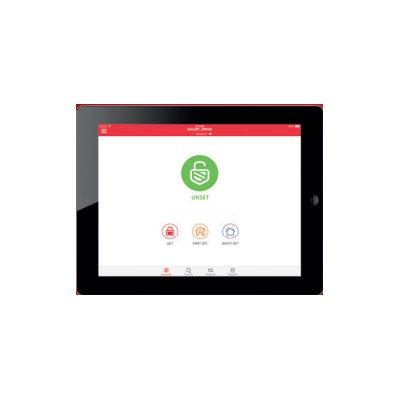

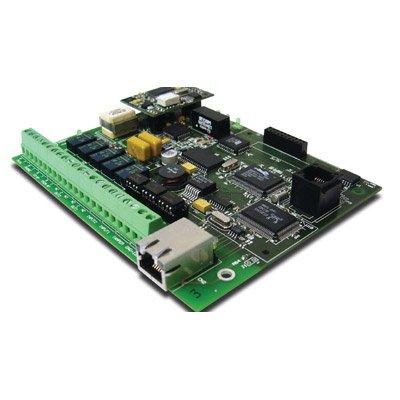
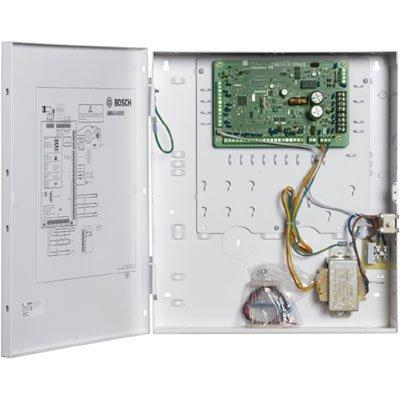
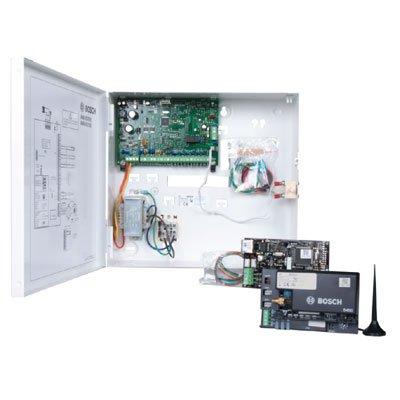
Round table discussion

Technological leaps in the last several decades have revolutionised biometrics. The technologies are constantly evolving, spanning facial recognition to iris scanning to fingerprints, to provide new levels of security and convenience. Biometrics are everywhere, from smartphones to border control, constantly evolving to meet the needs of our increasingly digital world. They are also more accurate and easier to use than ever. We asked this week's Expert Panel Roundtable: What’s new with biometrics?

There is safety in numbers, or so the expression goes. Generally speaking, several employees working together tend to be safer than a single employee working alone. Even so, some environments require that workers complete their jobs alone, thus presenting a unique combination of security vulnerabilities. The U.S. Occupational Safety and Health Administration (OSHA) defines a lone worker as “an employee working alone, such as in a confined space or isolated location.” We asked this week’s Expert Panel Roundtable: How can security technologies help to protect "lone workers?"

Historically, the emphasis of security systems has been on reactivity, whether it’s providing video evidence of an incident or data to support a resulting investigation. Reactivity is core to impactful security, but increasingly, systems are also seeking to be more proactive. A proactive system seeks to prevent events from happening in the first place, thus mitigating the harm to an organization, and making the need for a reactive response moot. We asked this week’s Expert Panel Roundtable: How can security systems be proactive? Please provide a couple of examples.
White papers

Moving to Mobile: A Guide for Businesses Switching to Mobile Access Control
Download
Cyber Security and High Security in a Business Integrated World
Download
5 Reasons To Integrate Mobile Technology Into Your Security Solution
Download
Preparing Your Organization With Quality Situational Awareness
Download
The Evolution Of Cards And Credentials In Physical Access
Download
9 Opportunities To Upgrade Your Access Control Technology
Download