

For businesses today, loss prevention is no longer just about safeguarding inventory from theft. While retail theft makes frequent headlines in the United States, and is indeed the leading cause of shrinkage, The National Retail Foundation (NRF) has reported that process failures, operational inefficiencies and employee theft also drive significant losses.
Legacy security systems
In 2022, the shrink loss is estimated to be $120billion in the United States, and that’s for retail alone. Industries like hospitality, healthcare, manufacturing, and transportation all face similar challenges even though loss and inefficiency take different forms in each of these fields.
As shrinks from theft and operational inefficiency have already put margins of companies under pressure, we are increasingly seeing more businesses demand AI-powered security systems with advanced video analytics, capable of addressing both security and operational inefficiencies that their legacy security systems could not.
Understanding the full scope of loss
Package theft is a common problem in commercial buildings, with which box detection in mailrooms
Starbucks’ recent announcement of reinventing its franchise operation due to faltering sales is a great example of how operational efficiency can take a toll on business revenue. In restaurants or hotels, failing to anticipate customer flow can lead to long wait times or inefficient use of staff, frustrating guests.
Take, for example, in hospitals, inefficient patient flow management can lead to overcrowded waiting areas and delays in care, compromising patient health. Similarly, in manufacturing, poorly optimized assembly lines create production bottlenecks, delaying output and raising overhead.
Package theft is another common problem in commercial buildings, with which package detection in mailrooms can mitigate loss from deliveries. These invisible leaks creepingly drain profits across industries, and require future-proof solutions that not only confirm what’s already known but also provide actionable insights for improvement.
Transforming security into a powerhouse for efficiency
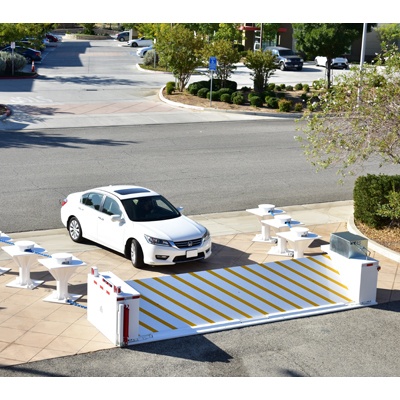
Progress continues to advance across these areas, fueling optimism for what lies ahead. Thanks to the rise of artificial intelligence and data analytics, some security solutions are already integrated with facial recognition and license plate detection capabilities, as well as Virtual Fences that help ensure that only authorized personnel or vehicles enter sensitive areas.
This can be especially useful for manufacturing environments, where controlling access to high-risk zones and protecting valuable assets are critical. Some modern security systems can even offer more than a watchful eye, doubling as a data analytic tool beyond traditional surveillance limits.
Heat mapping in security AI technology
Heat mapping in security AI technology analyzes ways of movement and behavior in a retail environment
Modern security systems are now capable of tracking foot traffic, analyzing customer behavior, and even identifying bottlenecks in real time by incorporating different technologies such as heatmapping, people counting and queue length monitoring for long lineups.
Heat mapping in security AI technology analyzes patterns of movement and behavior in a retail environment by visually representing areas with high foot traffic. With tracking over time and identifying potential vulnerable and hot spots for potential theft and fraud, resulting in change of store layout, deploy additional resources in high traffic areas and physical security placement.
Predictive security analytics
AI people counting in security utilizes sensors and cameras to accurately track the number of individuals entering and exiting a space in real time. This data helps businesses optimize staffing levels, enhance customer experience, and improve overall operational efficiency by aligning resources with foot traffic trends.
Predictive security analytics, such as heat mapping and people counting, are not new inventions. But I believe the ability to integrate all these functionality into a single system will allow these technologies to further mature and expand their footprint in near future. Rather than relying on separate tools for each business function, businesses can now use a single, integrated system to gather actionable data while continuing to secure protection through video surveillance.
You Can’t Manage What You Can’t Measure
AI-powered security systems give businesses access to a wealth of data that they can use
AI-powered security systems give businesses access to a wealth of data that they can use to precisely pinpoint where losses are happening. This is key to solving the problem of shrinkage, which often goes beyond simple theft.
Consider the Starbucks case mentioned earlier, while Starbucks hasn't specified how it plans to achieve operational efficiency to “enhance the cafe experience”, an AI-powered security system could provide an all-encompassing solution to minimize bottlenecks during peak hours, optimize store layouts, and allocate staff more efficiently.
The impact of this technology can be tremendous as it not only enhances the customer experience but also reduces inefficiencies that contribute to lost revenue. By analyzing patterns, conducting Forensic Review with Smart Search to quickly locate incidents, and understanding the root causes of loss, companies can implement targeted solutions that reduce shrinkage and streamline operations.
Future-proof solutions
Walmart is using foot traffic analytics to predict demand and manage inventory
Companies like Walmart are already using foot traffic analytics to predict demand and manage inventory. But beyond basic predictive inventory analysis and crowd control, the data gathered will have the potential to be combined with other business functions, smart energy management, pricing and marketing strategy, just to name a few.
Investing in a security system that integrates AI video analytics, such as package detection, queue length monitoring, and Virtual Fences, can provide future-proof solutions that also enhance operational efficiency.
Looking ahead
With New York State's introduction of new Retail Security measures to encourage businesses to strengthen their security, we've seen increased interest. However, modern security systems with real-time analytics are now offering companies more than just protection—they’re providing valuable insights into operations, transforming security from a cost burden into a powerful tool for growth and efficiency.
As businesses continue to adopt AI-powered security systems, it's clear that the role of security is evolving beyond traditional surveillance. These advanced systems are no longer just about protection, but help businesses grapple with increasingly complex challenges. By transforming security from a reactive expense into a proactive, data-driven asset, companies can stay ahead of the curve, managing not only what they can see, but also what they’ve been missing.