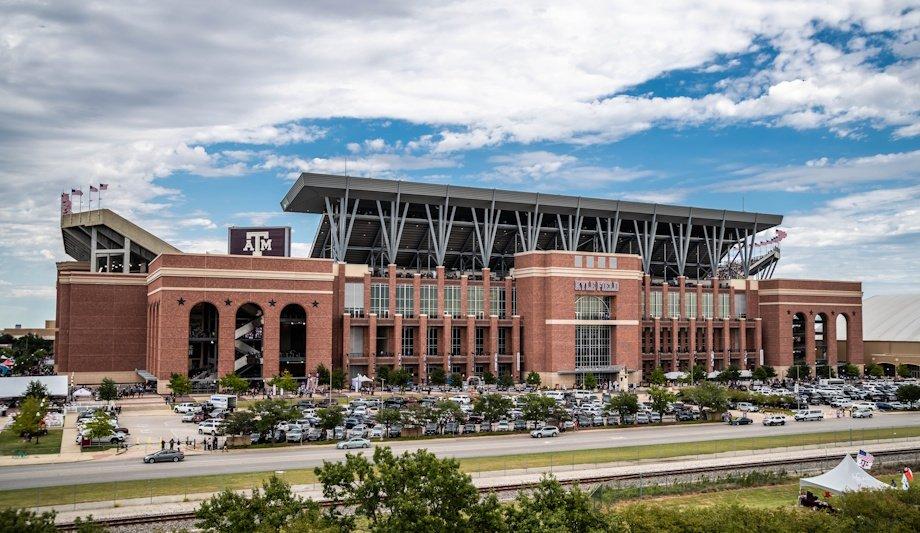

Texas A&M University opened its doors in 1876 as the state's first public institution of higher learning. Now, it’s well known as a research-intensive flagship university dedicated to preparing Aggie pioneers to take on the challenges of the future.
Located in the heart of the Houston-Dallas-Austin triangle, Texas A&M's main campus in College Station, Texas, is home to more than 69,000 students. Another 5,200 are at branch campuses.
The challenge
Staff would write tickets when they saw cars without valid parking receipts or hang tags
The growing student and staff population at Texas A&M University led to more cars, bicycles, foot traffic, and bus passengers to manage. Manual processes couldn’t keep up. Issuing and managing physical permits required significant administrative work, and the parking enforcement team relied on foot patrols to walk each parking lot.
Staff would write tickets when they saw cars without valid parking receipts or hang tags. It was a slow and cumbersome process, making it difficult to monitor parking lot occupancy to ensure the number of permit holders matches the number of available spots.
The solution
- Efficient parking enforcement: Patrollers use vehicles equipped with AutoVu SharpZ3 cameras to enforce parking and track real-time data on parking lot usage — even during large events.
- Improved parking permit distribution: Vehicle information is in the system almost immediately after the customer purchases the permit, reducing overhead costs since hang tags don’t have to be printed and distributed.
- Increased customer satisfaction: Students, faculty, staff, and guests don’t need a hang tag or paper permit. Users can go online and change the plate on their account, and it’s in the system within minutes.
“The reduction in time and resources required to enforce parking is notable. A patrol that used to take an hour now takes around 10 minutes. We’re able to reallocate resources in a more efficient way,” said Dell Hamilton, Parking Systems Manager at Texas A&M
Results
Now, parking enforcement is based on license plate registrations, and the university has eliminated physical permits for the majority of customers. Patrollers use vehicles equipped with AutoVu SharpZ3 cameras to enforce parking and track real-time data on parking lot usage — even during large events.
Getting data more quickly also makes it easier to manage the variety of parking restrictions that exist on campus. This includes spaces reserved for specific groups of people, time of day restrictions, and timed parking limits in areas such as the student recreation center.
“Going away from paper permits and hang tags was a huge success,” Hamilton said. “Today, the vast majority of permits issued can be validated with ALPR. Users can go online and change the plate on their account, and it’s in the system within minutes. We not only save on printing and shipping costs but also make it easier for the customer to exchange or return their permit.”