Video Management System
Robotic Assistance Devices, Inc. (RAD), announces the commercial availability of SARA™ Assess, developed in collaboration with Circadian Risk. As SARA’s first commercial integration with a third-party physical risk intelligence platform, SARA Assess extends RAD’s agentic AI beyond its own hardware ecosystem and creates a new software-led entry point for organizations seeking to continuously verify connected security controls, update facility risk scores, and initiate correctiv...
Johnson Controls, a global pioneer in thermal management, mission-critical building systems, energy efficiency, and decarbonisation, is returning to exhibit at Global Security Exchange (GSX) 2026 in Atlanta from Sept. 14-16. At Booth 1633, Johnson Controls will showcase new innovations and Managed Services designed to help organizations improve visibility across facilities, accelerate incident response, strengthen operational resilience and maintain continuity across increasingly connected and m...

3xLOGIC, the foremost provider of integrated and intelligent security solutions, has launched VIGIL 13.5, the latest update to its VIGIL Video Management System (VMS). The new release introduces AI Bridge and Face Recognition, allowing organizations to deploy advanced AI-powered video analytics and security intelligence without replacing existing camera infrastructure. VIGIL 13.5 has been designed to support users who wish to improve operational awareness, automate security workflows, and mo...

For decades, surveillance intelligence meant faster detection, more cameras, sharper resolution, and quicker alerts. That equation is now being rewritten. As video systems move from recognizing objects to understanding context, the real differentiator is no longer accuracy in ideal conditions, but reliability amid chaos: monsoon distortion, fluctuating crowds, inconsistent infrastructure. In this conversation, Tuhin Bose, Senior Vice President and CTO at Videonetics, unpacks what “True AI...

barox Kommunikation AG is pleased to announce the appointment of Nikolay Mitev as Regional Sales Manager for Eastern Europe, reinforcing the company's commitment to expanding its presence across the region. Based in Sofia, Bulgaria, Nikolay will be responsible for driving business growth across Eastern Europe and the CIS. His role will focus on developing new market opportunities and promoting barox's full portfolio of managed Ethernet switches and media converters. He will also work to raise a...

ONVIF®, whose open standards make IP-based physical security products interoperable worldwide, has introduced the Release Candidate for ONVIF Profile V, a draft standard for cloud-based video surveillance. Profile V extends the ONVIF brand-independent approach to the cloud, giving system integrators, consultants and end users a way to build cloud video systems that are not tied to a single vendor. A cloud-based video management system reduces or replaces on-site hardware and runs video thro...
News

In a landmark step towards building a future-ready, technology-led governance ecosystem, Videonetics has successfully deployed its AI-powered Unified Video Management Platform across all 28 districts of Andhra Pradesh. The large-scale implementation establishes a connected, real-time intelligence network that enhances public safety, optimizes traffic enforcement, and enables data-driven decision-making across the state. At the core of this transformation is Videonetics’ unified platform, which brings together video management system, AI-driven analytics, traffic management, e-ticketing, and face recognition within a single architecture. About 15,000 IP cameras have been installed across critical locations, enabling continuous monitoring and seamless data flow into the command centre. Improving enforcement consistency A key highlight of the rollout is the advanced traffic management system operational across more than 680 intersections. The system automates detection of violations such as over-speeding and signal breaches, while also enabling identification of blacklisted vehicles—significantly reducing manual intervention and improving enforcement consistency. Additionally, face recognition systems deployed at nearly 1,000 locations empower authorized law enforcement agencies to identify persons of interest through integration with approved national databases, in compliance with regulatory frameworks. Built across roughly 15,000 cameras and integrated with the state's criminal records, traffic enforcement, and command-and-control systems, CCTV360 (RTGS) gives Andhra Pradesh Police a single operational layer that connects every camera, every database, and every district in real time. Where fragmented camera networks once meant retrospective, manual investigation, the platform now delivers actionable intelligence to officers in the field within minutes — and in several documented cases, within hours of an incident. Beyond enforcement statistics “The true value of technology in policing is measured not by the number of cameras deployed, but by the outcomes delivered to citizens. This platform has helped us recover missing children, apprehend repeat offenders, trace stolen vehicles, and strengthen inter-district intelligence sharing at an unprecedented scale,”said Ch. Srikanth, IPS, Inspector General of Operations, Andhra Pradesh Police Within weeks of going fully operational, CCTV360 (RTGS) began delivering outcomes that go well beyond enforcement statistics: A stolen two-wheeler reported in Bapatla was tracked across districts via ANPR and recovered by police in Tenali within 3 hours. Two 11-year-olds reported missing from Yelamanchili were identified by the Face Recognition System at Visakhapatnam Railway Station and reunited with their families in under 4 hours. A Non-Bailable Warrant offender was flagged by the Face Recognition System at Tirumala Bus Stand, Tirupati, and taken into custody within 81 minutes. A woman missing for more than a month was traced from Anantapur to Puttaparthi and located the same day a statewide facial recognition alert was issued. Valuable response time Beyond these individual cases, state officials report a broader pattern of reduced crime rates, faster investigations, and measurably safer roads through consistent, automated traffic enforcement. “Earlier, by the time CCTV footage was manually reviewed, valuable response time was already lost. Today, the system automatically alerts us about suspicious vehicles, wanted offenders, or missing persons within minutes. It has made investigations faster, patrol teams more effective, and field coordination far more efficient,” said Mrs. Malika Garg, IPS, Superintendent of Police (Operations), Andhra Pradesh Police “Andhra Pradesh represents one of the most progressive examples of how technology can be leveraged to transform governance at scale. At Videonetics, we are deeply committed to supporting the state’s vision of building safer, smarter, and more responsive cities. This deployment reflects our long-term commitment to India’s digital transformation journey, where AI-powered video intelligence will play a pivotal role in strengthening public safety, improving urban mobility, and enabling efficient governance across regions,” said Naresh B. Wadhwa, Vice-Chairman & MD, Videonetics. More responsive governance Implemented in partnership with MATRIX Security & Surveillance Pvt. Ltd., the deployment integrates a vast network of cameras, analytics engines, and enforcement systems into a centralized Command and Control Centre in Amaravati, creating a unified operational backbone for statewide monitoring and response. Built on a modular and scalable architecture, the platform is designed to evolve with the state’s future requirements. The Andhra Pradesh deployment stands as a strong benchmark for how AI-powered video intelligence can enable safer cities and more responsive governance at scale across India.
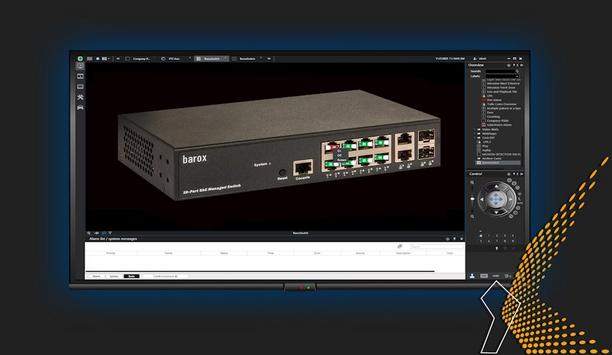
barox Kommunikation announce a collaboration with Octave, enabling Octave Coda Video users to simplify their device and network management via integration with the barox range of Ethernet switches. Driving superior performance and resilience for physical assets and critical infrastructure, Coda Video, Octave’s enterprise-grade Video Management System (VMS), is proven to meet the most demanding of high security environments. What barox features can be integrated? Eliminating the need for separate network management tools, the barox integration with Coda Video supports the most commonly used industrial managed and PoE‑enabled barox switches specified within security and critical infrastructure environments. Integration into the Coda Video VMS via the Event Interface plugin allows connectivity to barox switches to provide real‑time monitoring of the switches, network and device status, where Coda Video displays a map of all IoT devices, alarms and events. In addition, centralized configuration and diagnostics and tight linkage between network events and video/sensor workflows can all be realised. Focusing on operationally relevant network and power features, the barox integration with Coda Video includes per‑port PoE monitoring and On/Off control, where for example, if a network camera fails to respond, the barox switches can be used to autonomously send a re-boot command - saving invaluable camera downtime and in many cases, bringing the device back online, to resolve the issue without the requirement for engineer involvement. Furthermore, advanced functionality of power consumption monitoring per connected device, network and link status, device and cable alarms and SNMP‑based health and status metrics can all be accessed to help simplify operations and support - to greatly enhance the efficiency of Coda Video surveillance networks. Benefits for technology users The barox integration with Coda Video allows system users to perform key network-related actions through a single pane of glass. Operators gain an overall system view with visibility into switch status, device connectivity and network alarms. Modern security systems increasingly rely on IP‑based edge devices such as cameras, sensors, intercoms and IoT equipment. While these devices are mission‑critical, the network infrastructure powering them has traditionally been a blind spot. Whether the application involves IP surveillance cameras, intercom systems, access control, fire and intrusion or other PoE‑powered IoT field devices, the barox integration with Coda Video is well suited for the critical infrastructure, transportation, industrial, smart city and utility sectors. For integrators and stakeholders, the integration benefits include faster commissioning and troubleshooting, reduced on‑site maintenance visits, a unified view of networks, devices and sensors, and easier compliance with SLA and uptime requirements. Authority comments “Ethernet switches play an integral role in security infrastructure. In effect, they are the nervous system of any enterprise video management system,” says Sunil Mudholkar, vice president of physical security products for Octave. “By integrating barox network intelligence with Coda Video, we extend situational awareness beyond cameras and sensors to the very infrastructure that powers them – enabling a truly proactive and resilient security operation.” “The integration between barox industrial network switches and Coda Video was developed to enhance interoperability,” says Rudolf Rohr, barox co-founder and managing partner. “It enables network‑level visibility, control and diagnostics directly inside Coda Video, allowing operators to manage not only video and sensors, but also the health of the underlying infrastructure from a single environment.”
Verkada and Acre Security are examples of the new generation of cloud-managed physical security platforms. Both offer unified solutions for video surveillance, access control, and more, making them frequent contenders for organizations modernising their security infrastructure. This guide provides an unbiased, in-depth comparison of Verkada vs Acre, evaluating their features, pricing, deployment models, and best-fit scenarios to help security leaders make informed decisions. Verkada and Acre Security take fundamentally different approaches to physical security: Verkada delivers a tightly integrated, closed cloud-only experience with unified hardware and streamlined management. Acre Security offers an open, flexible platform that supports cloud, hybrid, and on-premise deployments, making it ideal for organizations with complex or evolving needs. Summary Recommendations: Best overall: Acre Security for large, complex, or multi-site enterprises needing flexibility and integration. Best for native video surveillance: Verkada, with its onboard camera analytics, built-in storage, and unified footage management. Best for hybrid flexibility: Acre Security, supporting both cloud and on-premise deployments. Best for enterprise scale: Acre Security, with robust multi-site and integration capabilities. Multiple management tools Verkada is a cloud-managed physical security provider that combines hardware, software, and centralized management into a single, unified platform. Rather than stitching together separate vendors for cameras, access control, alarms, and sensors, Verkada delivers these systems as an integrated ecosystem that is configured and monitored through one web-based console called Command. Its product portfolio includes cloud-connected video cameras with onboard storage and analytics, door access control, environmental sensors, intrusion alarms, and intercoms. Devices are designed for plug-and-play installation and automatically connect to the cloud for remote visibility, updates, and management. This architecture reduces the need for on-premise servers, complex networking, or multiple management tools. Multi-site operations For security and IT teams, the practical benefit is operational simplicity. Administrators can manage users, sites, alerts, and investigations from one interface, deploy systems quickly across distributed locations, and scale without significant infrastructure overhead. Built-in analytics, centralized logs, and mobile access also help teams respond faster to incidents and maintain consistent policies across facilities. Verkada is typically a strong fit for organizations that prioritise fast deployment, ease of use, and standardized hardware, especially small to mid-sized businesses or multi-site operations that want a streamlined, cloud-first approach with minimal IT maintenance. What is Acre Security? Acre Security is a unified physical security platform built for organizations that need flexibility, scalability, and architectural control. It brings together access control, intrusion detection, visitor management, and identity services into one system that can be deployed in the cloud, on-premise, or in hybrid environments. Unlike closed, single-vendor ecosystems, Acre is designed with an open and modular architecture. Teams can integrate third-party hardware, connect with existing enterprise systems, and modernise incrementally without replacing their entire infrastructure. This approach helps protect prior investments while allowing security operations to scale over time. For IT and security leaders, the practical advantage is choice and adaptability. Acre supports centralized management across multiple sites, customisable workflows, and deployments that align with compliance, data residency, or network requirements. This makes it especially well suited for large, distributed, or regulated organizations that need more control than a cloud-only model can provide. In short, Acre fits enterprises that value integration, deployment flexibility, and long-term scalability over a one-size-fits-all solution. Core feature comparison Choosing between Verkada and Acre Security comes down to how each platform delivers the day-to-day security capabilities the team relies on. Both address the same core domains, video, access, intrusion, visitors, deployment, and integrations, but they differ in how tightly those capabilities are packaged and how much control administrators retain. Video Surveillance Verkada: Cameras include onboard storage and native analytics, with footage, alerts, and investigations handled in one consistent interface. The experience is standardized across all devices. Acre Security: Supports a broader range of camera technologies and deployment styles, enabling teams to tailor surveillance setups and reuse existing hardware where needed. Acre has also announced plans to build a native video management system directly into the Acre Access Control app — complementing its existing enterprise-level integrations like Milestone and giving organizations a more unified experience without sacrificing flexibility. Access Control Verkada: Provides a unified system where doors, credentials, and events are managed together with minimal configuration. Workflows are designed to be simple and consistent across locations. Acre Security: Offers more configurable access policies and hardware options, giving teams greater control over permissions, schedules, and site-specific requirements. Intrusion and Environmental Monitoring Verkada: Native sensors and alarms are monitored alongside video and access activity, creating a single, consolidated view of incidents. Acre Security: Intrusion capabilities can be layered into broader security strategies and adapted to different facility needs. Visitor Management Verkada: Integrated visitor features such as digital sign-in, badge printing, and centralized logs are managed from the same dashboard as other security tools. Acre Security: Visitor and identity workflows can be aligned with existing access processes and organizational policies for more customized handling. Deployment Flexibility Verkada: Cloud-managed architecture with devices connecting directly to the vendor’s platform, minimizing on-site infrastructure and simplifying rollout. Acre Security: Supports cloud, hybrid, or fully on-premise deployments, allowing organizations to choose where systems run and where data resides. Integrations and Ecosystem Verkada: Operates primarily within its own ecosystem with a focused set of integrations designed for simplicity and consistency. Acre Security: Provides broad third-party hardware compatibility, open APIs, and a larger partner network to support deeper integrations with enterprise systems. Each system (access, intrusion, and visitor) is modular and can be purchased as standalone systems or integrated with one another to operate as one unified ecosystem. Administration and Usability Verkada: Streamlined interface with minimal training required, making it easier for lean teams to manage multiple sites quickly. Acre Security: More advanced controls and configuration options suited to teams that need granular oversight and customization. Term operational needs Verkada prioritises simplicity, speed, and standardization across the entire platform. Acre prioritises flexibility, interoperability, and architectural control. The right choice depends on whether the team values out-of-the-box ease or the ability to tailor every layer of the system. Exact pricing for both platforms depends on deployment size, hardware selection, and feature requirements. Buyers should evaluate total cost of ownership, including hardware, software, subscriptions, maintenance, and any migration or integration work, to ensure alignment with long-term operational needs. Pros and cons Here’s a practical view of the strengths and trade-offs of Verkada and Acre Security based on day-to-day operations and long-term ownership. Verkada Pros Simple, unified cloud management across all devices Fast deployment with minimal on-site infrastructure Consistent interface and workflows across cameras, doors, and sensors Lower IT overhead for small or distributed teams Strong remote access and mobile administration capabilities Verkada Cons Proprietary hardware limits vendor choice and creates lock-in and high upfront costs Less flexibility for highly customized or legacy environments Cloud-only architecture may not fit strict compliance or data policies Costs scale directly with device count and subscriptions Acre pros Flexible deployment options to match IT and compliance requirements Broad hardware compatibility protects existing investments and lowers upfront costs Strong fit for large, multi-site, or complex enterprise environments Greater control over configuration, policies, and workflows Easier to integrate into existing security stacks and processes Acre cons No native video management system - yet (announced plans for one in 2026) More planning and configuration required during setup Experience can vary depending on selected hardware and partners May require dedicated security or IT expertise to manage effectively Pricing and scoping are often customized, making budgeting less straightforward Choosing between Verkada and Acre Security is less about features and more about how each platform fits the environment, resources, and long-term plans. Long-term investments Organizations with standardized locations and limited internal IT support often benefit from systems that are easy to deploy and manage. Environments with diverse site types, legacy infrastructure, or varying security requirements typically need more adaptability. If the organization has requirements around data control, infrastructure ownership, or regulatory compliance, deployment flexibility becomes a key factor in the decision. The right platform should match the operational capacity. Smaller teams tend to value simplicity and low maintenance, while larger or more technical teams often benefit from greater configurability and control. Security platforms are long-term investments. Consider how the system will scale, integrate with other tools, and evolve as business and compliance needs change. Choosing a platform that aligns with the future state can reduce costly transitions later. Selecting the right platform means balancing ease of use today with the flexibility users may need tomorrow. Why choose Acre Security Acre Security is purpose-built for organizations that need flexibility, control, and long-term scalability from their physical security platform. Rather than locking into a single deployment model or proprietary hardware stack, Acre gives users the freedom to design a solution around their environment, whether cloud, hybrid, or on-premise. Its open architecture, broad hardware compatibility, and strong integration capabilities make it easier to unify access control, intrusion, visitor, and identity workflows across multiple sites while protecting existing investments. As the business grows or requirements change, Acre adapts with users, so they can expand, modernise, or integrate without starting over. Multi-site footprints For enterprises with complex operations, compliance obligations, or multi-site footprints, Acre delivers the control and configurability needed to build a security strategy that lasts. Both Verkada and Acre Security represent the modern shift toward unified, software-driven physical security. The right choice is not about which platform has more features, but which model better aligns with how the organization operates today and how it plans to grow. Verkada focuses on simplicity and fast, standardized deployment, which can work well for smaller teams or environments that value quick rollout and minimal management. Acre takes a more flexible approach, giving enterprises greater control over architecture, hardware, and integrations so security can scale and adapt over time. Evolving compliance requirements For organizations with multiple sites, existing systems, or evolving compliance requirements, flexibility and long-term ownership often matter more than convenience alone. In those cases, Acre Security provides a foundation that can grow with the business rather than constrain it. As users evaluate their options, consider not just immediate needs but where the security program will be three to five years from now. Choosing a platform that supports that future can reduce complexity, protect investments, and deliver lasting value.

Octave, the planned software spinoff from Hexagon AB, has announced the acquisition of VXG Inc., a provider of enterprise-grade, cloud native video management software. Octave’s portfolio simplifies complexity across the asset lifecycle. The acquisition will enable Octave to build upon the AI enhanced cloud capabilities in its physical security portfolio and further strengthen its software offerings for protecting people, places and assets. Public safety organizations VXG’s cloud native platform allows corporate campuses, finance, retail, education, health care and public safety organizations to manage small to mid-sized security installations. Its AI-powered engine combines computer vision analytics and generative AI capabilities for intelligent monitoring, alerts and investigations, along with secure access and evidence sharing workflows. Its open ecosystem supports hundreds of camera models and is built for service providers delivering Video Surveillance-as-a-Service (VSaaS). The acquisition builds on a partnership that began in June 2025, when Hexagon introduced a cloud based video management system built on VXG’s offering. Bringing VXG in house provides Octave full control of its technology stack, paving the way for future portfolio integrations and product enhancements. Protect workflow environment “VXG’s cloud based video management system gives Octave an immediate advantage and supports our cloud roadmap,” said Octave CEO Mattias Stenberg. “Its AI driven design aligns with our vision of intelligence at scale. The acquisition expands our hybrid deployment options — cloud, edge and on premises — positioning Octave to lead the shift to cloud first solutions.” The VXG leadership team, led by CEO Yaro Lisitsyn, will remain with the company to drive continued development of the cloud roadmap and ensure continuity for customers and partners. VXG had revenues of around US$ 1.0m in 2025 and will be fully consolidated within the Protect workflow environment from May 2026.

Videonetics, a global pioneer in True AI-powered video computing, has been awarded the “AI-Driven Critical Infrastructure Security Excellence Award” at the prestigious 25th Edition of Data Center Summit & Awards 2026, organized by UBS Forums in ITC Maratha, Mumbai. The recognition highlights Videonetics’ pioneering role in transforming critical infrastructure security through advanced AI-powered video intelligence, enabling organizations to move from reactive monitoring to proactive, insight-driven operations. Insightful session Adding to the company’s strong presence at the event, Harsh Mehta, Vice President – Enterprise Sales, Videonetics, delivered an insightful session on “Beyond Surveillance: When Data Centers Start Seeing, Thinking and Acting.” The session focused on how real-time visual intelligence, predictive analytics, and adaptive systems are reshaping modern data center environments enhancing security, operational efficiency, and resilience. Speaking on the occasion, Harsh Mehta said: “Data centers are evolving into intelligent ecosystems where visibility, speed, and decision-making are critical. At Videonetics, we are enabling this transformation by turning video data into real-time intelligence helping organizations anticipate risks, optimize operations, and ensure continuous uptime.” Award and recognition The Data Center Summit & Awards 2026 brought together leading CIOs, CTOs, and infrastructure experts to discuss emerging trends such as AI-driven operations, hybrid cloud, sustainability, and next-generation data center strategies. This recognition reinforces Videonetics’ commitment to innovation and its vision of building intelligent, secure, and future-ready infrastructure through True AI-powered video intelligence platform.
AxxonSoft has released version 3.0 of its intelligent video management platform Axxon One. The update introduces new cybersecurity and access management features to meet strict enterprise standards, expands video analytics and archive investigation capabilities, and delivers a faster, more intuitive user experience across configuration, operation, and search workflows. The platform’s Vision-Language Model (VLM) now powers both real-time scene understanding and archive search — enabling users to detect and retrieve events using natural language, without preconfigured rules. Key enhancements Bookmarks: Organize and Retrieve Critical Footage Efficiently A bookmark is a selected fragment of video archive from one or multiple cameras, with a defined time interval, marked areas of interest, comments, and categories. All bookmarks appear in a dedicated panel with text search by name, comment, or category. Users can view, export, edit, or delete bookmarks, with access controlled by user roles. Bookmarks integrate directly into export workflows, including overlay of metadata and regions of interest — accelerating evidence handling and reporting. Updated Export: Flexible, Compliant, Ready to Share Export settings are now embedded directly in the export window for faster setup. Users can adjust parameters such as codec, compression level, frame rate, and resolution of exported fragments, and configure captions — including date/time, camera name, coordinates, username, and event metadata — with customizable font style and overlay method (rendered or embedded). Multiple cameras can be exported as separate files, a single multi-track file, or an executable with a built-in player for synchronized playback. Additional improvements: Export templates and watermark settings are managed at the domain level. Operator name watermarks can be embedded for audit and compliance. Multi-Camera Tracking: Continuous Object Monitoring Across Sites Axxon One 3.0 introduces real-time multi-camera tracking with continuous map visualization. Using a similarity-based algorithm, the system synchronizes object positions between live streams and the map — ensuring reliable tracking across large-scale physical protection systems. Text-to-Scene Matching for Archive Search Axxon One 3.0 extends its Vision-Language Model (VLM) to archived video, enabling text-to-scene understanding: users can search recordings using natural-language queries like “human and dog” or “woman wearing a black dress”. Previously available only in real time via Meta-detector, VLM now also powers archive investigation through Meta-search, turning the model into a versatile tool for both real-time awareness and post-event analysis. This eliminates the need for preconfigured detectors: users can find specific or rare events after the fact, using plain English descriptions. Effective queries specify: Object type, Attributes (color, clothing, size), Environment, Scene details (angle, position). Examples: running person wearing pink, person climbing a fence, package left at the entrance, white car at a crosswalk top view. LDAP Synchronization: Streamlined User Lifecycle Management Enhanced LDAP integration simplifies user management in corporate environments: Maps LDAP groups to Axxon One roles. Supports nested LDAP groups through multiple role assignments. Supports automatic and manual user synchronization. Dynamically updates permissions when users are moved within the directory tree. Secure Communications: Enterprise-Grade Encryption Axxon One now supports both operating system TLS certificates and third-party certificates issued by customer-trusted certification authorities — meeting strict corporate security requirements. The platform has also completed full migration to OpenSSL 3.x, strengthening cryptographic security for all TLS-based communications. Additionally, token-based authentication is now available for secure API integrations. Usability and Performance: Faster, Smoother, Scalable Configuration changes now apply significantly faster in non-clustered systems, while optimized event and multimedia data transfer improves performance in deployments with many client workstations. The platform also features an updated NTP-based time synchronization mechanism for greater accuracy and reliability. Fast Macro Configuration: Set Up Scenarios Quickly Automatic response scenarios (macros) can now be configured for thousands of devices in a few clicks. Object grouping allows quick selection of domains, camera groups, or servers — drastically reducing setup time in large installations. Quick Motion Search: Investigate from Live Video Users can launch motion-in-area archive search directly from the camera window — even from live video — enabling faster incident investigation. A dedicated button initiates search mode, allowing users to define an area of interest and start the query immediately. Results appear in the search interface, where parameters can be refined or additional criteria applied without leaving the workflow. Updated User Interface: Speed and Clarity Numerous UI enhancements improve daily workflows: Optimized top panel for faster access. Separation of client and domain settings. Improved navigation, object grouping, and layout sorting by name. The object panel now includes: Device search. Flexible object tree display modes. Camera thumbnails. Additional updates: Display of track lifespan in the surveillance window for detectors that generate tracks. Ability to temporarily disarm cameras for a specified duration. Cybersecurity: Built for Enterprise Trust Configuration Encryption All sensitive data is protected via the unified Vault mechanism. A unique decryption key is generated when the configuration is created and is accessible only to administrators, ensuring that no one else can decrypt the stored credentials. Database Security The event database follows the principle of least privilege. Access is granted through application roles — no superuser account required. This is critical for enterprises running Axxon One on their own PostgreSQL instance. User Access Restrictions Operator name watermarks can be applied to all video views and exports. When enabled, restricted users cannot obtain clean video or snapshots. In addition, granular access control is now enforced for search by face, license plate, vehicle attributes, and visual similarity. Additional Improvements Added support for modern NVIDIA GPU architectures (Hopper, Blackwell). Improved web client stability and security. Simultaneous replication of multi-camera archives with dedicated management interface. Simplified integration of third-party analytics with metadata transmission in native Axxon One format. Availability The Axxon One 3.0 installation packages and release notes are available on the download page.

Expert commentary

Security is a top priority for any organization responsible for safeguarding critical infrastructure. However, recent events have highlighted the fragility of the global energy supply chain and the need for change. When tankers cannot safely navigate the Strait of Hormuz, fuel prices rise and public anxiety grows. This often results in long lines at the fuel pump and fears of shortages quickly becoming a self-fulfilling prophecy. The reality is that critical infrastructure will always be a target because those seeking to disrupt, cause harm or force change — militarily, economically, politically or socially — understand both its physical and psychological impact. Regulating for resilience While headlines focus on political debates over who should keep shipping lanes open, critical infrastructure organizations and governments are moving forward with new physical and cyber safeguards to protect sites closer to home. Before recent Middle East events, CISA’s 2025 review outlined efforts to strengthen U.S. securityWeeks before recent events in the Middle East, the U.S. Cybersecurity and Infrastructure Security Agency (CISA) released its 2025 review outlining major actions taken to strengthen national cyber and physical defences. Meanwhile, in Europe, the Critical Entities Resilience (CER) Directive will take effect across the EU in July, with member states such as Germany advancing early through its KRITIS framework to establish a model for CER compliance. These initiatives extend to energy supplies, from power stations (gas, electricity and nuclear), refineries and pipelines, substations, water treatment facilities, data centers and food production. And while increased investment in renewable energy may reduce reliance on overseas supply, wind and solar farms remain potential targets as well. Fortunately, the likelihood of missile strikes on critical infrastructure is low in many regions. But the risks of trespassing, espionage, sabotage, terrorism and protest activity are far higher. Protection and detection Security levels vary widely across critical infrastructure. A large power station may employ live-monitored CCTV, video analytics, alarms, sensors, access control, fencing and other heightened defences. In contrast, a rural electrical substation may rely on a single unmonitored camera, a perimeter fence and a basic alarm. Despite significant annual investment, organizations often lack the ability to connect these systems. Without integrated systems, real-time situational awareness — understanding what happened, how it began, what is occurring now and how to respond — is nearly impossible. Operators typically manage large portfolios of sites spread over vast and often challenging geographies. Only by integrating siloed systems and linking multiple sites into a centralized operation can true enterprise-wide visibility be achieved. Video management system A centralized insight layer (PSIM) ensures incidents are detected using all available resources For example, a perimeter breach at a substation might initially appear to be an isolated incident. But combined with a similar incident at another site, it could indicate the start of a coordinated attack. A centralized insight layer (often referred to as a PSIM — Physical Security Information Management system) ensures incidents are detected using all available resources. A perimeter alarm — triggered by a steel fence sensor or a 3D LiDAR system — initiates an alert and the video management system automatically displays the relevant live camera feed and recent footage. Operators can follow predefined workflows to lock down areas, dispatch first responders or initiate evacuations. Automated actions, such as playing recorded announcements over public address systems, can also occur. Rapid, effective response is essential for safety, security and ensuring uninterrupted service to customers. Resilient supply chains require security measures that function from the source to the point of service. Recent geopolitical and environmental events, such as severe flooding, have shown how quickly disruption to one link can trigger widespread consequences. However, critical infrastructure operators can strengthen resilience by leveraging the robust systems they already have, improving their ability to detect and respond to threats.

In the modern world of intelligent security, AI cameras and processing units (often called "AI boxes" or "AI servers") are transforming surveillance. They can detect specific behaviors — like someone entering a restricted area, loitering, or a vehicle parking illegally — and send immediate alerts. This represents a significant leap from older systems that merely recorded video for later review. However, a common challenge arises when organizations use devices from multiple manufacturers. Each brand often comes with its own proprietary software, creating a fragmented ecosystem. Unified Video Management Software (VMS) platform Security personnel might need to switch between several different programs to monitor all their cameras. Furthermore, critical evidence — such as video clips triggered by an alarm — is typically stored locally on each device. If that device's storage fills up, new footage can overwrite the old, potentially erasing vital evidence before anyone has a chance to review it. Security personnel might need to switch between several different programs to monitor all their cameras This is where a Unified Video Management Software (VMS) platform becomes indispensable. Acting as a central nervous system, it integrates disparate devices into a cohesive operational framework. Solutions like SVMSPro exemplify this approach, seamlessly merging feeds from diverse AI hardware into a single, intuitive interface. Using SVMSPro as a case study, we can outline the core capabilities of a modern unified AI management platform: Simplified Multi-Brand Management Eliminate the complexity of managing multiple software applications. A unified platform provides a single dashboard to view, control, and manage all AI devices — regardless of manufacturer. This consolidation dramatically streamlines daily operations, reduces training overhead, and provides a holistic view of the entire security infrastructure. Unifying AI surveillance application. Centralized & Secure Evidence Storage Relying on the limited local storage of edge devices is a liability. Critical evidence from alarms is vulnerable to being overwritten and lost. SVMSPro solves this at the source. The moment any connected AI device detects an event — whether it’s intrusion, loitering, or object removal — SVMSPro receives the alert in real time and immediately triggers intelligent actions: Start high-quality alarm-triggered recording, Capture detailed snapshots, Activate PTZ tracking to track the subject automatically, And securely store everything on the centralized SVMSPro platform — not on fragmented front-end devices. This ensures evidence is permanently preserved and readily accessible. Users can swiftly search, review, and retrieve any alarm-related video or image via the web client or desktop application — anytime, anywhere. Illegal parking snapshot. Organized access & smart alerting Effective security is a team effort with tiered responsibilities. A unified platform enables precise, role-based access control. With SVMSPro, administrators can define user roles, create custom accounts, and assign specific video channels — even from different brands — to each operator. A guard may only access parking lot feeds, while a manager receives alerts for perimeter breaches. This granular control enhances operational efficiency, safeguards data privacy, and ensures team focus. Furthermore, real-time alerts can be pushed to mobile apps, guaranteeing immediate notification for the relevant personnel. User management. Integrated data analysis By aggregating data across all connected devices, a unified platform unlocks powerful analytics. It transforms scattered data points into actionable intelligence, generating comprehensive reports on event trends — from peak intrusion times in retail to occupancy heatmaps in large facilities. For instance, by ingesting people-counting data from AI cameras, SVMSPro can produce detailed daily, weekly, monthly, and annual traffic flow reports, supporting informed business and operational decisions. People flow statistics. Conclusion: From fragmented data to cohesive insight A unified management platform is the critical backbone for any multi-brand AI security deployment. It transforms a collection of isolated smart devices into a synchronized, intelligent network. The practical applications are vast: Retail: Combines loss prevention with customer behavior analytics. Transportation Hubs: Manages vehicle flow and enhances passenger safety. Manufacturing: Monitors compliance in restricted hazardous areas. Smart Cities: Correlates events across districts to provide a unified operational picture for public safety. By centralizing control, securing evidence, and delivering intelligent, role-specific alerts, platforms like SVMSPro empower organizations to evolve from simply observing events to understanding and acting upon them with unprecedented speed and clarity.

It is the time of year when city centers transform, as outdoor Christmas markets fill town squares and high streets. An estimated 6,000 markets will open across Europe during the festive season, with some of the largest — including Nuremberg’s Christkindlesmarkt, London’s Hyde Park Winter Wonderland and Craiova in Romania — welcoming millions of visitors. Sadly, these popular events have in recent years been the subject of attacks, most notably Berlin in 2016 and the tragedy in Magdeburg last December, where a vehicle was driven into the crowd. Incidents such as these have encouraged governments, including the UK with the introduction of Martyn’s Law, to strengthen planning and preparation for large-scale public events. Digital twins: A new standard for event preparation Drone-based photogrammetry captures streets, squares and surrounding buildings with exceptional detail One of the most effective tools for preparing and safeguarding public spaces today is the creation of a photorealistic digital twin — a highly accurate 3D virtual model of the intended market area. Drone-based photogrammetry captures streets, squares and surrounding buildings with exceptional detail, enabling planners to work within a realistic and immersive environment long before any physical structures are installed. Digital twin design tools can ingest these datasets and visualize them using advanced technologies, creating a lifelike representation of even the most complex outdoor scenes. Designing the market in 3D before construction begins Once the digital twin is created, event organizers, city authorities and security specialists can begin shaping the market virtually. Temporary stalls, lighting installations, stages, decorative structures, back-office units, Christmas trees, ice rinks and other festive features can be positioned directly within the digital model. It‘s also possible to place static representations of people or larger groups to approximate crowd density and understand how occupied space will influence visibility, accessibility and the overall perception of the environment. This ability to design and refine the market layout before construction allows planners to test multiple variations, understand how structures interact and ensure that the environment remains safe and manageable throughout the event. Virtual camera planning, coverage assessment and analysis Digital twins also provide a robust foundation for planning the deployment of visual-monitoring systems Digital twins also provide a robust foundation for planning the deployment of visual-monitoring systems. Cameras can be placed directly into the 3D environment, allowing planners to immediately see how temporary structures, decorations or pedestrian flows will influence the field of view. Blind spots become apparent, alternative camera heights or angles can be explored and strategic decisions about additional mounting points or temporary towers can be made with confidence. For each planned camera, the expected resolution per meter or per foot is visualized directly inside the digital twin. Instead of relying on theoretical charts or static design tables, planners can instantly see whether a particular camera position will deliver the clarity required for the intended purpose, whether it is early detection of movement, recognition of behavior patterns or full identification of individuals. Real-time visual feedback This real-time visual feedback makes the entire planning process more precise, transparent and efficient. These evaluations can be carried out within the realistic daytime environment captured by the digital twin. Planners can also prepare alternative scene variants — for example, dedicated night-time versions or layouts reflecting festive lighting — to understand how visibility and coverage may change throughout the event. Even without full weather simulation, this approach allows teams to anticipate typical operational challenges and refine the monitoring concept well before the first stall is erected. Testing safety and security scenarios Perhaps the greatest advantage of working with a digital twin is the ability to explore the environment from multiple perspectives before the event begins. Although the scene itself is static, planners can move through it using a virtual intruder to understand how the market will appear from ground level and to identify potential vulnerabilities that may not be obvious from a top-down view. This makes it possible to assess where hostile-vehicle barriers should be positioned, how narrow passages might feel when occupied, or where visibility may be reduced due to temporary structures or decorations. The static digital twin also provides a clear way to evaluate emergency access lanes, determine suitable locations for help points or medical posts and plan the general layout of security patrol routes. By navigating the scene freely and observing it from different perspectives, teams can refine the design and address potential blind spots long before construction begins. A unified environment with LiDAR The created digital twin also becomes the primary visualization environment for LiDAR during live operations Beyond planning, the created digital twin also becomes the primary visualization environment for LiDAR during live operations. Operators can interact with this 3D map directly and with a single click on any location, all PTZ cameras capable of viewing that point automatically reposition to it. This provides an unmatched navigation interface for real-time camera control, making situational awareness significantly faster and more intuitive. LiDAR then works seamlessly with a video management system, which controls all camera streams, recordings and video evidence, creating a tightly integrated monitoring workflow. Supporting real-world operations Once the market opens, the digital twin continues to serve as a valuable operational resource. If layouts change during the event — for example, because of additional attractions, adjusted walkways or altered security checkpoints — these modifications can be quickly modelled and evaluated before implementation. When the festive season concludes, the same model can be repurposed for future events, long-term city planning or other public-space deployments. A safer and smarter festive season Christmas markets are vibrant, high-profile and densely populated environments, making them attractive targets for those seeking to cause disruption. By combining detailed photogrammetry, advanced 3D visualization, and rigorous spatial evaluation, cities can create safer, better-prepared, and more resilient festive settings. With tools such as digital twins and LiDAR, authorities can plan more effectively, anticipate risks earlier and ensure that every stall, pathway and vantage point contributes to a joyful — and secure — holiday season.
Security beat
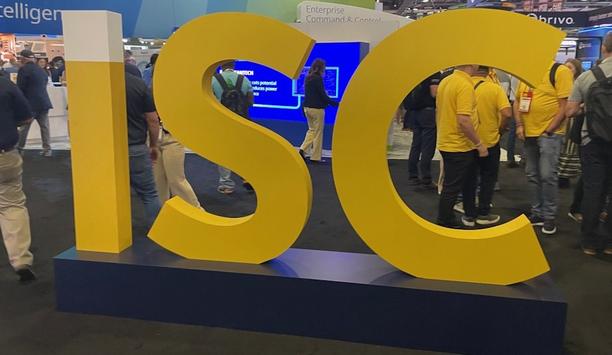
Artificial Intelligence (AI) had a major presence at the ISC West 2026 show in Las Vegas. Almost every booth offered some variation on AI and how intelligence is transforming the physical security industry. Several industry leaders led the way, showcasing how they are tackling complex security challenges with smarter, more efficient solutions. Obviously, the security industry will never be the same. Milestone Systems: Responsible AI and open platforms Milestone has declared 2026 the "year of delivery” on previously announced developments and enhancements. A standout feature is their new natural language AI search, which is being integrated across XProtect, Arcules, and Briefcam platforms to simplify how users interact with vast amounts of video data. A core pillar of their strategy is responsible AI development, which prioritises using licensed data over "scraped" data. They have introduced new anonymisation tools that protect privacy by replacing faces with AI-generated characteristics like hair color while keeping the person unrecognisable. Furthermore, Milestone is moving workloads to Linux to reduce costs, transitioning toward an app marketplace, and has partnered with NVIDIA for the "Hafnia" project to ensure high-quality data to train AI models. Ambarella: Powering the edge with AI chips With their presence at ISC West in a meeting room near the trade show floor, Ambarella is the "engine" behind many high-performance intelligent video products, specializing in low-power AI chips like the N1 and CV7 families. Their technology is moving beyond cameras, where they provide systems-on-chips [SOCs] to many manufacturers. They have expanded into "AI boxes" that can process 64+ video channels simultaneously. A standout feature is the Natural Language technology, which allows users to search for specific objects or abstract scenes using simple prompts. To address modern security concerns, Ambarella has implemented "agentic" programming for a no-code development of automated workflows and media signing to combat AI-generated deepfakes by verifying video integrity through metadata. Motorola Solutions: Simplifying intelligence Motorola Solutions shows physical security evolving into a real-time enterprise intelligence layerMotorola Solutions is prioritising user accessibility by integrating natural language processing into its system configuration. Motorola's portfolio demonstrates how physical security technology is evolving into a real-time operational intelligence layer across the enterprise. Instead of requiring custom coding, operators can now use simple commands—like asking the system to "show me when someone fell down"—to set up advanced analytics and search parameters. The company is also deploying AI agents designed to aggregate data and automatically flag safety or compliance risks, such as perimeter breaches or blocked fire exits. To ensure maximum utility of the hardware, Motorola Solutions’ system can ingest massive, complex physical manuals and automatically generate monitoring rules based on those standard operating procedures. Furthermore, Motorola is focusing on interoperability, using industry-standard interfaces to ingest data from various hardware brands and networks. This approach aims to provide operators with clear, recommended next steps during critical events, streamlining the decision-making process in high-pressure environments. i-PRO: Putting generative AI at the edge i-PRO is bringing generative AI directly to the edge with a new fisheye camera, which processes complex analytics locally rather than relying solely on the cloud. These cameras, on display at ISC West, have moved beyond simple attribute-based tracking to identify complex behaviors like aggression, fighting, and slip-and-fall incidents. By running on the latest Ambarella chips, i-PRO cameras can use generative AI to improve image quality and analyze scenes in real-time without external processing. This focus on edge-based intelligence ensures high-performance analytics are available even in environments where constant cloud connectivity might be a challenge. Brivo: The rise of agentic AI Eagle Eye Video Assistant (EEVA) acts as a natural language AI agent that can monitor for specific threats Brivo and Eagle Eye Networks have officially unified under the Brivo name, focusing on streamlining the experience for large integrators. They are pioneers in agentic AI, introducing features that allow users to talk to their mobile apps to initiate lockdowns or add users. Their Eagle Eye Video Assistant (EEVA) acts as a natural language AI agent that can monitor for specific threats, such as a brandished weapon or a specific vehicle, and automatically trigger access control responses. By treating access and video as a unified system, Brivo enables users to connect specific video skills—like detecting a red car or a brandished weapon—to automated access control actions. They are also using AI to achieve "zero-cost integration," linking disparate cloud systems using AI-generated instructions. Everon: Emphasis on video monitoring Everon is making a massive investment in active video monitoring, using AI-driven systems to deter crime even before it happens. “The market is ripe for it, and customers are demanding it,” says David Charney, Everon’s Sr. Vice President, Video Command Center. Employing virtual guards who can use voice commands, lights, and horns to "shoo away" unauthorized individuals. The company has implemented senior-level leadership that has facilitated more than 5,000 video-based apprehensions. Everon, specializing in integrated systems for multi-site businesses, uses a rigorous selection process to choose AI providers that can accurately filter alerts for specific applications, such as identifying when a fire door is blocked. As a "trusted advisor" to their 300,000 customers, the company focuses on delivering professional-level results that move beyond basic recording to proactive threat mitigation. Hanwha: New hybrid VMS combines cloud and on-prem Hanwha Vision highlighted the official public launch of Blaze, a hybrid video management system (VMS). The platform uses a hybrid architecture to manage on-premise and cloud-connected devices across multiple sites without complex port forwarding. Blaze features native AI capabilities, including semantic search that allows operators to find specific incidents using natural language queries, such as "person with a safety jacket." The AI security platform lets teams search surveillance footage the way they search Google. AI similarity detection allows operators to quickly trace a person’s movement and investigate incidents faster (useful in active shooter behavior, medical emergencies, or crowd panic scenarios, and more). The system also provides a "histogram" view of traffic patterns to help security professionals quickly identify anomalies in historical footage. OpenEye: Operational intelligence and shift to OpEx OpenEye unveiled AI-powered features such as visual chat and scene analysisOpenEye is redefining video surveillance by moving intelligence from the camera level to the cloud, significantly reducing the need for on-site server management. At ISC West, OpenEye introduced new AI-driven tools like visual chat and scene analysis. Beyond security, these tools provide valuable operational alerts, such as identifying overflowing dumpsters, dirty tables in restaurants, or vehicles blocking dock doors. The system also utilizes natural language for search, allowing users to find specific attributes like "people wearing backpacks" within designated timeframes. OpenEye also highlighted an industry-wide shift toward operational expenditures (OpEx) billing models, as users increasingly prefer predictable monthly or yearly payments over large upfront capital expenditures (CapEx). This model aligns with their channel-based operations, meeting customers where they currently operate without the burden of high fees. IQSIGHT: New name, same mission for Bosch video Formerly Bosch Video, the newly named IQSIGHT seeks to maintain the “Bosch pedigree” under the new name. It’s the same engineering, manufacturing, etc. IQSIGHT also pledges to be "easier to do business with" by improving user interfaces and end-to-end user experiences. Despite the transition, the company has increased their pace of innovation and reinforced the open systems philosophy with enhanced integrations with Milestone, Genetec, and others. The major product release at the show is IVA Pro Context, which uses generative AI to provide human-level scene understanding. Through a partnership with Laelaps AI, a robotics startup, IQSIGHT is exploring autonomous dispatch and response. When a camera identifies a scene, it triggers a robot to provide a tailored response. Commercialisation is expected in 12 to 18 months. Verkada: How their system can solve a crime But how does AI operate in the real world? Verkada had a “themed” exhibit demonstrating how their system could solve a hypothetical theft at the Louvre museum in Paris. The exhibit took attendees through and showed how Verkada technologies (e.g., license plate recognition and search capabilities) could provide fast results to solve the crime. AI-powered tools, like their newest unified timeline, demonstrate value in the real world of investigations.
There was high-level energy at GSX 2025, befitting an industry undergoing massive change. Artificial intelligence (AI) was everywhere, but not so much in the booth signage. Rather, AI has made its way beyond marketing claims and solidly into the core of the products themselves. There were hundreds of examples of how AI is changing how security systems operate, all for the better. Clearly on display at GSX 2025 was an industry in the midst of metamorphosis. Deep integration of AI My conversations with companies across the security ecosystem revealed an industry heavily focused on leveraging advanced technologies like AI and the cloud to address increasingly complex global and localized threats. Several key themes emerged at the Global Security Exchange (GSX), sponsored by ASIS International, held Sept. 29–Oct. 1 at the Ernest N. Morial Convention Center in New Orleans, La. Themes I heard repeated throughout the show floor included deep integration of AI, the ongoing shift toward cloud-based and hybrid architectures, and a sharp focus on modernizing security systems to meet current challenges. AI and intelligent automation transform security The use of GenAI is moving beyond simple search functions into real-time decision support Companies are integrating AI and intelligent technologies to enhance analytics, streamline incident response, and improve internal efficiency. The use of Generative AI (GenAI) is moving beyond simple search functions into real-time decision support. For example, Bosch Video Systems introduced a "second tier" to its video analytics capabilities by combining highly sensitive edge detection with GenAI models in the cloud. For example, in visual gun detection, edge analytics might flag a potential gun (yellow), but the cloud-based GenAI then quickly reviews and confirms the threat (red), helping to filter out false alarms. Bosch is also using GenAI for more open-ended searches, such as a "Where's Waldo" application demonstrated at their booth. GenAI-powered system Eagle Eye Networks says they are focused on helping integrators "organize the AI chaos” through their cloud-based video platform. Their precision person and vehicle detection capabilities work across multiple cameras. Motorola Solutions introduced Inform, an AI-assisted incident response solution designed to bring clarity to the "noise" and help security teams respond to complex threats. They also offer Avigilon Visual Alerts, an on-prem GenAI-powered system that expands the natural language interface. AI internally to improve processes The Body Workforce Mini protects frontline workers and businesses "amid rising violence and theft." The Axon Body Workforce Mini, a small “computer with a lens” for non-police applications, is AI-capable and can perform real-time translations, automated report writing, and summarization, and can even act as a personal assistant by incorporating company policies. All those functions are built into a lightweight body-worn camera designed to safeguard frontline workers in retail and healthcare verticals. The Body Workforce Mini protects frontline workers and businesses "amid rising violence and theft." Beyond products, integration company Everon is using AI internally to improve processes, such as handling commoditized tasks, which they expect will result in better customer satisfaction. Everon wants to be known as a premier service provider and will be introducing new services in the video realm. AI-powered search and continuous system upgrades Genetec prefers the term Intelligent Automation (IA), instead of AI, to describe its empathetic interface, which can "know" what additional information a security professional needs when they click on an image, for example. Genetec says the advantages of the cloud include AI-powered search and continuous system upgrades. Their Security Center SaaS has had a fast and successful launch. It enables cloud-based systems with local storage. Genetec also highlighted the Cloudlink 210, a cloud-managed appliance designed to unify physical security operations that can be simply plugged in without involving IT staff. They call it a “headless appliance.” Cloud migration and the push for hybrid systems Hanwha debuted OnCAFE (Cloud Access for Everyone), a new cloud-based access control product The industry continues its strategic march toward the cloud, often through hybrid applications that blend on-prem strength with cloud flexibility. Acre's access control is described as "cloud-first technology," and they continue to focus on cloud solutions, incorporating AI. To help customers transition, they offer the "Bridge," a migration tool that allows systems to communicate throughout the move. At the same time, they are continuing to develop and enhance their core on-prem products – DNA Fusion and AccessIt!. Adding access control to supplement their video product line, Hanwha debuted OnCAFE (Cloud Access for Everyone), a new cloud-based access control product. The goal is to provide “access control that is easy;” It works alongside their OnCloud direct-to-cloud VMS as a Service platform. Future of video management The future of video management is increasingly hybrid. Milestone recently completed a three-year process of updating XProtect and building for the future of hybrid applications. At GSX, they showcased how their XProtect Evidence Manager seeks to "democratize evidence management" by collecting video, cell phone data, notes, and other metadata related to a case for easy sharing and prosecution. Also, Milestone’s “app center” enables additional features to enhance XProtect without involving integration. Milestone is also focusing on "Metadata Ingest," which collects and aggregates data from various manufacturers (including Genetec, Motorola, and Exacq) for use by AI. Strategic modernization and open integration Convergint and Genetec collaborated on a "2026 Technology Modernization Outlook" white paper A key theme for the future is the shift toward open systems and strategic modernization, enabling security professionals to better utilize new technology. Convergint and Genetec collaborated on a "2026 Technology Modernization Outlook" white paper, arguing that dealers and end-users need to think more strategically when buying technology. They predict that "2026 will be the year of modernization," with tangible results including unified intelligence, flexible deployment, and lower total cost of ownership. The call for open standards and architecture was also strong. What AI needs from open systems Johnson Controls noted that cloud, AI, and open standards are its three big focus areas. Their C-CURE IQ 3.10 is gaining adoption as it unifies access and video. OpenEye is seeking to address the "AI disruption anxiety" in the industry, focusing on what AI needs from open systems. The emphasis is on the value of a Model Context Protocol (MCP), an open standard and framework to enable AI systems to integrate and share data with external tools and sources. Addressing shifting global and local threats Allied Universal's "World Security Report 2025" highlights a risen focus on executive protection Companies unveiled solutions targeted at new security concerns, particularly the rising threat of violence, theft, and misinformation. Allied Universal's "World Security Report 2025" highlights an increased focus on executive protection and cites the rise of misinformation and disinformation as the number two threat. They noted that macro trends around instability and the political and social environment are driving security threats globally. To combat physical threats, Shooter Detection Systems introduced a new outdoor sensor, which is now generally available after a favorable feedback period that included an apprehension in one municipality. The company notes the unique challenge of developing technology for a "non-cooperative" threat like a person with a gun, in contrast to most security technologies that are "cooperative" and depend on user compliance. Implementation of integrated security Flock Safety is expanding its focus beyond license plate readers into solutions for retail, with a new initiative to automate and streamline investigative processes, which are often manual. The company also showcased "drones as automated security guards," which can be deployed within 90 seconds to provide "eyes" on a site and enhance safety. The system works on its own network and is firewalled away from the city system A tour of the City of New Orleans' Real Time Crime Center (RTCC), hosted by Axis Communications, demonstrated a mature implementation of integrated security. The RTCC uses Axis cameras, Genetec VMS, and is tied to a Motorola Solutions Command Center to enhance efficiency and effectiveness, operating independently of the police department. They measure success in terms of valuable hours saved in an investigation or even when an event is happening. The system works on its own network and is firewalled away from the city system. Rapidly changing industry on display The GSX 2025 highlights an industry that is moving toward more intelligent and integrated solutions. The investment in AI is shifting security from reactive monitoring to proactive, automated assistance. Throughout the show floor, the continued embrace of hybrid cloud architectures, coupled with an emphasis on open standards and modernization roadmaps, suggests a security ecosystem built for agility and future growth. These trends, and the GSX show itself, collectively underscore the industry's commitment to delivering scalable, next-generation solutions for a changing threat landscape.
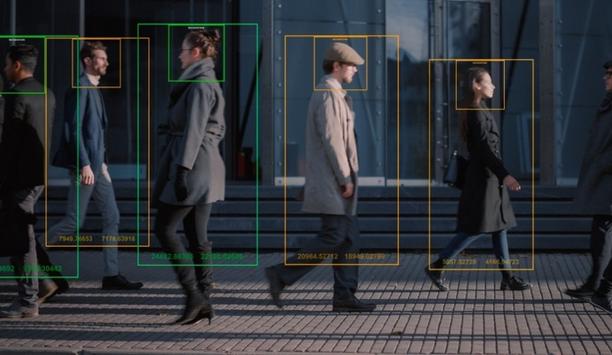
The information age is changing. Today, we are at the center of addressing one of the most critical issues in the digital age: the misinformation age. While most awareness of this problem has emerged in the consumer and political worlds, the issue cannot be ignored when it comes to the authenticity and protection of video and security data. Video surveillance data SWEAR is a company with the mission to ensure the integrity of video surveillance data by mapping video data and writing it into the blockchain, providing real-time, immutable proof of authenticity. Blockchain, which is the underlying technology that enables cryptocurrencies, is a decentralized digital ledger that securely stores records across a network of computers in a way that is transparent, immutable, and resistant to tampering. SWEAR solution The SWEAR solution is based on proactive, foundational protection that validates data at the source The SWEAR solution is based on proactive, foundational protection that validates data at the source before any opportunity for manipulation can occur. “Our technology is about proving what’s real and our goal is to ensure that security content and video surveillance data remain untampered with and reliable when needed,” says Jason Crawforth, Founder and CEO of SWEAR. Real-time authentication Security leaders need to ensure that the content they are relying on to make mission-critical decisions is authentic. Once verified, organizations can be sure that their investment in video can be trusted for critical use cases, including intelligence operations, legal investigations, and enterprise-scale security strategies. SWEAR seeks to embed trust and authenticity directly into video surveillance content at the point of creation. This ensures real-time authentication while proactively preventing tampering or manipulation before it can happen. AI-generated content The rise of AI-generated content, such as deepfakes, introduces significant challenges As AI transforms the landscape of video surveillance by enhancing threat detection and predictive analysis, it also introduces the very real risk of manipulation through AI-generated content. This presents a significant challenge in protecting critical security data, especially in mission-critical applications. The rise of AI-generated content, such as deepfakes, introduces significant challenges when it comes to ensuring the protection of digital media like video surveillance. Recent study findings It is a fact that digital media content is being questioned more regularly, which puts businesses, legal systems, and public trust at risk. A recent study from the Pew Research Center found that 63 percent of Americans believe altered videos and images create significant confusion about the facts of current issues. Last month, California Governor Gavin Newsom signed three bills aimed at curbing the use of AI to create fake images or videos in political ads ahead of the 2024 election. Footage authenticity “While most of the news cycle has centered on the use of fake content in politics, we need to think about how manipulated videos could affect security,” says Crawforth. “In video surveillance, ensuring the authenticity of footage is critical for keeping operations secure and safe around the world. That means verifying and protecting video data is a must.” Organizations must be capable of performing thorough digital investigations, which involve retrieving and analyzing video and security data from devices and networks through a chain of evidence. Digital forensic capabilities Strong digital forensic capabilities also enhance incident response, risk management, and proactive security An in-depth understanding of who has handled video data, how it was handled, and where it has been is an important step in responding to security incidents, safeguarding assets, and protecting critical infrastructure. Strong digital forensic capabilities also enhance incident response, risk management, and proactive security measures, all essential for risk management, regulatory compliance, and cost control, says Crawforth. An unbroken chain of custody “By using tools to identify, preserve, and analyze digital evidence, organizations can ensure swift and accurate responses to security incidents,” he adds. “Using the latest tools and techniques is vital for maintaining a strong security posture." "But you must ensure your digital content isn’t manipulated.” SWEAR’s technology provides an unbroken chain of custody, ensuring that video evidence can be trusted and admissible in court and forensic applications. Authenticating content Authenticating content also strengthens accountability and trust, protecting organizations By verifying video content is protected from tampering, manipulation, or forgery, organizations can be sure that they have reliable evidence that produces actionable results. Authenticating content also strengthens accountability and trust, protecting organizations from legal disputes or compliance violations. Safeguarding digital content “With an increasing amount of disinformation in today’s world, we sought to develop an innovative solution to safeguard the integrity of digital content,” says Crawforth. SWEAR safeguards security content using real-time “digital DNA” encoding. It integrates directly at the video management system level, ensuring it is preserved with a secure chain of custody and maintains integrity for evidentiary purposes. Real-time “digital DNA” encoding The digital DNA is then stored on a blockchain, creating an immutable record The solution integrates with cameras and other recording devices to map this digital DNA of the video data, all in real-time. The digital DNA is then stored on a blockchain, creating an immutable record that tracks the content’s history and integrity. Any attempt to manipulate the media can be instantly detected by comparing the current state of the media to its original, authenticated version. SWEAR is actively collaborating with video management solution providers to integrate the technology into their platforms. Video and security data benefits “We’re still in the early stages of our collaboration in this space, but it is clear that the industry recognizes that we have to work together to mitigate this risk proactively before it becomes a significant issue,” says Crawforth. “The feedback we have received from the industry to date has been beyond our expectations, and we expect to have more integration partners to highlight shortly.” “We should approach this as a collaborative effort across the industry, as ensuring the authenticity of video and security data benefits everyone involved,” says Crawforth.
Case studies

At the Toronto Zoo, every person on site – whether that’s a keeper, security officer, scientist, or volunteer - shares one vision: create a world where people, wildlife, and wild spaces thrive. Thirty minutes from downtown Toronto lies a 500-acre campus that is home to over 2000 animals across 200 species. Welcoming 1.3 million guests each year, Toronto Zoo is a world-class operation on a mission to connect people, animals, conservation science, and traditional knowledge to fight extinction. When Toronto Zoo Supervisor of Health & Safety Services, Graham Birtles, set out to modernise the Zoo’s legacy access and alarm infrastructure, he discovered that the partner he already trusted for animal enclosure fencing was the same one now leading the way in physical security and access control. World-class operation The Toronto Zoo opened in 1974 with a goal that extended well beyond exhibition. Today, its work spans conservation science, breeding programs for endangered species, community education, and climate advocacy. Its Guardians of Wild program extends that belief outward, inviting staff, guests, and partner organizations to champion wildlife beyond the Zoo’s borders: in policy, community relations, and corporate engagement. “My everyday is somebody else’s once-in-a-lifetime experience,” says Graham. “We want every person who comes through these gates to leave understanding what the Toronto Zoo is about, and what they can personally do to make a change.” Delivering that experience safely for guests, staff, and the animals themselves demanded a security platform fit for the job. Rapid emergency response Before Gallagher Security, the Zoo’s access control and alarm infrastructure had not kept pace with the scale of operations. Mobile alerting was unavailable to officers in the field, credentialling hundreds of seasonal staff required plastic cards that were slow to issue and difficult to track, and there was no integration with the Zoo’s video management system to support rapid emergency response. There was also a unique challenge facing the Zoo team: the electric perimeter fencing around animal enclosures - the secondary layer of protection between the animals and the wider Zoo environment - operated as an entirely separate system, disconnected from the broader infrastructure. Following an animal containment incident that was escalated to security leadership, the need to bridge those two systems became urgent. Graham found the solution at a security trade show, when his integrator walked him toward a familiar orange booth. Higher voltage requirements “I said, I already know Gallagher. They’re my fence people. They’ve been taking care of our fencing systems for over 50 years at the Toronto Zoo.” What Graham didn’t yet know was that Gallagher also delivered enterprise-grade physical security, making Toronto Zoo’s path to world-class operations clear. Working together, Gallagher Security and Gallagher Animal Management designed and implemented an integration between Gallagher Command Centre and the Zoo’s Animal Management energiser systems, enabling real-time communication between animal fencing infrastructure and the security platform for the first time. Higher voltage requirements The implementation required calibration for significantly higher voltage requirements than traditional smaller animal environments, ensuring safe and effective management across large species habitats. The Zoo team worked closely with Gallagher’s experts to configure their setup, and the solution is now fully operational within the orangutan habitat. “Now we can see the voltage of our fences at all times,” says Graham. “We can send alerts to our wildlife care team the moment something touches the hot wire so we can make sure the animals are safe.” When an alert is triggered, integrated CCTV allows the wildlife care team to immediately verify the event and assess the situation before responding; a critical functionality for animal safety. The Zoo’s security needs extend well beyond its animal habitats, and the Gallagher platform has delivered. Persistent administrative challenges Mobile Credentials have addressed one of the most persistent administrative challenges on site. With hundreds of contractors and seasonal catering staff requiring access at any given time, the previous reliance on plastic cards was slow and difficult to manage. Now, time-limited mobile credentials are issued on sign-in and revoked automatically on sign-out, removing the risk of residual access. For officers in the field, Gallagher Mobile Connect removed the need to return to base to manage alarms. Officers maintain full situational awareness from their vehicles around the clock, long after the central control center closes. Further integration with 27 Axis intercoms in high-risk spaces - housing venomous snakes, spiders, and other dangerous species - ensure staff working alone in those environments are never out of reach. Restricting workshop equipment “We can monitor alarms throughout the Zoo; not just for traditional break-and-enter or door-open scenarios. We are monitoring life-safety systems, fire systems, animal conditions, and more,” says Graham. What has distinguished the Toronto Zoo’s deployment is not any single feature, but the broad range of problems the Gallagher platform has been called on to solve. New challenges from across the organization are allowing Graham and his team to unlock more value from their security system. Whether it is monitoring environmental conditions within animal habitats, restricting workshop equipment to trained operators, or ensuring staff cannot access sensitive areas until their training is verified, the answer has consistently been found within the same platform. Conventional vendor relationship “I like that I can call on the Gallagher team and they will work with us to find a solution,” says Graham. “Gallagher has become a house brand here at the Toronto Zoo. It’s integrated with everything we do,” Graham Birtles, Supervisor of Health & Safety Service. The Zoo’s collaboration with Gallagher has not been a conventional vendor relationship. Graham describes it as a convergence of purpose. “When we partner with organizations such as Gallagher, they become Guardians of Wild,” he says. “Because they help me and the Toronto Zoo accomplish our mission.” The Gallagher platform will play a central role in the Zoo’s next chapter. A new Community Conservation Centre, developed with a local university, will soon bring classrooms, laboratories, and a new otter river habitat into a shared community space; with Command Centre managing access for students, professors, and visiting groups. “Gallagher understands our mission,” says Graham. “They are very helpful, and everything they have put in place for us has worked. The flexibility has been fantastic.” This installation was deployed in partnership with Met-Scan Canada Ltd

Barnet Council recently undertook a major upgrade of its CCTV infrastructure, partnering with i-PRO and systems integrator DSSL to enhance security, improve urban planning, and drive smart city initiatives. The project was driven by the need to replace an aging and largely non-functional CCTV network while maximising cost efficiency and scalability. With i-PRO’s market-leading edge computing analytics, the council was able to implement a future-proof technology that not only delivers high-quality security and safety but also provides valuable data insights for business and community planning. Future-proof technology The Customer - Barnet London Borough Council, also known as Barnet Council, is the local authority for the London Borough of Barnet in Greater London, England. The borough's major urban settlements are Hendon, Finchley, Golders Green, Friern Barnet, Chipping Barnet, Whetstone, and Edgware; there are also village settlements notably Totteridge and Arkley along with rural areas and countryside part of the Green Belt. As such, the area is geographically diverse and is also the largest London borough by population, with close to 350,000 residents. Business Challenge - The council’s previous CCTV system was in a state of disrepair, with only 15-20 of its 3000 cameras operational across the entire estate. Further to this, the council also looked ahead and made the decision to future-proof existing technology and enhance the capabilities of the system by strategically upgrading to smarter technology, capable of providing deeper insights, finding new efficiencies and generally improving the quality-of-service Barnet Council could provide to constituents and local businesses alike. Prominent AI capability The Solution - To address this, Barnet opted for a phased upgrade and system enhancement using the X-series AI Processing Relay Application, integrating i-PRO cameras with a newly upgraded control room and an enhanced Genetec video management system (VMS). The decision to go with i-PRO was influenced by its prominent AI capability and the substantial cost savings— an estimate of £600,000 over five years — when compared to server-based alternatives. Additionally, the system’s scalability allowed Barnet to expand its camera network without requiring extra server infrastructure, space, or cooling requirements. “A key factor in the decision was the ability of i-PRO cameras to serve as multifunctional sensors, capturing both security footage and valuable urban analytics. The cameras are used for people and vehicle counting, feeding real-time data into Power BI for internal council reports,” states Aaron Stephens, Managing Director at DSSL Systems. Planning future expansions The analytics data has become instrumental in planning future expansions, which will include additional coverage in parks, railway stations, and high-traffic areas. The insights generated help local businesses understand customer footfall, assist in investment decisions for town infrastructure, and support the council in managing traffic and public spaces more efficiently. “Unlike traditional server-based AI technology, which place a heavy burden on network infrastructure, i-PRO cameras process analytics on the edge, transmitting only metadata rather than large video files,” continues Stephens. Video management solution This approach significantly reduces costs while enabling faster and more efficient data analysis. The system was deployed with strict cyber security compliance, in alignment with regulations such as NDAA. Installed by DSSL, the network adheres to stringent firewall policies and integrates seamlessly with the Genetec video management solution, ensuring secure and reliable data management. "The i-PRO forensic capabilities are directly embedded within Genetec Security Center, which enables control room operators to quickly find specific objects or events by filtering through attributes and characteristics captured by the cameras. This speeds up the investigative process and enhances collaboration with the Metropolitan Police," said Benjamin Durrant, Account Executive, Genetec UK & Ireland. Culturally diverse community The deployment included 127 X-series bullet cameras for general safety and monitoring, 10 fisheye cameras in libraries for heat-mapping and people counting, and dual-view 5G re-deployable units for festivals and outdoor events. In Barnet’s unmanned libraries, the cameras also play a critical role in security, with audio detection triggering alerts for disturbances and automated people counting ensuring buildings are empty before lockdown procedures are initiated. Barnet Council’s investment in smart city technology extends beyond security. Re-deployable 5G cameras are being used to track attendance at public events, festivals, and religious gatherings, providing valuable crowd insights for better planning within a culturally diverse community. Return on investment and planning “With an initial £1 million investment, the council has maximized existing infrastructure to expand its data capabilities without significant additional spending. Phase two of the project, which has already been approved, will see the addition of 60-70 new i-PRO bullet cameras,” states Stephens. Beyond security, the smart city and community safety teams are leveraging i-PRO’s capabilities for advanced applications such as people and vehicle analytics. A new trial for automatic number plate recognition (ANPR) is also set to begin, potentially leading to a larger rollout. The council has already started benefiting from i-PRO’s analytics, such as heat-mapping in libraries, but is awaiting governance approval before publicly sharing results. The system complies with data privacy regulations as it does not use facial recognition. Smart city infrastructure Looking to the future, Barnet is exploring additional IoT integrations, including environmental sensors, flood detection, and traffic signal coordination. These efforts will further enhance the council’s smart city infrastructure. “This transparency, combined with i-PRO’s compliance with strict security standards, solidified the council’s trust in the solution. The i-PRO team came in to answer questions from the council and really won them over with their knowledge and honesty,” said Stephens. “Furthermore, i-PRO’s deep integration with the Genetec security solutions portfolio created a seamless ecosystem, reinforcing its market position as a leading smart city solution provider.” Looking to the future As Barnet Council continues its journey towards a fully integrated smart city, the focus remains on future scalability and efficiency gains. The initial return on investment is still being assessed, but the long-term impact is clear: by leveraging real-time data insights, the council can optimize public spending, justify infrastructure investments, and drive smarter, more connected urban development. As more councils recognize the benefits of data-driven planning, projects like Barnet’s will set the standard for the future of smart city technology.
Willis Tower, an iconic symbol in Chicago for over 50 years, has undergone significant transformations to become a modern workplace and community hub that delivers the best experiences for its tenants, area residents and visitors. Originally known as Sears Tower, it was renamed Willis Tower after a change in ownership in 2009. Major renovations took place in 2017, culminating in a complete transformation in 2022. Currnetly, Willis Tower offers a range of amenities from short-term workstations to traditional leases, as well as dining, retail, and entertainment spaces. The Skydeck on the 103rd floor, 1,353 feet above street level, provides breathtaking views of up to 50 miles across four states, attracting millions of visitors annually. Challenge As part of Willis Tower’s transformation, the structural separations between the office and Skydeck areas were eliminated, creating a more open and accessible space for visitors and tenants. Recognizing the need for a customized strategic security plan, Director of Security Keith Kambic, CPP, spearheaded efforts to find the right partners to ensure the safety and security of tenants, visitors, and employees. Kambic’s first step was to engage with the national security and technology consulting firm Guidepost Solutions. The next priority was to establish a strong partnership with a Chicago-based integration partner and to identify the best security solutions in the market. Kambic chose 4S Security as the integration partner because of their holistic approach to achieving optimal results. The partnership with 4S Security elevated the security measures at Willis Tower to new heights. “We are different than the average integrator,” said Leor Elfassy, Director of Business Development at 4S. “We have software developers on staff who write integrations, and as a matter of business principle for the last 30 years, we only work with software manufacturers that allow us to do so.” Solution The upgrade to Willis Tower involved retrofitting the access control system to a cloud-based solution and the new Video Management System (VMS), Salient CompleteView, was selected based on its ability to integrate seamlessly with the access control platform. “In the end the client wants a single pane of glass that they can work from and Salient’s CompleteView is well-designed to let integrators bring their vision to life,” continued Elfassy. Salient’s open architecture was an essential factor in the decision, along with product features like Dynamic Resolution Scaling (DRS), a powerful bandwidth management tool, and agnostic integration to analytic platforms for future system enhancements. Specific features like snapshot and CompleteView’s interactive mapping feature were also important selection factors. While all of these product capabilities are important, in the end it came down to the personal attention of Salient team members – from the President to the system engineer – and their efforts to go above and beyond in every way. Salient’s dedication to working cohesively with the Willis Tower and 4S teams created an effective partnership that propelled the project forward. Kambic said, “when we selected Salient, we did so not only for their product, but because we could tell that both of our companies were cut from the same cloth – great service, and great people.” Both Salient and 4S provided learning tools prior to implementation to ensure a seamless transition to the new VMS for the Willis Tower security team. 4S created customized training videos and pamphlets and held onsite training sessions, while Salient educated the security team through its YouTube training videos. Results The result of the partnership between 4S and Salient was a 40% reduction in bandwidth usage across the Willis Tower network. In addition, the integrated system provided immediate awareness of events such as forced-open doors, tailgating, and panic alarms. Ongoing top-notch local support from both Salient and 4S ensures smooth and timely software release updates and exploration of new technological capabilities, advancing video surveillance through CompleteView. Pleased with the results, the Willis Tower team attests to the success of the partnership, efficacy of Salient’s product, andoutstanding level of service from Salient both before and after the sale.
In alignment with the State of Mississippi’s mission of “Empowering Mississippi citizens to stay connected andengaged with their government,” Salient's CompleteView Video Management System (VMS) is being installedthroughout more than 150 state boards, commissions, and agencies in order to ensure safety for thousands ofconstituents who access state services daily. Challenge Determining the right path to success wasn’t a quick process. The elaborate undertaking of converting all State of Mississippi buildings from its legacy video system, which included analog cameras across a disparate video platform, to match their standard of excellence took a lot of planning. This involved researching and interviewing multiple manufacturers of IP cameras and video management systems. The plan was strategic, as it was important to State officials to find an open architecture solution that could utilize as much existing technology as possible, thereby preserving current taxpayer investment. Solution After a thorough evaluation, the decision came down to three competitive VMSs, all based on total cost-of ownership, scalability requirements, software performance capabilities, along with support assessments. Salient’s CompleteView was ultimately determined the top choice. “In the selection process, three VMS manufacturers were deemed a reasonable fit. The choice of CompleteView over these competitors came down to one critical component, partnership. The culture at Salient embodies an unmatched support you don’t typically see in an industry leader. Their greatest value-add is that open line of communication between the RSM, technical support, and engineering. If I need something, I know I can pick up the phone and get immediate assistance” said Mike Cooper with MS Department of Public Safety. Once CompleteView was selected, another strategic decision was made to have personnel from The Statehandle the design and installation of CompleteView internally rather than engage outside consulting. This hasproved to be an effective option, allowing them to tailor each installation to suit individual property needs. The State works through the channel for procurement, then handles all programming and administration internally. This offers them the most flexibility while still achieving uniformity across each deployment as well as complete control of the process. Result The conversion to CompleteView is underway and will take approximately 3-5 years to complete. The State now benefits from a centralized platform that allows for greater administrative control, as well as a product that meets the State of Mississippi standard for NDAA compliance. According to Cooper, “we now have a platform that is easily managed and visibly organized in an efficient manner. We also appreciate having a system that’s permission based with tighter controls.” Finally, The State’s technical team is committed to keeping the system updated as Salient releases newer versions of its software each quarter. These upgrades ensure they are taking advantage of all security enhancements and feature improvements that CompleteView has to offer. The State has also planned integration of its access control system, Open Options, with CompleteView, tying video directly to specific door openings. This gives State personnel an enhanced view into their security operations, with quick and easy auditing of badge events through a single interface. Further initiatives will explore the addition of AI video analytics to add weapons detection, appearance search, and cross-camera tracking — all to help speed up investigations. Salient’s open platform makes these integrations possible. Staying present on these new releases and innovative integrations ensures an advanced level of protection from potential threats and works to achieve the ultimate end game – keeping community members safe.
The Community Builders (TCB) is a nonprofit organization whose mission is to build and sustain strong communities where all people can thrive. They work with businesses, institutions, and public officials to revitalize neighborhoods in ways where all people can live in healthy homes with equitable access to resources and opportunities to pursue their dreams. Their partnership with Salient Systems exemplifies the use of video technology in vulnerable neighborhoods to help achieve these goals. Challenge TCB operates and manages 150 sites and properties across the country, employing over 600 staff members. These locations range from campus environments to individual buildings, each presenting unique security challenges to ensure overall resident safety. The primary focus for implementing a video management system is not only to ensure safety and security but also prevent property maintenance issues. Under Joe Giggey’s leadership as senior director of Information Technology, TCB established enterprise- level security standards. These standards enabled access to video remotely through smartphones, iPads, and laptops for a central team of sites in 30 cities. Additionally, seamless integration with existing cameras and access control systems was required, considering TCB’s extensive network of 30+ access control systems and about 6,800 different camera models. Affordability was another crucial factor, as is often the case for nonprofit organizations. Having an easy-to-administer VMS, reliable search and video export functionalities, scalability for future property acquisitions, and centralized management in a distributed environment were also significant requirements. Solution Salient’s CompleteView VMS met all the specified criteria, marking the beginning of the partnership between TCB and Salient in 2016. The deployment of CompleteView has grown to 85 site recording servers and over 2,300 camera licenses. Given the widespread nature of TCB’s properties, certified regionalized integrators have been selected to install CompleteView across TCB locations. These integrators have been trained and received certification from Salient Systems professional trainers on installation, executing upgrades, expanding systems, and customizing the deployment ensuring effective implementation and ongoing support. In addition, manufacturer support by Salient’s own System Engineering team has been utilized and according to TCB personnel, “has been phenomenal.” Results TCB staff help address complaints, educate residents on lease rules, and avoid evictions. Salient’s CompleteView has assisted in resolving disputes, and investigating incidents. In addition, the ability to verify details of incidents in progress helps pinpoint the location and gives first responders details about the situation they may face on arrival. Video footage provided by Salient’s VMS, CompleteView has proven invaluable in multiple instances and according to Giggey “The VMS paid for itself immediately, highlighting the effectiveness and value of this partnership.” The collaboration between TCB and Salient Systems has become an exemplar of how technology can be harnessed for the greater good, building trust and effecting positive changes in vulnerable neighborhoods. With ongoing support from Salient Systems, TCB is committed to making a lasting impact and ensuring strong communities where all people can thrive.

The healthcare organization based in Washington state has begun a journey of unifying its video surveillance and access control under one platform, yielding better situational awareness, streamlining investigations, and providing an additional level of safety and security to staff and patients alike. Multicare Health System in Washington State employs more than 20,000 team members across 11 hospitals and more than 300 medical clinics, laboratories, medical imaging, pharmacies and specialty services locations. Physical security assets As a large healthcare organization, Multicare has many levels of security to attend to, including slips and falls, patient care, guest management, parking and perimeter security, staff and security officer safety and much more. “We had multiple video management system (VMS) solutions and multiple systems were outdated and past their end of life. We needed to consolidate into a single, unified solution with a global interface,” Davis explains. When Joshua Davis, technology system support coordinator, joined MultiCare in 2018, he oversaw the upkeep, implementation and eventual retirement of the organization’s physical security assets, including its outdated NVR solution, legacy analog surveillance cameras, as well as access control and video management solutions. Access control solutions Like many robust and expanding organizations, MultiCare has added new sites and facilities over the years, finding itself with disparate security, video surveillance and access control solutions. Prior to upgrading that technology, operators were pulling video footage via a flash drive transfer at legacy sites when incidents occurred. The organization was experiencing challenges of using older equipment too, and the access control solution didn’t have two-way integration with the VMS, making analytics cumbersome and difficult to manage. Centralized security operations With a focus on efficiency, as well as saving time and money, Multicare wanted a consolidated, easy-to-navigate platform for security staff to be able to view, respond to incidents and pull security video footage as needed. With one centralized security operations center running 365/24/7, along with about 100 other workstations running video at any given time throughout the organization’s locations, Davis also needed a way to streamline the number of permissions, access and remote troubleshooting and capabilities across the entire organization. So, a few years ago, Multicare partnered with integrator Entrance Controls and technology partners, Salient Systems and AMAG Technology, to begin the process of integrating its video surveillance, while upgrading its cameras, VMS, surveillance capabilities and access control operations. IP video capabilities “This was a team effort to pull off a project of this size. We needed to make sure that calculations, server type, and correct camera counts/types were accounted for. We all worked together to make sure that everyone was kept in the loop,” explains Blake Albertsen, regional sales manager for Salient Systems in the Pacific Northwest and Western Canada. The healthcare organization has nearly completed its security upgrades: upgrading the VMS to a unified platform from Salient Systems; installing roughly 90 servers to allow the organization to experience full IP video capabilities; upgrading its 3,000-plus analog cameras to IP as they age out, as well as using Salient’s GEN II Capture card technology to get extra life and optimized capabilities out of other existing analog cameras without having to invest in encoders. Better situational awareness In addition, two-way integration with AMAG’s Symmetry Access Control system and Salient Systems’ CompleteView VMS allows Davis and his team to pull up, search and see motion-related video clips associated with access control events whenever necessary, yielding better situational awareness and streamlining investigations. “We spent over 18 months developing the plan and design of each server before we ever placed one server into the Multicare platform. There were so many different moving pieces we needed to make sure were in place for a successful upgrade,” Albertsen says. Single VMS solution The upgrades have allowed Multicare to not only boost security, safety and efficiency, but it has also saved Davis and his staff significant time already. “Before we had a centralized, single VMS solution, we didn’t have capabilities of customizing camera views at every location. Some locations have more cameras than others and once our staff had a view that had been created for them, they couldn’t change the view,” Davis says. Now, the VMS allows staff and operators the ability to easily customize their surveillance views and change those views depending on the locations, cameras and angles they need to see. This has come in handy in many ways, especially when hospital staff need to see a specific room for a day or a period of time depending on what’s happening, but don’t need to watch that view all the time. “The interface has improved our usability dramatically because it’s so customisable,” Davis adds. Indoor and outdoor cameras Another unexpected benefit of the security upgrades thus far has been the peace of mind a unified security platform has given to Multicare employees. Because both indoor and outdoor cameras are all on one centralized platform, hospital employees can be escorted by security to access perimeter cameras in parking garages or outdoor locations when leaving at night so they can virtually scan the area before exiting the building. “That has given many team members a feeling of additional safety, which has been great for staff,” Davis says. Over the next several years, Multicare will continue to upgrade its legacy cameras and servers across sites it hasn’t reached yet, with the ultimate goal of having all its video surveillance under one, customisable platform. Benefits of centralized security In addition, according to Davis, as the healthcare system has begun to experience the benefits of centralized security, they would like to expand the number of cameras and views at many facilities, while also expanding uses and capabilities of the system. “We are taking baby steps as it’s an expensive endeavor, but we are growing exponentially and we see an opportunity to expand our capabilities and use into continuing to provide excellent patient treatment and overall security at our locations,” Davis says.
Products
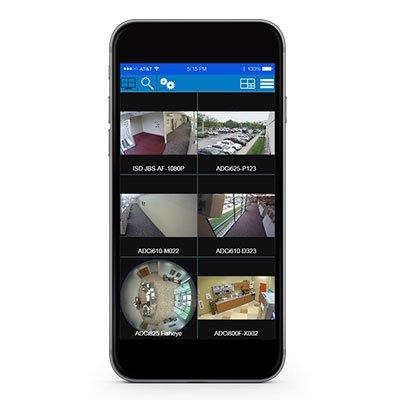
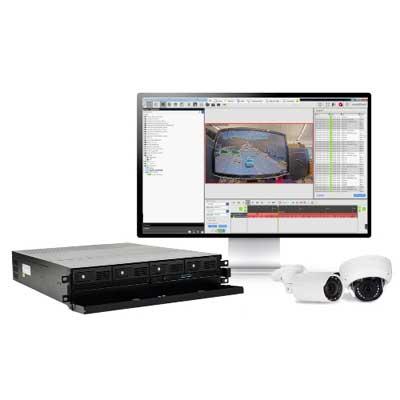
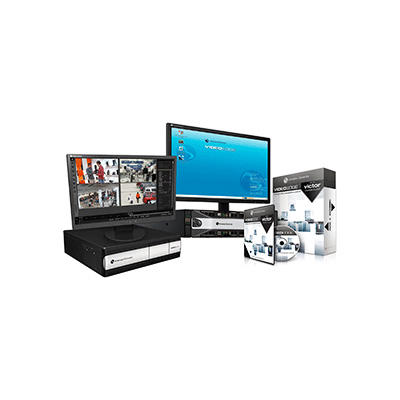
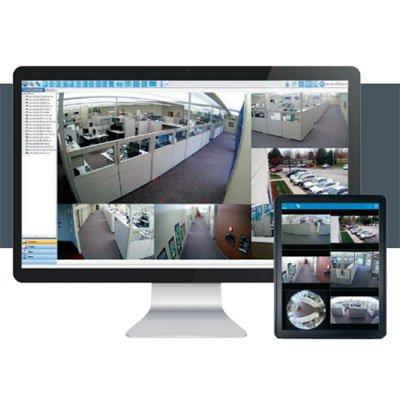
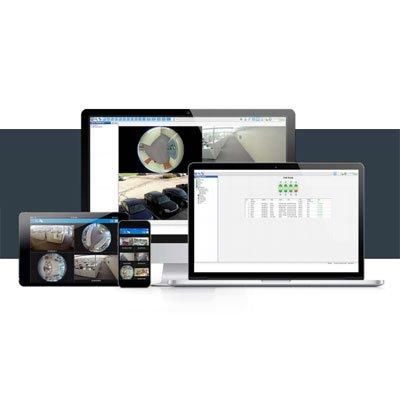
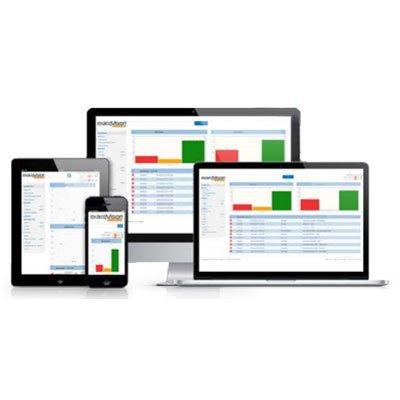
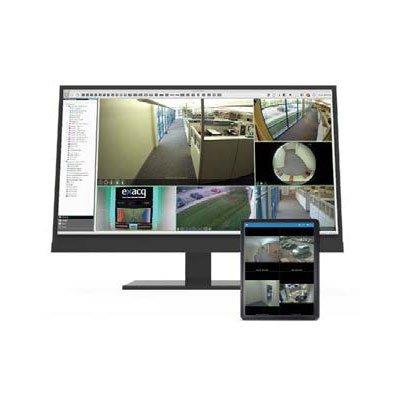
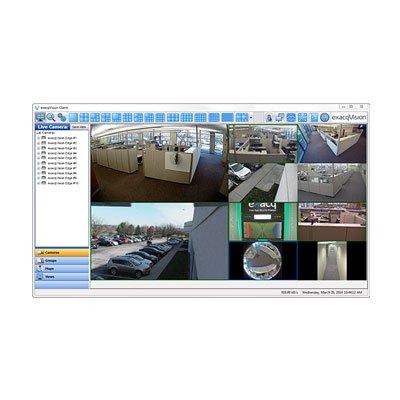

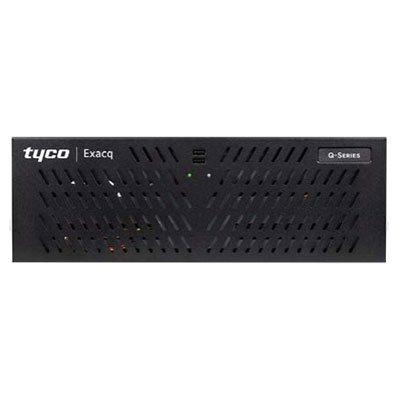
Round table discussion

At mid-year 2026, the broader economy tells a story of resilience under pressure. Conflict in the Middle East has triggered a shock to the energy supply, driving oil prices up and reigniting global inflation. However, a total downturn has been averted. Exceptional, historic levels of business investment and data center construction are providing a firm floor for growth, offsetting cooler consumer spending and keeping labor markets fundamentally stable. But how are changing economics impacting the physical security market? We asked our Expert Panel Roundtable: How do changes in the broader economic climate impact physical security?
False alarms are the security industry's oldest and most persistent challenge. Industry estimates suggest that as many as 95% to 98% of security system activations are non-emergencies. The high rate stems from a combination of human behavior, environmental triggers, and technical limitations. However, newer technologies are finally addressing the challenge of false alarms. We asked our Expert Panel Roundtable: What are the new solutions to security's oldest challenge, reducing false alarms?

New technology advancements significantly increase efficiency and productivity in any industry, including physical security. Enhanced innovation both creates new products and services and improves existing products, all for the benefit of security manufacturers, integrators, and end users. Companies that embrace new technology stay ahead of the curve and gain a significant competitive advantage. In addition, they can differentiate themselves in the marketplace. We asked this week's Expert Panel Roundtable: What are the most promising new technologies in the physical security industry?
White papers

Minimizing Storage, Maximizing Focus
Download
Understanding AI-Powered Video Analytics
Download
How To Lower Labor Costs When Installing Video Surveillance
Download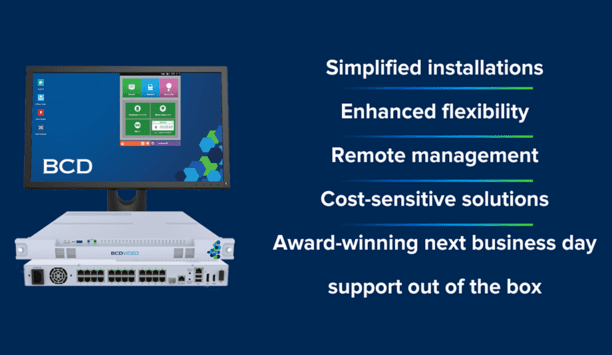
Understanding All-In-One Solutions
Download
How Video Technology Is Transforming Loss Prevention, Operations, And Customer Experience In The Retail Sector
Download
Troubleshooting IP Video Systems
Download
2024 Trends In Video Surveillance
Download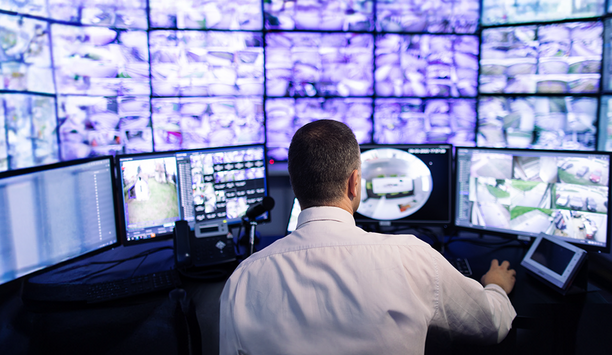
The Real Cost Of An Outdated Video Security System
Download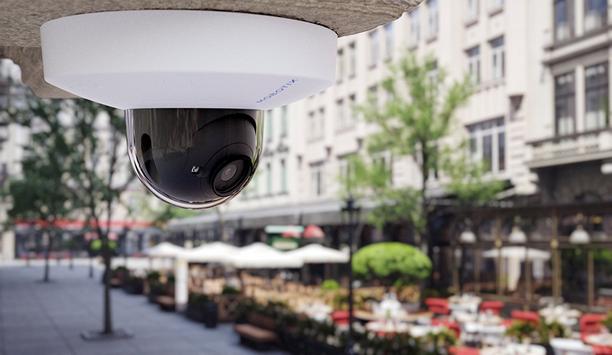
5 Easy Steps To An Upgraded Video Surveillance System
Download
VSS - Top 4 Questions To Get You Started
Download
Why SAAS Security Platform Is More Popular In American SMEs
Download
Camera Cyber Lockdown
Download
Video Technology Strategies For Hospitals Are Moving Beyond Security
Download
Healthcare Surveillance: Finding Efficiencies From OR To ER And Beyond
Download
Unlocking Wide-Angle Camera Dewarping
DownloadVideos



Video Management System: Manufacturers & Suppliers
- exacqVision Video Management System
- Honeywell Security Video Management System
- Vicon Video Management System
- Bosch Video Management System
- Dahua Technology Video Management System
- LILIN Video Management System
- Infinova Video Management System
- AMAG Video Management System
- Meyertech Video Management System
- March Networks Video Management System
- Hikvision Video Management System
- OT Systems Video Management System
- Eagle Eye Networks Video Management System
- Axis Communications Video Management System
- Video Storage Solutions Video Management System
- Hanwha Vision Video Management System
- Senstar Video Management System
- IndigoVision Video Management System
- IDIS Video Management System
- Geutebruck Video Management System