


At the end of last year, we anticipated that data gathering and analysis would continue to be a strong trend, and that certainly proved to be the case in 2016.
More and more organizations are seeing the value of the intelligence provided by diverse systems’ data. The number and variety of networked systems and devices – both security and non-security – continued to grow steadily in the last year, and the data these disparate sources create has proven highly useful in identifying statistical patterns and trends that may indicate the likelihood of incidents occurring. More data leads to more complete intelligence, allowing organizations to more easily identify threats or business opportunities, make more informed decisions and create better outcomes in general.
Another key trend we anticipated in 2016 was the growth of security as a critical component in an organization. This also proved to be the case in the last year, as the role of security teams continued to take on more relevance related to overall operations. This has largely been possible thanks to the ready availability of strong tools and solutions that allow security departments to lower costs, increase compliance and reduce the risk of insider threat.
Identifying Insider Threats
Increased adoption of predictive analysis to identify potential threats and opportunities will continue to be a strong trend in 2017, as will the transformation of security from reactive cost center to proactive business partner. Additionally, the coming year will see even greater emphasis on the convergence of physical and cyber security, which should come as no surprise given the ever-increasing number and sophistication of cyberattacks we have seen in recent months.
Nearly every organization’s business strategy includes the critical need to secure networks and digital assets with technologies that apply intelligence to their infrastructures to detect vulnerabilities and improve network security. While these are vital measures, they overlook the role of physical security in protecting digital assets. Consider that many data breaches are actually perpetrated by individuals from within an organization who are authorized to access sensitive areas of networks or facilities. Many other data breaches are the result of physical break-ins to steal a laptop or backup server.
Organizations are beginning to understand the need for strong physical security and identity management to complement cybersecurity programs. In considering solutions to bridge the gap between the two, many find that the most effective practices are those that include physical and logical security working in tandem to thwart data breaches from inside and outside of an organization. There is still a long way to go in making organizations aware of this reality, but we anticipate that education will expand awareness in the coming year.
 |
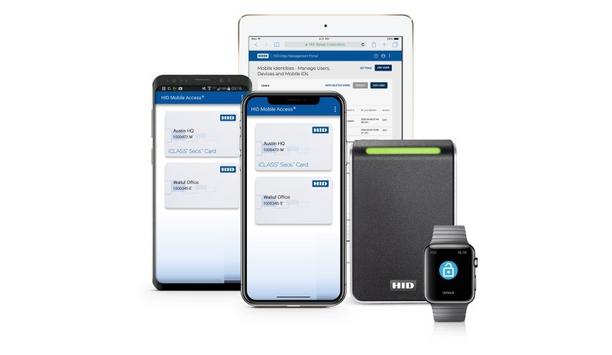
| Mobile PIAM solutions offer the ability to connect systems that use mobile devices, access control and offline locks |
Increasing Mobile Capability
Another key trend in the security industry for the last several years is mobile capability, which will see even broader and deeper adoption and integration in 2017. A main area of growth will be mobile PIAM (physical identity and access management), which allows organizations to extend their infrastructure to areas that may otherwise be difficult or time-consuming to secure. These include locations such as outdoor or temporary venues, where deploying a traditional solution would be cost-prohibitive and where identity is often verified by consulting physical lists and checking photo IDs.
Mobile PIAM solutions offer the ability to connect systems that use mobile devices, access control and offline locks to deliver strong identity authentication, allowing organizations to more easily control access and extend control wherever there is a need. Given the flexibility, ease of use, effectiveness and cost savings these mobile PIAM solutions, will likely see steady growth in terms of both maturity and adoption in the coming year.
Closing Out Another Strong Year
Following up on a strong 2015, Quantum Secure experienced another high-growth year in 2016. Since becoming part of HID Global in 2015, we have seen a rise in the volume and range of opportunities to deploy SAFE software solutions. Most notable was Quantum Secure’s involvement in the recent International Sporting Event held in Rio de Janeiro, Brazil, where SAFE Sports and Events Manager was deployed to manage and track the identities of approximately 500,000 credentialed individuals to reduce the risk of unauthorized intrusions and prevent potential threats. Using a mobile app, security staff were able to quickly and effectively validate individuals by simply swiping their credentials on handheld peripherals, while also performing an on-site visual verification via a workstation and/or mobile device.
Quantum Secure has led the way in software for identity management, compliance and access provisioning within physical security infrastructures, and we will continue our tradition of innovation in 2017 and beyond. We are continually looking to expand our SAFE portfolio to deliver solutions that simply physical identity and access management and generate actionable intelligence that can identify and eliminate potential risk for growing number of vertical markets and applications.
See the full coverage of 2016/2017 Review and Forecast articles here