
Genetec Inc. has revealed new insights specifically aimed at the healthcare sector from its 2026 State of Physical Security Report.
Drawing from a global pool of security professionals, including those involved in healthcare, the report highlights a continued preference for hybrid-cloud deployments. It further underscores an increasing emphasis on access control, artificial intelligence (AI), and inter-departmental collaboration.
Hybrid-Cloud Deployments in Healthcare
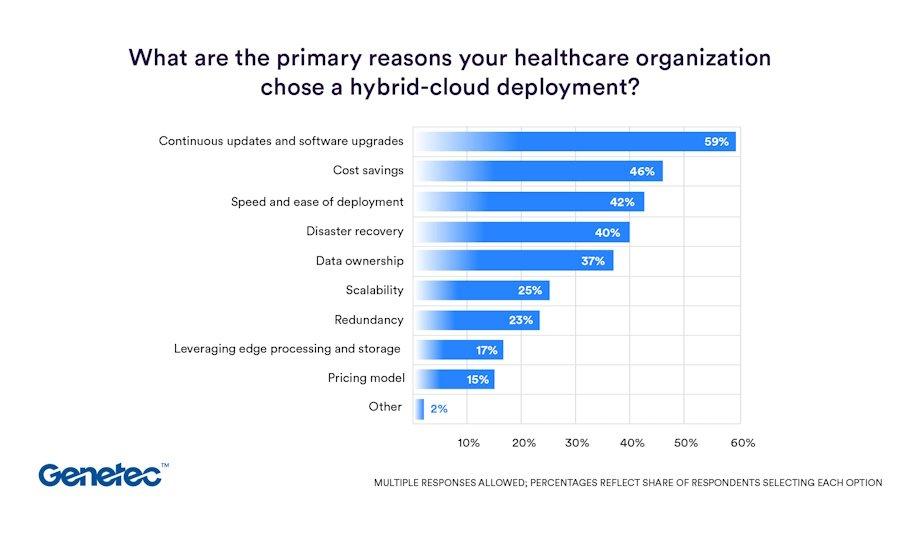
Healthcare organizations are placing a strategic focus on hybrid-cloud systems owing to their flexibility. Surveyed professionals cited ongoing updates and software enhancements as the primary reasons for adopting cloud solutions, at 59%. Additionally, cost-effectiveness was a factor for 46%, followed closely by quick and easy implementation at 42%. The benefits of disaster recovery and data ownership were also recognized, with 40% and 37% citing these advantages respectively. The need for such solutions is amplified by the complex regulatory and operational demands of healthcare settings.
According to Dale Martin, Key Account Manager in Healthcare at Genetec, "Healthcare organizations are taking a measured, strategic approach to modernization. Flexible deployment options support long-term planning and goals while allowing organizations to adapt as operational and clinical needs evolve."
Advancing Security Processes
Nearly half (49%) of those surveyed plan to utilize AI to improve security processes
The 2026 report also highlights significant challenges for the healthcare sector, such as training and upskilling staff (42%), an aging IT infrastructure (40%), and difficulties in attracting and retaining talent (38%). These issues are shaping security strategies moving forward. Nearly half (49%) of those surveyed plan to utilize AI to improve security processes.
In addition, access control projects are anticipated by 55% of respondents, with 40% focusing on AI initiatives and 39% on video surveillance. Another priority recognized by 39% of respondents is collaboration with other departments, such as human resources and facilities management, indicating an integrative role for physical security.
Rising Physical Security Incidents
The report details an increase in physical security incidents within healthcare environments
The report details an increase in physical security incidents within healthcare environments. Notable upticks have been seen in physical attacks on employees (55%), verbal assaults (52%), unauthorized entries (50%), break-ins (47%), and insider thefts (44%).
In response to these challenges, healthcare organizations are broadening the methods for sharing and utilizing security data throughout their enterprises. Over half of these entities are integrating access activity data with other systems, and many are extending this practice to include sharing alarms, incident information, and video and audio data. Security Operations Centers (SOCs) are concurrently linking to cybersecurity tools, intrusion detection, asset monitoring systems, HR systems, and external threat intelligence sources.
Expanding Traditional Security Functions
Physical security data in the healthcare sector is also being applied to achieve broader objectives beyond mere security measures.
Goals identified include enhancing safety and security (60%), boosting operational efficiency within security teams (52%), achieving regulatory compliance (49%), and improving the experience of both employees and patients (44%). Moreover, security data is increasingly supporting occupancy management and driving operational efficiency across various departments.