Stadiums and arenas have evolved beyond being mere event sites, becoming vibrant year-round hubs for entertainment, commerce, and community activities.
The Tottenham Hotspur Stadium exemplifies this trend by diversifying its functions and enhancing its commercial revenue, which is anticipated to grow from £255.2 million to £277.1 million by 2025. This financial boost is attributed to hosting events such as NFL games, boxing matches, and a series of summer concerts by Beyoncé.
Amidst their growing complexity, these venues face heightened security challenges. The role of security now extends beyond incident response, morphing into a strategic function that not only ensures safety but also supports various operational facets such as marketing and sales.
The impending enforcement of the Terrorism (Protection of Premises) Act 2025, referred to as Martyn's Law, demands that operators of large public venues enhance readiness without compromising the visitor experience. This legislation, expected to be effective by spring 2027, mandates vigorous assessments to bolster preparedness against potential terrorist threats.
In honor of Martyn Hett, a Manchester Arena attack victim, Martyn’s Law compels venue operators to consider and mitigate terrorism risks through actionable strategies. Critical measures for venues with over 800 attendees include deploying video surveillance and vehicle access controls. AI-enhanced video solutions are integral to fulfilling these obligations, forming a crucial part of a comprehensive preparedness strategy.
Traditional video surveillance has been a mainstay in venue security, yet its reliance on human operators to multitask numerous feeds poses challenges. AI-powered systems now alleviate this burden by autonomously monitoring and flagging suspicious activities. These systems alert operators to potential threats, freeing them to focus on other critical tasks, ultimately enhancing response efficiency by providing contextual insights to ground teams.
Modern surveillance technology empowers security teams with high-definition imagery and diverse camera types, including dome, bullet, and multi-directional models, tailored to specific venue needs. AI-driven analytics provide real-time intelligence, crucial during emergencies to track crowd movements and direct responses effectively, streamlining communication with on-site and emergency services.
Surveillance systems featuring multiple analytics triggers enhance operator responsiveness. They can quickly retrieve specific footage using metadata, facilitating efficient investigations. Sophisticated search capabilities via semantic inputs allow operators to access relevant footage swiftly, enhancing their ability to track individuals or objects across extensive event spaces.
The scope of venue security now extends beyond ticketed areas to include adjacent entertainment districts and public spaces. AI-enabled video analytics enable operators to maintain a vigilant watch across wide areas, supporting a proactive response to risks. This holistic approach not only ensures security but also aids in areas like marketing and operational efficiency.
AI-powered video analytics offers valuable insights that facilitate strategic resource deployment, significantly contributing to a seamless visitor experience amidst diverse events. As the deadline for Martyn’s Law approaches, venue leaders must capitalize on the opportunity to integrate AI into their security strategies, transforming security from a reactive measure to a strategic asset that aligns with the demands of modern multi-use venues.
Stadiums and arenas are no longer places that come to life only on an event day. Increasingly, they are becoming year-round hubs for concerts, conferences, hospitality, retail, and community activity.
The Tottenham Hotspur Stadium is one such example of a venue generating additional revenue and audiences beyond football matches, with its 2025 commercial income rising from £255.2 million to £277.1 million, due to hosting four National Football League (NFL) franchises, high-profile boxing events, and a Beyoncé summer concert series.
Positive visitor experience
Yet, as these venues grow more complex and multifaceted, so does the challenge of keeping visitors and staff safe throughout the year. Security is no longer simply about responding to incidents.; Instead, it has become a strategic function that enables stadium leadership to tailor security to different event types and risk levels, keep on top of health and safety and maintenance, and add value to marketing, sales, operations, and more.
More pointedly, venue operators will soon have to comply with the Terrorism (Protection of Premises) Act 2025, better known as Martyn's Law, which received Royal Assent in April 2025 and is expected to come into force in spring 2027. With less than a year before implementation is anticipated, organizations responsible for large publicly accessible venues are increasingly assessing how they can strengthen preparedness while maintaining a positive visitor experience.
Wider readiness strategy
Named in memory of Martyn Hett, a victim of the Manchester Arena attack in 2017, the legislation introduces new responsibilities for venue operators to consider the risk of terrorism and put appropriate measures in place to help prevent, respond to, and reduce the impact of a terrorist attack if it occurs.
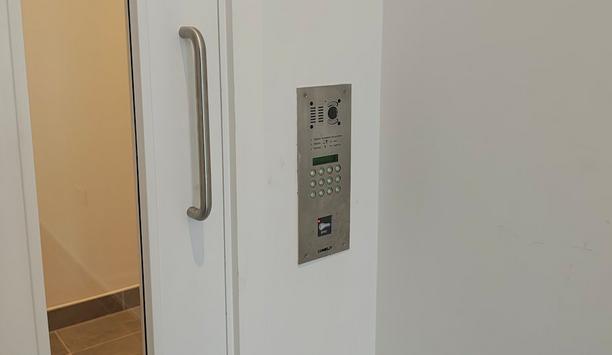
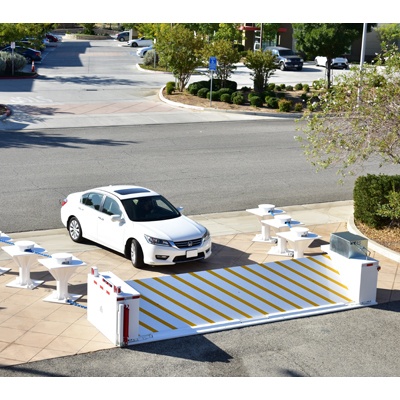
Notably, for venues with attendees of over 800 people, physical protection such as video surveillance, vehicle access control, ground security, and more, must be considered and evaluated on a regular basis. AI-powered video solutions can help organizations meet their obligation under Martyn’s Law as part of a wider readiness strategy.
Video surveillance systems
Traditional video surveillance systems have always played a critical role in venue security, but their effectiveness has often relied on human operators monitoring dozens, or even hundreds, of video feeds simultaneously. In busy environments, critical details can be missed, particularly when security teams are managing large crowds, multiple entry points, and fast-moving situations.
With AI-powered cameras and video management systems (VMS), operators no longer need to continuously monitor multiple video, chat, and sensor data streams. Instead, AI does the monitoring, flagging any suspicious activity, unauthorized objects (people and vehicles), crowd congestion, and so on, for operators to respond to if needed. Operators are freed up to focus on other activities, while the system will quickly alert them to events that require intervention, helping them respond to events rapidly and prevent situations from escalating. Ground teams also benefit from contextual, AI-powered insights that can help them track and locate a person or vehicle of interest, such as clothing color, direction of travel, and if they are potentially carrying a weapon.
Multi-directional models
By enabling security teams to assess and respond to situations before they develop into something more serious, venues are better prepared for some of the objectives underpinning Martyn's Law. The legislation places particular emphasis on preparedness, requiring organizations to consider how they would respond to incidents through measures such as evacuation, lockdown procedures, and effective communication. Situational awareness is fundamental to all four.
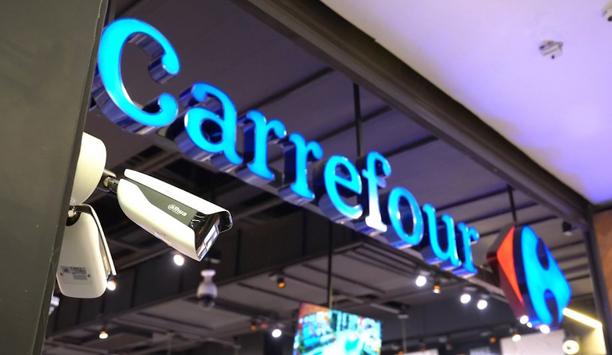
Modern-day cameras equip operators with high-definition footage of an event or object of interest. Most cameras available on the market start at 1080p definition, with 4MP, 6MP, 8MP or 4K resolution options. Camera form factors have also improved, with dome, flat eye, bullet, fish eye, pan-tilt-zoom (PTZ), thermal, and multi-directional models providing venues with a range of options to fit any sized area and surveillance need.
Monitoring crowd movements
Real-time intelligence from video surveillance provides operators with a clearer understanding of what is happening across a venue and its surrounding environment. Vitally, AI-powered video analytics and AI object detection help operators to avoid missing events that need their attention and action.
During an emergency, security teams can monitor crowd movements, identify potential bottlenecks, move towards the last known location of a potential attacker, and direct the public away from dangerous areas. Information on an attacker’s location, physical appearance, and direction of travel, plus the location of any casualties or people hiding within the venue, can be shared with on-site personnel and emergency services, helping to coordinate a faster and more efficient response.
Multiple analytics triggers
To further refine operator response times and efficiency, alerts can be set based on multiple analytics triggers, for example, if a person is detected crossing a line and then remains in a pre-defined area for a set number of seconds.
For post-event investigations, operators can search footage quickly using the metadata stored within video. For example, they can pull up all footage of all people wearing a grey top, or, to filter this further, a child wearing a grey top. This improves the efficiency and speed of carrying out investigations.
Generative AI tool
Moreover, if a video analytics tool supports it, operators can use an AI-powered search feature that enables them to input a phrase or sentence of what they are looking for, with the system showing them all relevant results. This feature, known as semantic search, is a more natural way of searching akin to prompting a generative AI tool to come to a result.
Operators can also select a specific area of interest to view all footage related to that area, allowing them to quickly find motion within that area. They can see all motion within that section on all captured video footage, to see, for example, who left a suspicious package in a room. Some video analytics systems can also pull footage of similar objects across multiple cameras, which can help track the direction of a vehicle or person of interest as they move across a busy and large event space.
Wider entertainment districts
Modern venue security increasingly extends beyond the perimeter fence or turnstile. Many new stadium developments are embedded within wider entertainment districts, retail destinations, and mixed-use communities. As a result, operators are responsible for understanding activity not only inside a venue but also across surrounding public spaces where large crowds gather before and after events.
AI-enabled video helps operators to monitor large areas efficiently, maintaining situational awareness across multiple locations and mixed-use premises (the arena, retail, transport links, storage and backroom areas, and so forth). Operators gain a comprehensive understanding of potential risks and a stronger ability to respond before issues escalate.
AI-powered video analytics
There are also value-added benefits to other departments, such as marketing, sales, maintenance, staffing, and cleaning. Understanding and predicting busy periods and crowd flow patterns, alerting to long queue lengths, identifying congestion points, and monitoring vehicle movements and parking spaces all help to improve the visitor experience and streamline event operations. This is particularly useful for multi-use venues where one day a football match may be hosted, the next day a corporate event, and the following day a concert, with different stadium areas being used each time.
Operators need visibility of how people move through their spaces and where resources are best deployed. AI-powered video analytics can provide that intelligence in real time.
Venue leaders have a short window of opportunity to strengthen their security strategies ahead of Martyn’s Law coming into force. Investing in AI-powered video security shifts security into a proactive, value-generating function that meets the needs of today’s multi-use event spaces and helps to deliver the visitor experience that attendees have become accustomed to.