

 |
| A number of misconceptions exist about the capabilities and technology of |
Like many categories in the security marketplace, the biometrics market suffers its share of misconceptions, ranging from misunderstanding of the technology to underestimating its utility for a broad range of uses.
Misunderstandings Created By Pop Culture
Contributing to the problem of understanding is the popular culture. “Popular movies such as James Bond and Mission Impossible have created many misconceptions and misunderstandings regarding biometrics,” says Robert Fee, Director of Sales, Access Control, Zwipe. “We all see them create perfect copies within minutes, and enter buildings or highly secured areas. If it was that easy, there would not be a multi-billion-dollar-a-year industry.” Another misconception that comes up is that a fingerprint template stored on one device works exactly the same with any other biometric device, says Fee.
There is also a misconception that someone can steal and use a digital version of a person’s unique biometric, says Phil Scarfo, VP Worldwide Marketing, Biometrics, HID Global. “Some of the more advanced technologies like multispectral imaging [from HID Global] can identify human tissue as authentic, quickly detect fraudulent materials and respond and adapt to new vulnerabilities with a ‘learning’ capability that keeps up with new threats,” he says.
Another misconception is that all biometrics devices and solutions are created equal. “What may be right for a mobile device and consumer application is not sufficient for commercial or enterprise applications,” says Scarfo. While there is the fear by some that biometrics poses a threat to personal privacy or a potential permanent loss of digital identity if it is stolen or compromised, it is far outweighed by the measureable benefits, he says. Ironically, the focus historically has been more on the potential risks rather than the benefits, adds Scarfo.
Biometrics Binding Digital Identities To Individuals
Most people don’t fully appreciate the critical importance of biometrics in an increasingly complex world of digital identities and ever-expanding ecosystem of ID cards, phones and other devices, says Scarfo. Biometrics is the only true means of linking or binding digital identities to the individual, determining who is actually using the system, and verifying whether he or she is a legitimate user for a myriad of new mobile and on-line applications. “The ability to securely link or bind digital identities to ourselves will simplify life and make it more secure,” says Scarfo. “Intelligently coupling what we have with who we are is a much better way forward in today’s complex digital world.”
Misconceptions also persist around cost and ease of use, according to Steve Perna, Executive Director, Products and Solutions Division, SRI International. “Today’s biometrics systems are reliable, cost-feasible (particularly from a lifecycle cost perspective), and deliver ease of use,” he says. “Costs are being driven down across all aspects of the biometrics ecosystem, from underlying technologies and platforms to the devices themselves.”
 |
| As prices reduce, functionality and features improve, and technologies become more mobile, biometrics is becoming an increasingly attractive form of security |
Misconceptions Related To Privacy
There are also misconceptions related to privacy. People are apprehensive about sharing their biometric information out of fear of how their information can be exploited maliciously, says Arie Melamed Yekel, CMO, FST Biometrics. “However, these concerns are unfounded.” Much of an individual’s biometric information is already available publicly, whether registered through a governmental database, or facial/body/voice images and videos available on public social media profiles, he says. “In fact, entering one’s biometric information into a system such as FST Biometrics’ is much more secure since we take care to encrypt our data and protect our users,” he says.
ZKAccess sees a big misconception is that biometric devices capture the actual image of a person’s fingerprint or face when enrolled. This creates a privacy concern for users that their fingerprint/face image can be compromised and subsequently used or shared without their permission, resulting in personal and/or financial harm to them. Biometrics do not capture live images. "Biometrics and fingerprinting are not the same,” says Larry Reed, CEO, ZKAccess.
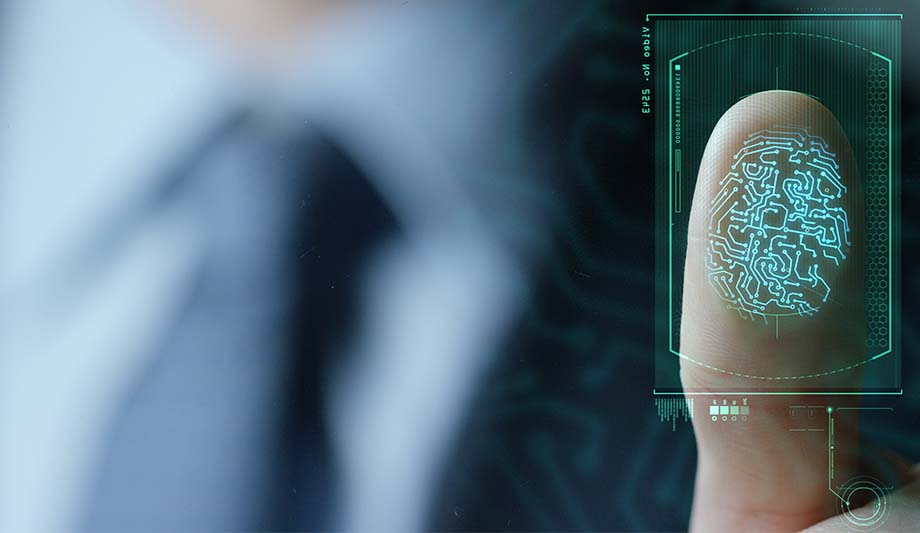
The commonly observed method of “fingerprinting” (seen on television and in hospitals/government facilities) is also known as an AFIS (an Automated Fingerprint Identification System, which uses digital imaging technology to obtain, store and analyze fingerprint data and originally used by the U.S. Federal Bureau of Investigation [FBI] in criminal cases). However, commercial biometric systems do not store/match actual images. Instead, biometric devices capture and store only a few dozen minutia points on the finger or face, apply proprietary mathematical algorithms, and convert those minutia points into binary code (i.e., a series of zeros and ones). “If you were handed a pencil and told to draw someone’s face by using 40 to 50 dots, would anyone recognize the face you drew?” Reed asks. “This is how biometrics capture, store and match templates. Only binary code is used.”
Early Adopters Of Fingerprint Readers
Some misunderstanding of biometrics stems from suboptimal experiences of early adopters of fingerprint readers for access control, says Steve Perna. “But the truth is that, in most cases, organizations didn’t try and abandon biometrics,” he says. “More likely they never adopted it due to stories they heard that impacted public perception. In other cases, higher prices dampened enthusiasm.”
However, Perna says these impediments to adoption continue to fade, as prices come down, functionality and features improve, and as biometrics become inherently mobile and can deliver benefits beyond access control, such as time-and-attendance tracking, inventory management and logical access to other applications.
Learn why leading casinos are upgrading to smarter, faster, and more compliant systems