Crime prevention through environmental design (CPTED) is an approach that integrates physical elements into community spaces to reduce crime and enhance safety.
Widely endorsed by law enforcement, CPTED has demonstrated its effectiveness in promoting security. A deeper understanding of CPTED can help optimize its implementation.
Understanding CPTED
CPTED involves crime prevention by utilizing elements of the built environment, which includes all man-made or altered spaces like buildings, roads, parks, and infrastructure.
CPTED involves crime prevention by utilizing elements of the built environment
Urban planners, architects, and property managers leverage this approach to enhance safety and deter criminal behavior. The strategy encompasses five interrelated techniques that clearly define boundaries, promote authorized use of locations, and increase visibility.
Key Strategies in CPTED
Each CPTED strategy plays a unique role in deterring crime while they are most potent when applied collectively. The fundamental strategies help communities feel safer by using the built environment strategically.
Natural Surveillance
This strategy enhances an area's safety by reducing opportunities for criminal activities. It entails designing spaces with maximum visibility, limiting hidden areas where criminal activities could occur.
Natural Access Control
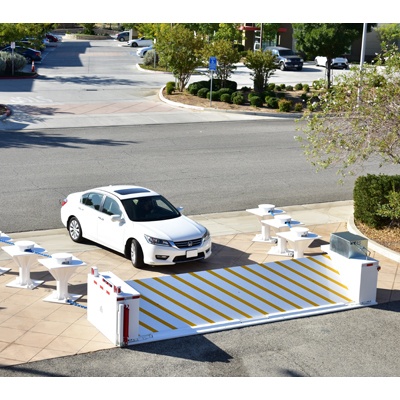
Access control strategies limit entry to designated areas, emphasizing when someone is in an unauthorized zone. For instance, pedestrian safety zones illustrate efficient access control within broader safety designs.
- Entrances and exits
- Fencing
- Gates and barricades
- Guard and ticket booths
- Landscaping
- Lighting
- Traffic barriers
Bollards also play a significant role, preventing numerous crashes daily and holding an essential position in many CPTED strategies.
Promoting and Reporting Safety
Activity Support
Promoting public activities increases visibility and safety, encouraging community involvement in deterring and reporting crime. Examples include adequate lighting, seating, scheduled activities, and proper maintenance.
Management and Maintenance
Effective CPTED management involves setting care standards to maintain spaces, indicating to potential offenders that the area is monitored and valued. This management symbolizes control and ownership, crucial for community protection.
Territorial Reinforcement
Establishing clear divisions between public and private spaces and using signs, barriers, and lights can act as natural deterrents to criminal activities by reinforcing ownership and surveillance.
Implementing CPTED Strategies
Commercial, industrial, and residential areas can benefit from implementing CPTED strategies, with many already doing so unconsciously. Key areas of implementation include:
- Parks: Proper lighting and maintenance encourage approved usage.
- Residential Developments: Features like security gates and proper lighting enhance neighborhood safety.
- Retail Spaces: Effective use of designated parking and clear operating hours guide acceptable space use.
- Schools: Controls such as crosswalks and barrier-equipped zones help maintain student and faculty safety.
- Transit Stations: Use of guard stations, gates, and clear signage enhances safety for public transport users.
By understanding CPTED, stakeholders can recognize its benefits for various public and private environments, from government facilities to residential areas.
Crime prevention through environmental design (CPTED) is an approach that incorporates physical elements to help reduce crime rates and improve safety. It has proven itself an effective strategy and is widely promoted by law enforcement. Take a closer look at what CPTED is to optimize this approach.
What is CPTED?
CPTED is a crime prevention approach that uses elements of the built environment, including all human-made or modified spaces and structures that form a community, including buildings, roads, parks, and infrastructure.
Urban planners, architects, and property managers use it to improve safety and deter crime. CPTED includes five overlapping strategies that establish clear boundaries, encourage approved use of spaces, and increase visibility.
The five strategies of CPTED explained
The key strategies included in crime prevention through environmental design use the built environment to deter unwanted activity and help community members feel safe. A closer look at CPTED strategies shows that while each plays a distinct role in preventing crime, they are most effective when they work together in an overlapping fashion.
- Natural Surveillance - Natural surveillance is a CPTED strategy that improves safety within an area by limiting opportunities for criminal activities. It involves designing activity spaces with physical features placed for maximum visibility, reducing the number of spaces a criminal could hide or conduct illicit activities.
- Natural Access Control - Access control limits who and what can enter designated areas. This CPTED strategy works by making it very obvious when someone is in an area where they shouldn’t be. Pedestrian safety zones are excellent examples of using access control as part of a comprehensive safety design.
The following types of controls are effective at channelling people and cars along intended paths:
- Entrances and exits
- Fencing
- Gates and barricades
- Guard and ticket booths
- Landscaping
- Lighting
- Traffic barriers
Bollards are another effective access control. As bollard statistics show, they help prevent up to 100 crashes per day, so it is no surprise that they are an integral part of many CPTED approaches.
Deterring and reporting crime
Activity Support - Strategies that support public activities help keep people engaged in public spaces. This improves visibility and increases safety. It also keeps the community engaged with the space, which gives them a vested interest in deterring and reporting crime. Examples of activity support include:
- Adequate lighting
- Benches or other seating
- Posted public hours
- Scheduled activities
- Site maintenance
- Walking and biking paths
It is important to note that activity support complements other CPTED strategies. Well-designed and maintained parks are more likely to attract visitors than neglected ones.
Management and Maintenance - How do barriers intersect with CPTED?
Responsible parties should establish CPTED management plans and care standards to ensure the continued upkeep of managed spaces. Management of a designated area shows would-be criminals that the area is cared for, valued, and observed. It expresses both control over and ownership of the space. Furthermore, establishing and continuing CPTED maintenance standards safeguards the interests of the surrounding community.
Territorial Reinforcement - Territoriality establishes a clear line between public and private spaces. It reinforces ownership and gives the impression that an area is being watched. Using signs, barriers, fencing, lights, and similar strategies to establish property boundaries acts as a natural deterrent to criminals.
Incorporating CPTED strategies
- Commercial, industrial, and residential spaces can all benefit from incorporating CPTED strategies. Many already use one or more without realizing it. Sectors that have widely adopted CPTED include:
- Parks: Well-lit, maintained spaces with clearly designated activity areas encourage approved use of parks, paths for walking and biking, and other public spaces.
- Residential developments: Low shrubs, security gates, beam barricades, and proper lighting improve security throughout neighborhoods and apartment complexes.
- Retail spaces: Proper maintenance, designated parking and pedestrian areas, and clearly marked hours of operation provide clear guidelines for acceptable use of retail and commercial spaces.
- Schools: Crosswalks, dedicated drop-off and pick-up zones with barriers, and access controls at entrances and exits help keep students and faculty safe in schools and universities.
- Transit stations: Clear pathways, guard stations, gates, booths, and signage all improve safety in transit stations and on public transportation.
Once users understand what CPTED is, users can see how virtually all public and private spaces, from government offices to residential homes, can benefit from implementing CPTED strategies.