Crime prevention


Northwave Cyber Security has been selected as a member of Europol's Advisory Group on Internet Security. Cyber Threat Intelligence Lead Michel Mollema will represent Northwave in the group, contributing expert insights to Europol’s European Cybercrime Centre (EC3) that can be used protect people, organizations and governments from cybercriminals. Northwave has a long-standing track record in cyber intelligence and crime prevention. As part of this ongoing collaboration, Europol representa...

At mid-year 2026, the broader economy tells a story of resilience under pressure. Conflict in the Middle East has triggered a shock to the energy supply, driving oil prices up and reigniting global inflation. However, a total downturn has been averted. Exceptional, historic levels of business investment and data center construction are providing a firm floor for growth, offsetting cooler consumer spending and keeping labor markets fundamentally stable. But how are changing economics impacting th...

SimpliSafe®, maker of award-winning smart home security systems, announces three key additions to its executive leadership team: Mike Buckley as Chief Financial Officer, Sandra Yang Scirpo as Chief Customer Officer, and Sharon Segev as Chief Administrative and Legal Officer. These strategic additions support SimpliSafe’s focus on offering innovative home security offerings, delivering peace of mind to its customers, and expanding its reach in support of its mission to make every home...

ASIS International, the world’s largest association for security management professionals, has announced its programming lineup for Global Security Exchange (GSX) 2026 with in-person and digital experiences taking place 14 – 16 September at the Georgia World Congress Center in Atlanta, GA, and via the online GSX event platform. “It has been an honor and a joy to chair the GSX 2026 Education Selection Committee and work alongside a dedicated group of security professionals,&rdq...

The Security Industry Association (SIA) has announced the agenda and speaker lineup for the 2026 Perimeter PREVENT, the premier event in perimeter security. This symposium—held June 24 in Washington, D.C., and presented by SIA with guidance from the SIA Perimeter Security Subcommittee—will gather policymakers, federal agency personnel, architects, engineers and security solution providers to engage on the critical issues related to perimeter defense for physical environments, includ...
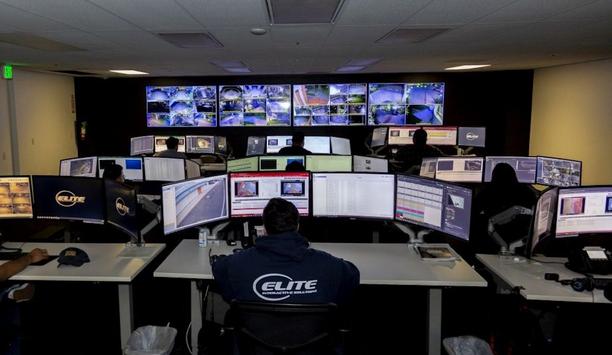
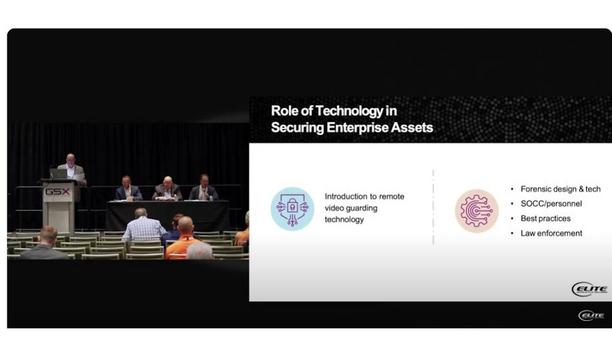
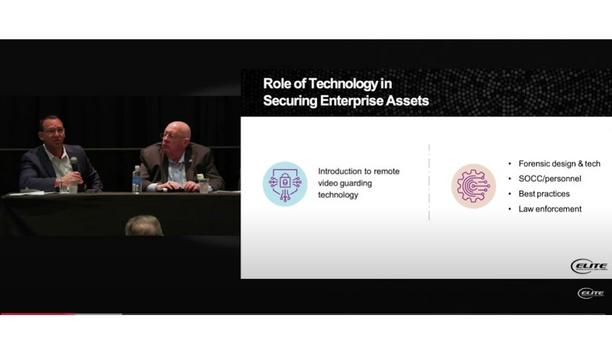
Elite Interactive Solutions, a remote video guarding pioneer using proprietary intelligence and integration to achieve proven, real-time crime prevention, announces the company has been selected The Monitoring Association’s (TMA) 2026 Monitoring Center of the Year. Elite was proclaimed winner of the security monitoring industry’s highest honor during the 20th Excellence Awards presentation, held during TMA’s annual Mid-Year Meeting. According to TMA, the Excellence Awards reco...
News

The Association of University Chief Security Officers (AUCSO), the organization for security professionals working in Higher and Further Education worldwide, announces the winners of its Annual Awards 2026, recognizing outstanding achievement across the global university security community. The awards were presented on Wednesday, 15 April 2026, at the AUCSO Gala Dinner and Awards Evening, held in the Great Hall at the University of Exeter, as part of the AUCSO Annual Conference and AGM 2026. Modern campus security Bringing together sector leaders from across the UK, Ireland, Europe, Australia, the USA and the Middle East, this year’s conference, themed ‘Excellence Shared - Value Realised’, celebrated the innovation, professionalism and dedication shaping modern campus security. The Annual Awards honor individuals and teams who have gone above and beyond in 2025, demonstrating exceptional leadership, operational excellence and a commitment to keeping campus communities safe. AUCSO security officer of the year Winner: Vicky Laskey, University of Exeter - Awarded to a Security Officer who has consistently demonstrated excellence and professionalism, going above and beyond the usual expectations of their role. Vicky Laskey was recognized for her outstanding professionalism, compassion and unwavering commitment to student wellbeing. A trusted and highly visible presence across campus, she has led student engagement initiatives and safety campaigns that help students feel informed, reassured and supported. Calm and empathetic under pressure, and committed to continuous development, she consistently goes above and beyond, setting a benchmark for frontline campus security. AUCSO security team of the year Winner: Security Team, University of Plymouth - Awarded to a Security Team whose teamwork or response to an incident has required exceptional commitment beyond normal duties, displaying courage, determination and dedication in supporting their campus community. The University of Plymouth Security Team was recognized for extraordinary courage, professionalism and resilience in the most challenging circumstances. In a life-threatening incident, a three-officer night shift responded decisively to a critically injured individual, securing the scene and delivering life-saving first aid that helped stabilise the casualty before emergency services arrived. Beyond this, the team has consistently demonstrated compassion, operational excellence and community commitment - supporting vulnerable students, responding to major incidents and embodying the very best of the profession. AUCSO security manager of the year Winner: Ahmed Mohamed, Oxford Brookes University - Awarded to a Security Manager who has introduced innovations adding measurable value to their institution, positively contributed to the wider security community, reduced security risks and demonstrated consistent leadership across their team. Ahmed Mohamed was recognized for exceptional leadership and innovation, delivering transformative impact both within Oxford Brookes University and across the wider security community. Through digital reporting systems, data-led operations and modernised training, he has enhanced the effectiveness and professionalism of his Security Service. His work to improve student safety and strengthen external partnerships has increased confidence and reduced risk, while fostering a high-performing, collaborative team culture. AUCSO initiative of the year Winner: Coventry University Protection Service - Awarded to a security team that has implemented a unique and innovative initiative delivering tangible value to both the security operation and the wider institution. Coventry University Protection Service was recognized for a high-impact, student-focused safety program that places wellbeing, engagement and crime prevention at the heart of campus life. Through twice-weekly roadshows across campus and accommodation, the team has created a visible and accessible platform for student support, working in partnership with local police and PCSOs to deliver practical, real-world safety advice. Interactive demonstrations and hands-on engagement bring key initiatives to life, ensuring messages resonate with students. The results are compelling: SafeZone registrations have increased by 40%, while alerts have risen by 90% year-on-year, reflecting stronger awareness, trust and student confidence. By combining innovation, partnership working and measurable impact, Coventry University has set a benchmark for excellence in student engagement and campus safety. Demonstrating extraordinary commitment Julie Barker, Chief Operating Officer at AUCSO, said: “These awards recognize the very best of our profession - individuals and teams who demonstrate extraordinary commitment, innovation and leadership in protecting their campus communities. This year’s winners are outstanding examples of the professionalism and dedication that define our sector, and it was a privilege to celebrate their achievements at our 42nd Anniversary Conference.” The AUCSO Annual Awards continue to highlight the critical role of security professionals in Higher Education, showcasing best practice and setting benchmarks for excellence across the international community.

Elite Interactive Solutions, the industry pioneer in remote video guarding and real-time crime prevention, has named Peter Hargittay as its new Chief Revenue Officer. He brings more than 25 years’ experience designing revenue systems that align marketing, sales, partnerships and customer success. Hargittay’s background spans branding, demand generation, enterprise sales, partner ecosystems, and post-sale organizations. As CRO for Elite, he will be responsible for all revenue-generating processes, aligning sales, marketing, customer success, and revenue operations to drive growth. Accelerating revenue performance “We are delighted to welcome Peter as CRO at a vital moment in Elite’s journey. As the company enters its next phase of growth, we are at an inflection point that demands disciplined leadership and execution, and a vision for scalable growth,” says Elite CEO Michael Zatulov. “This appointment reflects our commitment to strategically scaling the organization, strengthening our go-to-market capabilities, and accelerating revenue performance. Peter’s demonstrated success as a cross-functional operator equally adept at brand, pipeline and customer ownership will serve this mission well.” Quality management solutions Hargittay’s most recent and longest association was with Intellect, a leading provider of quality management solutions with an AI platform enabling quality and regulatory compliance teams to automate critical quality processes, such as CAPAs, audits, document control, and supplier management. His roles there included Chief Marketing Officer, VP of Business Development, SVP of Sales and Chief Customer Officer. “My approach springs from a full customer lifecycle perspective — including acquisition through retention, expansion, and advocacy. I favor an account-based experience that aligns marketing, sales, and customer success around shared account ownership to increase net revenue retention and expansion,” says Hargittay. Remote guarding industry “I am excited to apply my skills and join the winning team at Elite, whose innovative approach to crime prevention has paced the remote guarding industry and is transformative to security overall.” Hargittay spent nearly 14 years with Intellect, which included delivering record revenue growth through building data-driven systems, high-impact marketing and SDR/BDR teams, and a partner ecosystem. His other previous positions include executive roles with PeopleSupport, Aegis Ltd. and Arise Virtual Solutions. Hargittay is based in the Los Angeles area, along with his wife and two sons, ages 15 and 11.

The Life Safety Alliance (LSA), an organization committed to improving global life safety and security through best practices, networking, and collaborations, announced the inaugural class of the Life Safety Alliance Legends Program, formally establishing the highest level of recognition within the global security and life safety profession. The Life Safety Alliance is a not-for-profit organization open to all members of the security and life safety community. Acknowledging contributions The Legends Program was created to define, preserve, and uphold the profession’s most enduring contributions. It acknowledges individuals whose contributions have significantly benefited their organizations or fields. These leaders helped shape the modern practice of security, safety, and risk across sectors and generations. “From the outset, we wanted this program to reflect the full breadth of our profession,” said Michael Gips, CPP, CSyP, Life Safety Alliance president and co-chair of the Legends committee. “We evaluated dozens of nominees across physical and cybersecurity, life safety, intelligence, loss prevention, resilience, governance, investigations, and so on. Our goal is to recognize those whose influence transcended any single role or sector.” Selection of the nominees The selection of the inaugural class was thorough and carefully considered. Nominees were assessed using a structured process based on professional judgment, historical importance, and long-lasting, influential contributions to the field. From an exceptionally accomplished pool spanning disciplines, sectors, and geographies, only a select group met the threshold required for elevation to Legends status. Measure of Legend “We set out to establish the measure of a Legend, which is an order of magnitude above the top, the best, or even the most popular,” said Jonathan Perillo, Co-Chair of the Legends Committee. “Legends are the few who turn the tide of theory or practice, whose stories are carried through generations, and whose efforts are frequently invoked to inspire greatness. To capture this, we abandoned traditional measures and instead collected what truly resonates as a Legend. I’m delighted to announce that we were successful in this pursuit across all fields of the security spectrum, and we are thrilled to announce our inaugural class of Legends.” The Life Safety Alliance is honored to announce the Inaugural Life Safety Alliance Legends, listed alphabetically by last name: Marene Allison, a barrier-breaking security executive and among the first women to graduate from West Point, she pioneered the integration of physical and cybersecurity leadership at Fortune 500 corporations, setting the model for converged security functions. Steve Bellovin, an Internet security pioneer who co-invented encrypted key exchange, password-authenticated key agreement methods, and coauthored the seminal Firewalls & Internet Security: Repelling the Wily Hacker, helping define the technical foundations of modern network defense. Jason Brown, a transformative corporate security leader who advanced enterprise-wide security strategy, operational resilience, and executive engagement across global organizations. Russell J. Cancilla, a distinguished security executive and educator who elevated the professional stature of corporate security through leadership development, industry service, and standards advancement. Tim Crowe, a criminologist instrumental in the development and global adoption of Crime Prevention Through Environmental Design (CPTED), reshaping how the built environment reduces crime and enhances public safety. Sandi Davies, a driving force behind the professionalisation of frontline security, she expanded education, certification, and global engagement through her leadership of the International Foundation for Protection Officers. Whitfield Diffie, a co-creator of public-key cryptography, whose groundbreaking work on asymmetric encryption and secure key exchange fundamentally transformed global communications security and enabled modern digital commerce. Eduard Emde, a longtime international security leader and standards advocate who strengthened global collaboration, certification frameworks, and professional governance within ASIS International and across the worldwide security community. Larry Fennelly, a prolific author and educator in physical security and CPTED whose publications and instruction shaped generations of practitioners and embedded environmental design principles into mainstream security practice. Martin Gill, a criminologist, researcher, academic, and longtime editor of Security Journal who elevated evidence-based scholarship and helped bridge research and real-world security practice. Godfried Hendriks, a global security strategist and certification champion who advanced international professional standards and strengthened cross-border collaboration within the security field. Sandra Jones, a respected public- and private-sector security leader who advanced professional standards, mentorship, and the development of diverse leadership talent within the industry. Bonnie Michelman, a pioneering healthcare security executive who elevated hospital and campus safety into a strategic discipline and championed collaboration between public safety and private security. Ray O’Hara, one of the principal architects of Enterprise Security Risk Management (ESRM) and an ASIS President, he helped align security strategy with organizational objectives while advancing global standards and certification. Don W. Walker, an ASIS President and cofounder of the CSO Center who played a pivotal role in aligning corporate security with business leadership, strengthening executive skillsets, and advancing professional standards and certification. Collectively, these Legends represent the architects, stewards, and standard-bearers of modern security and life-safety practice. Their influence spans physical security, cybersecurity, risk management, governance, research, education, intelligence, and professional standards development. Future of the programme The inaugural class also lays the foundation for the program’s future. Designed as an enduring institution rather than a one-time recognition, the Legends Programme will continue to identify individuals whose careers demonstrate the same level of transformative and sustained impact. “This first class establishes the standard,” Gips added. “In the years ahead, the program will continue to recognize those whose work has shaped, and will continue to shape, how our profession protects people, information, organizations, and communities.”

LVT, the pioneer in rapidly deployable security solutions, announces a strategic partnership for License Plate Recognition (LPR) capabilities powered by Insight LPR, to be generally available in May. This advanced solution, which can be seamlessly affixed to LVT’s mobile units, is purpose-built for private-sector customers across retail, transportation, construction, property management, and commercial environments. For data privacy, LPR data is securely confined to an individual customer’s environment. Customers retain full control of their data, including the option to authorize sharing with third parties. Improving incident response LVT's LPR powered by Insight allows users to receive automated alerts in under 10 seconds when a vehicle of interest is detected on-site. Utilising high-resolution sensors effective up to 120 feet, the system captures license plate data, vehicle color, and type with 98% accuracy across diverse environmental conditions. This partnership focuses on providing security teams with precise, actionable data to improve incident response and crime prevention. “License plate recognition is one of the most effective tools to protect against repeat offenders and organized retail crime (ORC),” said George Bentinck, chief product officer at LVT. “By pairing Insight LPR’s exceptional accuracy rate with LVT’s Intelligent Site Management platform, we are giving security teams the power to move from reactive monitoring to proactive interception. This is possible while our customers retain full control of their data, including the option to authorize sharing with third parties, such as law enforcement." Inclement weather scenarios The LVT LPR Solution powered by Insight enables: Instant Hotlist Notifications: Vehicles associated with theft, fraud, or unauthorized access trigger immediate alerts the moment they're detected—giving security teams time to intervene before incidents occur. They identify, cross-reference, and alert in real-time. Proactive protection, not reactive investigation. All-Condition Reliability: High-fidelity imaging that outperforms standard CCTV in low-light, high-speed, and inclement weather scenarios. Precision: 98% accuracy rate, day or night. Actionable Evidence: Advanced search and predictive analytics transform raw scan data into prosecutable intelligence. Identify vehicle patterns across locations and generate time-stamped documentation that stands up in court. Evidence that closes cases, not just captures plates. Localised Data Control: Data collection is restricted to the individual customer’s environment. Customers maintain the right to authorize sharing, and any compilation of anonymised or aggregated data is only done to enhance ILPR’s offerings and, with customer consent, to support law enforcement efforts in accordance with CJIS-compliant security standards. Purpose-built solutions “The numbers tell the story: 70% of crimes involve a vehicle, yet 80% go unsolved because investigators lack actionable evidence. Insight LPR bridges that gap. We built our platform to do one thing exceptionally well—capture vehicle evidence that helps turn unsolved cases into closed ones, supporting our mission to make communities and businesses safer through LPR technology,” said John Nethery, chief executive officer at Insight LPR. “LVT’s mission aligns perfectly with ours, and we admire their proven success in leading security forward with purpose-built solutions. Together, we can enhance safety without compromising customer security or public trust.”

Deep Sentinel, the pioneer of AI-enhanced live-guard security surveillance, announced its integration with UniFi, giving thousands of UniFi Protect users instant access to Deep Sentinel’s real-time, human-verified crime prevention system. About UniFi UniFi, one of the world’s biggest and most recognized camera manufacturers, is now integrated with Deep Sentinel’s AI-enhanced monitoring platform. This milestone bridges trusted UniFi Protect infrastructure with Deep Sentinel’s patented live-guard technology — delivering proactive protection without replacing existing hardware. Expanding proactive protection “Deep Sentinel is driving a new era in security by uniting advanced AI with real-time live-guard intervention,” said David Selinger, CEO of Deep Sentinel. “With UniFi joining our ecosystem and giving us early access to its new API, we’re expanding proactive protection to even more customers and partners. Together, we’re transforming cameras from passive recorders into active guardians that stop threats in their tracks.” Instant upgrade, zero rip-and-replace With the new UniFi integration, customers can connect their existing UniFi Protect NVRs and compatible cameras (G5, G6, and AI series) directly to Deep Sentinel’s live monitoring hub, enabling AI-driven detection and human-verified response within seconds. This integration offers: No new hardware: Use existing UniFi Protect cameras and infrastructure Rapid deployment: Full integration in hours, not days Proactive defense: AI-powered alerts analyzed and verified by live guards Immediate ROI: Eliminate costly system replacements while gaining 24/7 active protection Marriage of reliability and innovation “We’re thrilled to be certified with Deep Sentinel’s program for UniFi cameras,” said Eli Weinkle, CEO of NXT AV, an authorized UNiFi integrator. “Our customers can now elevate their UniFi systems to enterprise-grade protection, combining the hardware they already trust with the fastest, most proactive monitoring solution in the industry. It’s the perfect marriage of reliability and innovation.” Testimonial “Deep Sentinel’s UniFi integration delivers real-time human protection intuitively, and unobtrusively,” said Chris Worthington, CEO of Personal Technology, a Deep Sentinel Partner. “It provides proactive security that makes homes and neighborhoods safer, and it does all this at a very reasonable cost using the best in-class cameras. The best feedback we've ever received from our clients in twenty years has come from their experience with Deep Sentinel." With proven crime-stopping results in verticals such as apartment buildings, retail, critical infrastructure, auto dealers/service lots, and construction sites, the integration between Deep Sentinel broadens UniFi’s ROI for millions of key businesses anywhere in the country. First access to UniFi’s API Deep Sentinel is the first security company to gain a preview of UniFi’s new API, reinforcing its leadership in third-party integration and rapid innovation, and expanding Deep Sentinel’s cloud-based focus on hardware-agnostic remote guarding delivery. This collaboration enables seamless data exchange between UniFi’s camera ecosystem and Deep Sentinel’s cloud-based live monitoring network, creating a secure, stable connection optimized for real-time guard response. Expanding an ecosystem of trusted partners In addition to UniFi / Ubiquiti, leading camera manufacturers — including Axis, Luma, Vitek, InvidTech, Hikvision, Dahua, Uniview, Tiandy, and LTS— are integrated with Deep Sentinel’s AI-enhanced live monitoring platform. These integrations provide camera manufacturers and integrators a path to recurring revenue, while offering end-users AI-enhanced, human-verified protection without the need for expensive hardware replacement. “Our mission is simple,” added Selinger. “To make every camera in the world capable of stopping a crime before it happens.”

The Security Industry Association (SIA) has announced details for Perimeter PREVENT—the premier perimeter security event. This year’s event, which examines the critical issues related to perimeter defense for physical environments, will be held on June 24 in Washington, D.C. Perimeter PREVENT—presented by SIA’s Perimeter Security Subcommittee – gathers policymakers, federal agency personnel, architects, engineers and security solution providers for a full-day conference program that offers educational presentations, lively networking opportunities and an open forum to share questions and ideas. Perimeter security topics Attendees will get access to invaluable insights on the full sphere of perimeter security topics, from physical hardening to layering detection technologies at the perimeter, with strong areas of focus including government facilities, public events and spaces, data centers, policies and regulations. “The perimeter is constantly evolving, and layered and strategic approaches to perimeter security are more needed than ever before in today’s environment,” said SIA CEO Don Erickson. “Perimeter PREVENT is an event designed to keep you up to date on the elements and technologies needed in a perimeter security strategy and how they can be applied to high-value environments like critical infrastructure, data centers, government and commercial facilities and public events.” High-value environments SIA is seeking engaging content for this year’s Perimeter PREVENT and has opened the call for speakers for the 2026 conference. Session proposals should be informative and commercial-free and explore key topics in perimeter security, such as: Physical hardening solutions, including physical barriers and gates Standards, guidelines, and widely adopted business practices Policies and regulations impacting perimeter security Stadium authority and/or professional sports organizations Data center security Crime prevention through environmental design (CPTED) applied to perimeter security Layered intrusion detection at the perimeter Entrance screening and its relationship to perimeter security Integration of multiple layers of perimeter security

Expert commentary

In today's rapidly evolving security landscape, facial recognition has become a buzzword that often triggers privacy and data protection concerns. However, many security professionals may not realize that "facial recognition" is an umbrella term encompassing various technologies, each with distinct applications and privacy implications. Let's dive into what these technologies really mean for security system resellers, integrators, and end-users. Facial recognition tech At its core, facial recognition technology re-identifies or verifies individuals based on their facial features, which are used as biometrics. However, not all biometric systems are based on unique identifying features. Some analyze general characteristics like facial hair style or other distinctive marks. Such traits, known as soft biometrics, can aid in identification but aren't unique enough to verify someone's identity uniquely. Personally identifiable information Modern systems incorporate robust safeguards, including data encryption and strict retention policies While facial recognition technology has applications ranging from access control to crime prevention to investigation, its implementation varies widely depending on specific needs. Modern systems incorporate robust safeguards, including data encryption and strict retention policies, to ensure the responsible handling of any personally identifiable information (PII). Understanding key technologies and applications Facial recognition encompasses several distinct technologies, each serving specific purposes. Here's a comprehensive breakdown of these technologies and their real-world applications. Key technologies: Face Verification (1:1): A one-to-one comparison where a person claims an identity (e.g., by showing an ID card), and the system verifies whether the face matches the provided identity. Example: In airports, face verification is used for automated passport control. When a traveler approaches a gate, their face is scanned and compared to the photo stored in the government database. If the face matches, the traveler is allowed through the gate without manual checks. Face Identification (1 to many): A one-to-many comparison, where a face captured by a system is compared to a database of multiple faces and facial features to identify the person. This process is often used in security or surveillance contexts. Example: In the case of a missing child at an airport, a system could scan the faces of all passengers passing through checkpoints and compare them to a photo of the child in a database. If a match is found, it triggers an alert. Face Re-identification (Many to Many): Many-to-many comparisons where multiple faces are compared to multiple other faces. This is typically used to track a person’s movement anonymously across different areas by matching their facial images at different checkpoints, without knowing their identity. Example: In a retail environment, facial re-identification might be used to track how long an anonymous person spends moving from one section of a store to another by re-identifying their face as they enter and leave different camera views. Facial recognition can be used both for real-time and offline applications. Real-Time Facial Recognition: Real-time facial recognition refers to the immediate processing of a live video feed, comparing faces to a database to generate instant alerts when a match is found. Example: At large public events like sports stadiums, real-time facial recognition might be used to detect banned individuals (e.g., known hooligans) as they attempt to enter. Post-Event (Recorded) Facial Recognition: This refers to analyzing video recordings after the event has occurred, rather than in real-time. Facial recognition is applied to recorded data to identify or track individuals. Example: After a crime, investigators could use facial recognition software on recorded video from security cameras to identify suspects by matching their faces to known databases. These definitions cover various aspects of facial recognition technology, its different applications, and how biometrics are used for identification and tracking purposes. Biometrics: Biometric technologies use a person’s distinguishing physical characteristics, such as their face, fingerprint, or iris, to identify them. Example: Fingerprint or face scanning for unlocking a phone or using iris recognition for secure entry at high-security buildings like data centers. Hard Biometrics: Hard biometrics refer to physical characteristics that are sufficiently unique enough to be used for identifying a specific individual, such as a face, fingerprint, or iris. Example: Using iris recognition at airport security checkpoints to confirm the identity of a traveler. Soft Biometrics: Soft biometrics (personal features) include general attributes like height or body shape, which are not unique enough to identify a person on their own but can help narrow down re-identification when combined with other information. Example: Using height and body shape to help identify a suspect in a camera scene when facial features alone are unreliable. Appearance Similarity: This refers to distinguishing between people based on their appearance (e.g., clothing, accessories) rather than biometric features. It’s often used for accelerated investigation and statistical analysis rather than identification. Example: A retail store may track customers based on the clothes they are wearing to monitor how long they stay in the store, without tracking their faces or personal details. Liveness Detection: A method used to determine whether the subject in front of a facial recognition system is a live human being and not a photo or a video recording. Example: In some mobile payment systems, facial recognition requires users to blink or move their head slightly to ensure they are a live person and not someone trying to use a photo for authentication. Mathematical Representation: Non-reversible mathematical representations are lists of numbers based on a person's facial image or appearance based on clothing. These numbers represent characteristics but cannot be easily used to recreate the face. Example: When an organization stores only the mathematical representations from a face rather than an actual image, even if the data is stolen, it is nearly impossible to recreate the person’s face or use the data with another system. Privacy and security considerations Modern facial recognition systems prioritize privacy through various protective measures, moving far beyond the basic security protocols of the past. Solutions integrate multiple layers of protection designed to safeguard personal data while maintaining system effectiveness. These sophisticated privacy controls work in concert to ensure responsible data handling and comply with evolving security standards. Key protective measures include: Biometric template isolation that keeps facial recognition templates separate from other personal data, with dedicated secure storage environments. Template encryption frameworks specifically designed for biometric data, using industry-standard protocols that protect facial features during both processing and storage. Biometric data anonymization that converts facial features into non-reversible mathematical representations – into numbers - prevents the reconstruction of original face images. Cascading deletion protocols automatically remove both raw facial data and derived biometric templates after their authorized use period. Segmented access controls that separate facial recognition administrative functions (like enrollment and template management) from regular system operation. Privacy standards The key is selecting the right tool for each application and ensuring that personal data is collected The security industry continues to evolve, finding innovative ways to balance effective surveillance with privacy protection. By understanding this comprehensive range of technologies, security professionals can better serve their clients with solutions that address specific needs while maintaining appropriate privacy standards. The key is selecting the right tool for each application and ensuring that personal data is collected only when necessary and protected when it is not. Statistical analysis and pattern recognition The variety of facial recognition applications demonstrates that not all systems require storing personal information. Many modern solutions focus on statistical analysis and pattern recognition rather than individual identification, offering powerful security benefits while respecting privacy concerns. This balance of capability and responsibility represents the future of video security technology.

As urban populations grow and security challenges evolve, major Californian cities like Los Angeles, San Francisco and San Diego have increasingly turned to advanced surveillance systems to enhance public safety. Surveillance infrastructure Between 2022 and 2024, these cities have made significant strides in upgrading their surveillance infrastructure, driven by concerns over crime, public safety, and the need for more sophisticated emergency response systems. This article explores how California's urban areas are improving surveillance technologies and practices, with a focus on citywide initiatives, partnerships with technology firms, and the integration of AI-driven systems. Introduction of smart city surveillance The push toward smart city technology has reshaped the security landscape in California The push toward smart city technology has reshaped the security landscape in California. With the state being home to some of the world's most innovative technology firms, cities such as Los Angeles (LA), San Francisco, and San Diego are leveraging this expertise to develop and implement advanced surveillance systems. Citywide surveillance initiatives Since 2022, the state has seen an increase in citywide surveillance initiatives aimed at addressing rising crime rates, enhancing traffic management, and improving emergency response. These systems include AI-enhanced video analytics, high-definition cameras, and real-time monitoring centers, helping law enforcement track and respond to incidents more efficiently. Key surveillance developments across Californian cities 1. Los Angeles: AI and Facial Recognition Integration Los Angeles has led the way in deploying state-of-the-art surveillance systems, particularly in high-crime areas and transportation hubs. In 2023, the Los Angeles Police Department (LAPD) expanded its use of artificial intelligence (AI) in crime prevention. The department integrated AI-enhanced video analytics with its existing network of over 30,000 surveillance cameras throughout the city, a move designed to improve real-time crime detection and automate the identification of suspicious activity. Privacy law compliance The city government has enacted measures to restrict the application of facial recognition to high-priority cases Facial recognition technology has also been a controversial but increasingly used tool in the city’s surveillance strategy. While privacy concerns remain, LA has implemented strict regulations to ensure that this technology is used in compliance with privacy laws. In response to public concerns, the city government has enacted measures to restrict the application of facial recognition to high-priority cases such as locating missing persons or identifying known offenders. According to a 2023 Los Angeles Times report, these technologies have helped reduce violent crime in areas where the systems are deployed, with a notable 15% reduction in crime rates in Downtown LA. 2. San Francisco: Data-Driven Crime Prevention San Francisco, a tech hub, has similarly embraced advanced surveillance systems, with a focus on predictive policing. The city's law enforcement agencies have adopted data-driven approaches that rely on vast amounts of data collected through surveillance cameras and other sensors placed around the city. Pilot programme In 2022, the San Francisco Police Department (SFPD) introduced a pilot program that integrated predictive analytics with its citywide surveillance system. By analyzing patterns of criminal activity, the system can forecast potential hotspots and allocate resources more effectively. Although controversial due to concerns over profiling and civil liberties, the system has been credited with helping police prevent several large-scale crimes. Transparency in the use of surveillance data Measures include annual audits and public reporting, ensuring that the system adheres to standards Moreover, the city has implemented stringent oversight measures to ensure transparency in the use of surveillance data. This includes annual audits and public reporting, ensuring that the system adheres to legal and ethical standards. A 2023 report from The San Francisco Chronicle indicated that this initiative has led to a 10% improvement in response times to major incidents, particularly in high-density areas like the Financial District. 3. San Diego: Smart Traffic and Public Safety Surveillance San Diego has also taken significant steps to upgrade its urban surveillance capabilities. One of the key focuses of the city has been integrating surveillance systems into its transportation infrastructure. The city’s Smart Streetlights program, which began as a traffic monitoring initiative, was expanded in 2022 to include surveillance capabilities aimed at improving public safety. Smart Streetlights programme Under this program, thousands of streetlights equipped with cameras and sensors have been installed throughout San Diego. These lights not only monitor traffic conditions but also detect suspicious activities, accidents, and emergencies. The data collected is transmitted in real-time to the city’s public safety command center, where law enforcement can respond to incidents more quickly. A 2023 evaluation by the San Diego Union-Tribune revealed that the Smart Streetlights program had helped reduce traffic-related accidents by 12% and had become a vital tool in aiding crime investigations. Cybersecurity measures All data collected through its surveillance network is secure from potential breaches or unauthorized access Additionally, San Diego has focused on enhancing its cybersecurity measures to protect the integrity of its surveillance data. The city government partnered with local cybersecurity firms to ensure that all data collected through its surveillance network is secure from potential breaches or unauthorized access. Key technologies driving city surveillance in California The success of these surveillance initiatives can be attributed to the rapid advancement of several key technologies, which have transformed traditional security systems into sophisticated, AI-driven solutions. 1. AI-Powered Video Analytics AI-powered video analytics is at the forefront of city surveillance efforts in California. This technology enables the automatic detection of unusual patterns or activities, significantly enhancing the ability of law enforcement agencies to identify potential threats in real time. AI systems can analyze vast amounts of video footage quickly, reducing the need for manual monitoring. 2. Facial Recognition Technology Despite its controversial nature, facial recognition technology has been adopted in several Californian cities for high-priority security applications. While cities like San Francisco have restricted its use, other cities such as Los Angeles have integrated it into their surveillance networks under strict legal frameworks. 3. Predictive Analytics This technology allows police departments to focus their resources more effectively by identifying potential hotspots Predictive analytics, used prominently in San Francisco, relies on data collected from various surveillance systems to predict potential criminal activity. This technology allows police departments to focus their resources more effectively by identifying potential hotspots based on past crime patterns. 4. Smart Sensors and IoT Integration Cities like San Diego have embraced the Internet of Things (IoT) by embedding smart sensors into urban infrastructure. These sensors, connected to central monitoring systems, help cities track everything from traffic conditions to air quality. They also play a crucial role in public safety by identifying anomalies and triggering alerts for law enforcement. Challenges and controversies While the benefits of enhanced surveillance are clear, Californian cities face several challenges in the implementation of these technologies. 1. Privacy Concerns The increased use of surveillance technologies, particularly AI and facial recognition, has raised significant privacy concerns. Advocacy groups have called for stricter regulations to prevent misuse and protect individual privacy rights. In response, cities like San Francisco and Los Angeles have implemented oversight committees and enacted laws to govern the use of these technologies. 2. Data Security The risk of cyberattacks targeting sensitive data has prompted cities to invest in robust cybersecurity As cities collect vast amounts of surveillance data, ensuring its security is a major challenge. The risk of cyberattacks targeting sensitive data has prompted cities to invest in robust cybersecurity measures. San Diego's partnership with local tech firms to secure its surveillance infrastructure is an example of proactive steps being taken to address this issue. 3. Balancing Surveillance and Civil Liberties Striking a balance between effective surveillance and the protection of civil liberties continues to be a contentious issue. Critics argue that predictive policing and AI-driven surveillance systems can lead to biased decision-making and discriminatory practices. California cities have responded by introducing transparency measures, including public audits and open-data initiatives, to maintain public trust. California Urban Surveillance: A Model Worth Emulating The last couple of years have seen Californian cities making significant progress in upgrading their surveillance and security systems. By integrating AI, predictive analytics, and IoT technologies into their urban infrastructures, cities like Los Angeles, San Francisco, and San Diego are setting new standards for public safety and crime prevention. However, as these technologies continue to evolve, cities must also address the ethical and legal challenges they present, particularly in the areas of privacy and data security. With careful planning and regulation, California’s approach to urban surveillance could serve as a model for other cities worldwide.

The European Union’s GDPR (General Data Protection Regulation) framework represents some of the toughest and most secure privacy laws in the world. Their creation signaled the EU’s dedication to individual privacy rights and generated new standards and requirements for an organization inside or outside of the EU wanting to do business in the region. This privacy stance raises an interesting question: to what extent (if any) will France be utilizing AI-assisted security and biometrics - at the upcoming Paris Summer Olympic Games? AI-assisted security systems As France prepares to host this global event, certain AI-assisted security systems like algorithmic video monitoring have been tested and are planned to be in use. The country also passed a law with a legal framework for addressing provisions of hosting the Games in their country, Law No. 2023-380. These technologies will support the police and security efforts to detect sudden crowd movements, irregular vehicle, and pedestrian movements, abandoned objects, people lying on the ground, and more, any of which could indicate an attack. Local connectivity One recent French poll found that an overwhelming number of respondents support the use of smart cameras Such technologies, which can be connected directly to localized command centers and police departments, provide an opportunity to prevent deadly incidents like the bombing at the 1996 Summer Olympics in Atlanta, GA. There are signs that citizens of the EU are becoming more receptive to such measures, with one recent French poll finding that an overwhelming number of respondents (89 percent) support the use of smart cameras in stadiums for this purpose. Biometric technology The general public and private use of biometric technology (face matching, face liveness, and other biometric modalities), on the other hand, continues to run into challenges with adoption in this privacy-focused region. For the most part, laws ban facial recognition, permitting its use only once someone has been convicted or is suspected of having committed a serious crime. Limitations of video surveillance Limiting the utility of biometrics to only video surveillance for an event of the Paris Olympics’ magnitude is not the best approach. The ability to quickly identify or de-identify possible suspects from regular attendees greatly strengthens the activities of the police and helps protect the rights of regular attendees. Consider the example of New York City detectives using facial recognition to identify a man who, in 2019, left a pair of potential bombs in the Fulton Street subway station. Benefits of facial recognition technology Many believe that the use of facial recognition could have expedited and solved the Boston Marathon bombing tragedy With facial recognition technology, it took only one hour to identify the suspect - a process that previously would have taken several hours or even days, leaving the possibility of further damage unresolved. Citing yet another example, many believe that the use of facial recognition could have expedited and solved the Boston Marathon bombing tragedy much sooner and more efficiently, aiding investigators who reportedly had to sift through 120,000 photos and nearly 13,000 videos before identifying the perpetrator. Need for real-time video With an estimated 16 million visitors expected to descend upon France for the Games - and an environment that is harder to protect from bad actors - is limiting the use of biometrics to video surveillance the most effective? In our minds, in certain high-urgency cases, such as tracking kidnapping cases or possible terrorism activity, it should be permissible for facial recognition to be applied to recorded video in real-time and without delay. Public safety Beyond this obvious good that biometrics can bring from a public safety perspective, there are other ways that biometrics can be woven into the fabric of the Summer Olympics to support a faster, more enjoyable experience for all. Consider queue management. In a few weeks, an estimated 2.3 to 3.1 million ticket holders will form lines to access Olympic events. Fingerprint scanning technology People could pass through lines in mere fractions of a second, versus having to fumble for a paper ticket If fingerprints were captured at the point of ticket purchase and fingerprint scanning technologies made available on-site, people could pass through lines in mere fractions of a second, versus having to fumble for a paper ticket that may be torn or damaged, or an e-ticket on a phone with a dead battery. This would speed up the processing of queues tremendously. Olympics-focused gambling activity Another area where biometrics can be beneficial is in Olympics-focused gambling activity, which is expected to gain steam as the Games get underway. Biometrics can be used to match facial images with legal documentation for age verification, and then combined with geofencing to ensure gambling participants are of legal age, depending on where they are physically based. Biometrics also makes it possible to identify, beyond the shadow of a doubt, all of the activities of particular individuals, which can help track nefarious activities like money laundering. Evolution of privacy and security We believe biometrics can be a force for major good in our society and around various facets of the upcoming Paris Olympics, most notably public safety. It will be interesting to watch both the 2024 Summer Olympics and the ongoing evolution of privacy and security laws and practices in France and the European Union.
Security beat

Clean, safe mass transit systems benefit everyone. Today’s transit operators face tremendous challenges, including declining revenue due to work-from-home policies, concerns about disease prevention, and high crime environments. Among these concerns, difficulty recruiting and retaining police resources has been exacerbated by the ongoing mental health crisis that disproportionately impacts public transportation networks. Mass transit systems Safe cities require an operational environment where people feel comfortable on mass transit. Sustainable cities are built upon the growth of mass transit systems. Safe cities and mass transit go hand-in-hand. The safety of an urban city is intrinsically linked to the safety of its mass transit systems. Safe cities require an operational environment where people feel comfortable on mass transit For additional insights into the security of transit systems, we spoke with Angela Osborne, Associate Vice President of Risk and Emergency Management Solutions at Guidepost Solutions, who specializes in emergency management planning, security risk assessments, and physical security assessments. Q: How did the COVID pandemic impact the security of transit systems? Angela Osborne: The pandemic had a profound impact on transit system security. Transit systems are already highly susceptible to crime prevention through environmental design (CTPED) issues. Facilities with poor maintenance, lack of active monitoring or incidence response, and low foot traffic all contribute to CTPED issues, and the pandemic only aggravated this. Many regular commuters began remote work, thus leading to less use of transit facilities. Transit centers experienced an uptick in individuals engaging in drug activity, encampments, encounters with mentally disturbed persons, and opportunistic crime. As a result, individuals who maintained their commute became fearful due to safety and public health concerns. Q: How do millions of employees returning to work (after working at home, for example) change the transit security challenges? This has become a reason why individuals are resistant to returning to working onsite Osborne: While employees returning to work has increased foot traffic and the use of transit has provided positive CPTED elements in terms of having additional eyes and ears around, many individuals are stepping back into a risk environment that has significantly changed since these systems were last widely used. Due to the increase of illegal behavior in transit facilities, criminality has surged across numerous urban areas. Many returning transit users were not prepared to face these changes. This has become a reason why individuals are resistant to returning to working onsite. Q: What role can employers play in keeping commuters safe as they return to the office? Osborne: Organizations need to provide security awareness training focused on transit. At a minimum, they should share safety resources provided by transit authorities. In addition, harassment on transit systems is a persistent issue that should not be overlooked. Organizations need to provide security awareness training focused on transit Organizations cannot assume that everyone is familiar with these elements, taking into consideration that some individuals began employment at the organization during the pandemic or are recent graduates. Others may not have had to navigate transportation to the office in years. If an organization is requiring staff to come to an office, the organization should fulfill its duty by providing training and resources. Q: What other current trends are impacting transit security -- for better or for worse? Osborne: Transit systems are impacted by many serious trends. Transit is a target for terrorists and saboteurs due to the trends of cybersecurity attacks and active assailant targeting. We recently saw how a cyber sabotage event crippled train operations in Germany. Whether the threat actor is a nation-state or non-state actor, many systems have significant cybersecurity vulnerabilities. As more individuals return to the office, more opportunities for targeting arise. In terms of physical threats, most transit systems are simply not equipped to conduct weapons screenings and have difficulty deterring weapons due to legal regulations. Q: What is the biggest missed opportunity when it comes to transit security? By incorporating AI features, systems can leverage an exceptions-based alerting system Osborne: The biggest missed opportunity is leveraging artificial intelligence (AI) advancements for video surveillance. We tend to find that transit systems have a lot of cameras, but systems are rarely monitoring all cameras in real-time due to the high number of cameras present. By incorporating AI features, systems can leverage an exceptions-based alerting system. Many existing cameras have some form of analytics present that can be leveraged to indicate a line cross and alert on motion; however, AI allows for a greater range of options to alert operators to issues. Q: What is the role of technology to ensure a secure transit system? How well does technology, in general, address the need? Osborne: Technology is an important element in securing a transit system. The current challenge is that the use of technology systems is used reactively rather than proactively. For instance, a video surveillance system is usually leveraged after an incident has taken place. Integrating access control systems, intrusion detection, and alarms, and video surveillance can provide a much more proactive approach leading to faster detection or system alerts, enabling a safer and more accessible response. Technology can only accomplish this when paired with a response mechanism. Q: How will the practice and impact of transit security change in the next 10 years? One of the big factors will be the ability to recruit and retain transit police or supporting law enforcement Osborne: Most transit systems will need to adapt to a hybrid work approach to right-size their operations and consider greater consolidation to make security resources more sustainable. One of the big factors will be the ability to recruit and retain transit police or supporting law enforcement. This is a challenge for many urban departments and could continue to have ripple effects for mass transit. As more individuals use mass transit and return to some level of pre-pandemic life, people are likely to feel more comfortable on mass transit (pending no follow-on pandemics) with these safeguards in place. Q: What else do transit security professionals need to know? Osborne: I encourage all transit security systems to conduct a threat, risk, and vulnerability assessment to better understand the risk environment. Data is generated across these systems; however, it is often not being collected and leveraged to its fullest capacity to enable informed security and safety decisions. I would also recommend that new transit systems consider full barriers to prevent individuals from deliberately jumping or accidentally falling onto tracks. Although retrofitting stations to include this is difficult, new build stations offer a good opportunity to incorporate safe and secure design from the start.

Shoplifting is often viewed as petty theft by individuals, but that is not always the case. Overall, shoplifting is becoming more sophisticated and coordinated. Sometimes, retail crimes are strategic and expertly choreographed. Every step is carefully thought out — from the brand to the location to the items that are taken. Shoplifting, a major safety concern Also, the violence that accompanies these events is rising. Shoppers are rightly concerned about their safety while shopping, and the brand reputations of retailers are under threat. Traditional ‘shoplifting’ has two major differences, when compared to organized retail crime (ORC). The differences are numbers and motivation. ORC consists of groups working together to monetize theft, very different than an individual taking an item they need. Rise in organized retail crimes (ORC) ORC groups take in-demand items that they can resell for a profit, either online or at a physical location ORC groups take in-demand items that they can resell for a profit, either online or at a physical location. Also, ORC attacks are not random - they come with a high level of strategic thinking. “Armed with the right tools, retailers can identify ORC patterns that allow them to potentially anticipate and take steps to mitigate future events,” said Craig Szklany, the Vice President and Product General Manager - Loss Prevention & Liability at Sensormatic Solutions. Although ORC was rising before 2020, the COVID-19 pandemic and its impact on people’s lives and livelihoods accelerated the trend. Economy impacts shoplifting The economy also impacts shoplifting. “When consumers have less money to spend, they are more likely to steal necessities,” said Craig Szklany, adding “Keeping food on the table or finding an alternate source of income to pay the mortgage can be powerful motivators, and some individuals turn to retail crime to keep up.” One tool to fight shoplifting is analytics, which can be used to determine where shrink is occurring. Craig Szklany continues, “Understanding where crimes take place helps retailers make strategic decisions about where to place their loss prevention efforts.” Loss prevention systems with artificial intelligence (AI) Some of these systems are equipped with artificial intelligence (AI) that can identify ‘red’ and ‘green’ shoppers (thieves versus well-intentioned customers), as they move throughout the store, so retailers can respond proactively to potential threats. With enough data on these patterns, systems can alert retailers of at-risk locations" “Widespread use of these technologies can also help track ORC groups, as they move around regions or countries,” said Craig Szklany, adding “With enough data on these patterns, systems can alert retailers of at-risk locations.” He continues, “The increased use of scan-and-go and other forms of self-service checkout has made it easier for consumers to steal. Implementation of these systems has been one of the biggest factors in increased shrink for retailers.” Store visibility technology “The purpose of scan-and-go is to provide a seamless shopping experience for consumers, with smoother checkout and to help retailers reduce the need for employees,” stated Craig Szklany, adding “However, with increased theft, retailers need some form of monitoring at these sections.” He continues, “With store visibility technology and AI, retailers can both monitor self-checkout for theft, while also gathering insights that enable them to better identify and predict theft at these checkouts.” Intelligence-led loss prevention technology Craig Szklany adds, “Intelligence-led loss prevention technology provides a huge return on investment (ROI). Traditionally, items that left the store were as good as gone. With RFID and smart-exit technology, that is no longer the case.” These systems allow retailers to quantify theft events and include data on what was stolen and how much it cost. With that information, retailers can take a proactive approach to theft prevention, by providing enhanced evidence packages to law enforcement, which increases the chances of the items being returned to stores. Challenge of shift to the Internet of Things (IoT) The biggest change in retail technology in the last five years is the shift to the Internet of Things (IoT) The biggest change in retail technology in the last five years is the shift to the Internet of Things (IoT) and Store Visibility technology. Stores outfitted with integrated tags, pedestals, and AI-enabled video cameras can be connected holistically, so that retailers have a clearer insight into the thieves’ journeys in real-time. That data helps prevent future theft. These technologies provide a more accurate look into what exactly went missing, when, and where, which allows retailers to respond to shoplifting, in a way that they had not been possible in the past. Modern loss prevention technologies offer flexibility “The great thing about modern loss prevention technologies is that they’re flexible,” stated Craig Szklany, adding “The same system that tracks ORC events can provide insight into energy use, floor optimization, customer experience, and more.” RFID tags allow retailers to track inventory at the item level, so they are better prepared to make decisions about stocking and promotions. Computer-vision-based AI (artificial intelligence) that identifies ‘red’ and ‘green’ shoppers can also track customer sentiments and demographics, to enable retailers to offer special discounts and enhanced customer service, in order to improve customer experiences and establish loyalty. Benefits of video loss prevention technologies Ahead of busy shopping seasons, many retailers hire extra employees to serve as physical deterrents against theft, but labor shortages may take this practice out of reach this year. Video loss prevention technologies can reinforce retailers’ workforce, allowing them to be proactive against theft without drawing associates from their main goal: helping customers.

Technology is driving new opportunities in the security industry. Innovation trends include artificial intelligence (AI), edge-based systems, mobile systems, a greater focus on software, and efforts to simplify operation of security systems, even as capabilities become more complex. ISC West 2022 reflected these changing trends. “In addition to emphasizing technology innovation, ISC West also reflected an industry that is resilient, dedicated and passionate,” said Mary Beth Shaughnessy, the Event Director of ISC Security Events. ISC West 2022 “Almost 12,000 dealers, installers, integrators, end users and consultants reconnected at ISC West 2022, and there were nearly 20,000 total industry professionals in attendance (including manufacturers),” adds Mary Beth Shaughnessy. The 550 exhibitors and brands on display reflected an industry that has come through the COVID-19 pandemic in better shape than ever, poised for even greater success in the years ahead. Turning video and access control into knowledge Deployment of AI to ‘watch video’ can inform users of what’s happening in real-time Motorola Solutions emphasized several themes that were heard repeatedly throughout the show. “One trend is fulfilling the need to turn video and access control into sources of knowledge, inside the enterprise,” said John Kedzierzski, Motorola Solutions’ Senior Vice President of Video Security and Access Control. Deployment of AI to ‘watch video’ can inform users of what’s happening in real-time, while monitoring access control yields the equivalent of an operating system inside a building. Using the Cloud offers consumer ease-of-use to systems The second trend listed by Motorola Solutions is working to bring the consumer ease-of-use experience into enterprise security solution applications. Professional security systems were previously complicated to buy, install, manage and upgrade. However, using the Cloud, even distributed enterprises can bring consumer ease-of-use to systems, from improving the out-of-box installation experience to boosting the ability to manage the system. Transition to ‘mobile first’ interfaces The third trend emphasized by Motorola Solutions is transition to ‘mobile first’ interfaces, reflecting the need for busy security executives to be on-the-go, but with full access to their systems, without being chained to their desks. Since the last springtime ISC West show in 2019, Motorola Solutions has grown rapidly, both organically and through acquisition of IndigoVision, Pelco, Openpath, Envysion, and Ava Security. Cloud-based Orchestrate system Integration is simple through a ‘drag-and-drop’ approach that doesn’t involve writing code In addition, the company is making it easier to integrate video and access control systems with Motorola’s radio systems, typically carried by security guards. The cloud-based Orchestrate system translates ‘events’ from access control and video, to trigger notifications on a mobile radio. Integration is simple through a ‘drag-and-drop’ approach that doesn’t involve writing code. Simplifying implementation of AI Artificial Intelligence (AI) has traditionally been associated with the use of large servers or even intelligence in the Cloud. Several exhibitors at ISC West helped to change that misconception. For example, Oosto offers a simpler and more economical approach. They supply edge appliances for AI. The purpose-built Vision AI appliance, a small box, puts intelligence at the ‘near edge’, by connecting to up to five cameras. Easy and dependable ‘failover’ ensures redundancy without a big investment, and the system can work with any IP camera, including an end user’s installed base of cameras. Oosto’s TCO (total cost of ownership) calculator Oosto’s TCO (total cost of ownership) calculator spells out how much a customer can save versus using a big server, including lower costs such and power and cooling. AI was probably the biggest buzzword at ISC West, but there was also emphasis on the practical results of applying AI to physical security. Artificial Intelligence (AI) - the biggest buzzword at ISC West I believe our purpose is to bring buzzwords, like Cloud and AI together in a way that is useful to end-users" “What surprises me (at the show) is that there is a lot of generic marketing of AI, but we are trying to step back from our analytics and look at applications that serve certain end-users,” said Jeff Corrall, Vice President - Product Management at March Networks, adding “As an industry, we are still at the stage of AI as a buzzword.” Jeff Corrall further said, “I believe our purpose is to bring buzzwords, like Cloud and AI together in a way that is useful to end-users. We have to live with the buzzwords, but what we really want is to apply them. That creates a stickiness with the end-user — when high technology is making a difference.” March Networks Labs address specific end-user problems and then apply their systems to provide a solution. Jeff Corrall adds, “A lot of AI is responding to what the customer is asking for, and we are stepping back and making sure the end-user will use it on a consistent basis.” ‘Edge versus cloud’ was a common theme at ISC West Edge versus Cloud ‘Edge versus cloud’ was a common theme at ISC West, pondering where in a system the ‘intelligence’, such as AI and machine learning, as well as other functionality, should reside. Among the companies addressing the quandary was Axis Communications, which focused on the issue using a racing theme at their presentation to the industry press. The winner of the ‘race?’ - The combination of both approaches working together as a team, of course. AXIS Speed Monitor on exhibit One introduction at the show was the AXIS Speed Monitor, a speed detection app available using ACAP Axis Communications also highlighted the deep learning analytics of the ARPEC 8 camera chip (introduced during the COVID-19 pandemic), which will be deployed across their camera line. One introduction at the show was the AXIS Speed Monitor, a speed detection app available using ACAP (Axis Camera Application Platform), the capability to load ‘apps’ onto camera chips at the edge. They also introduced the D4100-E Network strobe siren (a smart edge device), the Audio Manager Pro (a cloud-based software system enabling zoning and callouts for specific areas in a building), the W101 body worn cameras with GPS capabilities, and a Barcode Reader for doorstop applications (another ACAP app). ‘App Store’ approach to expanding applications Azena is at the center of expanding applications at the edge, promoting new applications through an ‘App Store’ approach that sells software apps that can be loaded onto cameras that are equipped with Azena’s operating system. In the last couple of years, the company (formerly known as Security and Safety Things) has expanded its offerings. There are currently 108 apps in the store from 30 to 40 app developers. There are 14 camera models (from six manufacturers) that are commercially available and run their operating system. The newest camera is a fisheye model from Vivotek. “What we have seen is that a lot of the use cases are pretty unique,” said Fabio Marti, Vice President - Marketing for Azena. Two examples are an application that monitors a flame to ensure it is burning cleanly (no smoke). Another system monitors nets covering fish farms to avoid birds getting tangled up in the nets. Fabio Marti said “A challenge is to find new business avenues for integrators. Everybody is not eager to look beyond their comfort zone.” Focusing on software to ensure user experience Software systems are one of the major focal points for innovation in security systems Software systems are one of the major focal points for innovation in security systems and Verkada is focusing on how software innovation can improve systems. “For decades, innovation was on the hardware front,” said Filip Kaliszan, Verkada’s Founder and Chief Executive Officer (CEO), adding “We saw an opportunity for more innovation on the software side. The customer experience revolves around software.” Ensuring an end-to-end experience “We want to guarantee an end-to-end experience,” adds Filip Kaliszan. As a new company with a ‘hybrid cloud’ approach, Verkada focused on appealing to end users to convince them of the value proposition. Once an end user was convinced, Verkada brought in an integrator partner to deliver the solution. In effect, Verkada finds demand and brings that demand to the integrator. Software-centric operation of a modern building Verkada is broadly focused on ‘software-centric operation of a modern building.’ After starting out in video, Verkada has since expanded into systems for access control, alarm systems, and other categories. They use a combination of third-party hardware and equipment that is custom designed to work seamlessly with their software systems. Verkada’s end goal is to put the various systems together into a platform. They will continue building each product category, which will eventually be unified into ‘the operating system for the building of the future.’
Case studies

DeterTech, the official site security partner of Brentford FC, is proud to support an accredited Safe Haven established by the club at Gtech Community Stadium, reinforcing both organizations’ commitment to community safety and wellbeing. Located in Brentford FC’s west stand security hub on Lionel Road South, it will provide support 24 hours a day, seven days a week, 365 days a year. It will be managed by trained security staff and is open to any member of the public who feels vulnerable or needs help. Contacting emergency services Safe Havens are dedicated spaces of support that help people with their onward journey by providing various forms of assistance, such as contacting emergency services, phone charging facilities, calling a taxi, or reaching friends and family. Accredited by the Safer Business Network, shops, cafes, pubs, libraries, and other venues can also become a registered Safe Haven. “Our purpose at DeterTech is always to bring greater peace of mind to people and communities, every day. The Safe Haven campaign is one of many powerful examples of how we put that into action,” said Sarah Craig, Chief Marketing Officer at DeterTech. Various forms of assistance Brentford’s chief executive Jon Varney said: “We are a club that sits in the heart of the community and it is vital that we are able to support our fans and those living in the local area. In creating a Safe Haven space at our stadium, we are ensuring there is help available for anyone at any time of day.” “This builds on the wide-ranging work we are doing with fans and partners as part of our continued commitment to create inclusive and safer environments for women and girls, not just on a matchday but everyday.” Crime prevention sessions As the official site security partner of Brentford FC, this initiative is another way for DeterTech to assist Brentford FC’s commitment to fan safety and community wellbeing, following other events such as crime prevention sessions and free bike marking for fans on matchdays. Drawing upon DeterTech’s experience in risk management and deterrent technologies, DeterTech will support the Safe Haven team with resources and guidance to help Brentford FC deliver a safe and inclusive experience for all.
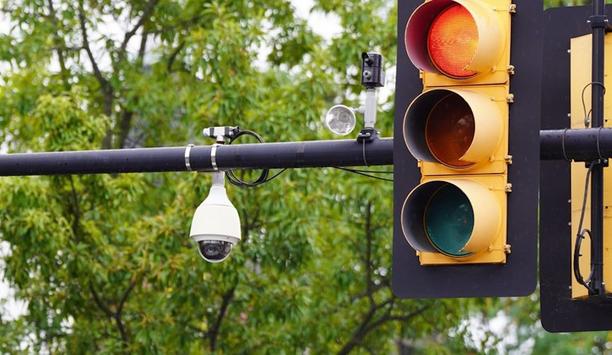
Tucked away in the heart of Delaware County is Media Borough, Pennsylvania. Though less than a square mile in size, the borough serves as both the county seat and a dynamic hub of business, government, and community life drawing thousands of visitors daily to its courthouse, restaurants, shops, and year-round events. For the Media Borough Police Department, this bustling environment brings opportunity but also a responsibility to keep residents, employees, and visitors safe. “Media is a unique, vibrant town,” said John McCormick, Chief of Police, Media Borough Police Dept. “The county courthouse is here, everyone from Delaware County comes to Media. That's why it’s called Everybody's Hometown.” Outdated surveillance system For years, Media relied on an outdated surveillance system that struggled with reliability and clarity. The aging equipment frequently went offline during storms and offered limited image resolution, making it difficult for officers to identify suspects or respond quickly to incidents. Recognizing these limitations, borough leadership installed a new surveillance infrastructure powered by Hanwha Vision cameras and the Wisenet WAVE Video Management System (VMS). The new system was designed and installed by Phoenix Systems, a local system integration partner with close ties to Media. The Phoenix team worked closely with the borough to expand and unify coverage across the downtown business district, major thoroughfares like Baltimore Avenue and State Street, and within the police department’s command centre. High-voltage infrastructure The installation combined existing coaxial connections and new single-mode fiber optic cabling, while leveraging wireless peer-to-peer links where traditional fiber was impractical due to trolley lines and high-voltage infrastructure. Since transitioning to Hanwha Vision and Wisenet WAVE, the Media Police Department has seen dramatic results. Officers now have access to live and recorded footage from their desktops and mobile devices, allowing them to coordinate responses in real time during incidents. When a theft or suspicious activity occurs, detectives can immediately view cameras around town and relay updates to officers on the ground. This instant communication has dramatically improved the department’s solvability rate. Maintaining situational awareness The system also plays a crucial role during Media’s many public events, including its popular “Dining Under the Stars” summer series as well as parades and seasonal festivals, all drawing large crowds to downtown. “All the restaurants come out into the streets,” McCormick said, “So you can imagine the amount of people that come to town for this event.” Now, with centralized monitoring in the department’s dispatch area and secure remote access, officers can maintain situational awareness throughout the borough, ensuring safety without disrupting the town’s inviting atmosphere. Pedestrian-friendly vibe A defining feature of the Media project was its focus on aesthetics. To preserve the town’s historic charm and pedestrian-friendly vibe, the police department and Phoenix Systems focused on color-matching camera housings and mounts to the town’s black light poles and fixtures. The goal was to integrate technology seamlessly into the streetscape, providing security without creating a sense of conspicuous surveillance. This design choice reflects Media’s broader community-oriented approach of being transparent and mindful of residents’ comfort. The system’s presence is subtle, yet residents and business owners appreciate its impact, often asking police if incidents were captured on camera, confident that the system is there to protect them. Providing factual documentation Beyond its core role in crime prevention, the Hanwha Vision system has proven invaluable for liability management. When the borough receives claims involving alleged falls or accidents, officials can review video evidence to verify events. Nearly every intersection in the downtown district is covered, enabling the borough to provide factual documentation to insurers, saving both time and taxpayer resources. Phoenix Systems credits the borough’s success to Hanwha Vision’s flexibility and responsive support. The intuitive nature of the Wisenet WAVE VMS makes it easy for users, regardless of technical background, to operate. Officers have developed custom layouts within the platform for specific events, demonstrating their comfort with the system and its user-friendly design. AI and analytics capabilities “Every technology you can have is in this system,” Burroughs said. “It's all bridged within the Hanwha WAVE platform. The next phase is leveraging the system they have to do something new. That's the beauty of WAVE. It's not just surveillance, it's not just VMS, it's more.” With a robust surveillance foundation in place, the borough is now looking toward the next phase: integrating AI and analytics capabilities. Future plans include leveraging Hanwha’s AI-powered tools to enable advanced searches such as identifying individuals by clothing color or tracking specific vehicles across multiple cameras. Public safety systems Media’s network of Hanwha Vision cameras and Wisenet WAVE VMS serves as a model for how small municipalities can implement scalable, aesthetically conscious, and community-supported public safety systems. What began as a need for better video quality has evolved into a comprehensive security ecosystem that enhances transparency, operational efficiency, and quality of life for everyone in “Everybody’s Hometown.” “Our camera system catches almost every intersection in our business district,” McCormick said. “It's been priceless. It's been paramount.”

DeterTech, official site security partner to Brentford Football Club, has announced it will be participating in the next Bike to Brentford designated matchday, taking place at the Gtech Community Stadium on 27th September, 2025. DeterTech will be outside the ground offering free SmartWater bike marking to fans arriving on two wheels. The “Bike to Brentford” initiative aims to promote sustainability, encouraging fans to arrive to the stadium in modes that reduce their environmental impact including public transport, walking, and cycling. DeterTech is the owner of SmartWater – the award-winning forensic marking technology – and will be stationed by the stadium’s bike park before the game help tackle bike theft. Latest crime trends and solutions SmartWater is a ‘traceable liquid’ which provides a legally irrefutable way to identify stolen goods Fans can get their bikes marked with SmartWater for free and speak to the DeterTech team for expert advice on the latest crime trends and solutions. SmartWater is a ‘traceable liquid’ which provides a legally irrefutable way to identify stolen goods and return them back to their rightful owner. James Beale, Head of Sustainability and Community, Brentford Football Club, says "We're making it easier and safer for fans to cycle to games through our Bike to Brentford initiative. On select matchdays we're putting up secure bike parks around the stadium and providing bike mechanics to repair fans' bikes at no cost to them." He adds, "Thanks to DeterTech offering free bike marking, we can give our fans even greater peace of mind. We hope that extra security encourages them to switch to cycling more often throughout the week, not just on matchdays." Brentford’s continued commitment Baba Devani, CEO at DeterTech, said: "We are inspired by Brentford’s continued commitment to its community and are thrilled to be supporting the “Bike to Brentford” scheme. Marking property with SmartWater is a proven crime prevention measure that ensures supporters can enjoy the game without having to worry about their bike." Members of the DeterTech team will also be joining the Brentford Community Sports Trust in completing the Palace to Palace bike ride to raise funds for the King’s Trust taking place on October 5th 2025.

Western Michigan University (WMU), home to more than 15,000 students and 5,000 employees, realised a significant gap in its security infrastructure with less than 5% of its campus exterior covered by surveillance cameras. “Ultimately, our bottom-line goal is to have a safe campus,” said Lieutenant Matt Page, Supervisor of Building Security at Western Michigan University, Police Department. “The security and safety of students, employees, and visitors that come to campus is the top priority.” WMU recently launched a large-scale security modernisation initiative, based on Hanwha Vision’s Wisenet WAVE Video Management System (VMS) and more than 500 new cameras, primarily the PNM-C32083R 4x4MP multi-sensor models. Limiting situational awareness The University’s Department of Public Safety had previously relied on outdated interior cameras and a legacy VMS that lacked integration, scalability, and advanced functionality. The absence of exterior cameras created blind spots in high-traffic public areas, limiting situational awareness and leaving the campus vulnerable to theft and safety incidents. The University also struggled with short storage durations, high subscription costs, and difficulty in managing disparate systems. WMU needed a unified solution that could expand coverage, integrate legacy equipment, reduce operational costs, and deliver advanced AI analytics features for real-time monitoring and investigative efficiency. Strengthening investigative capabilities After a thorough evaluation of multiple vendors, WMU selected the Hanwha Vision high-resolution cameras, strategically deployed across campus exteriors, parking lots, and entrances. The university also installed Hanwha license plate recognition (LPR) enabled cameras at key entry and exit points, further strengthening investigative capabilities. “Our biggest crime on campus is larceny, and we've been able to solve a vast majority of those calls simply because of the camera system that we have,” said Scott Merlo, Chief of Police and Director of Public Safety at Western Michigan University. “Now, we're able to be proactive and catch people in the act before we even know who the victims are.” WAVE VMS was a decisive factor in WMU’s choice. It allowed the university to integrate both the new Hanwha cameras and legacy models into a single, unified system. Officers and staff with minimal technical training report that WAVE is simple and intuitive, making it easier to locate, review, and share video evidence. Operational efficiency benefits With WAVE VMS, the University has also eliminated recurring subscription fees by moving to a one-time license model. WAVE is delivering operational efficiency benefits, including expanded storage capacity from its previous limit of seven to 10 days to a 30-day minimum retention (with data purged at 90 days). The impact of WMU’s upgrade has been dramatic. WMU increased exterior camera coverage from less than 5% to more than 90%, effectively doubling the overall number of views to between 2,500 to 3,000 across campus. Different campus departments “We were one of the first in the world to get these 4x4K cameras and with their high-quality sensors, we can install them higher than most AI cameras,” said Page. “We get a much larger area of surveillance coverage, while still getting better than expected AI functionality.” Not only have crime prevention and response times improved, but the new system’s flexibility allows the Department to assign role-based access to different campus departments, including landscaping and dining services. Multiple previous thefts Recent incidents such as bicycle thefts outside dining halls were resolved swiftly using AI alerts, object tracking, and LPR data. In one case, motion-based AI alerts helped officers intercept a suspect in real time, preventing the loss of property. Off-duty detectives received an email notification triggered by a motion sensor set up through the camera’s AI functionality. The camera detected a suspicious person near a bike rack that had been the site of multiple previous thefts. Wide-area monitoring “Without the AI functionality, and without the notification systems that are built into the WAVE VMS, that bicycle would have been taken from campus and likely never returned,” said Page. The Campus Services department is also using the system. Landscaping teams have direct access to live camera feeds allowing them to monitor the grounds and assess maintenance needs faster, for example identifying icy sidewalks that need to be cleared. WMU plans to continue replacing its older cameras with Hanwha Vision models, while leveraging advanced PTZ cameras for wide-area monitoring and investigative use. Western Michigan University’s investment in Hanwha Vision’s WAVE VMS and AI-enabled cameras has transformed its approach to campus security, delivering enhanced visibility while creating a safer environment that benefits students, faculty, staff, and visitors. “When I talk to parents, the number one concern that they have about their kids coming to our campus is safety,” said Merlo. “With the systems that we have in place, without any question, their sons and daughters are going to be safe here.”

Genetec Inc., the pioneer in enterprise physical security software, announced that its cloud-based vehicle investigation system, Cloudrunner™, is now hosted in Canada on the Microsoft Azure cloud platform. This will ensure that sensitive data for Canadian law enforcement, security agencies, and private-sector organizations remains in Canada while delivering responsiveness, scalability, and reliability. Vehicle-centric investigation system Cloudrunner is a cloud-native vehicle-centric investigation system that helps public safety agencies Cloudrunner is a cloud-native vehicle-centric investigation system that helps public safety agencies and security teams detect, analyze, and respond to vehicle-related crime. Designed with privacy and compliance in mind, Cloudrunner supports proactive policing and community safety. It offers real-time alerts, historical search tools, and an intuitive map-based interface that makes it easy to visualize vehicle activity, collaborate across jurisdictions, and share insights securely. Data-driven tools “With vehicle-related crime on the rise in Canada, law enforcement agencies need powerful, data-driven tools that help them solve cases faster and keep communities safe,” said Larry Legere, Commercial Director at Genetec Inc. "By hosting Cloudrunner in Canada, we're giving agencies the tools they need to make quick, informed decisions that help them stay ahead of criminal activity, while keeping sensitive data within our borders.” Users can quickly identify vehicles Cloudrunner enables users to quickly identify vehicles of interest, even with partial information By combining automated license plate recognition (ALPR) with rich metadata, such as vehicle type, make, model, and color, Cloudrunner enables users to quickly identify vehicles of interest, even with partial information, at any time of day or night, and in any weather condition. The platform supports real-time hotlist alerts, historical search capabilities, and investigative tools that help law enforcement locate suspects on the move, and close cases faster. Evaluation of Cloudrunner "One of our primary considerations during the evaluation of Cloudrunner was ensuring that all collected data would be securely stored and remain within Canadian borders," said Jeff Joyce, Manager - Parking Services, at the University of British Columbia (UBC). "Data sovereignty was a non-negotiable priority for us, as it not only addresses regulatory requirements but also reinforces our commitment to protecting sensitive information and upholding the trust of our campus community." Setting up Cloudrunner Canada now joins a growing list of countries, including the United States, Australia, and New Zealand, where Cloudrunner is hosted locally to meet the needs of agencies that require data to reside within national borders. New and existing Canadian users will automatically use Canada as their hosting region when setting up Cloudrunner, with no changes to existing workflows.
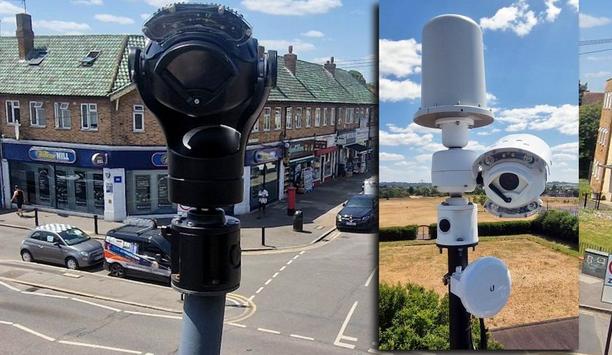
360 Vision Technology, the UK manufacturer of ruggedised HD, radar and thermal PTZ imaging cameras, and OpenView, one of the largest privately owned independent security companies in the UK, are reinforcing their long-standing collaboration with Enfield Council. The partnership aims to enhance public safety through the deployment of state-of-the-art Predator and Invictus HD PTZ cameras, across London Borough of Enfield’s town centre and public parks. Maximize security surveillance coverage To maximize security surveillance coverage, London Borough of Enfield’s town centre, public spaces and parks have been equipped with a combination of 360 Vision Predator and Invictus HD PTZ cameras. In high-risk areas, the Predator cameras, featuring built-in LED IR, or white light illumination, provide unparalleled nighttime imaging. With a lighting range of up to 250 metres and the ability to deliver full-color video even in low-light conditions, they significantly improve security surveillance visibility and safety in dimly lit locations. Impact of installing surveillance cameras Enfield Council’s policy on video surveillance is based on a ward survey, where the potential impact of installing Enfield Council’s policy on video surveillance is based on a ward survey, where the potential impact of installing surveillance cameras to deter incidents of street crime and antisocial behavior was considered. Consultation with partners OpenView, the police and levels of crime in an area, enabled informed decisions about where cameras were to be installed. Deployment of the 360 Vision cameras Utilizing this intelligent data, the location of cameras across London Borough of Enfield was chosen to define the key operational ‘hot spots’, where the deployment of the 360 Vision cameras would yield maximum benefit. Combating anti-social behavior with the aim of keeping London Borough of Enfield’s streets safe for all, in the town centre, a visual overview is provided by Invictus HD PTZ cameras, while a number of long-range Predator HD PTZ cameras fitted with built-in IR LED illumination have been mounted atop tower blocks, providing a comprehensive overview of the town centre, enabling the Enfield Council to monitor street level activity effectively. Pioneering radar detection for crime prevention Surveillance measures are deployed across the London Borough of Enfield’s many public parks Surveillance measures are deployed across the London Borough of Enfield’s many public parks. At Albany Park, a solution was required to prevent the occurrence of regular acts of vandalism to a community café and protect the premises. Responding to the problem, OpenView, who have built an enviable reputation for delivering unique, innovative, and technologically advanced solutions, tailored to meet the specific needs of clients, recommended the use of 360 Vision’s Predator Radar camera. After a successful trial, the Predator Radar camera was installed and the Enfield Council became one of the first authorities in the UK to deploy advanced camera radar detection to identify potential criminal activity within pre-defined ‘sterile’ areas. Integrated high-definition PTZ cameras “Traditionally, the use of radar systems has been considered to be the preserve of high-end installations, such as those at airports or ports,” says David Hall, OpenView’s Framework Manager. “However, deploying 360 Vision Technology’s Predator Radar all-in-one devices, with integrated 360-degree rotational radar and integrated high-definition PTZ cameras, we’ve been able to secure the large, fenced-off areas around the café to provide a far more effective and economical solution versus using many traditional cameras to cover the same area." "In addition, Predator Radar’s advanced detection capability is such that target detection and alarm functionality are continuous, day and night, even within adverse weather conditions." Integrated Predator PTZ optical camera The mix of cameras in the parks is equipped with 360 Vision’s built-in LED white light option Hall added: “The Predator Radar camera creates an alarm on detection of a target, or targets, and instructs its integrated Predator PTZ optical camera to view the target and provide system operators with instant visual verification. Additionally, as the target moves, they are automatically and continuously tracked by the optical camera to maintain real-time visual coverage.” In addition to the Predator Radar cameras, the mix of cameras in the parks are equipped with 360 Vision’s built-in LED white light option, to enable control room operators to be proactive when dealing with certain incidents. ONVIF-compliant Predator and Invictus cameras Apart from providing lighting to achieve high-quality video images in the dark, the use of white light acts as a visible assurance or as a deterrent to subjects under nearby camera surveillance, to make it clear that live surveillance monitoring is being carried out. HD video from the Predator and Invictus cameras is transmitted to the Enfield Council CCTV control room via a fibreoptic and radio transmission network. At the control room, the ONVIF-compliant Predator and Invictus cameras are integrated into a IndigoVision ‘Control Centre’ VMS. Enfield Council’s security surveillance system Map-based monitoring makes security operations easier and faster for the system operators Map-based monitoring makes security operations easier and faster for the system operators, who can simply click on a map point in Control Centre to automatically display any specific 360 Vision camera. “Enfield Council’s security surveillance system is constantly developing, to meet the needs of modern day town centre public safety requirements,” continues David. “We’ve found that the 360 Vison Invictus camera is a great fit for town centre use, where its mix of day and nighttime visual imaging performance vs ROI is highly effective.” Public safety requirements The deployment of the 360 Vision Predator and Invictus HD camera technologies reflects Enfield Council's commitment to evolving its security surveillance system to meet modern public safety requirements. The combination of daytime and nighttime visual imaging performance of the cameras in the London Borough of Enfield’s town centre and parks demonstrates a strong return on investment (ROI) and effectiveness in enhancing the Borough’s overall safety measures. Implementation of advanced security measures The performance of these advanced security steps is part of Enfield Council’s ongoing commitment The implementation of these advanced security measures is part of Enfield Council’s ongoing commitment to maintaining a safe and secure urban environment. Enfield Council will continue to adapt its surveillance infrastructure to meet modern public safety demands, ensuring residents and visitors benefit from the enhanced security measures. Innovative camera surveillance solutions “Working with OpenView on this project has been a great opportunity to enlist innovative camera surveillance solutions that really can help protect public spaces,” says Adrian Kirk, Business Development Director at 360 Vision Technology. “It’s notable how OpenView engineers embrace the latest technologies with ease, which is a tremendous credit to their team and ensures that the company’s long list of local government customers can benefit from cutting edge security solutions which can have a major impact on the quality of life for members of the public.” 360 Vision Technology’s range of products “Enfield Council has been impressed with 360 Vision Technology’s range of products that can be installed on various projects, or applications - this has proved to be an essential part of the ongoing projects in the London Borough of Enfield, whether it be for applications within parks, Street Scene or Housing estates,“ says Darren Woods, Enfield Council’s Public Safety Centre Manager. “The newest installation has used the 360 Vision Predator Radar camera that has been installed in an area that was suffering from high volumes of vandalism and building damage. Since its installation over the last few months, it has been highly effective. The 360 Vision predator range of cameras are currently being installed as part of a system upgrade, replacing older camera units. This investment into market-pioneering camera equipment ensures that Enfield Council is moving forward with affordable and good quality surveillance camera imaging solutions as video technology moves forward.” Innovative characteristics of the 360 Vision product range "We have been highly satisfied with the innovative characteristics of the 360 Vision product range and its suitability for the intended applications,” comments Kevin Hall, OpenView’s Group Director. “Furthermore, the quality of delivery, ongoing support, and operational performance were critical factors influencing our selection of the chosen systems technology." Predator radar cameras OpenView’s Framework Engineering Supervisor, Martin Ivory, enthused: “360 Vision has been a fantastic partner to work closely with, having the chance to use and deploy a large number of the products available from the company. Their ease of deployment and tremendous build quality and ruggedisation, versatility and reliability make them the ideal camera for public safety." "The support provided from Adrian Kirk and the technical team at 360 Vision enabled us to utilize the full capabilities of both the Invictus IP and Hybrid, and also the Predator and Predator Radar cameras, providing a practical solution for any scenario within the public safety sector.”
Round table discussion

Technology offers a range of tools to bolster security at public events, including before, during, and after. This year, the 2024 Summer Olympics in Paris will draw the attention of the world, requiring the best protection available for the venues, the athletes, and the attendees. Other happenings such as the FIFA World Cup, the Super Bowl, the Tour de France, and the U.S. NBA Finals are momentous events that challenge security and law enforcement personnel to keep them safe. We asked this week’s Expert Panel Roundtable: How is technology contributing to security in the arena of public events?

Ideally, every new product or technology serves a need in the market, but not all new products are created equal. The impact of some new technologies is so profound that they make us rethink our preconceptions and may create a total transition in the broader market. These are the technologies we call “game changers” because they prompt a significant shift in the current manner of doing or thinking about security. We asked this week’s Expert Panel Roundtable: What current technology is a “game changer” for physical security?

For many years, security systems produced their share of "data exhaust." Every access control action and each video image became a data point to be stored in perpetuity, with no practical way to use the data. More recently, systems have been developed to enable organizations to analyze data from sensors and other connected devices to gain valuable insights into how their systems are being used, to identify potential vulnerabilities; and even to provide insights into broader enterprise operations. We asked this week’s Expert Panel Roundtable: How are data analytics changing the course of the security marketplace?
Products

White papers

The Power Of Integration In Physical Security Systems
Download
Preventing Loss, Securing Assets
Download
Precision And Intelligence: LiDAR's Role In Modern Security Ecosystems
Download
Leveling Up With Campus Safety
Download
Cybersecurity in Keyless Access Management
Download
Simple Security Solutions for SMBs
Download
Assessing Safety Readiness For Education Campuses
Download
Improving City Mobility Using Connected Video Technology
Download
Protecting Dormitory Residents and Assets
Download
Sinaloa, Mexico: Connected Cities are Safer Cities
Download
Access Control & Intelligent Vehicle Screening
Download
The Security Behind Financial Security
Download
Is Your Access Control As Effective As You Think?
Download
Making Your Surveillance Cyber Secure
Download