United Airlines has implemented an advanced key control system, the Morse Watchmans KeyWatcher®, to enhance security and management at its jet engine rebuild and test facility near San Francisco International Airport.
Spanning 20 acres, this maintenance center employs over 1,400 people who are responsible for reconstructing airplane engines using specialized equipment worth thousands of dollars.
Key Control System Implementation
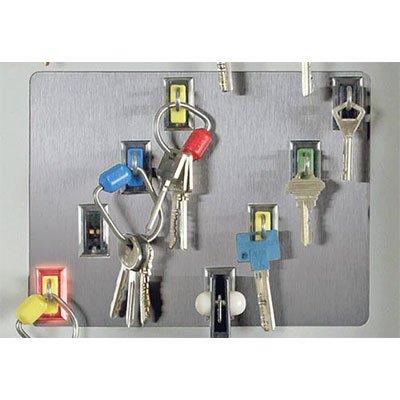
To maintain strict control over access to expensive tools and test equipment, the facility has equipped its premises with the integrated KeyWatcher system. Tools not in use are stored in locked toolboxes, and access is regulated through a system that provides an audit trail detailing who has accessed specific keys, when they were withdrawn, and when they were returned.
Bob Brown, Senior Specialist for Continuous Improvement at United’s facility, highlights the benefits: “With the KeyWatcher, the tools stay in their designated locations. We know the actual person who is using the tools, and we can hold them accountable. That’s why we’re not missing anything.”
Minimizing Foreign Object Debris
The introduction of structured procedures and the KeyWatcher system has significantly reduced these threats
Engine maintenance within the facility occurs in designated “cells” where tools for the job are strategically placed. This includes areas for both teardown and rebuilding processes.
Prior to employing the KeyWatcher system, there was a lack of organization which increased the risk of foreign object debris (FOD). Items that didn’t belong were often placed in toolboxes, raising the possibility of debris being sucked into engines. The introduction of structured procedures and the KeyWatcher system has significantly reduced these threats.
Advanced Access via Card Swipe Readers
The facility currently utilizes one 96-key and three 48-key KeyWatcher cabinets, where one of the 96-key and one of the 48-key units have card swipe readers for employee access using time-and-attendance cards. Each cabinet is also equipped with keypads, allowing access via unique PINs.
Employees can check out keys for durations ranging from 20 minutes to a full eight-hour shift, and backup keys are securely stored. Within two years of the system’s installation, only one tool was temporarily misplaced, later located within two hours, indicating a strong track record for the system's efficiency.
Remote Management and Data-Driven Decisions
Through IP access, the system grants Bob Brown the capability to manage key usage and generate detailed reports directly from his desktop computer.
These insights into key usage trends can assist the facility in planning for additional equipment needs. The success of this system has sparked interest among other departments at United Airlines to explore similar implementations.
There are hundreds of specialized tools used on a daily basis at the United Airlines jet engine rebuild and test facility, a 20-acre maintenance and operations centre adjacent to San Francisco International Airport.
United jets are brought to the facility, where more than 1,400 employees work, to have their engines rebuilt. Here a tool used every day might cost several thousand dollars, and test equipment can cost even more.
Key control system
Each mechanic is provided with the specific tools and test equipment needed for the job at hand; when not in use the tools are kept in locked toolboxes located in assigned areas. The shop uses the integrated Morse Watchmans KeyWatcher® key control system to store keys for the toolboxes and to enable complete control of access to individual keys. An audit trail tracks data regarding who removed any key, when it was taken and when it was returned.
“With the KeyWatcher, the tools stay in their designated locations,” said Bob Brown, Senior Specialist for Continuous Improvement at United’s facility. “We know the actual person who is using the tools, and we can hold them accountable. That’s why we’re not missing anything. They take pride in what they do and everything’s there for the next person.”
Foreign object debris
When employees work on an engine, they bring it into a “cell”, an area where point of use tooling is assigned to the job. In addition to several engine cells, the facility includes test cells and test equipment, used to take engines through their cycles. Each cell includes all the needed parts and point of use tooling.
One side of the cell is dedicated to tear down and the other to build and all tools are kept separate. Prior to implementing a KeyWatcher key control system and new procedures, Mr. Brown remembers that tool usage was not well organized and tracking tools was difficult. Non-tool items were often placed into tool boxes and the potential for foreign object debris (FOD) being sucked into an engine and/or damaging a blade was ever present. With the new policies and procedures, those issues have been minimised and/or eliminated.
Card swipe readers
“In the two years since the KeyWatcher system was installed, there was only one missing tool, which was found after two hours. That’s a pretty good record so far for a facility this size,” adds Mr. Brown.
The facility uses one 96-key and three 48-key KeyWatcher cabinets. The 96-key unit and one of the 48-key units incorporate card swipe readers to enable employee access using their time-and-attendance cards. All four cabinets have keypads that enable entry using a user’s unique PIN number. Keys may be out for 20 minutes or for up to a full eight-hour shift. Backup keys are also secured in the cabinet.
Providing complete information
The system can be accessed via IP from anywhere in the building and this online control enables Mr. Brown to administer the system and know from his desktop computer who has any key. He can also generate KeyWatcher activity reports that provide complete information on which keys come and go at what time and on what day.
The information provides insight into usage trends that could help the facility support a need for additional equipment. Mr. Brown states that the facility is already looking to install additional KeyWatcher units, and other departments at United have expressed interest in the system for additional uses.