As urban centers prepare for significant events, the demand for mobile vehicle barrier solutions is intensifying. From bustling farmers markets to expansive city festivals, these systems facilitate easy deployment of temporary barriers without the need for permanent infrastructure. These models are equipped with crash-tested physical security features that can be swiftly utilized by small teams.
Understanding Portable Barriers
Portable barriers are designed to be temporary, movable systems useful for controlling traffic or preventing unauthorized vehicular access to restricted areas. These barriers are employed by law enforcement, city officials, and event organizers who require robust protection without the high costs or permanence of built-in structures. They enable planners to establish secure perimeters within pre-existing environments, modifying them easily once events conclude.
Common Types of Portable Barriers
Temporary barricades are available in several designs, each catering to distinct site conditions and security demands.
Portable Wedge Barriers
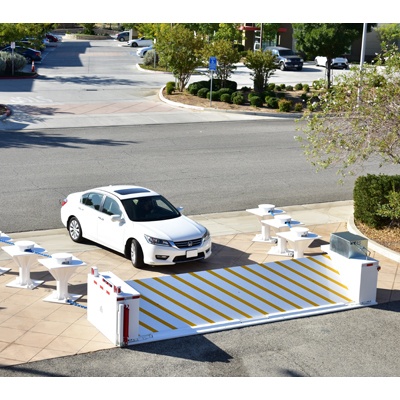
Wedge barriers lie dormant until activated, then rise to form a solid barrier capable of halting a moving vehicle. These are suited for managing temporary road closures, controlling access to government buildings, stadium security checkpoints, and zones requiring vehicle mitigation without ground alteration.
The MP5000 portable barrier exemplifies this type, being a towable wedge system deployable in under 30 minutes. It utilizes a hydraulic wedge to block lanes and can stop a 7.5-ton truck traveling at 40 mph. This barrier is frequently used to secure parades, street fairs, and large events due to its reliable vehicular mitigation and mobility. Operating independently with a self-contained, battery-powered design, the MP5000 is ideal where permanent power sources are unavailable.
For more compact locations, the MP100 offers a modular solution. It can be assembled by a two-person team and achieves M30 crash ratings through stacked units. This low-profile barrier permits emergency vehicles to drive over it when lowered, making it suitable for temporary campus roadblocks and emergency staging.
Beam and Gate Barriers
Beam and gate barriers function as robust, temporary checkpoints. They are primarily used at vehicle entrances where traffic control is necessary. Portable drop-arm barricades are engineered for rapid deployment, combining high visibility with unauthorized access resistance.
The DSC1500 portable beam barrier is a notable example. Transported on its own trailer, it can be positioned by a single vehicle within minutes and stop a 15,000-pound vehicle at 30 mph. This system suits construction site entrances, military base checkpoints, airport cargo areas, or temporary control at significant events with stringent security requirements.
Portable Bollards
Portable bollards offer a versatile solution for pedestrian-dense areas. These freestanding steel posts can be used without permanent anchorage, making them ideal where both safety and accessibility are priorities. TB100 crash-rated bollards, part of such systems, absorb vehicle impact while maintaining open pathways.
Designed for swift placement with wheels and lifting points, these bollards can form part of larger temporary infrastructure setups. The modular nature of portable bollards facilitates integration with other elements like signage and fencing, ensuring pedestrian flow is maintained while securing zones from vehicular intrusion.
Modular Surface-Mounted Vehicle Barriers
Among the latest advancements in temporary vehicle security, modular surface-mounted barriers require no digging or utilities for installation. These barriers utilize interlocking units to construct a durable, low-profile wall across roads or event spaces.
The DSC50 "S" barrier can be installed swiftly by one or two people. It is crash-tested to stop a passenger car at 30 mph and is ideal for temporary pedestrian walkways and short-term security at cultural events.
Optimal Uses for Portable Barriers
Portable barriers provide optimal solutions in scenarios where flexibility and rapid deployment are essential. They are commonly used in:
- Event Planning: To manage crowds and ensure attendee safety at parades, concerts, and fairs.
- Construction Zones: For creating secure perimeters while allowing access to authorized vehicles.
- Emergency Response: To block hazardous routes and protect first responders during incidents.
- Municipal Planning: To bolster security at seasonal markets, marathons, and civic gatherings.
Integrating crash-tested temporary barriers into event plans allows cities to create secure, efficient environments without disturbing existing infrastructure.
Delta Scientific provides exemplary crash-rated portable barrier technology. Their systems are thoroughly tested to meet or exceed ASTM M30, M40, and M50 standards. Featuring rapid deployment capability and durability, these barriers can be installed on diverse surfaces without excavation, offering high-performance protection for large-scale events, secured facilities, or urgent deployment scenarios.
As cities, event planners, and security teams prepare for large gatherings, the need for mobile vehicle barrier solutions is stronger than ever.
From farmers markets to concerts and city festivals, these systems make it easy to set up portable barriers without permanent construction. The models offer crash-tested physical security that can be deployed quickly by small teams.
What Are Portable Barriers?
Portable barricades are temporary, movable systems designed to control traffic or stop vehicles from entering restricted areas. They’re used by law enforcement, city officials, and event organizers who need strong, flexible protection but don’t want the cost or permanence of built-in infrastructure.
Whether creating pedestrian-safe zones, securing street closures, or managing emergency access, portable traffic barriers allow planners to build secure perimeters within existing layouts and remove them just as easily when the event ends.
What Are Common Types of Portable Barriers?
Temporary barricades come in several designs, with each suited for different site conditions and security needs.
1. Portable Wedge Barriers
Wedge barriers lie flat until activated, rising into a solid wall that can stop a moving vehicle. These barriers are ideal for temporary road closures, government building access control, stadium security checkpoints, and utility maintenance zones that require vehicle mitigation without altering existing pavement.
MP5000 Portable Barrier
One of the most widely used examples is the MP5000 portable barrier, a towable wedge system that can be set up in under 30 minutes. Once in place, the hydraulic wedge lifts to block lanes and can stop a 7.5-ton truck moving at 40 mph.
Cities often use this barrier to secure parades, street fairs, concert perimeters, and other large-scale events because it provides dependable vehicle-stopping power while remaining fully mobile. Its self-contained, battery-powered design allows it to operate independently of site utilities, which is perfect for locations with no permanent power or foundation.
MP100 Portable Barrier
For smaller spaces, the MP100 portable barrier offers a more modular solution. Each unit can be stacked and deployed by a two-person team, forming arrays that reach M30 crash ratings.
The MP100’s low profile lets emergency vehicles drive over it when lowered, making it ideal for temporary campus roadblocks, emergency staging areas, and outdoor sporting events where flexible entry and exit points are needed.
2. Beam and Gate Barriers
Beam and gate barriers function as strong, temporary checkpoints. They’re commonly used at vehicle entrances where traffic must be controlled rather than fully stopped. Portable drop-arm barricades are now designed for rapid deployment, providing both high visibility and strong resistance against unauthorized access.
A leading example is the DSC1500 portable beam barrier system. This drop-arm barricade is transported on its own trailer and can be positioned by a single vehicle in minutes. Once in place, its hydraulic arm lowers to block traffic and can stop a 15,000-pound vehicle traveling at 30 mph.
This portable vehicle barrier is ideal for construction site entrances, military base checkpoints, airport cargo areas, or temporary access control during large civic events where security needs are short-term but serious. Many planners include beam barriers as part of their temporary infrastructure plans to manage vehicle screening or delivery control zones during setup, teardown, and active event hours.
3. Portable Bollards
Portable bollards provide a highly flexible solution for pedestrian-heavy areas. They are freestanding steel posts that can be placed without permanent anchoring, making them ideal for areas where safety and accessibility must coexist.
TB100 crash-rated bollards are designed to absorb vehicle impact while preserving open walkways. Sets of five bollards achieve M30 ratings, and larger sets of 10 reach M50 levels, which is enough to stop a 7.5-ton truck at 50 mph.
Each temporary bollard includes wheels and lifting points for quick placement, and connecting cables distribute the impact across the array. Because pedestrians can move freely between bollards, these systems are widely used at sports events, outdoor concert grounds, school functions, and courthouse walkways, where event planners must maintain ADA accessibility while keeping vehicles out of protected zones.
Portable bollards also integrate seamlessly with other temporary infrastructure elements such as signage, barriers, and fencing. Their modular design allows them to become part of a broader, cohesive perimeter that blends safety with the flow of people and goods.
4. Modular Surface-Mounted Vehicle Barrier
Modular surface-mounted barriers are one of the newest innovations in temporary vehicle security. These systems sit directly on top of the ground and do not require any permanent installation, foundation work, or utility connection. Instead of relying on hydraulic lifting mechanisms or heavy beams, modular surface-mounted barriers use interlocking units that connect side by side to form a strong, low-profile wall across roadways or event spaces.
The DSC50 “S” barrier is an example of a modular surface-mounted vehicle barrier that can be installed by one or two people in just minutes. Crash-tested to ASTM SC30 standards, it can stop a passenger car traveling at 30 miles per hour. The system’s unobtrusive design makes it ideal for temporary pedestrian promenades, emergency command post perimeters, or short-term security at cultural festivals and outdoor dining districts.
When Do Portable Barriers Work Best?
Portable barriers are especially effective in settings that require flexibility and quick deployment. Common applications include:
- Event Planning: To manage traffic and protect attendees at parades, concerts, and fairs.
- Construction Zones: To create secure, temporary perimeters while maintaining access for authorized vehicles.
- Emergency Response: To block unsafe routes and safeguard first responders during active incidents.
- Municipal Planning: To enhance security for seasonal markets, marathons, and civic gatherings.
By integrating crash-rated temporary barriers into event layouts, cities can create safer, more efficient spaces without disrupting normal infrastructure.
Find Reliable Portable Barriers for the Large-Scale Event
Delta Scientific leads the industry in crash-rated, portable barrier technology. Each system is rigorously tested to meet or exceed ASTM M30, M40, and M50 standards. Designed for rapid deployment and long-term durability, Delta Scientific vehicle barriers can be installed on pavement, asphalt, or compacted soil with no excavation required.
They provide high-performance protection, whether you’re planning a large public event, managing a secure facility, or preparing for rapid deployment needs.