In today's world, securing assets and individuals is a top consideration across multiple sectors, from data centers to government facilities and commercial buildings. The challenge for architects and engineers is to integrate essential safety features without disrupting the aesthetic harmony of modern structures. Despite the ideal of security elements being invisible and unused, they can often intrude on architectural design, occupying crucial visual space.
Ensuring that safety measures blend seamlessly within a structure's design without sacrificing either security or visual appeal has become a primary focus in the realm of architectural design.
The Connection Between Security and Architectural Design
Architecture and design are fundamentally interconnected, with buildings needing to be both visually pleasing and structurally safe, always adhering to building codes. Historically, many robust structures have lacked visual appeal, often resulting in a sterile environment. In the past, physical security measures detracted from the elegance of buildings with their industrial and intrusive appearance. However, in the contemporary era, integrating security into the design process from the beginning has become crucial, especially with the increasing concerns over theft, attacks, and data breaches.
Balancing effective security with aesthetic design can significantly enhance both the safety and visual quality of a building. This thoughtful integration can transform security systems into valuable components of the architectural fabric.
Designing with Aesthetic Security in Mind
The goal of aesthetic security is not to compromise safety for visual appeal. Modern security solutions can effectively merge with a building’s design, remaining unobtrusive yet functional. Collaboration between architects and security experts early in the design process is essential for this integration.
Integrating Subtle Security Features
The goal of aesthetic security is not to compromise safety for visual appeal
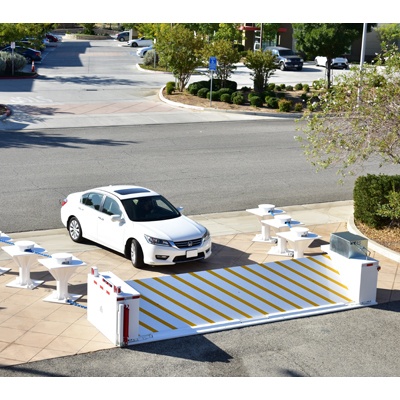
Discrete security enhancements significantly bolster a building’s safety while maintaining its aesthetic value. When incorporated cleverly, these features blend with their surroundings instead of attracting attention. For example, high security bollards can be artfully integrated into landscapes or built within seating areas, doubling as decorative elements that offer both protection and elegance.
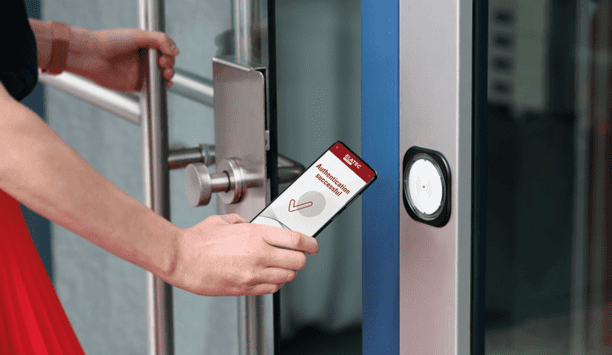
Similarly, access control mechanisms like card readers or biometric scanners can be embedded into architectural elements such as walls or door frames, ensuring they do not disrupt the building's design flow.
Selecting Optimal Materials and Finishes
The materials and finishes chosen for security features are pivotal in aligning safety demands with design aesthetics. Durable materials, like steel and concrete, can be used in high-security settings while maintaining cohesion with other design elements. For example, decorative metal panels may conceal security barriers as part of a building's facade, ensuring visual unification and effective protection.
Additionally, laminated or tempered glass, sometimes reinforced with polycarbonate interlayers or security films, can enhance strength without impairing transparency or aesthetic quality.
Leveraging Landscaping to Disguise Security Measures
Strategic landscaping can effectively mask security features, maintaining an inviting and cohesive environment. Plants and garden elements can be employed to shield security barriers, integrating them smoothly into the landscape. Perimeter fences can be covered with climbing plants, and large decorative planters placed to obscure security fixtures like bollards.
Finding Security Products that Blend with Design
This enables selections that meet security needs while enhancing the building's overall design
Security design firms, such as Delta Scientific, offer a variety of products and design solutions that prioritize security while complementing architectural vision. By focusing on minimalist and integrated design solutions, companies ensure that safety features are both functional and visually fitting.
Some projects may necessitate a more seamless integration of security elements, which highlights the importance of selecting products that match a building's aesthetic tone. Simple modifications, such as specific paint choices, can harmonize security features within the broader architectural context.
Delta Scientific provides customizable options, including decorative bollards and high-security gates, allowing for seamless incorporation into architectural designs. This enables selections that meet security needs while enhancing the building's overall design.
Enhancing Security and Design with Delta Scientific
Delta Scientific is known for its expertise in perimeter security solutions, offering products like bollards, barricades, and crash-rated gates. These are engineered to meet stringent security standards and can seamlessly integrate into the design of a building, achieving both subtle security placement and customizable finishes that align with architectural elements.
Security is a top priority across various industries, from data centers and government buildings to commercial offices. As the need to protect assets and people becomes more critical, blending security architecture and design has become more challenging for architects and engineers. Although the ideal scenario is for security features to remain unseen and unused, they often occupy valuable visual space.
These elements can disrupt the flow of architectural design, appearing as bulky, unsightly additions to the overall structure. Learning strategies to blend these systems can ensure that both safety and aesthetic appeal coexist in modern buildings.
The Relationship Between Security, Architecture, and Design
Architecture and design have always had an interdependent relationship. Buildings must be both visually appealing and structurally sound, requiring adherence to building codes to ensure safety and integrity. However, the most robust buildings often lack visual interest. Without thoughtful design, they may fulfill their function but appear sterile and uninviting to potential visitors and customers.
In the past, physical security measures were often intrusive and industrial-looking, detracting from the elegance of a building. But in the modern era, with rising concerns about theft, attacks, and data breaches, security has become a more integral part of architectural design. It’s no longer about bolting on security measures at the end of the design process. It’s about weaving them into the fabric of the design from the outset.
The challenge, however, lies in making these security features both effective and visually appealing. This is where thoughtful integration of security systems into architectural designs can make all the difference, enhancing both the safety and aesthetic value of the structure.
How To Create Aesthetic Security
Creating aesthetic security doesn’t mean sacrificing safety for beauty. On the contrary, modern security solutions are designed to blend seamlessly with the building’s aesthetics, ensuring that safety measures are effective but unobtrusive. The key to this lies in early planning and careful execution. By collaborating with architects and designers early in the planning stages, it’s possible to integrate security seamlessly into the design.
Incorporating Hidden Security Features
Hidden security features are a clever way to enhance a building’s security without compromising its aesthetic appeal. These features are designed to be discreet and blend into the surrounding environment, offering protection without drawing attention.
For example, high security bollards designed to prevent vehicle intrusion can be integrated into the landscaping or built into the design of outdoor seating areas. They can be disguised as decorative elements, offering both security and an elegant visual appeal.
Similarly, access control systems such as card readers or biometric scanners can be integrated into walls, door frames, or even custom-designed furniture, ensuring that they are not obtrusive.
Choosing Effective Materials and Finishes
The choice of materials and finishes plays a primary role in both the safety design and aesthetic quality of a building. Selecting materials that offer durability and strength, while also complementing the architectural design, ensures that security architecture and design systems are both functional and stylish.
For instance, steel and concrete may be commonly used in high-security environments, but they can also be incorporated in ways that blend with other materials in the design. Decorative metal panels, for example, can be used to cover security barriers, making them look like part of the building’s exterior while still providing effective protection.
Similarly, laminated or tempered glass can be used in architectural security design, sometimes with polycarbonate interlayers or security films, which provide real impact resistance that enhances its strength without sacrificing transparency or visual appeal.
Utilizing Landscape Design To Mask Security Barriers and Systems
Landscape design is an effective way to conceal security features while maintaining an inviting environment. Trees, shrubs, and garden elements can be used strategically to obscure security barriers and fencing, allowing them to integrate seamlessly into the surrounding environment.
For example, perimeter fences can be covered with ivy or climbing plants, while large planters can be placed in front of security bollards to obscure them from view. By incorporating natural elements into the design, security barriers can be made less conspicuous while enhancing the overall aesthetics of the site.
How To Find Aesthetic Security Products and Systems
Many security design companies, including Delta Scientific, understand the value of providing a range of products and design options. The goal is to create security solutions that not only protect but also complement the architectural vision. Many companies focus on making their systems as simple and understated as possible to avoid drawing attention. This minimalist approach ensures that security measures serve their function without disrupting the design.
However, some projects require a more integrated approach to safety design. When purchasing security products, it’s important to select systems that align with the building’s aesthetic style. Even something as simple as paint can be used to harmonize different security features, blending them cleanly with the surrounding architecture.
At Delta Scientific, we provide a range of options, from decorative bollards to high-security gates, that can be customized to fit seamlessly into a design. This allows architects and designers to choose security features that not only provide the necessary protection but also enhance the overall look of the building.
Elevate the Security Architecture and Design With Delta Scientific
Delta Scientific specializes in perimeter security solutions like bollards, barricades, and gates. The crash-rated products are engineered to meet the highest standards of security.
These products can be integrated directly into the building’s security architecture and design, whether through subtle placement or customizable finishes that blend with architectural elements.