


For years, physical security and cybersecurity evolved on parallel tracks. One team managed doors, badges and cameras, while the other handled network access, authentication and logical assets. The systems rarely shared information and, in many organizations, they still do not.
That separation is becoming harder to defend now that employees move continuously between physical and logical environments throughout the workday. A single person may badge into a building, access cloud applications, reserve workspaces, connect to operational systems and authenticate into sensitive applications within minutes.
Disconnected identity systems
Yet many organizations still treat each interaction as a separate identity event managed by different systems with different policies and different visibility. Attackers, with the help of AI, are becoming increasingly adept at exploiting those gaps.
According to HID’s 2026 State of Security and Identity Report, identity management is now the top strategic priority for security leaders, with 73% identifying it as a trend shaping their security planning. The report also found that managing multiple disconnected identity systems is now the primary operational challenge for more than half of respondents. This shows that identity is becoming the link between physical security, cybersecurity and operational resilience.
Fragmented identity creates operational and security risk
The growing convergence between physical and logical environments has raised the stakes considerably
Many organizations accumulated identity systems over time rather than designing them as a unified architecture. Access control platforms, visitor management systems, HR provisioning tools, multifactor authentication systems and workplace applications were often deployed independently to solve specific operational needs. Individually, these systems may function well. Together, they often create administrative duplication, overhead and blind spots.
A terminated contractor may lose network access immediately while retaining physical access to facilities for days. An employee may require multiple credentials to navigate a single workday. Security teams may need to reconcile disconnected logs across several systems during an investigation. These inefficiencies slow response times and increase operational risk.
The growing convergence between physical and logical environments has raised the stakes considerably. Modern attacks increasingly target the connections between systems, particularly where identity validation is inconsistent. HID’s research highlights growing concern around AI-driven credential attacks, biometric spoofing and phishing campaigns designed to exploit fragmented identity environments. This is one reason organizations are reevaluating identity management from the ground up.
Converged credentials reduce complexity
One of the clearest developments in this evolution is the growing adoption of converged credentials
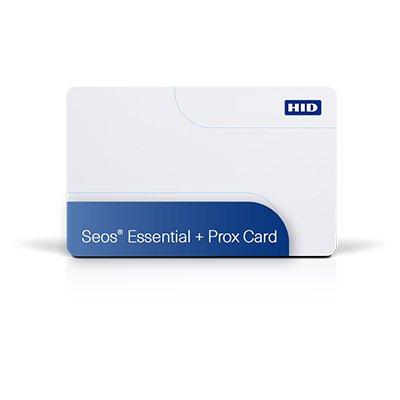
One of the clearest developments in this evolution is the growing adoption of converged credentials, where a single trusted identity is used across both physical and logical environments. This allows one credential to securely support access to buildings, workstations, cloud applications and other enterprise systems.
The operational advantages are substantial since security teams gain more consistent governance across environments and IT and facilities teams reduce administrative duplication. Organizations simplify onboarding and offboarding workflows while improving auditability and compliance visibility. Users benefit from a more seamless experience that supports how modern workplaces actually operate.
Importantly, converged identity strategies also reduce the number of credentials employees must manage. They are no longer forced to manage separate badges, passwords, tokens and access workflows across disconnected systems. That simplification means employees are less likely to seek workarounds. HID’s 2026 State of Security and Identity Report found that 75% of organizations have either deployed or are actively evaluating physical-logical identity convergence solutions.
Mobile credentials are changing expectations
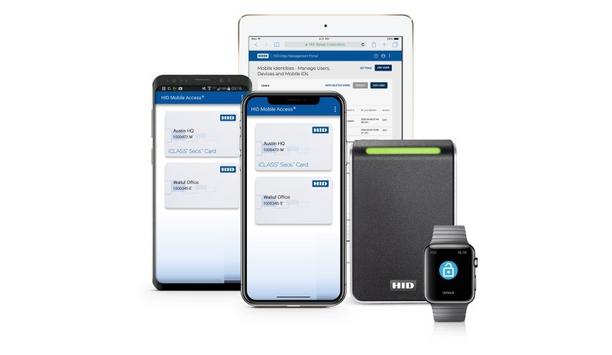
Mobile credentials are also reshaping how organizations think about identity management. What began primarily as a convenience initiative has matured into a broader security and operational strategy. HID’s research found that 74% of organizations have already deployed or are actively planning to deploy mobile credentials. Security improvement now ranks ahead of convenience as the primary driver for adoption.
Mobile credentials support encrypted communication, biometric authentication and real-time credential lifecycle management. Administrators can issue, revoke or update credentials remotely without requiring physical card replacement. Organizations also gain stronger visibility into credential usage and access patterns.
Credential lifecycle management
Equally important, mobile identity aligns with broader expectations of the workforce
Equally important, mobile identity aligns with broader expectations of the workforce. Employees increasingly expect workplace access experiences to mirror the simplicity of consumer technology, whether they are accessing offices, applications or services.
The future is unlikely to be entirely mobile, however. Most organizations are expected to maintain hybrid credential environments for the foreseeable future, combining mobile credentials with physical cards and other identity technologies based on operational needs and user requirements.
Biometrics expands beyond MFA
Biometric technologies are becoming more central to identity strategies across industries. Historically, biometric technologies were primarily deployed for multifactor authentication and to protect highly secure environments. HID’s research shows that organizations are increasingly adopting biometrics as part of core access control and identity verification workflows. This trend is particularly visible in sectors where identity assurance and operational efficiency are both critical.
Healthcare organizations are using biometrics to strengthen patient identification, secure sensitive areas and streamline staff authentication workflows. Higher education institutions are exploring biometric-enabled mobile experiences that support campus access, workspace login and digital services. Transportation operators are deploying facial recognition to accelerate passenger processing while improving identity verification.
With broader adoption comes greater scrutiny around privacy, transparency and governance. Organizations are paying closer attention to how biometric data are collected, protected and managed. HID’s report found that privacy and ethical concerns surrounding biometrics rose sharply year over year, reinforcing the importance of encryption, secure architecture and privacy-first design approaches.
Physical access is now part of cybersecurity
As physical and logical systems converge, every access decision carries more weight
As physical and logical systems converge, every access decision carries more weight. The credential used at the door may also support workstation login, cloud application access and other enterprise workflows. That makes the integrity of the entire identity chain more important, from the credential and reader to the systems that manage permissions, events and audits.
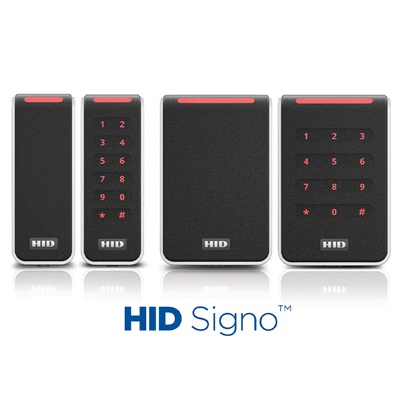
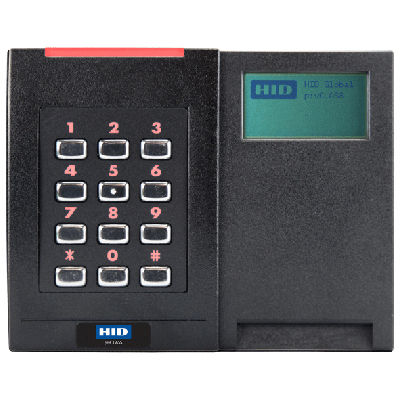
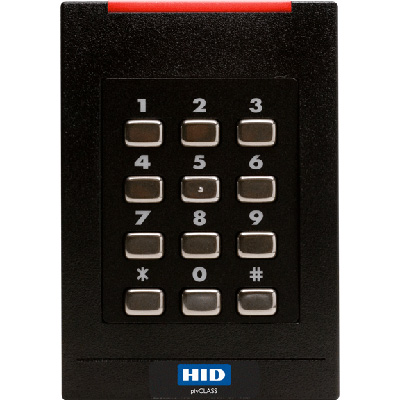
This is where older access infrastructure becomes a real liability. Legacy cards, weak reader-to-controller communication and disconnected credential systems can undermine even a strong cybersecurity program. If an organization cannot prove who entered a facility, whether the credential was valid and how that event relates to logical access activity, it is working with partial visibility.
Common governance model
Converged identity helps close that gap by linking physical and logical access under a common governance model. Organizations can apply more consistent policies, reduce credential fragmentation and accelerate investigations. IT gains stronger assurance that the person accessing systems is tied to the same trusted identity used to enter the building. Security teams gain better context when reviewing access events, anomalies or incidents.
This does not require an organization to replace everything at once. The practical path is phased modernisation: moving away from easily cloned cards, strengthening reader and credential security, improving integration with identity systems and choosing architectures that can evolve as requirements change.
Identity is becoming core to enterprise infrastructure. It now supports access control, cybersecurity, compliance, workplace experience and operational continuity. Organizations that treat identity as an infrastructure will be better positioned to reduce risk without adding unnecessary friction for users.