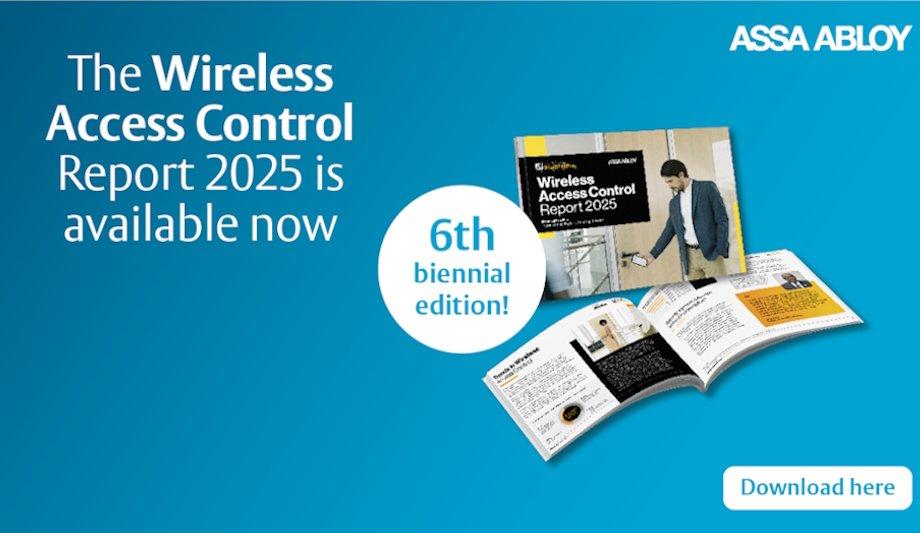
In today's evolving security landscape, the push towards digital access is becoming more critical. According to data from ASSA ABLOY's latest report, convenience is the primary motivator driving end-users, security professionals, and C-suite executives to embrace digitalization in access control.
The report highlights how seamless movement for employees, contractors, and visitors enhances operational efficiency and reduces costs for building and security managers.
Wireless solutions have emerged as the preferred method for digitalizing access due to their cost-effectiveness, ease of retrofitting, and readiness for integration. These solutions are particularly advantageous in mobile-first settings, supporting features like touchless entry, remote management, and real-time control.
ASSA ABLOY's findings indicate that mobile digital access is becoming standard, with applications such as the Openow® mobile app for SMARTair® wireless locks and the ABLOY® CUMULUS mobile key platform gaining traction. The shift to mobile credentials provides users with enhanced security and operational flexibility, demonstrated by a notable decrease in organizations dismissing mobile adoption—from 31% in 2023 to 19% in the latest report.
Biometric access is rapidly gaining acceptance as a viable option for both sensitive and general commercial environments. Survey results reveal that 91% of professionals recognize the utility of biometric technology, with 58% already implementing it. The user-friendly nature of biometrics, familiar through smartphone and banking applications, reduces administrative loads and minimizes the risks associated with lost physical credentials.
Sustainability has also become a significant consideration in security solutions, with ASSA ABLOY's report indicating that 27% of respondents prioritize sustainable practices in access management strategies.
Innovations in wireless and battery-powered systems like ABLOY PULSE aid in reducing energy consumption and align with growing demands for green building certifications like BREEAM and LEED. The increasing integration of Environmental Performance Declarations (EPDs) into construction products emphasizes the industry's shift towards sustainability.
The convergence of cyber and physical security, especially regarding compliance with new regulations, is a priority outlined in the 2025 ASSA ABLOY survey. A majority of respondents (84%) report awareness or compliance with cyber-security mandates that are critical in protecting both digital and physical assets.
As noted by Cyber-Security Governance Expert Andy Watkin-Child, companies are facing increasing pressure to prioritize cyber-security risk management to avoid legal repercussions. Regulations like NIS2 underline the need for a comprehensive approach to securing the cyber-physical ecosystem, highlighting the importance of robust security protocols in contemporary access solutions.
End-users, security professionals and C-suite strategists continue to see significant rewards in access digitalization. The most important factor, according to ASSA ABLOY’s survey data, is convenience. When employees, contractors and temporary visitors can come-and-go with ease, operations for building and security managers are made more efficient, including cost-efficient.
Wireless solutions are often the fastest, simplest way to digitalize. Adopters cite reduced installation costs, easier retrofits, and integration-readiness as just a few of their advantages. Wireless is also popular in mobile-first environments, making it easier to support touchless entry, remote management, and real-time control.
ASSA ABLOY’s new report
Digital access provides a concrete ROI which can be turned into a competitive advantage. In particular, it can help to tackle the “hidden costs” of workflow inefficiencies. Programmable digital keys eliminate costly rekeying when someone loses theirs, for example.
Remote access management can help businesses reduce on-site headcount and overheads. Automated audit trails and access logs cut the cost of manual compliance checks. Within this overall access landscape – digital and wireless – ASSA ABLOY’s new report analyses a number of trends, among them the following four.
1 Mobile
Mobile digital access is no longer a novelty. Increasingly, it is an expectation. Adoption has boomed, as widely forecasted. ASSA ABLOY’s broad range of digital access systems incorporates several mobile solutions, including the OpenowÒ mobile app (for SMARTairÒ wireless locks), CLIQÒ and eCLIQ Connect for mobile workforces, and the ABLOYÒ CUMULUS mobile key platform.
Fully mobile credential environments are now in operation at 17% of all survey respondents’ organizations – more than triple the rate measured in the 2023 edition of their report. The benefits of mobile are increasingly recognized by organizations across almost every sector and include more streamlined access management, with fewer physical credentials in circulation and the instant deactivation of any lost mobile key. This provides adopters with security peace of mind. Operational agility is enhanced when rights updates and other management functions can be done over-the-air from anywhere. Interestingly, the number of respondents who rule out mobile altogether continues to shrink from edition to edition of the ASSA ABLOY report: just 19% of survey respondents now reject the idea of going mobile, down from 31% in 2023.
“Many early adopters have already transitioned: mobile digital access is for the now, not just something for the future,” says Richard Sharp, VP & Head of Product Unit Wireless Locks, DAS at ASSA ABLOY Opening Solutions EMEIA. “Where our 2023 report captured strong momentum towards mobile access, the 2025 edition finds increasing market maturity. As so many organizations modernize their security infrastructure, digital access systems are becoming standard, with a clear shift to mobile credentials.”
2 Biometrics
Biometric access is emerging as a serious, scalable option in physical security, not just for sensitive facilities, but increasingly for general commercial settings. This broader reach is helped by the launch of powerful solutions like the iDFace reader from Control iD at accessible price-points.
Survey data showed that a vast majority of professionals (91%) view biometrics as a useful access and authentication technology, with more than half of respondents (58%) already deploying it to some extent.
Biometric systems benefit from increasing user familiarity: people are already using them to unlock smartphones and validate mobile banking. For facilities managers, biometrics reduce the administrative burden of managing cards or fobs and eliminate risk from misplaced credentials. With no risk from lost credentials and a frictionless user experience, biometrics enable streamlined, secure access for staff, visitors and contractors.
3 Sustainability
According to the International Energy Agency (IEA), buildings consume approximately 30% of global energy. The 2025 ASSA ABLOY report confirms suggestions that, increasingly, end-users and security professionals are identifying concrete ways in which digital access can help to reduce unnecessary energy use. For many security managers, sustainability has gone beyond just a consideration: for 27% of survey respondents, it is the top factor when considering investments to enhance access management reach or capability.
“For many organizations, across multiple sectors, sustainability is moving from a supporting role to a strategic driver,” says Richard Sharp. “Wireless systems, which reduce the need for cabling and complex infrastructure, are often seen as a ‘greener’ alternative. Battery-powered and energy harvesting devices like ABLOY PULSE generally consume much less energy than equivalent wired locks. We also see fast-growing demand for green building solutions and documentation, such as Environmental Performance Declarations (EPDs) which count towards several green certification schemes we support, including BREEAM, LEED, WELL and others.”
From next year, construction products in Europe will integrate the results from an EPD as part of the CE Marking process – and therefore, essential to sell a product or solution to the European market. Full implementation of the revised European Performance of Buildings Directive, from 2027, will enforce disclosure of carbon footprint of products via EPDs in the residential sector, too. From 2030, the same regulation requires all new-builds to declare total whole-life carbon, including embodied carbon. This mandate will most likely expand to apply to renovations from 2030 onwards.
4 Cyber/physical security
Another fast-evolving regulatory picture concerns cyber and hybrid physical/cyber security performance. This is a major focus for anyone upgrading or updating an existing digital access solution. The vast majority of 2025 survey respondents (84%) felt their organization was either already compliant, or in the process of ensuring compliance, or that these regulations were not relevant to their situation.
“Cyber security is quickly becoming a regulated risk for companies, either directly or indirectly, requiring boards to address cyber-security risk management or risk civil and/or criminal penalties,” notes Cyber-Security Governance Expert Andy Watkin-Child of Veritas GRC in the report.
NIS2, for example, takes an “all-hazard” approach to security, which means protecting not just digital networks and systems, but also the physical environments in which they operate – the so-called “cyber–physical ecosystem”.