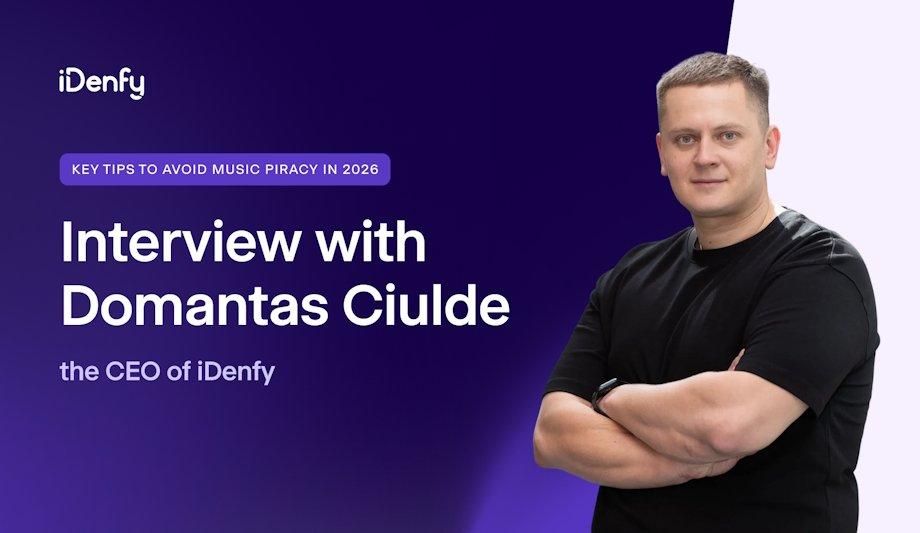
iDenfy, notable for its global RegTech services in identity verification and fraud prevention, is addressing emerging challenges in the music industry.
Since its inception in 2017, the rise of AI and the ease of online services have enabled illicit actors to exploit platforms, extending even into specialized sectors like music streaming and distribution.
Data from the previous year indicated that individuals aged 18 to 24, accounting for approximately 15.3% of internet users, are notably prone to downloading pirated music. To counter unauthorized music distribution, understanding compliance, music monetization education, and financial security tools remains crucial.
Identity Verification in Music Distribution
iDenfy recently highlighted the significance of identity verification in music distribution during a discussion with CEO Domantas Ciulde. The conversation involved insights on how platforms, artists, and audiences can collaboratively foster ethical online music consumption.
Despite artists having more tools than ever to protect their work, piracy persists. While copyright registration serves as the initial defense, advancements in digital technology, such as fingerprinting and watermarking systems, offer robust solutions. Blockchain technology is gaining traction for its potential to distribute royalties to artists and affirm ownership.
At iDenfy, the aim is consistent: ensuring that only verified and legitimate users participate in the digital economy. Musicians should be vigilant about their work's online presence. AI-driven content tracking can promptly detect unauthorized leaks or duplicates. When paired with secure distribution channels, this significantly curtails piracy.
Role of Streaming Services in Piracy Prevention
Enforcing a Know Your Customer (KYC) process for every uploader could deter such anonymity
Streaming services bear considerable responsibility in combating piracy, acting as primary gateways for global music access. Platforms are encouraged to implement stringent content identification measures, such as Spotify and YouTube’s Content ID, which require thorough user verification upon song uploads.
Anonymous accounts frequently initiate piracy by circulating copyrighted music. Enforcing a Know Your Customer (KYC) process for every uploader could deter such anonymity.
iDenfy’s KYC system verifies users worldwide, processing over 3,000 official document types from over 200 countries, thereby ensuring authenticity in digital content transactions.
AML and KYC Checks in Combating Piracy
There is a strong connection between piracy and illicit profit. Unauthorized sellers and websites benefit financially from stolen music via ads, subscriptions, or resale.
Stringent Anti-Money Laundering (AML) and KYC checks, supported by financial institutions and payment processors, can help trace every financial transaction back to a verified identity, making it difficult for criminals to benefit from music piracy. Domantas Ciulde emphasizes that iDenfy’s verification system enhances such transparency.
“Our solution doesn’t just check documents. It uses biometric verification, 3D liveness detection, and a global screening database to flag suspicious behavior. When combined with payment monitoring, this forms an informative data source against those trying to profit from piracy,” stated Ciulde.
Awareness of Piracy’s Impact
Raising awareness about piracy’s consequences is one of the most effective tools against it
Raising awareness about piracy’s consequences is one of the most effective tools against it. Illegal downloads deprive artists of revenue and limit platforms' ability to support emerging talent.
Supporting musicians on reliable platforms, even those with ads, helps sustain the creative industry. Users are urged to be cautious about where they access content.
Exceptions exist, such as DJs remixing playlists or artists releasing songs for free with acknowledgment conditions. Such practices can be managed by ensuring fair compensation for musicians and shielding listeners from malware risks associated with pirated files.
Future of Identity Verification and AI
According to Viktor Vostrikov, CMO at iDenfy, identity verification paired with AI is vital. “AI is becoming more proficient at quickly and accurately identifying pirated content. The human touch is still important. At iDenfy, they combine automated checks with human review accuracy to catch deepfakes, manipulated IDs, and even fraud that machines alone might miss.”
iDenfy forecasts that the most secure digital environments by 2026 will integrate both content and identity protection mechanisms. Such ecosystems, dominated by verified creators and clear revenue streams, will stifle piracy.
Addressing music piracy involves a multifaceted approach utilizing technology, legal frameworks, and financial safeguards. This issue remains complex, influencing fans, distributors, and the broader creative sectors. Ensuring trust among users goes beyond simply preventing illegal downloads.
“Transactions are secured and transparent when users have been verified. Our goal is to establish an environment that will encourage and protect creativity,” expressed Domantas Ciulde, CEO of iDenfy.
iDenfy, a pioneering global RegTech service provider, best known for its identity verification and fraud prevention solutions, designed to help regulated businesses comply with evolving compliance requirements, is noticing new threats in the music industry.
From iDenfy’s successful launch in 2017, AI and the convenience of online services have opened a door for bad actors to misuse online platforms, including in more niche sectors like streaming and music distribution.
Last year, approximately 15.3% of all internet users were individuals who fall into the category of ages 18 and 24, meaning they're the most likely to download pirated music for free. Compliance, music monetization education, and financial security tools are essential for understanding in order to prevent the unlawful distribution and monetization of copyrighted music.
Identity verification in the music distribution sector
Recently, iDenfy’s team discussed the importance of identity verification in the music distribution sector with Domantas Ciulde, the CEO, touching on topics like how platforms, artists, and listeners can all contribute toward a more ethical online music use.
In the greatest century currently, artists have more tools than ever before to safeguard their own works, but piracy is also more common than ever. The first line of defense against threats is still copyright registration, but digital technologies are where the real improvements are.
Unauthorized use can be automatically traced by fingerprinting and/or watermarking systems. Blockchain is also a hot topic right now because it can be used to distribute royalties to creators and confirm ownership.
People share the same goal at iDenfy. Whether they are uploading, licensing, or sharing content, iDenfy guarantee that only authentic and verified users take part in the digital economy. Musicians should also monitor the online presence of their work. Today, AI-based content tracking can catch leaks or duplicates early. When combined with secure distribution channels, piracy can be reduced significantly.
Preventing piracy
In terms of preventing piracy, streaming services have a significant amount of responsibility. They function as gatekeepers for the majority of music in the world. Platforms should consider putting in place content identification systems that demand rigorous user verification when a song is uploaded, such as Spotify's and YouTube's Content ID.
Anonymous accounts distributing copyrighted content are frequently the first step in piracy. It would be much more difficult for pirates to hide themselves behind false identities if each uploader had to go through a Know Your Customer (KYC) procedure.
At iDenfy, the KYC platform allows platforms to identify and analyze users globally. It verifies over 3,000+ types of official documents from more than 200 nations across the entire world. This assures that whoever is selling or uploading digital content is exactly who they claim to be.
Anti-Money Laundering (AML) and KYC checks
Piracy and profit are frequently linked. Via advertisements, subscriptions, or resale, unauthorized vendors and website owners make money from stolen music. Anti-Money Laundering (AML) and KYC checks can be enforced with assistance from financial institutions and payment processors.
Eventually, it will be more difficult for criminals to transfer or cash out their illegal song earnings when each financial transaction is linked to a verified identity. Domantas notes that iDenfy’s verification system supports such transparency.
“Our solution doesn’t just check documents. It uses biometric verification, 3D liveness detection, and a global screening database to flag suspicious behavior. When combined with payment monitoring, this forms an informative data source against those trying to profit from piracy,” said Domantas Ciulde.
Damage from piracy
The most efficient instrument is awareness. The damage that piracy causes is still often undervalued. Every single illegal download takes away from artists another source of revenue and cuts into the platform's ability to support young talent.
Supporting musicians on trustworthy platforms, even those with advertisements, helps to maintain the creative marketplace. Customers should be more mindful of where they get the information they have access to.
There are some exceptions; for instance, when a new DJ mixes his playlist and the artist releases a song for free with the condition that credit be given if it is used for performances or media creation. It can be achieved by making sure that musicians are fairly compensated and that listeners stay safe from malware and fraud attacks that often include pirated files that, after clicking, can cause serious computer damage
identity verification and artificial intelligence
Viktor Vostrikov, CMO at iDenfy, says that identity verification and artificial intelligence will be very important. "AI is becoming more proficient at quickly and accurately identifying pirated content. The human touch is still important. At iDenfy, they combine automated checks with human review accuracy to catch deepfakes, manipulated IDs, and even fraud that machines alone might miss."
iDenfy predict that the safest digital ecosystems by 2026 are those that have both content and identity protection tools. Piracy can barely flourish in these communities, composed of verified creators only, advanced identity verification tools, and clear revenue streams.
Combating music piracy with technology, law, and finance is necessary, as it grows to be a very complex international issue for music fans, distributors, and even the entire creative industries. Preserving music in the digital age is more than preventing downloads, but also securing trust among users.
“Transactions are secured and transparent when users have been verified. Our goal is to establish an environment that will encourage and protect creativity,’’ said Domantas Ciulde, the CEO of iDenfy.