Artificial intelligence (AI) - Round table discussions

Critical national infrastructure encompasses sectors such as energy, utilities, healthcare, and data centers – environments that underpin economic stability and public safety. With so much at stake, the importance of effective security systems is that much higher. We asked our Expert Panel Roundtable: What are the unique aspects of the critical infrastructure market, and how should the security industry adapt?
If AI is the dominant buzzword in the physical security industry, it is the second letter (I for intelligence) that is having the biggest impact. Simply put, intelligence transforms computer systems, including those used for physical security, from rigid, rule-following calculators into adaptable, problem-solving partners to human operators. We asked our Expert Panel Roundtable: What is the changing role of intelligence in physical security?

At mid-year 2026, the broader economy tells a story of resilience under pressure. Conflict in the Middle East has triggered a shock to the energy supply, driving oil prices up and reigniting global inflation. However, a total downturn has been averted. Exceptional, historic levels of business investment and data center construction are providing a firm floor for growth, offsetting cooler consumer spending and keeping labor markets fundamentally stable. But how are changing economics impacting th...

In the simplest terms, technology modernization accelerates when older systems become too expensive to maintain or fail to support modern standards. Market competition pushes businesses to update their technologies to meet rising customer demands. Additionally, the rapid shift toward cloud-based infrastructures and artificial intelligence creates a fear of missing out, forcing companies to adapt or risk irrelevance. Focusing on the physical security market, we asked our Expert Panel Roundtable:...

Artificial intelligence (AI) transforms physical security from a passive, reactive function into an autonomous, proactive one. Rather than just alerting human guards after an event, new systems driven by intelligent agents analyze, decide, and act in real time—handling routine deterrence, investigating anomalies, and reducing alarm fatigue. We asked our Expert Panel Roundtable: What is agentive (or agentic) AI and how is it changing physical security?

Next-generation (Next-Gen) technologies are products, services, or infrastructures that represent a significant leap forward rather than a small, incremental update. In the physical security industry, NextGen products are those that enable disruptive change, breakthrough performance, and a fundamental change that renders previous products obsolete. We asked our Expert Panel Roundtable: What is the next generation of physical security solutions, and how will they change the industry?

Physical security innovation is accelerating due to the convergence of AI-driven automation and IoT connectivity. The trend makes you wonder: How far will physical security technologies evolve in the next decade? Already, modern systems are shifting from reactive recording to proactive prevention via real-time analytics. Additionally, the need for hybrid cloud scalability and integration with IT infrastructure is driving rapid hardware-to-software modernisation. We asked our Expert Panel Roundta...

Emphasizing proactive rather than reactive security shifts the focus from dealing with crises and damage control to prevention. Advantages of a proactive approach include cost efficiency, better business continuity, and fewer crises that draw attention away from strategic improvements. Staying ahead of threats is a core mission of the security department, and technology has evolved to enable security professionals to deliver on that mission better than ever. We asked our Expert Panel Roundtable:...

Ethics can impact a company's reputation, profitability, and overall sustainability. Ethics extend beyond the law to encompass doing the "right thing" even when it is not legally mandated. As technologies such as artificial intelligence and data sharing continue to impact the physical security industry, a focus on ethics today is timelier than ever. A commitment to moral principles is critical to build a successful, sustainable, and respected industry. We asked our Expert Panel Roundtable: What...

In the past, security installers and integrators were used almost exclusively to install hardware. However, the role is changing and expanding along with the technologies used in the physical security industry. Nowadays, an installer or systems integrator is much more likely to use a strategic, IT-centric, and data-driven approach. To gain additional insights, we asked our Expert Panel Roundtable: How is the role of the security installer/integrator changing?
In the physical security marketplace, artificial intelligence (AI) has evolved beyond the novelty phase. The emphasis has now shifted to the more practical aspects of implementing AI technology. That a system implements AI is no longer impressive in and of itself. The question becomes: What can this AI system do for me? How can it improve my physical security stance? We asked our Expert Panel Roundtable: How is artificial intelligence (AI) transforming physical security?

If recent physical security events are a guide, the topic of artificial intelligence (AI) will be everywhere at the upcoming ISC West 2025 exhibition in Las Vegas. Cybersecurity solutions are another core focus at today's physical security events, and ISC West will likely follow the trend. Attendees will also be looking for advancements in access control systems, including biometric technologies and integrated security platforms, among other hot topics. We asked our Expert Panel Roundtable: What...

Technology innovations and an evolving threat landscape will be core factors impacting the physical security market in 2025. Technology elements such as artificial intelligence (AI), multi-factor access control, and mobile devices will continue to drive growth in the greater industry. We asked our Expert Panel Roundtable: What is the outlook for the physical security industry in the year ahead?

2024 was a year of significant challenges and remarkable progress in a world that is more interconnected than ever. Global collaboration continues to point the way toward continuing progress in multiple industries, including physical security. In 2024, technology continued to transform the way we connect and cooperate, driven by new technologies such as artificial intelligence (AI) and blockchain. We asked our Expert Panel Roundtable: How did the security marketplace “change for the better...

New technology advancements significantly increase efficiency and productivity in any industry, including physical security. Enhanced innovation both creates new products and services and improves existing products, all for the benefit of security manufacturers, integrators, and end users. Companies that embrace new technology stay ahead of the curve and gain a significant competitive advantage. In addition, they can differentiate themselves in the marketplace. We asked this week's Expert Panel...
2025 is likely to see further advancements in artificial intelligence, with potential impacts on various aspects of society, including the security industry. The new year will also require security professionals to adapt to changing market conditions and develop contingency plans for unforeseen events. Industry changes will accelerate and challenge everyone in the security market to keep up. Making specific predictions for the new year can be a struggle, but we asked our Expert Panel Roundtable:...

The security marketplace has its share of buzzwords, which are words or phrases that become popular and widely used in a specific industry. Buzzwords can be useful for conveying complex ideas quickly, but they can also be misused or misunderstood. Within a specific industry, such as security, buzzwords can create a sense of shared understanding and belonging. We asked this week’s Expert Panel Roundtable: What new buzzword have you heard, and what does it mean for the security industry?

By all accounts, technology development is moving at a rapid pace in today's markets, including the physical security industry. However, market uptake of the newest technologies may lag, whether because of a lack of clear communication or not enough education of potential customers. We asked this week's Expert Panel Roundtable: How can the industry do a better job of promoting emerging technologies in physical security environments?
Technology automates tasks, streamlines processes, and improves efficiency in various fields, including physical security. But the success of today’s latest technologies depends on our ability to use them responsibly and efficiently. Optimising our industry’s use of technology requires that the industry’s workforce have the needed skills to operate the latest equipment. We asked this week’s Expert Panel Roundtable: How does technology innovation in security systems impact...

The hospitality industry drives economic growth and development by creating jobs, generating revenue, and initiating a ripple effect to improve profitability throughout the supply chain. The hospitality industry includes a vast number of small businesses, including hotels and restaurants. But what are the security challenges of these businesses, and how is the security marketplace serving those needs? We asked this week's Expert Panel Roundtable: How can technology address the security challenge...

The Internet of Things (IoT) has revolutionized many industries, including physical security. By connecting physical devices to the internet, IoT technology offers significant enhancements to security systems. Benefits include real-time monitoring, remote access, and the utility of new devices such as temperature and humidity sensors. At the same time, IoT devices come with challenges, including greater cybersecurity vulnerability. We asked this week's Expert Panel Roundtable: How is the Interne...

A software platform designed to centralize and manage various physical security systems within an organization used to be called a PSIM (physical security information management) system. Generally speaking, however, the PSIM term has fallen out of favor because the systems were seen as expensive and difficult to manage. The phrase has been replaced by command-and-control, referring to software that combines access control, video surveillance, intrusion detection, and other systems into a unified...

Direct costs such as purchase price and maintenance are important elements in the total cost of ownership (TCO). However, there are others. Elements such as opportunity costs of lost revenue or hidden costs of energy consumption and environmental consequences can also impact the measure of TCO. Costs of training, integration, support, and scalability can also be examined. Considering the security industry impact of TCO, we asked this week's Expert Panel Roundtable: How does/should total cos...

While technology like cameras, alarms, and access control systems are crucial components, they are only as effective as the people who use and manage them and the systems that deploy them. When installing physical security systems, the focus should be on the holistic operation of the system rather than the functioning of individual components. However, in the end, overlooking critical factors can undermine the totality of system performance. We asked this week's Expert Panel Roundtable: Wha...

There is no shortage of threats facing security professionals, including some that are new and emerging. Understanding various new threats allows individuals and organizations to take proactive steps to protect themselves, but the first step is to identify what those threats are. Early detection of threats can minimize the impact of a successful attack, whatever the vulnerability at issue. We asked this week’s Expert Panel Roundtable: What new and emerging threats will physical securi...
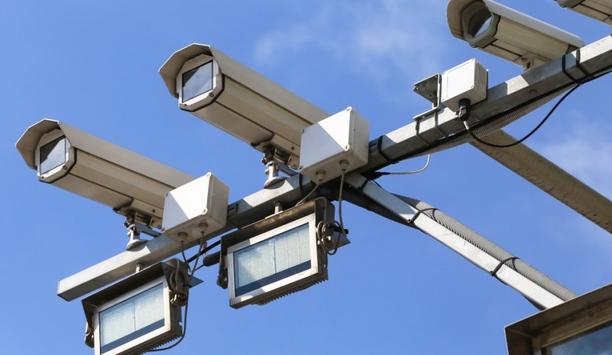
Transportation enables the movement of goods and people, facilitates trade and commerce, and is crucial for businesses to operate and expand. Security technology plays a major role both in protecting today's various transportation systems and increasingly to make them more efficient. We asked this week's Expert Panel Roundtable: What’s new in technology serving the transportation market?
Factors such as stable demand and large contracts make the government market particularly enticing for security companies and professionals. However, entering and thriving in the government market presents a number of challenges. We asked this week's Expert Panel Roundtable: What are the unique aspects of the government market, and how should the industry adapt?

Suddenly, artificial intelligence (AI) is everywhere. The smart technology brings a range of benefits to our lives, from streamlining everyday tasks to making scientific breakthroughs. The advantages of AI and machine learning (ML) also include automating repetitive tasks, analyzing vast amounts of data, and minimizing human error. But how do these benefits apply to the physical security industry, and is there a downside? We asked this week’s Expert Panel Roundtable: What are the benefits,...

Manufacturers make things. That hasn’t changed. Manufacturers today still produce finished goods from raw materials using various tools, equipment, and processes. What is evolving is a greater emphasis among manufacturers on understanding and meeting customer needs. In the security industry and elsewhere, the role of a manufacturer is expanding from a purely production-focused function to one that embraces technology, prioritizes adaptability, expands service offerings, and caters to a mor...

Migrating to the Cloud can be a cultural shift for some organizations, especially when it comes to physical security systems. Challenges such as concerns about data security and compliance, cost management, and a skills gap can make adopting the Cloud seem onerous. But the benefits are there, aren't they? We asked this week's Expert Panel Roundtable: Will the impact of the Cloud on physical security integrators be net-positive or net-negative?