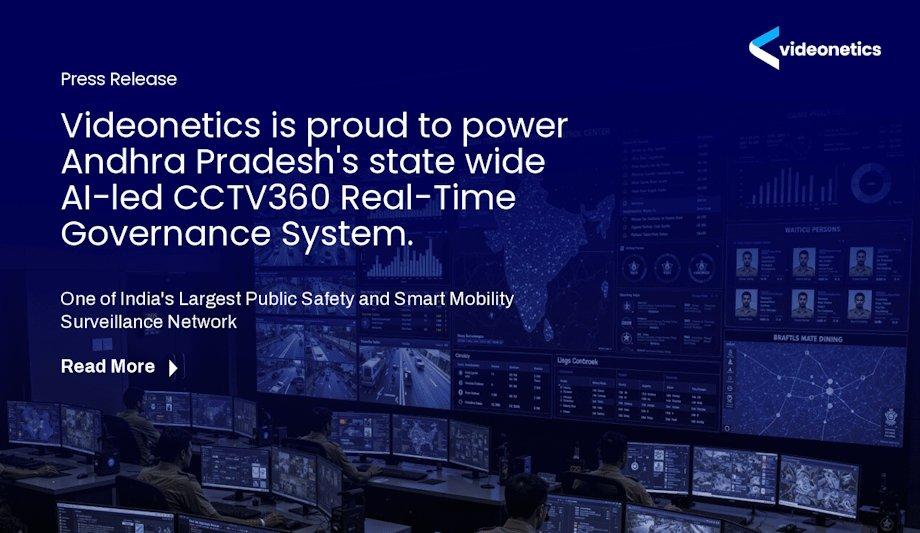
In a significant move towards enhancing technology-driven governance, Videonetics has rolled out its AI-powered Unified Video Management Platform across all 28 districts of Andhra Pradesh. This extensive deployment establishes a comprehensive real-time intelligence network designed to boost public safety, improve traffic enforcement, and facilitate data-driven decision-making throughout the region.
The cornerstone of this initiative is the Videonetics’ platform, which consolidates a video management system, AI-driven analytics, traffic management, e-ticketing, and face recognition under one architectural framework. Approximately 15,000 IP cameras have been strategically positioned in critical areas, ensuring continuous monitoring and uninterrupted data flow to the command center.
Enhancing Enforcement Consistency
A noteworthy feature of this rollout is the sophisticated traffic management system that is functional at over 680 intersections. This system automates the detection of infractions such as over-speeding and signal breaches, and it also facilitates the identification of blacklisted vehicles. The automation significantly cuts down on manual intervention and enhances the consistency of law enforcement.
The platform now delivers actionable intelligence to officers on the ground almost instantaneously
Moreover, face recognition systems installed at nearly 1,000 locations enable authorized law enforcement personnel to identify individuals of interest, leveraging national databases in adherence to regulatory guidelines. Integrated with state criminal records and traffic enforcement systems, CCTV360 (RTGS) allows Andhra Pradesh Police to access a comprehensive operational layer that unifies cameras, databases, and districts in real time. While fragmented camera networks once necessitated manual and after-the-fact investigations, the platform now delivers actionable intelligence to officers on the ground almost instantaneously.
Impact Beyond Statistics
“The true value of technology in policing is measured not by the number of cameras deployed, but by the outcomes delivered to citizens. This platform has helped us recover missing children, apprehend repeat offenders, trace stolen vehicles, and strengthen inter-district intelligence sharing at an unprecedented scale,” affirmed Ch. Srikanth, IPS, Inspector General of Operations, Andhra Pradesh Police.
Since the platform became fully operational, CCTV360 (RTGS) has generated results that extend beyond enforcement statistics. For example, a stolen two-wheeler reported in Bapatla was swiftly tracked and recovered in Tenali within three hours. Similarly, two missing children from Yelamanchili were identified by the Face Recognition System in Visakhapatnam and reunited with their families in under four hours.
Faster Response Times
With a modular and scalable architecture, the platform is adaptable to the future needs of the state
State officials have observed a broader trend of reduced crime rates and expedited investigations, accompanied by safer roads thanks to consistent and automated traffic enforcement. “Previously, valuable response time was lost by the time CCTV footage was manually reviewed. Now, the system alerts us to suspicious vehicles, wanted offenders, or missing persons within minutes," stated Mrs. Malika Garg, IPS, Superintendent of Police (Operations), Andhra Pradesh Police. "It has made investigations faster, patrol teams more effective, and field coordination far more efficient."
Naresh B. Wadhwa, Vice-Chairman & MD of Videonetics, highlighted Andhra Pradesh as a progressive example of leveraging technology for large-scale governance transformation. “At Videonetics, we are deeply committed to supporting the state’s vision of building safer, smarter, and more responsive cities. This deployment reflects our long-term commitment to India’s digital transformation journey, where AI-powered video intelligence will play a pivotal role in strengthening public safety, improving urban mobility, and enabling efficient governance across regions,” Wadhwa commented.
Advancing Governance Responsiveness
In partnership with MATRIX Security & Surveillance Pvt. Ltd., the deployment integrates an expansive network of cameras, analytics engines, and enforcement systems into a centralized Command and Control Centre in Amaravati. This setup creates a unified operational backbone for monitoring and response statewide.
With a modular and scalable architecture, the platform is adaptable to the future needs of the state. The Andhra Pradesh deployment serves as a benchmark for how AI-powered video intelligence can foster safer cities and more responsive governance across India.
In a landmark step towards building a future-ready, technology-led governance ecosystem, Videonetics has successfully deployed its AI-powered Unified Video Management Platform across all 28 districts of Andhra Pradesh. The large-scale implementation establishes a connected, real-time intelligence network that enhances public safety, optimizes traffic enforcement, and enables data-driven decision-making across the state.
At the core of this transformation is Videonetics’ unified platform, which brings together video management system, AI-driven analytics, traffic management, e-ticketing, and face recognition within a single architecture. About 15,000 IP cameras have been installed across critical locations, enabling continuous monitoring and seamless data flow into the command centre.
Improving enforcement consistency
A key highlight of the rollout is the advanced traffic management system operational across more than 680 intersections. The system automates detection of violations such as over-speeding and signal breaches, while also enabling identification of blacklisted vehicles—significantly reducing manual intervention and improving enforcement consistency.
Additionally, face recognition systems deployed at nearly 1,000 locations empower authorized law enforcement agencies to identify persons of interest through integration with approved national databases, in compliance with regulatory frameworks. Built across roughly 15,000 cameras and integrated with the state's criminal records, traffic enforcement, and command-and-control systems, CCTV360 (RTGS) gives Andhra Pradesh Police a single operational layer that connects every camera, every database, and every district in real time. Where fragmented camera networks once meant retrospective, manual investigation, the platform now delivers actionable intelligence to officers in the field within minutes — and in several documented cases, within hours of an incident.
Beyond enforcement statistics
“The true value of technology in policing is measured not by the number of cameras deployed, but by the outcomes delivered to citizens. This platform has helped us recover missing children, apprehend repeat offenders, trace stolen vehicles, and strengthen inter-district intelligence sharing at an unprecedented scale,”said Ch. Srikanth, IPS, Inspector General of Operations, Andhra Pradesh Police
Within weeks of going fully operational, CCTV360 (RTGS) began delivering outcomes that go well beyond enforcement statistics:
- A stolen two-wheeler reported in Bapatla was tracked across districts via ANPR and recovered by police in Tenali within 3 hours.
- Two 11-year-olds reported missing from Yelamanchili were identified by the Face Recognition System at Visakhapatnam Railway Station and reunited with their families in under 4 hours.
- A Non-Bailable Warrant offender was flagged by the Face Recognition System at Tirumala Bus Stand, Tirupati, and taken into custody within 81 minutes.
- A woman missing for more than a month was traced from Anantapur to Puttaparthi and located the same day a statewide facial recognition alert was issued.
Valuable response time
Beyond these individual cases, state officials report a broader pattern of reduced crime rates, faster investigations, and measurably safer roads through consistent, automated traffic enforcement. “Earlier, by the time CCTV footage was manually reviewed, valuable response time was already lost. Today, the system automatically alerts us about suspicious vehicles, wanted offenders, or missing persons within minutes. It has made investigations faster, patrol teams more effective, and field coordination far more efficient,” said Mrs. Malika Garg, IPS, Superintendent of Police (Operations), Andhra Pradesh Police
“Andhra Pradesh represents one of the most progressive examples of how technology can be leveraged to transform governance at scale. At Videonetics, we are deeply committed to supporting the state’s vision of building safer, smarter, and more responsive cities. This deployment reflects our long-term commitment to India’s digital transformation journey, where AI-powered video intelligence will play a pivotal role in strengthening public safety, improving urban mobility, and enabling efficient governance across regions,” said Naresh B. Wadhwa, Vice-Chairman & MD, Videonetics.
More responsive governance
Implemented in partnership with MATRIX Security & Surveillance Pvt. Ltd., the deployment integrates a vast network of cameras, analytics engines, and enforcement systems into a centralized Command and Control Centre in Amaravati, creating a unified operational backbone for statewide monitoring and response.
Built on a modular and scalable architecture, the platform is designed to evolve with the state’s future requirements. The Andhra Pradesh deployment stands as a strong benchmark for how AI-powered video intelligence can enable safer cities and more responsive governance at scale across India.