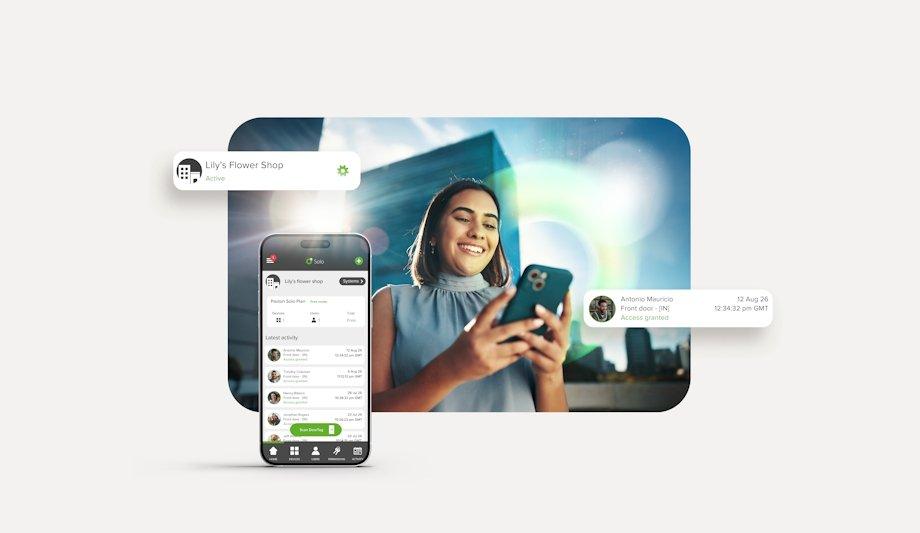
Paxton, a prominent manufacturer in the security technology sector, has introduced Solo, a cutting-edge, cloud-hosted access control solution. This innovative system empowers users to control access through their smartphones, effectively making the phone both the access key and system hub. To mark the launch, Paxton is distributing 10,000 free Solo starter kits to security installers, aiming to make the technology accessible and demonstrate its unique capabilities.
Adam Stroud, CEO of Paxton, emphasized the uniqueness of Solo, stating: “Solo is different. It is the first system that fully utilizes the modern capabilities of a smart phone. By doing so, it creates a step change to the architecture of modern security. Solo is a complete re-imagining of how networked access control is achieved. Because it is so different, we want as many installers as possible to see it, use it, and understand it.”
Features of Networked Access Control
Solo merges easy installation typical of standalone systems with the powerful capabilities of networked access control. This system eliminates the need for on-site data networks, servers, or centralized PCs, operating entirely from a smartphone. This functionality allows the phone’s built-in biometric identification such as facial recognition and fingerprint to be used for secure, card-free access.
The Paxton Solo app provides centralized management, event logs, and activity reports in real-time, offering visibility and control that is efficient and user-friendly. The system’s streamlined architecture supports flexibility and quick installations, benefiting both installers and end-users.
Affordable Security Solutions
The development of Solo was heavily influenced by installer feedback
The development of Solo was heavily influenced by installer feedback. Surveys conducted by Paxton showed that 80% of installers desire simple options for repeat business, leading to the creation of a solution that caters to recurring revenue models without unnecessary complexity.
Solo provides a cost-effective alternative to traditional access control systems, making high-level security feasible for locations where it was previously unaffordable. The minimal hardware requirements and lack of need for network infrastructure allow for rapid installations, providing installers the chance to complete more projects efficiently.
Cloud-Based Access Control Innovations
While Solo is not the first of its kind in cloud-based systems, it distinguishes itself by integrating cloud and mobile technologies extensively. Adam Stroud notes: “Solo is not the first cloud-based access control system; however, it takes the concept to a new level by making full use of cloud and mobile phone technology. By doing this, the equipment being installed can be dramatically simplified, while still providing flexible access control to the highest security standards.”
Stroud further explains that the adoption of a service-based model offers installers flexibility in how they support their clients, adding value to their service offerings.
Practical Applications for Solo
Solo serves as a practical solution for environments where traditional networked systems are not viable
A Solo system requires just a Solo DoorTag, Solo Controller, power supply, electronic lock, and the Paxton Solo app. Free from the constraints of a traditional site data network, Solo is ideal for diverse settings, including independent businesses, residential accommodations, healthcare institutions, and temporary structures like construction sites.
Designed to function independently of existing IT infrastructure, Solo serves as a practical solution for environments where traditional networked systems are not viable, such as small enterprises, student housing, and remote installations.
Commitment to Security Standards
Ensuring the highest levels of security, Paxton collaborated with cybersecurity experts, including Pentest Partners, to validate Solo’s robustness. The system boasts IASME Level 1 and Level 2 certifications and has achieved UL IoT Cybersecurity Diamond certification—the highest possible accreditation—before its official release.
With the introduction of Solo in the US market, installers are encouraged to experience firsthand the capabilities of this phone-based, cloud-hosted system, with the added opportunity to claim a free Solo starter kit to understand its potential commercial benefits.
The security technology manufacturer Paxton has officially unveiled Solo, a phone-based, cloud-hosted access control system. With Solo, your phone is the system, your phone is the key. To support the launch, Paxton is going for a true 1st, giving away 10,000 free Solo starter kits, placing the technology directly into the hands of security installers.
Adam Stroud, Paxton’s CEO, said: “Solo is different. It is the first system that fully utilizes the modern capabilities of a smart phone. By doing so, it creates a step change to the architecture of modern security. “Solo is a complete re-imagining of how networked access control is achieved. Because it is so different, we want as many installers as possible to see it, use it, and understand it.”
Networked access control
Solo combines the straightforward installation of a standalone system with the capability of networked access control. There is no requirement for an on-site data network, server or centralized PC. The system is created and managed entirely from a smartphone. In effect, the phone is both the system itself and the key in the hand.
Using the phone’s built-in biometric ID, such as fingerprint or facial recognition, Solo provides secure, convenient access without cards or fobs. Centralized administration, event reporting, and real-time activity logs are all available directly on the Paxton Solo app, making real-time visibility and management fast, flexible, and intuitive.
Game-changingly affordable
Installer insight played a central role in the development of Solo. In surveys conducted by Paxton, 80% of installers said they want repeat business to be simple, confirming demand for solutions that support recurring revenue without added complexity.
Costing a fraction of a traditional access control system, Solo makes professional security viable for sites where it was previously cost-prohibitive. With minimal hardware and no network infrastructure required, installations are quick and efficient, enabling installers to fit more in a day. The cloud-hosted model also provides built-in flexibility; offering the option to fit and forget or establish straightforward, recurring revenue stream.
Cloud-based access control system
Adam Stroud explains: “Solo is not the first cloud-based access control system; however, it takes the concept to a new level by making full use of cloud and mobile phone technology. By doing this, the equipment being installed can be dramatically simplified, while still providing flexible access control to the highest security standards.”
“Additionally, by supporting a service-based model, we can offer installers choice regarding the ongoing support they provide to customers.”
Traditional networked systems
All that is required for a Solo system is a Solo DoorTag, Solo Controller, power supply, electronic lock and the Paxton Solo app. Operating independently from a fixed on-site data network, Solo is suited to a huge host of environments where traditional networked systems would be impractical.
This includes small independent businesses, residential settings such as short-term rentals and student accommodation, and healthcare environments including clinics and care homes. Solo is equally suited for gyms, lockers, bike storage facilities, gates and remote buildings, as well as temporary installations such as building sites where fixed data infrastructure is unavailable or impractical.
Adam Stroud concludes: “Solo is designed to be installed independently of a customer's IT network. The installation takes a fraction of the time required for a traditional system. Coupled with the highly competitive nature of Solo, this gives installers the ability to win more quotes, and the ability to install more systems without increasing the size of the team.”
Highest security standards
Paxton worked closely with cyber-security experts, Pentest Partners, to verify that Solo is a high-security solution for today and tomorrow. The system has been developed to the highest security standards, achieving IASME Level 1 and Level 2 certification prior to launch during rigorous beta testing.
To ensure resilience against modern cyber threats, Paxton has also achieved UL IoT Cybersecurity Diamond certification, which is the highest possible accreditation. Solo is now being introduced to installers across the US, giving them the opportunity to experience the phone-based, cloud-hosted system firsthand and explore its commercial potential. As part of the launch, installers can claim a free Solo starter kit, allowing them to trial the system and see how it can work for their business.