Darwin International Airport (DIA), located in Australia's Northern Territory, is the region's largest airport and stands as the tenth busiest in the country.
Serving over two million passengers annually, it also shares runways with the Royal Australian Air Force's (RAAF) Base Darwin. A significant $60 million expansion has been approved, which aims to double the passenger and aircraft capacity, bolstering DIA’s role as a key international transit hub connecting Europe, Asia, and Australia.
Security Enhancements at DIA
Recent evaluations of DIA’s security operations led to the revision of the management and control of facility keys.
The existing manually-managed mechanical master key system posed several security risks, including the potential for lost keys and limited oversight concerning access. To address these concerns, an advanced Morse Watchmans KeyWatcher® key control system was installed alongside a new access control security system with electronic locks and programmable keys, enhancing overall security.
Upgraded Key Management System
The Morse Watchmans KeyWatcher key cabinet was synchronized with the Cyberlock system
The revamp included the replacement of conventional door lock cylinders with a Cyberlock access control system, integration of USB-connected key authorizers, and deployment of management control software and servers.
The Morse Watchmans KeyWatcher key cabinet was synchronized with the Cyberlock system, streamlining security management. Additionally, wireless capability was established for access control across remote airport locations, using the KeyPro software and KeyWatcher’s email notifications to alert the system of alarms and transaction activities.
Secured and Automated Key Access
Over 180 new electronic keys have been assimilated into the automated system, stored in the KeyWatcher cabinet when not in use or permanently allotted. This ensures that only pre-authorized users have access to the keys, with all key access activities recorded for tracking purposes.
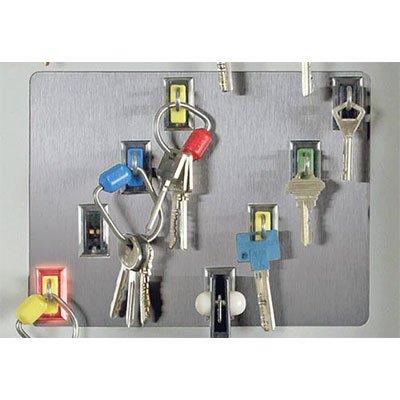
Illuminated key slots facilitate easy access and return of keys, enhancing convenience without compromising security measures.
Maintaining Tight Key Access Control
The KeyWatcher system grants DIA improved security by preventing unauthorized access
The KeyWatcher system grants DIA improved security by preventing unauthorized access and minimizing the risks of lost or misplaced keys. Preapproved employees and temporary users, such as contractors, can access keys directly without the need for sign-ins or overseen by security or management personnel.
To activate a removed key, users must update access control rights at a USB-connected authorizer. Once the key is returned, its audit trail is extracted, detailing which locks the key interacted with prior to its return to the cabinet.
The KeyWatcher automatically logs the access history for each key, including user identification, and the date and time of access. Reports are easily generated when needed, and the cabinet's integrated RS-232 communication ports ensure straightforward connectivity to printers or network devices via Ethernet. By managing key access and monitoring usage, DIA significantly enhances its investment in security with this advanced access control system.
Darwin International Airport (DIA) in Australia’s Northern Territory is the region’s largest airport and the 10th busiest airport in Australia. Serving in excess of two million passengers every year, DIA also shares its runways with the Royal Australian Air Force’s RAAF Base Darwin.
A $60 million expansion approved for DIA will double the amount of passengers and planes it can handle and will help reinforce DIA’s reputation as an international transit point between Europe, Asia and Australia. The airport terminal currently services both international and domestic flights with separate cargo handling facilities.
Mechanical master key system
Security operations at the airport have also been under review, including management and control of facility keys.
It was found that the manually-managed mechanical master key system in use at the airport had several security risks associated with it, such as lost keys and the lack of oversight as to who was accessing doors and gates and when such access was occurring. To meet the needs of DIA, an automated, more secure system was installed featuring a Morse Watchmans KeyWatcher® key control system and a new access control security system with electronic locks and programmable keys.
Key management system
The deployment of the new access control and key management system involved replacing all conventional door lock cylinders with a Cyberlock access control system; installing USB-connected key authorisers; implementing back of house management control software and servers; and integrating the Morse Watchmans KeyWatcher key cabinet with the Cyberlock system.
An additional undertaking was required to enable wireless capability for the access control system at remote locations on the airport property. Morse Watchmans KeyPro software and KeyWatcher’s email notifications are utilised to send alarms and transaction data to the access control system.
Illuminated key slots
In total, more than 180 new electronic keys became part of the system. When not in use or permanently allocated, they are secured in the KeyWatcher cabinet. The automated key cabinet allows access only to pre-authorized users and all key access activity is automatically recorded for tracking purposes. Designed for convenience as well as security, the electronic key control system makes it easy for users to access or return keys with illuminated key slots and return anywhere features.
The KeyWatcher system offers the airport an increased level of security and control by preventing unauthorized key access and reducing lost or misplaced keys. In this way, employees or temporary users such as contractors who have reason to be on the premises and are preapproved in the system can access a key from the cabinet without having to sign in or require the presence of security or management personnel.
Added level of security
Once a key is removed from the cabinet, in order to activate it the user must update the access control rights for the key at a USB-connected authoriser. When the key is returned, it must first be presented to the key authoriser to extract the audit trail showing which locks the key had touched prior to replacing it in the key cabinet.
The KeyWatcher automatically records the access history of each key, including user, date and time of key access/return. Reports can be generated as needed and the cabinet’s built-in RS-232 communication ports allow ease of use for direct connectivity to printers or other devices, or networked connectivity via Ethernet. By controlling access to the keys and knowing when they were accessed and by whom, DIA has enhanced their investment in the access control system with an added level of security.