Boon Edam Inc., a pioneer in security entrances and architectural revolving doors, has published a new whitepaper for security professionals entitled, ‘Access Control Integration with Turnstiles and Security Doors.’
The publication outlines the five basic components of an access control system and explores its inherent weaknesses related to working with different types of entrances in controlling unauthorized entry. The whitepaper then reveals the benefits and best practices around integrating access control systems with security entrances, including high security revolving doors and portals; medium security optical turnstiles, and low security tripod and full height turnstiles.
Access control systems
To set the stage, the whitepaper begins by explaining that most access control systems are installed in buildings alongside traditional manual or automatic swinging doors. The weakness of this combination lies in the fact that once unlocked by a credentialed user, a swinging door can be held open or forced open, allowing entry for unauthorized people.
The whitepaper begins by explaining that most access control systems are installed in buildings
When an organization cannot accurately report on the number of people in their building, they are more vulnerable to risk and liability, such as crime, violence, regulatory fines, loss of productivity, litigation, etc. The publication continues by outlining five main benefits of access control systems coupled with security entrances vs. swinging doors, including their ability to mitigate tailgating and piggybacking and establish a reliable standard operating procedure (S.O.P.) for entry.
Integrating authentication devices
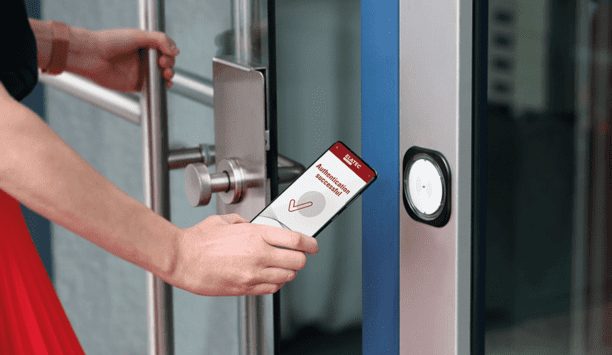
The whitepaper also provides details on how to seamlessly integrate authentication devices of all shapes and sizes with security doors and turnstiles for maximum effectiveness and ease of use.
Finally, the ‘Access Control Integration’ whitepaper concludes by introducing biometrics and explaining how these devices pair with high security revolving doors and mantrap portals to ensure not only that one person enters per authorized credential, but also that the person entering matches the credential. A detailed infographic included with the whitepaper illustrates the entry process, showing how the entrance speaks to the access control system to confirm or deny entry to a building’s most secure areas.