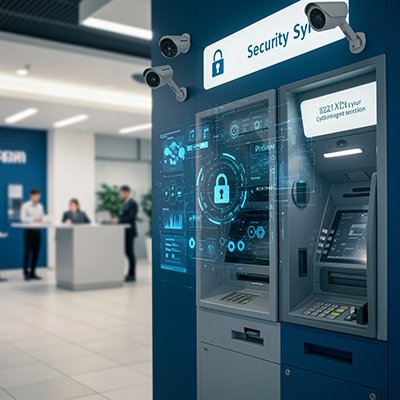
In recent discussions with leaders in healthcare security, a persistent issue has emerged: their security frameworks are fragmented, exposing them to risks without an easy solution.
This condition isn't due to lack of effort, but stems from the historical divide between physical and cybersecurity in the sector. Traditionally, facility operations managed physical security measures like badge readers and alarm systems, while IT handled networks and software.
Over time, these systems operated independently, with their own vendors and procurement cycles. However, this separation is now problematic, evidenced by incidents and compliance issues that organizations are struggling to address.
Integration Challenges in Healthcare Security
As the latest HIPAA update—the most significant in over a decade—nears finalization, healthcare providers face not just operational but regulatory pressure to unify their security systems. A disconnected infrastructure poses active vulnerabilities. For instance, if a bad actor gains access to an unsecured server room, that immediately becomes both a physical and a cyber threat. The increasingly unified network and IP-connected security devices mean these threats can quickly span both domains.
The ransomware attack on a London hospital that crippled blood work operations highlights the risks of fragmented security. Lack of integration provides exploitable loopholes, where physical breaches can escalate into cybersecurity incidents. Hence, connecting previously isolated security measures into an integrated system is crucial.
Necessity of Unified Security Systems
Unified security infrastructures not only meet standards but significantly enhance protection for staffWhen questioned about their security measures, many hospitals admit to having disparate systems that seldom interact. This gap prevents holistic management of security functions such as access control and video surveillance from a central platform.
Facilities leading in this space have shifted from deploying isolated solutions to establishing integrated frameworks—enabling automated processes and comprehensive incident response capabilities. Fragmented systems heighten support costs and challenge policy enforcement, rendering eventual consolidation both expensive and necessary.
Regulatory and Operational Drivers
The forthcoming HIPAA update mandates features like multifactor authentication, encryption, network segmentation, and prompt revocation of access privileges, pressing organizations to rethink infrastructure. The demand for immediate access revocation exemplifies this need, requiring coordination with HR processes absent in standalone systems.
Retrofitting these changes on older systems will be more costly than proactive updates, with HHS estimating first-year compliance expenses at $9 billion. Early adopters of integrated systems are already on a more cost-effective path.
Beyond Compliance to Safety Enhancement
While HIPAA compliance serves as a catalyst, the broader goal is to ensure genuine safety within healthcare settings. Unified security infrastructures not only meet standards but significantly enhance protection for staff, who face higher risks of workplace violence compared to other industries.
This aspect is financially impactful, with US hospitals incurring $18.27 billion in violence-related costs in 2023. Connecting security systems mitigates these concerns, transforming compliance obligations into opportunities for improving overall safety and operational efficiency.
Addressing Visitor Management Risks
Acre's FAST-PASS provide a streamlined solution, integrating visitor data into a broader security frameworkVisitor management remains a notably vulnerable area due to the inherently open nature of hospitals. Currently, many facilities manage visitor information manually, creating risks under new regulations that include visitor management.
Here, tools like Acre's FAST-PASS provide a streamlined solution, integrating visitor data into a broader security framework. This system verifies visitor credentials swiftly and cross-checks watchlists, fulfilling compliance and minimizing risk through seamless integration.
A Strategic Approach to Future-Proofing
Healthcare providers confronting the HIPAA deadline have two potential strategies: tackle just the immediate compliance needs or use this moment to revolutionize their security infrastructure into a cohesive, future-ready system.
Tools and technologies are available to support the latter, with regulatory clarity favoring integrated solutions. Facilities pursuing comprehensive updates will create safer environments with scalable security operations, seizing a critical opportunity that becomes less feasible with time.
Lately, when talking to healthcare security leaders, one thing has been coming up more than anything else: they know their security infrastructure is disconnected; they know it creates risk, and they’re not sure how to close the gap without a costly overhaul.
That’s not a failure of intent. It’s a consequence of how security was built in the healthcare sector. Over decades, physical security and cybersecurity have developed distinct disciplines with separate ownership. Facility teams would manage badge readers, cameras, and alarm panels where IT managed networks, servers, and software. Each domain had its own vendors, its own procurement cycles, and its own reporting lines. Understandably, back then the assumption was that running them independently was sufficient.
That assumption has since broken down in a big way – and the consequences are showing up in incident reports, compliance gaps, and operational risk that most organizations haven’t fully mapped out yet.
Now, with the most significant update to HIPAA in over a decade nearly final, the pressure to address that fragmentation is no longer just operational. It's regulatory.
Disconnected infrastructure is an active vulnerability
Here’s a scenario to use when talking to hospital security teams:
A bad actor walks into a hospital, finds an unsecured server room, and plugs in a laptop. At what point does that become a cyber problem?
The answer is: immediately. And it never stops being a physical security problem either.
The reason is network convergence. Physical security devices – cameras, access control panels, intercoms, alarm systems – are no longer standalone hardware operating in isolation. They’re IP-connected devices running on the same infrastructure as clinical systems and patient records. A compromised camera becomes a network entry point. An unsecured access control panel can serve as a pivot to a server. A visitor who reaches a networked terminal has potentially bypassed digital defenses entirely – without even touching a keyboard.
The London hospital ransomware attack that shut down blood work operations didn’t begin with a sophisticated intrusion. It began with physical access to the facility. That’s the operational reality healthcare organizations are now working within. Disconnected security infrastructure doesn’t just create administrative friction; it creates exploitable gaps.
What unified security infrastructure requires
When asked hospitals to describe their current security posture, the most common answer is: we have systems in place, but they aren't connected.
Most organizations have some level of physical security deployed. What's typically missing is a common operational layer – a way to manage access control, video, visitor management, and intrusion detection from a single platform rather than through separate consoles with no shared data.
The facilities that are furthest ahead aren't always the ones with the largest budgets. They're the ones that made a deliberate decision to stop procuring point solutions and start building toward integrated infrastructure. That shift changes what's possible: automated credential revocation, real-time access visibility across sites, incident response that correlates physical and digital events in a single view, and the list goes on. None of that is available when the systems can't communicate.
The fragmentation itself is also a cost driver, not just a security problem. Organizations running disconnected systems across multiple vendors face higher support overhead, inconsistent policy enforcement, and expensive integration work when they eventually need to consolidate. The organizations investing in unified infrastructure now are building an asset. The ones deferring it are accumulating technical debt with a compliance deadline attached.
The compliance forcing function
The first major update to HIPAA in more than a decade is nearly final. It represents the clearest regulatory signal yet, noting that standalone, disconnected security systems are no longer adequate for healthcare environments.
Every control becomes mandatory – this includes multifactor authentication, encryption, network segmentation, annual penetration testing. And one requirement under the HIPAA access control rules that most organizations aren't prepared for: physical access credentials must be revoked within one hour of employee termination, across every facility, every door, every restricted area simultaneously. Can your current system do that?
This required function is not achievable with disconnected systems. It requires access control that integrates with HR workflows, so that credential revocation happens automatically when a termination is processed – not when someone remembers to chase down a badge. The infrastructure required to meet that single requirement is the same infrastructure that closes the broader gaps across the estate.
HHS estimates first-year compliance costs at $9 billion – in large part because so many organizations are paying to retrofit integration that should have been built in from the start. The facilities beginning this work now have a different path available. Proactive infrastructure investment is significantly less expensive than emergency remediation under a regulatory deadline.
The safety case goes beyond compliance
To be direct about something. The HIPAA deadline is a forcing function — but it shouldn't be the only reason healthcare organizations are having this conversation.
The infrastructure required to meet the updated standards – unified access control, real-time monitoring, automated credential management, visitor screening – is the same infrastructure that makes hospitals genuinely safer for the people working in them every day.
The numbers make that case plainly. Healthcare workers are five times more likely to experience workplace violence than workers in any other industry, and US hospitals spent $18.27 billion on violence-related costs in 2023. These aren't abstract statistics — they reflect what happens when the systems designed to protect people operate in isolation from each other. Connected infrastructure doesn't just satisfy a compliance requirement. It closes the gaps that put staff at risk in the first place.
Compliance and operational safety aren't parallel goals. They're the same investment, finally being recognized as such.
What this looks like at the point of entry
One of the places with disconnected infrastructure is creating the most visible risk that is visitor management. Hospitals are inherently open environments – patients, families, contractors, and vendors moving through constantly. That accessibility is operationally necessary. It's also one of the most consistent vulnerabilities in the security posture of most facilities.
Running background checks, issuing credentials, tracking who's in the building – most facilities still handle this manually, or with tools that sit outside their core security infrastructure. Under the updated HIPAA requirements, visitor management is explicitly in scope. It connects directly to the network segmentation and audit trail requirements that are expected to become mandatory later this year.
FAST-PASS is Acre's answer to this. It processes every visitor in seconds, cross-checks automatically against watchlists, and generates the compliance record as part of the workflow — not assembled after the fact. It connects directly into the broader access control platform, so visitor data isn't siloed the moment someone walks through the door. New visitors in 15–20 seconds, returning guests in under 10.
It's a practical example of what connected infrastructure looks like at the front door.
FAST-PASS is part of the Acre Identity platform, which is built to support HIPAA, ISO 27001, and Joint Commission readiness from the ground up.
The window is still open
There are two ways healthcare organizations can approach the HIPAA deadline. The first path is to treat it as a line to clear – address the specific requirements, document compliance, and move on. That approach is expensive, produces compliance without capability, and leaves the underlying infrastructure problem unsolved.
The other is to treat this moment as the organizational catalyst to build security infrastructure that actually works – where unified systems, automated workflows, and real-time visibility become the foundation, and compliance is a byproduct rather than a project.
The tools to do this exist. The regulatory direction is clear. The organizations that make this investment now will emerge with hospitals where staff are safer, patients are better protected, and security operations are manageable at scale. That's the outcome worth building toward – and with the deadline approaching, the organizations that start now will have options that those who wait won’t.