Acre Security has rolled out the general availability of its integration connecting the Acre Intrusion controller family, including EVO, Gen1, and AIC-1200, with Acre Access Control (AAC).
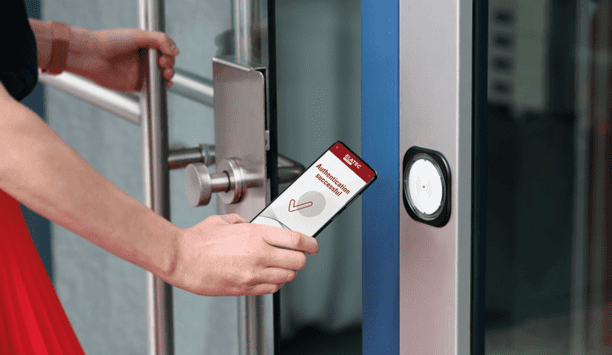
This integration streamlines access and intrusion management into a single workflow, simplifying user and credential management and reducing cross-system administration needs.
Acre Intrusion Controller (AIC) and AAC integration
While Acre Intrusion Controller (AIC) is firmly established across Europe, AAC is gaining traction in North America as organizations upgrade their security infrastructures. The integration arrives at a time when critical infrastructure operators need to enhance insider-threat programs and improve the offboarding process. U.S. authorities like CISA are reinforcing that managing insider threats involves cross-functional efforts from HR, IT, and security teams.
Acre’s solution ensures systems remain synced, preventing outdated permissions from persisting when employees transition roles or exit the company.
Independent Evolution of Security Systems
Historically, access control and intrusion detection systems have evolved separately. Access control focuses on permissions management, while intrusion detection is geared towards unauthorized monitoring and alarm activation.
Diverse protocols and proprietary standards have led these systems to develop in isolation, complicating synchronization during critical operational transitions.
Cloud Solutions and Unified Security
Cloud-based intelligence improves event correlation, helping SOCs distinguish real alerts from false positivesThe shift to cloud-based architectures has enabled a unified data layer across access control and intrusion detection systems, regardless of hardware protocols. This cloud-based intelligence facilitates better event correlation, helping security operations centers to differentiate meaningful alerts from false positives effectively.
As Kumar Sokka, CEO of Acre Security, notes, "We are not claiming to be first to ‘unify’ security tools... This release is a step in our One Acre journey to give security teams operational clarity by unifying access and intrusion detection on a single, governed platform."
Challenges in the Data Center Security Landscape
With data centers increasingly targeted due to the expansion of AI infrastructure, Acre's integration supports a unified security approach. According to IBM's 2025 Cost of a Data Breach Report, physical security breaches in the US average a cost of $10.22 million. Such facilities necessitate security systems that integrate access control with intrusion detection comprehensively.
Acre’s Consolidated Platform Approach
Unlike other vendors that integrate disparate products via partnerships, Acre incorporates both access control and intrusion detection within its own platform. This approach ensures a unified governance layer, where a single cardholder profile manages both access and intrusion permissions.
Upon an employee's termination by HR, access and alarm codes are revoked simultaneously, eliminating synchronization delays and orphaned credentials.
Unified Security Management Dashboard
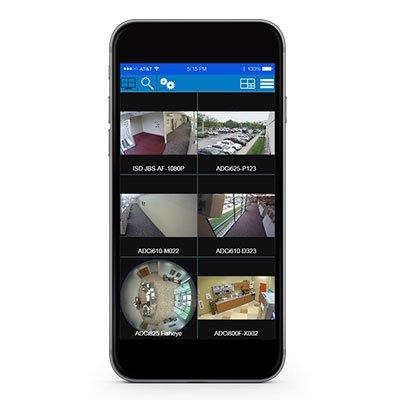
The platform centralizes security information within a single dashboard, combining alarm and event histories for rapid verification. Intrusion and access alerts appear in the same application, avoiding the need for manual data reconciliation.
With its cloud-native architecture and proprietary FlexC bi-directional encrypted communication protocol, the AIC-AAC integration operates without on-premises servers or additional integration appliances, reducing potential failure points.
The integration is currently available in EMEA and APAC regions.
Acre Security, a global pioneer in physical security solutions, announced the general availability of its integration between its Acre Intrusion controller family (EVO, Gen1, AIC-1200) and Acre Access Control (AAC).
The integration connects access and intrusion into one governed workflow, reducing duplicated user and access credential management and cross-system administration.
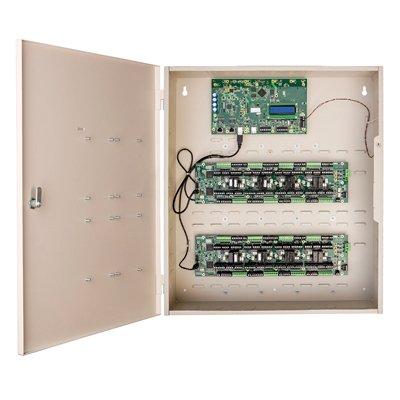
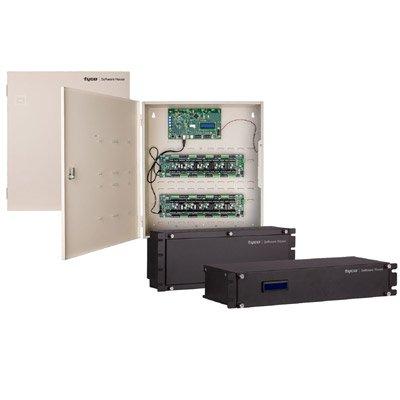
Acre Intrusion Controller (AIC)
Acre Intrusion Controller (AIC) is a proven platform across Europe, while AAC continues to gain momentum in North America as organizations modernise their security environments.
The announcement comes as critical infrastructure operators are being urged to tighten insider-threat programs and improve offboarding. CISA and other U.S. bodies have continued to publish guidance that frames insider threat as a cross-functional operational program, not a single-team policy, with HR, IT, and security working from shared processes. In practice, that means offboarding cannot depend on two separate systems staying in sync.
Acre’s AIC–AAC integration is built for that reality, helping prevent a common problem – two separate systems drifting out of sync and leaving old permissions behind after someone changes roles or leaves.
Evolving independently
Access control and intrusion detection evolved independently, as they solve different problems: access control is permissive (managing who can enter and when). Intrusion detection is detective (monitoring for unauthorized presence and triggering alarms). Access control is standardized around Wiegand and OSDP protocols for reader-to-controller communication.
Intrusion systems used proprietary panel protocols and industry standard reporting protocols for central station monitoring. The vendor ecosystems were equally siloed, with different trade associations, installer certifications, and sales channels.
Different buyers
Inside enterprises, these systems are often reported to different buyers. Facilities management might own the burglar alarm because it is tied into building management. The security director or IT owned access control because it touched employee credentials and identity systems.
That split creates operational gaps during moments that matter most, especially employee exits and access changes, where timing, traceability, and clean revocation are critical.
Eliminating the barrier
Cloud architecture eliminated the protocol barrier. When both systems run on the same cloud infrastructure, they can share a common data layer regardless of the protocols the field hardware uses. The translation happens at the edge; the intelligence lives in one place.
Current threat landscape requires a coordinated response, as security operations centers receive high volumes of alerts daily, many of which are false positives. Correlating events across systems helps stretched teams separate signal from noise.
Unifying access and intrusion detection
"Organizations today face an increasingly complex threat landscape while managing more systems and more data than ever before," said Kumar Sokka, CEO of Acre Security. “We are not claiming to be first to ‘unify’ security tools. The difference is what we mean by unification: identity, policy, and audit that hold up during offboarding and incident response. This release is a step in our One Acre journey to give security teams operational clarity by unifying access and intrusion detection on a single, governed platform."
Security demands
The integration arrives as data center operators face unprecedented security demands due to the race to build AI infrastructure at a historic scale.
These facilities have become high-value targets. IBM's 2025 Cost of a Data Breach Report found that the US average cost of a physical security breach was $10.22 million. As data centers house the compute power behind AI training and inference, operators require security architectures that treat access control and intrusion detection as a unified system.
Acre's different approach
Other vendors often deliver “unification” by integrating separate products through partnerships and connectors. Acre’s approach is different because both the access control and intrusion systems are Acre platforms. That allows unification at the governance layer: one person profile, consistent permissions, and a single record of changes across both systems, instead of two databases trying to stay in sync.
This means a single cardholder profile governs both access permissions and intrusion arming rights. When HR terminates an employee, one action revokes both door access and alarm codes, without sync delays or orphaned credentials in a secondary system.
Exception days, holiday calendars, and scheduling rules apply across both systems from a single configuration.
Displaying information in a single dashboard
The platform presents security‑related information in a single dashboard with a unified alarm and event history. For example, an intrusion alert and a door‑forced‑open alert are displayed within the same application for faster event and alarm verification, rather than appearing in separate applications that require manual correlation.
Cloud-native architecture with Acre’s proprietary FlexC bi-directional encrypted communication protocol means no on-premises translation servers, no integration appliances, no additional points of failure between systems.
The AIC-AAC integration is available now in EMEA and APAC.