


Regardless of market, the challenge of commoditization is very real for manufacturers as companies producing lower-end products continue to imitate the most advanced technologies. This creates a perception among customers, and the marketplace in general, that even leading-edge products with greater features, functionality, and value are indistinguishable from others on the market. As a result of commoditization, this inability to easily distinguish one product from another creates an environment where price often becomes the sole differentiating factor.
In the professional surveillance and security market, commoditization has become more of an issue in recent years. This is especially true with surveillance cameras and other video security solutions. Global competition, outsourcing, and offshoring have combined to make product margins very slim, putting significant strain on manufacturers of higher-end solutions to recoup costs associated with technology innovation. This often makes it difficult for developers and manufacturers of leading edge technologies to compete with low-cost suppliers who have been flooding the video surveillance market with commoditized products.
Innovation As A Differentiator
To retain (or re-establish) differentiation between brands and avoid falling into this commodity trap, security manufacturers must rely on innovation. If you don’t continually develop new technologies and solutions, you’ll eventually be competing on price alone. And with other global suppliers developing their cameras and recorders inexpensively, market prices generally drop to remain competitive, especially in bid situations. Lower prices mean lower profits which typically hampers innovation in commoditized product categories due to the financial resources and dedicated R&D efforts necessary to sustain product innovation. Long story short, companies that fail to recognize the importance of innovation may find themselves on life support as their margins become slimmer and slimmer while their market share continues to erode.
A popular mantra in business is ‘Innovate or Die’, which can be found posted on office walls everywhere. This is particularly true for security technology manufacturers. Any manufacturer who does not actively focus on innovation is accelerating towards tough times. These providers will be the first to feel the pressure that comes with commoditization, and their pain points will be magnified. Innovation is not an end goal but an ongoing process that must be sustained, as each new development will itself eventually be incorporated—again at a lower cost—by commodity-level products.
Lower prices mean lower profits |
Ongoing Process
Innovation must be an ongoing, never-ending process as every innovation that gains traction in the market will attract the attention of competitors who will incorporate similar features and functionality into their products. Whether the innovation is cutting-edge or an incremental improvement to features and functions, in time, it will become commoditized. And in today’s market, the timeframe between innovation and commoditization is shorter than ever and shrinking every day.
Once competitors have succeeded in copying innovative developments—or at least creating the perception of providing comparable functionality—manufacturers of cutting-edge products may find themselves once again in the unenviable position of competing on price alone. Unless, that is, they continue to innovate. Therefore, developing an innovative feature or function cannot be a one-off goal; it must instead be part of an overall long-term strategy to improve products and solutions to stay at least ahead of the marketplace—and the commoditization process.
The need for innovation has never been greater than it is at this moment. However, it’s not enough to simply innovate for the sake of innovation. Any and all product improvements and enhancements must be developed with the goal of better meeting customer needs and/or to provide upgrades to current capabilities that will meet or exceed new specifications and expectations in the industry. With this in mind, there are four main areas where innovative manufacturers’ products outshine commoditized cameras.
 |
| Many manufacturers rely on third-party providers who specialize in particular components to provide the building blocks for their cameras |
Owning The Technology
At their most basic level, surveillance cameras, for example, are made up of the same basic components: lens, imager, processor, and so on. While the quality of these components and the advanced technology they enable will vary from one provider to another, they basically perform the same role as image capture devices. Such generalizations are not unique to video cameras and surveillance solutions, and are common in other product categories such as mobile phones, computers, cars and many others.
Standard interfaces and the development of useful and accepted guidelines and standards like ONVIF has made commoditization even more of an issue. Many manufacturers rely on third-party providers who specialize in particular components to provide the building blocks for their cameras, which may seem like a good idea in the near term but can actually hinder innovation.
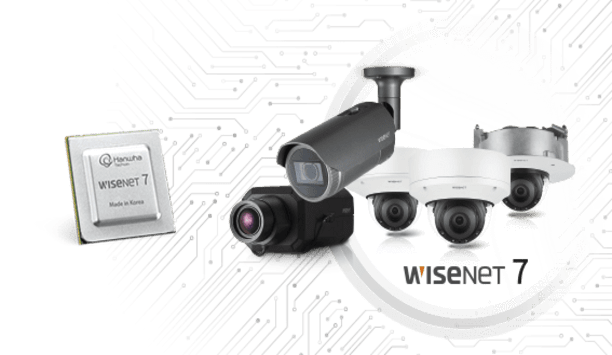
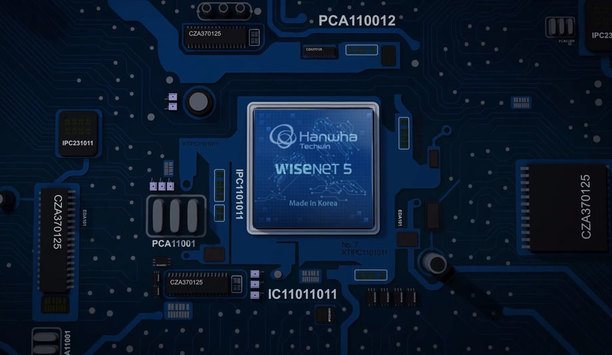
It’s simple. If you manufacture your own chip sets and develop your own firmware—as Hanwha does—you are in control of the innovation process and development planning, which yields established timeframes for these advancements. Conversely, if you source technology, your ability to innovate is restricted by other companies’ ability and willingness to create and release technology advancements, as well as their commitments to numerous other partners who may have priority. Unfortunately, many component manufacturers are content to offer the lowest price for their solutions, rather than increase costs by delivering improvements. Therefore, manufacturers who develop and own innovative technologies are in much better position to deliver superior products ahead of the curve.
Performance And Price
Another reality of innovation is that increased performance and functionality comes with a higher price tag. In fact, this is often not the case when economies of scale are factored into pricing models where the cost of R&D and innovation are amortized across broad product lines with high manufacturing volumes. Even when this is the case, there are many ways to cut corners to reduce the cost of goods, which makes it difficult to compete on price alone for commoditized products. As a result, manufacturers need to educate security professionals on how new technologies deliver greater overall value, and often lower Total Cost of Ownership (TCO).
Manufacturers need to educate |
Advanced features and functions are important to every security product and solution, but these aren’t the end-all. Instead, security manufacturers of higher end products continue to shift the focus from features and functions to systems integration, scalability, and versatility. As the applications for video surveillance continue to transcend traditional security applications and migrate to business intelligence, manufacturers will continue to strive to deliver the right balance of price and performance.
Quality And Reliability
In the professional security industry, good-enough just doesn’t cut it when reliability and product integrity are compromised. Commoditized products rarely, if ever, offer the levels of quality and reliability of the innovative products they’re copying. In nearly every case, these products tend to be based on previous generations of technology rather than the latest, most innovative versions, making them significantly inferior on several levels.
Quality and reliability are the hallmarks of strong security. Recognizing their ability to compete and succeed based on price-driven products alone, lower-end manufacturers tend to focus their strategy on sales volume. This may make their products more attractive to buyers today, but it’s a short-sighted approach that can compromise security—which contradicts the main objective of every security and surveillance solution. Security manufacturers who continue to invest in new and improved technologies and products provide the highest level of protection for people, places and assets.
 |
| Without proper cyber security measures, networked surveillance cameras are vulnerable to hackers |
Cyber Security
Another key area where commoditized products often trail innovative solutions is in the all to critical area of cyber security. Many of the most high-profile cyber-attacks, such as the Target data breach and the recent DDoS attacks that took many of the most well-known websites offline for a period of time, were made possible by internet-connected devices. In the case of Target, hackers gained access to the corporate network and were able to acquire customer financial and other information through software used by a third-party HVAC contractor’s system. In the DDoS attack, hackers were able to turn web cameras for the most part into “bots,” which were used to send the large numbers of requests needed to flood a site’s server and bring it down. And this is just the tip of the iceberg.
A greater number and variety of devices—beyond traditional computers, smartphones and tablets—are networked today. The phenomenon known as the Internet of Things (IoT) has us networking everything from more high-tech products like surveillance cameras and data networks to thermostats, refrigerators, and light bulbs. Because far too many of these devices have their own IP addresses that can be hacked over the Internet, each represents a potential vulnerability that hackers could use as a doorway to gain access to overall networks.
Innovative manufacturers build |
Without proper cyber security measures, networked surveillance cameras also fall into this category of vulnerabilities. Innovative manufacturers build strong security and encryption into their products and continue to release new or updated firmware versions to ensure cameras are protected from emerging threats and vulnerabilities. Reputable manufacturers are also entrusted not to incorporate back-doors into their devices by enabling IP addresses to be easily customized by partnered installers.
Those providers whose focus is on delivering lower-cost commoditized products open potential back doors for hackers to exploit. Considering the potential damage a network breach could cause, from disruption of operations to theft of sensitive assets like customer or financial data, these lower-priced products could end up being very, very expensive in the future.
Staying Ahead
Well-known management consultant Peter Drucker is often quoted as saying, “In a commodity market, you can only be as good as your dumbest competitor.” With apologies to Mr. Drucker, who has made significant contributions to shaping the way numerous corporations do business, this axiom doesn’t necessarily apply to professional security products and technologies. Innovation is the key to staying ahead of the lower-cost commodity products that are flooding the professional security market. Those manufacturers who invest in ongoing R&D and manufacturing are committed to innovation and the long-term needs of their customers. There’s no doubt that commoditization has its benefits, but the safety and security of people, property, and assets requires far more analysis and consideration than price alone.
From facial recognition to LiDAR, explore the innovations redefining gaming surveillance