Security cameras - Expert commentary

There was a time when physical security and cybersecurity occupied two very different worlds. One was concerned with the nuts and bolts of locks, doors and perimeter protection. The other focused on networks, software and digital threats. Today’s modern access control systems – used in everything from offices and hotels to hospitals and data centres – combine the two, fusing mechanical engineering and cloud platforms. That means that a door is no longer simply a physical barri...

When news broke that a Renoir painting had been stolen from an exhibition in the south of France, days after 600 diamonds were taken from a museum in Vienna, few in the art or security worlds would have been surprised. Europol had recently published “Changing Tactics, Changing Targets: The Evolving Nature of Museum Heists,” highlighting criminals’ growing focus on high-value objects and their increasing use of force. The latest theft also echoes the Louvre heist almost a year...

The eagerness to adopt AI in physical security is increasing as teams want to implement technology solutions for faster, smarter operations. At the same time, the conversations surrounding AI have changed. The focus now includes not only efficiency gains but also concerns about accountability and trust. According to the Genetec 2026 State of Physical Security report, AI ranked alongside access control and video surveillance as a key priority. However, approximately 40% of the over 7,000 physica...
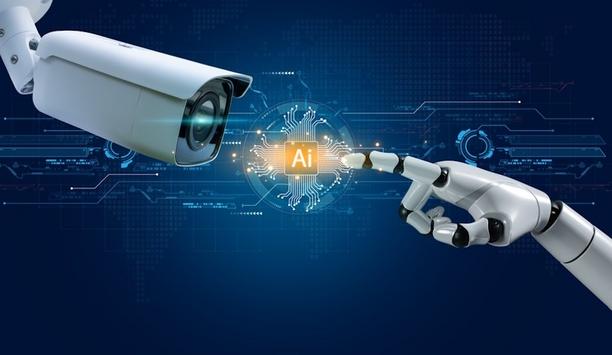
The biggest return on investment from an AI-enabled camera might have nothing to do with security. Organizations are increasingly discovering that the same cameras installed to protect people and property can also improve safety, streamline operations, automate routine workflows, and generate valuable business intelligence. Security remains the primary mission, but it is increasingly only the first customer for the intelligence these systems produce. AI-enabled cameras are rapidly becoming dis...
Europe has set an ambitious goal. With the European Green Deal, leaders aim to make the continent climate neutral by 2050. Ireland is following this lead, promising to cut greenhouse gas emissions by 51% before 2030. And solar energy is a key part of this plan. If you drive through rural Ireland today, you can see the changes happening. Solar farms now cover former grazing land and open fields. They work quietly and efficiently, providing clean electricity to homes, hospitals, schools, and busi...

It has been 10 years since the European Union adopted the General Data Protection Regulation (GDPR), triggering a fundamental overhaul of data protection and privacy law. Today, GDPR is embedded in the day-to-day operations of organizations working with, or within, EU member states. GDPR was introduced in recognition that the world had changed profoundly and that existing data protection laws were no longer adequate in an increasingly digital and interconnected environment. The regulation was a...

Modernizing security infrastructure requires research and planning to build intelligent, connected systems that are secure, scalable and positioned to take the organization into the future. Prioritising needs, total cost of ownership, interoperability, resilience and sustained value will help ensure that a surveillance system upgrade will deliver both protection and measurable operational impact. Before making that investment, however, security leaders must answer a few key questions to manage...

Security is a top priority for any organization responsible for safeguarding critical infrastructure. However, recent events have highlighted the fragility of the global energy supply chain and the need for change. When tankers cannot safely navigate the Strait of Hormuz, fuel prices rise and public anxiety grows. This often results in long lines at the fuel pump and fears of shortages quickly becoming a self-fulfilling prophecy. The reality is that critical infrastructure will always be a tar...

For years, innovation in physical security has focused on what systems can do: higher-resolution cameras, AI-driven analytics, smarter access control, and cloud-based management. But across deployments, from residential systems to enterprise campuses, a more fundamental issue continues to undermine performance: Connectivity. It is increasingly clear that the effectiveness of modern security systems is not limited by sensors or software, but by the reliability, reach, and architecture of the net...
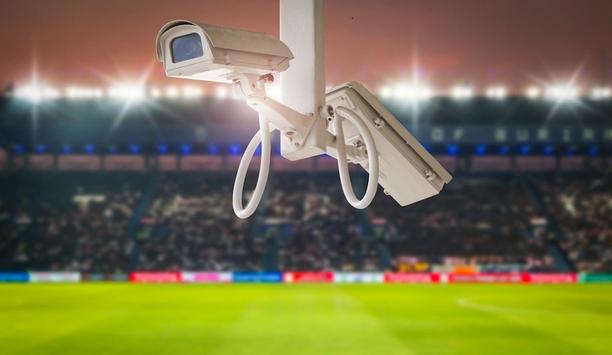
The FIFA World Cup is the ultimate celebration of “The Beautiful Game.” Every four years, we welcome this highly anticipated competition on the global stage, unifying nations and bringing people from all corners of the world together in the name of soccer. While the culmination of the World Cup’s unmatched energy creates electrifying moments on the soccer pitch, the underlying security and risk threats cannot be overlooked.World Cups are not just sporting events, they are tempo...

The physical security industry's entire value proposition is built on the idea that the right people get in and the wrong people stay out. It is somewhat ironic, then, that the industry itself has been fairly cavalier about who gets into a career inside it. I work in an industry that designs and deploys the systems that decide who enters a building, who carries a credential, and who is trusted with access. The technology has grown remarkably sophisticated with AI-based and biometric technologie...

A security camera installed today has more AI processing power than the systems that guided early autonomous vehicle prototypes. And yet the operator who mounts that camera on a wall will, in all likelihood, never use most of that capability. Industry surveys bear this out: a wide gap persists between the number of security professionals who believe AI can improve outcomes and the much smaller share who have adopted it operationally. The reason has nothing to do with the silicon and every...

Banking is built on change. The financial services landscape is evolving faster than ever, as mobile adoption, digital transactions, and customer expectations continue to accelerate. Success in this space now depends on more than keeping pace — it’s about anticipating what comes next and building the agility to move with it. At the same time, financial institutions face the dual challenge of transformation and trust. They must modernise operations, integrate emerging technologies, a...

Acquisitions are often billed as moments of bold opportunity. For senior executives and boards, these deals are about accelerating growth, unlocking synergies, and strengthening competitive advantage. But for the teams responsible for making operations run safely and smoothly — including physical security — acquisitions can feel like controlled chaos. Decisions happen without warning, details are opaque, and the ripple effects of choices made in the boardroom cascade down through ev...

In security, vision is paramount. The surveillance camera serves as an unwavering digital eye—the foundational source of truth. Yet a critical vulnerability persists: what happens when these “eyes” falter without warning? Corrupted footage or unexplained gaps in recorded evidence can render an entire system unreliable, turning trusted video into questionable data. Relying on chance is no longer a viable strategy. Traditionally, ensuring the health of a video surveillance syste...

In mobile surveillance, remote sites, and environments with unstable networks, video recordings often suffer from "time gaps" due to network interruptions, a longstanding technical challenge for security systems. Under traditional architectures, central servers rely on real-time streams for storage. Once the network connection is lost, the recording timeline experiences an irrecoverable interruption, leading to the loss of footage of critical events. This creates a fundamental flaw in post-eve...
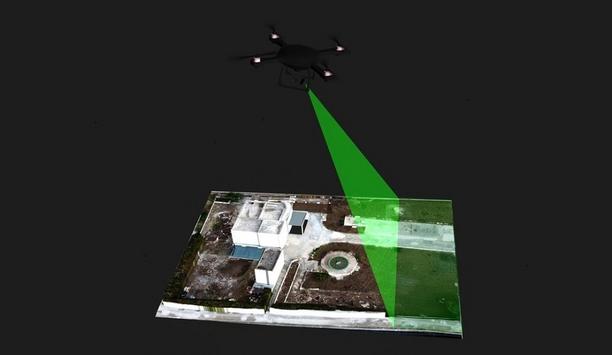
Seven minutes. That’s how long the recent Louvre heist took. In broad daylight, a group of thieves rode up on a construction platform, smashed display cases, stole several historical jewels tied to the Napoleonic dynasty and escaped on scooters before anyone in the control room even realized what was happening. It sounds like a scene straight out of “Mission: Impossible.” Only this time, Tom Cruise wasn’t there. In movies, we often see tight webs of red laser beams guard...
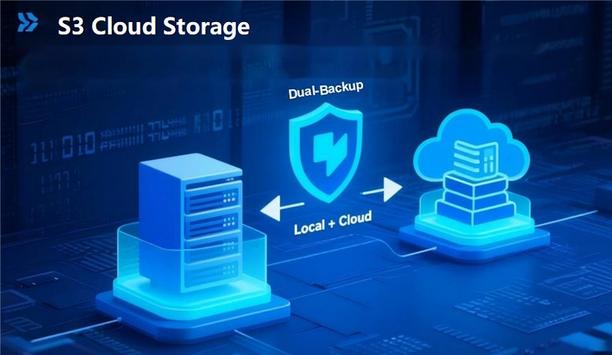
Where and how to store security camera footage usually depends on the scale of the video surveillance project, the way you are using to record the video and how long you want to keep the recordings. If there are only few IP cameras, say 2~3 IP cameras for example, and you don’t need to keep the recordings for the month, usually using SD card which is installed in the camera is enough. Video management software A VMS provides a unified platform to manage all cameras and record footage on...
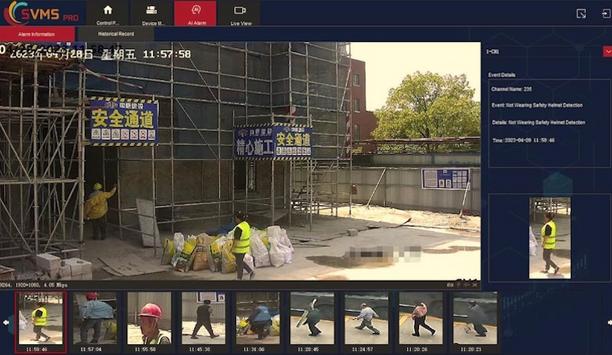
Currently, in security surveillance, the application of intelligent analysis technology has two approaches: front-end intelligence and back-end intelligence. Front-end intelligence Front-end intelligence is typically implemented within the video surveillance camera itself, integrating AI edge algorithms into the camera. Its advantages include: acquiring video in real-time and performing video analysis and feedback results immediately. Benefits No consumption of network resources like bandw...

Physical security isn’t a one-time project or a static system. It’s a dynamic, ongoing process and program that requires constant attention and management to remain effective. While the initial implementation of a security system — what we often call Day 1 — is critical, the ongoing maintenance, service, and adjustments made after systems are operational, or Day 2, are equally essential. Security program long-term Organizations that fail to focus on post-occupancy sec...
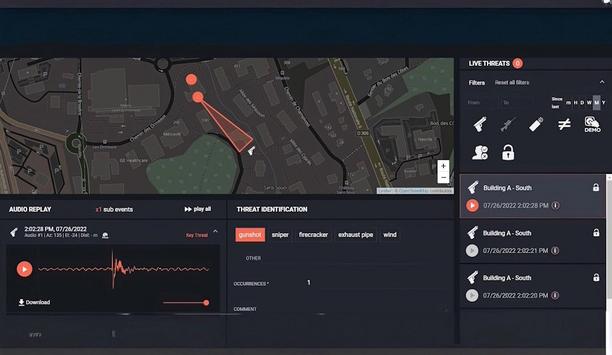
Gun violence remains one of the most unpredictable threats in today’s physical security landscape. When it strikes, seconds matter. The ability to detect and respond to gunfire almost instantaneously can determine outcomes. Security pioneers and first responders know this, and yet too many gunshot detection systems in operation today are shackled by outdated assumptions and aging architecture. The demand now is not for incremental improvements, but for a complete rethinking of how these...

The physical security industry has been in love with the cloud for quite some time. And understandably so. The promise of instant scalability, centralized access, and simplified maintenance is hard to ignore, especially in an era of remote work and distributed facilities. But reality is catching up to the hype. For many, especially those dealing with video surveillance at scale, the cloud is no longer the catch-all solution it once seemed. Rising costs, bandwidth limitations, and latency issue...

In the old days, hopping onto the platform from a not-yet-stopped train was a commonplace stunt for daily commuters in a hurry. It was a thrilling, but dangerous part of railway travel. Today, rail travel is generally much safer, but thrill and fame seekers are finding new, creative ways to use the railway to court notoriety online. Earlier this month, a young man filmed himself laying on the tracks and allowing a train to pass over him. In another instance, two people were seen misusing...

In the ever-evolving struggle between cyber offense and defense, attackers have almost always moved first. In the emerging domain of artificial intelligence, this pattern appears to be repeating itself. Yet, global cybersecurity pioneers appear disconcertingly disengaged. Just over half even agree that AI-driven attacks are set to become dramatically more complex and widespread. Equally concerning is the widespread apathy regarding AI’s role in expanding an already sprawling corporate att...
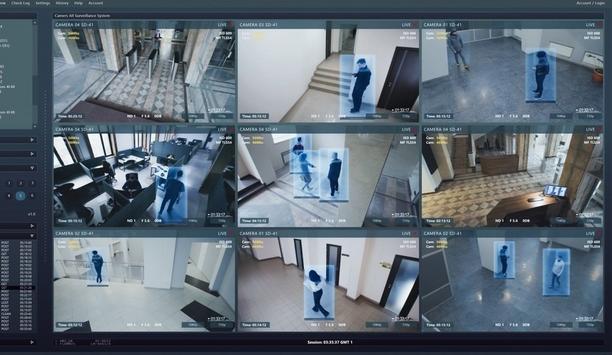
In 2021, New Orleans took bold steps to modernize its public safety strategy after experiencing a dramatic increase in criminal activity. The city invested $70M in advanced video security systems, placing smart cameras in high-risk areas like busy transit hubs and crowded public spaces to promote community safety. The cameras weren’t just traditional CCTV setups—they were smart security solutions equipped with real-time alerts that leverage AI-powered analytics, facial recogni...

Retailers now often find themself in a precarious situation. Profit margins are being squeezed by widespread shoplifting: The Council on Criminal Justice reports that between the first half of 2023 and the first half of 2024, shoplifting reports increased by 24%. Meanwhile, the strategies used by shops to deal with this situation are alienating consumers and affecting total sales. Andy Jassy, the CEO of Amazon, stated during an earnings call that customers are now purchasing more pharmaceutica...

For businesses today, loss prevention is no longer just about safeguarding inventory from theft. While retail theft makes frequent headlines in the United States, and is indeed the leading cause of shrinkage, The National Retail Foundation (NRF) has reported that process failures, operational inefficiencies and employee theft also drive significant losses. Legacy security systems In 2022, the shrink loss is estimated to be $120billion in the United States, and that’s for retail...

Technology advances in the security industry are transforming the way modern systems are designed and installed. Customers today are looking for greater scalability and flexibility, lower up-front costs, and operational efficiency. Cloud-based software as a service (SaaS) solutions, AI-enhanced tools, and IoT-enabled sensors and devices are increasingly in demand. The traditional role of the systems integrator is evolving as a result. While security integrators have always worked closely with e...

From where I sit in talking to security pioneers every day, the traditional Global Security Operations Center (GSOC) stands at a critical inflection point. Security teams are up against challenges in staffing, operational efficiency, and more threat complexity, which means “thinking outside the box” is becoming critical. The use of artificial intelligence (AI) is emerging as more than a buzzword in these situations; it’s becoming a game-changing force multiplier in security o...

In today’s world, almost any electronic security system holds the potential to become a gateway for cybercriminals. With physical security and cybersecurity increasingly entwined, security professionals aren’t doing their job unless they take all possible precautions to lock down unauthorized access to camera systems, access control platforms, intercoms, and other network-based security devices and solutions. Let’s explore the many steps companies should take throughout their...