SecurityInformed.com
  • Products
    Video Surveillance
    • Surveillance cameras
    • Video Surveillance software
    • IP cameras
    • Digital video recorders (DVRs)
    • Dome cameras
    • Network Video Recorders (NVRs)
    • IP Dome cameras
    • Security camera lenses
    Access Control
    • Access control readers
    • Access control software
    • Access control controllers
    • Access control systems & kits
    • Intercom Systems
    • Electronic lock systems
    • Access control cards/ tags/ fobs
    • Access control accessories
    Intruder Alarms
    • Intruder alarm system control panels & accessories
    • Intruder detectors
    • Intruder alarm warning devices
    • Intruder alarm communicators
    • Intruder alarm accessories
    • Intruder alarm lighting systems
    Technology's Role In Securing Banks And Financial Institutions
    Technology's Role In Securing Banks And Financial Institutions
    Dahua 2-Wire IP Smart Control Panel

    Dahua 2-Wire IP Smart Control Panel

    Hikvision 4MP ColorVu 3.0 Fixed PT Network Camera

    Hikvision 4MP ColorVu 3.0 Fixed PT Network Camera

    Hikvision DS-2CD1F47G3H-LIU(2.8mm) 4 MP ColorVu 3.0 Fixed PT Network Camera

    Hikvision DS-2CD1F47G3H-LIU(2.8mm) 4 MP ColorVu 3.0 Fixed PT Network Camera

    Hikvision DS-2CD1F47G3H-LIUF/SX(4mm) 4 MP ColorVu 3.0 Fixed PT Network Camera

    Hikvision DS-2CD1F47G3H-LIUF/SX(4mm) 4 MP ColorVu 3.0 Fixed PT Network Camera

  • Companies
    Companies
    • Manufacturers
    • Distributors
    • Resellers / Dealers / Reps
    • Installers
    • Consultants
    • Systems integrators
    • Events / Training / Services
    • Manned guarding
    Companies by Product area
    • CCTV
    • Access control
    • Intruder alarm
    • IP networking products
    • Biometrics
    • Software
    • Digital video recording
    • Intercom systems
    Technology's Role In Securing Banks And Financial Institutions
    Technology's Role In Securing Banks And Financial Institutions
  • News
    News
    • Product news
    • Corporate news
    • Case studies
    • Events news
    Latest
    • EtherNet/IP Security: CIP Security Gains TÜV Certification
    • CREST: Cyber Resilience Across Financial Services
    • Teledyne ADGiLE 2.0: Methane Monitoring at ADIPEC 2026
    • Aetina Unveils NVIDIA-Powered Edge AI Platforms
    Technology's Role In Securing Banks And Financial Institutions
    Technology's Role In Securing Banks And Financial Institutions
  • Insights
    Insights
    • Expert commentary
    • Security beat
    • Round table discussions
    Featured
    • Too Many Alerts, Too Little Time: How AI Is Tackling Control Room Fatigue
    • What Is The Role Of Passwords In Physical Security?
    • What Steve Jobs Taught Me About Building Better Security Technology
    • What Are The Unique Aspects Of The Critical Infrastructure Market?
    Technology's Role In Securing Banks And Financial Institutions
    Technology's Role In Securing Banks And Financial Institutions
  • Markets
    Markets
    • Airports & Ports
    • Banking & Finance
    • Education
    • Hotels, Leisure & Entertainment
    • Government & Public Services
    • Healthcare
    • Remote Monitoring
    • Retail
    • Transportation
    • Industrial & Commercial
    Technology's Role In Securing Banks And Financial Institutions
    Technology's Role In Securing Banks And Financial Institutions
    Enhancing Security At Lincoln's Inn With KeyWatcher

    Enhancing Security At Lincoln's Inn With KeyWatcher

    Enhance Hospitality Security With Key Control Systems

    Enhance Hospitality Security With Key Control Systems

    eCLIQ Enhances Security At Marin Hospital Of Hendaye

    eCLIQ Enhances Security At Marin Hospital Of Hendaye

    Alamo Colleges Boosts Safety With Alcatel-Lucent OmniSwitch Platform

    Alamo Colleges Boosts Safety With Alcatel-Lucent OmniSwitch Platform

  • Events
    Events
    • International security
    • Regional security
    • Vertical market
    • Technology areas
    • Conferences / seminars
    • Company sponsored
    Virtual events
    • Video Surveillance
    • Access Control
    • Video Analytics
    • Security Storage
    • Video Management Systems
    • Integrated Systems
    Technology's Role In Securing Banks And Financial Institutions
    Technology's Role In Securing Banks And Financial Institutions
    Perimeter Protection 2027

    Perimeter Protection 2027

    DSEI Germany 2027

    DSEI Germany 2027

  • White papers
    White papers
    • Video Surveillance
    • Access Control
    • Video Analytics
    • Video Compression
    • Security Storage
    White papers by company
    • HID
    • ASSA ABLOY Opening Solutions
    • Milestone Systems
    • Software House
    • ELATEC USA
    Other Resources
    • eMagazines
    • Videos
    Technology's Role In Securing Banks And Financial Institutions

    Technology's Role In Securing Banks And Financial Institutions

    Integrated Systems Enable Critical And Compliant Security For Transportation

    Integrated Systems Enable Critical And Compliant Security For Transportation

    Modernizing Physical Access Control

    Modernizing Physical Access Control

    Access. Intrusion. One Estate.

    Access. Intrusion. One Estate.

About us Advertise
  • Securing Financial Institutions
  • AI special report
  • Cybersecurity special report
  • 6
Mobile access
  • Home
  • About
  • Products
  • News
  • Security beat
  • Expert commentary
  • Case studies
  • White papers

Are Mobile Credentials More Secure Than Smart Cards?

Are Mobile Credentials More Secure Than Smart Cards?
Scott Lindley
Scott Lindley
Contact company
Contact Farpointe Data, Inc.
icon Add as a preferred source Download PDF version
Quick Read
⌵
Summary is AI-generated, newsdesk-reviewed
  • Mobile credentials offer stronger security through biometric and multi-factor authentication features.
  • Bluetooth and NFC technologies provide safer, proximity-based access control in mobile systems.
  • Businesses increasingly prefer smart phones over traditional cards for enhanced cybersecurity.
Related Links
  • How Smart Access Control Will Improve Rental And Landlord Security

For the past several years, there has been a focus by integrators and customers to assure that their card-based access control systems are secure. To give businesses an extra incentive to meet their cybersecurity threats, the Federal Trade Commission (FTC) has decided to hold the business community responsible for failing to implement good cybersecurity practices and is now filing lawsuits against those that don't.

For instance, the FTC filed a lawsuit against D-Link and its U.S. subsidiary, alleging that it used inadequate safeguards on its wireless routers and IP cameras that left them vulnerable to hackers.Many companies perceive that they are safer with a card but, if done correctly, the mobile can be a far more secure option 

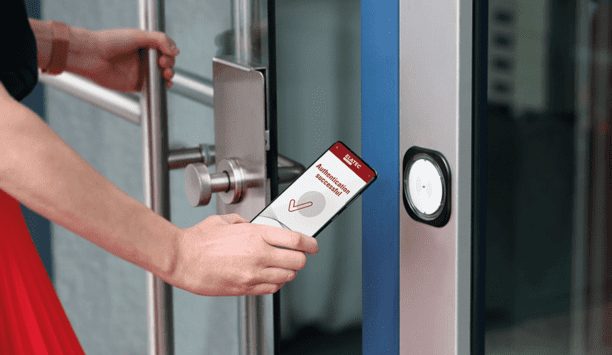
Now, as companies are learning how to protect card-based systems, such as their access control solutions, along comes mobile access credentials and their readers which use smart phones instead of cards as the vehicle for carrying identification information. Many companies perceive that they are safer with a card but, if done correctly, the mobile can be a far more secure option with many more features to be leveraged.

Handsets deliver biometric capture and comparison as well as an array of communication capabilities from cellular and Wi-Fi to Bluetooth LE and NFC. As far as security goes, the soft credential, by definition, is already a multi-factor solution.

Types Of Access Control Authentication

Access control authenticates you by following three things: 

  • Recognises something you have (RFID tag/card/key),
  • Recognises something you know (PIN) or
  • Recognises something you are (biometrics).

Your smart phone has all three authentication parameters. This soft credential, by definition, is already a multi-factor solution. Your mobile credentials remain protected behind a smart phone's security parameters, such as biometrics and PINs. Organizations want to use smart phones in their upcoming access control implementations Once a biometric, PIN or password is entered to access the phone, the user automatically has set up 2-factor access control verification - what you know and what you have or what you have and a second form of what you have.                

To emphasize, one cannot have access to the credential without having access to the phone. If the phone doesn’t work, the credential doesn’t work. The credential operates just like any other app on the phone. The phone must be “on and unlocked.” These two factors – availability and built-in multi-factor verification – are why organizations want to use smart phones in their upcoming access control implementations.

Smart Phone Access Control Is Secure

Plus, once a mobile credential is installed on a smart phone, it cannot be re-installed on another smart phone. You can think of a soft credential as being securely linked to a specific smart phone. Similar to a card, if a smart phone is lost, damaged or stolen, the process should be the same as with a traditional physical access credential. It should be immediately deactivated in the access control management software - with a new credential issued as a replacement.
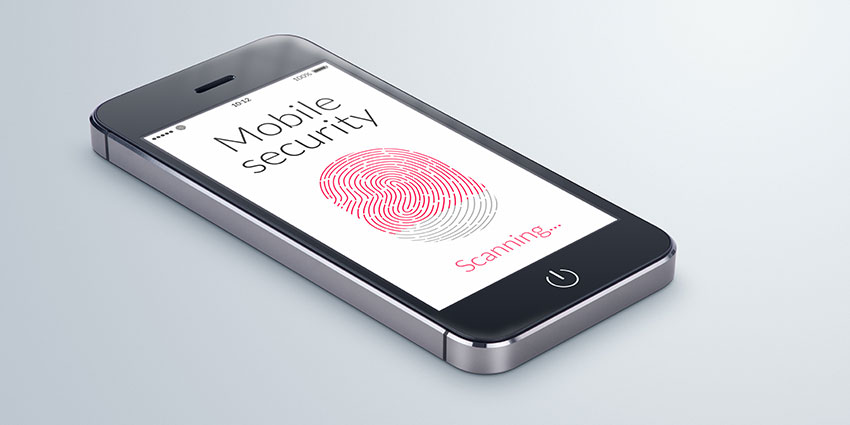
one cannot have access to the credential without having access to the phone. If the phone doesn’t work, the credential doesn’t work. The credential operates just like any other app on the phone.
Your mobile credentials remain protected behind a smart phone's security parameters, such as biometrics and PINs

Leading readers additionally use AES encryption when transferring data. Since the Certified Common Criteria EAS5+ Computer Interface Standard provides increased hardware cybersecurity, these readers resist skimming, eavesdropping and replay attacks.           

When the new mobile system leverages the Security Industry Association's (SIA) Open Supervised Device Protocol (OSDP), it also will interface easily with control panels or other security management systems, fostering interoperability among security devices.

Likewise, new soft systems do not require the disclosure of any sensitive end-user personal data. All that should be needed to activate newer systems is simply the phone number of the smart phone.All that should be needed to activate newer systems is simply the phone number of the smart phone

Bluetooth And NFC The Safer Options

Bottom line - both Bluetooth and NFC credentials are safer than hard credentials. Read range difference yields a very practical result from a security aspect. First of all, when it comes to cybersecurity, there are advantages to a closer read range. NFC eliminates any chances of having the smart phone unknowingly getting read such as can happen with a longer read range.

There are also those applications where multiple access readers are installed very near to one-another due to many doors being close. One reader could open multiple doors simultaneously. The shorter read range or tap of an NFC enabled device would stop such problems. However, with this said in defense of NFC, it must also be understood that Bluetooth-enabled readers can provide various read ranges, including those of no longer than a tap as well.

One needs to understand that there are also advantages to a longer reader range capability. Since NFC readers have such a short and limited read range, they must be mounted on the unsecure side of the door and encounter all the problems such exposure can breed. Conversely, Bluetooth readers mount on the secure sides of doors and can be kept protected out of sight.

Aging Systems Could Cause Problems

Research shows that Bluetooth enabled smart phones are continuing to expand in use to the point where those not having them are already the exceptions With that said, be aware. Some older Bluetooth-enabled systems force the user to register themselves and their integrators for every application. Door access – register. Parking access – register again. Data access – register again, etc.

Newer solutions provide an easier way to distribute credentials with features that allow the user to register only once and need no other portal accounts or activation features. By removing these additional information disclosures, vendors have eliminated privacy concerns that have been slowing down acceptance of mobile access systems.

In addition, you don’t want hackers listening to your Bluetooth transmissions, replaying them and getting into your building, so make very sure that the system is immunised against such replays. That’s simple to do. Your manufacturer will show you which system will be best for each application. Research shows that Bluetooth enabled smart phones are continuing to expand in use to the point where those not having them are already the exceptions. They are unquestionably going to be a major component in physical and logical access control.

Gartner suggests that, by 2020, 20 percent of organizations will use mobile credentials for physical access in place of traditional ID cards. Let’s rephrase that last sentence. In less than 18 months, one-fifth of all organizations will use the smart phone as the focal point of their electronic access control systems. Not proximity. Not smart cards. Phones!

Download PDF version Download PDF version
Google logo Add as a preferred source on Google
  • Network / IP
  • Biometrics
  • Vehicle tracking
  • Wireless security
  • IP Surveillance
  • IP security solutions
  • Data Security
  • IP transmission
  • Mobile access
  • Related links
  • ELATEC Access control software
  • ELATEC Access control readers
  • Articles by Scott Lindley
  • Related categories
  • Access control controllers
  • Intercom Systems
  • Access control software
  • Access control readers
  • Electronic keypads
Related white papers
Where Do We Go From Prox?

Where Do We Go From Prox?

Download
Physical Access Control

Physical Access Control

Download
Machine Operator Authentication

Machine Operator Authentication

Download
Related articles
The Importance Of Machine Authentication In Plant Safety And Security

The Importance Of Machine Authentication In Plant Safety And Security

Universal Readers Create A Frictionless Access Experience For Orion Entrance Control

Universal Readers Create A Frictionless Access Experience For Orion Entrance Control

Security Considerations For RFID And Mobile Access

Security Considerations For RFID And Mobile Access

Follow us

Sections Products Video Surveillance Access Control Intruder Alarms Companies News Insights Case studies Markets Events White papers Videos AI special report Cybersecurity special report RSS
Topics Artificial intelligence (AI) Mobile access Healthcare security Cyber security Counter terror Robotics Thermal imaging Intrusion detection Body worn video cameras
About us Advertise About us 10 guiding principles of editorial content FAQs eNewsletters Sitemap Terms & conditions Privacy policy and cookie policy Californian Residents (CCPA)
  1. Home
  2. Topics
  3. Mobile access
  4. News
  5. Expert commentary
About this page

Discover why smartphone access control surpasses traditional card-based solutions in terms of security, convenience, and cost-effectiveness. Upgrade your access management now!

Subscribe to our Newsletter

Stay updated with the latest trends and technologies in the security industry
Sign Up

DMA

SecurityInformed.com - Making The World A Safer Place
Copyright © Notting Hill Media Inc. 2000 - 2026, all rights reserved

Our other sites:
SourceSecurity.com | TheBigRedGuide.com | HVACinformed.com | MaritimeInformed.com | ElectricalsInformed.com

Subscribe to our Newsletter


You might also like
Technology's Role In Securing Banks And Financial Institutions
Integrated Systems Enable Critical And Compliant Security For Transportation
Modernizing Physical Access Control
Minimizing Storage, Maximizing Focus
Sign up now for full access to SecurityInformed.com content
Download Datasheet
Download PDF Version
Download SecurityInformed.com product tech spec