What Factors Are Accelerating Technology Modernization In Security?
19 Jun 2026
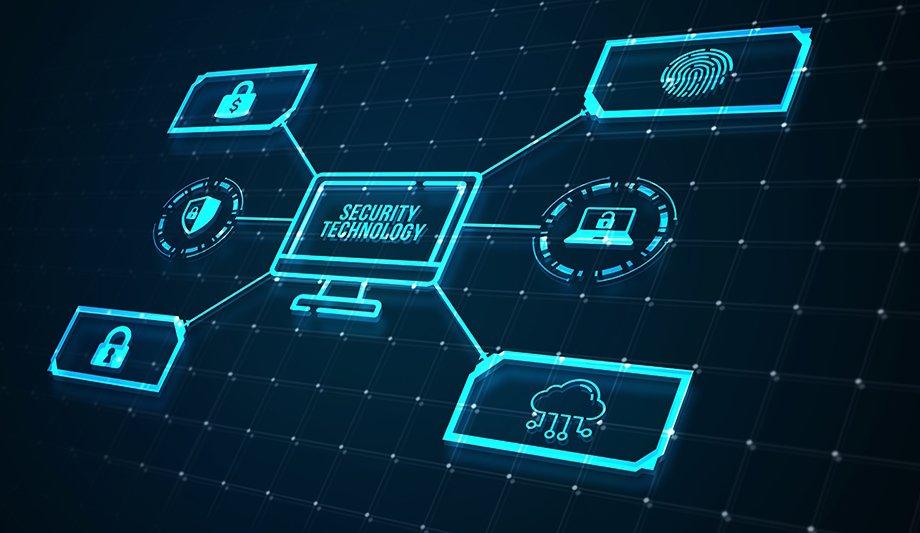

- High costs of outdated systems drive technology modernization in security.
- Cloud and AI adoption spur security technology upgrades.
- Market competition forces businesses to update security technologies.
Editor Introduction
In the simplest terms, technology modernization accelerates when older systems become too expensive to maintain or fail to support modern standards. Market competition pushes businesses to update their technologies to meet rising customer demands. Additionally, the rapid shift toward cloud-based infrastructures and artificial intelligence creates a fear of missing out, forcing companies to adapt or risk irrelevance. Focusing on the physical security market, we asked our Expert Panel Roundtable: What factors are accelerating technology modernisation in security?


As more security platforms become interconnected and expand their value beyond just physical security, organizations are recognising the need for greater certainty about who is interacting with their technology. According to Gartner, 63% of organizations worldwide have already fully or partially implemented a Zero Trust strategy, which – among other things – requires stronger and more frequent identity verification and authentication procedures. This is driving companies to modernize their systems with authentication solutions that are not only more accurate, but also simpler and more convenient to use. As a result, biometrics are a key component of modernization efforts. Biometrics allow organizations to move beyond knowledge or possession-based credentials to methods that are directly tied to the individual. And just like cards or PINs, they can become part of virtually any workflow that requires identity assurance. Artificial intelligence (AI) is helping accelerate this transition by allowing biometrics to handle real-world conditions more effectively while improving speed and throughput. AI is also facilitating deeper integrations between physical security, cybersecurity, and operational systems. As part of that modernization, look for biometric authentication to become a connective tissue tying identity to every layer of security.

One of the biggest drivers of technology modernization in security is the growing demand for trustworthy and accountable AI. Organizations are moving beyond asking what AI can do and are increasingly focused on how it was developed, trained, and governed. CTOs, CIOs, and risk management teams are scrutinising AI vendors more closely than ever, particularly in regulated and mission-critical environments. As AI becomes embedded in security operations, concerns around bias, transparency, privacy, and regulatory compliance are influencing purchasing decisions. Organizations want evidence that AI systems have been developed responsibly. This is where standards such as ISO/IEC 42001 are becoming increasingly important. They provide a structured framework for AI governance, risk management, transparency, and continuous improvement. In the coming years, manufacturers that can demonstrate ethical AI practices will have a significant advantage over those that cannot. Trust is becoming just as important as functionality when evaluating security technology.

Technology modernization in physical security is being accelerated by several converging factors. The first is broader digital transformation and the continued shift from legacy, on-premises systems to cloud-based platforms. Physical access control software is no longer something that must be installed and maintained on a dedicated server inside a building. Increasingly, it is delivered securely from the cloud – often hosted on infrastructure such as Amazon Web Services – enabling security managers to access and manage the system via a secure web interface from anywhere. A second key driver is the mainstream adoption of mobile credentials and digital identities. Supporting this shift requires modern reader infrastructure capable of handling encrypted mobile transactions and strong authentication methods. Cyber security pressure is another major accelerator. The threat landscape has evolved significantly and systems that were considered secure a decade ago may now be vulnerable. Modernization is essential to ensure encrypted communications, secure protocols, and ongoing patch management, with biometrics offering a second authentication step for increased security. Regulatory and compliance requirements are also tightening. Finally, insider risk must be addressed. Employees can present security vulnerabilities if access rights are not properly controlled. Adopting principles such as zero trust and least-privilege access ensures that individuals are continuously verified and only authorized for the areas and systems they genuinely need to access.

Technology modernization in security is no longer being driven by aspiration; it is being driven by pressure. In a recent survey from Axon of more than 250 security leaders in retail and healthcare, 82% reported at least moderate operational disruption from safety or security challenges in the past 12 months. The effects compound quickly across the business: Leaders most reported higher insurance and legal costs, increased employee turnover, and steeper hiring and recruitment spend. These pressures are pushing safety and security firmly onto the strategic agenda and accelerating the search for technology that can keep pace with the scope of the problem. Addressing challenges of this scale calls for a connected approach. The organizations best positioned to respond are those building toward a network of hardware, software, and sensor solutions that work together to drive greater efficiency and visibility. With a connected ecosystem, every capability reinforces the next, and organizations can move from reactive response to real-time coordination across every layer of their security environment.

The security market is changing rapidly, and we are moving from a product/device structure to a sensor environment, where each device can generate information and data for an expanded project scenario. In this more sophisticated project design scenario, the two forces really driving modernization are cloud and AI. End users want to manage sites remotely and optimize business continuity, data harmonization and higher integration with other divisions, for example building management, energy management and more. Cloud has made that a general expectation for users. The consequence is that proprietary cloud platforms are recreating the lock-in problem our industry solved years ago at the device level with interoperability standards like ONVIF. AI is the other driver, and this scenario has introduced a new aspect into security management and operations: How to analyse data and use it to prevent incidents instead of acting once the incident has already happened. The question on a job site has shifted from "will these devices work together?" to "can my system share intelligence across different hardware from different manufacturers?" The technology to do that exists but what is missing is a common language between platforms. Integration and interoperability can be vastly different scenarios. This means that today the value of the technology often gets stuck inside one vendor's system.

Artificial intelligence is the key driver prompting change in security today. Currently, AI-powered alerting and search are turning reactive security operations into proactive processes, with the ability to use video surveillance as a business intelligence tool more available than ever. AI will only continue to progress in capabilities. The use cases we are seeing today will grow in terms of the convenience they can unlock. Agentic capabilities, the phase of AI we are turning the corner on now, will turn proactive response into a completely automated workflow. With human-in-the-loop design implemented, this has the potential to completely reinvent company roles, turning security professionals into cross-departmental thought-leaders who use their expertise in physical security systems to identify optimizations across the organisation. Hybrid architectures are accelerating how quickly organizations can adopt this new technology, as combined leveraging of local recording with cloud capabilities provides more flexible deployment options.

Several converging factors are accelerating technology modernization in physical security and many of them are being driven by forces outside the traditional boundaries of the industry. First and foremost is the growing recognition that cybersecurity and physical security are now inseparable. The rise of zero trust architectures is pushing organizations to rethink how identities are authenticated and verified across both digital and physical environments. That means stronger, more dynamic credentialing and a move away from legacy technologies that were never designed with today’s threat landscape in mind. A major catalyst behind this shift is the emergence of quantum computing. While it may still feel like a future concern, the reality is that quantum computers will eventually be capable of breaking many of the encryption methods that underpin current access control systems. This is where standards such as Open Supervised Device Protocol (OSDP) become critical. OSDP introduced secure channel communication between readers and controllers, but its underlying cryptographic foundations are ageing. There is now active work to evolve OSDP towards quantum-resistant models, using stronger encryption approaches to ensure long-term resilience. With a broader shift towards risk-based modernization, not every part of a system needs to be replaced overnight, but organizations are prioritizing upgrades in high-risk areas.

Technology modernization in the security industry is accelerating out of necessity. As projects become more complex and stakeholders more distributed, organisations need faster, more accurate ways to capture information, make decisions, and execute across the project lifecycle. Across applications, artificial intelligence is helping unlock those efficiencies—not as a replacement for human expertise, but as a force multiplier for it. In many cases, the greatest opportunity for technology modernization is not simply with smarter products or better analytics; it is in eliminating repetitive administrative tasks, preserving critical project knowledge, and reducing the manual work that slows teams down. In applications where AI streamlines documentation, information capture, and workflow coordination, security professionals can focus more of their time on solving problems, serving customers, and applying the expertise that technology cannot replace. As the scope of AI application expands into the design, implementation, and system management phases, organizations can move beyond reactive project execution toward more connected, proactive operations optimisation. The result is better communication, faster project delivery, and greater consistency from initial site assessment through long-term system management.

Technology modernization in security is accelerating as organizations face greater operational complexity, tighter budgets, and rising expectations around cybersecurity, governance, and resilience. Disconnected systems and aging infrastructure are barriers to efficiency and decision-making. To meet these evolving needs, end users are actively replacing siloed systems with interoperable architectures that allow data to flow seamlessly and enable real-time monitoring and response, and faster decision-making. Cloud adoption is also maturing. Hybrid connectivity, deployment flexibility and governance are some of the key drivers. Security teams are working closely with IT to meet governance, risk, compliance, cybersecurity, and long lifecycle operational demands across many sites. AI is also accelerating modernization, particularly through practical automation that helps security teams investigate incidents faster, respond more efficiently, and reduce operator workload. Automation and AI-powered technology are unlocking new outcomes and opportunities, but responsible and ethical implementation of AI technology is important, with clear guidelines, boundaries, data privacy practices, and humans in control.

AI is dramatically accelerating the pace at which organizations adopt new tools, platforms, and connected technologies—and that speed is fundamentally reshaping the security landscape. The bottom line: Every new cloud service, AI driven workflow, or digital system expands the attack surface, pushing security teams to move beyond protecting today’s environment and toward securing what the business will become tomorrow. While much of the focus is on AI itself, organizations are also working to future-proof against emerging risks such as post-quantum threats, which AI will only amplify over time. At the core of this modernization is a shift toward smarter, identity-centric security that can continuously establish trust, reduce fraud, and apply the right level of friction for users—along with improved visibility into cryptographic assets to address post quantum risks. When security does not evolve as quickly as technology, organizations risk falling behind both increasingly sophisticated attackers and more agile competitors.

Technology and security have always shared a dynamic connection and in the view of the built environment specifically, the modernization of this relationship is being accelerated by several converging factors. Today, there is a growing demand for connected buildings, and as such, facility managers increasingly expect their security systems to integrate with wider building management platforms. Access control systems now form part of a connected ecosystem that offers enhanced security management, often tailored to the facility and its occupants, with professionals and end users alike actively looking to combine security with convenience, aesthetics and accessibility. At the same time, greater emphasis is being placed on life safety, compliance and accountability, with external legislation requirements a driving force behind the demand for systems that provide greater audit trails and reporting. As mobile credentials, cloud-based management and contactless technologies continue to advance in response, they are more widely adopted and are being considered much earlier in the design process through building information modeling (BIM) and coordinated digital specification workflows. With this, the distinction between traditional hardware products and technologically advanced security systems will only narrow further, further accelerating innovation across the sector and enhancing physical building security in the process.

Technology modernization in security is being accelerated by a combination of rising threats, cloud adoption, AI, and the growing convergence of physical and cyber security. Organizations are no longer protecting a single building, network, or application. They are protecting distributed workplaces, connected devices, cloud platforms, identities, APIs, and large volumes of sensitive data. At the same time, attackers are moving faster and using automation, supply chain weaknesses, and AI-enabled techniques. This is forcing security teams to modernize from reactive, manual processes to more intelligent, automated, and real time approaches. Another key factor is business resilience. Security is now directly tied to uptime, trust, compliance, and customer confidence. Modern tools such as AI-driven analytics, cloud native security, zero trust, and integrated monitoring help organizations detect risks earlier and respond faster. Modernization is no longer just a technology upgrade; it is becoming a core business requirement.
Editor Summary
Technology modernization in security is accelerating due to rising operational costs, cyber threats, and market competition. Organizations are shifting from legacy, siloed infrastructure to cloud-based, interoperable platforms and mobile credentials. Key catalysts include the adoption of artificial intelligence for automated, proactive analytics, and the integration of zero-trust frameworks to address growing cyber-physical security risks. Ultimately, modernisation has transformed from a simple IT upgrade into a critical strategic requirement for business resilience.
- Related links
- Genetec Access control software
- HID Access control software
- Suprema Access control software
- Biometric Access control software
- Access Control Software Access control software
- Mifare Access control software
- Proximity Access control software
- Centrally managed access solution Access control software
- Face Recognition Software Access control software
- Related categories
- Access control software