
The Lubbock County Detention Center (LCDC) in Texas, a notable direct supervision county detention facility with a 1500-bed capacity, has been operating since 2010 with the Morse Watchmans key control system.
This system is instrumental in enhancing the security and safety measures for both inmates and staff, alongside other advanced electronic security systems.
Maintaining a Secure Environment
Captain Malcolm Chambliss, the Day Shift Captain and Detention Response Team Commander at the Lubbock County Sheriff’s Office, emphasized the importance of integrating sophisticated technology at the LCDC. The Morse Watchmans automated key control system was integral to the facility's strategic objective of achieving safer and more efficient operations.
Captain Chambliss noted, "Tracking keys from one shift to another is an essential procedure for maintaining a secure environment, and the Morse Watchmans system provides that capability for us in an automated, easy to use way."
Advanced Key Management with SmartKey Technology
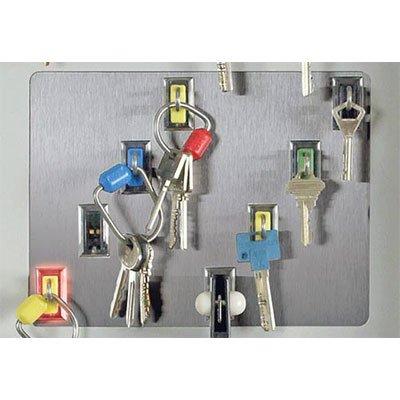
Each key is affixed to a SmartKey locking mechanism equipped with a memory chip
The KeyWatcher® system installed at LCDC is designed to ensure accountability through its innovative functionality. LCDC guards and other authorized personnel must use their pre-programmed PIN codes on the cabinet's built-in keypad to access keys.
When the PIN entered matches the information in the system database, the cabinet unlocks, allowing the removal or return of keys. Each key is affixed to a SmartKey locking mechanism equipped with a memory chip, ensuring that every transaction is logged each time a key is taken or replaced.
Enhanced Security Protocols
According to Captain Chambliss, the marriage of electronically restricted access and real-time key tracking significantly bolsters the facility's security protocols. "The system is extremely secure and has helped to improve our security procedures," he states.
The LCDC operates with four network-connected KeyWatcher key cabinets, allowing for seamless online monitoring, updates, and reporting. This network connectivity empowers personnel, such as Captain Chambliss, to keep track of key distribution at any given moment.
Efficient Key Control System
The system is configured to send email alerts if keys are not returned as scheduled, thus enabling swift supervisory action. Additionally, activity reports for each key can be generated, and historical data can be compiled into databases and spreadsheets for comprehensive analysis.
Captain Chambliss affirms the value of implementing the Morse Watchmans key control system, stating, "The Morse Watchmans key control system was a good decision and has proven to be a valuable technology solution. We don’t have problems with unauthorized access or missing keys and the paperwork takes care of itself. In fact, with less effort we have more usable information."
Try our KeyWatcher Configurator tool to design your ideal system to meet your requirements (Note: if using a mobile device, please turn the phone to landscape mode.)