Banking is built on change. The financial services landscape is evolving faster than ever, as mobile adoption, digital transactions, and customer expectations continue to accelerate. Success in this space now depends on more than keeping pace — it’s about anticipating what comes next and building the agility to move with it.
At the same time, financial institutions face the dual challenge of transformation and trust. They must modernise operations, integrate emerging technologies, and manage growing risks — all while safeguarding the confidence that underpins every customer interaction. The ability to innovate without disruption has become a defining measure of leadership.
Cloud-based platforms
That’s why a clear and flexible roadmap is essential. It provides the structure to stay aligned and the freedom to adapt and progress. With the right technology roadmap, banks can modernise their systems responsibly, while strengthening resilience and leading with confidence in this rapidly shifting market.
No two financial institutions are built the same — especially when it comes to security infrastructure. Each organization’s environment reflects its unique mix of business priorities, operational requirements, and risk tolerance. A large bank may rely on highly controlled, on-premises systems designed to safeguard vast amounts of sensitive data and legacy investments.
There’s no one-size-fits-all model in banking; the best strategy is the one that works for your organization
Meanwhile, smaller and more agile credit unions might leverage cloud-based platforms and AI-driven analytics to accelerate service delivery and innovation. Both approaches are valid — and both deliver value — because they align with the institution’s specific goals and return on investment. There’s no one-size-fits-all model in banking; the best strategy is the one that works for your organization.
Integrating AI models
Regardless of where you stand today, it’s essential to look ahead and imagine what your future needs might be. Will your institution need to manage operations centrally? Is global expansion part of your growth strategy?
Are you preparing to integrate AI models or advanced automation? These questions help shape a flexible roadmap — one that prioritises open platforms and interoperable solutions. Such an approach allows traditional and emerging technologies to coexist, evolve, and scale together on your terms. It bridges technology generations and creates a path forward that’s intentional, not reactive.
From plans to practice
A roadmap becomes meaningful when it connects vision to measurable results. It’s about designing each step to serve a purpose: strengthening awareness, improving investigations, or accelerating decisions.
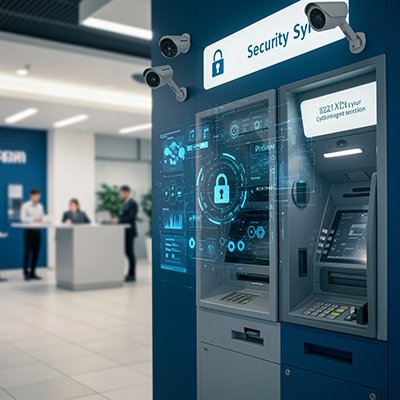
Adaptable planning ensures those outcomes can evolve as priorities shift. For some banks, the focus may be on modernising surveillance infrastructure. For others, it may mean integrating analytics that reveal how customers interact with branches or ATMs. Each success shapes the next phase of progress.
Technology infrastructure program
Adaptability also means understanding that modernisation doesn’t have to happen all at once
Adaptability also means understanding that modernisation doesn’t have to happen all at once. Incremental improvements can deliver immediate and long-term value. A single upgrade that shortens investigation times or improves video retrieval might seem small, but across hundreds of locations, that impact compounds quickly. A larger technology infrastructure program upgrade will take more time, but can lead to more impactful business results.
True flexibility starts with openness. Systems that integrate seamlessly, whether they connect legacy cameras or cloud-based analytics, can provide the most long-term value. Open devices and platforms ensure long-term adaptability, giving teams confidence that today’s investments will still deliver value years from now.
This approach helps institutions modernise strategically. Instead of tearing out what already works, they enhance it — layering intelligence, automation, and stronger governance over familiar infrastructure. Each advancement builds a smarter, more resilient foundation for future innovation.
Culture fuels change
That alignment not only strengthens technology performance but also builds confidence across the people
Technology enables transformation, but people sustain it. A flexible roadmap relies on effective communication and alignment from leadership throughout every branch and department. When teams understand how modernisation strengthens security and customer trust, they approach each initiative with purpose. That shared vision is what turns progress into culture.
Trust, after all, is what defines banking. Customers rarely see the systems that keep them safe, but they feel the consistency and care behind every interaction. When that trust is reinforced through steady innovation, it becomes a competitive advantage that grows stronger with each improvement.
Adaptability also drives stronger collaboration. When security, operations, and compliance teams align under a unified plan, insights flow more freely, and actions follow more quickly. The result is fewer silos, faster decision-making, and a shared vision of success. That alignment not only strengthens technology performance but also builds confidence across the people and processes that keep the institution secure every day.
A map of the future
Flexibility creates direction with room to move; a balance of focus and agility. The most effective roadmaps evolve continuously, blending technology, insight, and collaboration into a long-term rhythm of progress.
Security without speed limits empowers banks to advance at their own pace while remaining secure, compliant, and confident in every decision. It’s how financial institutions move forward— not by racing ahead, but by steering with precision and vision, one strategic turn at a time.