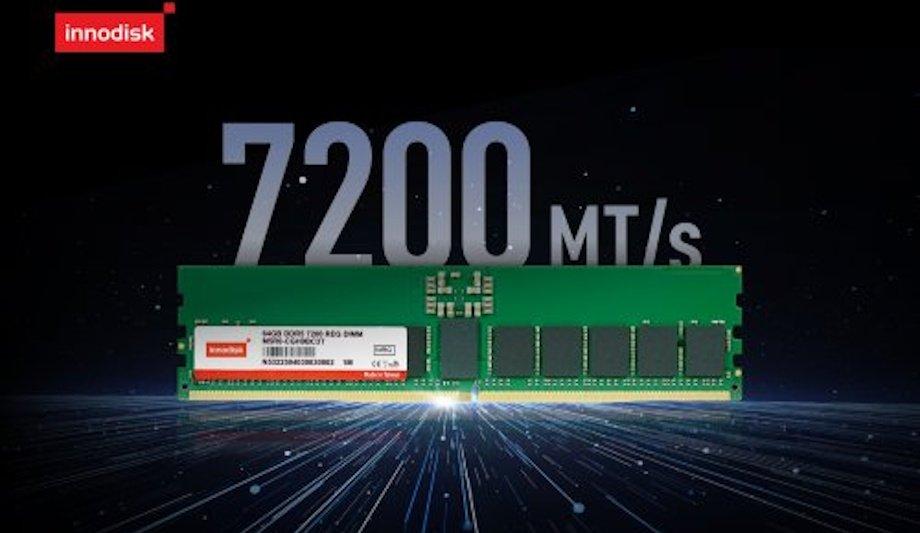

Innodisk, a recognized provider of AI solutions, has unveiled its new DDR5 7200 RDIMM, marking an important enhancement to its DDR5 series.
This development is notable for introducing a single-module capacity of up to 64GB, the largest in the industrial sector, aimed at advancing innovation within embedded and edge AI applications.
Enhanced performance for Data Processing
The newly launched DDR5 7200 RDIMM offers a remarkable data transfer rate of 7200 MT/s, a 12.5% speed improvement. Available in capacities from 8GB to 64GB, with RDIMM models specifically ranging between 16GB and 64GB, this series caters to the needs of enterprise data centers and edge AI servers.
It supports the growing demand for on-premises confidential computing, enabling sensitive data to be processed locally while ensuring robust security and privacy protections.
Robust Testing and Validation
These measures ensure the DDR5 7200 RDIMM holds stable version even under heavy loading conditions
Leveraging its extensive field experience and feedback from a diverse clientele, Innodisk has fortified its validation process. The company conducts rigorous stress tests under extreme conditions, such as 4-corner, thermal shock, humidity, and PCB bending tests.
These measures ensure the DDR5 7200 RDIMM maintains stable performance even under heavy loading conditions, with ongoing efforts to expand its validation processes further.
Upcoming Product Rollout
In response to the growing demands of data-intensive applications, Innodisk is set to introduce the rest of the DDR5 7200 product family by Q1 2026. This includes CUDIMM, CSODIMM, ECC CUDIMM, and ECC CSODIMM formats, offering customers a broad array of competitive options to choose from.
Through this product enhancement, Innodisk reiterates its dedication to providing innovative memory solutions. These developments are designed to empower edge AI and embedded applications, guaranteeing reliable performance in challenging industrial environments.