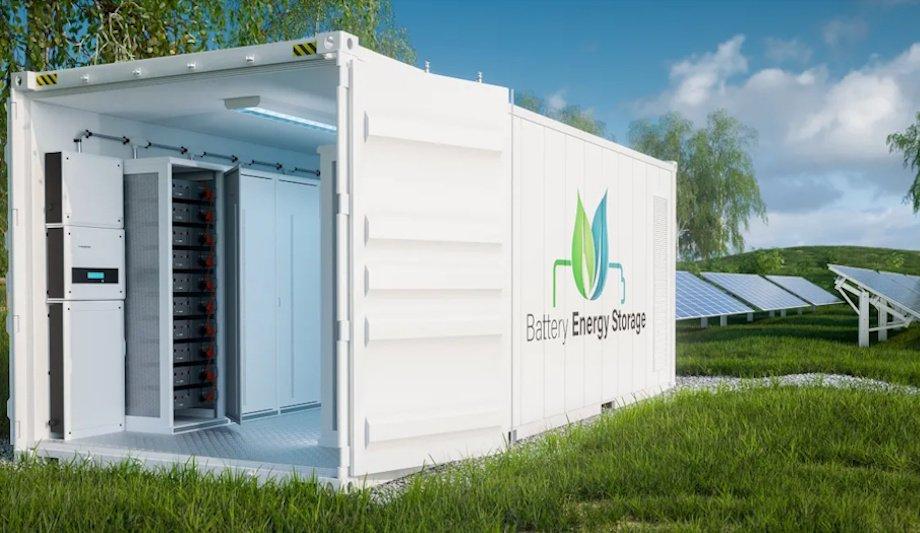
As the global shift towards renewable energy accelerates, Battery Energy Storage Systems (BESSs) play a crucial role in meeting the demand for stable, decentralized power on a large scale. These systems capture excess energy from sources like solar and wind, storing it in batteries for deployment during periods without wind or sunlight.
This method helps maintain grid stability by ensuring a consistent power supply, effectively managing the inherent fluctuations of renewable sources. For example, surplus electricity generated by solar farms during the day can be conserved in BESS facilities for nighttime usage.
Currently, over 90% of large-scale energy storage units utilize lithium-ion batteries. Investment in new facilities is projected to rise at an annual rate of over 30%, reaching $12.1 billion by 2025. These batteries are favored for their superior energy density, faster charging capabilities, and extended lifespan compared to traditional alternatives.
Addressing BESS Safety Concerns
The difficulty in extinguishing a fire once thermal runaway starts poses potential dangers of significant damage
Lithium-ion batteries, while advantageous, present unique safety challenges, particularly the risk of fire due to thermal runaway. Understanding and proactively managing these risks with comprehensive fire detection and prevention strategies is essential for operators.
The difficulty in extinguishing a fire once thermal runaway starts poses potential dangers of significant damage and risk to first responders. An incident in April 2022 exemplifies this when teams battled a fire for four days at a 10 MW storage site in Chandler, AZ. A similar event occurred in 2019 in Surprise, AZ, resulting in injuries and substantial community disruption.
Abuse Factors in Lithium-Ion Cells
Specific environmental conditions must be maintained to prevent lithium-ion cells from failing. When these conditions are not met, abuse factors may trigger thermal runaway. Awareness of these factors is essential for early prevention.
Electrical Abuse: This happens when batteries exceed voltage limits during charging or discharging, possibly causing overheating. The complex operation of these batteries increases the risk of any cell surpassing voltage limits, leading to potential fire hazards.
Mechanical Abuse: Physical damage from impacts, vibrations, or punctures can compromise battery integrity.
Thermal Abuse: Occurs when operating temperatures exceed safe levels, possibly due to overcharging, resulting in chemical reactions that turn liquid electrolytes into flammable gases.
Importance of Early Detection
Detecting battery failure at the earliest stage is crucial to prevent thermal runaway from developing
Detecting battery failure at the earliest stage is crucial to prevent thermal runaway from developing. As conditions worsen, electrolyte vapors vent, increasing internal pressure and leading to catastrophic failure.
Conventional heat and smoke detectors used in mobile BESS units might not provide timely warnings. They typically react to smoke only after a fire has occurred. Additionally, these systems may not be adequately monitored or maintained due to design limitations.
Preventive Measures and Technology
A comprehensive approach incorporating advanced detection solutions and battery management systems can significantly enhance safety measures.
Battery Management Systems monitor critical factors like voltage, current, and temperature. However, they should complement additional layers of protection.
Temperature and Humidity Sensors keep track of surrounding air conditions, including room temperature and power quality.
Innovative detection systems provide early warnings, enabling timely emergency responses. These include:
- Thermal Imaging Cameras: Capture temperature variations in equipment and surroundings.
- Off-Gas Detection: Detects early signs of battery failure through vapor venting.
- Very Early Warning Smoke Detection: Employs sensitive sensors to signal potential fire events, allowing for prompt intervention to mitigate risks.
Evolving Fire and Life Safety Standards
Fire and life safety standards are advancing to mitigate BESS-associated risks. Adherence to building and fire codes is critical in protecting the public and emergency responders.
The International Fire Code (IFC) 2021 specifies storage battery bundling and safe spacing in Chapter 12. National Fire Protection Association (NFPA) 855 outlines rules for the lifecycle of energy storage systems. UL 9540 and UL 9540A set safety and testing benchmarks for energy storage systems across all levels.
Continual updates in these standards necessitate careful review before beginning BESS design, construction, installation, and operation. As lithium-ion battery storage becomes integral to the green energy transition, advancements in fire prevention and safety technology are vital for sustainable operations. The integration of off-gas detection, early smoke warning systems, and thermal imaging, combined with sophisticated alarm monitoring, ensures BESS facilities maintain optimal safety levels.
As the world transitions to renewable energy, Battery Energy Storage Systems (BESSs) are helping meet the growing demand for reliable, yet decentralized power on a grid scale.
These systems gather surplus energy from solar and wind sources, storing it in batteries for later discharge. This process helps stabilize the grid by ensuring a steady power supply and mitigating the variability associated with renewables. Excess daytime electricity from solar farms, for instance, can be stored at a BESS facility for use overnight.
More than 90% of these grid-sized energy storage systems utilize lithium-ion batteries with spending for new facilities expected to grow at an annual rate of more than 30%, reaching $12.1 billion by 2025. Lithium-ion batteries offer higher energy density, faster charging and longer life than traditional batteries.
Addressing BESS safety concerns
Lithium-ion batteries in energy storage systems have distinct safety concerns that may present a serious fire hazard unless operators understand and address the risk proactively with holistic, advanced fire detection and prevention methods.
Once a lithium-ion battery overheats in a BESS and the process of “thermal runaway” occurs, it can be nearly impossible to extinguish, potentially causing catastrophic damage and risking the lives of first responders called to put out the fire. Such an event occurred in April 2022 at a 10 MW storage facility in Chandler, AZ, where fire crews struggled to extinguish a blaze for four days.
In 2019, a fire and explosion at an energy storage system in Surprise, AZ, near Phoenix, was triggered by an overheated lithium-ion battery injuring several first responders and resulting in significant damage to the facility and disruption to the surrounding community.
Abuse Factors
Lithium-ion cells are prone to failing if not kept within specific environmental conditions. When these conditions are compromised, so-called abuse factors can lead to thermal runaway. Awareness of these abuse factors can help operators prevent thermal runaway at its earliest stage.
- Electrical Abuse: This occurs when a battery exceeds voltage limits during charge or discharge and overheats. The simultaneous operation of these batteries poses the risk that any one of the battery cells could exceed voltage limits during charge or discharge and can cause overheating that triggers a potential fire event.
- Mechanical Abuse: This can be caused by physical or mechanical damage to the battery such as a crush, indentation, or puncture from vibration or shock.
- Thermal Abuse: This is initiated when the operational temperature exceeds the limits of the battery. If caused by overcharging, the extra current triggers a chemical reaction that breaks down the battery’s organic liquid electrolytes and changes them from a liquid to a highly flammable gaseous state.
Why is the earliest possible detection of a battery failure
When an abuse factor continues unaddressed, more of the liquid electrolyte from the battery will convert to gas, causing an internal build-up of pressure sufficient to vent or rupture the battery seals and resulting in an off-gassing event. Eventually, as more gas is generated, internal pressure and heat continue to increase rupturing, melting the separator, and releasing the smoke. By this point, thermal runaway is imminent.
A single cell failure can quickly overheat and spread to surrounding cells. That’s why the earliest possible detection of a battery failure is crucial to preventing a potential disaster caused by thermal runaway.
It is common for mobile BESS units to utilize traditional heat and smoke detectors in interior spaces, but these sensors are not equipped to provide sufficiently early warning of an impending fire. They are only sensitive enough to detect smoke after a fire has started, which is much too late to stop thermal runaway from igniting an entire bank of batteries. Furthermore, these pre-installed systems cannot be serviced, monitored, or maintained to ensure they are in basic working order due to unit design.
The best protection is prevention
A holistic approach using advanced detection and performance-based solutions combined with battery management systems can work together to establish layers of safety and fire protection.
- Battery Management Systems monitor voltage, current, and temperature to identify any battery abuse factors. While this is an important initial layer, it should not be the only layer of protection.
- Temperature and Humidity Sensors measure the temperature of the air surrounding the sensor including ambient room temperature, shock/vibration/AC power quality and conditions.
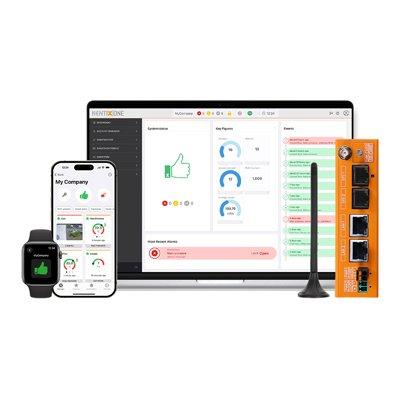
- Advanced detection innovations provide the very earliest possible intelligence about conditions inside the BESS. These early warning systems can be professionally tested, serviced, maintained, and monitored at the fire alarm control panel.
- Thermal Imaging Cameras graphically illustrate the temperature of the objects and equipment the camera can see.
- Off-Gas Detection technologies can provide an alert in the initial stage of lithium-ion battery failure when venting of electrolyte solvent vapors begins and prior to thermal runaway.
- Very Early Warning Smoke Detection systems use ultra-sensitive sensors to provide early warning of an impending fire event, buying time to initiate an appropriate emergency response to prevent injury, property damage or business disruption.
If an off-gas event occurs, sensors can be used to quickly notify facility operators to shut down the system or contact first responders to mitigate the spread of fire from cell to cell.
Responding to the ever-evolving fire and life safety industry
Fire and life safety industry standards are evolving to minimize the fire risks associated with BESSs. Ensuring appropriate criteria to address the safety of such systems in building codes and fire codes is an important part of protecting the public, building occupants, and emergency responders.
- International Fire Code (IFC) 2021 1207.8.3 Chapter 12, Energy Systems requires that storage batteries, prepackaged stationary storage battery systems, and pre-engineered stationary storage battery systems are segregated into stationary battery bundles not exceeding 50 kWh each, and each bundle is spaced a minimum separation of 10 feet apart and from the building wall.
- National Fire Protection Agency (NFPA) 855 establishes requirements for design, construction, installation, commissioning, operation, maintenance and decommissioning of stationary energy storage systems and applies to battery installations over 70 kWh.
- UL 9540—Standard for Safety Energy Storage Systems and Equipment outlines safety requirements for the integrated components of an energy storage system requiring that electrical, electro-chemical, mechanical and thermal energy storage systems operate at an optimal safety level.
- UL 9540A—Test Method for Evaluating Thermal Runaway Fire Propagation in Battery Energy Storage Systems implements quantitative data standards to characterize potential battery storage fire events and establishes battery storage system fire testing on the cell level, module level, unit level and installation level.
Design, construction, installation, and operation of a BESS
Because these requirements are continuously evolving, careful investigation of all standards must be performed before beginning the design, construction, installation, and operation of a BESS.
Lithium-ion battery storage facilities are pivotal to the transition to a greener economy. Just as eco-friendly technology is evolving to strengthen the renewable energy industry, advanced fire prevention and life safety technology must also advance to protect it. Off-gas detection, very early warning smoke detection and thermal imaging camera systems combined with advanced alarm monitoring can help keep BESSs operating at the highest levels of safety.