
 |
| Improvements in the technology have lowered – but not eliminated – concerns about false alarms |
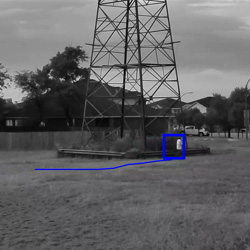
False alarms have plagued the video analytics market since the beginning. Improvements in the technology have lowered – but not eliminated – concerns about false alarms. Companies providing video analytics systems say the question isn’t whether false alarms can be eliminated, but rather how they can be managed.
“We’re still very far away from a day of zero false alarms,” says Zvika Ashani, chief technology officer (CTO), Agent Video Intelligence (Agent Vi). “Maybe someday when enough computing power is available and algorithms are at the level of sophistication of humans, but we’re still not there.” However, significant strides have been made in the last half dozen or so years, Ashani adds.
Today when customers install the Agent Vi system and configure it, they can quickly reach a working state with mostly “true positives,” he says. In other words, false positives can be managed. The ability to achieve a workable level of false positives is “the difference between robust, high-end analytics and what you can get inside a camera at a low cost,” he adds. “People realize they can’t work with [in-camera analytics], so they come to us for a more reliable solution.”
iOmniscient’s Nuisance Alarm Minimization System (NAMS) uses artificial intelligence to analyze what is or isn’t a threat – what’s a man or what’s a dog or what’s just a light changing? The system also helps to deal with the “noise” in a video image. “You never get to zero (false alarms), but if you reduce it several levels of magnitude, it’s tolerable,” says Dr. Rustom Kanga, CEO of iOmniscient. For example, if false alarms can be reduced from 20 a day to one every few days, it’s more manageable.
"You never get to zero (false alarms), but if you reduce it several levels of magnitude, it’s tolerable" says Dr. Rustom Kanga, CEO of iOmniscient |
In markets that require perimeter protection and real-time alerting, there is still a lot of wariness about the success of video analytics, concedes Brian Lane, director of marketing, 3VR. In these markets, analytics need to be nearly 100 percent accurate for them to be useful; otherwise, security directors tire of all the false alarms and eventually turn the analytics off.
In markets that require less accuracy, analytics are gaining ground, Lane says. For example, in business intelligence, analytics require less accuracy than, for example, identifying a former employee entering a building. Business intelligence relies on trends, not a single data point.