How Does Global Supply Chain Disruption Impact The Security Industry?
4 Mar 2022


- Supply chain disruptions hinder security product availability and delivery timelines.
- Security industry faces challenges in sourcing components post-COVID-19 pandemic.
- Global supply chain issues affect security industry's ability to protect assets effectively.
Editor Introduction
Supply chain issues have plagued the economic recovery during and after the COVID-19 pandemic, and the problems show every indication of persisting for months or even years to come. Supply chain challenges have impacted the security marketplace in many ways, reflecting the breadth and variety of products needed to secure people, facilities, and assets.
Wondering about the specifics of that impact, we asked this week’s Expert Panel Roundtable: How does disruption of the global supply chain of components impact players across the security industry?


The security industry is affected by the same supply chain challenges plaguing everyone. Semiconductor shortages are especially problematic across all types of security solutions and are expected to extend well into 2022, and potentially early 2023. Even when needed, supplies are available, they aren’t always in the right place. To clear these supply chain hurdles, security industry leaders and professionals must work with solution providers that have both - trusted supply chain partners and their own strong supply lines to their customers. These providers typically have global strength, extensive local and regional presence, and the portfolio breadth to offer alternatives, if your primary choices are unavailable. They also are more likely to absorb a portion of higher supply costs, providing a hedge against unexpected price increases. Keep an open dialogue with these suppliers, harness all available data about buying patterns and perhaps most of all, be patient. Things will get better.

Disruption to the global supply chain goes back to early 2020 and its impact has since known no bounds. From a manufacturing standpoint, two core elements have hindered the security sector - cost and production output. Crucially, almost all organizations possess links to an international supply chain and regardless of where products are manufactured, the scarcity of raw materials has had a knock-on effect, especially when you consider pricing. The cost of raw materials has surged and so too has the cost of transportation, where a shortage of containers and increased freight times has fallen short of demand. In turn and when paired with a disjointed production output, we have seen project delays that can incur additional penalties for those involved. And so, for hardware manufacturers, such as ourselves, it is now imperative to plan inventory well in advance, removing any potential stock issues for our customers, later down the supply chain.

Although the COVID-19 pandemic has affected us all personally, it does seem that some people in the security industry thought that it would just be business as usual on the commercial side. As we saw, short-term customer demand was artificially suppressed by the social distancing and isolation needs, but when these measures were relaxed, demand increased significantly. Unfortunately, the overall supply chain capacity has remained static, which has created a significant problem in meeting demand for some providers. The issue of potential supply chain disruption is, of course, one that can happen at any time, but the unpredictable nature of the last couple of years has really highlighted this. It is always sensible for suppliers to keep this firmly in mind, maintaining a good supply of components and products, to mitigate any disruptions as much as possible.

The disruption of the global supply chain has pushed back lead times on several important components for both hydraulic and electric barriers, leading to build times that are potentially longer at the factory. These longer build times can disrupt project schedules and cause delays in installation. General Contractors can get hit with liquidated damages, if the project is delayed too long. Delta Scientific has been able to stay ahead of these potential delays, by purchasing in larger quantities and staying ahead of the game. We have maintained our lead times, due to our purchasing power and foresight, coupled with the fact that we build all our equipment in-house, allowing us to control the builds more dynamically.

For most of the past year, some electronic access control manufacturers have been forced to warn their customers that certain models are presently unavailable, due to a lack of semiconductors or other sub-components not being delivered to them, because of production problems in Asia or other COVID-19-related troubles. At Farpointe Data, to bolster our claim that all our products are being made available in a timely fashion, we began producing an email sent every week, listing the lead-times of all our products. Since all of our products and their sub-components are shipped fully consolidated to customers from the company’s headquarters, located in the United States of America (USA), they are not currently facing any lead-time restrictions on any standard items. This includes the growing family of CONEKT mobile readers and credentials, as well as proximity, contactless smart cards, and long-range product solutions.

The disruptions to the global supply chain have affected the entire security industry in one way or another. Flexibility is key given the dynamic uncertainties. By using an agnostic camera approach, end users and systems integrators can make themselves less dependent on the availability of certain camera types. By using an open camera OS, manufacturers can give their customers the required flexibility to shift from one use case to another, without requiring new hardware, while ensuring camera data accessibility. Furthermore, retrofit solutions can mitigate further dependencies as they allow the ability to change the function of existing cameras.

It’s no secret that the global supply chain disruption is causing a squeeze on every industry right now. The main challenge that everyone is talking about is the global chip shortage. That has caused real issues for every industry that relies on electronic components and security systems have certainly not escaped from that. However, there is a parallel challenge that is hitting manufacturers, such as Secure Logiq particularly hard, including metalwork supplies. While it’s not often talked about, there is a huge amount of metal that goes into a server chassis. We always monitor anything that has the potential to significantly impact our manufacturing capabilities and try to offset any potential challenges, with early purchases. This has ensured we have been able to maintain our record of never failing to deliver a customer order within 7-10 working days, but it is definitely a supply issue that we are keeping a careful eye on.

The disruption of the global supply chain of components is delaying every security project while, increasing costs. However, Safetrust is seeing this challenge create new opportunities and accelerate the adoption of mobile credentials over physical credentials. Organizations are having difficulty obtaining the cards they need, because of the chip shortage, or they are finding that the prices have doubled or tripled in price. And, if they weren’t already swayed by the increase in security, convenience, and touch-free benefits of a mobile credential, the significant delays, shortages, and rising costs in sourcing traditional plastic cards are getting more to consider virtual credentials. This disruption to the supply chain will likely see a more significant push towards BYOD.

The last couple of years have taught us a great lesson in the importance of the supply chain and the profound impact it can have on every aspect of the flow of business. As we navigate our way out of the current situation, we need to work together as an industry, become responsible stewards of the supply chain, and do our best to discourage unhelpful behaviors, such as stockpiling. It’s never been more important to collaborate closely with suppliers, partners, and forecast demand with accuracy. But, there’s more to supply chain issues than the current shortage of goods and materials. As cybercriminals become more sophisticated, there’s even greater pressure on organizations to scrutinize the cyber security measures, standards, and certifications of their entire supply chain ecosystem. It is imperative to build a network of trusted suppliers, in order to mitigate ethical concerns and possible trust, and security vulnerabilities.

For many in the security market, supply chain challenges will persist well into 2022. While many manufacturers are experiencing delays in product delivery, the savvier ones are reaping the benefits of having control over their own supply chains. And for those manufacturing products in-house, the impact is further diminished from companies, with a strong reliance on third-party suppliers. Having a trusted supply chain and knowing how a product is made are also critical to cyber security. Those factors may have been overlooked previously, but now they have taken on new meaning. Global supply chain problems have also provided renewed focus on relationships between trusted suppliers and dealers/integrators. Hanwha Techwin invested heavily and paid a premium for some components, in order to ensure production lines remained open. There are few things more important than being able to confidently meet contractual obligations. This lesson is going to be hard-won for many in the industry.
Editor Summary
Whether shortages relate to semiconductors, electronic subcomponents, or even metalwork supplies, the security marketplace has felt the punch of supply chain disruption over recent months and likely will continue to feel the impact for months to come. In addition to describing the obstacles, our Expert Panelists also de-lineate some strategies that manufacturers are deploying to manage the shortages and minimize impact on their customers. Such efforts will continue to be compulsory and a cost of doing business, until supply chain disruption normalizes.
Hanwha Vision America products
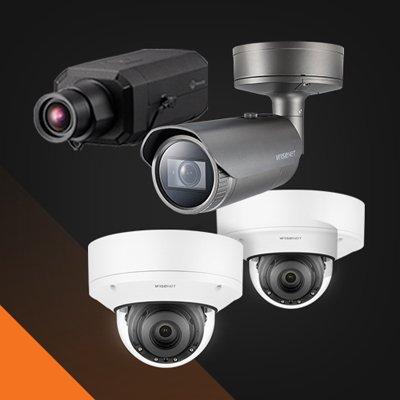


Hanwha Vision America news
At ISC East 2025, Hanwha Vision is showcasing a range of high-performance surveillance solutions designed to elevate the security experience and transform an organization’s total operations. Attendees can see the future of security technology at Booth 507, ranging from AI cameras equipped with the Wisenet 9 System on Chip (SoC); to the new OnCAFE access control platform; to DesignPro, an intuitive project design and management resource. Hanwha Vision’s exhibit at ISC East demonstra...
Hanwha Vision is showcasing the future of security technology at GSX 2025 (Booth 2326), featuring its new Wisenet 9 System on Chip (SoC) and a growing suite of cloud-based solutions, including the new OnCAFE access control platform. Hanwha Vision will demonstrate how its latest technology simplifies security management, while providing powerful, intelligent, and scalable protection for any organization. Attendees will experience a full line of AI-powered cameras and devices supported by an...
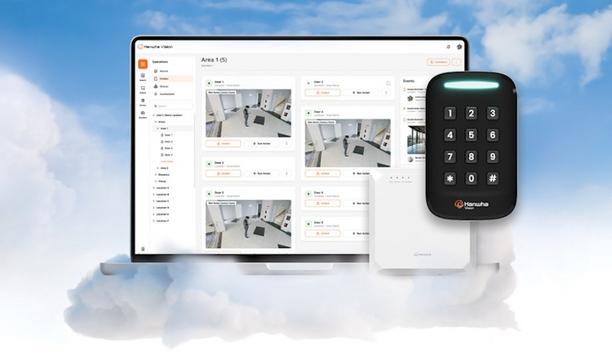
Hanwha Vision is opening new doors for security applications with the launch of OnCAFE (Cloud Access For Everyone), a cloud-hosted Access Control as a Service platform and the latest tool in the company’s expanding line of cloud-based solutions. Delivering a user-friendly, scalable, and cost-effective option for access control needs, OnCAFE reduces the deployment challenges traditionally associated with system initialization, device, user, and software management. Han...
Hanwha Vision America case studies
Wilson Bank & Trust, member FDIC, is an independent, community-based bank that began operating in Tennessee, USA in 1987. They have mortgage offices, operations centers, ATMs and branches located in and around Middle Tennessee that serve the city and surrounding rural areas. In total, they have operations and security at approximately 40 locations. One of the keys to their on-going success is their continuous search to improve their offerings. This drive extends to their physical security a...
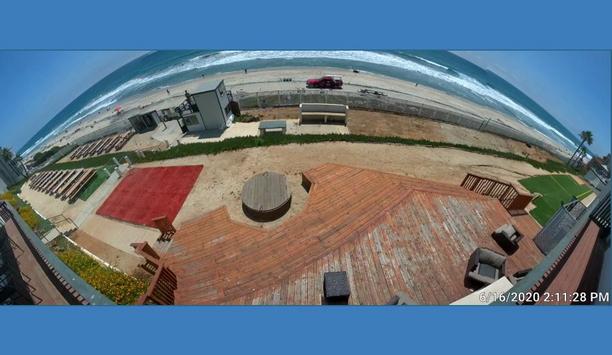
Hanwha Techwin America, a global supplier of IP and analog video surveillance solutions, has announced that Army and Navy Academy, a college preparatory military boarding school in California, has upgraded its security infrastructure with Hanwha security cameras. Located on a 23-acre beach-front property, the Army and Navy Academy is home to more than 300 students and employs more than 140 faculty and staff members. Two-fold surveillance upgrade According to Jeffrey Gibson, a system with anal...
Recently, Planet Fitness, with the help of their preferred system integrator Adirondack Direct, incorporated a video surveillance solution from Hanwha Techwin and Genetec that not only enhances security, but also improves operations. When leadership evaluated security at their 70-plus corporate run locations a few years ago, they chose to incorporate a video surveillance solution that would address security needs and would be advanced enough to help with management and operations. Each of...
Hanwha Vision America white papers







Hanwha Vision America virtual events


Hanwha Vision America videos

Hanwha Customer Stories: Buffalo And Erie County Naval And Military Park
COVID-19 Solutions: '5 Minutes With' Video Interview with Thomas Cook from Hanwha Techwin America
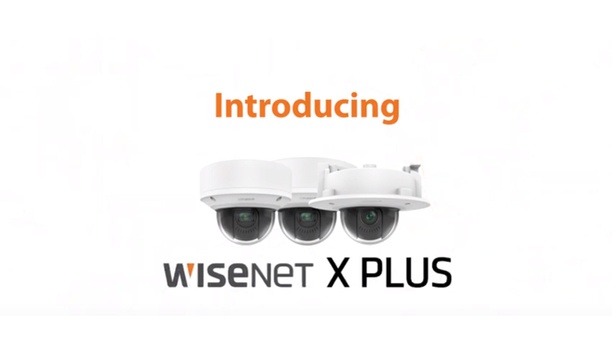
Hanwha Techwin’s Wisenet X series Plus
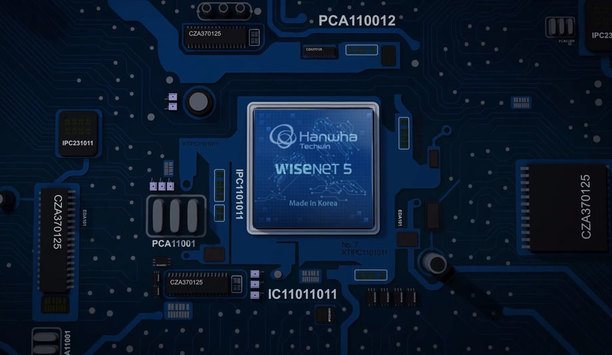
Introducing Hanwha Wisenet X Series Exclusive Wisenet 5 SoC Chipset
Expert commentary

Security beat