
Flir has introduced acoustic imaging cameras designed to identify concealed leaks and inefficiencies within cement plants. This technology is aimed at minimizing downtime, reducing energy costs, and optimizing overall performance.
The cameras facilitate more efficient, safer, and cost-effective maintenance with features such as intuitive operation, precise detection in noisy or hard-to-reach areas, and intelligent reporting capabilities.
Addressing Industry Challenges
The global cement industry was valued at $361 billion in 2024 and is projected to grow at a 5.1% compound annual growth rate (CAGR) from 2025 to 2032. This growth is largely driven by increased residential construction demands, particularly in Asia, leading to a surge in cement production from 600 million metric tons at the beginning of the century to over 2 billion metric tons in 2023.
Cement plants traditionally regarded maintenance as a mere cost, limited to annual shutdowns
Given this rapid expansion, unplanned downtime poses a significant risk. Cement plants traditionally regarded maintenance as a mere cost, limited to annual shutdowns and reactive fixes.
However, many operators now understand that regular, scheduled maintenance can significantly enhance profit margins. In a plant that produces 1 million metric tons annually, an unscheduled one-day shutdown can result in losses of up to $300,000.
Precision with Flir Acoustic Cameras
Effective maintenance not only prevents catastrophes but also addresses ongoing inefficiencies that may silently affect profitability and competitiveness.
Identifying these issues, especially in high-energy systems such as those using compressed air and industrial gases, is crucial but often challenging due to the concealed nature of leaks.
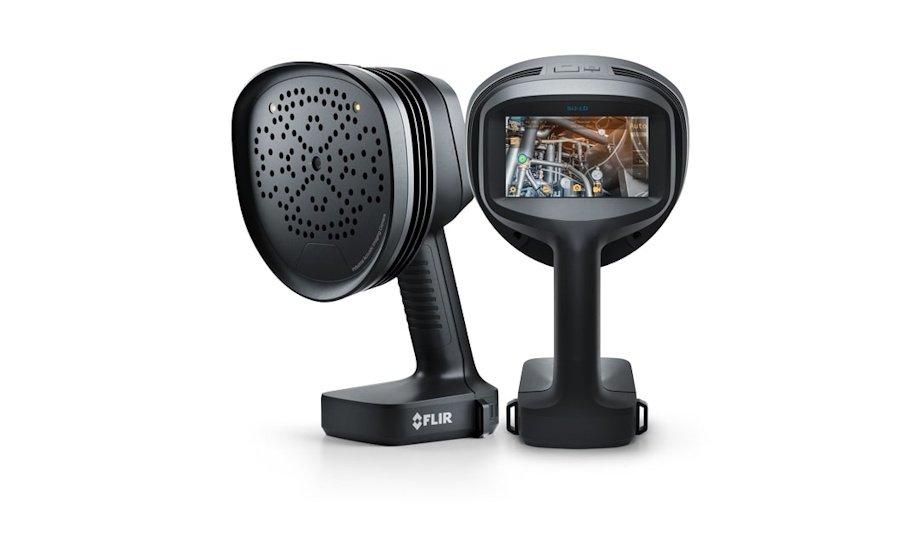
Flir’s Si2-LD handheld acoustic camera was developed to address this challenge. Featuring sensitive MEMS microphones, the camera can pinpoint leaks in compressed air systems and provides a 12 MP image display on a 5-inch, 1280 x 720 color screen.
Inspecting Hard-to-Reach Areas Safely
Si2-LD camera’s bandpass filtering ability enables users to isolate leaks by selecting specific frequency ranges
In noisy industrial settings, the Si2-LD camera’s bandpass filtering capability enables users to isolate leaks by selecting specific frequency ranges, effectively identifying even minor leaks.
For instance, it can detect a leak as small as 0.007 liters per minute from a distance of 2.5 meters and can spot larger leaks up to 130 meters away.
This functionality allows maintenance personnel to safely examine difficult-to-reach areas, including high-temperature zones, without compromising safety.
Efficient Operation and Reporting
After inspections, the camera’s onboard leak size quantification software helps prioritize repairs by evaluating potential energy loss, ensuring that significant leaks are addressed promptly.
Understanding the restrictions on external drives and Wi-Fi in plant environments, Flir offers a data cable accessory for connecting the camera directly to PCs or laptops, facilitating easy file transfers without network or security concerns.
The engineers behind the Si2-LD emphasize its user-friendliness, acknowledging that users often lack time to master new analytical equipment. Designed for simplicity, the camera’s "point and shoot" operation allows detection, quantification, and analysis with minimal training. The device is also packaged in a rugged carrying case to endure the harsh conditions of quarries and cement facilities.